How to Fish for Salmon in California
Oh, the elusive California salmon! There's nothing quite like the thrill of chasing these magnificent fish, but let's be honest, it can also be incredibly frustrating when you're not quite sure where to start, what gear to use, or how to navigate the ever-changing regulations. If you've ever felt overwhelmed by the thought of trying to hook a salmon in the Golden State, you're absolutely not alone. This guide is here to cut through the confusion and give you a comprehensive, realistic look at how to successfully fish for salmon in California, covering everything from identifying the species to mastering the best techniques.
Understanding California Salmon Species and Their Seasons
Before you even think about wetting a line, it's crucial to understand the stars of the show: the salmon themselves. In California, we primarily target Chinook salmon, also widely known as King salmon. While other species like Coho (Silver) salmon exist in our waters, they are often protected or present in much smaller numbers, making Chinook the main focus for sport anglers. The challenge, and sometimes the heartache, with salmon fishing in California is that their seasons and populations are highly variable, influenced by ocean conditions, river flows, and a myriad of environmental factors.
King Salmon: The Premier Target
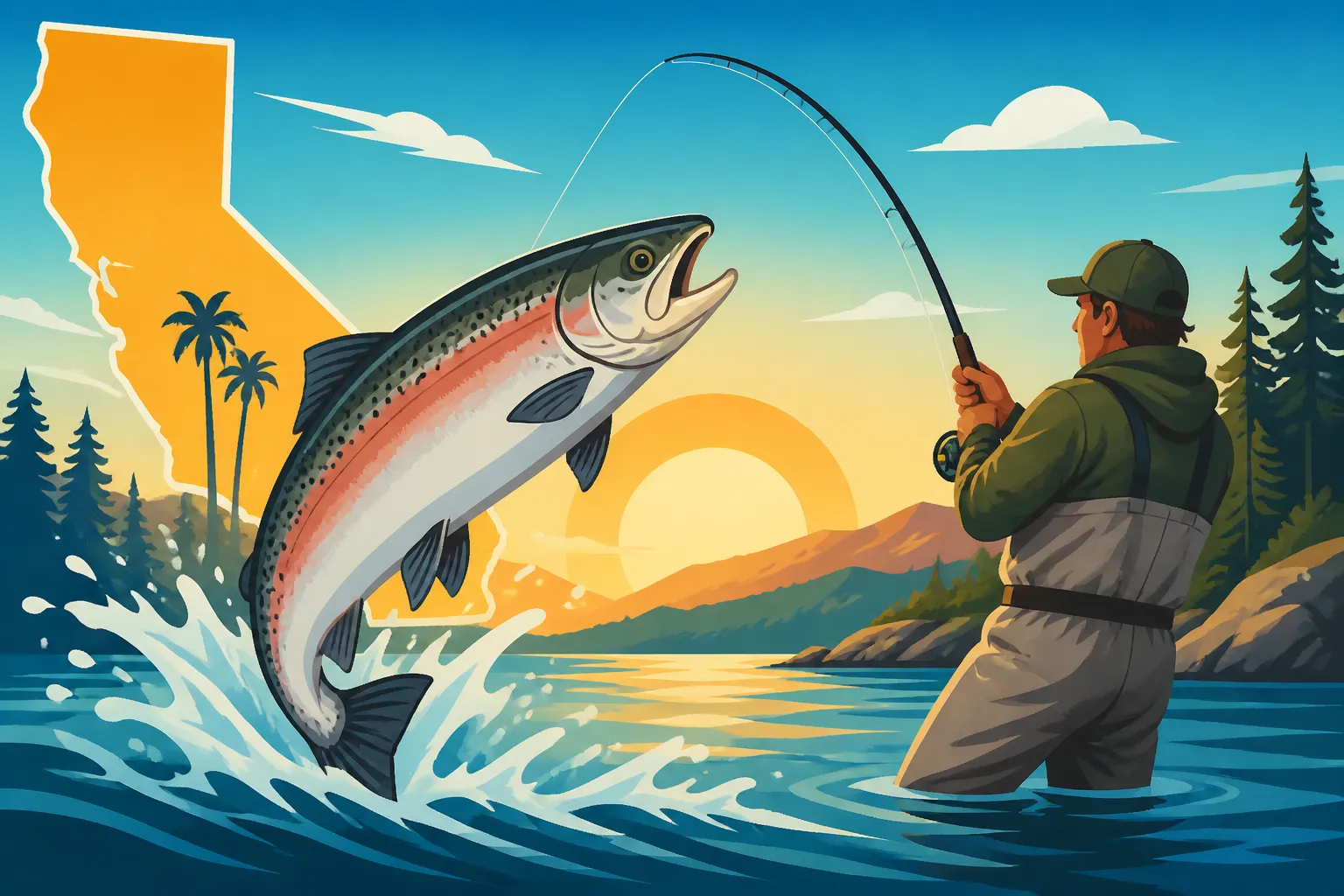
Chinook salmon, or King salmon, are the largest and most prized of the Pacific salmon species, and they're what most anglers dream of catching in California. These fish can grow to impressive sizes, with some individuals tipping the scales at over 50 pounds, though average catches are typically in the 10-30 pound range. They spend several years maturing in the nutrient-rich waters of the Pacific Ocean before returning to their natal rivers to spawn.
Their life cycle dictates their availability to anglers. We primarily target them in two main phases:
- Ocean Phase: When they are actively feeding and growing in the ocean. This is where you'll find the robust, silver-sided chrome bright fish.
- River Phase: As they enter freshwater estuaries and rivers, migrating upstream towards their spawning grounds. During this phase, their color can change from bright silver to a darker, sometimes reddish-brown hue, and their flesh quality begins to diminish as they focus entirely on reproduction.
The seasons for King salmon can be notoriously complex. Ocean salmon seasons are set annually, often changing from year to year based on stock assessments and conservation needs. It's not uncommon for ocean seasons to be severely restricted or even closed in some areas, especially along the central and northern coasts, if fish populations are deemed low. Freshwater seasons in rivers like the Sacramento, Feather, and Klamath also have specific windows, often opening later in the summer and extending into fall, coinciding with the salmon's spawning runs. Always, always check the latest California Fishing Regulations Explained before you head out.
Coho Salmon and Other Species
While Chinook salmon are the primary target, it's worth noting other species. Coho (Silver) salmon are generally protected in California due to critically low populations. If you happen to catch one, it’s imperative to release it immediately and unharmed. Pink (Humpy) and Chum (Dog) salmon are rarely encountered in California's sport fisheries. Steelhead, which are sea-run rainbow trout, are also present and highly prized, but they are a distinct species with different regulations and fishing techniques. For those interested in tracking specific species, a California Salmon Report Card is mandatory for most salmon fishing, even for catch-and-release, so make sure you understand those requirements.
Key Salmon Fishing Locations in California
California offers diverse opportunities for salmon fishing, from the deep blue waters of the Pacific to the meandering rivers of the interior. Each location presents its own set of challenges and requires different approaches. Understanding where to go and when is half the battle won.
Offshore and Coastal Waters
When ocean seasons are open, offshore waters are where you'll find the biggest, brightest, and most aggressive salmon. These fish are gorging themselves on baitfish, packing on weight before their arduous journey upstream.
- San Francisco Bay and Nearshore: The waters outside the Golden Gate and into San Francisco Bay can be hot spots during open ocean seasons. Anglers often launch from destinations like Emeryville, Berkeley, or Sausalito. The Bay entrance itself, and the coastline stretching north and south, sees strong runs when conditions are right. This area is particularly famous for its salmon, and you can find detailed information in our San Francisco Bay Fishing Guide.
- Monterey Bay: Further south, Monterey Bay is another premier salmon destination. The deep submarine canyon provides a rich ecosystem, attracting baitfish and, consequently, hungry salmon. Popular launch points include Santa Cruz and Moss Landing. Check out the Monterey Bay Fishing Guide for specifics on this beautiful area.
- Northern California Coast (Fort Bragg, Shelter Cove, Crescent City): These northern coastal towns offer incredible salmon fishing when conditions align. The rugged coastline, kelp beds, and upwelling provide excellent feeding grounds. Fort Bragg, in particular, is a well-known hub for ocean salmon fishing. These areas tend to have strong, consistent runs when the season allows.
- Southern California: While less renowned for salmon than the central and northern coasts, opportunities can arise in Southern California, particularly during cooler water years when salmon might push further south in search of food. However, these occurrences are less reliable.
Fishing in these areas typically involves trolling from a boat, often using downriggers to get lures and bait down to the desired depth where salmon are feeding. Party boats operating out of major harbors like Fisherman's Landing in San Diego (though primarily for tuna, they do sometimes target salmon if available) or Pillar Point Harbor in Half Moon Bay are popular options for anglers without their own boats.
Freshwater River Systems
Once the salmon leave the ocean and enter the rivers, the game changes entirely. The fish are now migrating, driven by instinct to reproduce. They're less interested in feeding, but can still be enticed to strike out of aggression, territoriality, or memory.
- Sacramento River: Often considered the backbone of California's salmon fishery, the Sacramento River sees multiple runs of Chinook salmon throughout the year, with fall being the most prominent. From the Delta all the way up to Redding, anglers pursue salmon using various techniques. The lower river, closer to the Delta, can offer good opportunities as fish enter freshwater, while the upper river provides clear, cool water for spawning fish. Our Sacramento River Fishing Guide offers comprehensive details.
- Feather River: A major tributary to the Sacramento, the Feather River is another powerhouse salmon fishery, especially below the Oroville Dam. Anglers flock here during the fall run, targeting fish as they move upstream. Access points are plentiful, and both boat and bank fishing can be productive. Don't miss our Feather River Fishing Guide for in-depth information.
- American River: Flowing through Sacramento, the American River is highly accessible and sees a strong fall run of King salmon. It's a fantastic urban fishery, allowing many anglers a chance to hook into a fresh salmon. Again, both boat and bank fishing are popular here. The American River Fishing Guide has more tips and tricks.
- Klamath River and Trinity River: Located in Northern California, these rivers are legendary for their salmon runs, particularly the fall Chinook. While access can be more challenging and regulations are often complex due to tribal fishing rights and conservation efforts, they offer some of the most pristine salmon fishing experiences. These rivers typically see robust returns, and fishing here can be truly special.
Freshwater salmon fishing often involves drift fishing, back-trolling, or sometimes casting hardware. The key is presenting your bait or lure naturally in the current, right in the salmon's migratory path or holding lies.
Essential Gear for California Salmon Fishing
Having the right tackle is non-negotiable for salmon fishing. These are powerful fish, and a mismatched setup will often lead to heartbreak. Investing in quality gear, even if it's budget-friendly, will significantly improve your chances of landing a salmon. Many great options can be found on Amazon, making it easy to get what you need delivered right to your door.
Rods, Reels, and Line
The specific setup depends heavily on whether you're targeting ocean salmon or river salmon, and the technique you plan to use.
- Ocean Fishing (Trolling/Mooching):
- Rods: You'll want a medium-heavy to heavy conventional rod, usually 7 to 9 feet in length, with a fast to moderate-fast action. This provides the backbone needed to fight big fish and handle heavy weights for trolling. Look for rods rated for 20-50 lb line.
- Reels: A high-quality conventional reel with a strong drag system and high line capacity is a must. Models like the Penn Fathom or Shimano Tekota are popular choices. You'll want something that can hold at least 300 yards of 30-50 lb monofilament or braided line.
- Line: For trolling, many anglers opt for 30-50 lb monofilament mainline due to its stretch, which can act as a shock absorber. However, braided lines (like PowerPro or Daiwa J-Braid) in the 50-80 lb range are increasingly popular for their sensitivity and strength, often used with a monofilament or fluorocarbon leader.
- River Fishing (Drift Fishing/Back Trolling/Casting):
- Rods: A medium-heavy spinning or casting rod, 8 to 10.5 feet long, is excellent for most river techniques. A longer rod helps with casting distance and line control. For drift fishing, a softer tip can be advantageous for detecting subtle bites.
- Reels: A sturdy spinning reel (size 4000-6000) or a low-profile baitcasting reel with a smooth, reliable drag. Brands like Daiwa or Shimano offer excellent options for river applications.
- Line: 15-30 lb monofilament or fluorocarbon mainline, or 30-50 lb braided line with a fluorocarbon leader. Fluorocarbon is often preferred for leaders due to its invisibility underwater and abrasion resistance.
Baits and Lures
Salmon are opportunistic predators, but they can also be incredibly finicky. Having a variety of baits and lures in your tackle box is a smart move.
- Natural Baits:
- Anchovies/Herring: These are perhaps the most classic and effective ocean salmon baits. They are typically fished whole or cut, often "brined" for toughness and enhanced scent, then rigged to spin enticingly in the water.
- Sardines: Another excellent baitfish, especially for larger salmon.
- Cured Roe (Eggs): For freshwater fishing, cured salmon or steelhead roe is a deadly bait, particularly when drift fished in river currents.
- Artificial Lures:
- Spoons: Classic metal spoons like the "Krocodile" or "Silver Horde" are incredibly effective in the ocean and some rivers. They imitate wounded baitfish with their wobbling action. You can find a huge selection of these on Amazon.
- Hoochies (Squid Skirts): These soft plastic squid imitations, often paired with a dodger or flasher, are deadly for ocean salmon. They come in a myriad of colors, with pink, green, and blue being common favorites.
- Plugs/Hard Baits: Large diving plugs like the "Brad's Killerfish" or "Luhr Jensen Kwikfish" are popular for back-trolling in rivers, especially when wrapped with a sardine fillet.
- Spinners: While more common for trout and steelhead, larger spinners can be effective for aggressive salmon in rivers.
- Flasher/Dodger Combinations: These are not lures themselves, but attractants that create flash and vibration to draw salmon to your bait or hoochie. They are an integral part of many ocean trolling setups.
Mastering Salmon Fishing Techniques
Successfully fishing for salmon in California requires adapting your techniques to the environment and the fish's behavior. What works in the ocean won't necessarily work in a river, and vice-versa.
Trolling for Ocean Salmon
Trolling is the undisputed king of ocean salmon fishing. It involves dragging lures or bait behind a moving boat at a controlled speed, covering large areas of water to locate fish.
- Downriggers: These are essential for consistently presenting your gear at specific depths. A heavy lead ball (e.g., 10-15 lbs) is lowered on a separate cable, and your fishing line is attached to the downrigger release clip. When a fish strikes, the line pops free from the clip, allowing you to fight the fish directly.
- Divers and Flashers: If you don't have downriggers, diving planes (like a "Diving Planer") or weighted flashers can help get your lures down. Flashers and dodgers are critical for attracting salmon to your bait. They create erratic movements and flash, mimicking a school of baitfish or a struggling prey item.
- Speed and Direction: Trolling speed is critical, usually between 2 and 4 knots, depending on the lure or bait you're using. Experiment with subtle changes in speed and direction (e.g., S-turns) to create varied action in your presentation, which can often trigger strikes. Pay close attention to your fish finder for bait balls or salmon marks.
- Depth: Salmon can be found at various depths, from the surface down to over 100 feet. Monitoring your fish finder and communicating with other boats or checking fishing reports (like the ones you can find for California Ocean Salmon Regulations) will help you pinpoint the productive depth zone.
Mooching and Drift Fishing
These techniques are more active and typically used when fish are concentrated or when targeting them in rivers.
- Mooching (Ocean/Bay): Mooching involves slowly drifting with the current, dropping weighted bait (usually a rigged anchovy) down to a specific depth, and then slowly retrieving it with a lift-and-drop motion. It's particularly effective when salmon are suspended in a water column and you want to present a natural-looking bait. You might be near structure or a bait ball, and the subtle movement is key.
- Drift Fishing (Rivers): In rivers, drift fishing is about presenting your bait or lure naturally along the bottom or in the strike zone. You cast upstream and allow your weighted bait (like cured roe, a puffball, or a small jig) to drift downstream with the current, maintaining a tight line to feel for bites. This technique is often used with a sliding weight system (like a Slinky weight) to prevent snagging on the bottom. The goal is to imitate food dislodged by the current.
- Back-Trolling (Rivers): This is a boat-based technique where the boat is positioned upstream and slowly allowed to drift downstream, sometimes using a motor in reverse, to present lures or bait ahead of the boat. Plugs wrapped with sardine fillets are very effective with this method, as their wiggling action in the current mimics a struggling fish.
Bank and Pier Fishing Considerations
While less common for salmon than boat fishing, there are certain situations where bank or pier fishing can be productive.
- River Bank Access: In major rivers like the Sacramento or American, during strong runs, salmon will hold in deeper pools or along current breaks. Anglers can target these areas from shore using drift fishing setups with cured roe or casting larger spinners or spoons. You might need waders to get into optimal casting positions, and always be mindful of private property.
- Bay Area Piers: On rare occasions, particularly when ocean salmon move into the bays and estuaries during open seasons, some piers might offer a fleeting chance to catch a salmon. This is more of a bonus than a consistent fishery, but keeping an eye on local reports can pay off. Pier fishing requires different considerations, and you can learn more about Fishing from a Pier in California: Rules.
Navigating California's Salmon Regulations
This is arguably the most critical and often the most frustrating aspect of salmon fishing in California. Salmon regulations are complex, dynamic, and subject to change with little notice. They are managed by both state (CDFW) and federal (NOAA Fisheries) agencies due to the migratory nature of the fish.
Understanding Seasons, Bag Limits, and Size Limits
Every year, new regulations are set, typically in spring, after extensive scientific review and public input. These regulations define:
- Open Seasons: Specific dates during which salmon fishing is allowed. These vary significantly by geographic area (e.g., Northern Management Area, Central Management Area, San Francisco Bay, specific rivers) and can be highly restricted. For instance, sometimes the ocean season in one area might be completely closed while another is open, or it might be open only for a few days a week. For the most current information, consult the official CDFW website or local tackle shops.
- Bag Limits: The maximum number of salmon an angler can keep per day. This is usually one or two fish, but it can be lower or higher depending on the specific area and year.
- Size Limits: The minimum size a salmon must be to be legally retained. This is typically measured from the tip of the snout to the fork of the tail.
- Gear Restrictions: Certain areas or seasons may have restrictions on gear, such as requiring barbless hooks or specific types of lures.
The Role of Report Cards and Stamps
If you're targeting salmon, you'll need a valid California Fishing License Guide, and likely a California Salmon Report Card. These report cards are vital for collecting data on salmon harvests, which directly impacts future season setting. You must fill out your card immediately after catching a salmon and return it to the CDFW by the specified deadline. Failure to do so can result in fines and impact future fishing opportunities for everyone. Additionally, an Ocean Enhancement Stamp may be required for fishing in ocean waters south of Point Arguello (Santa Barbara County).
Marine Protected Areas (MPAs) and Closures
California has established a network of Marine Protected Areas (MPAs) along its coast. These areas have specific restrictions, and many are "no-take" zones where fishing is completely prohibited. It is your responsibility to know if you are fishing within an MPA and what the regulations are for that specific area. Always consult maps and regulations before heading out. Beyond MPAs, specific California Salmon Closure Explained might be in effect for conservation reasons, impacting entire regions or certain stretches of rivers. This is why checking current conditions, often found in local fishing reports or on the CDFW website, is non-negotiable.
California Salmon Regulations Table
To give you a general idea, here's a table outlining common considerations for California salmon fishing, though always verify current regulations:
| Location Type | Primary Species | Typical Season Window | Common Techniques | Key Regulations |
|---|---|---|---|---|
| Ocean/Coastal | Chinook (King) | Varies annually (May-Oct often) | Trolling, Mooching | Bag/Size limits, Ocean Enhancement Stamp, MPAs |
| Major Rivers | Chinook (King) | Late Summer – Fall (e.g., Aug-Dec) | Drift fishing, Back-trolling | Bag/Size limits, Report Card, Gear restrictions |
| Estuaries/Bays | Chinook (King) | During ocean season | Mooching, Trolling | Bag/Size limits, Ocean Enhancement Stamp, MPAs |
Note: This table provides general guidance. Specific dates, limits, and regulations change yearly and by location. Always consult the California Department of Fish and Wildlife (CDFW) for the most up-to-date information.
Conclusion: Patience and Persistence Pay Off
Fishing for salmon in California is a journey that combines the thrill of the chase with the beauty of our state's diverse landscapes. It demands respect for the fish, an understanding of their habits, and a commitment to staying informed about the constantly evolving regulations. There will be days when the bite is hot, and you feel like a seasoned pro, and there will be days when you question why you even bother. That's salmon fishing! But with the right knowledge, gear (perhaps some great finds from Amazon to round out your tackle box), and a good dose of patience, the reward of hooking into a powerful California King salmon is truly unforgettable. Keep learning, keep exploring, and most importantly, keep fishing!
Disclaimer
The information provided in this guide is for general informational purposes only and is not intended as legal advice regarding fishing regulations. Fishing regulations in California are subject to change by the California Department of Fish and Wildlife (CDFW). It is the angler's sole responsibility to consult the most current official CDFW regulations before engaging in any fishing activity. Failure to comply with regulations can result in significant penalties.