California Float Tube Fishing for Beginners
There's nothing quite like the feeling of being truly immersed in nature while you fish, and for many anglers, especially those just starting out, the thought of a full-blown boat can feel overwhelming, expensive, and frankly, a bit intimidating. If you've ever dreamt of reaching those peaceful, untouched pockets of water that shore anglers can only gaze at longingly, all while experiencing a unique kind of tranquility, then float tube fishing might just be your calling. This comprehensive guide will walk you through everything you need to know to confidently cast off on your first float tube adventure in California, helping you navigate the gear, techniques, and safety essentials without the usual beginner's guesswork.
Why Float Tube Fishing in California is a Game Changer
Float tube fishing offers a truly unique angling experience that's tough to beat, especially in the diverse waters of California. It's an intimate way to connect with the water, offering peace, quiet, and access that other methods simply can't provide.
The Undeniable Appeal of Float Tubes
Let's be real, the hustle and bustle of everyday life often follows us to the water, especially at popular boat launches or crowded piers. That's where float tubes shine. Imagine gliding silently across the water, the only sounds being the gentle splash of your fins and the subtle ripple of your line. This incredible stealth factor allows you to approach fish-holding structures and feeding zones without spooking wary fish, often leading to more bites. You're essentially a part of the environment, not an interruption to it.
Beyond the tranquility, accessibility is a huge win for float tubers. Many smaller lakes, ponds, and even sections of larger reservoirs have areas that are too shallow for traditional boats, too far for shore casting, and too difficult to reach by foot. A float tube opens up these forgotten honey holes, putting you right on top of untouched waters brimming with fish. It's like having your own personal, portable boat that you can deploy almost anywhere. Plus, the investment is significantly lower than a powerboat or even a high-end kayak, making it a fantastic entry point for aspiring anglers looking to upgrade their mobility without breaking the bank.
Ideal California Waters for Float Tubing
California, with its incredible variety of aquatic environments, is practically built for float tubing. While you wouldn't take a float tube into the rough surf of the Pacific Ocean (please don't!), countless freshwater lakes, reservoirs, and slow-moving rivers offer perfect conditions. Think serene, tucked-away ponds in regional parks, smaller mountain lakes in the Sierra Nevada, or even calm coves on larger reservoirs that are otherwise dominated by powerboats.
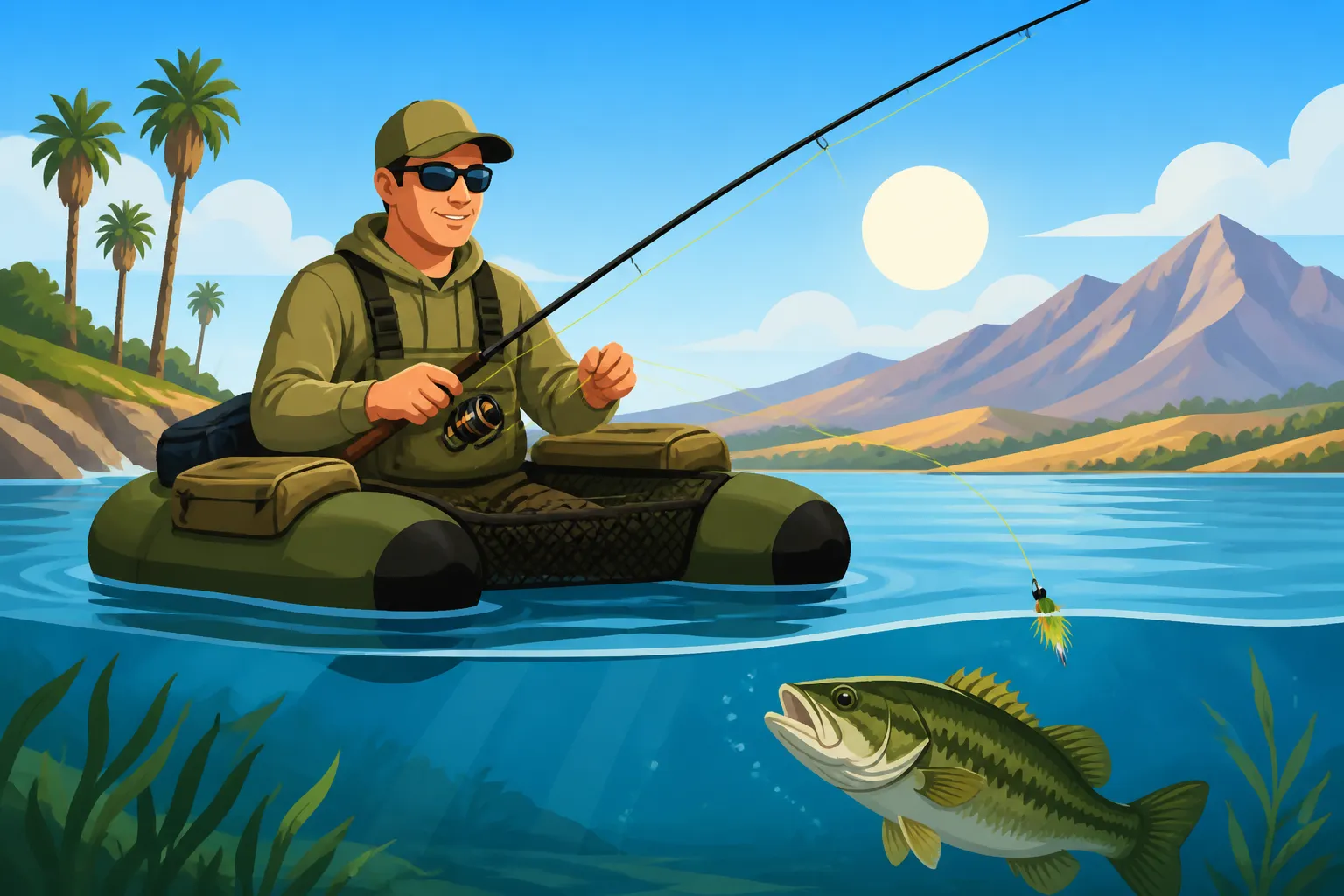
A fantastic starting point for float tubing in California is the Eastern Sierra, where numerous high-elevation lakes like Crowley Lake offer incredible trout fishing opportunities in clear, calm waters. Similarly, many smaller county parks and reservoirs across the state, such as those found in areas like the San Diego region or near Redding, often have designated areas or are simply perfectly suited for these quiet craft. For those venturing into the renowned California Delta, stick to the calmer back sloughs and protected channels where currents are minimal and the scenery is breathtaking, offering excellent opportunities for bass. These environments provide shelter from strong winds and boat traffic, creating a safe and enjoyable space for beginners to get comfortable.
Essential Gear for Your First Float Tube Trip
Getting set up with the right gear is crucial for both enjoyment and safety. Don't worry, you don't need to mortgage your house to start; a few key items will get you on the water comfortably.
Choosing Your Float Tube and Propulsion
When you're first looking at float tubes, you'll generally find a few main designs, each with its own perks. The classic U-shaped tube is often the most budget-friendly and compact, resembling a giant inner tube with a seat in the middle. They're great for smaller waters and easy transport. V-shaped tubes, on the other hand, offer better hydrodynamics, making them a bit faster and easier to maneuver, often with more storage. Then you have pontoon-style float tubes, which look a bit like mini catamarans. These offer the most stability, often have elevated seating, and boast ample storage, making them a favorite for longer trips or anglers with more gear. For a beginner, a U-shaped or V-shaped tube strikes a great balance of cost, portability, and performance. You can find a huge variety of options on sites like Amazon, making it easy to compare features and prices.
No matter which tube you choose, your primary propulsion will come from fins. These aren't just any old swimming fins; you'll want dedicated float tube fins designed to attach securely over your wading boots. Some models strap directly to your feet, while others clip onto a separate wading shoe. The key is comfort and efficiency. You'll be doing a lot of kicking, so ensure they fit well and don't cause chafing. Look for fins with good surface area to give you plenty of thrust without excessive effort. A quality pair will make your time on the water much more enjoyable and less tiring.
Finally, don't forget a pump! While some tubes can be inflated by mouth, trust me, you'll want a pump. A simple hand or foot pump works perfectly for occasional use, but if you plan on frequent trips, a small electric pump that plugs into your car's 12V outlet can be a real time-saver. Just remember to top off the inflation with a hand pump for optimal rigidity once it's mostly inflated by electric means. Having a quick and easy way to inflate and deflate means more time fishing and less time wrestling with your gear.
Must-Have Safety and Comfort Items
This might be the most important section, so pay close attention. First and foremost, a Personal Flotation Device (PFD) is non-negotiable. Even if you're a strong swimmer, unexpected currents, sudden winds, or even a tube puncture can put you in a dangerous situation. Always wear a US Coast Guard approved PFD that fits comfortably while you're seated in the tube. It should be snug but not restrictive, allowing for full range of motion while casting and kicking.
Next up are waders and wading boots. You're going to be in the water, sometimes cold water, so staying dry and warm is paramount to comfort and safety. Neoprene waders are excellent for cold water, providing insulation, while breathable waders are better suited for warmer conditions or hot California summer days when you still need to stay dry but want to avoid overheating. Pair these with sturdy wading boots that offer good ankle support and grip, especially if you're launching from uneven terrain. Getting cold or wet early in your trip can quickly ruin the experience.
A small, collapsible anchor (1.5-3 lbs is usually sufficient) is a lifesaver, literally. It allows you to stay put when you find a productive fishing spot, preventing you from drifting away in the wind or current. Nothing is more frustrating than making the perfect cast only to find yourself drifting out of position immediately. A small repair kit with patches and adhesive is also a smart addition for those "just in case" moments with your inflatable tube. For personal comfort and safety, don't forget a wide-brimmed hat, plenty of sunscreen, and polarized sunglasses (these are fantastic for spotting fish and submerged structure). A small, waterproof dry bag for your phone, keys, and wallet, and a whistle for emergencies round out the essentials.
Fishing Tackle for Float Tubing
When it comes to your fishing gear, think compact and efficient. A shorter rod, typically between 6 and 7 feet, with a light to medium-light action spinning reel, is ideal. The shorter length makes casting from a seated position much easier and less cumbersome, preventing you from constantly hitting your rod tip on the water or your tube. Keep your tackle simple, especially when you're starting out.
For carrying your tackle, skip the big, bulky tackle box. Instead, look for compact, soft-sided tackle bags or small storage boxes that can be strapped to your tube or fit neatly into one of its pockets. Brands like Outcast and Caddis offer great float tube specific storage solutions, but you can also find generic waterproof bags on Amazon that work perfectly. Organize your lures, weights, and hooks into small, clear compartments so you can quickly find what you need without rummaging around.
Finally, a landing net is practically a requirement. You're low to the water, and trying to hand-land a fish, especially one with sharp hooks, can be tricky and even dangerous from a float tube. A lightweight, rubberized net will protect the fish and make landing much safer and easier for you. For bait and lures, keep it simple for your first few trips. If you're targeting trout, PowerBait, small spoons like Kastmasters, or spinners such as Panther Martins are very effective. For bass, try some soft plastic Senkos, small crankbaits, or topwater poppers in calmer conditions. Remember, you're not trying to carry your entire garage out there; focus on versatility and what works for the target species in the waters you're fishing.
Getting Started: From Launch to Landing
Embarking on your first float tube adventure requires a bit of foresight, but with a solid plan, you'll be gliding and casting like a pro in no time.
Pre-Trip Planning and Preparation
Before you even think about inflating your tube, a little homework goes a long way. First, and this is critical, always check the local fishing regulations for the specific body of water you intend to visit. California's fishing regulations can be quite detailed and vary significantly by region and even by specific lake or river. For instance, some waters might have special tackle restrictions, slot limits, or catch-and-release rules. You can find a comprehensive guide on California Fishing Regulations Explained, which is an invaluable resource. Also, be sure to understand the California Freshwater Fishing Regulations if you're hitting an inland lake or stream, as these often differ from saltwater rules. Knowing the rules beforehand prevents headaches and potential fines.
Beyond regulations, pay close attention to the weather and water conditions. Wind is the float tuber's arch-nemesis, as it can make maneuvering incredibly difficult and push you away from your desired fishing grounds. Check forecasts for wind speed and direction, and consider rescheduling if strong winds are predicted. Water temperature is another important factor, especially for safety; even on a warm day, a dip in frigid water can lead to hypothermia if you're not properly prepared with neoprene waders. Also, consider the water access points. Look for locations with gentle slopes or sandy beaches for easy launching and retrieval. Packing smart the night before, organizing your tackle, and laying out your waders and fins will save you precious time and frustration on your fishing day.
Launching, Maneuvering, and Fishing Techniques
Getting into a float tube for the first time can feel a little awkward, but it's surprisingly simple. Find a calm, shallow area with a gentle slope. With your waders and fins on, wade into the water until it's about waist-deep. Then, carefully sit down into your tube, allowing the water to support your weight. This is a good time to adjust your PFD and ensure all your gear is securely stowed and accessible. Practice kicking your fins gently to move forward, backward, and turn in circles in the shallow water until you feel comfortable. The "kick, kick, glide" method is effective – a couple of strong kicks, then let the momentum carry you as you prepare for your next move.
Once you're comfortable with basic propulsion, you can start fishing. Stealth is your best friend. Move slowly and deliberately to avoid disturbing the water or casting a large shadow over your target area. For casting, you'll be doing most of your work from a seated position, so adapt your casting motion to be more compact. Sidearm casts or roll casts often work well to keep your lure low to the water and minimize splash. One very effective technique, especially for trout, is to troll a small lure or fly behind you as you slowly kick around the lake. This covers a lot of water and presents a natural-looking presentation. For more specific advice, articles like California Trout Fishing Techniques or How to Fish for Largemouth Bass in California can provide excellent starting points for target species.
Safety First: Staying Safe on the Water
I can't stress this enough: always wear your PFD. Seriously, no exceptions. It's not just about compliance, it's about your life. Currents can surprise you, winds can pick up unexpectedly, and gear can malfunction. A PFD is your most critical piece of safety equipment.
Beyond your PFD, the buddy system is highly recommended, especially when you're new to float tubing or exploring new waters. Having someone else with you means help is at hand if something goes awry. Always be aware of your surroundings: keep an eye out for other boats (they might not see you!), submerged obstacles, and changes in current or wind. Hypothermia is a real danger, even in California. If you feel excessively cold, shiver uncontrollably, or start feeling disoriented, get out of the water immediately. That's why good waders are so important. Finally, if you're targeting specific species like Steelhead, Sturgeon, or Salmon, remember that these often require special report cards in addition to your fishing license. Articles like California Steelhead Report Card, California Sturgeon Report Card, or California Salmon Report Cards Explained can detail what you need to know about these vital reporting requirements. These cards help the California Department of Fish and Wildlife manage fish populations, so proper completion and return are crucial.
Tips for a Successful First Float Tube Adventure
Your first few times out in a float tube are all about building confidence and getting a feel for the unique experience. Don't put too much pressure on yourself to catch a trophy fish right away.
Start Small and Local
The best advice for any beginner float tuber is to start with familiar, manageable waters. Pick a local pond, a small community lake, or a calm, protected cove on a larger reservoir. Avoid big, open bodies of water where strong winds and boat traffic can quickly turn an enjoyable outing into a stressful one. Think about the types of places you might explore when looking for the Best Lakes to Fish in California, but narrow your focus to the smaller, more serene options for your initial trips. These smaller environments are more forgiving and allow you to concentrate on mastering your gear and techniques without added complexities.
Additionally, keep your first few trips relatively short. An hour or two is plenty of time to get comfortable with launching, maneuvering, and casting from your tube. You don't want to exhaust yourself or get overly cold on a longer excursion before you've fully adjusted. As you gain experience and confidence, you can gradually extend your time on the water and explore larger, more challenging locations, perhaps even some of the calmer sections of the Best Rivers to Fish in California. Remember, the goal is to enjoy the process and build a positive foundation for future adventures.
Embrace the Learning Curve
Every angler, no matter how seasoned, has been a beginner. Float tubing, like any new skill, comes with a learning curve. Don't get discouraged if your first few casts aren't perfect, or if the fish aren't biting right away. The beauty of float tubing is the peaceful immersion in nature, and sometimes, simply being out on the water is the reward itself. Each trip is an opportunity to learn something new – perhaps a better way to kick your fins, a more efficient casting technique, or a new understanding of fish behavior in a particular spot.
Experiment with different fishing techniques. Try slowly trolling a lure, casting to visible structure, or even just drifting with the current in calmer areas. There's a lot of overlap with other portable watercraft, so don't be afraid to read up on tips from similar disciplines. For instance, many of the principles discussed in California Kayak Fishing Tips and Techniques can apply directly to float tubing, especially regarding stealth, access, and efficient paddling/kicking. The more you experiment and adapt, the faster you'll become a proficient float tuber. Celebrate the small victories, like a smooth launch or a perfectly placed cast, and let the fish be a bonus.
Respect the Environment and Other Anglers
As responsible anglers, it's our duty to protect the beautiful waters we get to enjoy. Always practice "Leave No Trace" principles: pack out everything you pack in, and if you see any trash, consider taking it with you. Avoid leaving behind fishing line, bait containers, or any other refuse. Keeping our fishing spots clean ensures they remain pristine for future generations and maintains the health of the ecosystem.
Be mindful of other anglers on the water. Float tubes are stealthy, but it's important to give shore anglers, other float tubers, and boaters plenty of space. Casting into someone else's fishing lane or drifting too close can quickly sour the mood. A simple nod or polite wave goes a long way in fostering a friendly atmosphere. And, of course, always adhere to the California Fishing Bag and Size Limits for any fish you catch. These regulations are in place to ensure sustainable fishing practices and healthy fish populations. Respecting these limits is not just a legal requirement, but an ethical responsibility that all anglers share.
| Gear Item | Description | Why It's Important | Beginner Recommendation |
|---|---|---|---|
| Float Tube | Inflatable personal fishing craft | Stealthy access to hard-to-reach spots | U-shaped or V-shaped for stability and ease of entry/exit |
| Fins | Worn on feet for propulsion | Essential for moving around and positioning | Comfortable, adjustable strap-on fins for wading boots |
| Waders & Boots | Waterproof garment and footwear | Stay warm and dry in cold water; protect from elements | Breathable waders for warmer conditions, neoprene for cold |
| PFD | Personal Flotation Device (Life Vest) | Non-negotiable safety item, even for strong swimmers | US Coast Guard approved, comfortable for sitting |
| Anchor | Keeps your tube in place against wind or current | Prevents drifting, allows focused fishing | Small, collapsible anchor (1.5-3 lbs) with appropriate rope |
| Rod & Reel | Fishing equipment | To catch fish, obviously! | Shorter (6-7 ft) light/medium-light spinning combo |
| Sun Protection | Hat, sunscreen, polarized sunglasses | Protects from sun exposure, reduces glare for better visibility | Wide-brimmed hat, SPF 30+, UV-blocking polarized shades |
Disclaimer
The information provided in this guide is for general informational purposes only and does not constitute legal or professional advice. Fishing regulations, conditions, and safety recommendations can change frequently. Always consult the latest official regulations from the California Department of Fish and Wildlife and prioritize your personal safety before embarking on any fishing trip.