Mooching for Salmon in California
There's nothing quite like the frustration of trying to tempt a salmon that just isn't interested, watching it glide past your expensive lures with utter disdain. But what if there was a method that mimicked nature so perfectly, those discerning fish couldn't resist? This guide dives deep into mooching for salmon in California, a highly effective and incredibly rewarding technique that offers a direct, visceral connection to one of the ocean's most prized game fish.
Understanding the Art of Mooching
Mooching isn't just a fishing technique; it's a philosophy, a dance with the ocean and its inhabitants. At its heart, it's about presenting bait in the most natural, enticing way possible, letting currents and gravity do most of the work to fool wary salmon.
The Core Concept of Mooching
Imagine a struggling baitfish, maybe a herring or an anchovy, gently tumbling through the water column, trying desperately to escape but ultimately succumbing to the currents. That's the exact impression you're trying to create when you mooch. Unlike trolling, where a boat pulls a lure or bait, or jigging, which involves active vertical retrieval, mooching relies on a slow, controlled drift, allowing your bait to flutter and spiral enticingly.
This method typically involves a weighted leader system that gets your natural bait down to the desired depth. The unique rigging, often with two hooks, allows the bait to spin or tumble as it descends and drifts, mimicking an injured or disoriented forage fish. The boat's movement (or lack thereof, beyond the drift) is critical, as it dictates how your bait behaves. It’s a patient game, requiring attention to detail and a keen understanding of both fish behavior and ocean conditions. When executed properly, it can be incredibly deadly, especially for kings.
Why It's Different from Trolling or Jigging
While all methods aim to catch fish, mooching stands apart due to its emphasis on a natural presentation and a more intimate connection to the fishing process. Trolling, for instance, covers a lot of water quickly, pulling lures or baits behind a moving boat. It's effective for locating active fish over large areas, but the presentation is often less subtle, with the boat's engine noise and consistent speed sometimes spooking more cautious salmon.
Jigging, on the other hand, is a much more active, vertical technique, where anglers drop heavy jigs to specific depths and work them with aggressive jerks and pauses. This can be fantastic when salmon are tightly schooled and feeding aggressively, but it doesn't always appeal to those sluggish or finicky fish. Mooching, however, offers a slower, more deliberate approach that often excels when salmon are scattered, shy, or simply not responding to faster-moving presentations. It's a testament to the idea that sometimes, less is more when it comes to tempting a bite.
The Appeal of Mooching for Salmon in California
California's waters, especially along the central and northern coasts, can be incredibly productive for salmon. But these fish can also be notoriously fickle. This is where mooching truly shines, offering distinct advantages that often lead to more consistent success.
The Natural Presentation Advantage
Salmon are predators, and like most predators, they're opportunists. An injured or disoriented baitfish is an easy meal, requiring minimal energy to catch. Mooching perfectly simulates this vulnerable prey. The subtle, erratic movement of a natural bait—be it a whole herring or anchovy—as it drifts through the water column is almost irresistible to a cruising salmon. There's no artificial flash or vibration that might raise suspicion; just pure, unadulterated fish scent and realistic action.
This natural presentation is particularly effective in areas with strong currents or upwellings, where baitfish are naturally disoriented. When you're drifting through a school of bait, your mooched offering just blends right in, looking like one of the crowd, but one that's a little easier to nab. This subtle realism can often make the difference between a frustrating day of watching the sonar and a successful trip with a full fish box.
Targeting Finicky Salmon
Let's be honest, salmon can be downright moody. One day they're hitting anything that moves, the next they're ignoring everything you throw at them. This is where mooching truly comes into its own. When salmon are "finicky," meaning they're not actively chasing or feeding aggressively, a natural, slow-moving bait can often trigger a reaction strike or a curious bite.
The key is that mooching removes many of the potential deterrents. There's minimal boat noise if you're drifting quietly, and the bait's presentation is so natural that it doesn't give the fish time to overthink. This method allows you to target salmon that might be suspended in the water column, perhaps digesting a meal or simply not in a chasing mood. You're bringing the meal to them in an unthreatening way, increasing the chances of a subtle take that a faster, more aggressive technique might miss entirely. It’s about being patient and letting the fish come to you, rather than trying to force a bite.
The Thrill of the Take
For many anglers, the fight is the best part, and mooching enhances this experience dramatically. Because you're typically using lighter lines and tackle than you might for heavy trolling setups, and your rod is often in hand, the strike is immediate and electrifying. There's no waiting for a rod in a holder to slam down; you feel every subtle tap, every gentle pull, and then the explosive run of a hooked salmon.
This direct connection amplifies the thrill of the chase. You're not just reeling in a fish; you're feeling every head shake, every powerful dive, every desperate surge. It's a hands-on, intuitive way to fish that builds anticipation and makes every landed salmon feel like a hard-won victory. It’s the kind of fishing that keeps you coming back for more, not just for the fish, but for the pure, unadulterated excitement of the battle.
Essential Mooching Gear and Setup
Getting your gear dialed in is crucial for successful mooching. While it might seem straightforward, having the right rod, reel, line, and terminal tackle can make all the difference in bait presentation and your ability to land a powerful salmon.
Rods, Reels, and Line Selection
For mooching, you want a rod with a sensitive tip but enough backbone to handle a fighting salmon. A longer rod, typically 9 to 10.5 feet, is ideal as it allows for better line control, absorbs shock during a fight, and helps keep the line clear of the boat during the drift. Look for medium-heavy action rods that can handle weights up to 8 ounces. Brands like Lamiglas or Shimano offer excellent mooching-specific rods.
When it comes to reels, a conventional single-action or lever-drag reel is preferred. Single-action mooching reels are incredibly popular, offering a direct 1:1 retrieve ratio that gives you an amazing feel for the bait and the fish. Lever-drag reels provide more stopping power for larger fish and are easier to adjust mid-fight. Capacity is key; you'll want to spool up with at least 200-300 yards of line. For line, 15 to 25 lb monofilament is a common choice for its stretch, which acts as a shock absorber. However, many anglers are switching to braided line (20-40 lb) for its sensitivity, often paired with a long fluorocarbon leader for stealth. You can find quality reels and lines easily on sites like Amazon.
Terminal Tackle: Weights, Leaders, and Hooks
This is where the magic of mooching truly happens. Your terminal tackle configuration is what gives your bait its lifelike presentation.
Weights: The amount of weight you need depends heavily on current, depth, and the size of your bait. Banana weights or crescent sinkers are popular due to their hydrodynamic shape, which reduces tangles. A good range to have on hand is 2 to 8 ounces. For deeper water or stronger currents, you might even go up to 10-12 ounces. The weight is typically attached to a three-way swivel, with your main line on one eye, the weight on another, and your leader on the third.
Leaders: A long leader, usually 6-10 feet of 20-30 lb fluorocarbon, is essential. Fluorocarbon is nearly invisible underwater and is more abrasion-resistant than mono. Your leader should be tied directly to your mooching rig, which consists of two sharp, strong hooks.
Hooks: The standard mooching rig uses two hooks, typically 4/0 to 6/0, snelled in tandem. The top hook is free-swinging, while the bottom hook is fixed a few inches below it. This setup is designed to hold your bait (usually a whole herring or anchovy) so it spins or rolls naturally. The upper hook goes through the nose of the bait, and the lower hook through its flank, ensuring maximum coverage and a high hook-up ratio. A good quality, sharp hook, like those from Gamakatsu or Owner, is paramount for penetrating a salmon's tough jaw.
Here's a quick reference table for common mooching weight choices:
| Depth Range | Current Strength | Recommended Weight (oz) | Common Scenarios |
|---|---|---|---|
| 20-50 feet | Light to Moderate | 2-4 oz | Shallow drifts, calm bays, gentle currents |
| 50-100 feet | Moderate | 4-6 oz | Standard offshore mooching, average currents |
| 100-150 feet | Moderate to Strong | 6-8 oz | Deeper water, stronger rips, faster drifts |
| 150+ feet | Strong | 8-12+ oz | Very deep water, turbulent conditions, fast drift |
The All-Important Bait: Herring and Anchovies
You simply cannot mooch effectively without fresh, high-quality bait. Herring and anchovies are the undisputed kings for California salmon.
Herring: Cut-plug herring is legendary in the salmon fishing world. It's prepared by cutting the head of a herring at a precise angle, which creates a natural spinning action when trolled or drifted. For mooching, however, whole herring (usually "green label" or "blue label" sizes) are often used. The size of the herring should match the size of the salmon you're targeting and the prevalent bait in the area. Freshness is key; look for bait that's shiny, firm, and has clear eyes.
Anchovies: Smaller and more delicate, anchovies are a staple for salmon along the California coast. They are best used whole. Rigging an anchovy for mooching requires a careful hand to ensure it spins correctly. Many anglers will "brine" their anchovies overnight in a saltwater solution with a touch of baking soda or powdered milk to firm them up and add a bit of scent, making them more durable on the hooks and more appealing to salmon. Both herring and anchovies can often be found at local bait shops near prime salmon fishing areas like Bodega Bay or Monterey Bay, or sometimes ordered online.
Mastering the Mooch: Techniques and Strategies
Mooching isn't just about dropping bait; it's a dynamic, interactive technique that requires constant attention and adaptation. Success hinges on your ability to control your drift, present your bait impeccably, and understand what the fish are telling you.
Drift Fishing and Boat Control
Effective mooching is all about the drift. You want your boat to move at a speed that allows your bait to sink and rise naturally, without being dragged too fast or sitting motionless. Ideally, you want to match the speed of the current. If you're on a charter, the captain will be handling this, often using a "kick-and-glide" technique with the engine or a sea anchor (drogue) to slow the drift in windy conditions.
When fishing on your own boat, finding the right drift often involves pointing the bow into the wind or current and using minimal engine power to control your speed. Keep an eye on your GPS speed over ground; a good mooching speed is usually between 0.5 and 1.5 knots, depending on conditions. The goal is a controlled descent and ascent of your bait through the desired depth range. If you find yourself drifting too fast, consider deploying a drift sock or sea anchor to slow things down. Learning to control your drift effectively is perhaps the most critical skill in mooching.
Bait Preparation and Presentation
As mentioned, bait freshness and proper rigging are paramount. For whole herring or anchovies, the top hook of your tandem rig should pass cleanly through the nose or upper jaw, while the bottom hook is inserted into the flank, just behind the gill plate. The key is to ensure the bait has a natural, slightly bent curve, which will make it spin enticingly as it drifts. If your bait is tumbling or spinning erratically, it's likely rigged incorrectly.
Once rigged, the presentation begins. You want to drop your bait smoothly, paying out line steadily to avoid tangles. Many anglers will count off depths, letting out a specific number of feet or "pulls" (arm's length) of line. The idea is to allow the bait to sink to a target depth, then lift your rod tip slowly, letting the bait rise a few feet, then drop it again. This "lift and drop" motion creates an irresistible flutter, making the bait look like it's struggling. Remember, salmon are often looking up for food, so a rising bait can be particularly effective. You're trying to cover a water column, not just a single depth.
Reading the Sonar and Water Column
Your fish finder is your best friend when mooching. Pay close attention to bait balls, arches (indicating salmon), and the thermocline (the layer where water temperature changes dramatically, often holding fish). Salmon often congregate around bait schools or along temperature breaks. Your sonar will help you identify the depth where fish are holding, allowing you to adjust your bait presentation accordingly.
If you see bait at 60 feet and some larger marks below, you'll want to target that 60-80 foot range with your mooch. Don't be afraid to experiment with different depths until you find where the fish are active. Often, salmon will move up and down the water column throughout the day. A good strategy is to start at a certain depth, fish it for a bit, and if no bites, slowly raise or lower your target depth until you connect. It’s a constant game of cat and mouse, adjusting to what the fish are doing.
The Bite and Hook Set
The bite when mooching can range from a subtle tap to a rod-wrenching strike. Sometimes, it's just a slight "mushy" feeling, like your bait got heavy, or a tiny tick. This is where the sensitivity of your rod and the direct connection of mooching reels really pay off. Don't be too eager to set the hook on the first tap. Salmon often "mouth" the bait before fully committing.
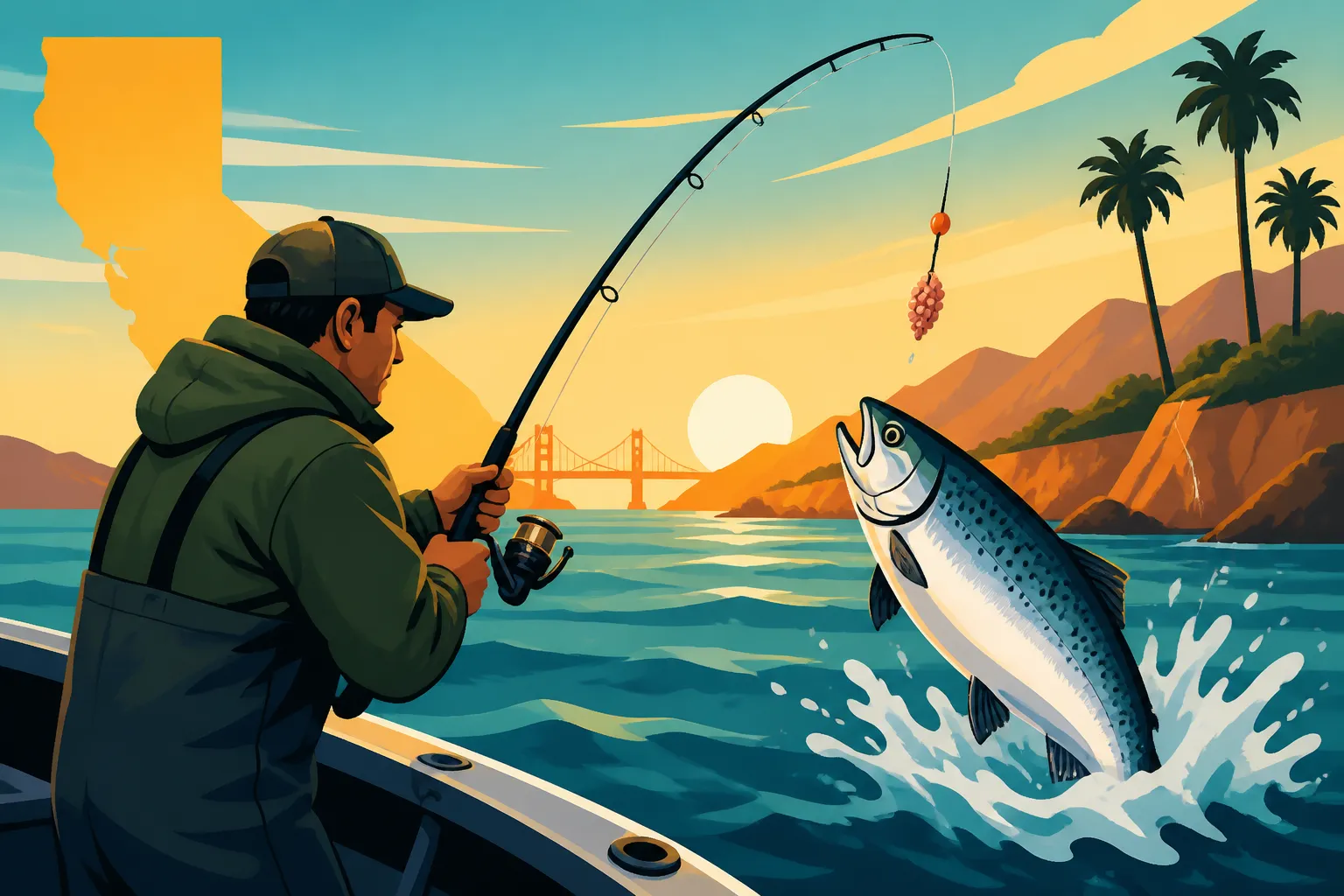
When you feel that solid pull, or the rod tip dips decisively, resist the urge to yank. Instead, reel down quickly to take up any slack and then lift the rod firmly and smoothly, driving the hook home. A sweeping side-set can also be very effective. Once hooked, keep steady pressure on the fish. California salmon, especially Chinook, are powerful fighters and will make strong runs. Use your drag properly, letting the fish run when it wants to, and gaining line when you can. Keep the rod tip up to maintain pressure and avoid slack line, which can lead to a thrown hook. This technique connects you directly to the fish, making every fight memorable.
Best Times and Places for Mooching Salmon in California
California offers fantastic opportunities for salmon, but knowing when and where to mooch can dramatically increase your chances of success. It's all about timing your trips with the fish's migratory patterns and understanding local conditions.
Peak Seasons for Salmon Runs
The salmon fishing season in California is primarily dictated by the migratory patterns of Chinook (King) salmon, which is the species most commonly targeted by moochers. While seasons can vary annually due to conservation efforts and ocean conditions, typically, the peak season for ocean salmon fishing off California runs from late spring through fall. For example, often you'll see seasons open around April or May and extend through October or November. These are the months when adult salmon are migrating along the coast, feeding heavily before heading to freshwater rivers to spawn.
The timing can also vary by region. Up north, like around Eureka and Fort Bragg, the season might start a little earlier or last longer than down in the Central Coast, around Bodega Bay and San Francisco. Always consult the latest California Salmon Season Dates Explained from the California Department of Fish and Wildlife (CDFW) before planning your trip, as closures and specific regulations can change from year to year. During these peak times, the ocean is often teeming with baitfish, attracting the salmon closer to shore and making them more accessible to mooching.
Top California Mooching Locations
While salmon can be found throughout California's coastal waters, certain areas are renowned for their consistent mooching opportunities.
- San Francisco Bay Area: While the bay itself offers some opportunities, the ocean waters just outside the Golden Gate, stretching north and south, are legendary. Areas like the "Duxbury Buoy" off Bolinas or the waters off Point Reyes are prime spots. The nutrient-rich waters here attract massive schools of bait, which in turn draw hungry salmon. Charter boats regularly depart from Fisherman's Wharf, Emeryville, and Sausalito, focusing on these productive grounds.
- Bodega Bay: Further north, Bodega Bay is another salmon hotspot. Anglers often target areas like "The Cordell Bank" or the deeper waters offshore, particularly where upwellings bring cold, nutrient-rich water to the surface. Local knowledge here is invaluable, so checking with bait shops or local guides about the current Best Fishing Spots in California for salmon is a great idea.
- Fort Bragg and Eureka: The North Coast of California is a rugged and incredibly productive area for salmon. Fort Bragg, near the Noyo River, and Eureka, serving the waters off Humboldt Bay, are major hubs. Here, anglers will mooch around prominent geological features, submarine canyons, and along the infamous "Albacore Alley" when conditions are right. These areas often see impressive numbers of Chinook salmon, sometimes larger in average size than those found further south.
These locations benefit from strong ocean currents, ample baitfish populations, and consistent salmon runs, making them ideal for the mooching technique.
Understanding Tides and Currents
Tides and currents play an absolutely critical role in successful mooching. Salmon are highly influenced by water movement, often feeding most actively during specific tidal phases. Generally, a moving tide—either incoming or outgoing—is better than a slack tide. Moving water concentrates baitfish, creating feeding lanes and stirring up the bottom, which can attract salmon.
The ideal current for mooching is often a moderate one, allowing your bait to drift naturally without being swept away too quickly or sitting lifelessly. Stronger currents might require more weight, while very light currents might mean a slower drift and more attention to imparting action to your bait. Pay attention to tide charts and current predictions for your chosen fishing grounds. Many experienced moochers will focus their efforts during the first few hours of an incoming or outgoing tide, especially when it coincides with dawn or dusk. Understanding how to interpret these natural forces is key to positioning your boat and presenting your bait effectively, leading to more productive drifts.
Troubleshooting and Advanced Tips for Mooching
Even with the right gear and basic technique, mooching can present challenges. Knowing how to adapt to changing conditions and fine-tune your approach can significantly improve your catch rates.
Common Mooching Mistakes to Avoid
Mooching might look simple, but subtle errors can cost you fish. Here are some common pitfalls and how to steer clear of them:
- Using Stale Bait: This is probably the biggest mistake. Salmon are incredibly discerning. If your bait is mushy, discolored, or smells off, they'll pass right by. Always use the freshest bait you can find, and keep it on ice to maintain its quality. Brining your bait, especially anchovies, can help them stay firm longer.
- Improper Bait Rigging: If your bait isn't spinning naturally, it looks suspicious, not injured. Take the time to rig your herring or anchovies perfectly. Test it next to the boat before deploying. A bad spin often means bent hooks or incorrect placement. You want a smooth, consistent roll, not a wild tumble.
- Fishing the Wrong Depth: Salmon can be at different depths depending on bait, light, and water temperature. Sticking to one depth without getting bites is inefficient. Use your sonar, talk to other anglers, and be prepared to experiment. If you’re not getting bit, change your depth in 10-20 foot increments until you find the strike zone.
- Not Paying Attention to the Drift: Letting your boat drift too fast or too slow for the current will make your bait look unnatural. As discussed, boat control is paramount. If you're drifting too fast, add a drift sock; too slow, try moving to a different current seam.
- Setting the Hook Too Early or Too Late: The "soft bite" of a salmon can be deceptive. A common mistake is to react instantly to the first tap. Conversely, waiting too long can mean the fish spits the bait. The sweet spot is often waiting for a definitive pull or the rod to load up, then sweeping the rod to set the hook. Practice makes perfect here.
Advanced Rigging and Scenting Techniques
Once you've mastered the basics, there are ways to refine your mooching game even further.
- Custom Mooching Rigs: While tandem hooks are standard, some anglers experiment with different hook sizes or placements based on bait size or salmon behavior. For example, a larger gap between hooks for longer baits, or smaller hooks for very timid fish. You can buy pre-tied leaders, but learning to snell your own allows for customization.
- Scent Applications: Enhancing your bait's natural appeal with scent can be a game-changer, especially in challenging conditions. Popular salmon scents include Pautzke's Krill Juice, Smelly Jelly, or Pro-Cure. Apply a small amount directly to your bait or on a small sponge attached near your hooks. The added scent trail can help draw fish in from a greater distance, particularly in murkier water or low light. Just remember, a little goes a long way – you want to enhance, not overpower, the natural scent.
- Glow-in-the-Dark Components: In deeper water or low-light conditions, adding a small glow bead or a bit of glow tape near your hooks can sometimes attract curious salmon. These subtle additions can make your bait stand out without looking unnatural. You can find many such products on platforms like Amazon.
Safety Considerations on the Water
Fishing, especially offshore, always carries inherent risks. When mooching for salmon, safety should be your top priority.
- Weather and Ocean Conditions: Always check marine forecasts before heading out. Conditions can change rapidly, particularly on the open ocean. Be prepared for wind, swell, and fog. If the forecast looks questionable, it's better to stay home or consider fishing in a more protected area like some of the Best Fishing Spots in the Bay Area.
- Know Your Boat and Its Limits: Understand your vessel's capabilities and don't push them. Ensure all safety equipment is on board and in good working order: life jackets, flares, a VHF radio, first-aid kit, and an anchor.
- Fishing Regulations: California has strict fishing regulations that are enforced. Before every trip, double-check the current California Fishing Regulations Explained for salmon, including bag limits, size limits, and any special closures. You'll also need a valid California Fishing License Guide and often a California Salmon Report Card to legally target salmon. Not having these can lead to hefty fines. Ignorance is not an excuse.
- Communication: Let someone know your float plan, including where you're going, who's with you, and when you expect to return. Carry a fully charged cell phone (though offshore reception is often poor) and a marine VHF radio for emergencies.
By being prepared, understanding the nuances of mooching, and prioritizing safety, you'll be well on your way to enjoying some of the most exciting salmon fishing California has to offer.
Disclaimer
Fishing involves inherent risks, and conditions can change rapidly. Always exercise caution, wear appropriate safety gear, and adhere to all local, state, and federal fishing regulations. This guide is for informational purposes only and does not guarantee fishing success or personal safety.