Bonito in California: Where and How to Catch
You know that feeling when you're out on the water, whether it's from a pier, a private boat, or a party boat, and you're just looking for some fast, exciting action? Sometimes, the big game fish are playing hard to get, leaving you feeling a little deflated. But that's where bonito come in! These speedy, hard-fighting smaller pelagics can turn a slow day into an absolute blast, providing incredible sport and even decent table fare. This comprehensive guide is going to walk you through everything you need to know about targeting Bonito in California, from understanding their habits to mastering the techniques that put them on your line, ensuring you're ready for some exhilarating angling.
Understanding California Bonito
Bonito are often misunderstood or overlooked, but they're truly a fantastic sport fish for anglers of all skill levels, especially here in the Golden State. They're part of the mackerel family, and they bring all the speed and power you'd expect from their lineage, just in a more manageable package.
What is a Bonito?
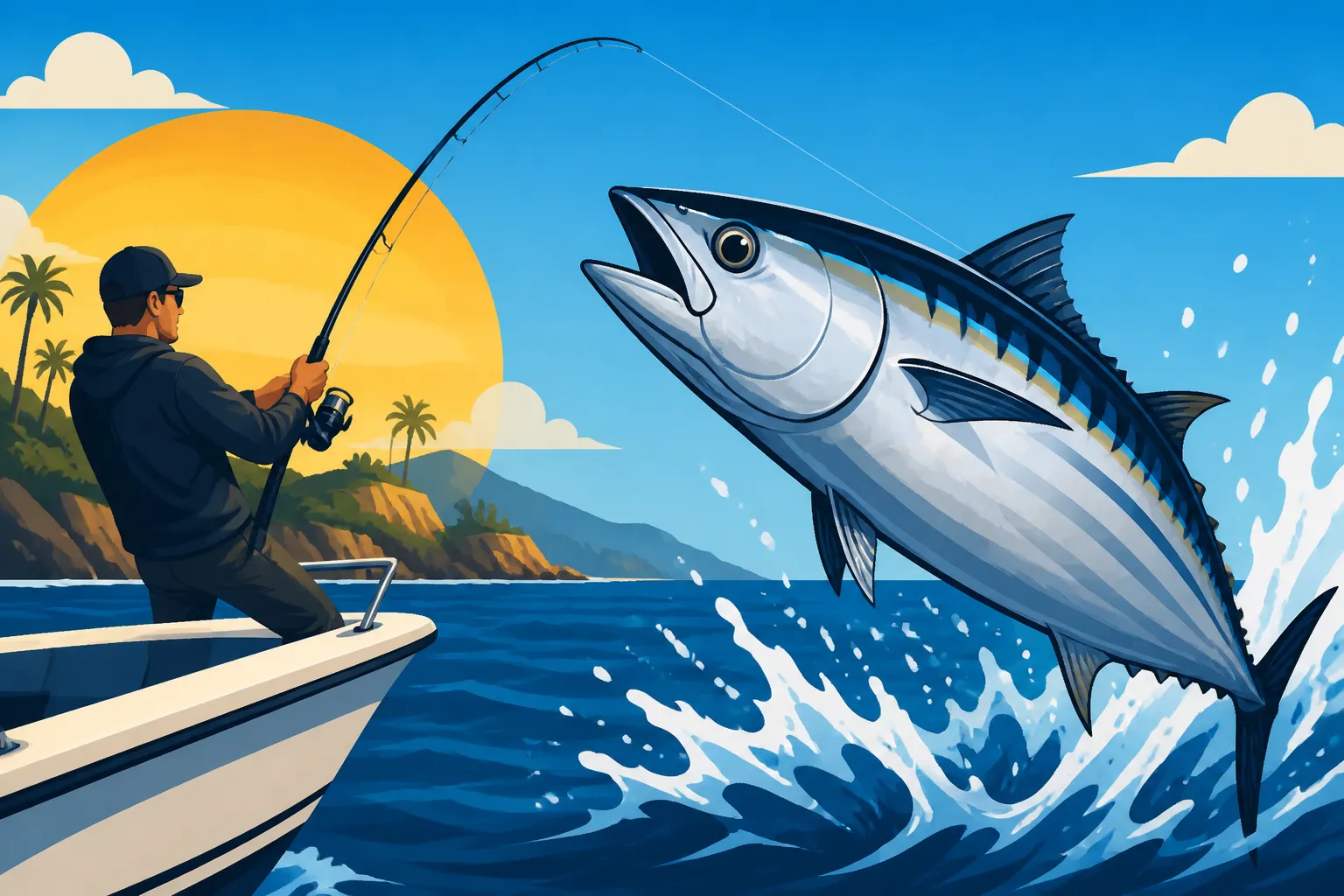
When we talk about "bonito" in California, we're primarily referring to the Pacific Bonito (scientific name Sarda chiliensis). These aren't the same as the Skipjack tuna or other species that might be called bonito elsewhere in the world, though they share that torpedo-shaped, fast-swimming characteristic. A Pacific Bonito is sleek, silver-sided, with distinctive dark, oblique stripes running along its back, fading to white on its belly. They have a pointed head and a deeply forked tail, built for speed.
Typically, Pacific Bonito caught in California range from about 2 to 8 pounds, though bigger ones in the 10-15 pound class aren't unheard of, especially offshore. What they lack in sheer size compared to, say, a yellowtail, they more than make up for in fight. They strike hard, make blistering runs, and fight all the way to the boat, often doing acrobatic jumps. Their firm, red meat is also quite good to eat, especially when fresh and properly cared for. Many anglers enjoy them grilled, smoked, or used as sashimi.
Where to Find Bonito in California
Bonito are a highly migratory species, much like their tuna cousins, and their presence in California waters is largely dictated by water temperature and the availability of baitfish. They absolutely love warmer water, so you'll primarily find them along the Southern California coast, from San Diego up through Los Angeles and Ventura counties. They can also show up further north during exceptionally warm water years, but their consistent strongholds are usually south.
You can encounter bonito in a variety of environments. They're famous for patrolling kelp beds, boiling on bait schools offshore, and even making their way into bays and harbors in pursuit of anchovies, sardines, and squid. Piers and jetties are often fantastic spots, particularly those with access to deeper water or strong currents, like the San Clemente Pier or Santa Monica Pier. They're often found alongside other pelagic species like barracuda and even smaller yellowtail, all feasting on the same bait.
Essential Gear for California Bonito Fishing
Having the right tackle can make all the difference between a frustrating day of missed bites and broken lines, and a triumphant day filled with exciting catches. Bonito, despite their size, are powerful fish, and they require gear that can stand up to their fast runs and aggressive head shakes.
Rods, Reels, and Line
For bonito, you'll want a setup that offers a good balance of casting distance and fighting power, but also keeps things sporting. You don't need heavy offshore gear, but ultralight trout tackle probably won't cut it.
A good choice for a rod would be a medium to medium-light action spinning or conventional rod, typically in the 7 to 8-foot range. This length gives you good casting distance for reaching boiling schools and enough leverage to control a fighting fish. A rod with a fast tip is ideal for detecting subtle bites and setting the hook quickly. For reels, a 3000 to 5000 size spinning reel or a small conventional reel (like a Penn Fathom 15 or similar) spooled with 15-20 pound braided line is perfect. Braided line offers superior casting distance, sensitivity, and strength-to-diameter ratio. However, because bonito have excellent eyesight and can be line shy, it's crucial to connect your braid to a fluorocarbon leader of about 15-20 pound test. A 3-6 foot leader tied with an FG knot or a strong double-uni knot will give you that stealth and abrasion resistance needed for their sharp mouths. If you prefer mono, 10-15 pound monofilament straight through can also work, especially from piers where abrasion resistance is key. You can find a fantastic selection of rods, reels, and lines on Amazon, making it easy to put together the perfect bonito setup.
Baits and Lures for Bonito
Bonito are opportunistic feeders and will hit a wide variety of offerings, but some are definitely more effective than others. Matching the hatch – meaning presenting something that resembles what they're actually eating – is always a good strategy.
Live Bait: If you have access to live bait, anchovies and sardines are absolute gold for bonito. A lively anchovy fished on a light line with a small hook can be irresistible. You can fish them with a small split shot to get them down a bit, or nose-hook them and let them swim freely, often called "fly-lining." Sometimes, just a simple chum line of chopped bait is enough to bring a whole school of bonito right to your boat or pier. This is a common tactic on party boats and can lead to some incredible action. To learn more about this approach, check out our guide on California Bait Fishing Tips and Techniques.
Artificial Lures: This is where the real fun often begins. Bonito are extremely aggressive towards fast-moving lures.
- Jigs: Small metal jigs are king for bonito. Popular options include the Kastmaster, Megabait, and various iron jigs in sizes ranging from 1/2 oz to 1.5 oz. Colors like chrome, blue/white, and green/yellow are perennial favorites. The key is a fast retrieve. Cast it out, let it sink a bit (or not at all if they're busting on the surface), and reel it back as fast as you can. This mimics a fleeing baitfish and triggers those aggressive strikes. If you want to dive deeper into this, our article on California Jigging Tips and Techniques has more details.
- Swimbaits: Small paddle-tail swimbaits rigged on a light jig head can also be very effective, especially when bonito are feeding on smaller baitfish or are a bit more finicky. Colors like sardine, anchovy, and even bright chartreuse can work.
- Feather Jigs/Trolling Lures: If you're trolling, small cedar plugs or feather jigs in bright colors like pink, green, or blue are excellent choices. Trolled at moderate speeds, they imitate a school of small baitfish and can cover a lot of water to find scattered schools.
Terminal Tackle Essentials
Don't overlook the small details in your terminal tackle; they can make or break your trip. You'll want to keep things light but strong.
- Hooks: For live bait, use small, sharp, strong hooks. Sizes 4 to 1/0 circle hooks or J-hooks are typically sufficient. If you're using jigs, ensure they come with good quality treble hooks or replace them with strong single hooks to prevent straighten-outs during a fight.
- Swivels: Small, high-quality ball-bearing swivels are essential, especially when fishing with lures that twist your line, like Kastmasters or when trolling. They prevent line twist, which can lead to frustrating tangles and weakened line. Use a swivel to connect your main line to your leader.
- Split Rings: If you're replacing hooks on jigs, make sure you have a good selection of strong split rings and a pair of split ring pliers. Bonito hit hard, and weak split rings are an easy point of failure. You can find quality terminal tackle kits on Amazon that include a variety of these essential items.
Effective Techniques for Catching Bonito in California
Bonito are a blast to catch because they’re aggressive, fast, and often found in schools, meaning you can experience wide-open action. But you need to know how to present your offerings to entice these speedy predators.
Casting and Retrieving
This is probably the most popular and often most effective method for targeting bonito, especially from shore, piers, or when you spot active schools from a boat. The key is speed and mimicking a fleeing baitfish.
When you see signs of bonito—birds diving, baitfish scattering on the surface, or even just general commotion—cast your metal jig or swimbait directly into or past the activity. Let the lure sink for a few seconds (or immediately begin retrieving if they’re busting on the surface), and then reel it back as fast as you possibly can. We’re talking a burn retrieve here. This speed is what triggers their predatory instinct. Bonito often hit on the retrieve, but they’ll also sometimes strike on the initial fall, so stay alert. Vary your retrieve a bit if the fast retrieve isn’t working; sometimes a stop-and-go or a quick twitch can induce a strike. From a pier, casting out and letting your jig sweep with the current before a fast retrieve can also be very effective, mimicking a wounded baitfish caught in the flow. Our guide on Best Fishing Piers in California highlights some prime locations where this technique shines.
Trolling for Bonito
If you're out on a boat and can't locate active schools or they're not busting on the surface, trolling is an excellent way to cover ground and find bonito. This method is particularly effective for scattering schools that might be spread out.
You'll typically want to troll small, bright lures like feather jigs, Rapala-style swimming plugs, or small cedar plugs. These lures, when trolled at speeds between 5 to 8 knots, imitate baitfish. Run several lines at different depths and distances behind the boat using outriggers or downriggers if you have them, or simply flat-line them. The idea is to create a spread that covers various zones and presents multiple targets. When a bonito hits, mark your spot on the GPS, slow down, and then you can often switch to casting jigs or live bait to target the rest of the school that might be in the area. Trolling also allows you to cover vast stretches of the coast where bonito might be transitioning or hunting for food. For more advanced boat techniques, consider looking into California Offshore Fishing Techniques.
Live Baiting Strategies
While artificial lures are a blast, sometimes live bait is just unbeatable, especially when the bonito are finicky or when you're trying to pick off the larger individuals.
The go-to live baits for bonito are anchovies and small sardines. If you're on a party boat or have a bait tank, you're in business. The simplest method is to "fly-line" a single, lively bait. Hook the anchovy gently through the nose or just ahead of the dorsal fin, cast it out, and let it swim freely with no weight or just a tiny split shot to help it sink slowly. This natural presentation is often irresistible. Chumming with handfuls of chopped bait can also bring the bonito right to your boat, creating a feeding frenzy that makes live baiting even more effective. Keep your drag set light enough to prevent the line from snapping on the initial powerful run, but firm enough to set the hook. This technique requires patience and a gentle touch, but the rewards can be incredible. Many anglers on a California Fishing License Guide party boat will rely heavily on these tactics.
California Bonito Fishing Hotspots and Seasons
Knowing when and where to fish for bonito is just as important as knowing how. Their movements are highly dependent on environmental factors, particularly water temperature.
Best Regions and Access Points
As we touched on earlier, Southern California is definitely the epicenter for bonito fishing in the state. The warmer waters of the Baja current influence the coastline from San Diego north to Santa Barbara, providing ideal conditions for these pelagic speedsters.
San Diego County: This is arguably the top bonito destination. Piers like the Ocean Beach Pier, Imperial Beach Pier, and Shelter Island Pier often produce, especially during warm spells. Offshore, the kelp beds and various banks just outside the harbor mouths are prime targets. Party boats out of Point Loma Sportfishing, H&M Landing, and Fisherman's Landing frequently target bonito as part of their daily coastal trips. The proximity to deep, productive waters makes this region a consistent hotspot.
Orange County: Moving north, piers like Dana Point Harbor Pier, Newport Pier, and Huntington Beach Pier can also offer excellent bonito opportunities. Again, look for signs of baitfish or active birds. Charter boats running out of harbors like Dana Point and Newport Beach will often find bonito working bait schools a few miles offshore.
Los Angeles and Ventura Counties: Piers such as Redondo Beach Pier, Santa Monica Pier, and Malibu Pier are popular shore-based options. For boat anglers, the waters around the Palos Verdes Peninsula and the Channel Islands can hold significant schools of bonito. Even inside large harbors like Marina del Rey or Long Beach, bonito will sometimes make an appearance when bait is abundant, providing unexpected urban fishing excitement.
Peak Fishing Seasons
Bonito are a warm-water species, so their presence is strongly tied to the summer and fall months in California.
Summer (June-August): As ocean temperatures rise, bonito begin to move into shallower, more accessible waters. This is when pier fishing starts to heat up, and coastal boats find them more consistently. July and August are generally excellent months, offering fast action when conditions are right. The schools tend to be more numerous and aggressive, making it a great time for both lure and live bait fishing. Our California Fishing Seasons: Month-by-Month Guide can give you more insights into this timing.
Fall (September-November): Often, the fall months can be even better than summer. The water is still warm, and baitfish are usually at their peak abundance. Bonito will actively feed, putting on weight before the cooler winter months. This is often when you'll find larger bonito mixed in with the schools, offering a true test of your light tackle. As late fall approaches and water temperatures begin to drop, they will gradually move offshore or south, but September and October can be phenomenal. During these times, you might even encounter them alongside tuna and dorado further offshore, especially if you venture out on a Best Fishing Charters in California.
California Regulations for Bonito
Fishing regulations in California are put in place to ensure the sustainability of our fisheries, and that includes bonito. It's super important to stay informed about the current rules, as they can change annually. Ignorance of the law is never an excuse, and you could face hefty fines or even lose your fishing privileges if you're caught breaking the rules.
Bag and Size Limits
For Pacific Bonito, the regulations are generally quite consistent, but it's always best to check the latest California Department of Fish and Wildlife (CDFW) ocean fishing regulations booklet or their website before you head out. These guidelines help manage the species and ensure healthy populations for future generations of anglers.
Currently, the daily bag limit for Pacific Bonito in California is usually 10 fish per person. There isn't typically a minimum size limit, but again, always verify this. This generous bag limit reflects the robust population of bonito and their value as a sport and food fish. While it's tempting to keep a limit when the bite is hot, practicing selective harvesting—keeping only what you'll eat and releasing the rest—is always a good approach for responsible angling. Remember that these limits apply to everyone, regardless of age, and are designed to prevent overfishing.
Important Considerations
Beyond just bag and size limits, there are a few other critical things you need to keep in mind when targeting bonito in California.
Fishing License: First and foremost, if you're 16 years or older, you absolutely need a valid California Fishing License Guide to fish for bonito, whether from a boat or shore. The only major exceptions are designated free fishing days or when fishing from a public pier with direct access to the ocean (like many of those famous Southern California piers). However, even when pier fishing without a license, all other regulations, like bag and size limits, still apply. If you plan to fish from a private boat, a party boat, or even rocks along the coast, that license is non-negotiable. Don't forget, if you're fishing in ocean waters south of Point Conception, you'll also likely need to purchase an California Ocean Enhancement Stamp, which funds projects to improve ocean fishing.
Report Cards: Unlike some other species like salmon or sturgeon, bonito do not typically require a separate report card in California. This simplifies things a bit, but it doesn't diminish the importance of understanding the broader California Fishing Regulations Explained. Keep your license readily available, either as a physical copy or on your phone via the CDFW app, as wardens do check.
Marine Protected Areas (MPAs): California has a network of Marine Protected Areas Explained along its coast. These are specific zones where fishing activity is either completely prohibited or heavily restricted. Always know if you're fishing near an MPA and understand its specific rules. Fishing unknowingly in a no-take zone can lead to severe penalties. Many fishing apps and charts clearly mark these areas, so make sure you check them before dropping a line. Being a responsible angler means understanding these details and doing your part to conserve our precious marine resources.
Bonito Fishing Quick Reference
To help you remember the key takeaways for your next bonito adventure, here’s a quick overview:
| Category | Recommendation | Notes |
|---|---|---|
| Target Species | Pacific Bonito (Sarda chiliensis) | Known for speed, fight, and distinct oblique stripes. |
| Preferred Habitat | Warm coastal waters, kelp beds, offshore banks, harbors, near piers | Strongest presence in Southern California. |
| Peak Season | Summer (June-August) and Fall (September-November) | Water temperature is key. |
| Rod & Reel | Medium to medium-light action spinning/conventional rod (7-8ft) | 3000-5000 size spinning reel; small conventional. |
| Line & Leader | 15-20 lb braided main line, 15-20 lb fluorocarbon leader (3-6 ft) | Braided for casting/sensitivity, fluoro for stealth/abrasion. |
| Best Lures | Metal jigs (Kastmaster, iron jigs), small swimbaits, feather jigs | Chrome, blue/white, green/yellow are top colors. |
| Best Live Bait | Anchovies, small sardines | Fly-lining or chumming tactics work well. |
| Primary Technique | Fast retrieve with jigs/lures, trolling, fly-lining live bait | Mimic fleeing baitfish. |
| Daily Bag Limit | 10 fish per person | Always check current CDFW regulations. |
| Size Limit | Generally no minimum size limit | Confirm with latest CDFW regulations. |
| License Required? | Yes, for ages 16+ (except public piers) | An California Saltwater Fishing Regulations license is mandatory. |
| Report Card? | No, typically not required |
Disclaimer
Fishing conditions and regulations in California can change frequently. While this guide provides comprehensive and up-to-date information at the time of writing, it is absolutely essential for every angler to consult the latest California Department of Fish and Wildlife (CDFW) regulations before any fishing trip. Always check for emergency closures, season changes, and specific bag and size limits for your target species and chosen fishing location. Stay safe, be responsible, and tight lines!