California Rockfish Depth Restrictions
Trying to figure out California's rockfish depth restrictions can feel like navigating a maze blindfolded, especially when regulations seem to shift more often than the tides. It's truly frustrating to just want to enjoy a day on the water and bring home some delicious rockfish, only to be constantly second-guessing if you're even allowed to drop your line where you want. This guide is here to break down those complicated rules, help you understand why they exist, and equip you with the knowledge to fish for rockfish legally and confidently, no matter where you are in the Golden State.
Why Rockfish Depth Restrictions Exist
For many anglers, the idea of depth restrictions might seem like an unnecessary hurdle, adding another layer of complexity to an already intricate sport. However, these rules aren't just arbitrary lines drawn on a map; they are born out of a critical need to protect rockfish populations and ensure the long-term health of our marine ecosystems. The science behind these regulations points directly to the phenomenon of barotrauma, a serious issue that affects fish brought up from deep water.
Understanding Barotrauma and Its Impact
Barotrauma is a physiological condition that occurs when fish are rapidly brought to the surface from significant depths. Think of it like a diver getting "the bends," but in reverse. As a fish is reeled up, the water pressure around it decreases dramatically, causing the gases in its swim bladder—which is used for buoyancy—to expand. This rapid expansion can cause a whole host of internal injuries: the swim bladder can rupture, the stomach can invert and protrude from the mouth, eyes can bulge, and other internal organs can be severely damaged.
The tragic reality is that fish suffering from severe barotrauma often can't re-submerge on their own, even if they're still alive when released. They float helplessly on the surface, making them easy prey for seabirds and marine mammals, or they simply die from their injuries. This is a huge concern for conservation, especially for species that might be caught incidentally or that anglers want to release because they don't meet size or bag limits. The California Department of Fish and Wildlife (CDFW) implements these depth restrictions to minimize the chances of barotrauma, particularly for sensitive species or during times when populations are more vulnerable. It’s a way to ensure that even if you're practicing catch and release, those fish have a genuine fighting chance to survive.
Conservation Efforts and Sustainable Fishing
Beyond individual fish welfare, depth restrictions are a cornerstone of broader conservation strategies for groundfish, which include the many species of rockfish, lingcod, and sole that call California's deep waters home. Many of these species are long-lived and slow to reproduce, making them particularly susceptible to overfishing. Over the years, certain rockfish populations experienced significant declines, prompting stricter regulations to allow them to recover.
These restrictions are part of a comprehensive management plan developed by agencies like the Pacific Fishery Management Council (PFMC) and enforced by the CDFW. By limiting fishing to shallower waters, especially during critical periods, regulators aim to reduce overall fishing pressure on deeper-dwelling, often more vulnerable, species. This strategy helps protect older, larger breeding fish that reside in deeper habitats, allowing them to continue reproducing and rebuilding their numbers. It’s about striking a delicate balance: allowing recreational anglers to enjoy the sport while ensuring that future generations can also experience the thrill of catching a quality rockfish. The ongoing adjustments to depth limits, season dates, and even bag limits are all pieces of this complex puzzle, reflecting the best available scientific data on fish stocks and ecosystem health. Understanding the "why" behind these rules makes them a lot less arbitrary and a lot more about ensuring the health and future of our beloved fisheries.
Understanding the Different Management Areas
California's coastline is incredibly diverse, stretching over 800 miles with varying oceanographic conditions, habitats, and fish populations. To effectively manage rockfish and other groundfish species, the state isn't treated as a single, uniform fishing zone. Instead, the California Department of Fish and Wildlife (CDFW) divides the coast into specific management areas, each with its own set of rules, including distinct rockfish depth restrictions. This localized approach allows for more nuanced and responsive management, addressing the unique ecological characteristics and fishing pressures of each region. It also means that what's legal in San Diego might be completely off-limits just a few hours north, which can be a real head-scratcher for anglers traveling up or down the coast.
Northern Management Area
The Northern Management Area typically covers the coast from the Oregon border south to the iconic 40°10' N latitude near Cape Mendocino. This region is characterized by rugged coastlines, strong currents, and often turbulent seas. The marine environment here supports different aggregations of rockfish species compared to the southern parts of the state, and the fishing communities have distinct traditions and target species.
For rockfish, this area is known for species like vermilion rockfish, canary rockfish, and various schooling rockfish, alongside prized lingcod. The depth restrictions in the Northern Management Area are carefully set to protect these populations, especially given their susceptibility to barotrauma from deeper catches. Anglers in places like Eureka or Crescent City need to pay close attention to the specific seasonal allowances. For example, some years might see more liberal depth allowances during the summer months, while winter might impose stricter, shallower limits or even closures for specific groundfish, pushing fishing efforts closer to shore. Checking the latest official CDFW regulations is paramount before heading out, as these rules are subject to change annually based on stock assessments and conservation needs.
Central Management Area
Moving south, the Central Management Area spans from 40°10' N latitude down to 34°27' N latitude, a line that runs roughly near Point Conception, just north of Santa Barbara. This vast stretch includes major fishing hubs like Bodega Bay, San Francisco, Monterey Bay, and Morro Bay. The Central Coast is particularly renowned for its diverse rockfish populations, including a healthy mix of shallow and deepwater species, and it's a hotspot for lingcod and other groundfish.
The regulations in the Central Management Area are often among the most complex due to the sheer volume of fishing activity and the sensitivity of certain species. Depth restrictions here are frequently adjusted, sometimes even mid-season, to account for changing stock conditions or to avoid impacting specific, recovering species. For instance, the exact coordinates of a specific "Rockfish Conservation Area" (RCA) or "Groundfish Conservation Area" (GCA) might dictate precise depth boundaries, sometimes measured in fathoms or feet, that you absolutely cannot cross while targeting or possessing groundfish. This can be especially tricky around areas like the Monterey Submarine Canyon, where depths drop off dramatically close to shore. Anglers often rely on precise GPS coordinates or sophisticated fish finders to ensure they stay within legal depths. Getting familiar with the annual California Rockfish Regulations and Limits is a yearly pilgrimage for serious anglers in this region.
Southern Management Area
The Southern Management Area extends from 34°27' N latitude, south to the U.S.-Mexico border, encompassing major fishing destinations like Santa Barbara, Los Angeles, Orange County, and San Diego. This region boasts a different marine environment, often warmer waters, and a unique mix of rockfish species, including calico bass (often managed similarly to rockfish in some contexts, though technically a different family), sheephead, and a variety of rockfish that thrive in kelp forests and rocky reefs.
While still critical for rockfish, the Southern Management Area also sees significant fishing pressure for pelagic species like tuna and yellowtail. The depth restrictions here are designed to protect rockfish habitats, particularly those associated with the extensive kelp beds and offshore islands like the Channel Islands. The regulations might differentiate between nearshore and offshore groundfish, with varying depth limits that dictate how far out and how deep anglers can drop lines. Often, the season for groundfish might be open year-round in certain depths, but with specific prohibitions on targeting them deeper than a set number of fathoms. Keeping an eye on the California Saltwater Fishing Regulations is crucial for southern California anglers, as these depths can change to protect species that might be particularly vulnerable to barotrauma due to warmer surface waters or other environmental factors.
San Francisco Bay Management Area
While technically part of the larger Central Management Area, the San Francisco Bay itself often has its own highly specific groundfish regulations that differ from the open ocean. Fishing within the bay is a unique experience, offering opportunities for rockfish (primarily small ones), lingcod, and various flatfish, often in shallower, estuarine environments.
The depth restrictions within San Francisco Bay are typically less about deep-water barotrauma and more about managing localized populations and avoiding interactions with sensitive habitats or other fisheries. For example, certain areas might be closed to rockfish fishing entirely, or specific gear restrictions might apply. Anglers targeting species like halibut or striped bass might incidentally catch a rockfish, and knowing the rules for possession, even within the bay, is vital. Given the unique ecosystem of the bay, checking the most recent CDFW updates is always a good practice, as these rules can be very precise about specific piers, channels, or bridge areas. This level of detail underscores how seriously California takes its marine resource management, ensuring that even within urban fishing environments, conservation remains a top priority.
Current Rockfish Depth Restrictions by Region
Alright, let's get down to the nitty-gritty: the actual depth limits you'll encounter when targeting rockfish in California. This is where it can get a bit confusing, as these regulations are dynamic and can change annually, or even seasonally, based on scientific assessments and management goals. Always remember, the information here is a general guide to help you understand the landscape; you must consult the official California Department of Fish and Wildlife (CDFW) regulations booklet or their website for the most up-to-date and legally binding rules before every trip. It's truly a must-do, as enforcement officers certainly won't accept "I read it online" as an excuse for a violation.
Northern and Mendocino Management Areas
These northern regions (from the Oregon border down to 40°10' N latitude, and then down to 38°57.50' N latitude near Point Arena) often have some of the stricter depth limits, particularly during certain times of the year, to protect rebuilding rockfish stocks.
During the open seasons, which typically run in phases throughout the spring, summer, and fall, the depth restriction for the general groundfish complex in these areas has often been set to 50 fathoms (300 feet). However, this can fluctuate. For instance, in some years, early spring might see a shallower limit, like 40 fathoms, before expanding to 50 fathoms in summer. Conversely, some years have seen specific Rockfish Conservation Areas (RCAs) that extend to 75 or even 100 fathoms for certain species, but these are exceptions and usually come with strict stipulations. Anglers often target black rockfish, China rockfish, and various schooling rockfish in these waters, alongside lingcod, which fall under the same groundfish complex rules. The seasons themselves can be complex, often with open periods followed by closures, so understanding the current California Fishing Seasons: Month-by-Month Guide is just as important as the depth. Always have a reliable depth finder on your boat, calibrated to accurately read in fathoms or feet, and make sure you're consistently monitoring it. Getting caught even a few feet outside the legal depth can result in significant fines and penalties.
San Francisco and Central Management Areas
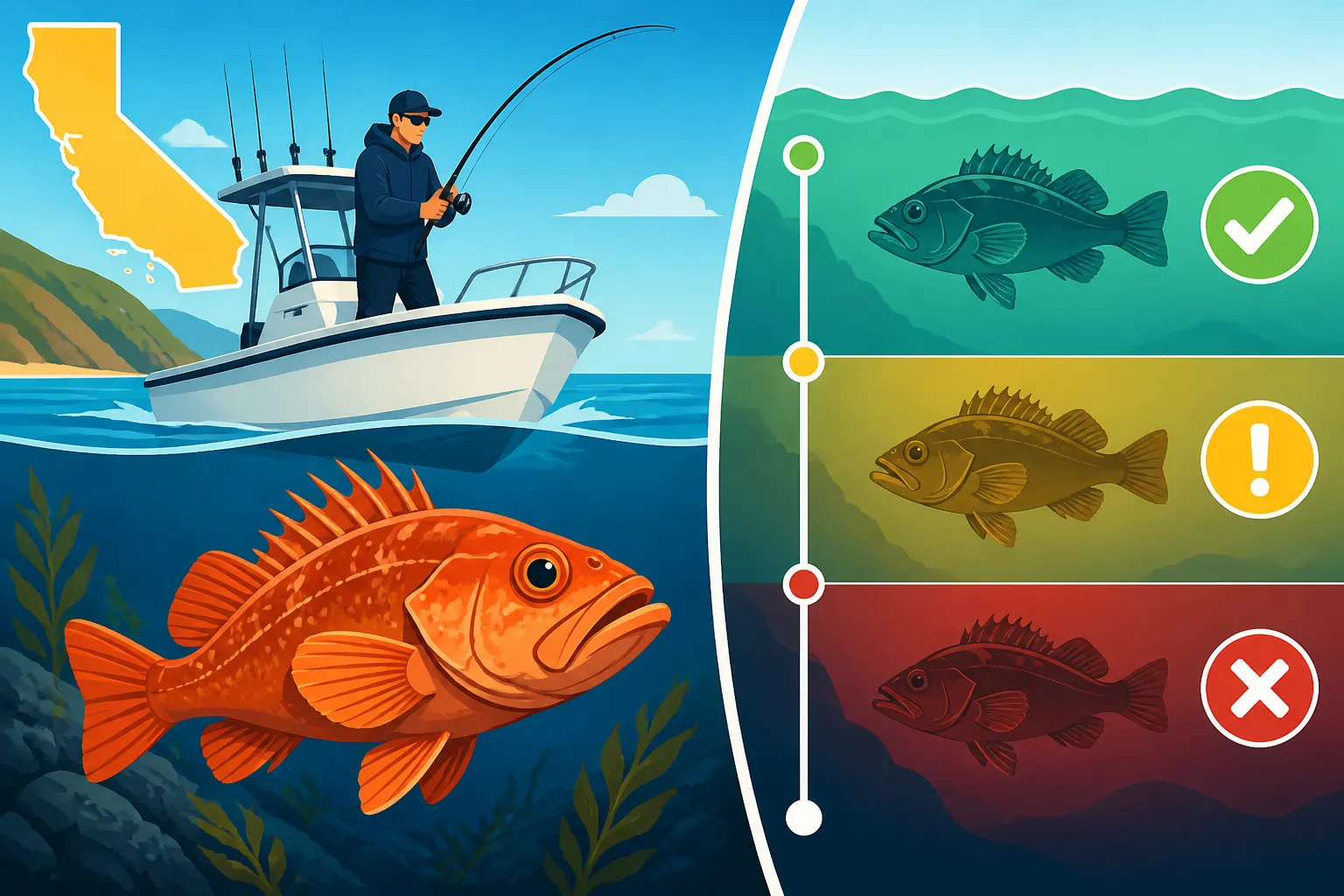
This extensive region (from 38°57.50' N latitude down to 34°27' N latitude near Point Conception) is perhaps where depth restrictions get the most attention due to the high volume of anglers and charter operations. The most common and widely implemented depth restriction here for the general groundfish complex, including rockfish and lingcod, has often been 50 fathoms (300 feet). This 50-fathom line is a major demarcation for many anglers and is frequently the go-to depth limit during open seasons.
However, there's a crucial caveat: in certain periods, especially outside the prime summer months, or in specific conservation zones, the depth limit can be significantly shallower. For example, some years have seen limits as shallow as 20 fathoms (120 feet) or even 30 fathoms (180 feet) during specific closure periods or in an attempt to protect deep-dwelling species. Furthermore, specific "descending devices" have become mandatory in some areas when fishing for certain species from depths greater than 50 fathoms, emphasizing the CDFW's commitment to reducing barotrauma mortality, even when fishing deeper is allowed. When fishing out of ports like Half Moon Bay or Monterey, where the continental shelf drops off steeply, staying compliant requires constant vigilance. Many charter captains will stick to the 50-fathom rule stringently to ensure their clients don't accidentally stray into prohibited depths.
Southern Management Area
Down in Southern California (from 34°27' N latitude south to the U.S.-Mexico border), the rockfish depth restrictions are often characterized by a general open season at shallower depths, with deeper limits sometimes available depending on the species complex and year. The prevailing rule for the recreational groundfish complex, which includes your various rockfish species, has frequently been a year-round open season in waters generally shallower than 60 fathoms (360 feet), with some specific seasonal or area-based exceptions.
However, it's not always a flat 60-fathom rule. In some seasons, especially during winter months, specific depths for deeper-dwelling species might be completely off-limits, or the general limit might be reduced to, say, 50 fathoms for all groundfish. This is often done to protect larger, older breeding rockfish that tend to congregate in deeper waters during colder months. Anglers targeting rockfish around the Channel Islands or off San Diego need to be particularly mindful of these nuances. While much of the attention in Southern California is on pelagic species, the rockfish fishery remains popular, and adherence to depth limits is strictly enforced. Charter boats like those out of Dana Point or San Diego's H&M Landing are experts at navigating these changing rules, but individual anglers are still responsible for their own compliance. For the most precise and current numbers, you have to read the official California Fishing Regulations Explained document for the current year.
Here's a simplified table summarizing the typical (but variable!) depth restrictions for general rockfish, which can give you a starting point. Always confirm current regulations with CDFW before fishing.
| Management Area | Typical General Depth Restriction (Fathoms) | Typical General Depth Restriction (Feet) | Common Seasonal Adjustments/Notes |
|---|---|---|---|
| Northern (Oregon-40°10' N) | 50 fathoms | 300 feet | Can be shallower (e.g., 40 fathoms) in early season/winter; check specific dates. |
| Mendocino (40°10' N-38°57.50' N) | 50 fathoms | 300 feet | Similar to Northern; seasonal nuances are common. |
| San Francisco (38°57.50' N-34°27' N) | 50 fathoms | 300 feet | Can be shallower (e.g., 20 or 30 fathoms) during specific closures/conservation periods. Descending devices may be mandatory. |
| Southern (34°27' N-Mexico) | 60 fathoms | 360 feet | Often year-round at this depth, but specific winter/conservation closures may reduce the limit. |
Disclaimer: This table is for general informational purposes only and is not a substitute for official CDFW regulations.
Navigating the Annual Regulation Changes
It's no secret that fishing regulations in California, especially for groundfish like rockfish, seem to change with the wind. One year you're dropping lines at 300 feet, the next it's 120 feet for half the year, then back to 300. This constant flux isn't just to keep us on our toes; it's a necessary evil driven by scientific data, stock assessments, and the dynamic nature of marine ecosystems. But boy, can it be a headache for us anglers trying to stay compliant and enjoy our time on the water!
How Regulations Are Determined and Updated
The process behind these changes is actually quite thorough, even if it feels a bit opaque from our perspective on the water. It starts with federal and state agencies, primarily the Pacific Fishery Management Council (PFMC) at the federal level, and the California Department of Fish and Wildlife (CDFW) at the state level. They work in tandem, guided by scientists who conduct rigorous stock assessments. These assessments involve analyzing catch data, surveying fish populations, and monitoring environmental factors to determine the health of various rockfish species. Are they overfished? Are they rebuilding? What's the reproductive success looking like?
Based on these scientific findings, the PFMC develops management recommendations and harvest specifications for the entire West Coast groundfish fishery. These recommendations then trickle down to the CDFW, which interprets them and translates them into specific, actionable regulations for California waters. This often involves public meetings and opportunities for input from stakeholders, including recreational anglers and commercial fishermen, although sometimes it feels like our voices are lost in the shuffle. The goal is always to find a balance: allowing for sustainable fishing opportunities while preventing overexploitation and ensuring the long-term viability of the fishery. Factors like the success of a previous year's regulations, unexpected environmental changes (like El Niño or La Niña), and even new scientific discoveries can all trigger adjustments to depth limits, season dates, and bag limits. This intricate dance means that the rulebook is rarely static, making yearly vigilance essential.
Essential Resources for Staying Informed
Given the constantly shifting landscape of regulations, relying on old knowledge or hearsay is a recipe for trouble. You need to be proactive and consult official, up-to-the-minute sources.
The absolute gold standard for California fishing regulations is the California Department of Fish and Wildlife (CDFW) website. Specifically, look for their "Ocean Sport Fishing Regulations" or "Groundfish Regulations" sections. They typically publish a full regulation booklet each year, usually effective from March 1st. Many anglers print out key pages or download the PDF to their phones before heading out. The CDFW also often issues "News Releases" or "In-Season Actions" throughout the year to announce emergency closures or modifications, so subscribing to their email list or checking their news feed regularly is a smart move. You can find detailed information on California Fishing Regulations Explained there.
Another fantastic resource is the PFMC website. While more technical, it provides the overarching federal framework for West Coast groundfish management, explaining the rationale behind many of the state-level rules. Understanding the federal context can sometimes help make sense of the state's specific regulations.
Local bait and tackle shops are also invaluable. The folks working there are usually seasoned anglers themselves, deeply embedded in the local fishing scene, and often the first to know about subtle changes or local interpretations of the rules. They can also tell you about current conditions and what's biting.
Finally, consider joining online fishing forums or local fishing clubs. While not official sources, these communities are excellent for discussing regulations, sharing interpretations, and collectively keeping an eye on updates. Just be sure to cross-reference any information you hear with the official CDFW sources!
Staying informed is a bit of a chore, but it's the only way to ensure your fishing trips are both successful and compliant. Ignorance of the law is never an excuse, especially when a CDFW warden pulls up alongside your boat.
Essential Gear and Tactics for Deepwater Rockfishing
When you're chasing rockfish in those deeper, legally permissible zones, your gear and techniques need to be dialed in. It’s not just about getting a line down; it’s about doing it efficiently, effectively, and responsibly, especially with those depth restrictions looming. Nobody wants to spend their whole day snagging the bottom or fighting tangled lines when they could be reeling in some tasty vermilion or bocaccio.
Specialized Rods, Reels, and Line
Deepwater rockfishing puts unique demands on your tackle, so you'll want to move beyond your standard inshore setup.
Rods: Look for a medium-heavy to heavy action rod, typically 6 to 7.5 feet long. It needs a strong backbone to handle heavy sinkers and pull stout fish up from the depths, but also a sensitive tip to detect those subtle rockfish bites. Often, anglers will opt for composite rods that offer a good blend of power and sensitivity. Brands like Ugly Stik or Penn offer durable, affordable options that can take a beating, which is crucial when you're fishing around rocky structures. A good deepwater rod should feel comfortable and balanced, allowing you to effectively jig your lures or baits without excessive fatigue.
Reels: A robust conventional reel is almost mandatory for deepwater rockfishing. You'll need significant line capacity for 50-60 fathom drops, and more importantly, strong gears and a smooth drag system to crank up fish and heavy weights. A star drag or lever drag reel in the 30-40 size class (like a Penn Fathom or a Daiwa Saltist) is a solid choice. Many seasoned anglers are also turning to electric reels, particularly for very deep drops (think 100+ fathoms, if regulations allow) or if they're fishing all day, to save their arms from the constant cranking. While an investment, an electric reel from brands like Daiwa or Shimano can make deep dropping much more enjoyable, especially for those who might struggle with the physical demands. When considering a reel, make sure it has a sturdy handle and a retrieve ratio that allows for both powerful cranks and faster retrieval when needed.
Line: This is where braided line truly shines for deepwater work. Unlike monofilament, braid has virtually no stretch, which is absolutely critical for feeling bites at 300+ feet down and for setting the hook effectively. It also has a much smaller diameter for its breaking strength, meaning you can pack more heavy line on your reel and it creates less drag in the water, allowing your weights to sink faster and more vertically. A 50-80 lb braided mainline is common. To connect your braid to your rig, you'll want a monofilament or fluorocarbon leader (typically 40-80 lb test, about 6-10 feet long). This leader provides abrasion resistance against rocks and kelp, and a bit of stretch to absorb shocks, which protects your main line. You can find high-quality braided lines and fluorocarbon leaders on Amazon, from brands like PowerPro or Seaguar.
Rigs, Lures, and Baits for Deepwater Success
Getting your offering down to the target depth and making it appealing to rockfish requires specific rigs and presentations.
Rigs: The most common deepwater rockfish rig is a multi-hook "gangion" or "dropper loop" rig. This rig typically features two to three hooks spaced about 12-18 inches apart, with a heavy lead sinker (usually 8-16 oz, sometimes more depending on current and depth) at the very bottom. The hooks are often snelled to short leader lines coming off dropper loops, preventing them from tangling. Some anglers prefer pre-made sabiki-style rigs, though these are typically for smaller baitfish and might not hold up to larger rockfish or lingcod. For robustness, many prefer tying their own dropper loop rigs with heavy monofilament.
Lures: Jigs are incredibly effective for deepwater rockfish. Heavy metal jigs, often referred to as "butterfly" jigs, "knife" jigs, or simple diamond jigs, weighing 4-10 ounces, are popular. Colors like chrome, blue/silver, pink, and glow-in-the-dark are often productive. The key is to get them to the bottom quickly and then jig them with an erratic retrieve—a few quick cranks, a pause, a drop, then repeat. Scampis or heavy leadhead grubs with large plastic tails (e.g., Berkley Gulp! grubs) are also excellent, especially tipped with a piece of bait. When shopping for these on Amazon, look for heavy-duty models that can withstand strong bites.
Baits: While lures are great, fresh bait is often irresistible to rockfish. Strips of squid are a perennial favorite due to their durability and scent. Other effective baits include chunks of mackerel, anchovy, sardine, or even pieces of bonita. Tipping your jigs or dropper loops with a small piece of squid or a scent strip can dramatically increase your hook-up ratio. The smellier, the better in deep, dark waters!
Using Electronics for Precision Fishing
In deepwater rockfishing, your electronics are just as important as your rod and reel.
Fish Finders/Sonars: A high-quality fish finder is non-negotiable. You need one that can accurately read depths and display structure in real-time, even at 300+ feet. Look for units with CHIRP sonar technology, which provides much clearer target separation and bottom detail. This allows you to identify rocky reefs, pinnacles, and ledges where rockfish congregate, and even mark individual fish or schools. Brands like Garmin, Lowrance, or Humminbird offer excellent models. Setting your fish finder to display in fathoms can make it easier to stay within the regulations.
GPS/Chartplotters: A reliable GPS unit integrated with a chartplotter is essential for navigation and precision fishing. You'll use it to mark productive fishing spots (waypoints), track your drifts, and most importantly, stay precisely within the legal depth boundaries. Many chartplotters will also display depth contours on their maps, which is incredibly helpful for visualizing the 50-fathom line or other regulated depths. Before you even leave the dock, you can plot courses that keep you well within the legal fishing grounds, avoiding accidental excursions into prohibited depths. Some advanced units also allow you to create custom depth alarms. Make sure to update your charts regularly.
Descending Devices: This is a crucial piece of gear, especially if you're fishing in areas where specific species or depths might necessitate releasing fish that show signs of barotrauma. A descending device is essentially a weighted clip or cradle that you attach to a fish's jaw or lip, then lower it back down to a depth where it can recompress its swim bladder and swim away. The CDFW encourages their use and in some cases, has even made them mandatory. Having one ready to go is a sign of a responsible angler and helps ensure your released fish have a chance at survival. You can find various models of descending devices, sometimes called "recompression tools," online or at well-stocked tackle stores. Being prepared with one not only aids conservation but can save you from potential legal issues if you're caught releasing fish that don't appear to be able to survive.
Common Mistakes to Avoid and How to Stay Compliant
Fishing for rockfish in California is incredibly rewarding, but it comes with a strict set of rules, particularly concerning depth. Making a mistake can not only lead to fines and penalties but can also harm the very fish populations we're trying to enjoy responsibly. Being aware of common pitfalls and actively working to avoid them is key to a stress-free and successful trip.
Misinterpreting Depth Boundaries and Marine Protected Areas
One of the most frequent errors anglers make is misinterpreting the exact depth boundaries. The regulations often refer to depths in fathoms (1 fathom = 6 feet), but many fish finders default to feet. While converting is simple, a momentary lapse or miscalculation can put you in violation. For example, if the limit is 50 fathoms (300 feet), but your fish finder shows 305 feet, you're technically outside the legal zone. Strong currents can also push your boat or your line into deeper water than you intended, even if you started in a legal depth. Always err on the side of caution, and if in doubt, move to shallower water.
Even more complex is navigating California Marine Protected Areas Explained. These are specific ocean areas designated for conservation, and fishing regulations within them can be extremely strict, often prohibiting the take of any species, including rockfish, regardless of depth. MPAs are not always clearly marked with buoys and often rely solely on GPS coordinates. Anglers need to understand if their chosen fishing spot falls within an MPA and what specific activities are allowed or prohibited there. A good chartplotter with up-to-date MPA boundaries is invaluable. Relying on visual cues alone or guessing can lead to unknowingly fishing in a "no-take" zone, which carries very serious penalties. Always double-check your charts and the CDFW regulations for MPA boundaries before dropping a line.
Inadequate Gear and Reporting Requirements
Using the wrong gear for the job can lead to compliance issues and ethical concerns. For instance, if you're fishing deep water and don't have adequate weight, your line will scope out significantly, meaning your bait or lure could be much deeper than where your boat is positioned vertically, potentially putting you over the legal depth limit. Similarly, using tackle that's too light can lead to prolonged fights, increasing stress on the fish and reducing their chances of survival if you need to release them.
Another often overlooked area is reporting. Some specific rockfish species or other groundfish might require a California Fishing Report Cards Explained for proper data collection, even if they aren't directly linked to depth restrictions. For example, specific regulations for lingcod or cabezon might require certain landing procedures or reporting of catch. While rockfish generally don't require specific report cards, understanding all aspects of California Fishing Regulations Explained is crucial. Always verify if any additional reporting is required for the species you are targeting or might incidentally catch, and ensure you have any necessary report cards on hand and filled out correctly. Failure to report, or misreporting, can contribute to inaccurate stock assessments, leading to future regulations that might not be in the best interest of the fishery or the angler.
Not Checking Regulations Frequently
This is perhaps the biggest and most common mistake: assuming the rules haven the changed since your last trip, or since last year. California's groundfish regulations are among the most dynamic in the country. They can change annually, seasonally, and sometimes even mid-season with emergency closures or modifications. Relying on word-of-mouth or an outdated regulation booklet is a recipe for disaster.
The CDFW makes these updates available on their website and often via news releases. As a responsible angler, it's your personal responsibility to check the current year's regulations before every fishing trip. This means looking up the specific depth limits, open seasons, and any gear restrictions for the precise management area you plan to fish in. Ignoring this crucial step can lead to being cited for fishing out of season, in closed waters, or at illegal depths. It might feel like a chore, but taking five minutes to confirm the latest rules can save you from a hefty fine, loss of your catch, or even confiscation of your gear. Think of it as part of your pre-trip checklist, just as important as checking your bait or fueling your boat. Staying informed and compliant ensures you're doing your part for sustainable fishing and protecting your privilege to enjoy California's amazing rockfish fishery.
Disclaimer
Please remember that fishing regulations are subject to change without notice. The information provided in this article is for general guidance only and should not be considered legal advice. It is the responsibility of every angler to consult the most current official regulations published by the California Department of Fish and Wildlife (CDFW) before engaging in any fishing activity. Always verify season dates, bag and size limits, and specific depth restrictions for your chosen fishing location and target species directly through official CDFW channels.