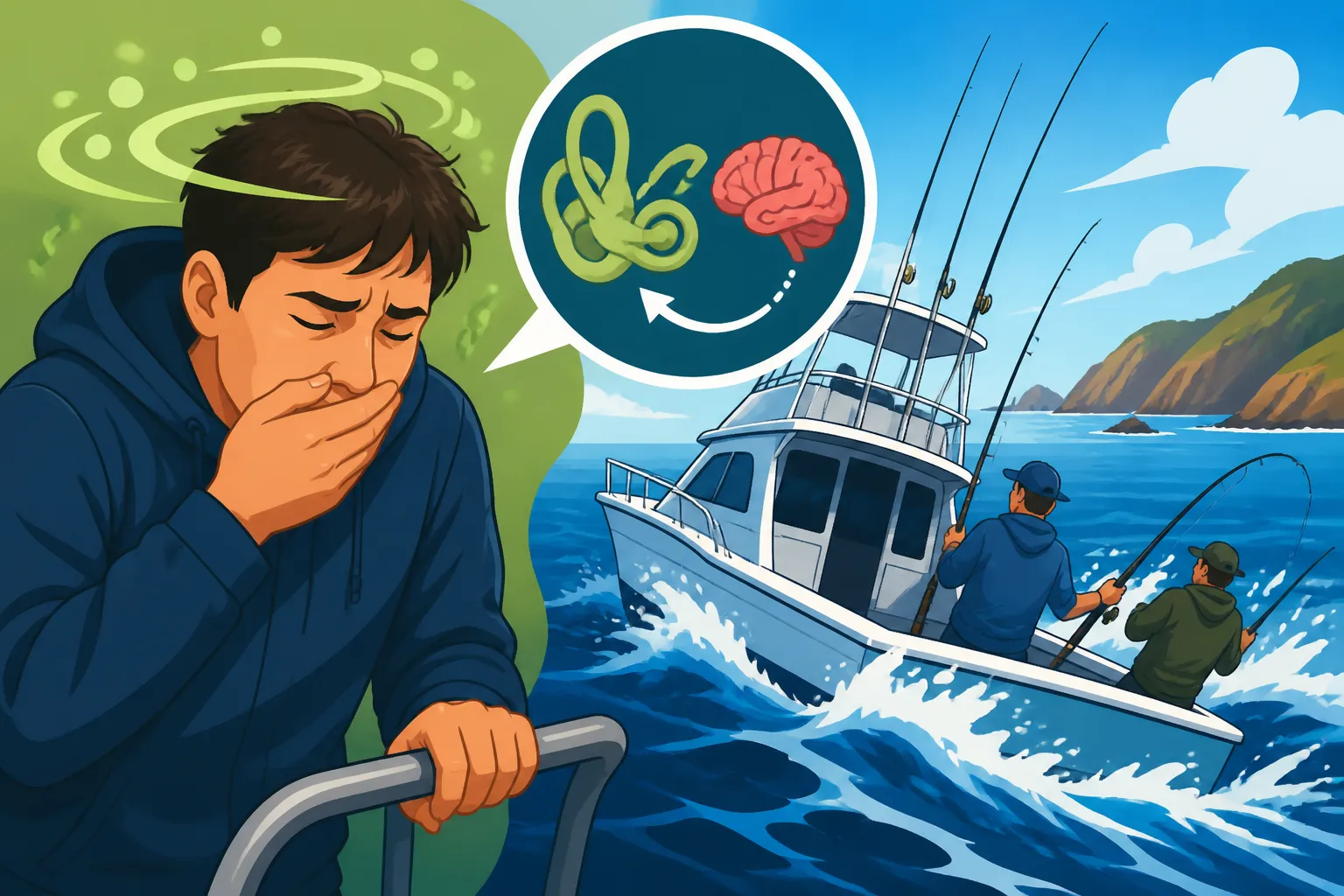
How Seasickness Works on California Offshore Trips
There's nothing quite like the excitement of heading out on a California offshore fishing trip—the vast ocean stretching before you, the promise of big fish, the salty air. But for many, that thrill is often overshadowed by a creeping dread: seasickness. It’s a completely miserable experience that can turn your dream day into an absolute nightmare, leaving you nauseated, dizzy, and wishing you were anywhere but on that rocking boat. This guide is here to shed light on exactly how seasickness works when you’re out on California's deep waters and, more importantly, how to combat it, so you can enjoy the fishing without the green gills.
The Science Behind Seasickness on the Water
Seasickness, a common form of motion sickness, isn't just "in your head"—it's a very real physiological response to conflicting sensory information your brain receives. Understanding this conflict is the first step in recognizing why some days out on the Pacific feel fine, while others leave you reaching for the rail.
What Causes Motion Sickness in General
At its core, motion sickness arises from a fundamental disagreement between your senses. Your inner ear, which is responsible for balance and detecting motion, tells your brain you’re moving. Meanwhile, your eyes might be focused inside the boat, on a fixed object, telling your brain that you're stationary. This sensory conflict—your eyes saying one thing, your inner ear saying another—throws your brain into a bit of a panic. It interprets this mixed signal as a sign of poisoning, leading to the body's natural defense mechanism: nausea and vomiting, as it tries to expel the perceived toxin. Think about it, it’s the same reason some people get queasy reading in a moving car; your inner ear feels the bumps and turns, but your eyes are fixed on a static page.
Beyond the eyes and inner ear, other senses can contribute to this chaotic mix. The feel of the boat pitching and rolling under your feet, the subtle vibrations from the engine, and even changes in air pressure can all feed data to your brain. When all these signals aren't perfectly synchronized, the brain struggles to make sense of your position and movement in space. This confusion quickly escalates into discomfort.
Why Offshore Trips in California are Prime Seasickness Triggers
California's Pacific waters, while beautiful and abundant with marine life, can present particularly challenging conditions that are ripe for triggering seasickness. Unlike calm bay or lake fishing, offshore trips mean you’re out in the open ocean, exposed to swells, chop, and currents that are far more pronounced. These conditions create persistent, irregular motion that is hard for your body to adapt to.
Consider a typical offshore trip targeting species like tuna or dorado—you might be traveling many miles out, sometimes beyond 50-100 miles, where the continental shelf drops off. Here, you're dealing with long-period ocean swells that can be quite large, even on an otherwise calm day. These slow, rolling motions are often the most insidious, as your body constantly tries to anticipate and adjust to a movement that never quite settles into a predictable rhythm. Add to that localized wind chop, especially on a breezy afternoon, and you've got a recipe for a truly bouncy ride. Different areas along the California coast, from the Channel Islands off Southern California to the open waters west of San Francisco, can have their own unique wave patterns and currents that intensify the motion.
Recognizing the Early Warning Signs and Symptoms
One of the most crucial aspects of managing seasickness is recognizing it early. Many people try to tough it out, ignoring the initial signals, only to find themselves in a much worse state later on. Being attuned to your body can make a huge difference in how severe your experience becomes.
Subtle Clues Your Body is Sending
Seasickness rarely hits like a sudden tidal wave. More often, it starts with subtle, almost imperceptible cues that your body is beginning to struggle with the motion. You might notice an unusual yawning spree, even if you’re not particularly tired. A cold sweat could break out on your forehead, or you might feel unusually clammy despite the pleasant weather. Some people report a general sense of malaise or a mild headache that just doesn’t seem right.
Another common early sign is a slight loss of appetite or a sudden aversion to foods you normally enjoy, especially greasy or acidic ones. You might also find yourself becoming unusually quiet or withdrawn, focusing intently on something internal rather than engaging with fellow anglers. These aren't necessarily full-blown symptoms, but rather your body's initial attempts to process the conflicting signals. Paying attention to these small, quiet warnings can be your first line of defense, prompting you to take preventative measures before things escalate.
Progression of Seasickness Symptoms
If those early warnings go unheeded, or if the sea conditions are particularly rough, seasickness symptoms can progress quite rapidly. The mild discomfort typically escalates into undeniable nausea—that persistent, churning feeling in your stomach that signals your body’s preparation to purge. Dizziness often accompanies this, making it hard to focus your vision or maintain your balance, even when standing still. You might find yourself wanting to lie down, close your eyes, and just escape the movement.
At its most severe, seasickness culminates in vomiting. While unpleasant, for many, this act actually provides temporary relief, as the body has completed its "purging" response. However, the cycle can easily restart, especially if the motion continues. It's a spectrum, and not everyone experiences every stage, nor does everyone reach the worst-case scenario. Some might only feel a bit queasy, while others are completely incapacitated. Understanding this progression is key to appreciating why early intervention is so vital, and why being prepared before you even step foot on the boat is paramount for a comfortable trip.
Practical Strategies for Prevention and Management
The good news is that you're not helpless against seasickness. There are numerous strategies, both preventive and reactive, that can significantly reduce your chances of getting sick or, at the very least, mitigate the severity of the symptoms. A little foresight and preparation can turn a potential nightmare into a fantastic day of fishing.
Pre-Trip Preparations to Minimize Risk
Preparation starts long before you even see the boat. One of the most effective strategies involves medication. Over-the-counter options like Dramamine (dimenhydrinate) and Bonine (meclizine) are widely available. It's crucial to take these as directed, typically an hour or more before your trip, to allow them to get into your system and work effectively. They can cause drowsiness, so be sure to test them out on land first if you're sensitive. For those with more severe motion sickness, a doctor might prescribe a Scopolamine patch, which is applied behind the ear and provides continuous relief for days. Always consult your healthcare provider to discuss the best option for you and any potential side effects.
Your diet and lifestyle leading up to the trip also play a role. Avoid heavy, greasy, or acidic foods the night before and the morning of your trip. Steer clear of alcohol, as it can dehydrate you and exacerbate nausea. Instead, opt for bland, easily digestible foods like toast, crackers, or plain oatmeal. Hydration is also key; drink plenty of water leading up to and during your trip. Lastly, ensure you get a good night's sleep. Being well-rested helps your body cope with stress and reduces susceptibility to motion sickness. When you're ready to find the perfect trip, exploring options through platforms like FishingBooker can help you compare vessels and trip durations, giving you a better idea of what to expect on the water.
On-Board Tactics for Relief and Comfort
Once you're on the boat and the engines start humming, there are still plenty of things you can do to manage potential seasickness. The classic advice, and one of the most effective, is to keep your eyes on the horizon. Focusing on a distant, stable point helps to re-synchronize your visual input with your inner ear's sensation of motion. Try to stay on the main deck, if possible, rather than below in an enclosed cabin where the visual disconnect is greater and the air can be stale.
Fresh air is your friend. Position yourself where you can feel the breeze, as stuffy air or strong odors (like exhaust fumes, bait, or someone else's breakfast) can quickly trigger or worsen nausea. Avoid trying to read or focus on anything up close, like tying knots or looking at your phone, as this intensifies the sensory conflict. Some people find relief from ginger, whether it's ginger ale, ginger candies, or crystallized ginger. Acupressure wristbands, which apply pressure to a specific point on your wrist, also work for some individuals. If you start to feel genuinely unwell, don't suffer in silence—let the crew know. They are often incredibly experienced and can offer advice, a quiet place to sit, or even a different perspective on the boat that might help. Finding the right charter, and especially a captain knowledgeable about local conditions, can be done by checking out a resource like How to Choose a California Fishing Guide.
Understanding Different Types of California Offshore Trips and Their Impact
The type of offshore trip you choose in California can significantly influence your experience with seasickness. Not all boats or destinations are created equal when it comes to motion, and understanding these differences can help you plan a more comfortable outing.
Comparing Party Boats to Private Charters
When it comes to offshore fishing in California, you generally have two main choices: a party boat (also known as an open party or sportfishing boat) or a private charter. Each has its own characteristics that can affect how much you feel the motion of the ocean. Party boats are typically larger vessels, designed to accommodate anywhere from 20 to 60+ anglers. Their size often means they offer a more stable ride, cutting through waves rather than being tossed around by them. This increased stability can be a huge advantage for those prone to seasickness. However, on a crowded party boat, you might have less flexibility to move around and find the "sweet spot" with the least motion.
Private charters, on the other hand, usually involve smaller boats, ranging from 6-pack charters (carrying up to six passengers) to slightly larger vessels. While smaller boats can be more nimble and allow for more personalized fishing, they are also more susceptible to the motion of the waves. A smaller boat will typically pitch and roll more intensely than a large party boat, especially in choppy conditions. If you're highly susceptible to seasickness, a larger party boat might be a safer bet for your first offshore experience. You can often find a wide array of both party boats and private charters listed on platforms like FishingBooker, making it easier to compare their sizes and amenities. For more details on choosing, check out this guide on California Private vs Shared Charters.
How Trip Duration and Location Influence Seasickness
The length of your trip and how far offshore you venture are critical factors in the seasickness equation. A half-day trip, usually lasting 4-6 hours, keeps you closer to shore in potentially calmer waters and limits your exposure time to motion. This is an excellent option for beginners or those who know they are susceptible. Full-day trips, typically 8-12 hours, take you further out, sometimes 30-50 miles, where swells and chop are more significant and persistent. The longer duration means your body has more time to succumb to the motion. For an in-depth look at these options, refer to California Half-Day vs Full-Day Charters.
Then there are multi-day or overnight trips, like the popular San Diego Overnight Tuna Trips Explained, which target species such as bluefin tuna far offshore, sometimes hundreds of miles from the coast. These trips involve continuous motion for 24 hours or more, pushing your body's limits. The further out you go, the more pronounced the ocean swells tend to be. Nearshore fishing for species like rockfish might keep you within a few miles of the coast, often in relatively sheltered areas, whereas targeting bluefin tuna requires venturing into the vast, unpredictable open ocean. Always check the marine forecast before booking, especially for longer trips, and consider how the forecast might change over multiple days.
Here’s a quick comparison of common seasickness remedies:
| Remedy Type | Examples | How It Works | Pros | Cons | Timing/Notes |
|---|---|---|---|---|---|
| Oral Medications | Dramamine (Dimenhydrinate) | Blocks signals in the brain responsible for nausea. | Widely available, often effective. | Can cause drowsiness, dry mouth. | Take 30-60 minutes before trip. |
| Bonine (Meclizine) | Blocks histamine receptors, reducing inner ear input. | Less drowsy than Dramamine for some. | Still can cause drowsiness, dry mouth. | Take 1 hour before trip. | |
| Patches | Scopolamine Patch (Transderm Scop) | Delivers medication through skin, blocking nerve signals. | Long-lasting (up to 3 days), highly effective. | Prescription only, blurred vision, dry mouth, can be expensive. | Apply 4 hours before trip. |
| Natural Remedies | Ginger (candies, ale, pills) | Thought to aid digestion and calm stomach. | Non-drowsy, readily available. | Effectiveness varies, not a guaranteed cure. | Start consuming 1-2 hours before, continue throughout. |
| Acupressure Bands (Sea-Band) | Applies pressure to P6 point on wrist. | Non-invasive, no side effects. | Effectiveness varies, anecdotal evidence strongest. | Wear before and during trip. | |
| Behavioral | Focus on Horizon, Fresh Air | Re-synchronizes senses, provides distraction. | Free, no side effects. | Requires continuous focus, might not be enough in rough seas. | Maintain throughout the trip. |
No matter how prepared you are, always discuss seasickness prevention with your doctor, especially if you have underlying health conditions or are taking other medications. Being smart about how you approach your fishing adventure can make all the difference, ensuring you focus on the fish, not the queasiness. For general tips on maximizing comfort, you might also find useful insights in What to Wear on a California Fishing Charter.
Disclaimer
The information provided in this guide is for general informational purposes only and does not constitute medical advice. Always consult with a qualified healthcare professional before taking any medication or implementing any health-related strategies, especially if you have pre-existing medical conditions. The ocean environment can be unpredictable, and individual experiences with seasickness may vary.