California Dungeness Crab Regulations
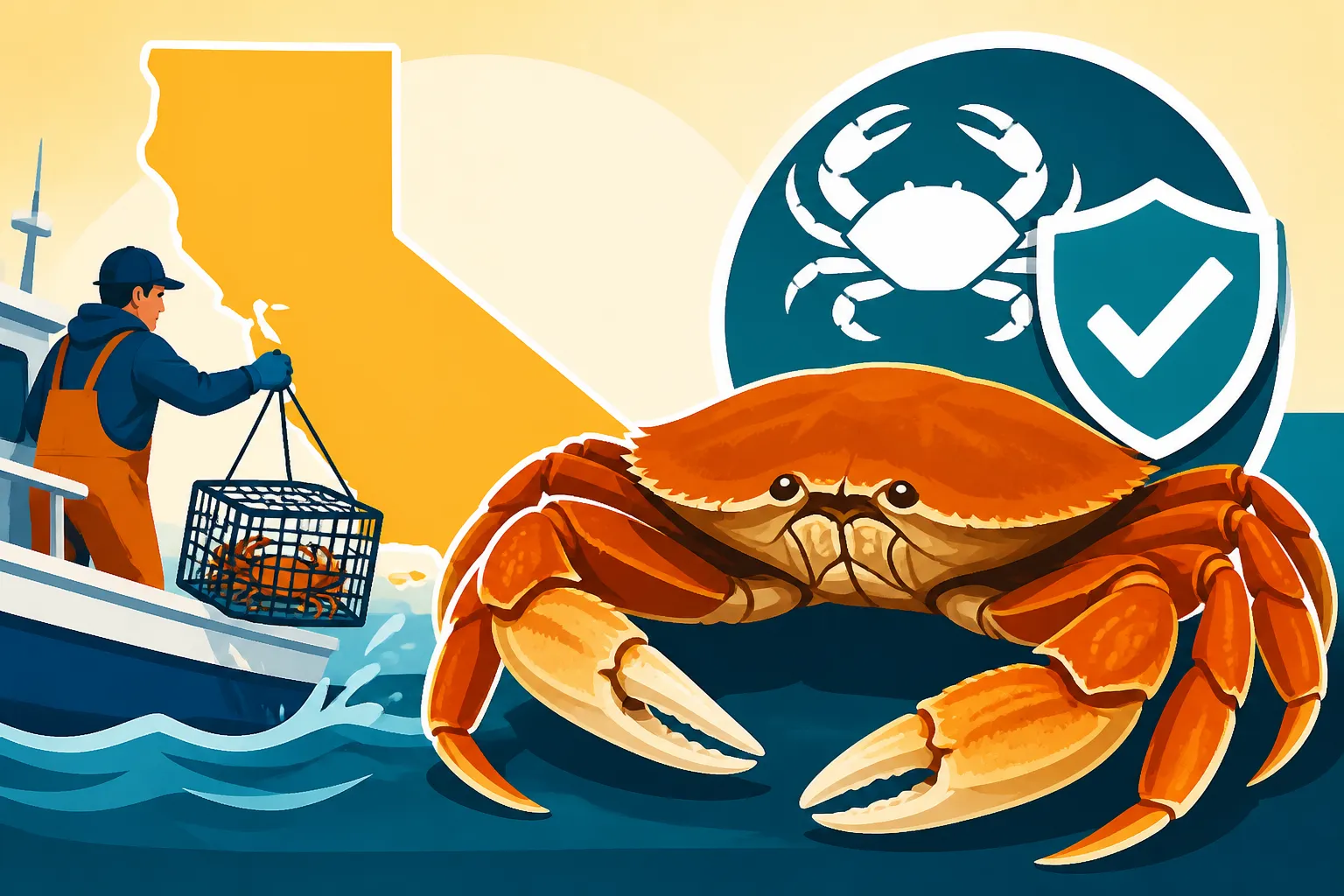
It can feel like you need a law degree just to go crabbing in California, especially with Dungeness crab regulations constantly shifting and varying by region. The last thing any of us wants is to accidentally break a rule and face a hefty fine, or worse, jeopardize the future of this incredible fishery. This guide is here to untangle the complexities, walking you through everything you need to know about Dungeness crab seasons, size limits, gear, and reporting requirements in California, so you can enjoy your catch with confidence.
Why California Dungeness Crab Regulations Exist
Anglers often wonder why there are so many rules for something as simple as catching crabs. Trust me, I've been there, scratching my head at a dense regulation booklet. But when it comes to Dungeness crab in California, these regulations aren't just bureaucratic red tape; they are absolutely crucial for ensuring that we can all enjoy this delicious crustacean for years to come. The Dungeness crab fishery, both commercial and recreational, is incredibly valuable, and without careful management, it could easily be overfished, leading to long-term population crashes.
Protecting the Future of Crab Fishing
Think about it: Dungeness crabs are a relatively slow-growing species, and they don't reproduce until they're a few years old. If we were to harvest indiscriminately, especially smaller crabs or female crabs, we'd quickly deplete the breeding stock. This is precisely why strict size limits and the "no female crab" rule are so vital. They ensure that enough crabs reach maturity and have the chance to reproduce, replenishing the population for the next generation. It's a delicate ecological balance, and our fishing practices directly impact it.
Beyond just individual crabs, these rules protect the entire marine ecosystem. Crabs play a significant role in the marine food web, both as predators and prey. A healthy crab population means a healthy ocean, which benefits countless other species, including the fish we love to catch. The California Department of Fish and Wildlife (CDFW) monitors crab populations closely, and regulations are often adjusted based on scientific data to prevent overharvesting and respond to environmental changes, such as harmful algal blooms or concerns over whale entanglement. It’s a dynamic system, and we, as responsible anglers, need to adapt along with it to ensure long-term sustainability.
Balancing Recreational and Commercial Interests
Another significant reason for these complex rules is the need to balance the interests of both recreational crabbers like us and the substantial commercial Dungeness crab industry. Commercial crabbing is a multi-million dollar business in California, providing livelihoods for many coastal communities from Crescent City down to Morro Bay. Their seasons, gear, and catch limits are often even more stringent and closely monitored than ours, all designed to maximize sustainable yield over the long term.
Recreational regulations, conversely, are designed to allow us to enjoy the sport and bring home a delicious meal, without competing unfairly or negatively impacting the commercial fishery. For instance, the timing of the recreational season often starts before the commercial season in many areas, giving recreational crabbers an early opportunity. Gear restrictions, like the maximum number of traps or snares per person, also help distribute the catch and prevent any single recreational angler from over-impacting local crab stocks. It’s all about creating a fair playing field and ensuring that everyone gets a piece of the pie, sustainably.
Essential Dungeness Crab Regulations in California
Alright, let's get down to the nitty-gritty of the rules you absolutely need to know before dropping a pot or casting a snare. Ignoring these can lead to fines and frustration, and nobody wants that! Always remember that these are subject to change, so a quick check of the latest CDFW regulations booklet is a must. You can often find a copy at your local tackle shop, download a PDF version on the CDFW website, or learn more in our article about the California Fishing Regulations Explained.
Understanding the Season Dates
This is probably the most critical piece of information: when can you actually go crabbing? The Dungeness crab season in California is highly variable and depends on whether you're crabbing recreationally or commercially, and importantly, which part of the state you're in.
For recreational crabbers, the general season typically opens statewide on the first Saturday in November and extends through June 30th the following year. However, it is absolutely crucial to note that recent years have seen frequent delays and closures in the season opener, particularly north of Bodega Head (Sonoma County). These delays are often implemented due to important conservation concerns such as minimizing the risk of whale entanglement in crab gear or to address elevated levels of domoic acid, a natural toxin that can accumulate in shellfish. This means that while the stated season might be November to June, you must check the CDFW website for emergency closures or delays right before you plan to go. Imagine planning a trip to Bodega Bay, only to find the season has been pushed back!
Crab Size Limits: Don't Get Pinched
This is where a crab gauge comes in handy – and you can easily find a reliable one on Amazon for a few dollars. Every Dungeness crab you keep must meet the minimum size requirement. This rule is put in place to protect juvenile crabs and allow them to mature and reproduce, contributing to the next generation of crabs.
- Minimum Size Limit: For recreational take, Dungeness crabs must measure at least 5¾ inches across the shell. This measurement is taken immediately in front of the posterior lateral spines, which are the sharp points on either side of the crab's carapace (back shell). If you're unsure, always release the crab. It’s far better to be safe than sorry!
It's not enough to just eye it. You must have a reliable measuring device on hand. Many tackle shops sell inexpensive plastic crab gauges specifically designed for this purpose. You simply place the gauge over the crab, and if it fits inside the opening, it's too small. If the crab extends beyond the gauge's markings, it's legal. And a golden rule to remember: all female Dungeness crabs must be released immediately, regardless of size. You can identify females by their broad, rounded abdomen (tail flap) tucked under their body, whereas males have a narrower, more pointed abdomen.
Daily Bag and Possession Limits
You can't just fill your boat or cooler with every legal crab you catch, tempting as that might be after a successful outing! California has strict daily bag and possession limits to ensure the resource is shared equitably among anglers and not overexploited.
- Daily Bag Limit: You are allowed to take a maximum of 10 Dungeness crabs per day. This means that in any 24-hour period, you cannot harvest more than ten legal-sized male Dungeness crabs.
- Possession Limit: The possession limit is also 10 Dungeness crabs. This means you cannot have more than 10 crabs in your possession at any given time, regardless of how many days you've been crabbing. If you've got them in your cooler at home, that counts toward your possession limit. This rule applies whether they are whole or cleaned, so process them wisely if you plan to keep them for a few days.
These limits apply per licensed person, so if you're crabbing with a friend or family member who also has a valid California sport fishing license, each individual can take their own limit. However, everyone needs to be actively participating and have their own gear deployed. Don't try to pool your limits onto one person's count if only one person is actively fishing! For more details on licensing, read our guide on Do You Need a License to Fish in California.
Legal Gear for Crabbing
Forget about spearing or using nets to scoop them up; there are specific legal methods for recreational Dungeness crabbing in California.
- Hoop Nets and Crab Traps: These are the most common and often the most effective methods. Hoop nets typically consist of a ring with netting that collapses flat on the bottom and is pulled up quickly to capture crabs. Crab traps are more rigid, box-like cages that crabs enter through one-way openings but find difficult to exit. Remember, all traps and nets must be clearly marked with your Go ID or name and address, especially if left unattended. You'll find a wide variety of effective hoop nets and traps on sites like Amazon, from basic models to more advanced collapsing designs.
- Crab Snares: A snare is essentially a bait cage surrounded by loops of monofilament line. When a crab grabs the bait, you quickly reel in, and the loops tighten around its legs, snaring it. This is a popular and very effective method for shore-based crabbing, especially from piers, docks, or jetties where using traditional traps might be impractical due to depth, currents, or restrictions. Our guide on Fishing from a Pier in California: Rules covers more on pier specifics.
- No Commercial-Style Traps (with escape rings): Recreational crabbers cannot use commercial-style crab traps that are equipped with circular escape rings. These larger, more complex traps are specifically designed and regulated for the commercial fishery. Your recreational gear must comply with the specific definitions laid out by the CDFW in the sport fishing regulations.
It's also important to note that you are limited to 10 traps or hoop nets per person for Dungeness crab. This ensures fair access to the resource and prevents any individual from deploying an excessive amount of gear, which could unfairly impact other crabbers or local crab stocks.
California Dungeness Crab Report Cards
Ah, the report card! Just like with abalone, steelhead, or sturgeon, fishing for certain species in California often requires a specific report card. These aren't just extra paperwork; they are a vital tool for the CDFW to gather data on catch rates and angler effort, which directly informs future management decisions and conservation efforts.
Currently, a Dungeness Crab Report Card is not required for recreational Dungeness crab fishing in California. However, you do still need a valid California sport fishing license. It's always a good idea to double-check the latest regulations directly from the CDFW website or their current regulations booklet, as these requirements can change from year to year. While a Dungeness crab card isn't required, for other species like salmon or sturgeon, it definitely is. You can learn more about these important data-gathering tools in our comprehensive piece on California Fishing Report Cards Explained.
Regional Variations and Special Considerations
California is a long state, stretching over 800 miles of coastline, and what's legal or advisable in Crescent City might be different from what you encounter in San Diego. Dungeness crab populations are primarily found from the Central Coast northward, so most of the active recreational crabbing occurs in those regions.
North Coast vs. Central/Southern California Rules
While the recreational season opener and general limits tend to be statewide for Dungeness crabs, there can be subtle differences or local advisories that are crucial to heed. The main distinction historically, and often currently, has been with the commercial Dungeness crab fishery, where the season north of Bodega Head (Sonoma County) often opens later than areas to the south. This delay is largely due to factors like crab meat quality testing (to ensure sufficient meat yield) and, more recently, for preventing whale entanglement during peak migration periods.
For recreational crabbing, the primary distinction you need to be aware of usually relates to closures or delays due to environmental factors. For example, popular crabbing areas like Humboldt Bay, San Francisco Bay, or Bodega Bay might experience sudden delays or closures due to domoic acid concerns. Domoic acid is a natural toxin produced by certain algal blooms that can accumulate in shellfish, making them unsafe for human consumption. Furthermore, the risk of whale entanglement in crab gear, especially during certain migration windows, has increasingly led to statewide or regional trap restrictions or even full closures. These critical updates are often announced with short notice, so being connected to CDFW alerts or regularly checking local fishing reports is absolutely critical before heading out. For broader marine rules, refer to our guide on California Saltwater Fishing Regulations.
Navigating Marine Protected Areas
California has an extensive and vital network of Marine Protected Areas (MPAs) along its coast, much like national parks or wildlife refuges in the ocean. These areas are established to protect marine ecosystems and species, and their conservation objectives directly impact fishing and crabbing activities. The critical thing to remember is that fishing and crabbing regulations within MPAs are often vastly different and much stricter than in open waters.
- Know Before You Go: Before you even think about dropping a crab trap or snare, it is your responsibility to identify if your chosen crabbing spot falls within an MPA. You can find detailed maps and specific regulations for these areas on the CDFW website or by looking up our article, California Marine Protected Areas Explained. Many MPAs, especially State Marine Reserves (SMRs), are complete "no-take" zones where any form of fishing or crabbing is strictly prohibited. Others might allow certain types of recreational take but forbid crabbing altogether. Ignorance of an MPA boundary is no excuse in the eyes of the law, and wardens patrol these areas diligently. Using a modern GPS plotter with MPA overlays or a fishing app that clearly shows these boundaries can be your best friend here.
For example, if you're crabbing near well-known spots like the Farallon Islands, certain parts of Monterey Bay, or along the Channel Islands, you absolutely need to verify if you're outside any restricted zones. Even incidental take (catching a crab in an MPA and immediately releasing it) can sometimes be frowned upon or lead to questions from enforcement officers. It’s always best to err on the side of caution and verify your exact location relative to MPA boundaries.
Staying Updated and Avoiding Violations
Navigating all these rules and real-time changes can feel like a full-time job, but trust me, it’s worth the effort to avoid legal trouble, contribute to conservation, and ensure sustainable crabbing for generations to come. The regulations are in place for a good reason, and enforcement takes them very seriously.
Essential Resources for Anglers
Being a responsible and successful angler means staying informed. The California Department of Fish and Wildlife (CDFW) is your primary and most authoritative source for all regulations.
- CDFW Website: This is your absolute go-to hub. They publish the annual California sport fishing regulations booklet, which contains all the Dungeness crab rules. Crucially, they also issue frequent news releases and emergency notices regarding season delays, closures, or other critical updates. Bookmark their "Ocean Sport Fishing Regulations" page and check it regularly, especially during the season opener.
- CDFW App: The CDFW often provides mobile apps (like "CDFW Fish and Wildlife" or similar) that offer convenient access to regulations, maps (including MPA boundaries), and sometimes even allow you to report your catch directly. This is super convenient when you're out on the water, far from a computer.
- Local Bait and Tackle Shops: These places are goldmines of current, localized information. Shop owners and staff are often avid anglers themselves and stay abreast of local conditions, recent regulation changes, and what the local enforcement focus might be. They can give you firsthand accounts of what's working and what areas might be experiencing closures.
- Online Fishing Forums and Social Media Groups: While not official sources, these communities can be great for hearing about recent news, discussions on regulation interpretations, and getting tips from other crabbers. Just always cross-reference anything you hear there with official CDFW sources to ensure accuracy.
Remember, the official California Fishing License Guide or our general overview, How to Read the California Fishing Regulations Booklet, are great starting points, but always drill down to the specific Dungeness crab rules right before you head out.
Common Pitfalls and How to Avoid Them
Even experienced crabbers can make mistakes, often due to oversight or changing regulations. Here are some common traps (pun intended!) to watch out for, along with how to sidestep them:
- Not Checking for Emergency Closures: This is HUGE. As mentioned, whale entanglement risk and domoic acid alerts can shut down the season with very little notice. Don't assume the season is open just because the calendar says November. Always check the CDFW website for the absolute latest updates. Imagine driving hours to the coast only to find out crabbing is closed for the day!
- Incorrect Measuring: A quarter-inch too short on a crab can cost you a hefty fine. Invest in a proper crab gauge (you can easily pick one up on Amazon), use it carefully, and always double-check your measurements. When in doubt, let it go. It's better to release a legal crab than keep an illegal one.
- Keeping Female Crabs: This is a cardinal sin in Dungeness crabbing and carries significant penalties. Always identify the sex of your crabs. The broad, rounded abdomen (tail flap) means female, and she gets to go back to lay more eggs. If you're new, practice identifying them on released crabs; it becomes second nature quickly.
- Unmarked Gear: If you're using hoop nets or traps, make sure they are clearly marked with your Go ID (from your fishing license) or your name and address. Unmarked gear can be confiscated, and you could face additional penalties. Using a permanent marker, a branded tag, or even engraving your information is a simple, effective step to prevent this.
- Crabbing in MPAs: This is a very serious violation. Use maps, GPS, and apps to ensure you are well outside any "no-take" zones. Don't rely on guesswork or general knowledge; specific boundaries matter.
- Exceeding Limits: It's tempting to keep just one more when the crabs are biting, but the 10-crab daily and possession limit is firm. Count your crabs carefully and adhere strictly to the rules. If you're on a party boat, the crew usually helps enforce this, but it's ultimately your responsibility to know and follow the rules.
Staying vigilant and proactive about regulations will ensure your crabbing trips are enjoyable, successful, and worry-free. For information on the consequences of not following the rules, you might want to read our article on California Fishing License Fines and Penalties.
Here's a handy table to quickly reference the core Dungeness crab regulations for recreational anglers:
| Regulation Category | Specific Rule | Details & Notes |
|---|---|---|
| Season Dates | Generally first Saturday in November – June 30th | Crucial: Always check CDFW for emergency closures or delays due to whale entanglement, domoic acid, or other factors. Can vary by region. |
| Minimum Size Limit | 5¾ inches | Measured immediately in front of the posterior lateral spines (sharp points on carapace). Use a proper crab gauge. |
| Bag Limit | 10 Dungeness crabs per person, per day | Applies to whole or cleaned crabs. |
| Possession Limit | 10 Dungeness crabs per person | Cannot possess more than 10 crabs at any time, even from multiple trips. |
| Female Crabs | Must be released immediately | Identify by broad, rounded abdomen (tail flap) tucked under body. |
| Legal Gear | Hoop nets, crab traps, crab snares | Max 10 traps/hoop nets per person. Must be clearly marked with Go ID/name & address. No commercial-style traps with escape rings. |
| Report Card | Not currently required for recreational Dungeness crab fishing | Always verify current year's regulations. A valid California Fishing License Cost is still required. |
| Location | Avoid Marine Protected Areas (MPAs) | Check maps (CDFW website, apps) before crabbing to ensure you are not in a "no-take" zone. See California Marine Protected Areas Explained for details. |
This table provides a quick reference, but it's never a substitute for reading the full regulations or checking for real-time updates directly from the CDFW!
Disclaimer
Please note that fishing regulations, including those for Dungeness crab in California, are subject to change at any time by the California Department of Fish and Wildlife (CDFW). While every effort has been made to provide accurate and up-to-date information in this guide, it is ultimately the angler's responsibility to consult the latest official CDFW regulations before engaging in any fishing or crabbing activity. This content is for informational purposes only and should not be considered legal advice.