California Lobster Fishing Rules
The thrill of chasing spiny lobster along California's rugged coastline is an experience unlike any other, but let's be honest, trying to navigate all the rules and regulations can feel like trying to untangle a particularly stubborn snarl in your fishing line. It's frustrating to want to enjoy one of California's most exciting fisheries only to worry if you're doing something wrong. This comprehensive guide is here to untangle that mess for you, breaking down everything you need to know about California lobster fishing rules so you can hit the water with confidence.
Understanding the California Spiny Lobster Fishery
California spiny lobster (Panulirus interruptus) are highly prized by recreational and commercial anglers alike, known for their delicious meat and the exciting challenge of catching them. Unlike their East Coast cousins, these lobsters don't have claws, making the catching process a bit different—and in some ways, less intimidating! However, their popularity means the California Department of Fish and Wildlife (CDFW) has some pretty strict rules in place to ensure their populations remain healthy for future generations. Ignoring these rules isn't just bad for the environment; it can lead to hefty fines and a ruined trip.
Why All the Rules and Regulations?
It’s easy to feel overwhelmed by the sheer volume of regulations, but they serve a crucial purpose: conservation. The spiny lobster fishery is a valuable resource, both ecologically and economically. Without strict controls on season, size, and methods, these slow-growing crustaceans could easily be overfished, devastating their populations and impacting the delicate marine ecosystem they're part of. Every rule, from the start and end dates of the season to the legal size limit, is designed to allow lobsters to grow, reproduce, and maintain a sustainable population. It's about balancing recreational opportunity with long-term ecological health.
Essential Permits and Gear You'll Need
Before you even think about setting foot near the water, you absolutely need a valid California fishing license. This is non-negotiable for anyone aged 16 or older who plans to take lobsters. On top of that, you'll also need an Ocean Enhancement Stamp if you're fishing in ocean waters south of Point Arguello, Santa Barbara County, which covers most of the prime lobster habitat. This stamp helps fund important programs to enhance marine resources. Without these two critical pieces of paper, your entire trip is illegal from the start, so make sure they're purchased and readily accessible. You can easily pick these up online or at most bait and tackle shops.
As for gear, you're looking at a few key items. If you're using hoop nets from a boat or pier, you'll need the nets themselves, a sturdy rope, and a buoy to mark your traps. Most hoop nets you find on Amazon are perfectly compliant, but always double-check the specifications. For divers, a good wetsuit, fins, mask, snorkel, and an appropriate light for night diving are essential. And no matter your method, a lobster gauge is an absolute must-have. This small, often plastic, tool ensures you accurately measure your catch on the spot, preventing you from accidentally keeping undersized lobsters.
Navigating California's Lobster Fishing Regulations
The heart of successful and legal lobster fishing lies in understanding the specific regulations around when, where, and how you can take these critters. These rules are non-negotiable and strictly enforced by wildlife officers, so paying close attention to these details can save you a lot of headache and heartache. It's not just about avoiding a ticket; it's about respecting the resource.
The Legal Season and Time Restrictions
The California spiny lobster season typically kicks off on the first Saturday in October and runs through the first Wednesday after March 15th. This specific timeframe is critical because it avoids the primary spawning months, giving the lobsters a chance to reproduce and ensure the next generation. For example, if you decide to go out on October 1st, but the first Saturday isn't until October 5th, you're technically fishing out of season for those few days, which is a violation.
Beyond the calendar dates, there are also daily time restrictions. Hoop netting is generally allowed from one hour after sunset to one hour before sunrise. This means night is prime time for hoop netting, which makes sense as lobsters are more active foragers after dark. For divers, however, the rules are slightly different. While diving, you can typically take lobsters during daylight hours, but diving at night specifically for lobster has additional regulations and safety considerations, which we'll delve into later. Always check the current California Saltwater Fishing Regulations booklet for the precise opening and closing times for both methods each year, as they can sometimes have minor adjustments.
Bag and Size Limits: Don't Get Fined!
This is where many anglers get into trouble. The bag limit for California spiny lobster is seven lobsters per person, per day, regardless of whether you're hoop netting or diving. This limit is strictly enforced, and wardens will often count your catch. Trying to hide an extra lobster or two is a surefire way to earn a citation.
Even more critical than the bag limit is the size limit. Any spiny lobster you keep must have a carapace length of at least 3 ¼ inches. The carapace is the hard shell segment covering the lobster's body, from the rostrum (the spike between its eyes) to the rear edge of the carapace, measured parallel to the body midline. This is why a lobster gauge is indispensable. You must measure your lobsters immediately upon capture. If it's undersized, it goes back into the water right away. Keeping an undersized lobster, even by a fraction of an inch, is a serious violation and carries significant penalties. Furthermore, it's illegal to take any female lobster that is "berried," meaning she is carrying eggs externally on her underside. If you encounter a berried female, she must be released unharmed, no matter her size. This rule is crucial for protecting the breeding stock. For more details on species-specific limits, you might want to review the California Fishing Bag and Size Limits guide.
Permitted Fishing Methods and Gear Restrictions
Recreational lobster fishing in California is primarily done by two methods: hoop netting and diving (either freediving or SCUBA diving). Spear fishing for lobsters is strictly prohibited.
Hoop Netting:
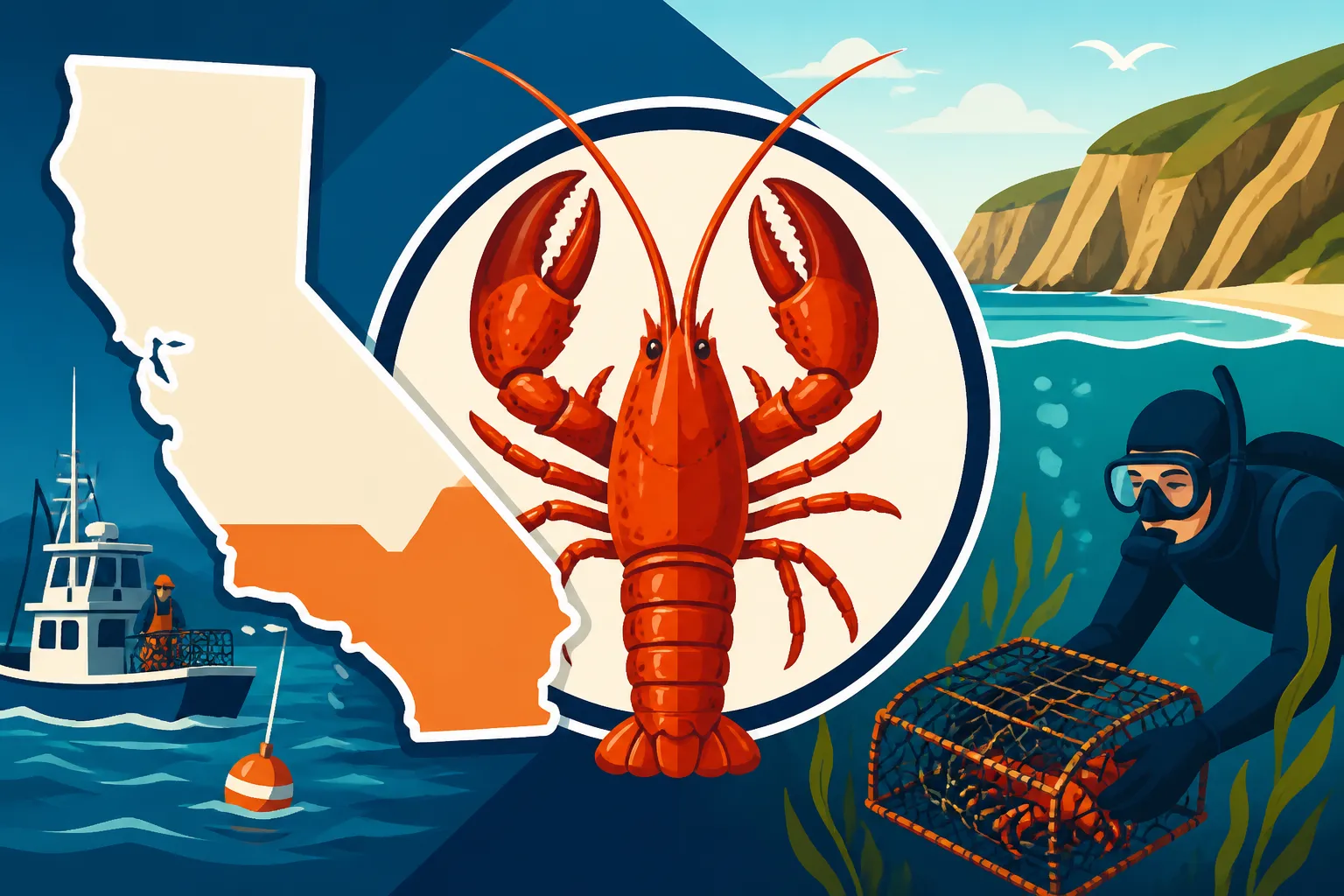
This method involves deploying hoop nets from a boat, kayak, pier, or jetty. A hoop net is essentially a ring or rings that hold netting, designed to collapse when deployed and then enclose the lobster when pulled up. You're typically allowed to use up to two hoop nets per person, but a maximum of 10 hoop nets per boat, regardless of how many licensed anglers are on board. Each hoop net must be clearly marked with the fisherman's GO ID number. While you can often find suitable nets at local tackle shops or through online retailers like Amazon, make sure they meet CDFW specifications regarding diameter and construction.
Diving:
For divers, lobsters are typically hand-caught. That means no spears, no gaffs, and absolutely no tools that could injure the lobster. You simply grab them by hand. Many divers use gloves to protect their hands from the lobster's spines. Just like with hoop netting, all size and bag limits apply. Divers must have a lobster gauge readily available and measure their catch immediately underwater or as soon as they surface.
The use of lights is another area with specific rules. When hoop netting at night, lights attached to the buoy or net are generally permitted to help you locate your gear. For divers, you can use lights to help spot lobsters in their rocky crevices, but the act of taking them must still be by hand. Always remember that these regulations are subject to change, so reviewing the official California Fishing Regulations Explained booklet annually is a smart move.
Diving Deeper: Specific Scenarios and Best Practices
Once you've got the basic rules down, it's time to think about the practicalities of a successful and safe lobster trip. California's diverse coastline offers different experiences, and understanding how to adapt your approach while staying compliant is key.
Hooping from a Boat vs. Shore
Whether you're dropping nets from a boat or a pier, the core regulations remain the same regarding licenses, season, limits, and net specifications. However, the experience and logistical considerations differ quite a bit.
Hooping from a Boat: This is often the most productive method, as it allows you to access prime rocky habitats that are inaccessible from shore. You can cover more ground, setting multiple nets in different locations to scout for concentrations of lobsters. Many experienced hoop netters use kayaks or small skiffs, quietly paddling along the coast and dropping nets near kelp beds, rock outcroppings, or artificial reefs. Remember the 10-net per boat maximum, even if you have several friends aboard, each with their own two nets. Marking your buoy with your GO ID is crucial for identification and enforcement. A good depth sounder can be an invaluable tool for finding suitable structure.
Hooping from a Pier or Jetty: This is a more accessible option for many, especially those without a boat. While you still need a valid California fishing license and Ocean Enhancement Stamp (if applicable to the region), pier fishing usually doesn't require a separate license if you are just using a rod and reel for finfish. However, for hoop netting, even from a pier, you are typically required to have the appropriate lobster fishing endorsements. Always double-check California Pier Fishing License Rules. You're still limited to two hoop nets per person. Look for piers or jetties that extend into deeper water or are near rocky areas where lobsters like to hide. Be mindful of other anglers and boat traffic, ensuring your lines don't interfere with others. Many pier anglers find success using strong lights to attract lobsters towards their nets, especially on clear, calm nights.
Night Diving and Safety Considerations
Night diving for lobsters is an incredibly exciting and productive way to catch them, as they are much more active and out in the open after dark. However, it also comes with significant safety risks that must be carefully managed. The CDFW allows night diving for lobster, but it requires a different level of preparation and caution.
First and foremost, never dive alone, especially at night. A dive buddy is non-negotiable. You'll need powerful dive lights, and it's wise to carry at least two—a primary and a backup. Visibility can drop to zero instantly if your light fails. Dive flags are also essential to mark your location to boaters. Many night divers choose to stick to familiar, shallower dive spots to minimize risks. Currents can be harder to judge in the dark, and navigating back to shore or a boat is more challenging. Make sure your boat has proper navigation lights and a clear signal for divers to locate it. It’s important to acknowledge that some areas may have specific restrictions related to night diving, particularly within or adjacent to California Marine Protected Areas Explained, so thorough research of your chosen location is vital.
Protecting Spawning Females and Handling Lobsters
One of the most important aspects of sustainable lobster fishing is respecting spawning females. As mentioned, any female lobster carrying eggs (often called "berried" or "egg-bearing") must be immediately released back into the water unharmed. These eggs are usually visible as a mass on the underside of her tail. Releasing them ensures the continuation of the species.
When handling any lobster, aim to minimize stress and injury. Hold them firmly by the carapace, avoiding squeezing their tail too hard. If a lobster is undersized or berried, release it gently back into the water, ideally near suitable cover. Don't just toss it from a height onto the surface; gently submerge it. It's also illegal to mutilate any lobster or remove its eggs while at sea. This means if you catch a lobster, it should remain whole until you return to shore, where you can then prepare it. If you're a diver, using a catch bag that allows water circulation is better than a solid container, which can heat up quickly and stress the lobsters.
Common Pitfalls and How to Avoid Them
Even with the best intentions, it's easy to make a mistake when fishing for lobster. But understanding the common errors can help you steer clear of violations and keep your fishing experience positive.
Mistakes That Lead to Fines
The CDFW is serious about protecting California's marine resources, and lobster fishing rules are among the most heavily enforced. Here are some of the most common ways recreational lobster anglers find themselves in hot water:
- No License or Stamp: This is the most basic, yet frequent, violation. Forgetting your California Fishing License Guide or the required Ocean Enhancement Stamp can result in a significant fine. Always carry your physical license or digital equivalent.
- Undersized Lobsters: This is perhaps the top reason for citations. Rushing measurements, not having a gauge, or simply trying to squeeze by with a questionable lobster will often lead to a fine. Measure every lobster, and if it's even slightly under 3 ¼ inches, release it. No exceptions.
- Over Bag Limit: Exceeding the seven-lobster daily limit is another common violation. Don't be tempted to keep an extra one "just because." Wardens often check coolers and catch bags.
- Taking Berried Females: Sometimes it's hard to see the eggs on a female, especially at night. Always check the underside of the tail carefully before placing a lobster in your catch bag.
- Improper Gear Marking: For hoop netters, failing to properly mark your buoys or nets with your GO ID is a red flag for wardens.
- Fishing Out of Season: Accidentally (or intentionally) fishing before the season opens or after it closes. Make sure you know the exact dates!
- Fishing in a Marine Protected Area (MPA): Many parts of the California coastline are designated as MPAs, which often have strict "no-take" rules for all marine life, including lobsters. Always consult MPA maps before heading out. Violating MPA rules can result in particularly severe penalties.
To avoid these, always keep a copy of the current regulations handy (many anglers download the CDFW app), double-check your gear, and be conservative with your catch. When in doubt, let it go. Information on California Fishing License Fines and Penalties can be pretty sobering, so it's always best to be compliant.
Reporting Violations and What Happens Next
If you witness someone violating lobster fishing regulations—whether it's taking too many, keeping undersized ones, or fishing out of season—you have a responsibility to report it. Poaching harms the resource for everyone. The best way to report a violation is through the CalTIP (Californians Turn In Poachers and Polluters) program. You can call their toll-free hotline at 1-888-334-CALTIP (888-334-2258) or use the CalTIP app, available for both iOS and Android devices. You can remain anonymous if you choose.
When reporting, try to provide as much detail as possible: the date, time, specific location (GPS coordinates if possible), a description of the individuals, their boat or vehicle (including license plate or boat registration numbers), and the nature of the violation. This information is crucial for wildlife officers to investigate and take action. Remember, CDFW wardens can enforce all California laws, not just fishing regulations, so they are well-equipped to handle various situations. By reporting violations, you're not just being a "tattletale"; you're actively participating in the conservation efforts that keep California's incredible spiny lobster fishery healthy and abundant for generations to come.
Lobster Fishing Quick Reference Guide
Here's a handy table summarizing the key regulations to keep in mind for California lobster fishing.
| Regulation Category | Detail | Specifics |
|---|---|---|
| Fishing License | Required for all 16+ | California Fishing License + Ocean Enhancement Stamp (south of Pt. Arguello) |
| Season Dates | Varies Annually | Typically first Saturday in Oct. to first Wed. after March 15th |
| Daily Bag Limit | Seven Lobsters Per Person | Applies to both divers and hoop netters |
| Size Limit | 3 ¼ inches Carapace Length (min.) | Measure from rostrum to rear edge of carapace |
| Gear for Hooping | Up to 2 hoop nets per person, max 10 per boat | Nets must be marked with GO ID |
| Gear for Diving | Hand-capture only | No spears, gaffs, or injurious tools |
| Time Restrictions | Hoop Netting: 1 hour after sunset to 1 hour before sunrise | Diving: Generally daylight, specific rules for night diving |
| Protected Species | Berried (egg-bearing) females | Must be released immediately and unharmed |
| MPAs | Prohibited in No-Take Zones | Always check local MPA regulations |
| Handling | Keep whole until ashore, release gently if undersized | Avoid injuring lobsters |
This table is a great starting point, but always verify details with the most current CDFW regulations booklet, which you can usually find at tackle shops or on the CDFW website. Many guides and outfitters, and even helpful forums, will often point to where you can get the latest official info directly. For example, some fishing clubs will distribute physical copies of the California Fishing Regulation Booklet Explained.
Final Thoughts on Sustainable Lobster Fishing
Venturing out for California spiny lobster is a truly rewarding experience, whether you're braving the chilly night waters with hoop nets or exploring rocky reefs with your dive gear. It connects you directly with the vibrant marine environment and offers a delicious reward. However, this privilege comes with a responsibility. By diligently following all the California lobster fishing rules—from understanding the California Freshwater Fishing Regulations to the specific saltwater ones for lobster, using your gauge, respecting limits, and releasing those vital berried females—you're playing a crucial part in ensuring this fishery remains robust for future generations of anglers.
Remember that preparedness is key. Get your licenses and stamps in order, acquire the right gear (a sturdy lobster gauge is readily available on Amazon), know the season dates, and study the specific regulations for your chosen fishing method and location. A little homework upfront makes for a much more enjoyable and successful trip, free from the worry of fines or, worse, impacting the sustainability of this incredible resource. The ocean gives us so much, and it's up to us to protect it.
Disclaimer
Please remember that fishing regulations, including those for California lobster, are subject to change by the California Department of Fish and Wildlife (CDFW). While every effort has been made to provide accurate and up-to-date information in this guide, it is ultimately the angler's responsibility to consult the most current official CDFW regulations prior to any fishing activity. This article is for informational purposes only and should not be considered a substitute for the official CDFW sport fishing regulations booklet or website.