California Sturgeon Size Limit Explained
It’s easy to feel overwhelmed by all the rules and regulations when you’re out fishing in California, especially when you’ve got a massive, prehistoric fish like a sturgeon on your line. Knowing the exact size limit for these incredible creatures isn’t just good practice, it’s absolutely essential to avoid hefty fines and ensure these ancient fish continue to thrive. This guide will meticulously break down the California sturgeon size limit, helping you navigate these vital rules with confidence and ease.
Understanding the California Sturgeon Slot Limit
The concept of a "slot limit" can sometimes feel like a puzzle, especially if you're used to simple "minimum size" rules. But for California sturgeon, it's the golden rule, designed with deep conservation in mind. Instead of just protecting the smallest fish, a slot limit protects both the smallest and the largest, allowing a healthy middle ground of breeding-age adults to be harvested. This specific regulation primarily applies to White Sturgeon, which are the species most commonly targeted by anglers in the state. Green Sturgeon are a different story entirely, as we'll discuss.
The Specific Slot for White Sturgeon
For White Sturgeon, California enforces a tight slot limit: you can only keep fish that measure between 40 inches and 60 inches fork length. That's a minimum of 40 inches and a maximum of 60 inches. If a sturgeon is shorter than 40 inches, it’s too small, and if it’s longer than 60 inches, it’s too big. Both must be immediately released unharmed. This narrow window might seem strict, but it’s critical for maintaining a robust breeding population. The smaller fish haven't had a chance to mature and reproduce, and the very large, older fish are often the most prolific breeders, contributing the most to the species' long-term survival. This approach helps ensure genetic diversity and strong future generations. Ignoring these rules can lead to significant consequences, which is why understanding the California Sturgeon Regulations and Limits is so crucial.
Let’s be honest, trying to quickly measure a huge, thrashing fish on a boat or muddy bank can be chaotic. The pressure to get it right, combined with the excitement of the catch, can make things blurry. But mistakes here are costly. Imagine finally hooking that dream sturgeon, only to realize too late that it's an inch outside the slot limit. You then have to deal with the disappointment of not being able to keep it and the anxiety of ensuring its safe release. This is why preparation is key, and understanding every detail of the slot limit is paramount before you even cast your line.
Why Green Sturgeon Are Off-Limits
While White Sturgeon have a slot limit, it's absolutely vital to understand that Green Sturgeon are strictly off-limits for retention in California. These magnificent fish are listed as a threatened species under the Endangered Species Act, and as such, no Green Sturgeon may be taken or possessed. If you accidentally catch one, you must release it immediately and unharmed. This distinction is critical, and misidentifying your catch can lead to severe penalties.
Differentiating between a White Sturgeon and a Green Sturgeon can be a challenge, especially for less experienced anglers or in low light conditions. Green Sturgeon generally have a more pointed snout, more prominent bony plates (scutes) along their sides, and a distinctive olive-green color, often with a white stripe along their belly and sides. White Sturgeon, on the other hand, tend to have a blunter snout, smaller scutes, and are typically gray or whitish. Take the time to study their identification features before you head out. A quick photo comparison on your phone (if signal allows) or even a laminated identification card can save you a lot of trouble and protect a vulnerable species. Remember, when in doubt, it’s always best to release the fish.
The Importance of Accurate Sturgeon Measurement
Measuring a sturgeon correctly isn't just a technicality; it's a make-or-break moment that dictates whether your catch is legal to keep or if it needs to be released immediately. Doing it wrong, even by a small margin, can lead to serious legal issues. The California Department of Fish and Wildlife (CDFW) is quite specific about how these measurements must be taken, and there's no room for guesswork.
How to Measure a Sturgeon Correctly
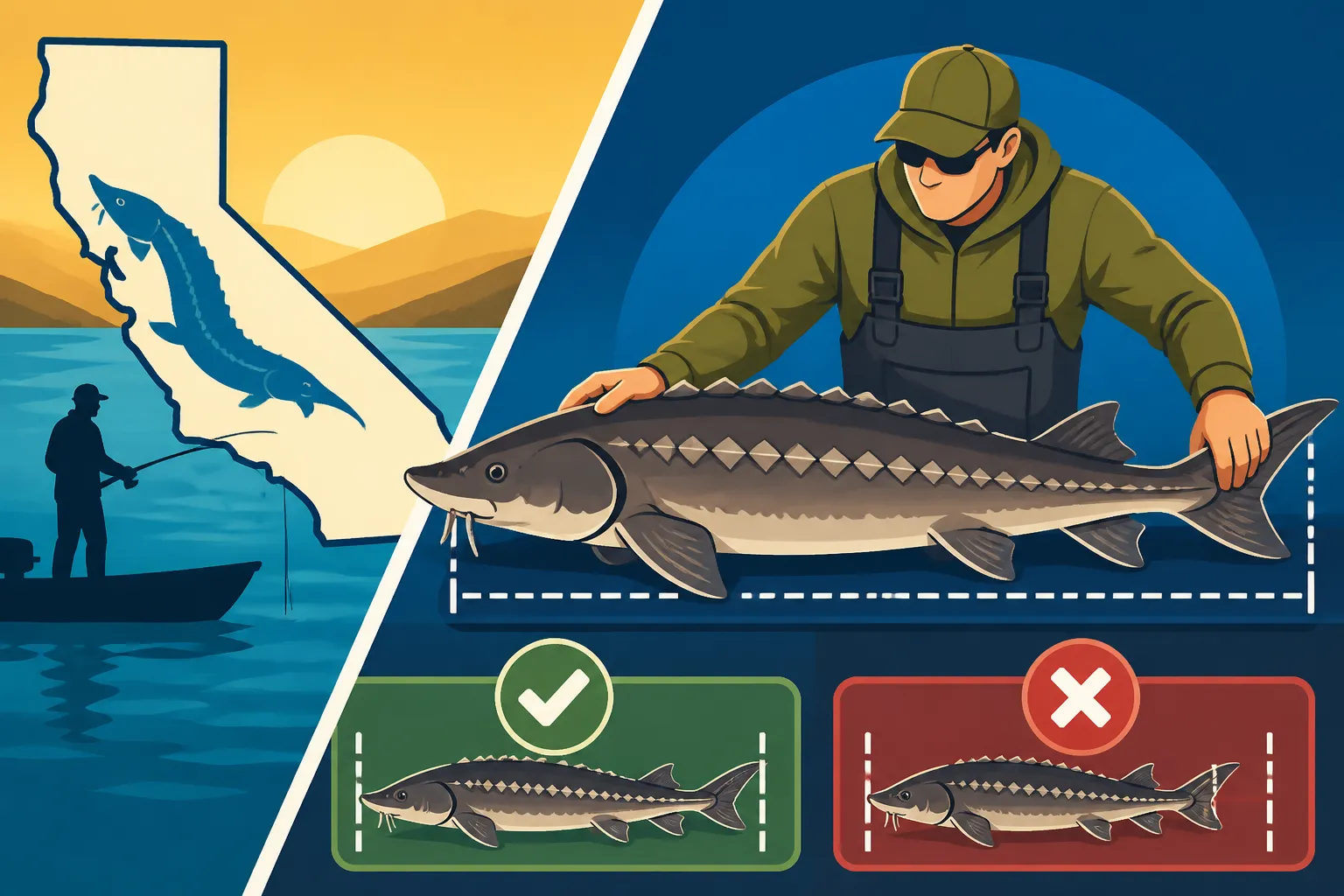
The CDFW requires sturgeon to be measured by fork length. This means you measure from the tip of the snout to the fork of the tail. It’s not to the absolute tip of the tail, but specifically where the two lobes of the tail meet. This can be tricky with a live, wriggling fish. You'll need a reliable measuring device that can handle a fish of this size – a soft tape measure is often preferred for accuracy and ease of use on a curved surface, but a rigid bump board can also work if the fish is properly restrained. For those looking to be well-prepared, an accurate, durable measuring tape is essential gear, and you can often find suitable options on sites like Amazon that are designed for large fish.
Here’s a step-by-step breakdown to ensure accuracy:
- Secure the Fish: This is paramount for both your safety and the fish's well-being. Gently but firmly get the fish under control. If you're on a boat, use a net or cradle. If on shore, try to keep it wet and on a smooth, non-abrasive surface like a wet tarp or mat. Avoid dragging it on rough ground.
- Lay it Flat: Position the fish as straight as possible. Ensure its mouth is closed if possible and the head is aligned with the measuring device's zero mark.
- Measure to the Fork: Extend the tape or measuring stick along the fish's body, stopping exactly at the deepest part of the V-shape in its tail fin (the fork). Do not pinch the tail, just note where the fork naturally falls.
- Confirm the Measurement: Double-check your reading. If it’s close to the 40-inch minimum or 60-inch maximum, measure again to be absolutely certain. There's no "close enough" in regulation.
- Release or Retain: Based on your accurate measurement, make the call. If it's within the 40-60 inch slot, and you've decided to keep it, tag it immediately and fill out your California Sturgeon Report Card. If it's outside the slot, release it quickly and gently.
Common Measurement Mistakes and How to Avoid Them
Anglers often make common mistakes that can lead to mismeasurements. One of the biggest errors is trying to measure a fish while it's still wildly flopping around. Not only is this unsafe for you, but it’s incredibly stressful for the fish and almost guarantees an inaccurate reading. Another mistake is measuring to the tip of the tail, rather than the fork. This can easily add an inch or two, potentially pushing a legal fish into the "too big" category, or worse, making a "too small" fish seem legal. Always remember: snout to fork!
Another frequent issue is not having the right measuring tool or having one that's too short or flimsy. A standard household tape measure might work for smaller fish, but for a 50-inch sturgeon, it's cumbersome and prone to error. Invest in a dedicated fish measuring device. Consider getting a long, soft, flexible tape measure that conforms to the fish's body, or a sturdy, marked mat. Lastly, failing to keep the fish wet during the measurement process is a mistake. Fish skin is delicate, and exposing it to dry air for too long, especially on hot surfaces, can remove their protective slime layer, making them vulnerable to disease once released. Always wet your hands, measuring device, and any surface the fish will touch.
| Sturgeon Species | Size Limit (Fork Length) | Retention Allowed | Key Identification |
|---|---|---|---|
| White Sturgeon | 40 to 60 inches | Yes | Blunter snout, gray/white, smaller scutes |
| Green Sturgeon | No retention permitted | No | Pointed snout, olive-green, larger scutes, white stripe |
Why Size Limits Matter for Sturgeon Conservation
The regulations around sturgeon size limits aren't arbitrary bureaucratic hurdles; they are carefully crafted conservation tools vital for the survival and health of California's sturgeon populations. These regulations are designed to protect the species at its most vulnerable life stages and to ensure that enough mature fish are able to reproduce and sustain the population.
Protecting Breeding Stock and Young Fish
The 40-inch minimum size limit is specifically designed to protect juvenile White Sturgeon. These smaller fish are often not yet sexually mature, meaning they haven't had the opportunity to spawn and contribute to the next generation. By allowing them to grow larger, they have a chance to reach maturity and participate in the breeding cycle at least once, ideally multiple times. Think of it like a savings account; you want to let your principal grow before you start drawing from it.
On the other end, the 60-inch maximum size limit is equally, if not more, important. Larger sturgeon, particularly those over 60 inches, are typically older, more experienced breeders. These "trophy" fish are often highly fecund, meaning they produce a large number of eggs, and their long life experience makes them crucial for the genetic health and resilience of the population. Removing these super-spawners from the ecosystem would have a disproportionately negative impact on future generations. By protecting them, we safeguard the very backbone of the species' reproductive capability. It’s a delicate balance, and adherence to these rules is how we ensure that our children and grandchildren will also have the chance to experience the thrill of catching these magnificent fish. This also ties into the broader California Fishing Regulations Explained|California Fishing Regulations Explained for various species.
Contributing to Scientific Data and Management
Every sturgeon caught, whether retained or released, provides valuable data, especially when you correctly fill out your California Sturgeon Report Card. This card isn't just busywork; it's a critical component of sturgeon management. The information you provide—species, size, location, and whether it was kept or released—helps CDFW biologists track population trends, monitor catch rates, and assess the effectiveness of current regulations. When anglers accurately report their catches, the data becomes more reliable, leading to better-informed management decisions.
For example, if data consistently shows a decline in catches of fish within the slot limit, it might signal an issue with recruitment (new fish entering the population) or overfishing. Conversely, if there's a healthy number of slot-limit fish being caught, it indicates the population is doing well. Without this angler-contributed data, scientists would have a much harder time understanding the health of sturgeon populations and making necessary adjustments to regulations, such as those governing California Salmon Season Dates Explained|California Salmon Season Dates Explained or other sensitive species. Your cooperation isn't just about avoiding a fine; it's about being an active participant in the conservation of a truly special fishery.
Penalties and Reporting for Sturgeon Violations
Ignoring California's sturgeon size limits and other regulations isn't just a minor oversight; it's a serious offense that carries significant penalties. The California Department of Fish and Wildlife (CDFW) takes these violations very seriously because they directly undermine conservation efforts for a long-lived, sensitive species. It's crucial for every angler to understand the potential repercussions and how to responsibly manage their catch, including the proper use of required documentation.
The Consequences of Violating Sturgeon Regulations
Catching a sturgeon outside the legal slot limit and failing to release it, or keeping a Green Sturgeon, can result in a range of penalties. These can be pretty harsh, and rightly so, considering the conservation status of sturgeon. You're not just looking at a slap on the wrist. Fines can range from several hundred to thousands of dollars, depending on the severity of the offense, the number of fish involved, and any prior violations. Beyond monetary penalties, you could face confiscation of your fishing gear, which can be a significant blow if you've invested in quality equipment.
Perhaps one of the most impactful penalties for a dedicated angler is the potential suspension or revocation of your fishing license. Imagine being banned from fishing for months or even years because of a single mistake or moment of carelessness. This truly underscores the importance of knowing and following the rules, including every detail of the California Fishing License Guide|California Fishing License Guide. In some egregious cases, typically involving repeated offenses or commercial poaching, violators could even face jail time. It’s a stark reminder that these regulations aren’t suggestions; they are laws designed to protect a valuable natural resource.
The Role of the Sturgeon Report Card
Beyond the size limit, remember that anyone fishing for sturgeon, regardless of whether they intend to keep one, must possess a valid California Sturgeon Report Card|California Sturgeon Report Card in addition to a California Fishing License. This isn't optional, and failing to have one is a violation itself. The report card serves a crucial purpose: it's how the CDFW tracks sturgeon fishing effort and harvest. Even if you don't catch anything, you're required to return the card by the deadline, marking that you didn't catch any fish.
If you do catch a legal-sized White Sturgeon and choose to retain it, you must immediately punch out the month and day on your report card. You are allowed to keep only one White Sturgeon per year with your report card. Think about that for a second: one fish for the entire year. This extremely low annual limit further emphasizes the need for strict management and the importance of accurate reporting. Trying to keep more than one fish or failing to mark your card instantly makes your catch illegal, inviting those serious penalties we just talked about. Accurate completion and timely return of your report card are essential components of responsible sturgeon angling, and are detailed within the California Fishing Report Cards Explained|California Fishing Report Cards Explained.
Reporting Violations and Staying Informed
If you witness someone violating sturgeon regulations—whether it's keeping an undersized or oversized fish, a Green Sturgeon, or exceeding the annual limit—it's your responsibility as a conservation-minded angler to report it. The CDFW relies heavily on public assistance to enforce these rules. You can discreetly report violations through the CalTIP (Californians Turn In Poachers and Polluters) hotline at 1-888-334-CALTIP (2258) or by using the CalTIP app. Providing as much detail as possible, such as boat registration numbers, vehicle descriptions, and locations, helps wardens investigate effectively. You can learn more about this process in our guide on How to Report a California Fishing Violation|How to Report a California Fishing Violation.
Staying informed is your best defense against accidental violations. Regulations can and do change, especially for sensitive species like sturgeon. Always check the current California Freshwater Fishing Regulations or the official CDFW website before each fishing season or trip. A quick look at the latest California Fishing Regulation Booklet Explained|California Fishing Regulation Booklet Explained can prevent a lot of headaches and ensure you're always fishing within the law, helping to preserve this incredible fishery for generations to come.
Disclaimer
The information provided in this guide is for general informational purposes only and is not intended as legal advice. Fishing regulations in California are subject to change by the California Department of Fish and Wildlife (CDFW). It is the responsibility of every angler to consult the most current CDFW regulations booklet and local advisories before engaging in any fishing activity. Adherence to all applicable laws and regulations is mandatory.