San Luis Reservoir: Fish Species and Best Spots
Navigating a new fishing spot, especially one as vast and dynamic as San Luis Reservoir, can feel like trying to solve a puzzle with half the pieces missing. You hear whispers of massive striped bass and trophy-sized largemouth, but figuring out where to cast your line and what they're biting on can quickly turn an exciting trip into a frustrating head-scratcher. This guide is here to untangle that confusion, providing you with a detailed breakdown of the fish species calling San Luis home and the prime locations to target them, ensuring your next outing is a success rather than a struggle.
Understanding San Luis Reservoir: A Central Valley Gem
San Luis Reservoir, nestled in the Pacheco Pass area of Merced County, isn't just another pretty lake; it's a critical component of California's State Water Project. This massive off-stream storage facility, along with its smaller companion, the O'Neill Forebay, holds vast amounts of water, making it a powerful and often challenging fishery. Its sheer size and the way it connects to the California Aqueduct system mean that conditions can change rapidly, from water levels to clarity, and even fish behavior.
The Unique Ecosystem of San Luis Reservoir
What makes San Luis so captivating, yet sometimes intimidating, is its unique ecosystem. Unlike many natural lakes, San Luis is a pumped-storage reservoir, drawing water from the Sacramento-San Joaquin Delta via the California Aqueduct. This constant movement and replenishment of water bring in a diverse range of forage fish, which in turn supports a thriving population of predatory species. However, this also means the fish are often migratory within the reservoir, following baitfish and reacting to the influx of new water, making it less predictable than a static lake.
You'll often hear anglers talk about the wind at San Luis. Oh, that wind! It can be a real game-changer, whipping up whitecaps and making boat control a nightmare. This isn't just about comfort; strong winds affect water clarity, baitfish movement, and can push fish into specific protected coves or deeper water. Being prepared for these conditions, both mentally and with the right gear, is crucial. For those planning a trip, checking weather forecasts for wind speed is as important as checking the fishing report.
The O'Neill Forebay: A Connected but Different Fishery
Adjacent to the main reservoir is the much smaller, shallower, and often warmer O'Neill Forebay. While connected by a canal and fish ladders, the forebay fishes very differently. It's often the go-to spot when the main lake is too rough or when anglers are targeting species that prefer slightly warmer or more stable conditions. Many anglers consider the forebay a fantastic warm-up or cool-down spot for a day of fishing, or even a primary destination in its own right, especially for bank fishing or targeting species like crappie and catfish.
The forebay's distinct characteristics—its shallower depth, protection from the worst of the main lake's winds, and its own unique structure—mean that techniques and target species can vary significantly from the main San Luis Reservoir. It’s almost like having two different fishing destinations right next to each other, each with its own rhythm and rewards. Understanding this dynamic is key to unlocking the full potential of this central California fishing powerhouse.
Prime Fish Species in San Luis Reservoir
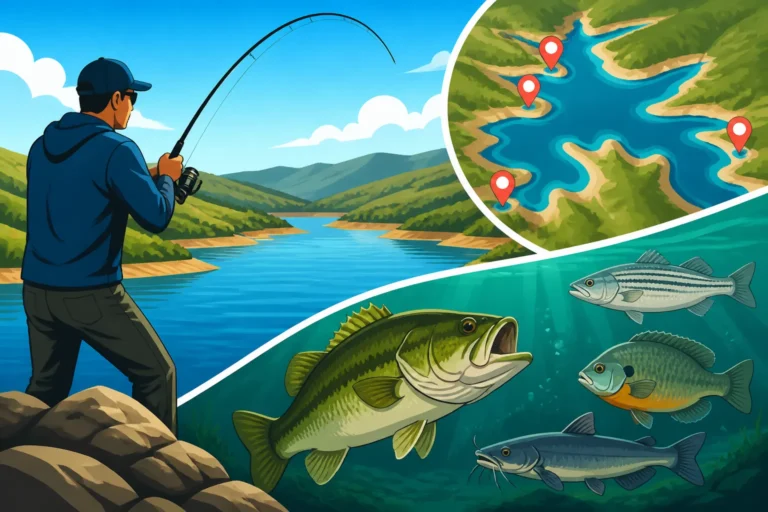
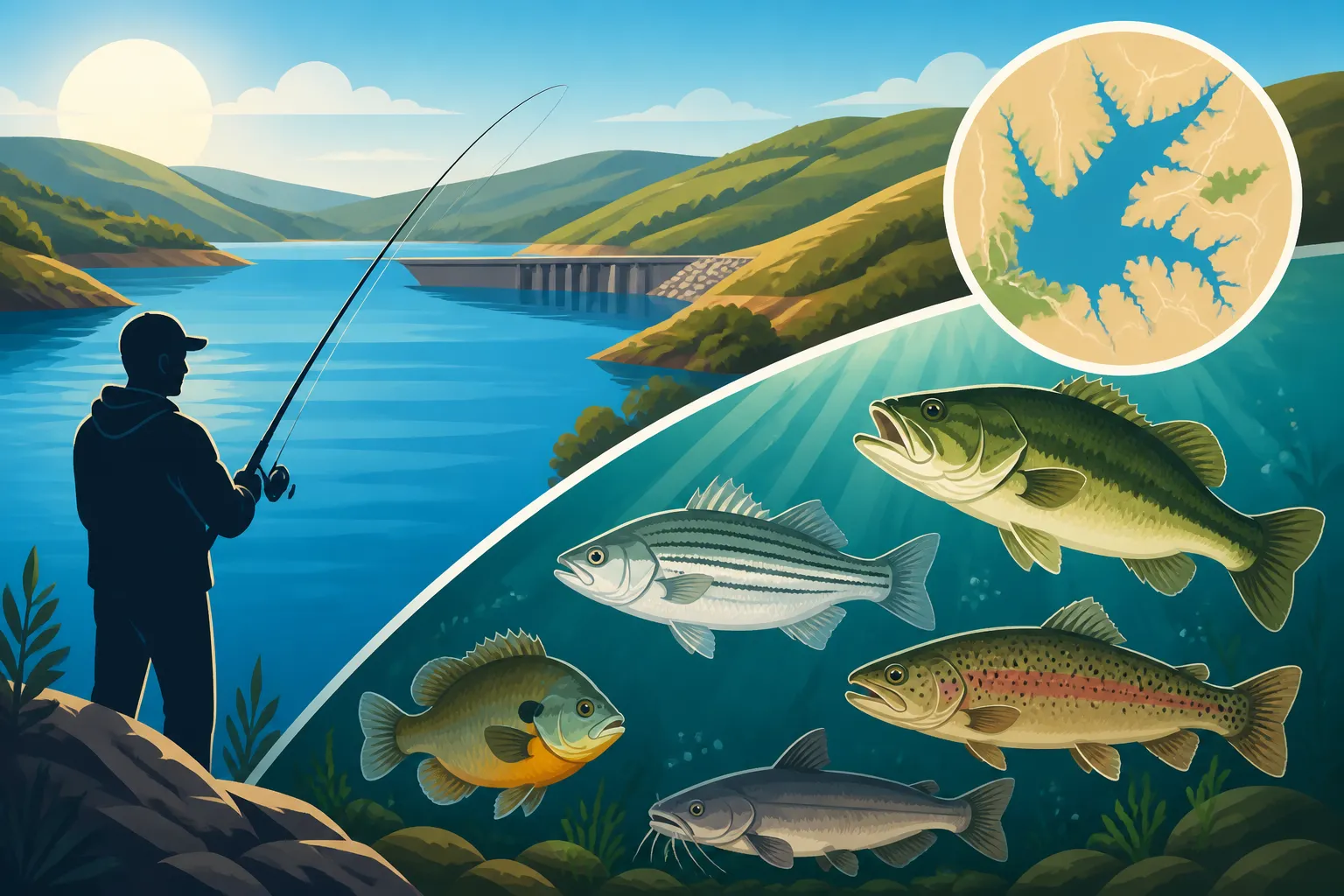
San Luis Reservoir is most famous for its incredible striped bass fishery, but it's also home to a healthy population of other popular species, including various black bass, crappie, and catfish. Knowing what's biting and when is half the battle, and these waters offer diverse opportunities for anglers of all stripes.
Striper Mania: The Dominant Predator
Striped bass, often simply called "stripers," are the undisputed kings of San Luis Reservoir. These hard-fighting fish can grow to impressive sizes here, with 20-pounders not uncommon and even larger specimens pulled out regularly. They're anadromous fish, meaning they typically live in saltwater and spawn in freshwater, but these landlocked populations have adapted perfectly to the reservoir environment. Their aggressive nature and powerful runs make them a thrilling target for anglers.
Stripers in San Luis typically feed on threadfin shad, hitch, and even smaller trout or bass. Their movements are often dictated by these baitfish schools, which can be found throughout the reservoir. During the spring and fall, stripers are particularly active, moving into shallower areas to feed. Summer often sees them move deeper to find cooler water, while winter can be a bit more challenging, though patient anglers can still find success. When planning your trip, consider checking current reports, which can often be found on fishing forums or through services like FishingBooker, to get the most up-to-date information on where the stripers are holding. Remember to be mindful of the California Striped Bass Regulations, as limits and sizes can change.
Black Bass: Largemouth and Smallmouth Opportunities
While stripers steal much of the limelight, San Luis Reservoir also boasts a very respectable black bass population, primarily largemouth and smallmouth bass. These fish offer a different kind of fight and require different tactics, appealing to anglers who love to target structure and finesse presentations. The sheer size of the reservoir means there's ample habitat for both species, from rocky points to submerged vegetation.
Largemouth bass often gravitate towards the scattered submerged brush, rock piles, and any available cover. The shallower, warmer waters of the O'Neill Forebay are particularly good for largemouth, especially during spring and early summer when they're actively spawning and feeding near shore. Smallmouth bass, on the other hand, prefer the deeper, rockier areas of the main reservoir. Look for them around bluff walls, rocky ledges, and transition areas where hard bottom meets softer sediment. They are known for their strong, dogged fights and can be a fantastic challenge on light tackle. Mastering California Bass Fishing Techniques can really pay off here.
Crappie and Catfish: Panfish and Bottom Dwellers
Beyond the apex predators, San Luis Reservoir and the O'Neill Forebay also offer excellent opportunities for crappie and various catfish species. These can be particularly fun targets for families or anglers looking for a more relaxed day of fishing, and they're often found closer to shore, making them accessible to bank anglers.
Crappie tend to school up around submerged brush, timber, or any structure that offers them cover and ambush points for small baitfish and insects. In the O'Neill Forebay, areas with standing tules or submerged trees can hold impressive numbers of both black and white crappie. They are popular for their delicate flavor and are a blast to catch on ultralight tackle. Catfish, including channel catfish and white catfish, are abundant in both bodies of water. They prefer the bottom, often congregating in deeper holes or along channels, and are opportunistic feeders, making them relatively easy to catch with a variety of baits. For those looking to target these, early mornings or evenings are often the most productive times, and the O'Neill Forebay's calmer waters can be an ideal spot.
Best Fishing Spots in San Luis Reservoir and O'Neill Forebay
Knowing the species is one thing, but knowing where to find them within such a massive body of water is another challenge entirely. San Luis Reservoir and its companion, the O'Neill Forebay, offer a variety of access points and distinct fishing zones, each with its own charm and target species.
Main Reservoir Hotspots
The main San Luis Reservoir is a vast expanse, but certain areas consistently produce good results, especially for striped bass and smallmouth bass. When the wind allows, these spots can be incredibly rewarding.
Basalt Area
The Basalt Area, located on the western side of the main reservoir, is a legendary spot for striper fishing. This stretch features rocky points, coves, and varying depths, providing excellent habitat and ambush points for predatory fish. It’s particularly good during the spring and fall when stripers are actively chasing baitfish in shallower water. Anglers often troll large plugs or cast swimbaits and topwater lures along the points and shoreline breaks here. On calm days, you might even see stripers busting on the surface, creating an exciting opportunity for a topwater bite.
Access can be a bit tricky depending on water levels, but many boat anglers launch from the Basalt Recreation Area and work their way along the shoreline. Bank anglers can find productive spots along the riprap and rocky outcroppings, especially closer to the launch ramp. It's a vast area, so don't be afraid to move around and explore different depths and structures. For those looking to hire a guide to navigate these complex waters, online platforms like FishingBooker can connect you with local experts who know the Basalt Area like the back of their hand.
Portuguese Cove and Dinosaur Point
Further south on the western shore, Portuguese Cove and the area around Dinosaur Point are also highly regarded. These spots offer a mix of rocky and sandy bottoms, with deeper water quickly accessible from shore in many places. Portuguese Cove is known for holding stripers, especially during lower light conditions or when they're cruising for baitfish. Dinosaur Point, popular for its picnic areas and amenities, also provides excellent bank access to some productive waters.
Anglers here often cast swimbaits, jerkbaits, or bait fish with anchovies or sardines from shore. Boat anglers can troll or cast along the deeper edges of the cove and around any visible structure. These areas can be particularly good when the wind is manageable, as they offer some protection compared to the wide-open main body of the reservoir. Understanding the best times to fish in California, particularly for specific species, can greatly enhance your success in these areas.
O'Neill Forebay Favorites
The O'Neill Forebay, while smaller, is a powerhouse for fishing, especially when conditions on the main lake are rough or for those targeting panfish and black bass.
San Luis Creek Inlet
The San Luis Creek Inlet, on the western side of the O'Neill Forebay, is a consistent hotspot. This area often has slightly warmer water and attracts baitfish, which in turn draws in largemouth bass, crappie, and catfish. The banks here are accessible, making it a favorite for shore anglers. You'll often find anglers soaking cut bait for catfish or casting small jigs and plastic worms for bass and crappie.
During the spring, this inlet can be teeming with largemouth bass moving into shallower waters for spawning. Flipping jigs, pitching senkos, or working spinnerbaits around any available brush or weed lines can be incredibly effective. For crappie, targeting submerged brush or overhanging trees with small minnows or crappie jigs can yield impressive stringers. It's a vibrant area that really showcases the diverse freshwater fish of California available in the forebay.
Check 12 and the Aqueduct Turnaround
"Check 12" refers to a specific operational gate on the California Aqueduct where water enters and exits the O'Neill Forebay, located on the eastern side. This area is a perennial favorite, particularly for striped bass and black bass. The moving water here concentrates baitfish and creates current breaks, which are prime ambush points for predators. Anglers can fish from shore along the aqueduct's edge or from boats working the currents.
The Aqueduct Turnaround, also on the eastern side, is another key area. Here, the aqueduct makes a large loop, providing varied depths and current flows. This spot is renowned for its consistent striper action, often attracting schools that feed aggressively. Both bait fishing with anchovies or bloodworms and casting lures like Kastmasters or swimbaits can be highly effective. The current can be strong, so be prepared with heavier tackle if needed. These moving water areas are fantastic examples of how California Freshwater Fishing Regulations apply to dynamic environments.
Essential Gear and Techniques for San Luis Reservoir
Tackling a unique fishery like San Luis Reservoir requires more than just a rod and reel. The right gear and a solid understanding of effective techniques can significantly boost your success rate, whether you're chasing monster stripers or stealthy black bass.
Rods, Reels, and Line Choices
For striped bass in the main reservoir, you'll generally want a medium-heavy to heavy action rod, around 7 to 8 feet long, paired with a stout baitcasting or spinning reel capable of holding 150-200 yards of 15-20 lb monofilament or, more commonly, 30-50 lb braided line. Braid offers superior casting distance and sensitivity, which is crucial for detecting subtle bites in deep or turbulent water. A fluorocarbon leader (20-30 lb) is often tied to the braid for invisibility and abrasion resistance.
When targeting largemouth and smallmouth bass, a diverse range of tackle is useful. For largemouth in the O'Neill Forebay's cover, a medium-heavy casting rod with 15-20 lb fluorocarbon or braided line (with a fluorocarbon leader) is ideal for pitching jigs and plastics. For smallmouth in the main lake's rocky areas, a medium-light to medium action spinning rod with 8-12 lb fluorocarbon or braided line (with a lighter leader) is perfect for drop-shotting, shaky heads, or small crankbaits. For crappie, ultralight spinning gear with 4-6 lb test is all you need.
Effective Baits and Lures
The variety of fish in San Luis Reservoir means a wide array of baits and lures can be effective. Matching the hatch, as they say, is often the key.
Striped Bass Baits and Lures
For striped bass, live bait such as anchovies, shad, or even smaller hitch (if legal and available) are exceptionally effective, especially when fished on a Carolina rig or under a slip bobber. Cut bait, like anchovy chunks or sardine slices, can also work wonders, particularly in areas with current.
When it comes to lures, large swimbaits (soft plastic or hard-bodied) mimicking baitfish are perennial favorites. Brands like River2Sea and Lucky Craft make excellent options. Topwater lures, such as poppers or walking baits, create explosive strikes during surface boils. Deeper-diving crankbaits or lipless crankbaits are great for trolling or casting in open water, while heavy spoons like the Kastmaster or Crippled Herring are fantastic for jigging vertically or casting long distances, especially if you see fish schooling deeper. Mastering California Trolling Tips and Techniques can be highly effective for covering water and finding active stripers.
Bass Baits and Lures
For largemouth bass, classic presentations excel. Plastic worms (Texas or Carolina rigged), jigs, spinnerbaits, crankbaits, and topwater frogs or poppers are all productive. Consider colors that imitate local forage or stand out, like green pumpkin, junebug, or chartreuse. For smallmouth bass, finesse tactics often shine. Drop-shot rigs with small plastics, shaky heads, Ned rigs, small swimbaits, and tube jigs are all excellent choices. Smallmouth are particularly drawn to presentations that mimic crawfish or small baitfish in rocky environments. Knowing how to fish for Largemouth Bass in California or even how to fish for Striped Bass in California can be the difference between a good day and a great day.
| Species | Best Season | Common Baits/Lures | Preferred Habitat |
|---|---|---|---|
| Striped Bass | Spring, Fall | Anchovies, Shad, Swimbait, Topwater, Jigging Spoon | Open water, Points, Current breaks |
| Largemouth Bass | Spring, Summer | Plastic Worms, Jigs, Spinnerbaits, Crankbaits | Submerged brush, Rock piles, Tules |
| Smallmouth Bass | Spring, Summer | Drop-shot, Tubes, Small Crankbaits, Jerkbaits | Rocky points, Bluff walls, Ledges |
| Crappie | Spring, Fall | Small Jigs, Minnows, Crappie Tubes | Submerged brush, Timber, Docks (Forebay) |
| Catfish | Spring, Summer | Cut Bait, Stink Bait, Worms | Bottom of deeper holes, Channels |
Tips for Success on San Luis Reservoir
Beyond the gear, a few general tips can make your San Luis trip more productive. First, always monitor the wind. It's not just about comfort; it dictates where fish will hold and what presentations will be feasible. If the main lake is too rough, consider the O'Neill Forebay. Second, pay attention to water levels and clarity. These can vary drastically, affecting fish behavior. A quick check of online forums or local tackle shops before your trip can provide invaluable real-time insights.
Third, use your electronics! Fish finders and GPS are critical on such a large body of water, helping you locate schools of baitfish, identify submerged structure, and mark productive areas. For those new to the reservoir, consider hiring a local guide. They have years of experience and can quickly put you on fish, teaching you the nuances of this challenging fishery. You can find reputable guides for the area on platforms like FishingBooker, which often include reviews and contact information. Remember, a valid California Fishing License Guide is always required, and make sure you're up to date on all California Freshwater Fishing Regulations.
Access and Amenities for Anglers
San Luis Reservoir and the O'Neill Forebay are popular destinations, and thankfully, they come with a range of access points and amenities to make your fishing trip as smooth as possible. Understanding your options for launching boats, fishing from shore, and finding necessary services can greatly improve your experience.
Boat Launch Facilities
For those bringing their own watercraft, both the main San Luis Reservoir and the O'Neill Forebay offer public boat launch facilities.
San Luis Reservoir Launch Ramps
On the main reservoir, the primary launch point is the Basalt Recreation Area launch ramp. This facility is well-maintained and typically accessible even during moderate water level fluctuations, though extreme lows can impact usability. There's ample parking for vehicles with trailers, and usually restrooms are available. It's a busy spot, especially on weekends, so arriving early is always a good idea. From Basalt, you have direct access to some of the best striper grounds on the main lake.
Another option for the main reservoir, though often subject to water levels, is the launch at Dinosaur Point Recreation Area. While primarily known for its bank access and picnic spots, it does have a launch that can be used when conditions are right. Always check the current water levels and accessibility status before planning to launch from Dinosaur Point, as it's not as consistently open as Basalt.
O'Neill Forebay Launch Ramps
The O'Neill Forebay has its own dedicated launch ramp, which is typically found near the O'Neill Forebay Recreation Area. This ramp is often less exposed to the heavy winds that can batter the main reservoir, making it a safer and more comfortable option on blustery days. It’s ideal for smaller boats, kayaks, and float tubes looking to fish the shallower, more protected waters of the forebay for bass, crappie, and catfish. Like Basalt, it offers parking and restrooms. Many anglers find this a great starting point, whether they plan to stay in the forebay or transition into the main lake if conditions improve.
When using any launch ramp, always be considerate of other users, follow proper launching and retrieval etiquette, and ensure your boat is inspected for invasive species like quagga and zebra mussels, as per California regulations. This helps protect our precious waterways.
Bank Fishing Opportunities
Not everyone has a boat, and that's perfectly fine! San Luis Reservoir and the O'Neill Forebay offer fantastic bank fishing opportunities, making them accessible to a wider range of anglers.
Main Reservoir Bank Access
For the main reservoir, the Dinosaur Point Recreation Area is a prime bank fishing destination. Its varied shoreline offers deep water access, rocky outcroppings, and some sandy stretches, allowing for different fishing techniques. Many anglers here target striped bass using cut bait, live bait, or by casting spoons and swimbaits. It’s also a good spot for catching the occasional smallmouth bass. The sheer size of the area means you can often find a quiet spot away from the crowds, especially during weekdays.
The Basalt Recreation Area also has some bank access, particularly near the launch ramp and along the riprap. While it can be busy with boat traffic, persistent bank anglers can still find success here, often targeting the same striper schools that boaters pursue. Always be mindful of casting distances and potential snags along the riprap.
O'Neill Forebay Bank Access
The O'Neill Forebay is arguably even better for bank anglers due to its smaller size, calmer waters, and abundant shoreline access. The entire O'Neill Forebay Recreation Area provides excellent opportunities, with numerous turnouts and pathways leading to the water's edge. The San Luis Creek Inlet area is particularly popular, known for its crappie, catfish, and largemouth bass. You can easily walk along the banks, casting to different structures or setting up multiple rods for bait fishing.
The areas around Check 12 and the Aqueduct Turnaround on the eastern side of the forebay also offer fantastic bank access. The concrete banks of the aqueduct provide a firm footing, and the current concentrates fish, making it a hotspot for stripers and catfish. Many anglers bring folding chairs and spend hours here, enjoying the constant action. Remember to check local signage for any restrictions on where you can fish from the bank, as some areas may be designated for specific uses or closed off. Having a reliable source like FishingBooker can sometimes help you find local guides who can point out the best bank fishing spots or even lead a guided shore fishing trip.
Final Thoughts and Planning Your Trip
Fishing San Luis Reservoir can be an incredibly rewarding experience, offering the chance to hook into some truly memorable fish, especially those hard-fighting striped bass. However, its vastness and dynamic nature mean that a little planning goes a long way. This isn't a small pond where you can just show up and expect immediate success; it demands respect and preparation.
Remember to always prioritize safety, especially when dealing with the unpredictable winds on the main reservoir. Let someone know where you're going and when you expect to return. Pack enough water, sunscreen, and layers of clothing, as the weather can shift quickly. And most importantly, respect the resource. Practice catch and release for fish you don't plan to eat, dispose of trash properly, and adhere to all California Fishing Bag and Size Limits.
Whether you're an experienced angler seeking a trophy striper or a family looking for a fun day of crappie fishing in the O'Neill Forebay, San Luis Reservoir has something for everyone. With the right knowledge of species, prime spots, and effective techniques, you're well on your way to a successful and enjoyable day on the water.
Disclaimer
The information provided in this guide is for general informational purposes only and is subject to change. Fishing regulations, conditions, and fish populations can vary. Always consult the latest California Department of Fish and Wildlife regulations and local advisories before planning your fishing trip to San Luis Reservoir or any other body of water. Stay safe and respect the environment.