California Yellowtail Regulations and Limits
There's nothing quite like the thrill of a yellowtail hitting your line, especially here in California. These powerful, hard-fighting fish are a true angling prize, but navigating the ever-changing rules and regulations around them can feel like a real puzzle. It’s frustrating to worry if you’re doing everything right when all you want to do is enjoy your time on the water. This comprehensive guide is here to clear up all the confusion around California yellowtail regulations, including bag limits, size restrictions, and other crucial details, so you can fish with confidence and peace of mind.
Understanding California Yellowtail Regulations
Fishing for yellowtail in California is an incredible experience, but it comes with a responsibility: knowing and following the rules. These regulations aren't just arbitrary hoops to jump through; they're thoughtfully designed to protect our precious marine resources and ensure that future generations can enjoy the same thrilling yellowtail pursuits we do today. Ignoring them, even accidentally, can lead to stiff penalties and, more importantly, can harm the very fisheries we love.
Why Yellowtail Regulations Are So Important
Think of yellowtail regulations as the guardrails for a sustainable fishery. These rules are put in place to prevent overfishing, a scenario where too many fish are caught, leading to a decline in their population. When a species like yellowtail is overfished, it can disrupt the entire marine ecosystem, impacting other fish, their prey, and even their predators. The California Department of Fish and Wildlife (CDFW) meticulously monitors fish stocks, and when they see signs of stress, they adjust regulations to give the fish a chance to recover. This foresight helps maintain a healthy population, ensuring that there are always yellowtail available for anglers to target, year after year.
Moreover, these regulations contribute to the overall health and biodiversity of California's coastal waters. Yellowtail, as a predatory species, play a vital role in the food web. By ensuring their population remains robust, we help maintain the balance of smaller baitfish and other marine life. It’s a complex dance, and every piece, including our responsible angling, contributes to a thriving ocean environment. Without these rules, individual anglers' actions, however well-intentioned, could cumulatively lead to significant ecological damage.
The Agencies Behind the Rules
When it comes to saltwater fishing in California, you're primarily dealing with two main governmental bodies: the California Department of Fish and Wildlife (CDFW) for state waters, and NOAA Fisheries for federal waters. While yellowtail fishing often occurs closer to shore in state waters, especially around kelp beds or islands, trips further offshore can venture into federal territory. Generally, federal regulations for highly migratory species like yellowtail tend to align with state regulations to avoid confusion, but it’s always wise to be aware of the distinction.
The CDFW is the primary state agency responsible for managing California's fish and wildlife resources. They conduct extensive scientific research, monitor fish populations, and enforce fishing laws. Their regulations are updated annually and can even change in-season if stock assessments reveal new concerns. NOAA Fisheries, part of the U.S. Department of Commerce, oversees fisheries in federal waters (typically beyond 3 miles from shore). They often work in conjunction with state agencies and regional fishery management councils to develop comprehensive management plans. These agencies also host public meetings and solicit input from stakeholders, including recreational anglers, when considering new rules, so your voice can be heard.
Key Regulatory Documents
To stay informed, your go-to resource is the California Sport Fishing Regulations booklet. This invaluable guide is published annually by the CDFW and contains all the current rules, limits, and seasons for both freshwater and saltwater species. You can usually pick up a physical copy wherever fishing licenses are sold, like sporting goods stores, or, even better, access the most up-to-date digital version on the CDFW website. I always recommend having the digital version saved on your phone for quick reference, as amendments or emergency closures can be posted online before they appear in a printed booklet.
Beyond the annual booklet, it's crucial to check for "in-season" regulation changes. The CDFW frequently issues news releases or updates its website with emergency closures or adjustments, particularly for sensitive fisheries. For instance, if yellowtail populations were to experience an unexpected decline due to environmental factors or increased fishing pressure, the CDFW could implement a temporary closure or reduce bag limits mid-season. Staying connected to official CDFW channels or reliable fishing news sources is paramount. You can also learn more about how to read this important document in our guide on How to Read the California Fishing Regulations Booklet.
Navigating Yellowtail Bag and Size Limits
Once you've got your fishing license in hand and understand the regulatory bodies, the next crucial step is to internalize the specific bag and size limits for yellowtail. These numbers are non-negotiable and strictly enforced to ensure that enough fish survive to reproduce and maintain healthy populations. It’s not just about catching fish; it’s about catching them responsibly.
Daily Bag Limits Explained
For California yellowtail, the daily bag limit is generally ten (10) fish per person. This means that in any single calendar day, you cannot take more than ten yellowtail. It sounds straightforward, but there are nuances. For example, if you go out fishing with a buddy and you each catch five yellowtail, your combined total on the boat is ten. If one of you catches seven and the other three, that's also ten. It's about individual limits, but also knowing the total number of fish on your vessel.
What happens if you accidentally catch more than the daily limit? The law is clear: any fish exceeding the bag limit must be immediately released back into the water with minimal harm. Continuing to fish for yellowtail after you've reached your limit is a violation. Also, remember the possession limit, which is typically twice the daily bag limit for fish not consumed or processed immediately. So, if you've been on a multi-day trip and have frozen your catch, you generally can possess up to 20 yellowtail. Always double-check current regulations for any specific changes, as these numbers can be adjusted. Failing to adhere to these limits can lead to significant penalties, as detailed in our article on California Fishing License Fines and Penalties.
Minimum Size Requirements
Equally important is the minimum size requirement for yellowtail, which is typically 20 inches fork length. "Fork length" is measured from the tip of the fish’s snout to the fork of its tail. This is a crucial distinction, as some species are measured by "total length" (to the very tip of the tail). Having a reliable measuring device, like a tape measure or a marked cooler, is essential for any yellowtail angler. You can find excellent, durable measuring tools on platforms like Amazon that are perfect for boat or shore use.
The rationale behind minimum size limits is simple: it allows fish to grow to maturity and reproduce at least once before being harvested. This helps replenish the population. If you catch an undersized yellowtail, you must release it immediately and carefully. Handling undersized fish gently is key to their survival; avoid touching their gills, try to keep them in the water as much as possible, and use de-hooking tools if necessary. If you accidentally keep an undersized fish, it's considered a violation, even if unintentional. Ignorance of the law is not an excuse. Always measure your catch right away to ensure compliance. For comparison, it's also useful to know the specific rules for other popular game fish, like the California Halibut Size and Bag Limits.
Special Considerations and Area-Specific Rules
While the general daily bag limit of 10 yellowtail and the 20-inch fork length minimum apply across most of California's coastal waters, there can sometimes be minor variations or special considerations depending on the specific fishing grounds. For example, regulations can differ slightly between Northern, Central, and Southern California coastal management areas for certain species, although yellowtail are predominantly a Southern California target. Anglers need to be particularly vigilant when fishing near state borders or in areas that might fall under different management jurisdictions.
Another important aspect relates to Marine Protected Areas (MPAs). These are specific ocean areas designated to protect marine life and habitats, and many have strict "no-take" zones or highly restricted fishing rules. Before you drop a line, always confirm you are not within a no-fishing MPA. Understanding California Marine Protected Areas Explained is critical for any saltwater angler to avoid violations. Additionally, if you're fishing from a private boat and plan to venture beyond state waters (3 miles offshore), ensure you are familiar with any federal regulations that may apply, although for yellowtail, state and federal rules are usually harmonized for recreational anglers.
California Yellowtail Regulations Quick Reference
| Daily Bag Limit | 10 yellowtail per person per day. |
|---|---|
| Possession Limit | 20 yellowtail (twice the daily bag limit for fish not immediately consumed). |
| Minimum Size Limit | 20 inches fork length (from tip of snout to fork of tail). |
| Season | Typically open year-round, but always check for in-season closures or adjustments. |
| Primary Regulatory Body | California Department of Fish and Wildlife (CDFW) for state waters; NOAA Fisheries for federal waters (beyond 3 miles). |
| Required Document | Valid California Sport Fishing License. |
| Key Action | Always measure fish immediately upon catching; release undersized fish carefully. Verify regulations before each trip, especially for in-season changes. |
Seasons, Gear, and Species Identification
Knowing the rules is one thing, but understanding the context of seasons, appropriate gear, and how to correctly identify your catch is equally important for a successful and compliant yellowtail fishing trip. California's dynamic marine environment means things can change, so a little preparation goes a long way.
Yellowtail Seasons and Closures
Unlike some other species with very defined seasons, yellowtail in California generally have an open season year-round. This means you can target them whenever you feel like it, provided you have a valid fishing license. However, this "open" status is always subject to change. Factors like unusual ocean conditions, significant population declines, or shifts in prey availability could prompt the CDFW to implement emergency closures or modify limits to protect the stock. This happened with salmon in recent years, for example, showing how quickly seasons can shift.
Typically, the peak seasons for yellowtail in California are late spring, summer, and early fall when water temperatures are warmer, and baitfish are abundant. This is when they migrate closer to shore and to islands like Catalina, San Clemente, and the Coronado Islands (though the latter are in Mexican waters, they're a popular yellowtail destination for Southern California anglers). While the season might be technically open year-round, understanding Best Season for Yellowtail in California can dramatically increase your chances of a productive trip. Always make it a habit to check the most current CDFW regulations online before every trip, just in case an unexpected closure has been announced.
Permitted Gear and Methods
When it comes to gear for yellowtail, there aren't typically restrictive regulations on the type of rod, reel, or line you use, as long as it's within the general sport fishing guidelines. Most anglers targeting yellowtail opt for medium-heavy to heavy conventional or spinning tackle, capable of handling powerful runs and the challenging fight these fish offer. The key is to use gear strong enough to land the fish efficiently, minimizing stress on both the fish and the angler.
Common and effective methods include using live bait (like sardines, mackerel, or anchovies), surface iron jigs, yo-yo jigs, or even trolling artificial lures. You can often find a wide array of high-quality lures, hooks, and line from reputable brands on Amazon, which makes stocking up convenient. While specific hook sizes or bait types aren't generally regulated for yellowtail, it's always good practice to use barbless hooks when possible, especially if you plan on catch-and-release fishing or are in an area where non-target species are common. This reduces harm to fish that you don't intend to keep or that are undersized. If you're looking for more specific tactics, our guide on How to Catch Yellowtail in California offers a deep dive into successful techniques.
Distinguishing Yellowtail from Similar Species
Correctly identifying your catch is critical for adhering to regulations, as different species often have different bag and size limits. Yellowtail (Seriola lalandi) are often mistaken for other pelagic species, particularly various types of tuna or other jacks, especially by novice anglers. While an experienced eye can tell the difference instantly, it's worth knowing the key distinguishing features.
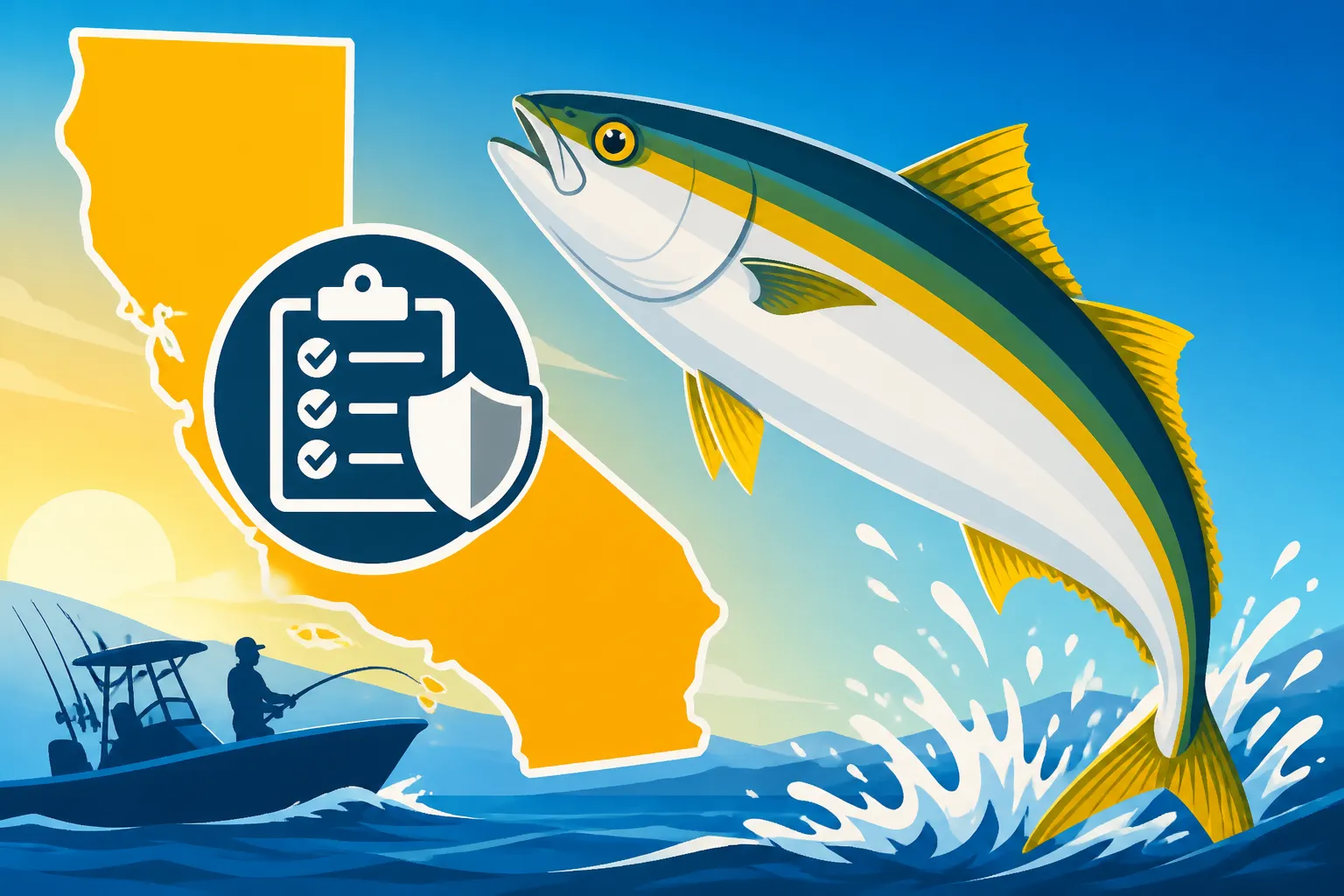
Yellowtail are characterized by their distinct yellow tail and a prominent iridescent yellow stripe running horizontally along their body, from eye to tail. Their body shape is more elongated and torpedo-like compared to the stockier, football shape of most tuna. They also have a more pronounced, pointed head. In contrast, species like Bonito or smaller Yellowfin Tuna, while also having sleek bodies, lack the distinctive yellow lateral line and often have different fin structures. For instance, Bonito typically have dark stripes along their back. If you're ever unsure about a catch, it’s best to err on the side of caution and either release the fish or consult a more experienced angler or the regulations booklet. Accurate identification ensures you're complying with the specific rules for each fish, preventing accidental violations.
Reporting and Enforcement
Fishing responsibly isn't just about following the rules; it's also about understanding the system that upholds them and knowing how to contribute to its integrity. While yellowtail don't have the same complex reporting card requirements as some other species, general licensing and ethical behavior are still paramount.
Report Cards and Why They Matter
When fishing for yellowtail in California, you won't need a specific yellowtail "report card" like you would for, say, steelhead or sturgeon. However, you absolutely do need a valid California Sport Fishing License. This license is the foundation of legal fishing in California, covering all recreational finfish in both fresh and saltwater (unless you're on a public pier in ocean waters, where a license isn't required for most species). The revenue generated from license sales goes directly back into conservation efforts, fish stocking programs, and enforcement activities, which ultimately benefit all anglers. For a complete understanding of licenses, check out our California Fishing License Guide.
While no yellowtail-specific report card is required, the CDFW still monitors yellowtail populations through various means, including creel surveys (where wardens interview anglers about their catch), commercial landing data, and scientific assessments. Even without a specific card, your adherence to bag and size limits contributes to the accuracy of these assessments. It’s also important to note that if you are fishing for other regulated species that do require a report card (like a California Sturgeon Report Card or a California Salmon Report Card), you must have those in your possession and fill them out correctly according to their specific rules, even if yellowtail is your primary target.
On-the-Water Enforcement and Violations
The brave men and women of the CDFW Wildlife Enforcement Division are the ones you'll encounter on the water, ensuring everyone plays by the rules. They patrol coastal waters, islands, and fishing grounds, conducting checks on boats and individuals to verify licenses, count catches, and measure fish. Their job is not just to catch rule-breakers, but also to educate anglers and ensure the long-term health of California's fisheries.
Common violations include exceeding the daily bag limit, possessing undersized fish, or fishing without a valid license. The consequences for these violations can range from significant fines, which can be hundreds or even thousands of dollars, to the confiscation of your fishing gear, and even the suspension of your fishing privileges. A simple mistake like miscounting your fish or misidentifying a species can lead to a costly citation. This is why being meticulous about counting and measuring, and knowing your California Fishing Regulations Explained inside and out, is so important. When a warden approaches, be courteous, cooperative, and have your license and catch readily accessible for inspection.
What to Do if You Witness a Violation
Protecting California's natural resources is a shared responsibility, and that includes reporting violations you might witness. If you observe someone actively poaching, exceeding limits, or engaging in illegal fishing activities, the California Department of Fish and Wildlife encourages you to report it through their CalTIP (Californians Turn In Poachers and Polluters) program.
You can report violations by calling their toll-free hotline at 1-888-334-CALTIP (888-334-2258) or by using the CalTIP app on your smartphone. When reporting, try to gather as much detail as possible: the date, time, and specific location of the incident, a description of the individuals involved (clothing, distinguishing features), details of the vessel (boat name, registration number), the type of violation, and any vehicle information. You can remain anonymous, and your vigilance can make a real difference in deterring illegal activities and safeguarding our yellowtail populations for everyone to enjoy responsibly.
Disclaimer
Please note that fishing regulations, bag limits, and size restrictions are subject to change by the California Department of Fish and Wildlife (CDFW) at any time. While this guide provides current information based on general regulations, it is your responsibility to verify the most up-to-date rules before engaging in any fishing activity. Always consult the official CDFW website or their current annual Sport Fishing Regulations booklet for the latest and most accurate information.