California Rockfish Bag Limit Explained
Oh, the humble rockfish! It seems straightforward enough, right? Head out, catch some tasty fish, and bring them home for dinner. But if you’ve spent any time on the water in California, you know that the rules around rockfish, especially the bag limits, can feel like a labyrinth designed by a bored bureaucrat. It's truly one of the most confusing aspects of California sportfishing, with regulations that seem to shift with the tides, leaving even seasoned anglers scratching their heads. This guide is here to untangle the complexities of California's rockfish bag limits, giving you the clear, practical information you need to stay compliant and enjoy your time on the water.
The Shifting Sands of California Rockfish Regulations
California's rockfish regulations are notoriously complex, and it's not without good reason. These rules are put in place by the California Department of Fish and Wildlife (CDFW) to ensure the sustainability of our precious marine resources. But let's be honest, trying to keep up with all the changes can be a full-time job for anglers.
Why Rockfish Regulations Are So Complex
First off, when we talk about "rockfish," we're not talking about just one type of fish. California's waters are home to over 60 different species of rockfish, from the vibrant Vermilion to the often-elusive Canary Rockfish. Each species has its own unique biology, population health, and conservation concerns. Some grow slowly and live for decades, making them particularly vulnerable to overfishing. Others reproduce more quickly. Managing such a diverse group under one umbrella is incredibly challenging.
On top of the species diversity, rockfish regulations are dynamic. They often change yearly, and sometimes even seasonally, based on scientific stock assessments, environmental factors, and federal management plans. This constant evolution is frustrating for anglers, but it’s a critical tool for preventing overexploitation and allowing fish populations to recover. It's a delicate balance between providing recreational opportunities and ensuring there are plenty of fish for future generations. Understanding these broader California Fishing Regulations Explained can really help put things into perspective.
Core Concepts: Bag Limits, Size Limits, and Seasons
To truly grasp rockfish regulations, you need to understand three fundamental concepts: bag limits, size limits, and open/closed seasons. Think of them as a three-legged stool; if any leg is missing, the whole thing falls over.
- Bag Limit: This is the maximum number of fish of a particular species (or group of species) you are allowed to keep in a single day. For rockfish, this isn't always a simple number, as we'll dive into shortly. It’s crucial because it directly controls the harvest pressure on a given stock.
- Size Limit: Many rockfish species have minimum or maximum size requirements. Minimum size limits protect juvenile fish, allowing them to grow and reproduce before being harvested. Maximum size limits, less common but still used, protect large, reproductively valuable breeding fish. Always measure your fish accurately, usually from the tip of the snout to the tip of the tail.
- Season: This refers to the specific periods when fishing for certain species is allowed. Rockfish seasons can vary significantly by management area and even by depth. You might find that rockfish are open in one region but closed in another, or only accessible during specific months. It's a critical component in managing fishing pressure during sensitive periods, like spawning season.
You simply can't ignore one of these concepts. Catching a fish within the bag limit but under the size limit is still a violation. Fishing for an allowed species during a closed season, even if you follow bag and size limits, is also illegal. It’s a comprehensive approach to conservation.
Decoding the Daily Bag and Aggregate Limits for Rockfish
Now, let's get into the nitty-gritty of what you can actually put in your cooler. The rockfish bag limit in California isn't just one simple number for "rockfish." It's a tiered system that combines an overall aggregate limit with specific sub-limits for individual species. This is where most anglers get tripped up.
The General Rockfish Aggregate Limit
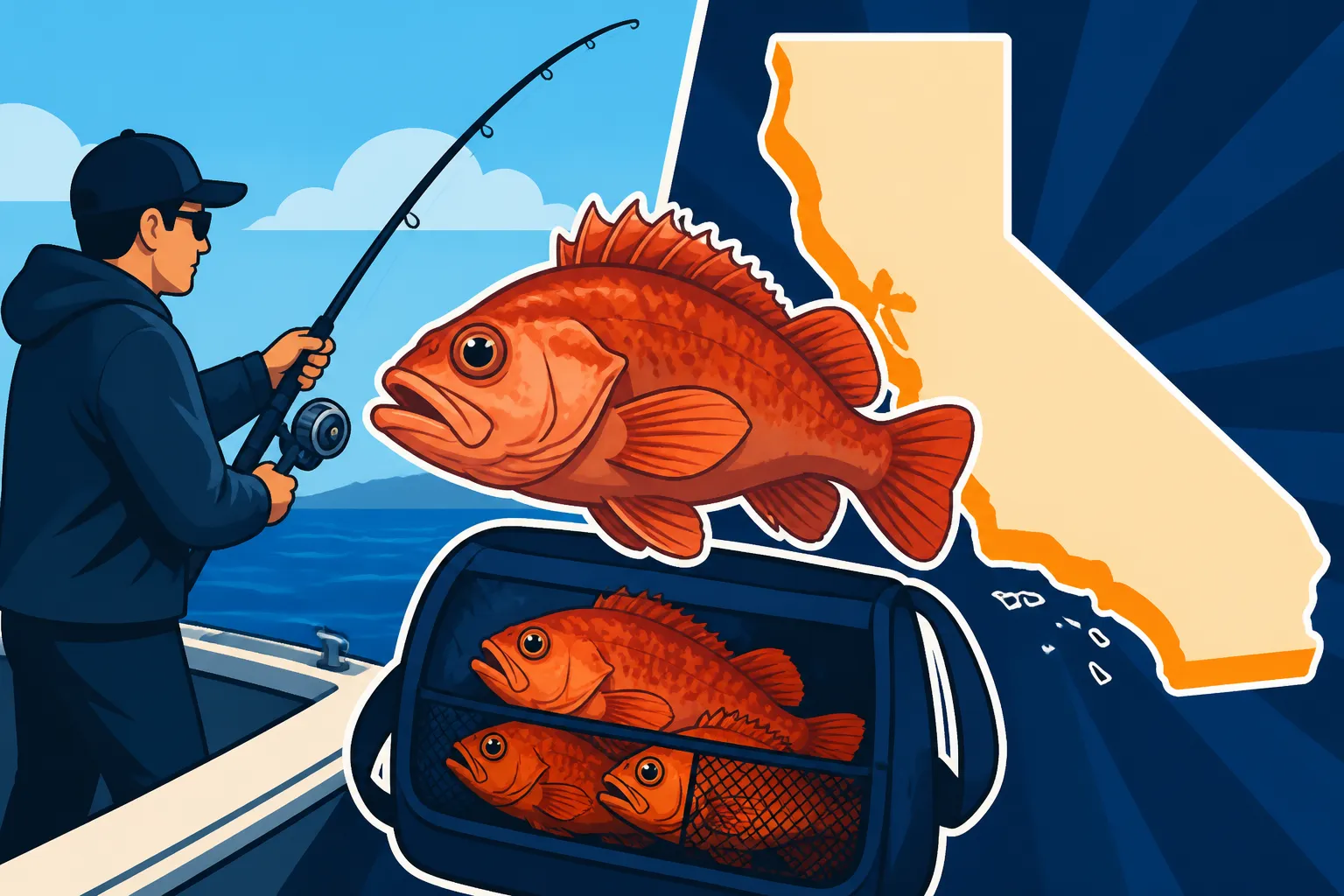
For many years, the standard rule for most anglers has been a 10-fish aggregate bag limit for rockfish in combination. What exactly does "aggregate" mean? It means that you can catch a mix of different rockfish species, but the total number of these combined rockfish cannot exceed 10 per person, per day. So, if you catch 5 Bocaccio, 3 Greenspotted Rockfish, and 2 Copper Rockfish, you've hit your 10-fish aggregate limit.
This limit applies to a broad range of common rockfish species, including many of the ones you're likely to encounter on nearshore or offshore trips. It's designed to allow for diverse catches while still capping the overall take from the general rockfish population. However, remember, this 10-fish limit is just the ceiling for the group. There are often stricter rules for specific species within that group. For a more complete overview, check out our guide on California Rockfish Regulations and Limits.
Species-Specific Sub-Limits Within the Aggregate
Here's where it gets a bit more challenging. While you have a 10-fish aggregate limit, several important rockfish species have their own stricter sub-limits. This means you cannot catch 10 of these specific fish, even if your total aggregate is still under 10. The most commonly known example of this is the Vermilion Rockfish.
Historically, Vermilion Rockfish have had a sub-limit of 4 fish per day within the 10-rockfish aggregate. So, you could catch 4 Vermilion Rockfish, and then still catch 6 other rockfish species (that don't have sub-limits) to reach your total aggregate of 10. However, you could not keep 5 Vermilions, even if your total catch was only 5 fish. Other species that frequently have sub-limits include Black Rockfish, often with a 2-fish limit, and sometimes Brown Rockfish. These sub-limits are in place because these particular species might be more susceptible to overfishing or have slower recovery rates. It’s crucial to know these specific numbers for the species you're targeting. And don't forget about size; California Rockfish Size Limit Explained helps clarify those dimensions.
Special Cases: Lingcod and Cabezon
Adding another layer of complexity, Lingcod and Cabezon are often caught alongside rockfish and are considered part of the broader "groundfish" complex managed by the CDFW. However, they typically have their own distinct bag and size limits that operate independently of the 10-fish rockfish aggregate.
- Lingcod: Generally, the limit for Lingcod is 2 fish per day, with a minimum size of 22 inches. These fish are powerful predators and highly sought after, but their populations require careful management. You can learn more in our California Lingcod Regulations and Limits article or specifically about their California Lingcod Bag Limit Explained.
- Cabezon: Similar to Lingcod, Cabezon also usually have a limit of 2 fish per day, with a minimum size of 15 inches. These unique fish, often found in rocky crevices, are also a favorite among bottom fishermen.
It's vital to remember that these limits for Lingcod and Cabezon are separate from your 10-fish rockfish aggregate. So, you could theoretically catch your 10 aggregate rockfish, plus 2 Lingcod, and 2 Cabezon, assuming all other regulations (like seasons and depth limits) are met.
Here’s a quick summary of typical limits for some popular species, but always check the latest DFW regulations before you go! These numbers are illustrative and subject to change.
| Species Category | Daily Bag Limit (per person) | Minimum Size Limit | Notes |
|---|---|---|---|
| General Rockfish Aggregate | 10 fish total | None specified | Applies to most rockfish species combined |
| Vermilion Rockfish | 4 fish | None specified | Sub-limit within the 10-fish aggregate |
| Black Rockfish | 2 fish | None specified | Sub-limit within the 10-fish aggregate (check current regs) |
| Treefish | 2 fish | None specified | Sub-limit within the 10-fish aggregate (check current regs) |
| Copper Rockfish | 10 fish (if no other sub-limits hit) | None specified | Falls under general aggregate if no specific sub-limit |
| Special Groundfish Species | |||
| Lingcod | 2 fish | 22 inches | Separate from rockfish aggregate |
| Cabezon | 2 fish | 15 inches | Separate from rockfish aggregate |
| Kelp Greenling | 2 fish | 12 inches | Separate from rockfish aggregate |
Note: This table is for general guidance only. Always refer to the current California Ocean Sport Fishing Regulations booklet published by the California Department of Fish and Wildlife for the most up-to-date and specific rules before any fishing trip. Regulations can and do change frequently.
Geographical and Depth-Based Variations
Just when you think you've got the bag limits down, California throws another curveball: geographical and depth-based variations. The Golden State's coastline is vast and diverse, spanning hundreds of miles, and what's legal in one area might not be in another. This regionalization is a critical part of fisheries management, reflecting localized stock health and specific conservation needs.
Northern, Central, and Southern California Differences
The California coast is typically divided into several management zones for groundfish, including rockfish. The most commonly referenced zones are:
- Northern Management Area: Generally north of 40°10' N latitude (near Cape Mendocino).
- Central Management Area: From 40°10' N to 34°27' N latitude (near Point Conception).
- Southern Management Area: South of 34°27' N latitude.
The open and closed seasons for rockfish can vary significantly between these zones. For instance, the Central Coast often experiences different open and closed periods for rockfish and other groundfish compared to Northern or Southern California. A seasoned angler fishing near San Francisco in July might find rockfish open, while a friend near San Diego might be under slightly different rules or even restricted from certain deeper areas. These distinctions are vital because environmental conditions, fish populations, and fishing pressure aren't uniform across the state. Understanding your specific zone is key to compliance, so be sure to consult resources like California Rockfish Rules in the Northern Management Area, California Rockfish Rules in the Central Management Area, and California Rockfish Rules in the Southern Management Area.
The Role of Depth Restrictions and Rockfish Conservation Areas
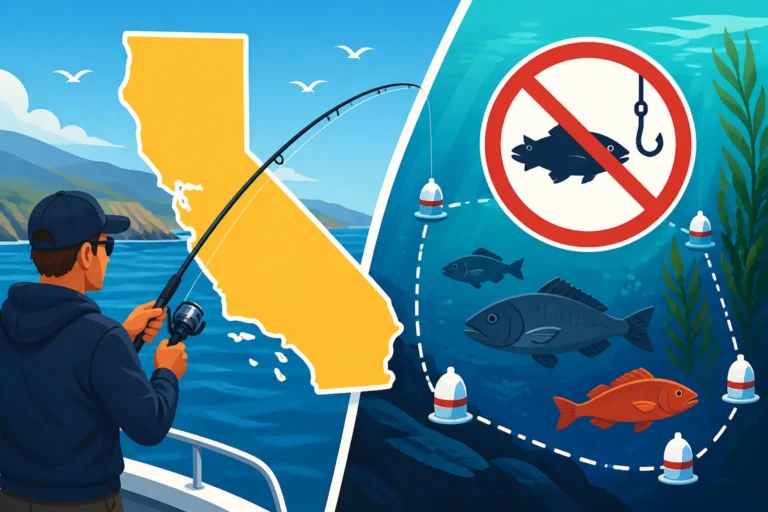
Perhaps one of the most frustrating, yet necessary, regulations for rockfish anglers is the implementation of depth restrictions and Rockfish Conservation Areas (RCAs). These rules dictate how deep you can fish for rockfish, and they are literally a matter of life or death for many species.
Rockfish, especially the larger, deeper-dwelling varieties, are highly susceptible to barotrauma when brought up from significant depths. Their swim bladders expand, causing internal damage and making it nearly impossible for them to survive if released. RCAs and depth limits aim to reduce catch-and-release mortality for these species by simply restricting fishing activity beyond certain depths.
These depth limits can change based on the management area and the season. You might find that in certain months, fishing for rockfish is only allowed in waters shallower than, say, 100 or 120 feet, to protect deeper populations. These restrictions are put in place to avoid overfished species, like some species of Cowcod or Canary Rockfish, which typically inhabit deeper waters. It's a major reason why offshore charters invest in advanced sonar and GPS to ensure they're staying within legal depth boundaries. If you're planning a trip, definitely look into California Rockfish Depth Restrictions and California Rockfish Conservation Areas for the latest information.
Staying Informed and Fishing Responsibly
Navigating California's rockfish bag limits and associated regulations can feel like a puzzle with constantly changing pieces. But with the right tools and a commitment to responsible angling, you can ensure your fishing trips are both successful and compliant.
Essential Tools for Compliance
The absolute gold standard for staying informed is the California Ocean Sport Fishing Regulations booklet. This is published annually (or updated with addendums) by the California Department of Fish and Wildlife and is your most authoritative source for all regulations, including bag and size limits, seasons, and special management areas. Never rely solely on hearsay or outdated information.
You can often pick up a physical copy of this booklet at any CDFW license agent (like your local tackle shop), or download a digital PDF version directly from the CDFW website. I've found it incredibly helpful to have a waterproof version or a laminated copy available on the boat. You can even find comprehensive marine charts and regulation summaries on sites like Amazon that can be invaluable in quickly referencing rules while on the water. Beyond the regulations booklet, having a good quality fish identification guide is crucial, especially for rockfish, which can look very similar across species. Again, a sturdy, waterproof guide purchased from Amazon can be a lifesaver when you're trying to quickly identify your catch before it goes into the cooler. And don't forget a reliable measuring device; a simple tape measure or a marked fish mat will do the trick. A thorough read of How to Read the California Fishing Regulations Booklet can make this less intimidating.
Consequences of Non-Compliance
It might seem like a lot of hassle, but the consequences of not adhering to rockfish bag limits and other regulations can be severe. Fishing without knowing or respecting the rules can lead to significant fines, confiscation of your catch, and even suspension of your fishing license. CDFW wardens are out there on the water, checking licenses, measuring fish, and ensuring everyone is playing by the rules. Their job is to protect the resource, and they take it seriously.
Beyond the legal ramifications, there's an ethical responsibility we all share as anglers. Sustainable fishing practices are essential to ensure that future generations can enjoy the same incredible fishing opportunities we do today. Every fish taken legally and responsibly contributes to the health of the fishery. Conversely, every violation detracts from it. If you ever witness a violation, understanding How to Report a California Fishing Violation can help protect our shared natural resources. Familiarize yourself with California Fishing License Fines and Penalties to understand the full scope of what's at stake.
In the end, while rockfish regulations can be daunting, they are put in place for a good reason. Take the time to understand them, carry the right resources, and you'll be well on your way to a successful and responsible rockfish adventure in California.
Disclaimer
The information provided in this guide is intended for general informational purposes only and is subject to change. Fishing regulations, including bag limits, size limits, and seasons, are set by the California Department of Fish and Wildlife (CDFW) and can be updated at any time. It is the responsibility of every angler to consult the most current official CDFW Ocean Sport Fishing Regulations booklet or website before engaging in any fishing activity. Relying solely on the information presented here without verifying with official sources is not recommended.