California Salmon Size Limit Explained
Navigating the myriad of fishing regulations in California can feel like trying to untangle a particularly stubborn bird's nest. One area that causes frequent confusion and a lot of head-scratching for anglers, especially those new to the sport or visiting from out of state, involves the ever-important salmon size limits. You want to bring home a keeper, but you absolutely don't want to run afoul of the law, and figuring out what's legal in one body of water versus another can be downright frustrating. This comprehensive guide is here to demystify California's salmon size limits, breaking down the rules so you can fish with confidence and stay on the right side of conservation.
Why California Has Salmon Size Limits Beyond Just Rules
It's easy to look at a dense rulebook and feel like the California Department of Fish and Wildlife (CDFW) is just making things complicated for the sake of it. But believe me, every single regulation, especially those concerning size limits for precious species like salmon, is rooted in deep biological understanding and a commitment to preserving these fisheries for the long haul. It's not about making your day harder; it's about ensuring future generations can experience the thrill of a salmon on the line.
Protecting Juvenile Fish and Spawning Stocks
Imagine if every young salmon, barely big enough to fend for itself, was fair game. Our salmon populations would plummet in no time! Size limits are primarily designed to protect juvenile fish, giving them a fighting chance to grow, mature, and contribute to the next generation. By allowing them to reach a certain size, we're ensuring they have the opportunity to spawn at least once, which is absolutely critical for the species' survival.
Think of it like this: a smaller salmon might be tasty, but a salmon that's had a chance to breed even once has already made its vital contribution to the ecosystem. Without size limits, we'd quickly deplete the breeding stock, leading to a catastrophic decline. This approach is especially crucial for species like Chinook (King) salmon, which are incredibly important both ecologically and economically in California. It's a careful balance that fishery managers constantly monitor, adjusting as needed based on scientific data and environmental factors like drought or ocean conditions.
Ensuring Sustainable Fisheries for Future Generations
Beyond just protecting the young, size limits contribute directly to the broader goal of sustainable fishing. When you adhere to these limits, you're not just following a rule; you're actively participating in the conservation effort. Sustainable fisheries mean that there are enough fish in the sea (or river, or lake!) today and tomorrow. It's about maintaining a healthy, thriving population that can support both recreational angling and commercial harvesting without being overfished.
California's waters are a precious resource, and species like salmon face numerous challenges, from habitat loss to climate change. Size limits are one of the most effective tools we have to manage these pressures. They help spread the fishing pressure across different age classes of fish and allow the strongest, most prolific breeders to contribute to the population before they are harvested. This long-term perspective is what ensures that your kids, and their kids, will still be able to enjoy the incredible experience of California Salmon Fishing Guide in these beautiful waters.
The Role of Science in Setting Limits
These aren't arbitrary numbers pulled from a hat! The California Department of Fish and Wildlife (CDFW) uses a wealth of scientific data to determine appropriate size limits. This includes extensive population surveys, genetic studies, age and growth analysis, and environmental monitoring. Scientists look at factors like the average age of sexual maturity for a particular salmon species, its growth rate, and the overall health of the stock.
For instance, if a particular salmon run is experiencing a downturn due to poor ocean conditions or reduced freshwater habitat, the CDFW might adjust size limits upwards or even implement closures to give the stock a chance to recover. This dynamic approach, grounded in biology and ecology, is why you'll often see changes in regulations from year to year. It's a constant balancing act, ensuring that fishing opportunities remain while prioritizing the health of the fish populations. When you delve into the details of the California Fishing Regulations Explained, you'll quickly see how complex and scientifically driven these decisions truly are.
Decoding California's Salmon Size Limits by Species and Region
Alright, let's get down to brass tacks: what are the actual size limits you need to know? This is where it gets specific, as salmon regulations can vary significantly depending on the species you're targeting and whether you're fishing in the ocean or in freshwater rivers and bays. It's crucial to check the very latest regulations before every outing, as they can and do change seasonally and by specific water body.
Chinook Salmon King Salmon Regulations: Ocean vs. Inland
Chinook salmon, often called King salmon, are the largest and most sought-after salmon species in California. Their regulations are arguably the most complex due to their extensive migratory patterns and the varying health of different runs.
In ocean waters, the general minimum size limit for Chinook salmon is 20 inches total length. However, this isn't a hard and fast rule for every single area or season. Some specific management areas, particularly along the coast, might have stricter minimums, like 24 inches, or even different daily bag limits depending on the time of year and the health of the stock. For instance, the California Ocean Salmon Regulations often come with detailed maps and very specific dates for different zones, from Fort Bragg down to Monterey Bay, with minimum sizes sometimes differing by a few inches or even changing mid-season. Always confirm the exact minimum size for the specific ocean zone and date you plan to fish. You can usually find this information in the annual sport fishing regulations booklet or on the CDFW website.
When it comes to inland waters, meaning rivers and bays, the regulations become even more localized. Many major salmon-producing rivers, like the Sacramento River, Klamath River, or Feather River, will have their own distinct Chinook salmon size limits, and often a reduced bag limit, especially during specific runs. For example, in some river sections, the minimum size for Chinook might be 20 inches, while in others, it could be 22 or even 24 inches. Some rivers might have a specific maximum size limit as well, protecting the largest, most valuable spawners. These limits are frequently tied to specific fishing seasons for those rivers, such as the California Salmon Season Dates Explained. It's not uncommon to find that certain river sections are entirely closed to salmon fishing, or only open for very specific periods, to protect sensitive spawning grounds.
Coho Salmon Regulations: A Species Apart
If you're targeting Coho salmon, also known as Silver salmon, you need to be acutely aware that Coho salmon are a federally protected species in many parts of California. This means that in most waters, particularly in the ocean and many freshwater systems, it is illegal to possess Coho salmon. This isn't just a size limit; it's a blanket prohibition on keeping them.
If you accidentally catch a Coho salmon, you are legally required to release it immediately and unharmed. This is due to their endangered status in many California populations. They are easily confused with smaller Chinook salmon, so it's absolutely vital to know how to identify them, even if you’re fishing for Chinook. A quick rule of thumb is that Chinook typically have black gums and spots on both upper and lower lobes of their tail, while Coho usually have white gums and spots only on the upper lobe of their tail. Trust me, mistaking a Coho for a Chinook and keeping it is a serious violation that carries significant penalties. Always have a good identification guide handy, even a laminated one you can buy on Amazon, to help you distinguish between species.
Other Salmonid Species Considerations: Kokanee
While not always considered "salmon" in the same vein as Chinook or Coho, Kokanee salmon are landlocked Sockeye salmon found in many of California's freshwater lakes and reservoirs, such as Lake Tahoe and Folsom Lake. Their regulations are typically much simpler than those for their anadromous (sea-run) cousins.
For Kokanee, you'll generally find a daily bag limit (often 5 or 10 fish) with a small minimum size limit, usually around 10 inches total length. However, some specific lakes might have different regulations, so always consult the current California Freshwater Fishing Regulations for the body of water you're fishing. They are much smaller than Chinook and Coho, so differentiating them is usually not an issue.
Here's a quick overview of general salmon size limits, but remember this table is a general guide only and specific regulations always supersede it. Always check the official CDFW regulations for the most current and localized information.
| Species | Location | General Minimum Size (Total Length) | Notes |
|---|---|---|---|
| Chinook (King) | Ocean Waters | 20 inches | Can vary by management area and season (e.g., 24 inches in some zones). Always check specific ocean fishing regulations. |
| Chinook (King) | Inland Waters | Varies, often 20-24 inches | Highly variable by river system and specific section. Check local river regulations and California Salmon Report Card Explained rules. |
| Coho (Silver) | All Waters | Prohibited Possession | Federally protected. Must be immediately released unharmed. |
| Kokanee | Freshwater Lakes | ~10 inches | Varies by lake, typically has a daily bag limit. Check specific lake regulations. |
The Art of Accurate Measurement: How to Stay Legal
So, you've landed a beautiful salmon, and you're pretty sure it's a keeper. But how do you actually measure it correctly to avoid any doubt or potential fines? Getting this right is absolutely critical, because a fish that's just shy of the legal limit, even by an eighth of an inch, is still an undersized fish in the eyes of the law.
Nose-to-Tail: The Standard Measuring Method
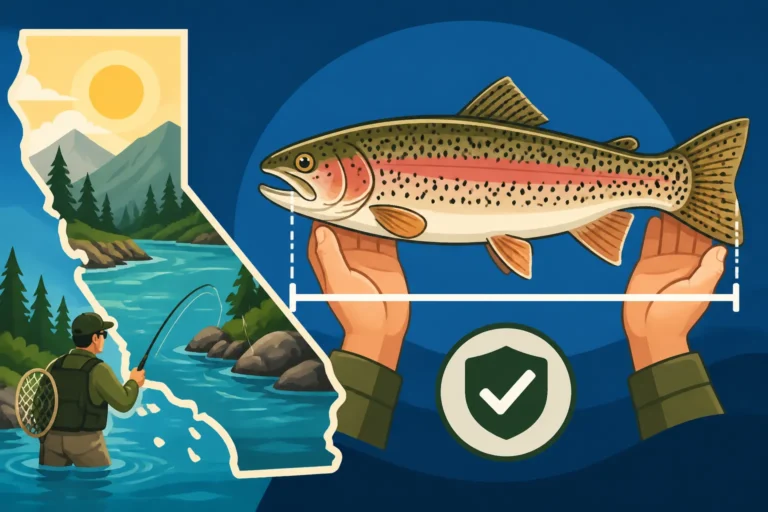
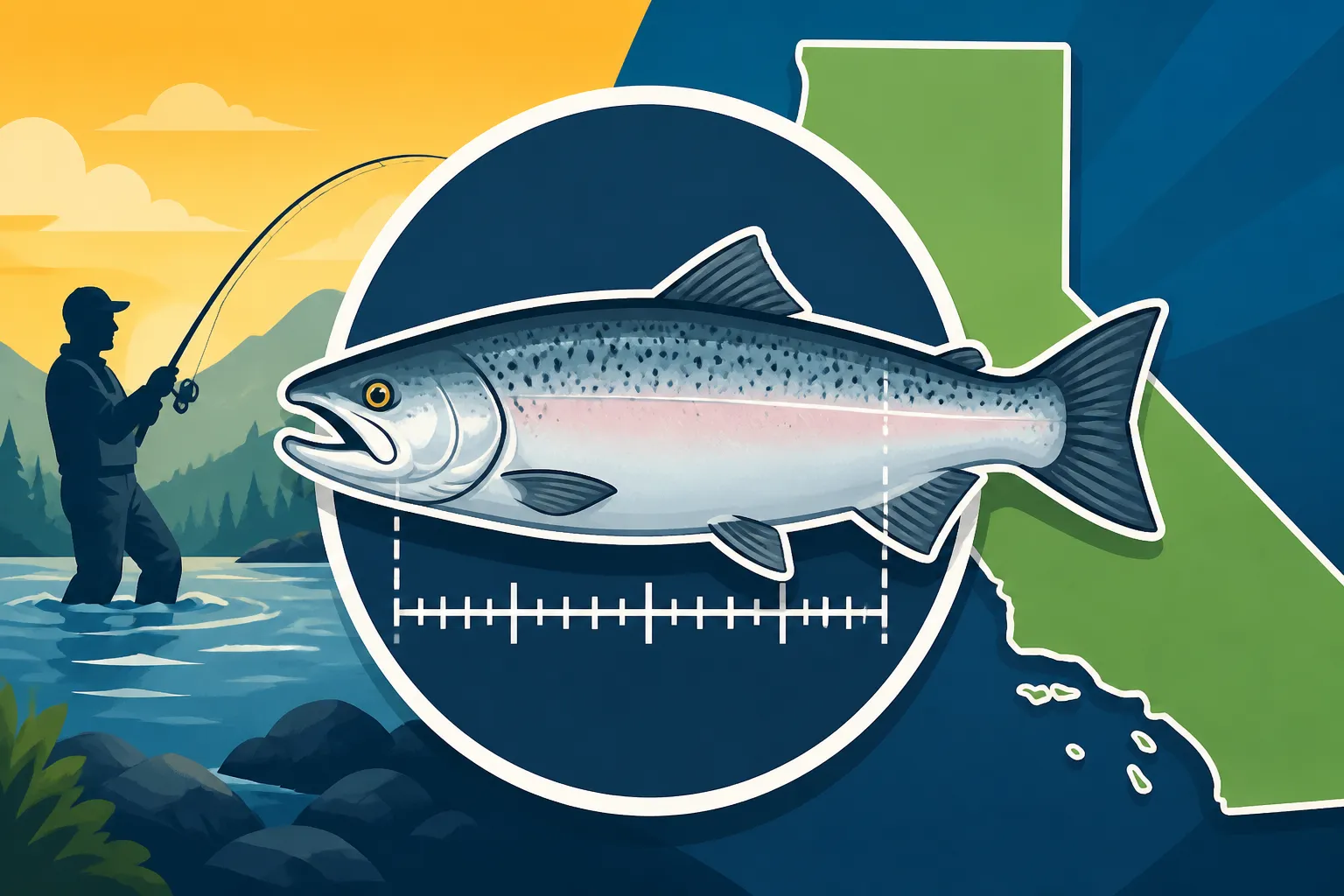
In California, for nearly all fish species including salmon, the official measurement standard is "total length." This means you measure from the tip of the longest jaw (with the mouth closed) to the end of the longest lobe of the tail, typically with the tail squeezed together to achieve the maximum possible length. It's not about measuring to the fork of the tail, or to the middle of the tail; it's the absolute maximum length.
To do this accurately:
- Lay the fish flat on a measuring board or tape measure.
- Gently close the fish's mouth.
- Position the nose squarely against the starting point (zero mark) of your measuring device.
- Gently squeeze the tail lobes together to extend them to their maximum length.
- Read the measurement at the furthest point of the tail.
It sounds simple, but in the excitement of a catch, it's easy to rush. Take your time. Ensure the fish is relaxed and laid out straight, not curled. If you're on a boat, the deck can sometimes be uneven, or the fish might flop around. Having a dedicated measuring board, ideally one that floats if you're on a kayak, can make this task much easier and more precise.
Essential Tools for Measuring Fish Accurately
You really don't want to rely on a rusty old tape measure that's hard to read or, worse, guessing. Investing in a good measuring tool is a small price to pay for peace of mind and legal compliance.
- Dedicated Fish Measuring Boards: These are fantastic. Many are made from durable plastic or aluminum, clearly marked, and have a solid "nose stop" to ensure accurate starting point. Some even float, which is a huge plus if you're on the water. You can find excellent options on Amazon from brands like Ketch or Promar, specifically designed for quick, accurate fish measurement.
- Retractable Tape Measures: A basic retractable tape measure can work in a pinch, but ensure it's made for marine environments (corrosion-resistant) and easy to read quickly. Look for ones with large, clear numbers.
- Ruler Stickers: For smaller boats or kayaks where space is at a premium, a waterproof ruler sticker applied to a flat surface can be a convenient solution. Just make sure it's applied smoothly and is highly visible.
- CDFW Regulations Booklet: While not a measuring tool itself, having the current California Fishing Regulation Booklet Explained handy, perhaps even a printed copy you can grab from a local bait shop or download, allows you to cross-reference the exact size limits for your specific location.
Remember, if there's any doubt about a fish being undersized, the safest bet is always to release it. It's better to be overly cautious than to face a citation.
Common Measurement Mistakes to Avoid
Even experienced anglers can make errors when measuring if they're not careful. Here are some of the most common pitfalls:
- Measuring to the Fork: As mentioned, California almost always uses total length (tip of jaw to longest tail lobe, tail squeezed). Measuring only to the fork of the tail will almost certainly result in an undersized measurement.
- Curled Fish: A fish that's flopping or curled won't give an accurate measurement. Gently subdue it (a quick rap on the head for ethical harvest, or keeping it in the water for release) and lay it out straight.
- Ignoring the Mouth: The measurement starts at the tip of the longest jaw, with the mouth closed. An open mouth or starting behind the jaw will give a shorter, inaccurate reading.
- Uneven Surfaces: Trying to measure on a lumpy cooler lid or a moving boat deck can easily lead to mistakes. Find the flattest, most stable surface available.
- Dark Conditions: Trying to measure in low light without adequate illumination can make reading the numbers difficult, increasing the chance of error. Carry a headlamp or flashlight if you're fishing at dawn, dusk, or night.
- Forgetting Report Cards: For species like salmon, you also need to fill out a California Salmon Report Card Explained immediately after retaining your catch, noting the species, length, and location. Failure to do so is also a violation.
What Happens When You Break the Rules and How to Avoid It
Nobody wants to have their exciting fishing trip ruined by a run-in with law enforcement, especially when it's easily avoidable. Understanding the repercussions and knowing how to stay informed are key parts of being a responsible angler in California.
Penalties for Exceeding Size Limits
Violating fishing regulations, including size limits, isn't just a slap on the wrist. California takes its natural resource conservation very seriously, and the penalties reflect that. If you're caught with an undersized salmon, or one outside of a specific slot limit, you could be facing:
- Fines: These can range from hundreds to thousands of dollars, depending on the severity of the offense, the number of fish, and whether it's a first-time or repeat offense.
- Confiscation of Equipment: Your fishing gear, and even your boat, could be seized by enforcement officers.
- License Suspension/Revocation: You might have your California Fishing License Guide suspended or even permanently revoked, meaning no more legal fishing for you in California for a period of time.
- Criminal Charges: In egregious cases, particularly involving endangered species like Coho salmon or repeated violations, criminal charges can be filed, leading to jail time.
It's a huge headache and expense that no one wants. That's why being diligent about checking regulations and accurate measurement is so crucial. A single mistake could cost you far more than the price of a proper measuring device from Amazon. If you ever witness someone violating fishing laws, it's important to know How to Report a California Fishing Violation to help protect our shared resources.
Staying Informed: Checking Current Regulations
The single best defense against inadvertent violations is to stay informed. Regulations, especially for migratory species like salmon, can change frequently, sometimes even mid-season due to evolving stock assessments or environmental factors.
- CDFW Website: The official California Department of Fish and Wildlife website is your ultimate, most up-to-date source. Bookmark it and check it before every trip. Look for the current "Ocean Salmon Regulations" and "Freshwater Sport Fishing Regulations."
- Annual Sport Fishing Regulations Booklet: While the online version is always the most current, picking up a physical copy of the booklet from a bait and tackle shop is a good idea. It provides a comprehensive overview and often includes helpful diagrams and maps. Just be aware that amendments can occur throughout the year, so always cross-reference with the online version.
- Local Bait and Tackle Shops: The folks working at your local tackle shop are often incredibly knowledgeable about the immediate area's regulations. They live and breathe fishing and can provide valuable insights into specific local rules and recent changes.
- Party Boat Crews/Charter Guides: If you're fishing with a charter or on a party boat, the crew will be intimately familiar with the regulations for that trip. Listen carefully to their instructions regarding size and bag limits. When considering a California Salmon Charter Trips, always ask about the specific regulations they adhere to.
Responsible Angling and Conservation Practices
Beyond just following the rules, truly responsible angling involves a commitment to conservation. This means more than just adhering to size limits; it's about minimizing your impact on the fishery as a whole.
- Ethical Release Practices: If a fish is undersized or you're practicing catch-and-release, handle it as little as possible. Keep it in the water, use barbless hooks (often required in many salmon fisheries), and release it quickly. This dramatically increases its chances of survival.
- Know Your Species: Being able to quickly and accurately identify species, especially the difference between Chinook and Coho salmon, is paramount. If you're unsure, it's always safer to release the fish.
- Respect Marine Protected Areas (MPAs): California has numerous California Marine Protected Areas Explained where fishing is either highly restricted or completely prohibited. Know where these are and respect the boundaries. They are vital for protecting fish stocks and their habitats.
- Clean Up Your Act: Leave no trace. Take all your trash, including discarded fishing line and bait containers, with you. Pollution harms marine life and degrades the environment for everyone.
By understanding the "why" behind salmon size limits, knowing the specific regulations for the species and location you're targeting, mastering accurate measurement techniques, and staying informed, you can enjoy California's incredible salmon fishing opportunities responsibly and legally. Tight lines!
Disclaimer
The information provided in this guide is for general informational purposes only and is not a substitute for checking the official regulations. Fishing regulations in California are subject to change by the California Department of Fish and Wildlife (CDFW). Always consult the most current CDFW sport fishing regulations before engaging in any fishing activity.