Best Tides for California Halibut
Few things are as frustrating for a California angler as spending hours on the water, meticulously casting, only to come up empty-handed while someone else reels in one beautiful California halibut after another. Often, the difference between a great day and a frustrating one comes down to understanding the nuances of the tides. This guide will deep dive into how tides impact California halibut behavior and help you pinpoint the absolute best times to hit the water for these elusive flatfish.
The Dance of Tides and Halibut Movement
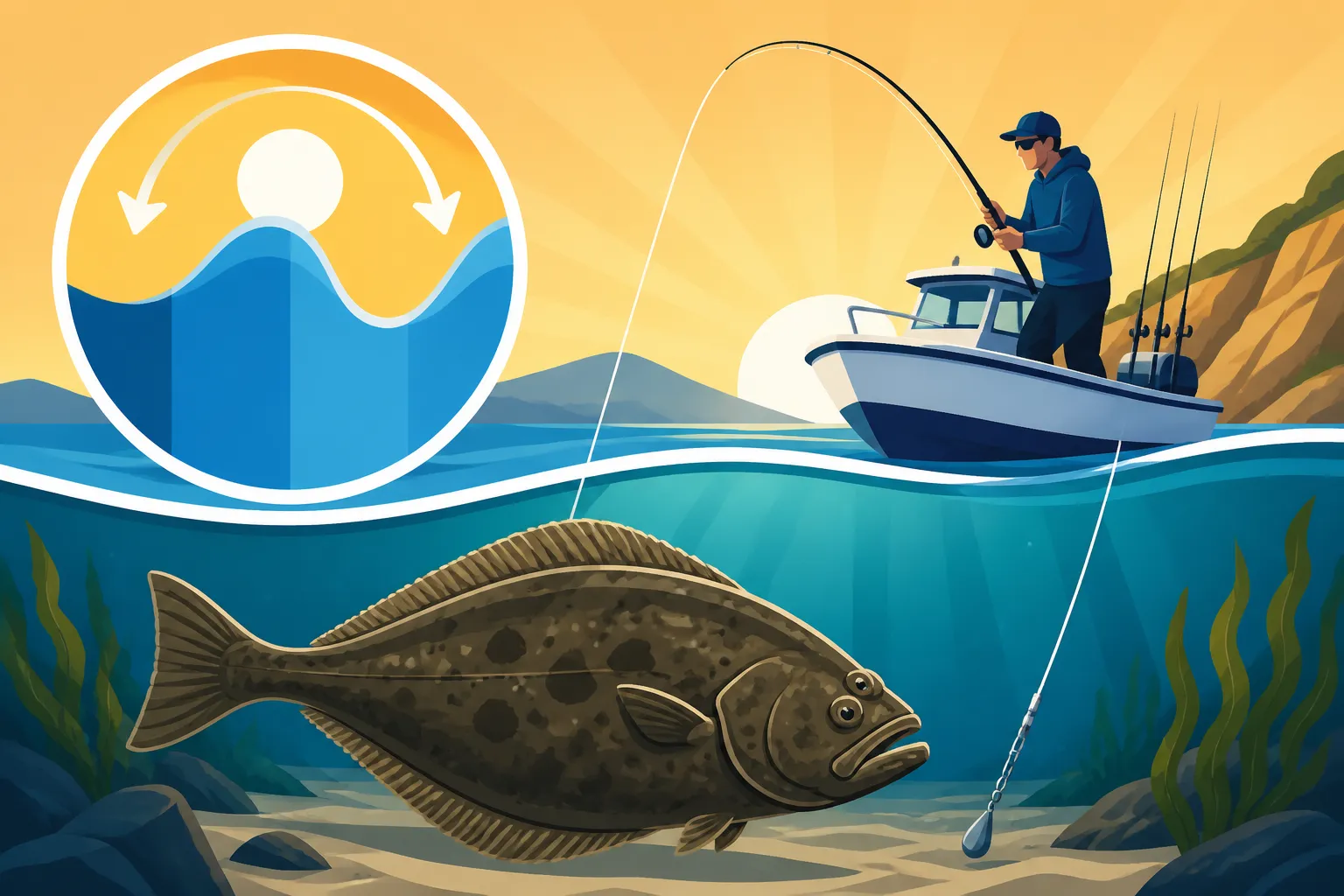
Tides aren't just about water going up and down; they create powerful currents that dictate the movement of baitfish and, consequently, where predatory fish like California halibut choose to position themselves. If you're not paying attention to the tide, you're essentially fishing blindfolded when it comes to halibut. These flatfish are ambush predators, meaning they lie in wait, often partially buried in the sand or mud, and pounce when an unsuspecting meal swims by. The current is their conveyor belt of food.
Understanding Tidal Currents and Bait Movement
Think of tidal currents as a river within the bay, estuary, or even nearshore ocean. When the water is moving, it dislodges crabs, stirs up sand eels, and pushes baitfish like anchovies and sardines around. This creates a feeding frenzy opportunity for halibut. They instinctively know where the currents will bring food and where they can best hide to intercept it. A strong current might push baitfish too fast, making them hard to catch, but a moderate, steady flow is usually perfect. The key is to understand how these currents behave in the specific spot you're fishing. Is it a narrow channel, a wide-open bay, or a deep drop-off? Each will respond differently to the push and pull of the ocean.
Why Halibut Love Moving Water
Halibut don't expend energy chasing down every meal; they're masters of efficiency. Moving water does a lot of the work for them. It reduces visibility for their prey, creating an element of surprise, and it also carries the scent of bait further, drawing in more potential targets. When the water is stagnant, baitfish can see predators more easily and have an easier time escaping. Conversely, in a good current, a halibut can simply lie camouflaged on the bottom, facing into the flow, and let the food come to them. This is why knowing the best tides for California halibut is so crucial – you're essentially aligning your fishing efforts with their natural hunting strategy.
Identifying the Best Tidal Stages for California Halibut
While many anglers might just say "moving water is good," it's far more nuanced than that. Different phases of the tide offer distinct advantages and disadvantages when you're targeting halibut. Pinpointing the peak moments can dramatically improve your success rate.
The Productive Ebb Tide
The outgoing, or ebb, tide is often considered a prime time for California halibut, especially when fishing in bays, estuaries, or along coastal rivers. As the water recedes from the shallower areas, it flushes out all sorts of critters that have been hiding in the mudflats, kelp beds, or marsh grasses. Think of it like a natural broom, sweeping baitfish, shrimp, and small crabs out into deeper channels where halibut are waiting.
For instance, when fishing San Francisco Bay, an ebb tide can be phenomenal in areas like the Berkeley Flats or along the drop-offs near Alcatraz. The draining water concentrates bait, making them an easy target. However, it's not just any ebb tide. A strong, swift ebb might push bait too quickly, making it hard for halibut to react. The sweet spot is usually the first few hours of a moderate to strong outgoing tide, as the current starts to build and the bait begins to move. Pay attention to the tide charts, which you can often find readily online or even as a handy waterproof booklet from a shop or online like Amazon, to identify these optimal windows. This is particularly important for understanding the specific nuances of California Fishing Seasons: Month-by-Month Guide and optimizing your approach.
The Lively Flood Tide
While the ebb tide often gets the most attention, the incoming, or flood, tide can be equally, if not more, productive depending on your location and the specific conditions. As the tide pushes into bays and estuaries, it brings in fresh, oxygenated ocean water, often carrying new schools of baitfish and crustaceans from offshore. Halibut will move with this rising water, pushing into shallower feeding grounds, points, and structure that were previously exposed or too shallow.
Consider fishing nearshore structures or kelp lines along the coast during a flood tide. The rising water allows halibut to move closer to these ambush points. In Southern California, areas around Dana Point or Santa Monica Bay can be excellent on an incoming tide, as the warmer, bait-rich ocean water pushes in. The key here is to target areas where halibut might intercept bait being brought in by the flow. It's not just about the water moving; it's about what the moving water is bringing with it. The first half of a building flood tide is usually most effective, as the current increases and bait becomes more active.
The Often-Misunderstood Slack Tide
Slack tide is perhaps the most misunderstood tidal phase when it comes to halibut fishing. Many anglers automatically dismiss it, but the reality is more nuanced. True, dead slack – that brief moment of absolutely no current at the peak of high or low tide – is generally the least productive time to target halibut. Why? Because without current, there's no bait movement, and halibut, being ambush predators, rely heavily on that current to deliver their meals. They become less active and often spread out, making them harder to locate.
However, the transition periods immediately before and after true slack can be incredibly effective. As the current slows down approaching slack, or just begins to pick up again afterwards, baitfish can become disoriented or clustered, making them easier targets for halibut. These short windows, sometimes only 30 minutes to an hour long, can be highly productive. Anglers fishing the California Delta for striped bass or sturgeon also understand these transition periods are critical for different reasons, proving that patience and precision are key across species. Many experienced anglers plan their trip to start fishing about an hour before the forecasted slack and continue for an hour or so after, hitting those prime "restarting" current periods. Don't write off slack tide entirely, but certainly focus your efforts on the moments of transition rather than the dead calm.
Applying Tidal Knowledge to Different Halibut Habitats
California is a massive state with incredibly diverse fishing grounds. The "best" tide for halibut can vary significantly depending on whether you're casting from a sandy beach, drifting through a bay, or exploring nearshore reefs. Tailoring your approach to the specific environment is crucial.
Bay and Estuary Halibut Fishing
Bays and estuaries, like San Francisco Bay, Tomales Bay, or San Diego Bay, are classic California halibut territory. Here, the tidal influence is paramount. Halibut in these areas often relate to channels, drop-offs, and shallow flats.
- Outgoing (Ebb) Tide: This is often the prime time. As water drains out, baitfish (like anchovies, sardines, or smelt) and crustaceans (like shrimp or crabs) are flushed from shallow areas into deeper channels and over ledges. Halibut will stage along these current seams, ambush points, and channel edges, facing into the flow, waiting for food to come to them. Drifting live bait, such as anchovies or shiner perch, or working swimbaits along these edges can be incredibly effective.
- Incoming (Flood) Tide: While sometimes less aggressive than the ebb, a flood tide can still be excellent, especially as the water pushes into new areas. Halibut might move onto shallow flats or sandy points, following the incoming bait. Look for areas with current breaks or eddies where bait might accumulate. The key is to find areas where the rising tide is bringing in fresh ocean water and bait.
- Tactics: For these areas, drift fishing is extremely popular. You can use a leadhead jig tipped with a plastic grub or a whole dead bait, or a sliding sinker rig with live bait. A good depth finder will help you identify channels and structure. When considering your gear, a robust baitcasting reel and rod combo can handle the fight, and you can find excellent options, sometimes with good deals, on Amazon before your trip. This technique often aligns well with the advice found in a comprehensive guide on How to Fish for Halibut in California.
Surf Fishing for Halibut
Surf fishing for California halibut is a thrilling pursuit, but it demands a deep understanding of how waves and currents interact with the tides. Halibut move into the shallower surf zone to feed on baitfish, sand crabs, and even small perch.
- Tidal Influence: While the general tide dictates the overall water level, the crucial factor in the surf is often the tidal push and how it interacts with the wave action to create rip currents and troughs. Often, the incoming tide, especially the mid to high tide period, can be excellent. As the water level rises, halibut have more water over them and can move closer to shore. The receding wave action can stir up sand crabs and disorient baitfish.
- Targeting Structure: Look for deeper troughs between sandbars, areas where a rip current is pulling water back out to sea, or points where waves break differently. Halibut will often position themselves on the deeper, calmer side of a trough, facing into the current or the direction from which bait is likely to come.
- Tactics: Casting swimbaits (like those from Lucky Craft or Big Hammer) or Carolina-rigged grubs can be very effective. Live bait, such as grunion (when in season) or anchovies, presented on a sliding sinker rig, is also a classic surf halibut tactic. A long surf rod is essential for casting beyond the immediate shore break. For more specific advice on this technique, check out our guide on California Surf Fishing Tips and Techniques.
Nearshore Ocean Fishing for Halibut
When you venture out of the bays and into the nearshore ocean, targeting halibut around reefs, rocky outcroppings, or large sandy expanses, the tides still play a significant role, though perhaps less overtly than in constricted bays.
- Current and Structure: In these open water areas, the main influence of the tide is the creation of current lines and upwellings around underwater structure. Halibut will congregate around these areas, using the structure for cover and the currents to deliver food.
- Tidal Flow: Both incoming and outgoing tides can be productive, but the strength of the current is often more important than its direction. A moderate current that swirls around a reef or pushes bait along a canyon edge is ideal. Too strong a current, and halibut might hunker down or move to calmer water; too little, and the feeding activity diminishes.
- Tactics: Drifting with live bait (sardines, mackerel, or anchovies) is a go-to method. You can also bounce heavy leadhead jigs tipped with large grubs or whole dead squid along the bottom. Pay close attention to your fish finder to mark bait schools and bottom structure. Understanding California Rockfish Depth Restrictions can also be helpful here, as halibut often share similar habitats, and knowing where you can and can't fish for other species helps with overall awareness.
Tools and Tips for Predicting and Using Tides
Mastering tidal fishing for California halibut isn't just about understanding the theory; it's about putting that knowledge into practice. Having the right tools and knowing how to interpret them can make all the difference.
Essential Tools for Tracking Tides
You wouldn't head out on the ocean without a weather report, and you shouldn't head out for halibut without consulting the tides.
- Tide Charts and Apps: These are your absolute best friends. There are numerous free and paid tide apps available for smartphones (e.g., Fishing Points, Tides Near Me) that provide real-time tidal predictions for virtually any location in California. Many coastal bait and tackle shops also provide free paper tide charts. For those who prefer a physical backup, or for situations where your phone battery might die, a waterproof tide book is an excellent item to keep in your tackle box – you can easily find these on Amazon or at local fishing stores. These charts will show you high and low tide times, as well as the height of the tides, which is crucial for understanding the strength of the current.
- Local Knowledge: Nothing beats talking to local anglers, bait shop owners, or charter captains. They often have hyper-local insights into how specific currents behave in their area, which points fish best on a certain tide, or where bait tends to congregate. A few minutes of conversation can save you hours of unproductive fishing.
- Fishing Reports: Regularly checking local fishing reports can also provide valuable insights into what tides have been working for others in specific areas. Look for reports that mention successful halibut catches and try to correlate them with the reported tidal conditions. Our guide on How to Read California Fishing Reports can help you decipher the jargon and get the most out of them.
Here's a quick reference table summarizing tidal stages and their halibut fishing potential:
| Tidal Stage | Characteristics for Halibut Fishing | General Productivity for Halibut | Recommended Strategy |
|---|---|---|---|
| Beginning Ebb Tide | Water begins to recede, current slowly builds. Flushes bait from shallows. | High | Target channel edges, drop-offs, and points where bait concentrates as it's pulled out. Drift live bait or artificials along current seams. This is often an excellent time for bay and estuary fishing, as discussed in detail within our guides like the one on California Halibut Regulations and Limits. |
| Mid-Ebb Tide | Strongest outgoing current. Can be very active, or too strong in some areas. | High to Moderate | Monitor current strength. If moderate, halibut are actively feeding along deep edges. If too strong, they might move to sheltered areas. Adjust weight to keep bait near the bottom. |
| Low Slack Tide | Brief period of minimal current at the lowest water level. | Low to Very Low | Generally slow. Halibut less active. Focus on the very beginning or end of this period, just as current slows or picks up. Often, it's best to take a break or move to a spot less affected by slack, perhaps shallower areas for different species. |
| Beginning Flood Tide | Water begins to rise, current slowly builds. Brings in fresh bait. | Moderate to High | Halibut push into shallower areas, flats, and structures with the incoming water and bait. Target points, reefs, and kelp lines in the nearshore ocean or bay entrances. This is a great time to implement tactics from our How to Fish for Halibut in California guide. |
| Mid-Flood Tide | Strongest incoming current. | Moderate | Similar to mid-ebb; monitor current. Excellent for areas where bait is being pushed in from offshore. Can be good for surf fishing as water covers more ground. |
| High Slack Tide | Brief period of minimal current at the highest water level. | Low to Very Low | Similar to low slack. Best avoided for active halibut fishing, but again, the moments immediately before and after can offer a short window of opportunity as the current begins to shift. |
Combining Tides with Other Factors
While tides are a huge piece of the puzzle, they're not the only one. The most successful halibut anglers understand how to combine tidal knowledge with other environmental factors to maximize their chances.
- Moon Phase: The moon's gravitational pull is what creates tides, so it's no surprise that moon phases influence their strength. New and full moons typically bring the strongest tides (spring tides), meaning more dramatic highs and lows and stronger currents. Quarter moons bring weaker tides (neap tides). Stronger currents can be great for halibut if they're not too strong, but sometimes moderate currents of neap tides are preferred. It's about finding that balance.
- Water Temperature: Halibut, like most fish, are sensitive to water temperature. They generally prefer cooler, but not freezing, waters. Sudden drops or spikes in temperature can make them less active, regardless of the tide. Online fishing reports often include water temperature readings, which can be invaluable.
- Time of Day: Early morning and late evening often provide lower light conditions, which can make predatory fish more active. If you can combine a favorable tide with one of these low-light periods, you've hit a potential jackpot. However, halibut are often caught throughout the day, so don't rule out midday, especially if the tide is right.
- Barometric Pressure: Stable or slowly rising barometric pressure often corresponds to good fishing conditions, while rapidly falling pressure (often associated with approaching storms) can shut down the bite. This is a subtle factor, but experienced anglers often consider it.
- Bait Presence: Ultimately, halibut will be where the food is. Even if the tide seems perfect on paper, if there's no bait in the area, your chances are slim. Keep an eye out for signs of baitfish – birds diving, surface commotion, or bait schools on your fish finder. Our guide to the Best Bait for California Halibut can offer further insights into what these predators are actively looking for.
By integrating your understanding of the best tides for California halibut with these other critical factors, you'll develop a truly comprehensive approach to targeting these fantastic fish. It takes practice and observation, but the rewards are well worth the effort.
Disclaimer
Fishing conditions and regulations in California can change frequently. Always consult the latest California Department of Fish and Wildlife (CDFW) regulations before heading out. This guide provides general information and recommendations, but it is your responsibility to ensure compliance with all current laws and safety guidelines.