How Weather Affects California Fishing
There’s nothing quite like the excitement of planning a fishing trip, scouting locations, tying on your favorite lures, and imagining that perfect bite. But let's be honest, how many times has an unexpected shift in the weather completely derailed your plans or turned a promising day into a frustrating bust? Understanding how weather affects fishing in California isn't just about avoiding a rainy forecast; it's about unlocking the secrets to consistent success, no matter what Mother Nature throws your way. This guide will help you decipher those atmospheric clues and adapt your strategy for a better day on the water.
The Big Three: Temperature, Barometric Pressure, and Wind
When we talk about weather impacting fishing, these three elements are often the most crucial. They directly influence fish behavior, feeding patterns, and where you'll find them lurking. Ignoring them is like trying to navigate a new lake blindfolded – you might get lucky, but you're probably going to miss a lot of prime spots.
Water Temperature is King (or Queen!)
While air temperature might make us anglers uncomfortable, it's the water temperature that truly dictates a fish's mood and metabolism. Think of it like this: fish are cold-blooded, meaning their body temperature largely matches their surroundings. When the water gets too cold, their metabolism slows down, making them sluggish and less likely to chase a meal. Too warm, and some species might become stressed, seek deeper, cooler water, or even stop feeding altogether.
In California, from the high mountain lakes of the Eastern Sierra to the vast Pacific Ocean, water temperature creates distinct zones. In freshwater lakes, especially during summer, you'll often find thermal stratification – layers of different temperatures. The warmer top layer (epilimnion) might hold baitfish and active predators like largemouth bass, while deeper, cooler layers (hypolimnion) are where trout might seek refuge. A sudden cold snap in the air can quickly cool down shallow waters, sending fish scurrying to deeper, more stable temperatures. Conversely, warming trends in spring are a siren call for many species, triggering spawning activities and aggressive feeding. Knowing the ideal temperature ranges for your target species is paramount. For example, trout thrive in colder, oxygen-rich water, usually below 65°F, while bass really turn on when water temperatures are in the 60s and 70s.
Barometric Pressure: The Invisible Influence
This might sound like something only a meteorologist would care about, but barometric pressure – the weight of the air pressing down on the water – has a profound, albeit often subtle, effect on fish. Many experienced anglers swear by the barometer, and for good reason. Fish have an air bladder that helps them maintain buoyancy, and changes in external pressure can affect this internal pressure, making them uncomfortable or more active.
Generally, stable high-pressure systems, especially after a storm has passed, often lead to fair weather and can make fish active and cooperative. The "post-front bite" can be fantastic. However, when the pressure is rising rapidly after a prolonged low, fish can become lethargic and less willing to bite. On the flip side, falling barometric pressure, which typically signals an approaching storm or front, often triggers a feeding frenzy. Fish seem to sense the impending change and feed aggressively before the weather turns foul. This is often when you'll hear anglers say the fish are "really chewing." Conversely, a sustained period of low pressure, particularly during active stormy weather, can make fishing tough as fish hunker down. Paying attention to these subtle shifts can give you a significant advantage, helping you decide whether to fish aggressively or with more finesse.
Wind: Friend or Foe?
Wind is perhaps the most immediately noticeable weather factor for anglers. It can be both a blessing and a curse. A light breeze or chop on the water's surface can be incredibly beneficial. It breaks up the water's surface, reducing light penetration and making it harder for fish to see you or your line. This "rougher" water also oxygenates the water, which can invigorate fish, and creates currents that push baitfish, insects, and other forage, concentrating them in specific areas. Think about fishing a windy point on a lake or reservoir; that current can bring a buffet right to the waiting predators.
However, too much wind can quickly turn a pleasant outing into a nightmare. High winds make boat control a challenge, casting accurately becomes nearly impossible, and it can create genuinely dangerous conditions, especially on large bodies of water like Lake Shasta or the open ocean off the coast of Eureka. Wind can also stir up sediment, reducing water clarity, which can deter sight-feeding fish like trout or many saltwater species. For surf fishing along the beaches of Southern California, strong onshore winds can make casting a heavy setup nearly impossible and fill the air with sand. Always check wind forecasts before heading out, and consider seeking sheltered coves or lee sides of islands if the wind is predicted to be heavy.
Precipitation and Sky Conditions: More Than Just Getting Wet
Beyond the immediate feel of temperature and wind, what's falling from the sky and how much light is hitting the water also plays a huge role. These factors influence everything from fish location to lure choice.
Rain: When Drips Mean Bites
For many, rain means packing it in, but a little drizzle or a steady, light rain can actually be a golden opportunity, especially in freshwater. Light rain cools surface temperatures slightly, adding oxygen to the water, which can perk up sluggish fish. It also washes terrestrial insects and other food sources into the water from shore, creating easy meal opportunities. During a light rain, fish often become more active and less wary, especially species like trout and bass, allowing you to get closer without spooking them. If you’re willing to brave a little dampness, some of your best fishing days might be in the rain.
However, heavy downpours are a different story. Excessive rain can lead to significant runoff, especially in rivers and streams, or coastal areas. This runoff can introduce a flood of cold, muddy water, debris, and pollutants, drastically reducing visibility and flushing fish out of their usual holding patterns. The California Delta, for instance, can see significant changes in clarity and current after a major rain event, making it challenging to target striped bass. In these conditions, fish might move to areas where the water is clearer or less turbulent, such as eddies or slower pockets behind structure. While a light rain might bring out the bite, a deluge often puts the fish off. Planning your trips around major storm systems is a smart move, but don't shy away from a light sprinkle! You can often find great deals on quality rain gear on Amazon to keep you comfortable.
Cloud Cover and Sun: Light and Shadow Play
Just like humans, fish respond to sunlight. Bright, sunny days can often push fish deeper or into heavy cover to escape the intense light. They might feel more exposed and less likely to feed aggressively in open water. This is especially true for clear, shallow lakes where light penetration is high. On these days, targeting shaded areas, deep structure, or fishing during dawn and dusk are often your best bets.
Overcast conditions, on the other hand, are often fantastic for fishing. The diffused light makes fish feel safer and more comfortable venturing into shallower water throughout the day. This is when topwater baits or shallow-running lures can be incredibly effective. Cloud cover also makes it harder for fish to spot your line or your silhouette, giving you a stealth advantage. Many species, from largemouth bass in Clear Lake to rockfish off the coast, tend to be more active under cloudy skies. Consider wearing polarized sunglasses, even on cloudy days, to cut glare and spot fish or structure under the surface.
Fog and Humidity: The Unseen Elements
Fog might not seem like a major factor for fish, but it certainly impacts the angler. Heavy fog, common along California's coast, especially in places like Monterey Bay, can severely reduce visibility, making navigation by boat hazardous. From a fishing perspective, fog often accompanies stable, often high, barometric pressure, which can mean good fishing. The reduced light penetration from dense fog can mimic cloudy conditions, encouraging fish to be more active. However, it can also make sight fishing impossible and disorient both angler and fish in unfamiliar waters.
Humidity, while less of a direct influence on fish behavior than other factors, often correlates with stable, warm weather. High humidity can indicate an approaching low-pressure system, which, as we discussed, can often trigger a pre-front bite. For the angler, high humidity combined with heat can be uncomfortable, making long days on the water more challenging. Dressing in breathable layers, easily found on Amazon, and staying hydrated become even more critical when fishing in high humidity.
Adapting Your Approach to California's Diverse Weather
Understanding how weather affects fish is one thing, but knowing how to adjust your fishing strategy is where the real skill comes in. California's diverse geography means you can experience everything from high desert heat to coastal fog and mountain snow, sometimes all in one day if you travel far enough!
Checking Forecasts and Reading the Water
The first and most crucial step is always to check the forecast. Don't just glance at the temperature icon; dig deeper. Look at wind speed and direction, barometric pressure trends (some apps even show this), and precipitation chances. NOAA marine forecasts are invaluable for saltwater anglers, while localized weather apps can provide microclimate details for specific lakes or mountain regions. However, forecasts are just predictions. Once you're on the water, you need to become a keen observer.
Look at the surface of the water: Is it calm or choppy? Are there whitecaps? Is the water clear, stained, or muddy? Observe the sky: Are the clouds building? Is the sun breaking through? Feel the air: Is the temperature dropping or rising? Is the wind picking up? These real-time observations should always take precedence over a forecast, as conditions can change rapidly, especially in mountainous or coastal areas. Being able to read the current conditions and compare them to your predictions allows you to make informed, on-the-fly adjustments. Learning How to Read California Fishing Reports can also give you valuable insights into recent trends and local conditions.
Gear Up for Success: Be Prepared
Being prepared for any weather scenario is key to a comfortable and successful fishing trip. For cold or wet conditions, layers are essential. A good waterproof and windproof jacket is non-negotiable for California's coastal or mountain fishing. You can find excellent options from brands like Frogg Toggs or Grundéns, many of which are available on Amazon. Beyond clothing, consider how weather impacts your gear choices.
For example, on bright, sunny days with clear water, you might opt for lighter fluorocarbon lines and more natural, subtle lure colors. On overcast or rainy days with stained water, brighter, more visible lures (like chartreuse or orange) and perhaps heavier lines might be more effective. If you're fishing a windy day, a heavier lure or weight will help you cast through the gusts and maintain bottom contact. Having a range of gear and being willing to swap out presentations based on the conditions is a hallmark of an adaptive angler. Don't forget essentials like sunscreen, hats, and plenty of water, especially for those hot summer days in California's reservoirs.
Strategic Species and Location Choices
The weather can drastically alter where and what you should fish. On a brutally hot, sunny summer day, chasing trout in a shallow stream is likely to be unproductive and stressful for the fish. Instead, you might focus on deeper lakes for lake trout or head offshore for yellowtail that are more tolerant of warmer surface waters, especially if there's a good offshore breeze. Similarly, a strong onshore wind might make surf fishing for Corbina tough, but it could churn up baitfish in a protected bay, making it perfect for striped bass or halibut.
Consider this table for some general guidance:
| Weather Condition | Typical Fish Behavior | Recommended Fishing Strategy | Target Species & Locations (CA examples) |
|---|---|---|---|
| Stable High Pressure | Active, good feeding. | Fish aggressively, use standard tactics. | Bass (Clear Lake), Trout (Eastern Sierra), Rockfish (Nearshore coast) |
| Falling Pressure (Pre-Front) | Increased activity, "feeding frenzy." | Fish aggressively, try topwater or reaction baits. | Striped Bass (Delta), Bluefin Tuna (Offshore San Diego), Bass (Any lake) |
| Post-Front High Pressure | Less active, sometimes lethargic. | Finesse tactics, slow presentations, target deep cover. | Crappie (Lake Isabella), Rainbow Trout (Stocked lakes), Largemouth Bass |
| Heavy Wind | Seek shelter or deeper water, current feeders active. | Fish sheltered areas, cast heavy baits, drift fishing. | Halibut (SF Bay), Lingcod (Coastal reefs), Striped Bass (Delta) |
| Light Rain/Overcast | More active, less wary, feed shallower. | Topwater, shallow cranks, brighter colors in stained water. | Largemouth Bass (Castaic Lake), Trout (Truckee River), Salmon (Sac River) |
| Heavy Rain/Runoff | Displaced, seek clear/calmer water. | Target eddies, transition zones, mouth of clear tributaries. | Catfish (Central Valley rivers), Steelhead (North Coast rivers) |
| Bright Sun/Clear Water | Seek deep water or heavy cover. | Fish deep, target shade lines, early/late in the day. | Smallmouth Bass (Lake Shasta), Lake Trout (Lake Tahoe), Spotted Bass |
| Dense Fog | Similar to overcast, reduced visibility. | Use electronics, focus on structure, safety first for boating. | Salmon (Bodega Bay), Halibut (Monterey Bay), Albacore Tuna (Offshore) |
This table isn't exhaustive, but it illustrates how different conditions call for different plans. Don't be afraid to change your target species or move to a different location if the weather isn't cooperating with your original plan. For specific timing, explore guides like Best Times to Fish in California or California Fishing Seasons: Month-by-Month Guide.
Seasonal Weather Patterns and Their Fishing Implications
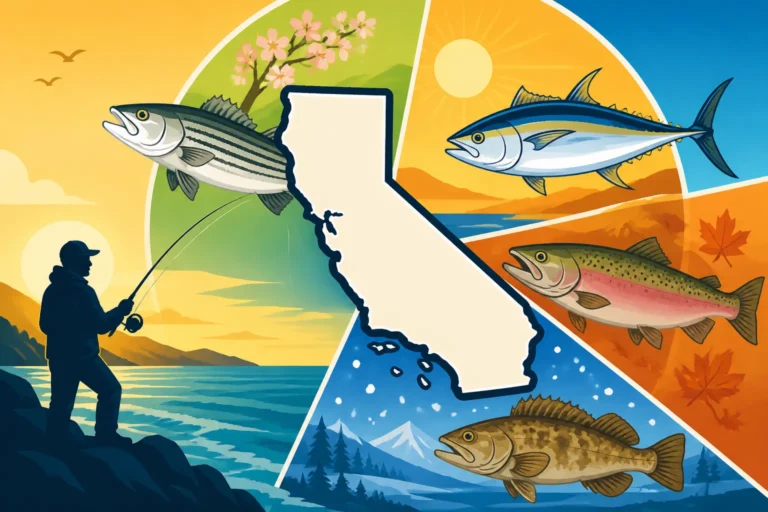
California's vastness means that "seasonal weather" isn't a single thing. What's happening in the high desert is vastly different from the coastal regions or the Sierra Nevada. However, understanding the general patterns can help you anticipate how weather influences fishing throughout the year.
Spring Transitions: Volatile but Rewarding
Ah, spring! The season of hope and wildly unpredictable weather. One day it's sunny and 70 degrees, the next it's raining with a cold front pushing through. These transitions mean fluctuating water temperatures and often unstable barometric pressure. For anglers, this can be challenging but incredibly rewarding. Warming trends will kick off spawning for many freshwater species like bass, making them aggressive and vulnerable in the shallows. However, a sudden cold snap can send them retreating to deeper water, making for a tough bite.
Coastal spring weather often means windy conditions as seasonal patterns shift, which can make offshore fishing tricky but might concentrate baitfish nearshore. Inland, snowmelt can raise river levels and cool temperatures, affecting species like trout and steelhead. The key to spring fishing is flexibility and preparation for anything. Don't let a gloomy morning scare you off; the afternoon might surprise you. If you're targeting bass, understanding California Bass Spawn Timing and Tactics is crucial this time of year.
Summer Stalls and Offshore Breezes
Summer in California brings heat, often relentless, especially in the Central Valley and desert regions. Freshwater lakes and reservoirs can see surface temperatures climb, pushing fish like trout deep into cooler thermal refuges. Largemouth bass might become nocturnal feeders or hug the deepest structure during the heat of the day. This is when How to Fish California Reservoirs in Summer Heat becomes an invaluable resource.
Along the coast, summer often means the infamous "marine layer" – dense fog and low clouds that keep coastal temperatures mild, even when inland areas are scorching. This stable, often cooler, coastal weather can be fantastic for saltwater species, especially if coupled with a light offshore breeze that creates clean, fishable conditions. However, strong onshore winds can create chop and swell, making offshore trips less comfortable. This is also prime time for pelagic species like bluefin tuna, though weather windows for long runs can be tight. Understanding the patterns of the "sea breeze" and "offshore flow" can make a huge difference in your saltwater success.
Fall Cooling and Feeding Frenzies
For many anglers, fall is the golden season. As air temperatures begin to cool, water temperatures stabilize and slowly drop, signaling to many fish species that it's time to put on the feedbag before winter. This leads to intense feeding frenzies, particularly for bass, trout, and many saltwater species. Barometric pressure tends to be more stable than in spring, and frontal systems often bring more predictable, though still impactful, changes.
In freshwater, fish will often move shallower, gorging on baitfish. In the ocean, the water column can still hold warm pockets, extending the season for species like yellowtail and dorado. Fall is also a critical time for salmon and steelhead runs in many of California's rivers. The cooler temperatures make for more comfortable fishing for anglers, and the active fish provide some of the best action of the year. Pay attention to guides like California Salmon Run Timing to hit these windows just right.
Winter Challenges and Unique Opportunities
Winter can be tough, with cold fronts, rain, and sometimes even snow impacting fishing conditions across the state. In freshwater, fish metabolism slows dramatically, and they often retreat to deeper, more stable water, becoming less active. Finesse techniques and slow presentations are usually the order of the day. However, winter also brings unique opportunities. Some species, like white sturgeon in the Delta, become very active in the colder months. Steelhead fishing can be excellent in northern rivers as winter rains bring them upstream.
Coastal fishing can be hit or miss; stormy weather can make it unfishable, but calm, clear days can offer surprising bites for rockfish and lingcod in deeper waters. The key to winter success is patience, precise technique, and dressing warmly. Don't underestimate the impact of a cold, clear day on fish; the low-angle sun combined with cold water can make fish very particular. Look into California Sturgeon Fishing Report Card Rules if you plan to target those giants in winter.
Disclaimer
Fishing regulations and conditions in California can change frequently. Always consult the latest California Department of Fish and Wildlife (CDFW) regulations booklet or website before heading out. The information provided here is for general guidance and educational purposes only.