Vermilion Rockfish in California: Where and How to Catch
It's incredibly frustrating when you're out on the water, gear prepped and hopes high, only to pull up a fish you can't quite identify or, worse, realize you're using the wrong techniques entirely. Many anglers struggle with the sheer variety of California's rockfish species and the ever-changing rules that come with them. This comprehensive guide aims to demystify Vermilion Rockfish, helping you confidently identify, locate, and successfully catch these beautiful, tasty fish while staying within the lines of important regulations.
Understanding Vermilion Rockfish: The "Red Snapper" of California
Before you can even think about putting a hook in the water, it's really helpful to know what you're actually targeting. Vermilion Rockfish are some of the most sought-after groundfish along the California coast, often mistakenly called "red snapper" due to their vibrant color, though they are not true snappers. They're a fantastic species to target, both for the fight they put up and their excellent table fare, but understanding them is key to a successful trip.
Identifying Vermilion Rockfish
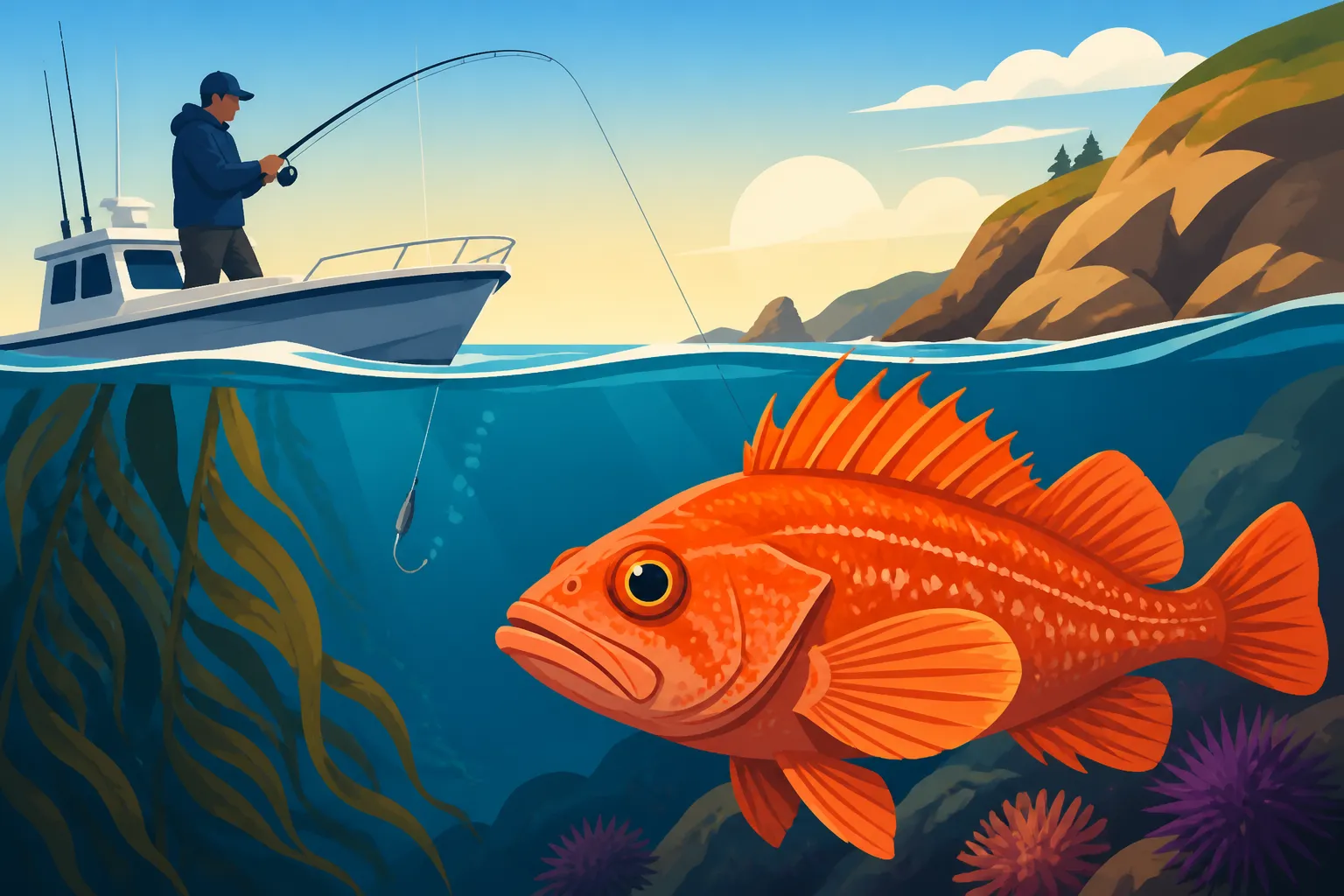
When you pull a Vermilion Rockfish aboard, you'll immediately notice its striking color. They boast a bright orange to brick-red body, which often fades to pinkish-white on their belly. What really helps distinguish them from other similar-looking rockfish, like Bocaccio or Chilipepper Rockfish, are a few key features. Look closely at their lower jaw: it often protrudes slightly, and they have distinct black blotches on their maxilla (the upper jawbone). Another tell-tale sign is the worm-like markings that can appear on their scales, though this isn't always present on every individual.
Their fins are also quite telling. The dorsal fin is deeply notched, and both the dorsal and caudal (tail) fins are typically edged in black, providing a sharp contrast to their otherwise fiery bodies. Compared to other rockfish in the "reds" category, Vermilions tend to have a slightly more robust body shape. When you're trying to quickly identify your catch, especially if you're pulling them up from deeper water, these visual cues become your best friends. It’s always a good idea to consult a comprehensive guide on California Rockfish Species Identified to ensure you're making accurate identifications, especially since bag limits can differ.
Typical Habitat and Behavior
Vermilion Rockfish are creatures of structure and depth. You won't typically find them milling about in shallow, sandy flats. Instead, they prefer rocky reefs, ledges, pinnacles, and even artificial structures like shipwrecks or submerged pipelines. These areas provide them with both shelter from predators and prime ambush points for prey. They are generally found in deeper waters, often ranging from 60 feet down to 300 feet, sometimes even deeper, depending on the region and time of year.
They are primarily schooling fish, which is great news for anglers because if you find one, there's a good chance you've found a whole pile of them. These schools often congregate around specific pieces of structure or changes in depth. Their diet consists mainly of smaller fish, squid, and crustaceans. This means your bait and lure choices should mimic these natural food sources. Understanding their preferred habitat and diet gives you a massive advantage when planning your fishing trip, allowing you to focus your efforts on the most promising areas.
Prime Locations for Vermilion Rockfish in California
California's vast coastline offers a plethora of opportunities for targeting Vermilion Rockfish. From the rugged northern shores to the warmer waters of Southern California, these fish can be found wherever suitable habitat exists. Knowing where to look and at what depth can significantly cut down on your searching time and increase your chances of a successful outing.
Coastal Regions and Depth Ranges
You can find Vermilion Rockfish pretty much all along the California coast, but certain regions tend to be more productive or have clearer access to their preferred deep-water habitats. In Southern California, areas around the Channel Islands, Catalina Island, and offshore banks like the Cortez and Tanner Banks are legendary for their rockfish populations. The waters off San Diego, Orange County, and Santa Barbara are also highly productive. As you move up the Central Coast, locations around Monterey Bay, Morro Bay, and San Simeon offer excellent rockfishing opportunities. Northern California, especially off Bodega Bay, Half Moon Bay, and even within areas of the San Francisco Bay complex, can also yield fantastic Vermilion Rockfish catches, though perhaps requiring a bit more local knowledge for the exact spots.
The key across all these regions is depth. Vermilions are rarely caught in less than 60 feet of water and are more commonly targeted between 100 to 300 feet. However, it's not uncommon to find them even deeper, especially the larger, older individuals. Always check the latest California Rockfish Depth Restrictions before heading out, as these can vary by region and season to protect specific species or overall groundfish populations. Having a good fish finder is indispensable for locating these deeper schools and structures.
Preferred Structure and Bottom Types
As we touched on earlier, Vermilion Rockfish are absolute structure magnets. They love anything that offers vertical relief or hiding spots on the ocean floor. This includes natural rocky reefs, submerged canyons, high spots, and pinnacles. If there's a significant change in depth or a sudden rise in the bottom topography, you can bet Vermilions might be holding there, waiting to ambush prey. Wrecks, debris fields, and artificial reefs are also prime real estate for these fish, creating complex ecosystems that attract baitfish and, consequently, hungry rockfish.
When you're out scouting, look for "hard bottom" on your sonar – those jagged, colorful returns that indicate rocks, not flat, soft sand. Areas where current flows over these structures are often particularly productive, as the current brings food right to them. Think about it: a rockpile in the middle of a flat, sandy expanse is like an oasis in the desert for these fish. If you're using a charter or a guide, they'll have these spots dialed in, but if you're on your own boat, investing in good charts and a reliable fish finder is crucial for finding these hidden gems. You might even find some of these specific structures highlighted as Best Fishing Spots in California if you delve into detailed regional guides.
Master the Art of Catching Vermilion Rockfish
So, you've identified your target and found a promising spot. Now comes the fun part: actually catching them! Vermilion Rockfish aren't usually considered finicky eaters, but employing the right baits, gear, and techniques will drastically improve your success rate and make your time on the water more enjoyable.
Effective Baits and Lures
Vermilion Rockfish are opportunistic feeders, so a variety of baits and lures can be effective. For natural bait, live squid is arguably the gold standard, especially if you can get your hands on some. Its natural action and scent are hard to beat. If live squid isn't available, cut bait such as fresh anchovies, sardines, mackerel, or even strips of bonito or salmon belly can be highly effective. The key with cut bait is ensuring it's fresh and presenting it in a way that looks appealing and natural to the fish.
When it comes to artificials, metal jigs are incredibly popular, especially for deeper water. Brands like Shimano Butterfly jigs or similar knife jigs dropped to the bottom and then jigged vertically can provoke aggressive strikes. Leadhead jigs tipped with plastic grubs or swimbaits in natural colors (think sardine, anchovy, or red/orange) are also deadly. These can be particularly effective when the fish are a bit more spread out or when you want to cover more of the water column. Many anglers stock up on a variety of jigs and soft plastics from online retailers like Amazon to ensure they have options for different conditions and fish moods.
| Bait/Lure Type | Description | Ideal Use | Pros | Cons |
|---|---|---|---|---|
| Live Squid | Natural, active bait with strong scent. | All conditions, highly effective. | Irresistible to rockfish, good for larger fish. | Can be hard to acquire, messy. |
| Cut Bait | Anchovy, sardine, mackerel, salmon belly strips. | Most conditions, readily available. | Strong scent, easy to rig. | Can get picked off by smaller fish quickly. |
| Metal Jigs | Heavy, slender jigs (e.g., knife, speed jigs). | Deep water, vertical jigging. | Durable, good for aggressive fish, no bait needed. | Requires active retrieval, less scent. |
| Leadhead Jigs | Weighted jig heads with soft plastic grubs/swimbaits. | Versatile, mimics baitfish, various depths. | Good vibration/action, can add scent. | Soft plastics can get torn up. |
| Shrimp/Squid Strips | Smaller, tougher cut bait. | When smaller bites are prevalent, tough bait. | Stays on hook well, good general attractant. | Less "action" than live bait. |
Essential Gear and Rigs
For targeting Vermilion Rockfish, you'll want a sturdy rod and reel combo capable of handling depths and potential larger fish. A medium-heavy to heavy conventional rod, often around 7-8 feet in length, paired with a reliable star drag or lever drag reel spooled with 30-pound to 50-pound braided line is a solid setup. The braided line is crucial because it has minimal stretch, allowing you to feel even the lightest bites in deep water and ensuring a solid hookset. A fluorocarbon leader of 30-50 pounds, about 3-6 feet long, is recommended for abrasion resistance against rocks and invisibility to the fish.
The most common and effective rig for Vermilion Rockfish is a dropper loop rig. This rig involves tying multiple loops along your main leader, to which you attach snelled hooks, typically 2 to 4 hooks, spaced about 12-18 inches apart. A heavy sinker (usually 8-16 ounces, depending on current and depth) is tied to the very bottom of the rig to quickly get your bait down. Another excellent option is a gangion rig, which is essentially a pre-made dropper loop rig often available at tackle shops or on Amazon. Always make sure your hooks are sharp and appropriately sized for the bait you're using, generally 3/0 to 6/0 circle hooks or J-hooks. For more detailed instructions, check out guides on Best Rigs for California Rockfish.
Best Fishing Techniques
Once you're rigged up, the technique is pretty straightforward: get your bait or lure to the bottom, and keep it there.
- Drifting: This is perhaps the most popular and often most effective method. Your boat drifts slowly over a promising piece of structure, allowing your baits to cover a wider area. Let your rig hit the bottom, then reel up a few cranks to keep your hooks just above the snags. Pay close attention to your line; any sudden slack or sharp tug could be a bite.
- Anchoring: If you find a particularly productive pinnacle or wreck, anchoring directly over it can allow you to precisely work that spot. This is especially good if you're getting consistent bites in one small area. Once anchored, you'll fish similarly, dropping your bait to the bottom and gently bouncing it or letting it sit.
- Slow Trolling: In some scenarios, particularly when prospecting or covering linear structures like ledges, slow trolling with heavy jigs or even live bait can be effective. This requires careful boat control to keep your lines vertical and baits near the bottom.
- Vertical Jigging: For those using metal jigs, drop the jig to the bottom, then retrieve it with a series of sharp upward jerks followed by free-spooling back down. This mimics an injured baitfish and can trigger aggressive reaction strikes. The key is to vary your cadence until you find what the fish are responding to.
Regardless of the technique, the paramount rule for rockfishing is to stay connected to the bottom. Vermilions live there, and that's where their food is. If you're not bumping the bottom occasionally, you're probably not in the strike zone. If you're considering a more guided experience, booking a trip with a California Deep Sea Fishing Charter Guide can provide invaluable insights and put you on the fish quickly.
Navigating Vermilion Rockfish Regulations and Conservation
Fishing responsibly is just as important as fishing successfully. California has a complex, but necessary, set of regulations designed to protect our precious marine resources, especially groundfish like Vermilion Rockfish. Ignoring these rules can lead to hefty fines and damage to fish populations.
California Specific Rules
The California Department of Fish and Wildlife (CDFW) manages groundfish regulations, which can change frequently based on scientific assessments and conservation needs. For Vermilion Rockfish, you'll need to pay close attention to several key factors:
- Fishing Seasons: Groundfish seasons vary by management area (e.g., Northern, Central, Southern California) and can be influenced by broader federal regulations. It's crucial to check the CDFW's current ocean sport fishing regulations booklet or website before every trip. Some areas might have specific closures or open periods for certain groundfish. You can also get a good overview from a guide on California Fishing Seasons: Month-by-Month Guide.
- Bag and Possession Limits: There will be a daily bag limit (how many you can keep per day) and potentially a possession limit (how many you can have in your possession, often twice the daily limit). For rockfish, there's usually a general "rockfish complex" bag limit that includes Vermilions, but Vermilion Rockfish sometimes have a separate, lower sub-limit within that complex, or even specific slot limits. Always confirm the current numbers.
- Size Limits: Minimum size limits are often in place to protect juvenile fish and allow them to reproduce before being caught. You'll need a measuring device handy to ensure your catch meets the legal length.
- Depth Restrictions: These are incredibly important for rockfish. Certain depths may be entirely closed to fishing, or specific gear restrictions might apply in different depth zones. This is often done to protect deeper-dwelling species that are more vulnerable to barotrauma. Consult the current California Rockfish Depth Restrictions carefully.
- California Fishing License: Of course, you absolutely need a valid California Fishing License Guide if you're 16 years or older to fish legally. Make sure it's current. If you're fishing saltwater, you might also need a California Ocean Enhancement Stamp depending on where and what you're fishing for.
Always, always consult the most current "California Fishing Regulations Explained" from the CDFW website or their physical booklet available at license agents. Ignorance of the law is not an excuse.
Sustainable Fishing Practices
Beyond just following the rules, practicing responsible angling helps ensure there are plenty of Vermilion Rockfish for future generations.
- Barotrauma and Venting: When rockfish are pulled up from deep water, the rapid change in pressure causes gases in their swim bladder to expand, leading to a condition called barotrauma. This can make it impossible for the fish to swim back down, even if released. If you're releasing a rockfish showing signs of barotrauma (bulging eyes, distended stomach, stomach protruding from mouth), use a descending device or a venting tool. Descending devices take the fish back down to depth, allowing their swim bladder to recompress naturally. Venting tools, often available on Amazon or tackle shops, are hollow needles used to puncture the swim bladder and release the excess gas. Learn how to use them properly to avoid further injury to the fish.
- Circle Hooks: Using circle hooks is highly recommended, especially when fishing with bait. They tend to hook fish in the corner of the mouth, reducing gut-hooking and increasing the survival rate of released fish.
- Careful Handling: If you plan to release a fish, handle it minimally and gently. Keep it in the water as much as possible. Avoid touching its gills or eyes.
- Avoid Marine Protected Areas (MPAs): California has established numerous Marine Protected Areas Explained where fishing is restricted or completely prohibited. Always know the boundaries of these areas and avoid fishing within "no-take" zones. These areas are crucial for allowing fish populations to recover and thrive.
By combining good angling techniques with a strong understanding of regulations and a commitment to conservation, you can enjoy fantastic Vermilion Rockfish fishing for years to come. Remember, every angler plays a part in protecting these incredible marine resources.
Disclaimer
Please remember that fishing regulations, seasons, and limits are subject to change at any time by the California Department of Fish and Wildlife (CDFW). While every effort has been made to provide accurate and up-to-date information in this guide, it is solely your responsibility to verify the most current regulations directly with the CDFW before engaging in any fishing activities. This guide is for informational purposes only and does not constitute legal advice.