Best Baits and Lures for Yellowtail in California
One of the most exhilarating experiences an angler can have in California is the electrifying fight of a Yellowtail. These powerful, fast-swimming jacks are a true test of skill and tackle, but getting them to bite can sometimes feel like solving a complex puzzle. If you've ever spent a day on the water, watching Yellowtail boil around your boat without so much as a sniff at your offerings, you know the frustration. This comprehensive guide is designed to unlock the secrets of what baits and lures truly entice these formidable fish in California waters, helping you turn those frustrating near misses into unforgettable hook-ups.
Understanding Yellowtail Behavior to Choose Your Tackle
Before we even talk about specific baits or lures, it's crucial to understand the Yellowtail itself. These aren't just any fish; they're apex predators with keen senses and specific hunting patterns. Knowing their habits helps you present your offerings in a way that truly mimics their natural prey. After all, a perfectly tied knot won't do you any good if the fish aren't interested in what's on the other end of the line.
Yellowtail's Feeding Habits and Preferred Environments
Yellowtail, particularly the California Yellowtail (Seriola lalandi), are aggressive, opportunistic feeders. They primarily hunt smaller baitfish like sardines, anchovies, and mackerel, but they won't turn their nose up at squid or even smaller crustaceans if the opportunity arises. What's fascinating about Yellowtail is their schooling behavior and how they use it to their advantage. They often hunt in coordinated packs, herding baitfish to the surface or pinning them against kelp paddies and structure.
You'll typically find Yellowtail cruising around kelp beds, submerged reefs, offshore islands like the Channel Islands, and even along deeper coastal areas. They love structure because it provides cover for them and also serves as a refuge for the baitfish they prey upon. When Yellowtail are "on the chew," they'll often create visible surface boils as they slash through schools of bait, a sight that gets any angler's heart pounding. Understanding this behavior means your chosen bait or lure needs to either perfectly imitate their natural food sources or provoke a strong reactionary strike when they're in a feeding frenzy.
Seasonal and Water Condition Influences
The behavior of Yellowtail, and consequently the best baits and lures to use, can change significantly with the seasons and prevailing water conditions. In California, Yellowtail fishing generally heats up in the late spring, peaks in the summer, and can remain strong well into the fall, especially during warmer water years. During these warmer months, baitfish are abundant, and Yellowtail are actively feeding closer to the surface. This is when you'll see those epic surface boils.
However, cooler water in the late fall or winter might push Yellowtail deeper, requiring different tactics. Water clarity also plays a huge role. In clear, blue offshore water, Yellowtail can be incredibly wary, making natural, live baits or subtle, realistic lures more effective. In slightly off-color or turbulent inshore waters, a brighter, more aggressive lure might stand out better and provoke a strike. Always pay attention to water temperature, clarity, and recent California Fishing Reports Explained when planning your trip; these factors will heavily influence what they're willing to bite.
Live Baits: The Irresistible Natural Choice
Let's be honest, nothing beats live bait for many species, and Yellowtail are definitely on that list. When you're dealing with finicky fish or want to maximize your chances, a lively, natural presentation is often your best bet. Live bait mimics exactly what Yellowtail are looking for, triggering their predatory instincts in a way that artificials sometimes can't.
Sardines and Anchovies: The Go-To Live Baits
If there's a king and queen of Yellowtail bait, it's undoubtedly sardines and anchovies. These small, oily baitfish are the natural diet of Yellowtail throughout their range, and they're often what the Yellowtail are keyed in on.
-
Sardines (or "Dines"): These are probably the most popular live bait for Yellowtail in Southern California. Their larger size means they hold up better on the hook and attract bigger fish. When you're on a party boat or private charter, the bait receiver will usually be brimming with these. The key is to select a lively sardine, one that's swimming strongly and doesn't look beat up. You can rig them in various ways:
- Nose Hooked: For a natural swimming action, especially when How to Fly-Line Sardines for Yellowtail or slow trolling. Hook them through the nose cartilage.
- Collar Hooked: For a bit more security, especially if you're casting further or fishing in current. Hook through the fleshy part behind the gill plate.
- Tail Hooked: Can be effective when Yellowtail are being aggressive and you want the sardine to dive deeper on the retrieve.
- Presentation: Whether you're fly-lining with no weight, using a small egg sinker, or slow trolling, a lively sardine swimming naturally near a kelp paddy or boiling fish is hard for a Yellowtail to resist. Just remember, these baits are delicate, so handling them gently is crucial for keeping them alive and kicking on your hook.
-
Anchovies (or "Chovies"): Smaller than sardines, anchovies are excellent when Yellowtail are feeding on smaller bait, often referred to as "micro-bait." They are extremely delicate, so gentle handling is paramount.
- Rigging: Typically nose-hooked with a small, light-wire hook (size 4 to 2/0) to maintain their natural movement. A tiny split shot or no weight at all is often best for fly-lining.
- Presentation: They're fantastic for getting a subtle presentation, especially when Yellowtail are line-shy or the water is very clear. Cast them into boiling schools or near structure. The challenge is keeping them on the hook during a cast and preventing them from tearing off. Many anglers swear by the effectiveness of anchovies on light line when bigger baits aren't getting bit.
Mackerel, Squid, and Other Productive Live Offerings
While sardines and anchovies are dominant, other live baits can be incredibly effective, especially when Yellowtail are behaving differently or in specific scenarios.
-
Mackerel (Spanish Mackerel, Pacific Mackerel): These are heartier baits and often preferred for larger Yellowtail. They're tougher, can withstand longer casts, and are more active swimmers.
- Rigging: Nose-hooked, collar-hooked, or even bridle-rigged for extra security, especially if you're trolling or targeting truly trophy-sized fish. Larger hooks (2/0 to 6/0) are appropriate.
- Presentation: Excellent for slow trolling around structure or kelp paddies. Also great for chumming, as their oily nature creates a strong scent trail. Sometimes, a larger, more aggressive Yellowtail will prefer a bigger meal like a mackerel over a sardine. If you're targeting big Yellowtail in deeper water or near substantial offshore structure, a lively mackerel is a top choice.
- Availability: Live mackerel can sometimes be caught on sabiki rigs right off the boat or pier before your trip, or purchased at bait receivers.
-
Squid: Don't underestimate the power of live squid. Yellowtail, especially those cruising deeper or in certain seasons, find squid utterly irresistible.
- Rigging: Typically nose-hooked or through the mantle with a strong hook. You can also fish a whole dead squid, but live is usually preferred.
- Presentation: Live squid are excellent for drift fishing over reefs or deeper kelp, or for fishing at night under lights when squid are present. They put out a fantastic scent and visual appeal. Many anglers specifically look for "squid boats" or areas where squid are spawning to target Yellowtail. They can be incredibly effective when other baits fail.
-
Other Baits (Occasional):
- Smelt: Smaller, silver-sided baitfish, sometimes found in bait receivers. Can be effective when Yellowtail are focused on small, flashy prey.
- Fly-lined artificials (like soft plastics): While not "live" bait, some anglers will use a realistic soft plastic lure and present it as if it were a live bait, especially when bait is scarce. This is a crossover technique but worth mentioning for its "natural" presentation.
When fishing with live bait, remember that the goal is to make it look as natural and enticing as possible. Light line, sharp hooks, and careful handling are always your friends.
Artificial Lures: Action, Flash, and Versatility
While live bait holds a special place, artificial lures offer incredible versatility, allowing you to cover more water, imitate various prey, and often provoke aggressive reaction strikes. Plus, you don't have to worry about keeping them alive! The world of artificial lures for Yellowtail is vast, but a few stand out as consistent producers in California.
Surface Iron and Colt Snipers: Mastering the Metal
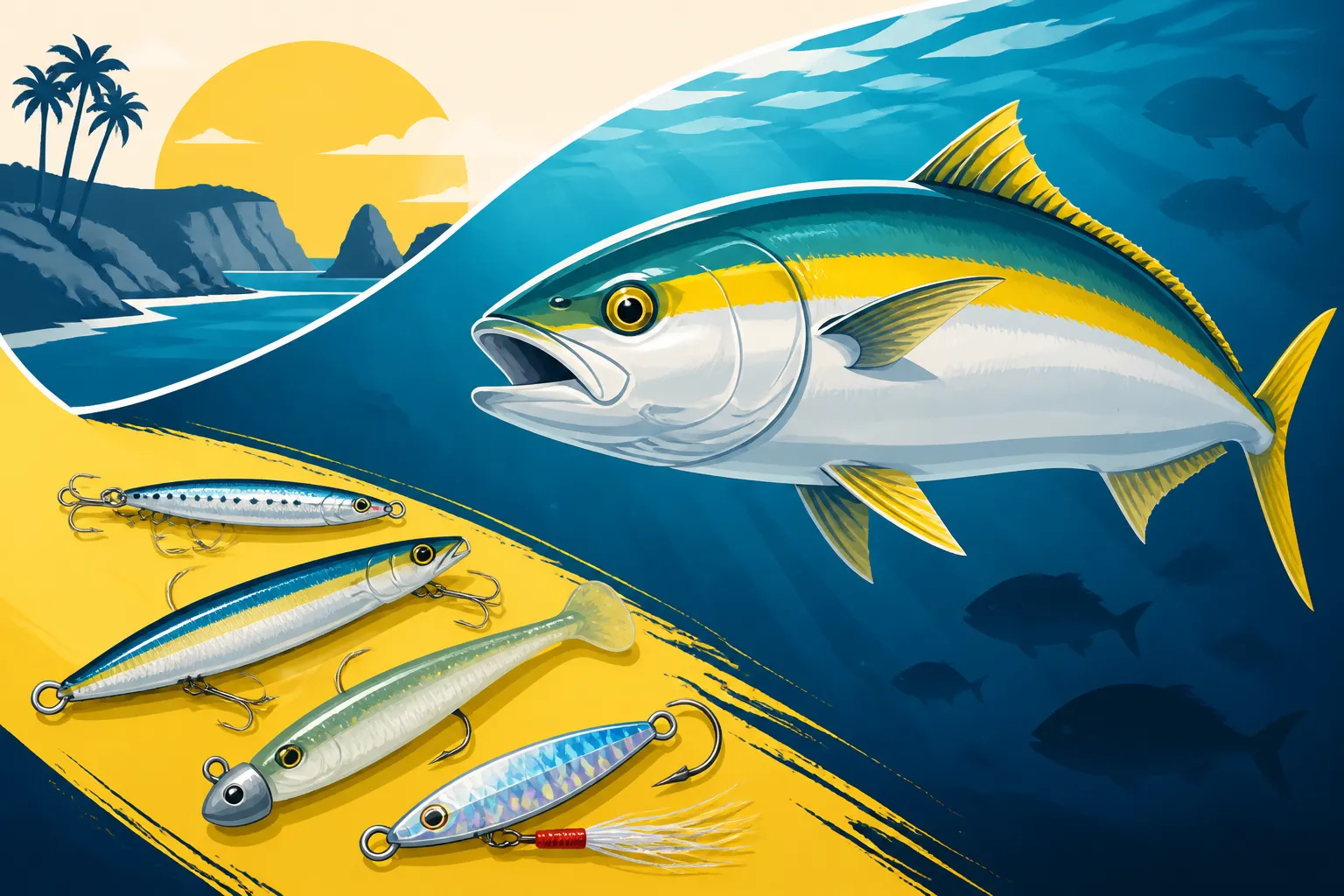
If there's one lure synonymous with aggressive Yellowtail fishing in California, it's the surface iron, often called a "jig." These metal lures are designed to be cast far and retrieved rapidly, mimicking a fleeing baitfish.
-
Surface Iron (e.g., Salas, Tady): These are heavier, often lead jigs, shaped like a slender fish. They come in various weights, colors, and patterns.
- How they work: The magic of surface iron lies in its "kick" or "swim." When retrieved at high speed, they flutter, dart, and flash, imitating a panicked baitfish trying to escape. This aggressive, erratic action triggers an instinctual chase response from Yellowtail, especially when they're in a feeding mood or actively boiling.
- Technique: Cast as far as you can, let it sink for a second or two (or not at all if fish are on the surface), and then reel as fast as you can, often with a sweep of the rod tip to enhance the action. The retrieve should be blistering fast. It's a physically demanding technique, but the reward of a Yellowtail exploding on your jig is unmatched. Popular colors include scrambled egg (yellow/white), blue/white, mint green, and chrome. Brands like Salas (6X, 7X) and Tady (45, AA) are mainstays. You can find a good selection on platforms like Amazon.
- When to use: Ideal when Yellowtail are visible on the surface, crashing bait, or when you need to cover a lot of water quickly to find them. Excellent for anglers wanting to target fish aggressively and get that heart-stopping surface strike. For more on this, check out our guide on Yo-Yo Jigging for Yellowtail.
-
Colt Snipers (e.g., Shimano, Daiwa): These are modern, often narrower, and more aerodynamic metal jigs, typically made from lead or zinc, designed for extreme casting distance.
- How they work: Colt snipers excel at distance casting and have a tight, erratic wobble on the retrieve. They often have realistic baitfish finishes and are pre-rigged with strong treble or assist hooks.
- Technique: Similar to surface iron, cast far and retrieve fast, often with pauses or twitches to give a dying baitfish impression. Some models are also effective for a vertical jigging presentation.
- When to use: Perfect for reaching distant schools of Yellowtail that are shy of the boat, or when you need to throw past a surface boil to intercept cruising fish. Their slimmer profile can also be effective when Yellowtail are keying in on smaller, slender baitfish.
Jigs and Soft Plastics: Subsurface Success
When Yellowtail are deeper, sulking near structure, or simply not responding to surface presentations, going subsurface with jigs and soft plastics can be incredibly productive.
-
Yo-Yo Jigs (e.g., Salas, Tady, Shimano): These are heavier, often shorter, and thicker metal jigs designed specifically for vertical jigging.
- How they work: Dropped straight down to the depth where Yellowtail are holding, then retrieved with a rapid, yo-yo-like motion. This causes the jig to flutter and dart aggressively, mimicking a dying or injured baitfish sinking through the water column.
- Technique: Drop the jig to the desired depth (often on fish finders), then aggressively retrieve it several cranks, pause, drop back down, or sweep the rod up and let it flutter down on a semi-slack line. The bite often comes on the drop. This is a very effective technique for fish holding tight to structure or those that are not showing on the surface.
- When to use: Essential when Yellowtail are holding in deeper water (50-200 feet), near kelp stringers, or suspended offshore. A prime example is when fishing around offshore banks or islands. Colors like scrambled egg, blue/white, and glow-in-the-dark are common.
-
Soft Plastics (e.g., Berkley Gulp!, Warbaits, MC Swimbait): These lures are incredibly versatile and can be fished in various ways to imitate baitfish or squid.
- How they work: Soft plastic swimbaits, jerkbaits, or grub tails can be rigged on lead heads or weedless hooks, offering a lifelike profile and seductive action in the water. The flexibility of the plastic creates natural movement.
- Technique: Can be cast and retrieved, jigged vertically, or even slow trolled. Varying retrieve speeds and adding twitches can make them incredibly effective. For swimbaits, a steady retrieve with a subtle tail kick is often enough. For jerkbaits, a rip-and-pause retrieve mimics a wounded baitfish perfectly.
- When to use: Great for Yellowtail holding near kelp, reefs, or when a more subtle, realistic presentation is needed. They can be particularly deadly when rigged weedless around heavy cover. Many anglers will scent their soft plastics with bait scents for added appeal. Brands like Berkley Gulp! offer scents infused into the plastic, making them highly attractive.
Trolling Lures: Covering Water for Cruising Yellowtail
Trolling is a fantastic way to cover large expanses of ocean, especially when Yellowtail are scattered or you're trying to locate schools of fish. It allows you to present multiple lures at once and keep your bait in the strike zone for extended periods.
-
Feathers and Cedar Plugs: These classic trolling lures have accounted for countless Yellowtail.
- Feathers: Typically made with a weighted head and a skirt of feathers or synthetic material. They create a darting, skipping action in the wake.
- Cedar Plugs: Unweighted cedar wood lures that have an erratic, swimming action when trolled. The natural wood grain gives them a unique appeal.
- How they work: Both create commotion and mimic baitfish skipping on the surface or swimming just below it. The erratic movement often triggers a reaction strike.
- Technique: Troll at various speeds (typically 5-10 knots) until you find what the fish prefer. Position them at different distances behind the boat to cover various sections of the wake.
- When to use: Excellent for blind searching for Yellowtail, especially around offshore banks, islands, or when moving between kelp paddies. Also effective when fish are chasing bait on the surface but aren't concentrated enough for casting.
-
Diving Plugs and Deep Divers (e.g., Rapala, Nomad): These lures are designed to dive to specific depths, allowing you to target Yellowtail holding deeper in the water column.
- How they work: These lures have a lip or bib that forces them underwater when trolled. They feature a wobbling, swimming action that imitates a larger baitfish.
- Technique: Deploy them on your trolling spread, keeping in mind their diving depths. You might use a downrigger to get them even deeper if Yellowtail are way down. Vary your speed and make turns to change the lure's action and depth.
- When to use: Useful when Yellowtail are marked on sonar but aren't coming to the surface, or when targeting fish around deeper structure. They're particularly good for a more consistent presentation at a specific depth compared to weighted jigs.
Essential Rigging and Presentation Tips
Having the best baits and lures won't guarantee success if you don't present them properly. Yellowtail are notoriously smart and can be very line-shy or picky about presentation. These details often separate a good day from a great one.
Matching Your Line and Rod to the Tackle
Your setup is just as important as the bait or lure itself. The right gear allows for proper presentation and gives you the fighting power needed for these hard-pulling fish.
-
Line Choice:
- Main Line: For most Yellowtail fishing, especially with lures or heavier live bait, 40-60 lb braided line is a popular choice for its strength, thin diameter (for better casting and less water resistance), and lack of stretch (for immediate hook sets). Some anglers prefer straight monofilament for its shock absorption.
- Leader Material: This is critical. Yellowtail have excellent eyesight. Fluorocarbon leader material is preferred for its invisibility underwater and abrasion resistance, especially around kelp and rocky structure. A 25-40 lb fluorocarbon leader is common, depending on water clarity and fish mood. When they are really biting and not line shy, you can bump it up to 50-60 lb. Always tie your leader to your main line with a strong knot like an FG knot or a uni-to-uni.
- Line Capacity: Yellowtail can make incredibly powerful, long runs. Ensure your reel has enough line capacity – at least 200-300 yards of main line, plus your leader.
-
Rod and Reel:
- Rods: A fast-action rod with a strong backbone is ideal for Yellowtail. For surface iron, a longer rod (8-10 feet) helps with casting distance and jig action. For yo-yo jigging or live bait, a shorter, more powerful rod (7-8 feet) offers better leverage. Rods with a 20-50 lb or 30-80 lb rating are common.
- Reels: A high-quality conventional reel with a strong drag system and a fast retrieve ratio is paramount. Brands like Penn, Shimano, and Daiwa offer excellent options. For surface iron, a high-speed retrieve is key, so look for ratios of 6.0:1 or higher. For live bait, something in the 4.0:1 to 5.0:1 range is often fine, but the faster retrieve is still a benefit. Ensure your reel can handle the sustained pressure of a long Yellowtail fight.
Presentation Techniques for Live Bait and Lures
How you get your bait or lure in front of the fish and how you work it can make all the difference.
-
Fly-Lining Live Bait: This is a classic and often deadly technique, particularly for Yellowtail on the surface or near kelp paddies.
- Technique: Hook a lively sardine, anchovy, or small mackerel, and cast it out with no weight. Let the bait swim naturally. Keep your reel in freespool with your thumb on the spool, ready to engage the drag when a fish strikes. This allows the Yellowtail to pick up the bait and run without feeling resistance.
- Tips: Cast away from the boat, especially when fish are boat-shy. Keep an eye on your line; any unusual movement or sudden surge means a bite. When you feel a strong pull, engage the reel and sweep the rod to set the hook. This technique is extensively covered in guides like How to Fly-Line Sardines for Yellowtail.
-
Casting and Retrieving Lures:
- Vary your retrieve: Don't just reel at one speed. Experiment with fast burns, pauses, twitches, and sweeping motions. Yellowtail often strike when a lure changes direction or speed, mimicking a confused or injured baitfish.
- Fan Casting: If you're not seeing fish, fan cast around your boat or target area to cover as much water as possible. Cast in different directions and vary your retrieve depths until you find where the fish are holding.
- Match the Hatch: Try to use lures that match the size and color of the natural baitfish the Yellowtail are currently feeding on. If they're on tiny anchovies, a large surface iron might get ignored, while a slender Colt Sniper or small soft plastic could be deadly.
-
Vertical Jigging:
- Depth Control: Use your fish finder to identify the depth where Yellowtail are holding. Drop your yo-yo jig or soft plastic right to that depth.
- Aggressive Action: Vertical jigging for Yellowtail is usually an aggressive technique. Erratic ups and downs, fast reels, and quick drops are often what triggers a strike. Don't be afraid to work the lure hard.
-
Stealth and Observation:
- Approach: Yellowtail can be wary. Approach kelp paddies or boiling fish quietly. Engine noise and slamming gear can spook them.
- Observe: Watch for birds diving, baitfish scattering, or surface boils. These are tell-tale signs of feeding Yellowtail. Pay attention to what other anglers on the boat are using and what's working for them. Reading a How to Read a California Charter Fish Count, combined with your own observations, can be invaluable.
Here’s a quick overview of some popular options:
| Bait/Lure Type | Best Use Case | Rigging/Presentation Tips | Pros | Cons |
|---|---|---|---|---|
| Live Sardines | Surface boils, kelp paddies, general all-around | Nose or collar hooked, fly-line or light sinker | Highly natural, almost irresistible when fish are active | Delicate, harder to cast, requires live bait well |
| Live Anchovies | Finicky fish, small bait schools, clear water | Nose hooked, light wire hook, fly-line with no weight | Very natural, excellent for subtle presentations | Extremely delicate, hard to cast, short lifespan |
| Live Mackerel | Larger Yellowtail, trolling, chumming | Nose or bridle rigged, slow troll or heavier sinker | Tougher bait, attracts bigger fish, strong swimmer | Can be hard to obtain, sometimes ignored by smaller Yellowtail |
| Live Squid | Deeper water, night fishing, specific feeding moods | Nose or mantle hooked, drift or vertical jig | Unique appeal, strong scent, great for wary fish | Can be seasonal/unavailable, delicate |
| Surface Iron (Salas) | Aggressive surface fish, boiling schools | Fast, erratic retrieve; long casts | Provokes violent strikes, covers water quickly, durable | Physically demanding, less effective when fish are deep or picky |
| Colt Snipers | Distant schools, boat-shy fish | Fast retrieve, occasional twitches, long casts | Extreme casting distance, good for pressured fish, durable | Can be less erratic than traditional iron, faster sink rate |
| Yo-Yo Jigs (Shimano) | Deep-holding fish, structure fishing | Vertical jigging, aggressive sweeps and drops | Gets to depth fast, triggers reaction strikes, durable | Requires specific technique, less effective on surface fish |
| Soft Plastics (Gulp!) | Kelp lines, reefs, subtle presentation | Jig heads, weedless rigs; cast/retrieve, drift | Versatile, realistic profile, good scent (e.g., Berkley Gulp!) | Can be easily torn, not ideal for extreme casting |
| Trolling Lures (Rapala) | Covering open water, locating schools | Trolled at varying speeds, different depths | Covers large areas, consistent presentation, no active casting | Less interactive, requires boat/trolling setup |
The exciting world of Yellowtail in California: Where and How to Catch, is a journey of constant learning. From understanding their preferred habitats and feeding times to perfecting your California Offshore Fishing Techniques, every detail contributes to your success. Make sure you're always up-to-date on your California Fishing License Guide, too. Good luck out there, and tight lines!
Disclaimer
Fishing regulations and seasons, including those for Yellowtail, can change frequently. It is the angler's responsibility to check the latest California Department of Fish and Wildlife (CDFW) regulations before heading out. This guide is for informational purposes only and should not be considered a substitute for official regulations.