Rainbow Trout in California: Where and How to Catch
There's nothing quite like the thrill of a rainbow trout hitting your line, especially here in California. But let's be honest, figuring out where these beautiful fish are biting and how to consistently hook them can sometimes feel like solving a cryptic puzzle. This guide is dedicated to demystifying rainbow trout fishing across the Golden State, offering a comprehensive look at their habits, the best places to cast your line, and the techniques that will put more fish in your net.
Understanding California Rainbow Trout
Rainbow trout (Oncorhynchus mykiss) are arguably California's most iconic and sought-after freshwater game fish. Their vibrant colors, spirited fight, and widespread availability make them a favorite among anglers of all skill levels.
What Makes Rainbows So Popular?
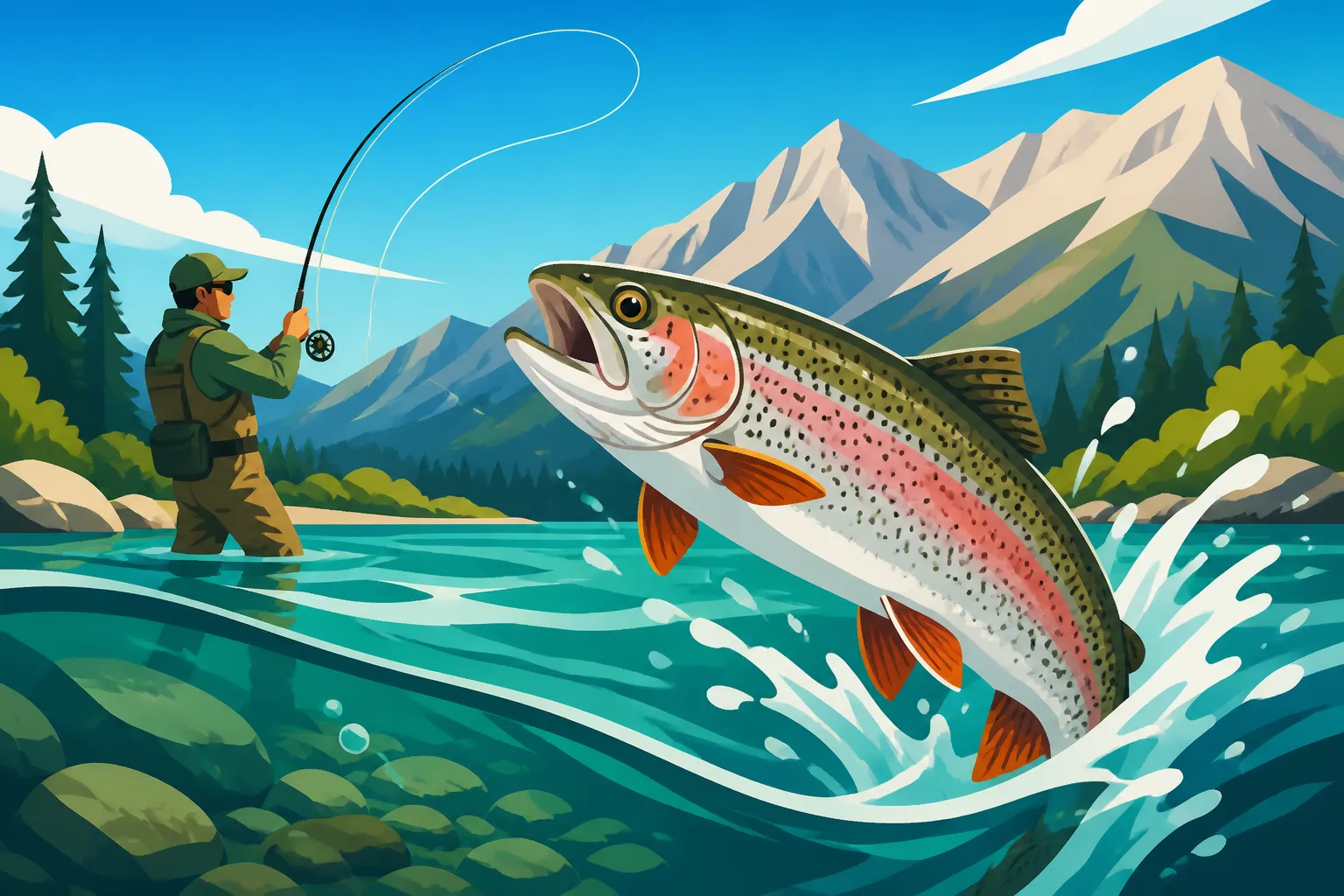
For many, the appeal of rainbow trout isn't just in their beauty, but in the sheer joy of the catch. They're known for their acrobatic jumps and strong runs once hooked, providing an exhilarating challenge whether you're using light tackle or a fly rod. This feisty nature, combined with their willingness to bite a variety of presentations, keeps anglers coming back for more.
Beyond the fight, rainbows are a testament to California's diverse fisheries. From pristine alpine lakes to meandering rivers and even urban ponds, these fish thrive in a surprising range of environments. Their adaptability is a huge part of their charm, meaning there’s almost always a rainbow trout fishery within a reasonable drive, no matter where you are in the state. They're also a fantastic entry point for new anglers, often being the first "real" game fish many people catch, sparking a lifelong passion for fishing.
Identifying California Rainbow Trout
Recognizing a rainbow trout is usually pretty straightforward, but knowing the finer details can help distinguish them from other trout species you might encounter. True to their name, they typically feature a distinctive iridescent, reddish-pink band running along their lateral line, often fading from vibrant pink to a subtle blush. Their backs are generally olive green, transitioning to silvery-white on their bellies, and their entire body, including the fins and tail, is usually covered in small, dark spots.
When trying to identify them, pay close attention to the spotting pattern. Unlike brown trout, which often have larger, sparse spots, sometimes with light halos, rainbow trout spots are typically smaller, more numerous, and evenly distributed. Cutthroat trout, another common species in some Californian waters, are distinguished by the red or orange slash marks under their lower jaw. Steelhead, by the way, are essentially an anadromous (sea-run) form of rainbow trout, displaying a more silvery, ocean-going appearance before returning to freshwater to spawn.
Ideal Habitats and Behaviors
Rainbow trout are cold-water fish, preferring water temperatures generally between 45-65°F (7-18°C). This preference dictates where you'll find them most abundantly in California. In the warmer summer months, they'll retreat to deeper, cooler sections of lakes or higher elevations in mountain streams where the water remains consistently cool and well-oxygenated. During spring and fall, when ambient temperatures are milder, they'll often spread out into shallower areas of lakes and slower-moving river sections.
Their diet is quite varied, making them opportunistic feeders. Younger trout often feed on aquatic insects, small crustaceans, and zooplankton. As they grow, their diet expands to include larger insects, minnows, leeches, and even small frogs. Understanding this varied diet is key to selecting the right bait or lure. They are also highly sensitive to water clarity and current, often positioning themselves behind structures like rocks or fallen logs to ambush prey while conserving energy. These ambush points are prime targets for anglers, as they offer shelter and a constant food supply.
Top Spots to Find Rainbow Trout in California
California is truly a rainbow trout paradise, offering an incredible variety of fishing environments. From the rugged beauty of the Sierra Nevada to the serene flows of valley rivers, there's a spot for every angler.
High Sierra Lakes and Streams
The Eastern Sierra region, often hailed as the crown jewel of California trout fishing, boasts an unparalleled concentration of rainbow trout. Lakes like Crowley Lake, part of the famed June Lake Loop, are renowned for their trophy-sized rainbows, especially in the spring and fall. These high-elevation lakes often rely on a combination of natural reproduction and aggressive stocking by the California Department of Fish and Wildlife (CDFW) to maintain healthy populations.
Further north, destinations like Lake Tahoe, straddling the California-Nevada border, offer stunning scenery alongside excellent rainbow trout opportunities, though catching them here often requires specialized tactics due to the lake's immense depth. Rivers like the Truckee River Fishing Guide and the Owens River are iconic fly-fishing destinations where wild rainbows thrive alongside stocked fish. Accessing some of these remote high-country lakes might require a hike or even a pack animal trip, adding an adventurous layer to the experience. For those venturing into this region, it's wise to consult a detailed Eastern Sierra Fishing Guide for specific area regulations and conditions.
Lower Elevation Rivers and Reservoirs
Not all prime rainbow trout spots require a trek into the high country. Many lower-elevation rivers and reservoirs across California are regularly stocked, providing fantastic and accessible fishing. Lake Shasta, a massive reservoir in Northern California, is a fantastic example, known for its healthy populations of rainbows that grow large on a diet of Kokanee salmon. You can find more details on Lake Shasta: Fish Species and Best Spots. Similarly, the American River and sections of the Sacramento River, particularly below dams, offer year-round trout fishing, benefiting from cold water releases and consistent stocking.
These waters often see higher fishing pressure due to their accessibility, but consistent stocking ensures that there are always fish to be caught. Reservoirs like New Melones Lake and Lake Berryessa also hold strong populations of rainbows, especially in the cooler months. Many of these locations are excellent for both boat anglers and bank anglers, often featuring amenities like boat launches, picnic areas, and paved access. Anglers here should also be mindful of California Freshwater Fishing Regulations as they can vary slightly by water body.
Urban and Accessible Options
For those looking for a quick fishing fix or introducing kids to the sport, California's urban fishing programs are a godsend. The CDFW frequently stocks neighborhood ponds and lakes within city limits, often timed with school breaks and holidays. These waters, while not offering wilderness solitude, provide an easy and consistent opportunity to catch pan-sized rainbow trout.
Lakes in places like San Diego (e.g., Lake Miramar, Lake Murray), Los Angeles County (e.g., Santa Fe Dam Recreation Area, Legg Lake), and various regional parks across the state are popular choices. These spots are typically well-maintained, offer easy bank access, and sometimes even feature fishing piers. While the fish may not be trophy-sized, the high catch rates make them perfect for beginners and families. It’s a great way to enjoy the outdoors without having to travel far from home.
Essential Gear for California Rainbow Trout Fishing
Having the right tackle can make all the difference when targeting rainbow trout. While you don't need to break the bank, having reliable gear suited to the task will significantly improve your success and enjoyment.
Rods, Reels, and Line Choices
For most rainbow trout fishing scenarios, a light to ultralight spinning rod is your best friend. A rod between 5'6" and 7' long with a fast or moderate-fast action will provide the sensitivity needed to detect subtle bites and the backbone to handle a fighting trout. Pair this with a small spinning reel, typically in the 1000 to 2500 size range, spooled with 4 to 6-pound test monofilament or fluorocarbon line. Monofilament offers good knot strength and shock absorption, while fluorocarbon is nearly invisible underwater and has excellent abrasion resistance, which can be crucial in clear Sierra streams.
If you're delving into fly fishing, a 3 to 5-weight fly rod, typically 7'6" to 9' in length, is ideal for most California trout streams and smaller lakes. This setup allows for delicate presentations of small flies while still having enough power to cast in breezy conditions. A matching fly reel and a floating weight-forward fly line are standard, often paired with a tapered leader and fluorocarbon tippet in the 3x to 5x range for stealth. Many excellent starter combos for both spinning and fly fishing are readily available, and a quick search on Amazon will show you a wide array of options to fit any budget.
Baits and Lures That Get Bites
Rainbow trout are opportunistic feeders, which means a wide variety of baits and lures can be effective. For bait fishing, the classics still reign supreme. PowerBait, in its many forms (dough, nuggets, or GULP! varieties), is a perennial favorite, especially for stocked trout in lakes and reservoirs. Garlic, chartreuse, and rainbow colors are consistently productive. Live baits like inflated nightcrawlers, mealworms, or crickets are also incredibly effective, mimicking natural food sources.
When it comes to lures, inline spinners such as Panther Martin, Mepps, or Rooster Tail are deadly, particularly in streams and rivers where trout react aggressively to their flash and vibration. Small spoons like Kastmasters, Little Cleos, or Thomas Buoyants are excellent for casting long distances in lakes. Don't overlook miniature crankbaits, either, especially those mimicking small baitfish, as they can draw strikes from larger, more aggressive trout. For those new to the sport, starting with a variety pack of these popular lures from Amazon can be a great way to find what works best in your local waters.
Fly Fishing Essentials
Fly fishing for rainbow trout requires a slightly different tackle box. Your fly selection should cover various insect stages and food sources. For subsurface fishing, nymphs are key – think Prince Nymphs, Hare's Ear Nymphs, Pheasant Tail Nymphs, and Caddis Larva patterns. These imitate aquatic insects drifting underwater. Streamers like Woolly Buggers (black, olive, brown) or Sculpzillas are fantastic for imitating baitfish or leeches and can entice larger trout, especially in lakes or deeper river pools.
When trout are rising to feed on the surface, dry flies become essential. Patterns like Elk Hair Caddis, Adams, Parachute Adams, and various Mayfly patterns are staples. It's also crucial to carry appropriate leaders and tippet material in varying strengths (e.g., 4X, 5X, 6X) to match your fly size and presentation needs. A good pair of polarized sunglasses, nippers, and forceps are also invaluable additions to any fly angler's vest. Remember, the key to successful fly fishing is often "matching the hatch," so observing what insects are active on or near the water can guide your fly choice.
Effective Techniques for Catching Rainbow Trout
Knowing what to use is only half the battle; knowing how to use it is what turns a hopeful cast into a memorable catch. Rainbow trout can be targeted with various methods, each with its own nuances.
Bait Fishing Strategies
Bait fishing for rainbow trout is often the most accessible and popular method, especially for beginners. One common strategy in lakes and reservoirs is still fishing with PowerBait or a inflated worm off the bottom. Rig your line with a sliding sinker, a small swivel, and a leader (18-36 inches) ending in a small hook (size 10-14). The sliding sinker allows the trout to pick up the bait without feeling immediate resistance, which can spook them. Cast it out and let it sit, watching for bites.
Another effective technique, particularly in rivers or when trout are suspended, is using a slip bobber. This allows you to present your bait at a specific depth, which is fantastic when trout are holding in the middle of the water column. Adjust the bobber stop to the desired depth, and let the current or a slow retrieve present your bait naturally. Drifting a live worm or PowerBait downstream under a small float can also be incredibly effective in slower-moving river sections, mimicking a natural food item drifting along.
Lure Fishing Tactics
Lure fishing for rainbows is a more active approach that can be incredibly rewarding. Inline spinners are best retrieved at a steady pace, fast enough to get the blade spinning but not so fast that the lure comes out of the water. Experiment with retrieve speeds and add pauses or twitches to entice hesitant fish. In rivers, cast upstream and retrieve just fast enough to keep the spinner moving naturally with the current.
Spoons like Kastmasters are versatile; they can be cast and retrieved steadily, jigged vertically in deeper water, or even trolled behind a boat. When trolling, vary your speed and depth until you find what the fish are responding to. Small crankbaits are excellent for covering water and often trigger aggressive strikes. For these, a stop-and-go retrieve or a slow, steady pull works wonders. Always pay attention to your surroundings; if you see baitfish jumping, that's a good sign that predatory trout are nearby, making lure fishing a prime choice. You can learn more about specific tactics in our guide on California Trout Fishing Techniques.
Fly Fishing Approaches
Fly fishing for rainbow trout is an art form that offers immense satisfaction. Reading the water is paramount. Look for seams where fast water meets slow, behind large rocks or logs, and in deeper pools – these are prime holding lies. Nymphing, where you drift weighted fly patterns subsurface, often under an indicator, is incredibly effective as trout do most of their feeding underwater. Focus on getting a natural, drag-free drift that mimics a loose insect.
When trout are rising to feed on the surface, dry fly fishing comes into its own. This requires a delicate presentation, placing the fly gently upstream of a rising fish and allowing it to drift naturally over the trout's feeding lane. Streamer fishing, often done with a strip-and-pause retrieve, can be very productive for larger, more aggressive trout, especially in lakes or after a rain event when the water is slightly off-color. Mastering these techniques takes practice, but the connection to the environment and the fish makes it a truly immersive experience.
California Regulations and Conservation for Rainbow Trout
Being a responsible angler means not just knowing how to catch fish, but also understanding the rules and doing your part to protect the fishery for future generations. California has specific regulations to manage its precious trout populations.
Understanding Limits and Seasons
California's fishing regulations for rainbow trout can vary significantly depending on the water body and region. Generally, there are statewide daily bag and possession limits, which typically apply to stocked waters. However, many wild trout streams and specific lakes operate under "special regulations," which might include different bag limits (sometimes zero, meaning catch-and-release only), size restrictions (minimum or maximum lengths), or even gear restrictions (e.g., barbless hooks only, artificial lures only).
It's absolutely crucial to consult the current California Fishing Regulations Explained booklet or the CDFW website before heading out. This is especially true for waters known for wild trout, such as sections of the Kern River or some high Sierra lakes, where stricter rules are often in place to protect sensitive populations. Pay close attention to season dates as well; while many stocked waters are open year-round, some mountain lakes and streams have specific opening and closing dates, often tied to snowmelt or spawning periods. For a deeper dive into trout-specific rules, check out California Trout Limits and Regulations.
Catch and Release Best Practices
Practicing good catch-and-release is vital for sustaining healthy rainbow trout populations, especially in waters with special regulations or for wild trout. The goal is to minimize stress and injury to the fish, giving it the best chance of survival.
Here are some key tips:
- Handle Fish Gently: Wet your hands before touching the fish to protect its delicate slime coat. Avoid squeezing or holding fish by the gills or eyes.
- Minimize Air Exposure: Keep the fish in the water as much as possible. A quick photo is fine, but prolonged air exposure is harmful.
- Use Barbless Hooks: Barbless hooks (or hooks with crimped barbs) are much easier to remove, reducing damage to the fish's mouth. Many special regulation waters require barbless hooks.
- Quick Hook Removal: Use forceps or pliers to quickly remove the hook. If the fish is deeply hooked, it's often best to cut the line as close to the hook as possible, as attempting to extract it can cause more harm.
- Revive the Fish: Hold the fish gently in the water, facing upstream, allowing water to flow over its gills. Move it back and forth slightly if needed, until it regains strength and swims away on its own.
By following these practices, you ensure that the fish you release can continue to thrive and contribute to the health of California's remarkable rainbow trout fisheries.
California Rainbow Trout Hotspots & Methods
Here's a quick overview of some popular rainbow trout spots in California and the common methods that tend to be most effective:
| Location Type | Specific Examples | Primary Fishing Methods | Best Seasons | Typical Size Range (Inches) | Notes |
|---|---|---|---|---|---|
| High Sierra Lakes | Crowley Lake, June Lake Loop | Trolling (lures/bait), Fly Fishing, Bait | Spring, Fall, Early Summer | 12-24+ | Trophy potential, often require boats, stunning scenery. |
| High Sierra Streams | Truckee River, Owens River | Fly Fishing (nymphs, dry flies), Spinners | Spring, Summer, Fall | 8-18 | Wild fish, often catch-and-release, technical fishing. |
| Major Reservoirs | Lake Shasta, Lake Tahoe | Trolling (lures/bait), Shore casting | Year-round | 10-20+ | Deep water, can be challenging, but hold big fish. |
| Lower Elevation Rivers | American River, Sacramento River | Spinners, PowerBait, Fly Fishing | Year-round | 9-16 | Consistent stocking, good accessibility, vary with water levels. |
| Urban Ponds/Lakes | Lake Miramar, Santa Fe Dam | PowerBait, Worms, Small Spinners | Year-round (post-stock) | 8-12 | Excellent for beginners/kids, high catch rates, highly accessible. |
Disclaimer
Fishing conditions and regulations in California can change frequently due to environmental factors, stocking schedules, and updates from the California Department of Fish and Wildlife (CDFW). Always consult the latest official CDFW regulations before planning any fishing trip to ensure compliance and promote sustainable angling practices. This guide is for informational purposes only and should not be considered a substitute for official regulations.