Best Baits and Lures for Barracuda in California
Trying to dial in on the right bait or lure for California barracuda can feel like a guessing game sometimes. These toothy critters are known for their aggressive strikes and lightning-fast runs, but they can also be incredibly finicky, leaving anglers scratching their heads. If you've ever spent a day chasing "logs with teeth" only to come up empty-handed, you know the frustration. This comprehensive guide is here to cut through the confusion and arm you with the knowledge of the best baits and lures to consistently hook into California barracuda.
The Thrill of Chasing California Barracuda
There's nothing quite like the sudden, jarring strike of a barracuda. One moment you're reeling, the next your rod is bent over, and line is screaming off the reel as a silver bullet streaks through the water. They might not be the prettiest fish in the ocean, but their fighting spirit and sheer abundance in California waters make them a prime target for sport anglers. Understanding their habits is the first step to tricking them onto your line.
Understanding Barracuda Behavior and Habitat
California barracuda, often just called "cuda" by local anglers, are opportunistic predators. They're built for speed, with long, slender bodies and razor-sharp teeth. They typically hunt in schools, actively chasing down baitfish. This means they are often found where baitfish congregate, creating feeding frenzies that are visible from the surface. Their diet consists primarily of smaller fish like sardines, anchovies, and mackerel, but they aren't shy about striking at anything that looks like an easy meal.
They're particularly keen on anything that flashes or moves erratically, mimicking an injured or fleeing baitfish. Understanding this predatory nature is key to selecting baits and lures that will trigger their instinctual strike. While they can be found throughout Southern California's coastal waters, their presence often waxes and wanes with water temperature and bait availability. They're a migratory species, moving up and down the coast with the seasons.
When and Where to Find Them
Barracuda typically show up in good numbers off the California coast starting in late spring, usually May or June, and can remain abundant through the summer and into early fall, sometimes even into November if the water stays warm. This makes them a fantastic target for summer fishing trips. They generally prefer warmer waters, often hovering around kelp beds, structure, and offshore islands. You'll find them anywhere from nearshore waters to several miles offshore.
For instance, prime locations often include the waters around the Channel Islands, Catalina Island, San Clemente Island, and even close to shore at spots like Huntington Beach or off the coast of San Diego. They're often found in the upper water column, especially during morning and evening feeding windows. Keep an eye out for diving birds or boils on the surface – these are telltale signs of a barracuda feeding frenzy, and that's exactly where you want to be. Consulting a good California Fishing Report Cards Explained can often give you insights into recent barracuda activity in specific regions.
Live Bait: The Irresistible Feast for Barracuda
When barracuda are present and actively feeding, nothing beats a lively baitfish. There's just something about the natural movement and scent that can make even the most finicky barracuda commit to a strike. Having a good supply of fresh bait is often the difference between a slow day and a banner day.
Sardines and Anchovies: The Go-To Choices
If you're heading out on a sportfishing boat or have a good bait receiver nearby, sardines and anchovies are your absolute best bet for barracuda. These are the primary forage fish for barracuda in Southern California, so presenting a lively one is like ringing the dinner bell.
- Sardines: These are fantastic, especially the larger ones, which can withstand aggressive retrieves or casting. Their oily scent and vibrant flash are irresistible. When casting a live sardine, try to get it away from the boat and let it swim freely. If it starts to swim back towards the boat, a gentle crank of the reel can send it darting away again, mimicking a panicked baitfish.
- Anchovies: Smaller than sardines, anchovies are also highly effective, especially when barracuda are keyed in on smaller forage. They're a bit more delicate on the hook, so a lighter touch is needed when casting and retrieving. Often, the smaller anchovies are perfect for a fast retrieve, making them look like an easy target.
You can often purchase these from local bait shops or directly on party boats. Knowing How to Catch Barracuda in California often starts with securing the best live bait.
Mackerel and Small Live Finfish
While sardines and anchovies are king, don't overlook other live bait options, particularly when targeting larger barracuda or when the smaller baits are scarce.
- Mackerel: Small mackerel, especially Pacific mackerel, can be incredibly effective. They're tougher than sardines and anchovies, making them great for repeated casting or when dealing with a lot of incidental bites from other species. Their larger profile can also attract bigger barracuda. Rig them through the nose or the back, similar to sardines, and give them plenty of line to swim.
- Other Finfish: Sometimes, local baitfish like smelt or even small grunion can be found and used. The key is to present them naturally. The fresher and livelier the bait, the better your chances. This can sometimes require an extra bit of effort, perhaps even jigging up your own sabiki rig before you start targeting the barracuda.
Rigging Live Bait for Success
Properly rigging your live bait is critical. A poorly hooked bait will swim unnaturally, fall off easily, or die quickly.
- Hooks: A good, sharp live bait hook, typically a size 1 or 1/0, is ideal. Circle hooks are fantastic for ensuring a solid hookup in the corner of the mouth, which is better for the fish if you plan to release it, and often holds better against their sharp teeth.
- Placement: The most common methods are nose hooking or tail hooking.
- Nose hooking: Pass the hook through the upper jaw, just in front of the nostrils. This allows the bait to breathe easily and swim naturally. It's great for slower retrieves or letting the bait swim freely.
- Tail hooking: Insert the hook just above the lateral line near the tail. This makes the bait swim away from the hook, creating a panicked, erratic action that can trigger aggressive strikes, especially on a fast retrieve.
- Leader: Barracuda have incredibly sharp teeth that can easily slice through monofilament or fluorocarbon line. A short, heavy fluorocarbon leader (30-50 lb test) or even a light wire leader is highly recommended. Some anglers prefer to go straight braid to a heavy fluorocarbon leader for maximum sensitivity and strength, but the wire leader offers maximum bite protection. For more on leader options, check out California Offshore Fishing Techniques.
| Live Bait Type | Preferred Size | Rigging Method | Pros | Cons |
|---|---|---|---|---|
| Sardine | 3-6 inches | Nose or Tail Hook | High appeal, common forage | Can be delicate, easily bitten off |
| Anchovy | 2-4 inches | Nose or Tail Hook | Excellent for frenzies, natural | Very delicate, harder to keep on hook |
| Pacific Mackerel | 4-8 inches | Nose or Tail Hook | Durable, attracts larger barracuda | Less available, larger profile might deter smaller cuda |
Artificial Lures: Action and Excitement
Sometimes, live bait isn't an option, or the barracuda are in such a feeding frenzy that they'll hit anything moving. This is where artificial lures shine. They allow for rapid casting and covering large areas, and the right lure can often outfish bait when the conditions are right.
Surface Irons and Jigs: Classic Barracuda Killers
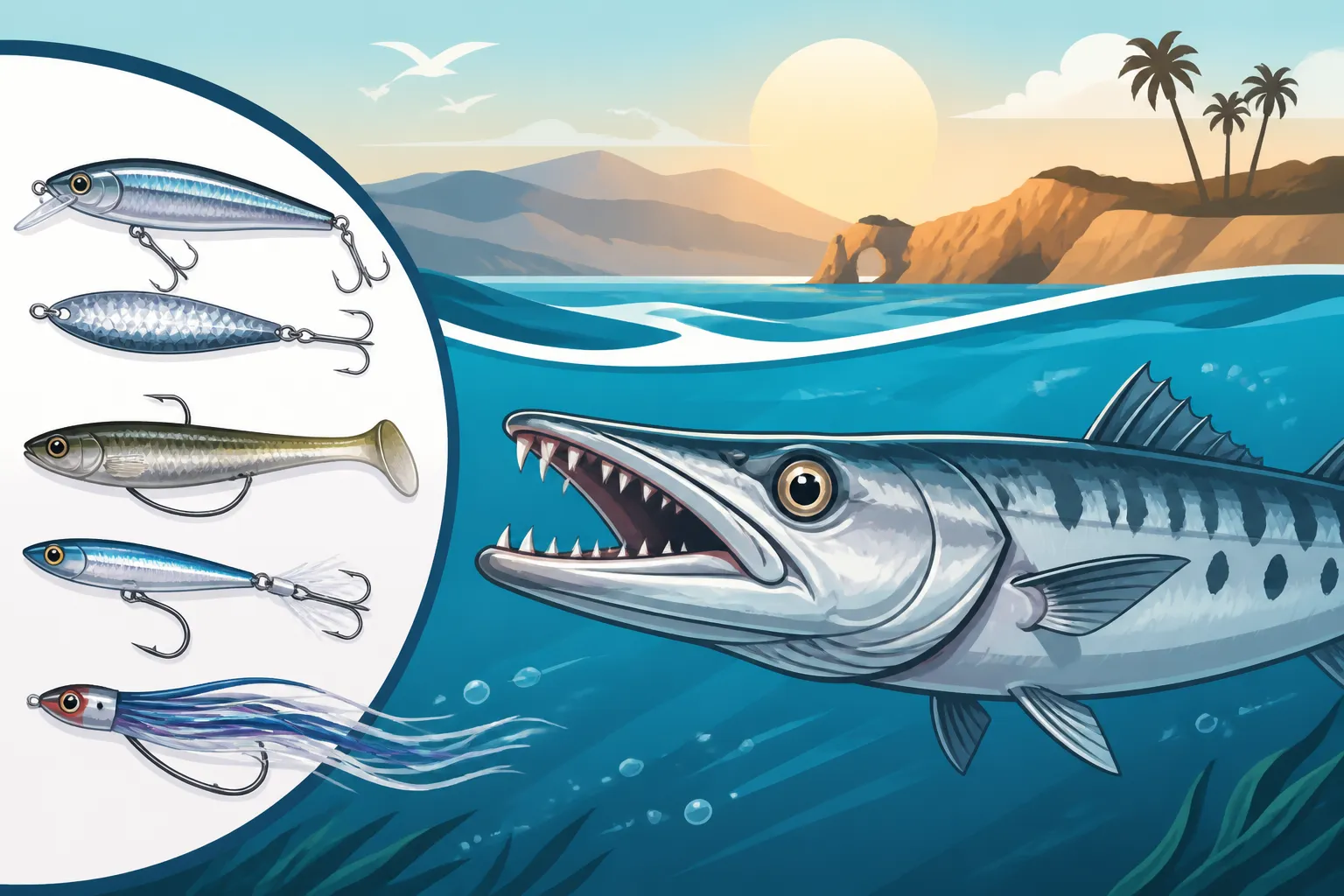
Surface irons, also known as surface jigs, are perhaps the most iconic barracuda lures in California. These long, slender metal jigs are designed to be retrieved quickly across the surface, mimicking a fleeing baitfish.
- Surface Irons: Brands like Salas, Tady, and Yo-Zuri are mainstays in any California angler's tackle box. The
Salas 7XandTady 45are legendary for barracuda. The key is to cast them as far as you can and retrieve them at a blistering pace, keeping your rod tip high to make them "skip" and "sizzle" on the surface. The flash and commotion drive barracuda absolutely wild. You can find a huge selection of these trusted brands on Amazon. - Wahoo Bombs/Cigar Jigs: While primarily designed for larger pelagics, the smaller versions of these lures, often called "cigar jigs," can be devastating for barracuda, especially when retrieved rapidly. Their streamlined shape allows for incredible casting distance and a fast, subsurface retrieve that barracuda can't resist.
When picking colors, chrome, blue and white, and green and white are usually top producers, mirroring the natural colors of local baitfish.
Hard Baits and Plugs: Mimicking Prey
Beyond the traditional irons, a variety of hard baits and plugs can be incredibly effective, especially when barracuda are a bit more spread out or feeding deeper.
- Lipless Crankbaits/Stickbaits: Lures like the
Rapala X-RaporYo-Zuri Sashimi Slidercan be deadly. These can be cast and retrieved with a fast, erratic motion, or even trolled. Their internal rattles and realistic finishes often get attention. The key is to maintain a high-speed retrieve, as barracuda are known for chasing down fast-moving prey. - Diving Plugs: When barracuda are a little deeper, or you're fishing near structure like kelp beds, diving plugs can be useful. These lures dive to a specific depth on the retrieve, allowing you to present a baitfish imitation right into their feeding zone. Again, a fast retrieve with occasional twitches will often trigger a strike. For fishing near kelp, you might also want to read up on California Rockfish Regulations and Limits, as you could encounter other species.
Ensure your hard baits have strong split rings and hooks, as barracuda can easily bend or break weaker components.
Soft Plastics and Swimbaits: Versatile Options
Soft plastics and swimbaits offer incredible versatility and can be rigged in various ways to match different fishing conditions.
- Soft Plastic Swimbaits: These are a fantastic choice, especially those with paddle tails that create a lot of vibration. Brands like
MC SwimbaitsorKicker Fishoffer realistic baitfish profiles. Rig them on a leadhead jig in weights from 1/2 oz to 1 oz, depending on depth and current. Cast them out and retrieve steadily, sometimes with a few twitches or pauses. The soft, lifelike movement is often enough to entice a barracuda. They're also relatively inexpensive, so losing a few to sharp teeth isn't as painful. Many anglers stock up on these versatile options on Amazon. - Flukes and Jerkbaits: Soft plastic jerkbaits, like a
Zoom Super Fluke, can be fished weightless or with a light bullet sinker to give them an erratic, darting action. The key here is a rapid retrieve with sharp rod twitches, making the lure "dart" like a panicked baitfish. This technique requires a bit more finesse but can be incredibly rewarding.
When using soft plastics, keep an eye on your retrieve speed. Barracuda are fast, so your lure needs to match that speed to appear natural and enticing.
Essential Gear and Techniques for Barracuda
Having the right bait or lure is only part of the equation. Pairing it with appropriate gear and employing effective techniques will significantly boost your success rate.
Rods, Reels, and Line Selection
For barracuda, you want a setup that's robust enough to handle their strong runs but light enough to cast all day.
- Rods: A medium-heavy to heavy action spinning or casting rod, typically 7 to 8 feet long, is ideal. This length provides good casting distance for both lures and bait and enough backbone to control a fighting fish. A rod designed for saltwater inshore or light offshore fishing will serve you well.
- Reels: A fast-retrieve spinning reel (size 4000-6000) or a conventional reel with a high gear ratio (6.0:1 or higher) is crucial for quickly burning those surface irons or retrieving live bait to create a panicked action. Brands like
ShimanoorDaiwaoffer excellent options known for their durability and smooth drags. - Line: Braid is almost universally preferred for its strength, sensitivity, and lack of stretch. A 30-40 lb braided mainline is standard. The lack of stretch helps with hook sets and feeling those subtle (or not-so-subtle) bites. Given the importance of line in this fishery, it's worth checking How to Buy a California Fishing License Online so you're ready to hit the water with your new gear.
Leader Material and Hook Types
This is where many anglers either win or lose their battles with barracuda. Their teeth are no joke.
- Leader Material: As mentioned earlier, a heavy fluorocarbon leader (30-50 lb) is a must. Fluorocarbon is more abrasion-resistant and less visible than monofilament. However, even fluorocarbon can be bitten through. Many seasoned barracuda anglers opt for a short section (6-12 inches) of light wire leader, like a 20-40 lb test single-strand wire or knottable wire. This virtually eliminates bite-offs. If you choose wire, make sure it's dark or clear to minimize visibility.
- Hooks: For lures, ensure your trebles are sharp and strong. Many factory hooks on cheaper lures are too weak for barracuda and will bend out. Consider upgrading to stronger, corrosion-resistant treble hooks. For live bait, circle hooks (size 1/0 to 3/0) are excellent for solid hook sets and minimizing gut-hooking. Single J-hooks can also be used, but require more precise timing on the hook set. California also has California Barbless Hook Requirements in some areas, so always check local regulations.
Key Fishing Techniques and Strategies
Barracuda fishing isn't just about casting and reeling; it's about strategy.
- The "Burn and Kill": This is the classic technique for surface irons. Cast as far as you can, reel as fast as humanly possible for 10-15 cranks, then pause for a split second (the "kill"). Often, the strike comes on the pause, as the barracuda thinks the "injured" baitfish is slowing down. Then, immediately resume your rapid retrieve.
- Matching the Hatch: Pay attention to what the barracuda are feeding on. If you see them busting on tiny anchovies, using small lures or anchovy-sized live bait will be more effective than a large sardine.
- Casting into Boils: When you see a "boil" on the surface (where barracuda are actively thrashing and feeding on baitfish), cast your lure or bait directly into or just past the boil. Get your offering into the action quickly!
- Trolling: For those fishing from a boat, trolling can be very effective, especially for locating schools of barracuda. Use diving plugs or even slow-trolled live bait with wire leaders. Trolling around kelp paddies or known structure can be productive. If you're new to the area, a
California Fishing Charter Guidemight offer valuable insights. - Pier Fishing: If you're fishing from a pier, like the iconic Santa Monica Pier or Cabrillo Pier, you can still catch barracuda. Cast jigs or spoons away from the pier, retrieve quickly, or fish live bait under a bobber or with a sliding sinker. Just be mindful of other anglers and California Pier Fishing License Rules.
By combining the right baits and lures with these effective techniques and appropriate gear, you'll significantly increase your chances of having an epic barracuda day on the water.
Disclaimer
Fishing regulations, seasons, and limits can change frequently. Always check the latest California Department of Fish and Wildlife (CDFW) regulations before heading out. This guide is for informational purposes only and does not supersede official regulations.