White Seabass in California: Where and How to Catch
Oh, the white seabass! If you've ever tangled with one of these beauties, you know the thrill – and the absolute frustration. They're notoriously elusive, showing up in droves one day and vanishing the next, leaving anglers scratching their heads. But when you finally hook into that ghost of the kelp forest, feeling that powerful tug and head shake, there's truly nothing like it. This guide is all about demystifying this magnificent California sport fish, helping you understand their habits, pinpoint their favorite haunts, and master the techniques needed to bring one to the boat.
Understanding the Elusive White Seabass
White seabass, or Atractoscion nobilis, are truly one of California's most prized game fish. They're renowned for their size, their fighting ability, and, let's be honest, their incredible taste on the dinner table. But before you can even think about cooking one up, you've got to find 'em and fool 'em, which is often easier said than done.
White Seabass Behavior and Habitat
These fish are masters of camouflage and stealth. They're generally found in coastal waters, favoring rocky reefs, kelp beds, and areas with substantial structure. Think of them as the shadowy figures of the underwater world, lurking amidst the swaying kelp fronds, waiting to ambush their prey. Their movements are highly dependent on bait, particularly squid. When the squid show up in force, you can bet the white seabass won't be far behind, making certain times of year incredibly productive.
They're migratory, too, moving up and down the California coast and even venturing into Baja California waters. You'll find them closer to shore during spawning season, typically late spring through summer, when they become more accessible to anglers. Water temperature also plays a significant role in their distribution; they prefer cooler, clean waters. Understanding these patterns is your first step to success. Don't just go where you fished last week; check those water temps and recent bait reports!
Identifying White Seabass
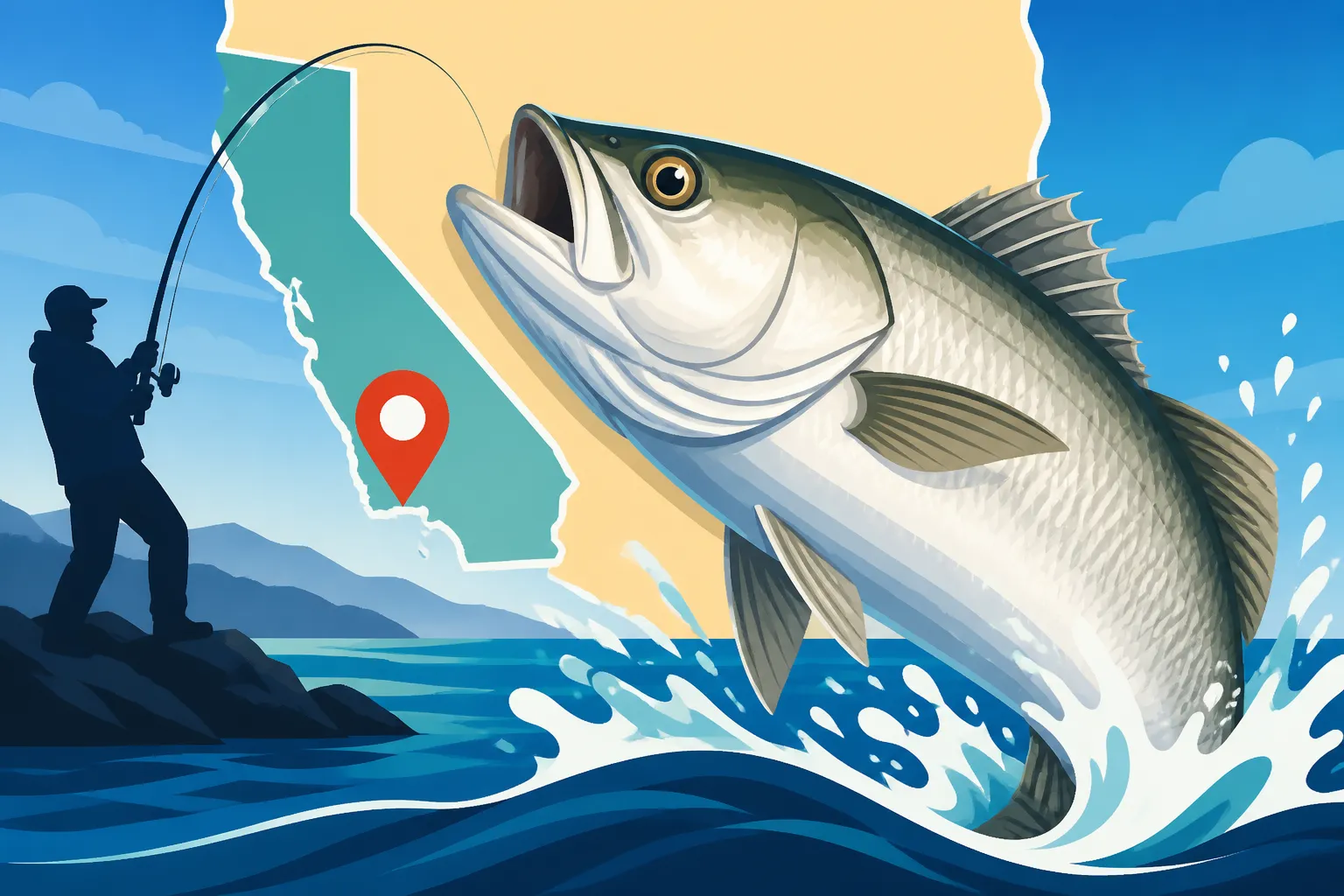
Catching a white seabass is a special event, and it's good to know what you're looking for. They're distinctive fish with a sleek, elongated body, typically silver-grey in color, fading to white on their belly. One of their most noticeable features is the small, dark spot at the base of their pectoral fin. Younger fish often have dusky vertical bars that fade as they mature.
They can grow quite large, with many caught in the 20-40 pound range, and trophy fish easily exceeding 60 pounds. The current California state record stands at an astounding 79 pounds, caught off San Clemente Island. Imagine the fight a fish like that would put up! When you're out there, always be mindful of the current California Fishing Bag and Size Limits for white seabass, which are typically quite specific to help maintain healthy populations.
Regulatory Considerations
Fishing for white seabass, like any prized species, comes with its own set of rules and regulations. These are put in place by the California Department of Fish and Wildlife (CDFW) to ensure sustainable fishing for future generations. It's not just about catching fish; it's about being a responsible angler.
Typically, there's a minimum size limit, usually around 28 inches total length, and a daily bag limit, often one or two fish per angler. These regulations can change seasonally or based on scientific assessments, so it's absolutely crucial to always check the most up-to-date information before heading out. A great way to stay informed is to grab a copy of the annual California sport fishing regulations booklet or check the CDFW website. You'll also need a valid California Fishing License Guide before you even think about dropping a line. Don't forget, these regulations are key, and fines for violations can be hefty.
Top Spots to Find White Seabass in California
Finding white seabass can feel like a treasure hunt, but with a bit of local knowledge and understanding of their habits, you can significantly increase your chances. California offers several prime areas where these magnificent fish are regularly caught, particularly when the conditions are just right.
Southern California Hotspots
Southern California is undeniably the epicenter for white seabass fishing. The region's abundant kelp forests, rocky reefs, and consistent squid populations create an ideal environment.
- Channel Islands: This chain of islands—including Santa Cruz, Anacapa, Santa Rosa, and San Miguel—are legendary for white seabass. The deeper, colder waters surrounding these islands, combined with extensive kelp beds and rocky structure, provide perfect ambush points. Anglers often target spots like the "White Seabass Grounds" off Santa Rosa Island or around the eastern end of Santa Cruz Island. Fishing can be excellent here from spring through summer. Many California Offshore Fishing Techniques are employed successfully in these waters.
- Catalina Island: Just 22 miles off the coast, Catalina is a perennial favorite. The island's many coves, points, and kelp lines are prime habitat. Descano, the backside of the island, and the areas around the West End are particularly productive. When the squid are running at Catalina, the seabass bite can be absolutely epic.
- San Clemente Island: This more remote island offers some truly world-class seabass fishing for those willing to make the journey. Its rugged coastline and deep water structure hold giant squid and, consequently, giant white seabass. It’s a favorite for long-range boats and private vessels alike.
- Mainland Coasts and Bays: Don't count out mainland areas! Local kelp beds off Malibu, Palos Verdes, Newport Beach, and San Diego can light up, especially during peak season. San Diego's coastal waters, particularly around Point Loma and the Coronado Islands (in Mexican waters, requiring specific permits), are also famous for their white seabass action. Look for areas with current breaks and structure near the entrances of large bays.
Central and Northern California Opportunities
While Southern California gets most of the glory, central and northern California still offer white seabass opportunities, albeit usually less frequently and often for shorter windows.
- Monterey Bay: This massive bay, with its deep canyon and extensive kelp, occasionally sees good runs of white seabass, usually in late spring and summer. They're often found around the edges of the kelp forests or patrolling the deeper water near the canyon. It's a bit more hit-or-miss here compared to the south, but when they show up, they can be trophy-sized. You can find excellent fishing in the Monterey Bay Fishing Guide.
- Half Moon Bay: Further north, Half Moon Bay and its surrounding waters can produce white seabass, typically during warmer water anomalies or strong bait migrations. It’s definitely not a consistent fishery like the south, but persistent anglers can be rewarded.
- Other Coastal Spots: Less common but not unheard of, areas like Morro Bay and even up to Bodega Bay can see occasional schools, especially if warm currents bring baitfish north. These are often opportunistic catches while targeting other species like How to Catch Rockfish in California. For these areas, staying glued to local fishing reports is paramount.
Pier and Jetty Fishing for Seabass
Can you catch white seabass from a pier or jetty? Yes, but it's much rarer and often requires specific conditions and a lot of patience. It usually happens during a strong squid run when the baitfish come close enough to shore to attract the seabass within casting range.
Piers in Southern California, particularly those near kelp beds or canyon edges like Malibu Pier or Redondo Beach Pier, might see occasional catches. Anglers will typically use live squid (if available from a bait receiver or caught themselves) or large swimbaits, cast far out and allowed to sink. While it's not the primary way to target them, it's certainly possible, and an unexpected white seabass from a pier is a truly memorable experience. Remember to always be aware of California Pier Fishing License Rules and other regulations.
Mastering White Seabass Fishing Techniques
White seabass are smart, and they can be finicky. You can't just throw any old bait out there and expect to catch them every time. Success often hinges on having the right bait, presenting it naturally, and knowing when and where to deploy your strategy.
Live Bait Tactics
When it comes to white seabass, live bait is almost always king, and within live bait, squid reigns supreme.
- Live Squid: This is the ultimate bait for white seabass. Whether it's a freshly caught market squid or a large, active flyer, a live squid is irresistible to them.
- Rigging: There are a few popular ways to rig live squid. One common method is to nose-hook it with a single, sharp 5/0 to 8/0 circle or J-hook, allowing it to swim naturally. Another is to use a dropper loop rig, with a sinker on the bottom and one or two hooks on droppers above, usually with the squid hooked through the mantle or nose. Many experienced anglers prefer circle hooks to minimize gut-hooking and increase the chances of a clean release for undersized fish.
- Presentation: Drift fishing is a classic method. Allow your squid to swim freely in the current, often near kelp stringers or rocky structure. Keep your reel in gear with the clicker on, or lightly engage the drag, ready for that tell-tale pull. Slow trolling a live squid can also be incredibly effective, especially when searching for scattered fish. The key is to make it look as natural as possible – a wounded or struggling squid is often the most enticing.
- Other Live Baits: While squid is king, white seabass will also eat a variety of finfish. Live anchovies, sardines, and mackerel can be very effective, especially if squid is scarce or the seabass are keyed into finfish. Rig these baits similarly to squid, often nose-hooked or through the back, ensuring they swim lively. If you're on a California Deep Sea Fishing Charter Guide, the deckhands will be experts at helping you rig these baits correctly.
Artificial Lures and Jigs
While live bait often outproduces artificials, there are times when lures can be incredibly effective, particularly for active fish or when you're trying to cover ground.
- Leadhead Jigs with Soft Plastics: These are a go-to artificial for white seabass. A white, glow, or light-colored leadhead jig (like a Berkley Fusion19 or a West Coast style jig) paired with a large, curly-tailed grub or swimbait (like those from Big Hammer or MC Swimbaits) can be deadly. Sizes from 5-inch to 9-inch are common.
- Technique: Cast these jigs out and let them sink to the bottom or just above the kelp, then retrieve them with a slow, sweeping retrieve, mimicking a swimming baitfish or squid. Vary your retrieve speed and depth until you find what the fish are reacting to. Often, the bite comes on the drop.
- Hard Baits and Surface Iron: Occasionally, when white seabass are actively chasing bait near the surface, a large lipless swimbait or a surface iron jig can entice a strike. This is often a more aggressive presentation and works best when the fish are in a feeding frenzy. Think big, flashy, and fast.
- Jigging: Vertical jigging with heavy metal jigs (like Daiwa's Saltiga jigs or Shimano's Butterfly jigs) can be effective in deeper water or when fishing over submerged structure. Drop the jig to the bottom and work it back up with a series of jerks and pauses.
Fishing from Boats vs. Kayaks
Your platform choice definitely impacts your strategy when hunting white seabass.
- Boat Fishing: Whether it's a private boat or a party boat, boats offer the advantage of mobility and access to prime offshore kelp beds and deeper structure.
- Private Boats: With a private boat, you have the flexibility to chase reports, move between spots, and spend more time dialing in the bite. You can employ tactics like slow trolling, drifting, and anchoring on a productive spot. Advanced electronics like high-quality fish finders (which you can often find a wide selection of on Amazon) are invaluable for locating bait schools and seabass holding near structure.
- Party Boats: If you're on an open party boat or California Fishing Charters: Complete Guide, you'll be fishing alongside many other anglers, usually anchored or drifting. The crew will typically provide bait and often instruct on rigging. Your job is to listen to the crew, get your bait down, and be ready for a bite. It's a great way to learn from experienced deckhands.
- Kayak Fishing: For the intrepid kayaker, white seabass fishing offers an incredible challenge and reward. Kayaks allow for stealth and precision, letting you get into tight spots around kelp beds that larger boats can't access.
- Tactics: Kayakers typically employ very similar live bait tactics, drifting live squid or finfish along kelp edges and through known seabass haunts. The quiet nature of a kayak can be a huge advantage, as white seabass can be skittish. Safety is paramount when kayak fishing offshore, so be sure to read up on proper gear and techniques in our California Kayak Fishing Guide.
Essential Gear for White Seabass Anglers
Having the right tackle can make all the difference when you hook into a powerful white seabass. These fish are strong, and they'll test your gear to its limits, often trying to drag you into the kelp.
Rods and Reels
You'll need a setup that combines sensitivity to detect subtle bites with enough power to turn a big fish away from structure.
- Rods: A medium-heavy to heavy action conventional rod, typically 7 to 8 feet long, is ideal. Look for a rod with a fast tip for sensitivity but a strong backbone to provide leverage during the fight. Graphite or composite rods are popular for their balance of strength and light weight. For those who prefer spinning gear, a heavy-duty spinning rod of similar length and power can also work, especially for casting lighter baits or jigs.
- Reels: For conventional setups, a star drag or lever drag reel in the 30-40 size class (e.g., a Penn Fathom 30 or a Daiwa Saltist 40) is a good choice. You need ample line capacity (at least 300 yards of 50-65 lb braid) and a smooth, reliable drag system. For spinning gear, a 6000-8000 series reel with good drag and capacity (like a Shimano Saragosa 8000) is appropriate. Ensure your reel is well-maintained and has been spooled with fresh line. You don't want to lose a trophy fish to old, weak line! A quick search on Amazon will show you a vast array of options for quality fishing reels suitable for white seabass.
Line and Terminal Tackle
Your connection to the fish, from your main line to your hook, must be robust and reliable.
- Main Line: Braided line has become very popular due to its strength-to-diameter ratio and lack of stretch, which aids in sensitivity. 50-65 pound test braid is common. It's often paired with a fluorocarbon leader for stealth and abrasion resistance.
- Leaders: Fluorocarbon leaders are essential. White seabass have excellent eyesight, and the invisibility of fluorocarbon underwater can make a huge difference. A 30-50 pound test fluorocarbon leader, typically 6-10 feet long, is standard. The length helps absorb shock and prevents the fish from seeing your main line.
- Hooks: Sharp, strong hooks are non-negotiable. Circle hooks (5/0 to 8/0) are highly recommended, especially when using live bait, as they tend to hook the fish in the corner of the mouth, making for easier release and less damage to the fish. J-hooks of similar size can also be used. Make sure they are high-quality, corrosion-resistant hooks.
- Sinkers: Depending on current and depth, you'll need various weights for your dropper loop rigs or Carolina rigs. Egg sinkers, torpedo sinkers, or bank sinkers ranging from 1 to 6 ounces are common. Having a good assortment on hand is key, and you can stock up on these and other essentials from retailers like Amazon.
Electronics and Accessories
Modern fishing often involves a bit of tech and crucial accessories to improve your chances.
- Fish Finders/Sonars: A quality fish finder is invaluable for locating bait schools, marking seabass holding near structure, and identifying kelp edges. Side-scanning and down-imaging features can give you a clear picture of the underwater world. Brands like Garmin, Lowrance, and Humminbird offer excellent units.
- Bait Tanks: If you're fishing with live bait, a good bait tank with proper aeration and circulation is critical to keep your squid or finfish lively. A strong, active bait is much more effective than a sluggish one.
- Gaffs and Nets: For landing a big white seabass, a strong gaff or a large, sturdy net is essential. A gaff should have a sharp point and a comfortable handle, and a net should have a wide hoop and deep mesh to safely cradle the fish. A tail rope can also be very helpful for securing larger fish once they're boatside.
- Cooler and Ice: White seabass meat is prized, so having a large cooler packed with ice is crucial for preserving your catch. Get it on ice quickly to maintain its quality.
White Seabass Bait & Lure Guide
| Bait/Lure Type | Description | Best Use | Key Advantages |
|---|---|---|---|
| Live Squid | Fresh, active market squid or large flyer squid. | Primary bait, especially during squid runs. | Irresistible to seabass, very natural presentation. |
| Live Finfish | Anchovies, sardines, mackerel, small sculpin. | When squid is scarce, or seabass are keyed into finfish. | Mimics natural prey, good alternative. |
| Leadhead Jigs | Weighted jig heads (white, glow) with plastic grub or swimbait tails. | Searching for active fish, covering water, deeper structure. | Versatile, can mimic squid or finfish. |
| Surface Iron | Heavy metal jigs designed for casting and fast retrieval. | When seabass are chasing bait near the surface. | Exciting visual strikes, covers large areas quickly. |
| Cut Bait | Strips of squid or mackerel. | Backup option, can be effective on slower bites or smaller fish. | Always available, scent trail. |
Remember, successful white seabass fishing combines preparation, patience, and a willingness to adapt. Check the California Fishing Seasons: Month-by-Month Guide to know when they're most likely to be active in your area, pay close attention to bait reports, and always double-check the local regulations, especially concerning California Marine Protected Areas Explained, to ensure you're fishing legally and sustainably. Tight lines out there!
Disclaimer
Fishing conditions and regulations in California can change frequently. Always consult the latest California Department of Fish and Wildlife (CDFW) regulations before any fishing trip. The information provided in this guide is for general informational purposes only and should not be considered legal or definitive regulatory advice.