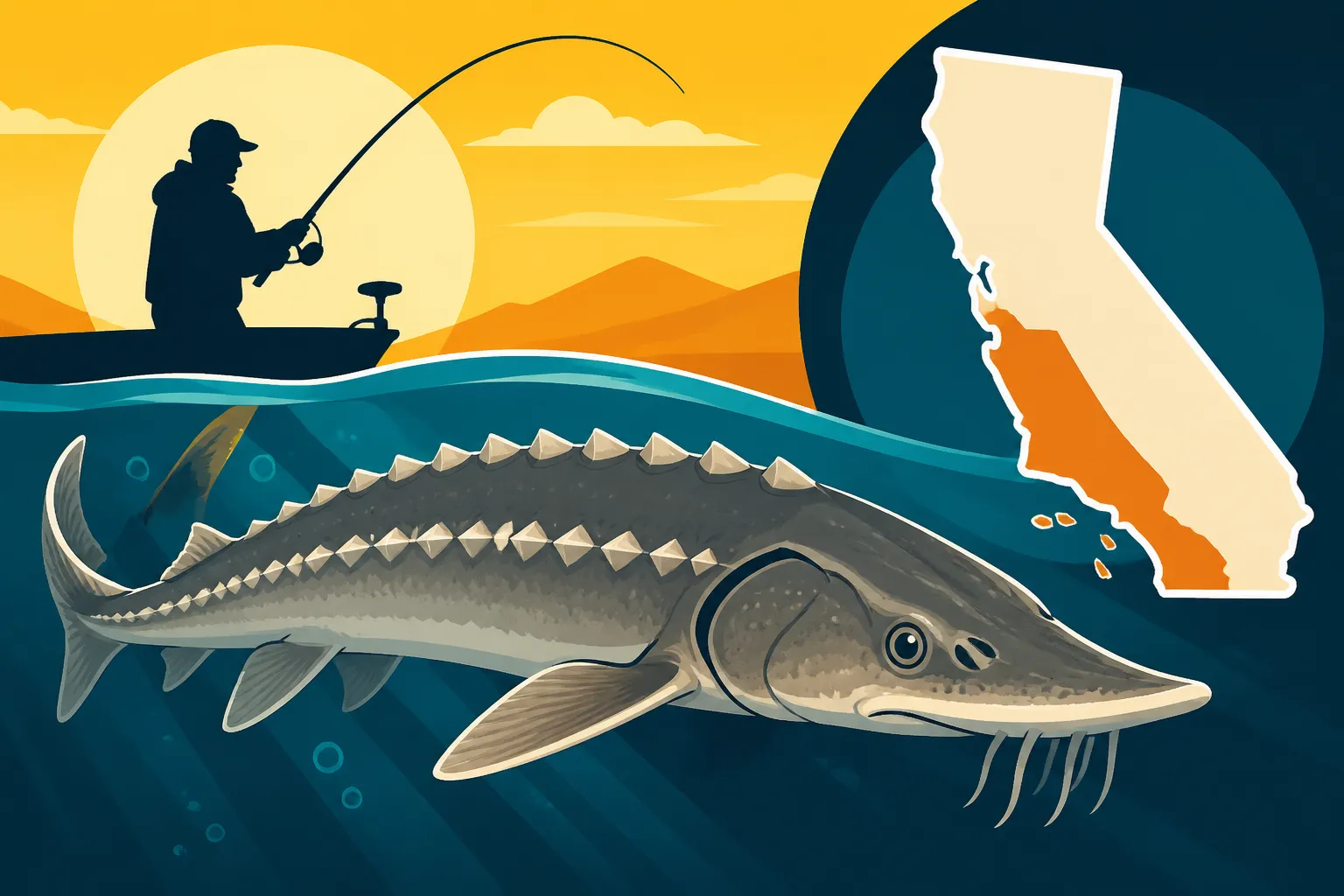
California Sturgeon Slot Limit
Navigating the specific rules for fishing in California can feel like trying to untangle a hundred-pound snarl of fishing line – it’s frustrating, confusing, and if you get it wrong, it can cost you. One of the trickiest areas for anglers, especially those targeting the impressive White Sturgeon, is the infamous slot limit. This guide is here to demystify the California Sturgeon Slot Limit, explaining exactly what it means, why it exists, and how to ensure you're fishing legally and responsibly.
Understanding the California Sturgeon Slot Limit
So, you're out on the Sacramento Delta, your heart pounding with the hope of hooking into one of California's ancient giants: a White Sturgeon. But what happens when you reel one in? That's where the slot limit comes into play, and it's absolutely critical to understand before you even cast your line. The slot limit isn't just an arbitrary number; it's a carefully determined range designed to protect the sturgeon population for future generations.
Defining the Legal Size Range
For White Sturgeon in California, the slot limit dictates that you can only keep fish that measure between a specific minimum and maximum fork length. As of my last check, this usually means a White Sturgeon must be between 40 inches and 60 inches fork length to be legally retained. Anything smaller than 40 inches or larger than 60 inches must be immediately released unharmed. This can change, so always double-check the latest California Fishing Regulations Explained booklet or the California Department of Fish and Wildlife (CDFW) website before heading out.
Think about it this way: imagine you're a bouncer at an exclusive club. The 40-60 inch White Sturgeon are the only ones on the guest list. The little guys, under 40 inches, are still growing and need more time to mature. The big, impressive ones, over 60 inches, are the prime breeders, the backbone of the population, and they need to stay in the water to keep making more sturgeon. It’s a conservation strategy aimed at allowing younger fish to reach reproductive age and protecting the most fertile, older fish from harvest. This isn't just a suggestion; it's a strict regulation, and violating it can lead to significant penalties.
The Critical Difference: White Sturgeon vs. Green Sturgeon
While we're talking about slot limits, it's paramount to understand that only White Sturgeon are legal to harvest, and even then, only within that specific slot. California is also home to another majestic species: the Green Sturgeon. These fish are easily identifiable by their olive-green to dark brown backs, more pronounced scutes (bony plates), and a distinct row of ventral scutes between the anus and the anal fin that White Sturgeon lack. More importantly, Green Sturgeon are a federally protected species, listed under the Endangered Species Act. This means it is illegal to take, possess, or harm a Green Sturgeon at any size, at any time.
Catching a Green Sturgeon, even by accident, requires immediate, careful, and unharmed release. If you're not absolutely sure what you've caught, err on the side of caution and release it. Anglers often face the challenge of distinguishing between the two species quickly when a large fish is on the line. It's a real moment of truth, and knowing your fish ID is just as important as knowing your knot-tying. It’s not uncommon for seasoned anglers to carry a laminated identification guide to ensure they're compliant with California Sturgeon Regulations and Limits.
Accurate Measurement: Fork Length is Key
Getting the measurement right is non-negotiable. The California Sturgeon Slot Limit refers to fork length, not total length. Fork length is measured from the tip of the snout to the fork in the tail. This might seem like a minor detail, but it's a crucial one that many anglers, especially newcomers, can get wrong. A fish that measures 39 inches to the fork might be 42 inches total length, but it's still an illegal take.
To measure accurately, gently lay the fish on a measuring board or alongside a tape measure, ensuring the mouth is closed and the tail is naturally extended, not squeezed together or fanned out. Many experienced sturgeon anglers invest in a quality measuring board specifically designed for large fish, often marked with the legal slot limits, which can be easily found on platforms like Amazon. Trying to use a flimsy tape measure on a thrashing sturgeon in a small boat is a recipe for error and potential harm to the fish. When in doubt, always release the fish if you cannot confidently measure it within the legal slot. Remember, these regulations are designed to protect the species, and your compliance is vital for the health of California's fisheries.
Why the Sturgeon Slot Limit Exists
It’s easy to look at fishing regulations and feel like they’re just there to make life difficult, but the California Sturgeon Slot Limit is actually a fantastic example of effective, science-based conservation in action. These ancient fish have a unique biology that requires special protection, and the slot limit is a smart way to ensure they thrive for generations to come.
Protecting Future Generations
The primary goal of the slot limit is to protect the breeding stock of White Sturgeon. Sturgeon are incredibly long-lived fish, some living over 100 years, but they are also slow to mature. Female White Sturgeon often don't start spawning until they are 15-20 years old and can go several years between spawning cycles. The smaller fish, under 40 inches, are juveniles that haven't reached reproductive maturity. Allowing them to grow ensures they get a chance to contribute to the population before being harvested.
Conversely, the larger fish, those over 60 inches, are the most prolific breeders. These old, wise matriarchs and patriarchs of the sturgeon world have proven their ability to survive and reproduce effectively. Removing these prime spawners would have a devastating impact on the overall genetic health and future numbers of the species. By letting them go, we ensure they can continue their vital role in sustaining the population. It’s a balancing act, allowing recreational harvest while safeguarding the future of the species. This approach is fundamental to all California Freshwater Fishing Regulations and marine species alike.
The Biology of a Living Fossil
Sturgeon are often called "living fossils" because their lineage dates back millions of years. Their unique biology—cartilaginous skeletons, scute armor, and barbels—reflects their ancient origins. Beyond their appearance, their slow growth rate, delayed sexual maturity, and infrequent spawning patterns make them particularly vulnerable to overfishing. A species that takes decades to mature simply cannot recover quickly from population declines caused by excessive harvest.
Before strict regulations were put in place, sturgeon populations faced significant pressure from both commercial and recreational fishing. The caviar trade, in particular, led to unsustainable harvesting of large, egg-bearing females. The slot limit, along with other measures like mandatory catch-and-release for Green Sturgeon and the use of report cards, aims to reverse these historical trends and rebuild healthy populations. Without these protections, California's sturgeon could easily face the same fate as other endangered species. Learning about their biology really drives home why adhering to regulations is so crucial for every angler.
Conservation Efforts and Historical Context
The current slot limit and associated regulations didn't just appear overnight. They are the result of decades of research, monitoring, and adaptation by the CDFW. Historically, sturgeon populations were much more abundant in California's rivers and estuaries. However, habitat degradation, water diversions, and unregulated fishing in the 19th and early 20th centuries led to severe declines. The commercial fishery for White Sturgeon was closed in 1917, and even recreational fishing faced stricter controls over time.
The development of the slot limit is a modern response to managing a valuable recreational fishery while ensuring sustainability. It reflects a shift towards more nuanced conservation strategies that understand the specific life history of a species. Coupled with efforts like the California Sturgeon Report Card, which helps biologists collect vital data on harvest rates and population health, the slot limit is a cornerstone of California's commitment to maintaining a robust sturgeon fishery. Every time you fill out that card, or thoughtfully release an out-of-slot fish, you're directly contributing to these vital conservation efforts.
Identifying Legal Sturgeon: A Practical Guide
Okay, you've got a sturgeon on the line! This is the moment of truth. Before you even think about keeping it, you need to quickly and confidently identify if it's a White Sturgeon, if it's within the legal slot limit, and if it's a species that can be retained at all. Rushing this step can lead to a hefty fine, so let's break down how to get it right.
Key Features for White Sturgeon Identification
White Sturgeon are typically a gray to brownish-gray color on their backs, with lighter, often white, bellies – hence their name. They have five rows of bony plates, or scutes, along their body: one dorsal (top), two lateral (sides), and two ventral (bottom). Importantly, the ventral scutes of a White Sturgeon do not extend past the anus. This is a crucial distinguishing feature. Their snout is relatively short and blunt, with four barbels (whisker-like sensory organs) located closer to the tip of the snout than to the mouth.
When you've got one next to the boat, take a deep breath. Look at the color, count the scute rows, and pay close attention to the barbels and snout shape. Practice identifying these characteristics even before you hook a fish, perhaps by looking at photos or videos. Knowing these details will help you make a quick and accurate decision when the adrenaline is pumping. The ability to correctly identify your catch is a fundamental skill for any angler, especially when dealing with protected species or those with specific size restrictions like the California Halibut Size and Bag Limits or California Salmon Bag Limit Explained.
Recognizing Green Sturgeon (And Why They're Off-Limits)
Green Sturgeon are a darker, more olive-green to dark brown color on their backs, with a very pronounced, almost iridescent green sheen on their sides. Their bellies are often white, but their overall darker coloration is a key indicator. They also have five rows of scutes, but unlike the White Sturgeon, their two rows of ventral scutes extend past the anus, all the way to the anal fin. This is the most definitive feature for distinguishing them from White Sturgeon. Additionally, their snout tends to be longer and more pointed, and their four barbels are located closer to the mouth than to the tip of the snout.
If you observe a sturgeon with a more pointed snout, darker coloration, and especially those ventral scutes extending past the anus, you've got a Green Sturgeon. Release it immediately and gently. There are no exceptions. These are federally protected, and harming or retaining one is a serious offense. This knowledge isn't just for avoiding fines; it's about respecting the incredible biodiversity of California's waters. It's an instance where knowing your California Fish Species: Complete Guide is truly paramount.
What to Do if You Catch an Undersized or Oversized Fish
So, you’ve identified it as a White Sturgeon, but it’s outside the 40-60 inch slot. What's next? Immediate and careful release is required. The goal is to minimize stress and harm to the fish. Here's a brief checklist:
- Keep it in the water: If possible, measure the fish while it's still in the water, or at least keep its head submerged. Sturgeon can be extremely heavy and unwieldy, and trying to hoist a massive fish onto a boat for a photo op only increases stress.
- Handle with care: If you must bring it aboard for a quick measure, use wet gloves and support its body horizontally. Avoid dragging it over rough surfaces.
- Remove the hook quickly: If the hook is easily accessible, remove it with pliers or a de-hooker. If it's deeply swallowed or difficult to remove, cut the line as close to the hook as possible. Barbless hooks are mandatory for sturgeon fishing in California, which greatly aids in quick and clean releases. You can find excellent barbless hook options on Amazon for your sturgeon rigs.
- Revive if necessary: If the fish seems sluggish, hold it gently by the tail in the current, allowing water to flow over its gills, until it regains strength and swims away on its own.
Remember, the vast majority of sturgeon you catch will be outside the slot, especially the larger, trophy-sized breeders. Celebrate the catch, snap a quick picture while respecting the fish's well-being, and send it back to continue its ancient journey.
Common Mistakes and How to Avoid Them
Even seasoned anglers can make mistakes, especially when regulations are complex or adrenaline is high. When it comes to California's Sturgeon Slot Limit, a small oversight can lead to significant legal trouble and harm to these magnificent fish. Let's talk about the common pitfalls and how to steer clear of them.
Misjudging Fish Length in the Water
One of the most frequent mistakes, particularly for those new to sturgeon fishing, is trying to "eyeball" the length of a fish while it's still in the water or only partially out. A sturgeon that looks "about 40 inches" can easily be 38 or 39 inches when measured accurately on a board. Similarly, a fish that seems to be "just under 60 inches" might push past that mark once properly laid out. The excitement of catching a large fish can cloud judgment, making fish appear larger or smaller than they truly are.
To avoid this, always carry a reliable, clearly marked measuring device, preferably a board, not just a flexible tape. Make sure your measuring device is long enough to cover the entire slot range. When you hook a sturgeon, have your measuring tools ready and establish a clear, safe protocol for measurement before the fish is even in view. If there's any doubt about the measurement, the safest and most responsible action is to release the fish. It’s far better to release a legal fish than to accidentally keep an illegal one.
Ignoring the Green Sturgeon Prohibition
This is a mistake that can have severe consequences, as Green Sturgeon are a federally protected species. Some anglers, in the heat of the moment, might mistake a Green Sturgeon for a White Sturgeon, or simply fail to properly identify it. The differences, while clear once you know what to look for, can be subtle to the untrained eye, especially if the fish is thrashing or covered in mud.
As mentioned earlier, the key is knowing the identifying features: the color, the snout shape, the barbel position, and most crucially, whether those ventral scutes extend past the anus. If you catch a sturgeon and it looks darker, has a more pointed snout, or those scutes run all the way back to the anal fin, it’s a Green Sturgeon. Release it immediately, without hesitation, and with the utmost care. Educate yourself, use identification guides, and when in doubt, always default to releasing the fish. It's a non-negotiable aspect of California Fishing Regulations Explained.
Consequences of Violating Sturgeon Regulations
Ignoring the slot limit or accidentally retaining a Green Sturgeon isn't just a minor infraction; it carries significant legal repercussions. Fines can range from hundreds to thousands of dollars, and you could face seizure of your fishing gear, your boat, and even your vehicle. In more serious cases, especially repeat offenses or the taking of protected species, criminal charges and jail time are possibilities. Your fishing license can also be suspended or revoked, making it impossible to fish legally in California for a period.
Beyond the legal penalties, there's the ethical responsibility. Every illegal take harms the conservation efforts and impacts the overall sturgeon population. These are iconic, long-lived fish that deserve our respect and protection. Understanding and adhering to the California Fishing License Fines and Penalties is not just about avoiding trouble; it's about being a responsible steward of our natural resources.
To illustrate, here's a quick summary of key differences:
| Feature | White Sturgeon | Green Sturgeon |
|---|---|---|
| Color | Gray to brownish-gray, white belly | Olive-green to dark brown, often with green sheen |
| Snout | Shorter, blunter | Longer, more pointed |
| Barbels | Closer to tip of snout | Closer to mouth |
| Ventral Scutes | Do not extend past the anus | Extend past the anus to anal fin (DEFINITIVE MARKER) |
| Legal Status | Legal to retain (40-60" fork length) | Federally Protected – Illegal to retain at any size |
| Common Size | Can grow very large, common recreational target | Generally smaller, but still large; rare to encounter |
| Conservation | Slot limit protects juveniles and prime spawners | Endangered, critical conservation efforts |
Gear and Techniques for Responsible Sturgeon Fishing
Catching a sturgeon is an incredible experience, but it requires the right gear and techniques, especially when prioritizing the fish's well-being and adhering to catch-and-release practices for out-of-slot fish. It's not just about what catches them, but what helps you handle them responsibly.
Choosing the Right Rod, Reel, and Line
Sturgeon are powerful, heavy fish, and your tackle needs to match their strength. A heavy-action rod, typically 7 to 9 feet long, with a strong backbone and a sensitive tip, is ideal. Look for rods rated for 50-100 pound test line. Brands like Ugly Stik or Penn offer durable, affordable options that can handle the abuse sturgeon fishing often entails. Pair this with a robust baitcasting or conventional reel that has a smooth, powerful drag system and a high line capacity. A reel like the Penn Squall or Shimano Tekota would be a good choice, capable of holding at least 200-300 yards of 65-80 lb braided line.
Speaking of line, braided line is a game-changer for sturgeon fishing. Its zero stretch provides incredible sensitivity, allowing you to feel even the lightest bite in deep or swift currents. Furthermore, its thinner diameter for a given strength rating allows you to spool more line. A 65-80 lb braid is standard, often connected to a 100-150 lb monofilament or fluorocarbon leader using a strong knot like a uni-to-uni or Albright knot. This heavy setup not only allows you to land large fish but also brings them to the boat quicker, reducing fight time and stress on the fish, which is crucial for successful release. You can easily find these heavy-duty fishing lines and reels on Amazon.
Best Baits and Rigs for Sturgeon Fishing
Sturgeon are primarily bottom feeders, so your presentation needs to get your bait down to where they are. The classic sturgeon rig is a sliding sinker rig. This involves a heavy sinker (typically 8-16 oz, depending on current and depth) that slides freely on your main line, terminating with a heavy-duty swivel. Below the swivel, you'll attach a leader (30-60 lb monofilament or fluorocarbon, about 18-36 inches long) with a single, stout barbless hook. Remember, barbless hooks are mandatory for sturgeon in California, a regulation designed to minimize harm during release. Some popular choices for hooks include 8/0 to 12/0 octopus or circle hooks.
As for bait, sturgeon are scavengers and have an incredibly keen sense of smell. Popular choices include fresh or cured lamprey eel, ghost shrimp, pile worms, mudsuckers, or salmon roe. Many anglers also use various "sturgeon baits" available commercially, which often combine different scents and textures. Experimentation is key, but strong-smelling, fresh baits tend to perform best. The goal is to present an irresistible scent trail on the bottom. If you're looking for more specific techniques, consider checking out guides like How to Catch White Sturgeon in California.
Minimizing Harm During Release
For every keeper sturgeon, you'll likely release many more. Ethical catch-and-release practices are vital for the health of the fishery. Here are critical steps:
- Barbless Hooks are Essential: This cannot be stressed enough. A barbless hook comes out clean and easily, causing minimal tissue damage. If you don't have true barbless hooks, you must crimp down the barbs on your barbed hooks with pliers.
- Keep the Fish Wet: Whenever possible, unhook and measure the fish with its head in the water. If you must bring it onto the boat or shore, do so quickly and lay it on a wet, soft surface (like a wet mat or tarp) to protect its slime coat and skin. Avoid dragging it over rough boat floors or rocks.
- Support the Entire Body: If lifting a sturgeon for a photo, always support its body horizontally with two hands or by using a cradle. Never lift a large sturgeon solely by its head or tail, as their internal organs can be damaged by their own weight. A quick photo is fine, but prioritize the fish's health over perfect aesthetics.
- Revive the Fish: If the sturgeon fought hard or seems lethargic, hold it gently in the current, facing upstream, allowing water to flow over its gills until it is strong enough to swim away vigorously on its own. Don't just toss it back; ensure it's ready.
By following these practices, you ensure that the out-of-slot sturgeon you release have the best possible chance of survival, contributing to the healthy population we all want to see.
Reporting Your Catch: The California Sturgeon Report Card
Beyond the slot limit, one of the most crucial elements of responsible sturgeon fishing in California is the mandatory Sturgeon Report Card. This isn't just bureaucratic paperwork; it's a vital tool for fisheries management and a legal requirement for anyone fishing for sturgeon.
The Importance of the Report Card
The California Sturgeon Report Card serves as a real-time data collection system for the CDFW. Each angler who intends to fish for sturgeon, regardless of whether they plan to keep a fish or only practice catch-and-release, must possess a current report card in addition to their valid California Fishing License Guide. Every time you catch a sturgeon, whether you retain it or release it, you are required to log specific information on your report card.
This data is invaluable. It helps biologists monitor fishing pressure, estimate harvest rates, and track the overall health and distribution of sturgeon populations. Without accurate reporting, the CDFW would be flying blind, making it much harder to implement effective conservation strategies and ensure the sustainability of the fishery. It helps them understand if the slot limit is working, if seasons need adjustment, or if other management actions are necessary. Think of it as your direct contribution to sturgeon science.
How to Properly Fill Out and Return Your Card
Filling out your report card correctly and promptly is critical. Here's what you typically need to record:
- Date: The date you caught the fish.
- Location: The specific water body (e.g., Sacramento River, San Francisco Bay).
- Species: Indicate White or Green Sturgeon (though Green Sturgeon are always released).
- Kept or Released: Mark whether you retained the fish (if it was a legal White Sturgeon within the slot) or released it.
- Fork Length (if kept): If you keep a White Sturgeon, you must record its fork length immediately upon capture.
- Notching: If you retain a White Sturgeon, you must also cut a triangular notch out of its upper caudal (tail) fin immediately after recording its length. This is a unique identifier for legally harvested fish.
- Effort (if no catch): Even if you don't catch anything, some cards require you to fill in your fishing effort.
Each report card typically has space for a limited number of harvested sturgeon (often one per year, but always check current regulations). The card must be in your possession while fishing for sturgeon. After the calendar year ends (or by a specific deadline, usually in January), you are legally required to return your card to the CDFW, even if you didn't catch or keep any fish. Instructions for mailing or submitting online are usually provided on the card itself.
Consequences of Not Reporting
Just like failing to adhere to the slot limit, not properly filling out or returning your Sturgeon Report Card can lead to fines and penalties. Fish and Wildlife wardens routinely check for report cards and their proper completion. If you're caught fishing for sturgeon without a valid card, if your card isn't properly filled out, or if you fail to return it by the deadline, you can face citations and fines. The penalties are similar to those for other license or regulation violations, emphasizing how seriously the CDFW takes this data collection.
It’s easy to forget these administrative tasks after a long day of fishing, but it’s a non-negotiable part of the privilege of targeting these incredible fish. Make it a habit to fill out your card as soon as you handle a sturgeon, and set a reminder to return it at the end of the year. This simple act plays a huge role in the ongoing health and management of California's sturgeon fishery, ensuring that others can enjoy the thrill of catching a living fossil for years to come. For more on the various reporting requirements, you might find information on California Fishing Report Cards Explained helpful.
Disclaimer
The information provided in this guide is for general informational purposes only and is subject to change. Fishing regulations, including slot limits, seasons, and reporting requirements, are frequently updated by the California Department of Fish and Wildlife (CDFW). It is the sole responsibility of every angler to consult the most current official CDFW regulations before engaging in any fishing activity. Failure to comply with regulations can result in significant fines and penalties.