California Calico Bass Bag Limit Explained
It can feel like a real puzzle sometimes, trying to figure out all the nuances of California's fishing regulations. One minute you're having a blast catching some feisty kelp bass, and the next you're wondering if that fish you just measured is legal or if you've already hit your limit for the day. It's enough to make your head spin, especially with the constant changes and species-specific rules. This guide is here to untangle the confusion surrounding the California Calico Bass bag limit, helping you understand the rules so you can fish with confidence and contribute to healthy fish populations.
Demystifying California's Calico Bass Bag and Size Limits
Fishing for Calico Bass, also known as Kelp Bass, is a quintessential Southern California experience. These hard-fighting fish are a blast to catch in the kelp beds and rocky structures, but knowing the specific regulations is key to staying legal and ensuring their populations thrive for years to come. It’s not just about avoiding a fine; it’s about responsible angling.
The Standard Statewide Regulations for Calico Bass
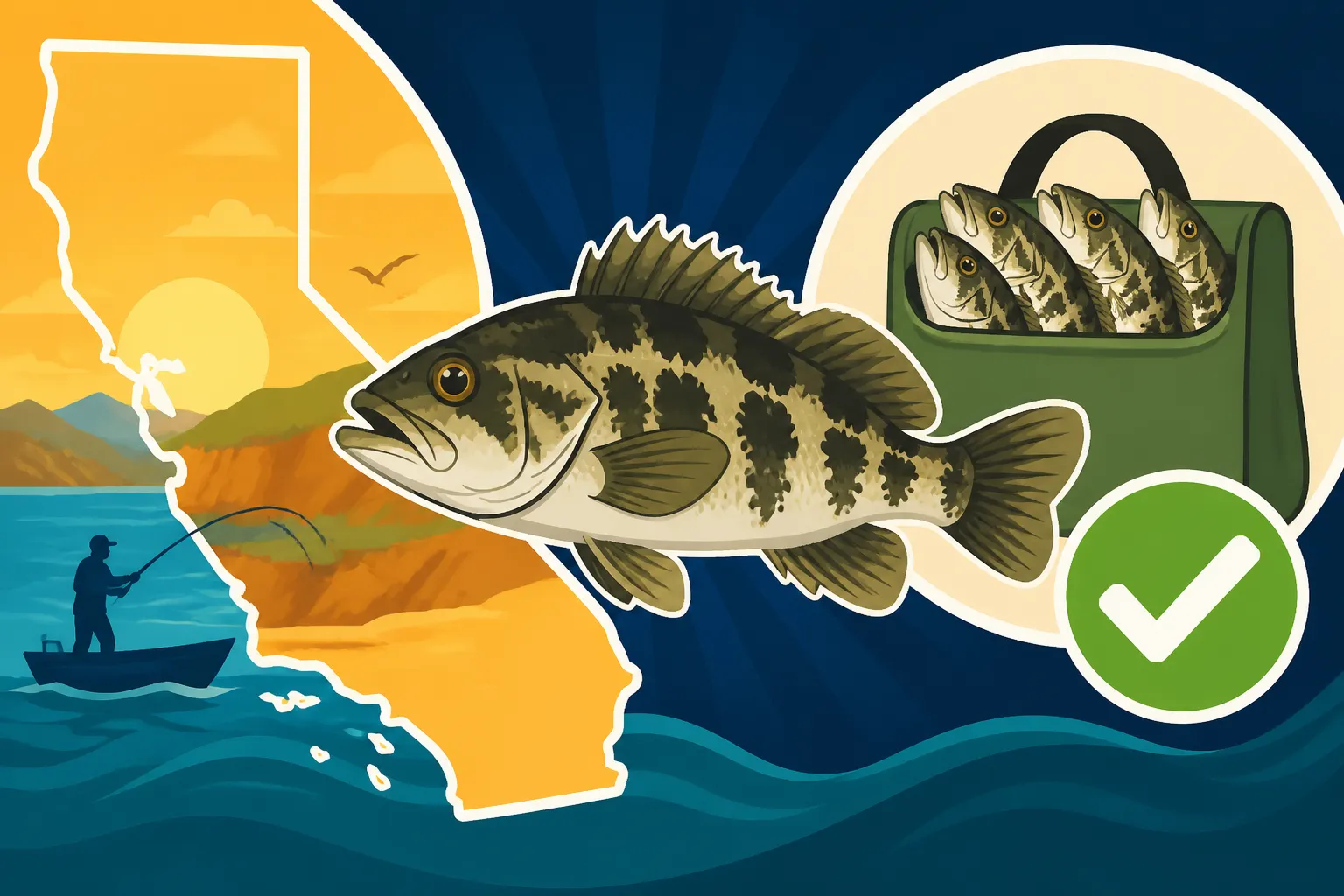
Let’s get straight to the numbers that matter. The California Department of Fish and Wildlife (CDFW) has clear guidelines for Calico Bass. Currently, the statewide regulation for Kelp Bass (which is the official name for Calico Bass), Barred Sand Bass, and Spotted Sand Bass is an aggregate bag limit of five fish total, with a minimum size limit of 14 inches total length. That's a crucial distinction – it's not five of each, but five combined across those three species. So, if you catch three Calico Bass and two Spotted Sand Bass, you’ve hit your limit. It's a common oversight, but one that can easily lead to a violation if you're not paying close attention.
These specific numbers aren't pulled out of thin air; they're the result of scientific research and careful management. The 14-inch minimum size limit is designed to allow Calico Bass to reach reproductive maturity and spawn at least once, contributing new generations to the population before they can be harvested. This helps protect the breeding stock, which is absolutely vital for a sustainable fishery. Similarly, the five-fish bag limit prevents overharvesting by individual anglers, distributing the fishing pressure more evenly across the population. It’s a delicate balance between providing recreational opportunities and ensuring conservation. You can find more details on these and other rules in the official California Fishing Regulations Explained guide.
Why These Limits Matter for the Fishery
The regulations for Calico Bass are more than just bureaucratic hurdles; they are the backbone of sustainable fishing in California's rich marine environments. Calico Bass are incredibly popular sport fish, easily accessible from shore, kayaks, and private boats, making them susceptible to heavy fishing pressure. Without strict limits, it would be all too easy for their populations to decline, as we've seen with other species in the past. These fish are relatively slow-growing and have specific habitat requirements, primarily living among kelp forests and rocky reefs, which are also vulnerable ecosystems.
These limits are a proactive measure to protect the ecological health of our coastal waters. By adhering to the bag and size limits, anglers directly contribute to ensuring that Calico Bass populations remain robust. This isn't just about having fish to catch next year; it's about maintaining a healthy marine ecosystem where Calico Bass play a vital role in the food chain. A thriving Calico Bass population indicates a healthy kelp forest, which in turn supports countless other marine species. It's a cycle, and every angler has a part to play in keeping it healthy. Think of it as a long-term investment in your favorite pastime and in the natural beauty of California’s coast. For those curious about the broader picture, our California Saltwater Fishing Regulations article dives deeper into coastal rules.
Avoiding Common Mistakes and Misidentifications
Even experienced anglers can sometimes stumble when it comes to precise measurements or identifying a fish that looks very similar to another. With Calico Bass, these small mistakes can have big consequences, turning a fun day into a frustrating encounter with a game warden.
How to Accurately Measure Your Calico Bass
Getting an accurate measurement of your Calico Bass is non-negotiable. The CDFW specifies "total length," which means measuring from the tip of the longest jaw to the tip of the longest lobe of the tail, with the fish laid flat on its side. It sounds simple enough, but there are a few common pitfalls. First, always make sure the fish's mouth is closed – an open jaw can add an inch or two, potentially pushing an undersized fish into the "legal" category incorrectly. Second, gently pinch the tail lobes together so they are as long as possible, rather than splayed out, to ensure you're getting the true maximum length.
Invest in a reliable, rigid measuring device. A flexible tape measure flapping in the wind on a rocking boat is an invitation for error. A dedicated fish measuring board or a sturdy ruler can make all the difference. Many tackle shops, and even online retailers like Amazon, sell specialized fish rulers that adhere to your boat or a cutting board, making it easy to quickly and accurately check your catch. When in doubt, always err on the side of caution. If a fish is borderline, it's always best to release it to avoid any legal issues. This simple act of careful measurement is a cornerstone of ethical fishing and compliance with California Fishing Bag and Size Limits.
Distinguishing Calico Bass from Look-Alikes
The aggregate limit for Calico Bass, Barred Sand Bass, and Spotted Sand Bass makes correct identification absolutely critical. These three species, collectively known as "Paralabrax" basses, can look remarkably similar, especially to the untrained eye or in varying light conditions.
- Calico Bass (Kelp Bass): Generally have a mottled brown and olive green pattern, often with distinct dark vertical bars or blotches on their sides. Their most defining characteristic is typically a deep notch between the spiny dorsal fin and the soft-rayed dorsal fin. The mouth is usually relatively large. You'll find them predominantly in kelp beds and rocky reefs.
- Barred Sand Bass: Tend to be lighter, more silvery-brown with faint, irregular vertical bars. The dorsal fins are usually joined, with a less pronounced notch than the Calico Bass. Their most telling feature is often a series of small, dark spots arranged in rows along their lower body. They prefer sandy or muddy bottoms, often near structures.
- Spotted Sand Bass: As their name suggests, these bass are covered in small, dark spots on their head, body, and fins, which are usually more defined than the faint spots on a Barred Sand Bass. They also have a distinctly smaller mouth and a more elongated body shape. They favor bays and estuaries with eelgrass beds and sandy bottoms.
Misidentifying one for another can lead to unintentional violations of the aggregate limit or size restrictions. Always take a moment to closely examine your catch before deciding to keep it. If you're unsure, consulting a fish identification guide or a seasoned angler can save you a lot of trouble. Accurate identification is a skill that comes with practice, but it's essential for responsible fishing for California Bass Fishing Regulations.
Here's a quick reference table for these popular bass species:
| Species | Primary Habitat | Key Identification Features | Bag Limit (Aggregate) | Size Limit (Min.) |
|---|---|---|---|---|
| Calico Bass (Kelp Bass) | Kelp beds, rocky reefs | Mottled brown/olive, distinct vertical bars, deep notch in dorsal fin. | 5 (combined) | 14 inches |
| Barred Sand Bass | Sandy/muddy bottoms, bays | Silvery-brown, faint bars, small dark spots on lower body, joined dorsal fins. | 5 (combined) | 14 inches |
| Spotted Sand Bass | Bays, estuaries, eelgrass | Numerous small dark spots on head/body/fins, smaller mouth, elongated body. | 5 (combined) | 14 inches |
Navigating Special Rules and Conservation Efforts
California's coastline is a diverse and sensitive environment. Because of this, certain areas have additional layers of protection that can impact where and how you fish for Calico Bass. Being aware of these special rules is crucial for preserving these valuable marine habitats.
Calico Bass Regulations within Marine Protected Areas (MPAs)
Marine Protected Areas (MPAs) are designated zones along California's coast and offshore islands designed to protect and restore marine ecosystems. These areas have varying levels of protection, from "no-take" State Marine Reserves (SMRs) where all fishing and extraction are prohibited, to State Marine Conservation Areas (SMCAs) that allow some recreational fishing under specific regulations. Fishing for Calico Bass within an MPA can be incredibly complex because the rules can change significantly from one area to the next. For instance, you might be allowed to fish for certain species in an SMCA, but Calico Bass might be off-limits, or there could be different tackle restrictions.
Before you even launch your boat or cast a line near a known MPA, you absolutely must verify the specific regulations for that particular zone. The CDFW provides detailed maps and regulations for all MPAs, and there are many apps and websites that can help you determine if you are in a legal fishing zone. Common MPAs where Calico Bass are prevalent include those around the Channel Islands, parts of the Southern California Bight, and areas near Santa Cruz Island. Fishing illegally within an MPA carries significant penalties, so it's not something to take lightly. Our guide on California Marine Protected Areas Explained offers a comprehensive overview, and if you're ever in doubt, check our post on How to Know If You're in a California MPA. Understanding these zones is just as important as knowing your basic bag limit.
Best Practices for Catch-and-Release and Handling
Beyond simply adhering to the legal limits, responsible anglers embrace catch-and-release practices, especially for undersized Calico Bass or when you've reached your bag limit. These fish, being aggressive and often found in shallow kelp, are prime candidates for high-volume fishing, meaning you might catch many more than you can legally keep. Minimizing harm to released fish is vital for their survival and for the overall health of the fishery.
Here are some best practices:
- Use Barbless Hooks: While not always mandated for Calico Bass, using barbless hooks (or crimping the barbs on your hooks) makes hook removal much faster and causes less damage to the fish's mouth. This dramatically increases their survival rate. Our article on California Barbless Hook Requirements provides more context.
- Minimize Air Exposure: Fish can't breathe air. Keep them in the water as much as possible, especially during hook removal and measurement. Every second out of water increases stress and reduces survival odds.
- Handle with Care: Support the fish horizontally, avoiding holding it vertically by the jaw or gills, which can damage internal organs and the jaw structure. Wet your hands before touching the fish to protect its protective slime coat.
- Use Proper Tools: A good pair of long-nose pliers or a dehooker (available at most tackle shops and on Amazon) allows for quick and efficient hook removal, especially with deeply hooked fish.
- Revive If Necessary: If a fish seems sluggish or disoriented after being released, gently hold it upright in the water, facing into the current, until it regains its strength and swims away on its own.
By adopting these practices, you're not just following the letter of the law; you're embodying the spirit of conservation and ensuring that California's vibrant Calico Bass fishery remains strong for generations to come. Read more about ethical releases in California Catch-and-Release Rules.
Essential Tools and Staying Up-to-Date
Staying compliant and being a responsible angler doesn't just happen; it requires both the right equipment and a commitment to ongoing education about the ever-evolving regulations.
Gear to Ensure Compliance and Conservation
Having the right tools at hand can make all the difference in preventing violations and promoting healthy fish populations. First and foremost, a reliable measuring device is paramount. As discussed earlier, a rigid, easily readable ruler or measuring board is far superior to a flimsy tape measure. Look for ones that are explicitly marked in inches, perhaps even with the 14-inch mark highlighted, to avoid any ambiguity in the heat of the moment. These are readily available at your local tackle shop or through online retailers like Amazon.
Beyond measuring, having a quality dehooker or long-nose pliers can expedite the release of a deeply hooked fish, especially when using barbed hooks. This minimizes stress and injury to the fish, significantly increasing its chances of survival. Consider a small, soft rubber net, sometimes called a "conservation net," rather than traditional knotted nylon nets. The softer mesh is far less likely to strip off a fish's protective slime coat or damage its fins, making it ideal for landing fish you intend to release. Finally, if you're serious about catch-and-release, carrying a pair of wire cutters to snip the line close to the hook on deeply swallowed hooks is a compassionate choice, as the hook will often rust out without causing further harm.
Your Go-To Sources for Current Regulations
California's fishing regulations, including those for Calico Bass, are subject to change. Water conditions, fish populations, and environmental factors can all influence rule adjustments, sometimes even mid-season. Relying on outdated information is a recipe for trouble. Your absolute best resource is the California Department of Fish and Wildlife (CDFW). They publish a comprehensive Sport Fishing Regulations booklet annually, which is available both online on their website and in print form at most tackle shops and sporting goods stores. Make it a habit to download the latest digital version to your phone or tablet, or pick up a physical copy at the start of each new year.
Additionally, pay attention to local advisories. Many coastal regions, ports, and charter operations will post updates relevant to their specific areas. Local tackle shops are invaluable resources for real-time information, as their staff often fish the same waters and are up-to-date on any emergency closures or changes. Websites like FishInfo.org also provide an easy way to look up regulations by location or species. Before any trip, take a few minutes to quickly review the current rules, especially for specific species like Calico Bass and the areas you plan to fish. Staying informed, perhaps by bookmarking the CDFW page on your browser or phone, is your best defense against unintentional violations and ensures you're always fishing within the legal framework. You can also refer to our guide on California Fishing Regulation Booklet Explained.
Disclaimer
The information provided in this article is for general guidance and educational purposes only. Fishing regulations in California are complex and subject to change by the California Department of Fish and Wildlife (CDFW). While we strive to provide accurate and up-to-date information, it is the sole responsibility of each angler to consult the official, current CDFW Sport Fishing Regulations booklet and any in-season updates before engaging in any fishing activity. Non-compliance with fishing regulations can result in significant penalties.