How to Read the California Fishing Regulations Booklet
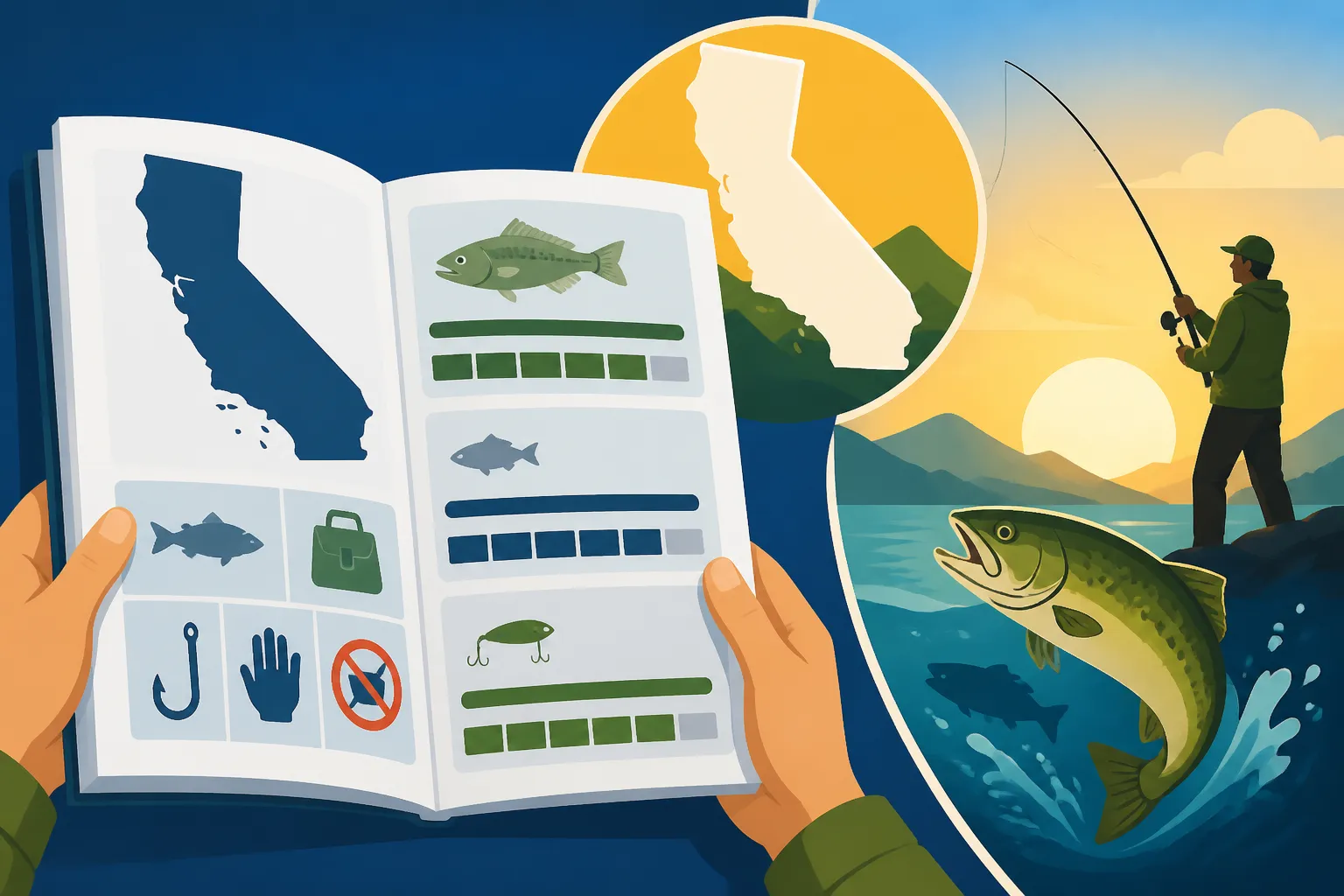
Oh, the California fishing regulations booklet! If you've ever stared blankly at its pages, feeling like you need a law degree just to figure out if you can legally cast a line, you are definitely not alone. It's thick, dense, and often feels like it's written in a language only government officials and seasoned wardens understand. But don't despair! This comprehensive guide is here to demystify that intimidating booklet, breaking it down into manageable chunks so you can confidently hit the water without fear of accidentally breaking a rule.
Why the California Fishing Regulations Booklet Feels Like a Mystery Novel
Let's be honest, that little book isn't exactly light reading. It's a critical document, outlining all the rules and restrictions for fishing across the entire state, which is why it can feel so overwhelming. The sheer amount of information packed into those pages is enough to make anyone's head spin, especially when you're just trying to enjoy a peaceful day out on the water. Many anglers just wish there was a simple, one-page cheat sheet, but the complexity of California's diverse fisheries demands a robust regulatory framework.
The Sheer Volume of Information
California is a massive state with an incredible variety of aquatic environments. We've got thousands of miles of coastline, deep ocean waters, expansive river systems like the Sacramento and San Joaquin, huge lakes and reservoirs, and countless high-alpine streams. Each of these habitats supports different species, and each species often requires specific regulations to ensure sustainability. This means the Department of Fish and Wildlife (CDFW) has to cover everything from ocean salmon seasons off the coast of Eureka to trout limits in the Eastern Sierra, and everything in between. The booklet is designed to be a one-stop shop for all of it, which naturally leads to its intimidating size.
It's easy to feel lost, flipping from one section to another trying to cross-reference rules. Imagine trying to plan a trip to Lake Shasta for trout and bass, then a week later wanting to try surf fishing for corbina down near San Diego. The rules for each scenario, each location, and each species are laid out, but finding them and ensuring you understand their interconnectedness can feel like a scavenger hunt. This is why many experienced anglers carry a physical copy, often picked up at a tackle shop or ordered from sites like Amazon, to mark up and reference.
Decoding the Jargon and Legal-Speak
Beyond the volume, the language itself can be a major hurdle. The regulations are written in a precise, legalistic style, which is necessary to avoid ambiguity in enforcement but can be baffling to the average angler. Terms like "bag limit," "possession limit," "slot limit," "special regulation waters," and "take" are used constantly, and if you don't know the exact definition, you might misinterpret a crucial rule. For instance, a "bag limit" is what you can keep in a single day, but a "possession limit" might be higher if you're on a multi-day trip and storing your catch properly. Missing these subtle distinctions can lead to fines, which is a headache no one wants.
It’s not just about understanding individual words; it's about comprehending the structure of the regulations. They often refer to other sections, cross-reference state code, or rely on maps and supplementary documents. Without a solid foundation, these cross-references can make the booklet feel like a circular maze. That's why taking the time to understand the basic terminology before you even start planning your trip is incredibly valuable.
Regional and Species-Specific Nuances
One of the biggest challenges is that California's fishing regulations aren't uniform across the state. They vary significantly by region (e.g., North Coast, Central Coast, Southern California), by water type (freshwater vs. saltwater), and, most importantly, by species. What's legal for rainbow trout in a mountain stream might be completely different from regulations for lake trout in Lake Tahoe, or even for other trout species in different bodies of water. The same goes for saltwater species; the rules for rockfish can be different depending on whether you're in the Northern Management Area or the Southern Management Area, and even the depth restrictions change!
This regional and species-specific variation is designed to protect local fish populations and ensure sustainable fishing practices, but it means you can't just learn one set of rules and be done with it. You'll need to consult specific sections for specific locations. For example, the season for salmon on the Sacramento River will be different from the season for ocean salmon off the coast, and the rules for white seabass in Southern California will differ from those for lingcod further north. It’s a constant learning process, but a crucial one for responsible angling.
Your Step-by-Step Guide to Navigating the Booklet
Alright, enough about why it's hard. Let's talk about how to tackle it head-on. Think of the booklet not as a novel to be read cover-to-cover, but as a reference manual where you look up specific information. Approaching it with a clear purpose makes it much less daunting. You'll want to mentally prepare yourself, maybe grab a highlighter and some sticky notes, and treat it like a mission to find specific answers.
Start with the Basics: License and Endorsements
Before you even think about what fish you want to catch or where, the absolute first thing you need to understand is your licensing requirements. The very beginning of the booklet, or often the CDFW website, will detail what you need. Almost everyone aged 16 or older needs a valid California Fishing License Guide to fish in California, whether you're a resident or a visitor. There are different options available, like annual, one-day, or two-day licenses, and specific reduced-fee licenses for seniors, disabled anglers, and military personnel.
Beyond the basic license, you might need specific endorsements or report cards depending on what you're targeting. For example, if you plan on fishing for salmon, steelhead, or sturgeon, you'll need the appropriate California Fishing Report Cards Explained. These aren't just an extra fee; they are vital tools for wildlife management, allowing the CDFW to collect critical data on catch rates. Make sure you know how to fill out a California report card correctly, as improper reporting can also lead to issues. This foundational understanding is non-negotiable before you wet a line.
Pinpoint Your Location and Target Species
Once your license is sorted, your next step is to get specific. Where are you planning to fish, and what are you hoping to catch? This is where the booklet really shines as a reference tool.
- Identify Your Water Body: Is it a lake, river, stream, bay, or open ocean? California's regulations are often categorized this way. For example, freshwater lakes and reservoirs will be in one section, while coastal waters and bays will be in another. Knowing if you're in an inland fishing zone or an ocean fishing zone is the first split you'll need to make.
- Locate Your Specific Spot: Once you know the general water type, find the specific body of water or general region you'll be fishing in. The booklet often has sections dedicated to major bodies of water or defined regions. For instance, if you're fishing in the Sacramento River, you'd look for that specific river's regulations.
- Determine Your Target Species: What fish are you hoping to bring home? Trout? Bass? Halibut? Rockfish? Each species typically has its own set of rules regarding seasons, size limits, and bag limits. You'll often find these organized alphabetically or by major game fish categories. It's smart to have a primary target in mind, but also be aware of regulations for other species you might accidentally catch. The California Fishing Regulations Explained delves into this further.
Understanding Limits: Bag, Size, and Gear
This is arguably the most critical section for preventing violations. Every fish species you intend to keep will have specific limits, and these are designed to prevent overfishing and maintain healthy populations.
- Bag Limit: This is the maximum number of fish of a particular species you can legally keep in a single day. For instance, the California trout limits and regulations will specify how many trout you can keep, which often varies by the type of water (e.g., five trout in most general regulation waters, but potentially fewer or more in special regulation waters).
- Possession Limit: This refers to the total number of fish you can have in your possession, whether on your person, in your cooler, in your vehicle, or stored at home. Often, the possession limit is the same as the daily bag limit, but for multi-day trips, it might be two or three times the daily limit, provided you're following specific rules about storing and transporting your catch. Always double-check this, especially for species like rockfish or salmon.
- Size Limit: Many species have minimum or maximum size requirements, sometimes even a "slot limit" where you can only keep fish within a certain size range. This protects juvenile fish and large breeding adults. For example, California Halibut Size and Bag Limits are strictly enforced, with specific minimum lengths to ensure fish have a chance to reproduce before being harvested. It's crucial to carry a measuring device with you, like a tape measure or a marked fishing rod.
- Gear Restrictions: This covers what kind of tackle, bait, and methods you can use. Some waters are "artificial lures only" or "fly-fishing only." Others might restrict the number of hooks or rods you can use (though the California Second-Rod Stamp Explained can expand your options in some freshwater areas). Understanding California Barbless Hook Requirements is also crucial, as many waters now mandate them for catch and release to minimize harm to fish. Always check if bait restrictions apply, especially in sensitive trout streams where only artificial lures are allowed.
Example Table: Common Regulation Types and Where to Find Them
| Regulation Type | Where to Find in Booklet (General Section) | Key Details to Look For |
|---|---|---|
| Licenses & Permits | General Information (Front of booklet) | Residency, age requirements, endorsements (e.g., Ocean Enhancement Stamp), report cards. |
| Freshwater Regulations | Inland Sport Fishing Regulations | Specific lake/river rules, trout limits, bass regulations, gear restrictions (e.g., fly-fishing only). |
| Saltwater Regulations | Ocean Sport Fishing Regulations | Species-specific rules (rockfish, halibut, salmon), depth limits, Marine Protected Areas. |
| Bag & Possession Limits | Species-Specific Sections | Daily catch limits, total fish allowed in possession. |
| Size Limits | Species-Specific Sections | Minimum/maximum lengths, slot limits. |
| Gear Restrictions | General Regulations, Species/Area Specific | Number of rods, bait types, hook requirements (e.g., barbless). |
| Seasons & Closures | Species-Specific Sections, Regional Maps | Open/closed dates for specific fish, regional closures. |
| Marine Protected Areas | Ocean Sport Fishing Regulations, Maps | No-take zones, limited-take zones, prohibited activities. |
Essential Sections You Can't Afford to Miss
While it’s tempting to just jump to your target species, some sections are universal and absolutely critical. Skimming these can lead to serious trouble, even if you think you know the rules for your specific fish. These cover broad protective measures and reporting requirements that apply to almost all anglers.
Marine Protected Areas (MPAs) and Special Closures
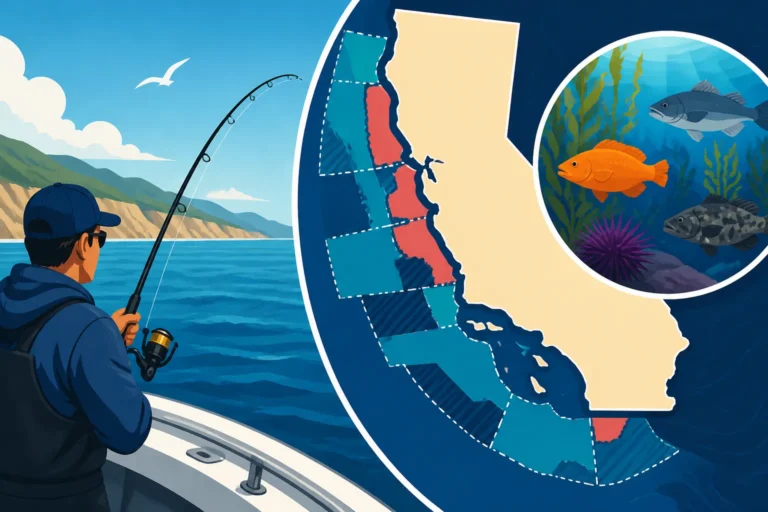
California has established an extensive network of California Marine Protected Areas Explained along its coast, from the Oregon border down to Mexico. These areas are designed to protect marine ecosystems and enhance biodiversity. Fishing within these zones can be severely restricted or entirely prohibited. There are different types of MPAs, such as State Marine Reserves (no take allowed), State Marine Parks (limited take), and State Marine Conservation Areas (highly regulated take).
The regulations booklet contains maps and detailed descriptions of these MPAs, outlining what activities are permitted or forbidden within each. It is absolutely vital that you understand if your chosen fishing spot falls within an MPA and what the specific rules are for that zone. Violating MPA rules can result in hefty fines and penalties. Many anglers use digital maps or apps to overlay MPA boundaries with their fishing spots, but the official booklet maps are the ultimate authority. Always carry updated charts or have a reliable app to avoid accidental trespass into a no-take zone.
Report Cards and How to Fill Them Out
We touched on this earlier, but it’s worth reiterating: report cards are not optional if you're targeting certain species like steelhead, sturgeon, or salmon. These cards are legally required and serve a critical purpose in fish management. Each time you catch one of these species, whether you keep it or release it, you are generally required to record the catch on your card immediately.
The booklet provides detailed instructions on How to Fill Out a California Report Card, including when to punch out dates, how to record location, and what to do if you release a fish. Failing to correctly fill out or return a report card by the specified deadline (usually in January) is a violation that can result in fines. Think of it as your contribution to conservation – the data helps the CDFW make informed decisions about future seasons and limits. You can find these cards at most tackle shops, just like your fishing license.
General Regulations and Prohibited Activities
Beyond specific species and locations, there's a section in the booklet dedicated to general statewide regulations that apply to all fishing. This includes rules about littering, pollution, harassment of wildlife, and the use of specific types of bait or gear that are universally banned (like certain nets or explosives – yes, they have to specify that!). It also covers ethical angling practices that help maintain the integrity of the sport.
Pay close attention to prohibited activities. For instance, it's generally illegal to snag fish, fish with more than the allowed number of lines (unless you have a second-rod stamp for freshwater), or to sell sport-caught fish. Understanding California Catch-and-Release Rules is also crucial, ensuring you handle fish with care if you intend to let them go. These general rules are the backbone of responsible fishing and protect the environment and the fish populations for everyone to enjoy.
Tips for Staying Up-to-Date and Avoiding Fines
Let's face it, the regulations aren't static. Seasons change, limits are adjusted, and new closures can be put in place. Relying on an old booklet or outdated information is a recipe for disaster. The last thing you want is a warden explaining your violation with a stern look, especially when fines for not having a license or violating bag limits can be substantial.
Using Online Resources and Apps
While the physical booklet is the official word, the California Department of Fish and Wildlife (CDFW) website is an invaluable resource for the most current information. They often post emergency closures or in-season adjustments much faster than a printed booklet can be updated. You can view the entire regulation booklet online, download PDFs, and even access interactive maps for MPAs and specific fishing spots.
There are also several excellent fishing apps available, some official and some third-party, that can put regulations right in your pocket. Apps like FishVerify or even simple map apps with MPA overlays can be incredibly helpful when you're on the water and need a quick reference. Just make sure the app sources its information directly from the CDFW and is regularly updated. While these digital tools are convenient, always remember that the official CDFW booklet and website are the final authority. For physical copies, you can often find the current year's regulations on Amazon, which is a good way to get it delivered right to your door if your local tackle shop is out.
Double-Checking Before You Go
This might sound obvious, but it's the step most often skipped, and it's the one that can save you a lot of grief. Before every fishing trip, especially if you're going to a new spot or targeting a new species, take a few minutes to:
- Consult the current regulations: Even if you fished the same spot last year, rules can change season to season. The California Salmon Season Dates are a perfect example, as they often fluctuate yearly based on fish returns and environmental conditions.
- Check for emergency closures or updates: A quick visit to the CDFW website's "News and Announcements" section can reveal if your chosen fishery has any temporary restrictions due to spawning runs, environmental issues, or other factors.
- Confirm your license and report cards are valid and properly endorsed: Make sure your California Fishing License Renewal is current and you have all necessary report cards for the species you might encounter.
A little preparation goes a long way. It’s better to spend five minutes confirming the rules than hours dealing with a citation or having your hard-earned catch confiscated.
When in Doubt, Ask!
If you've diligently read the booklet and checked online resources, but you're still uncertain about a specific rule, don't guess! Making an assumption can lead to a California Fishing License Fines and Penalties. There are several reliable avenues for clarification:
- CDFW Website Contact: The CDFW website usually has contact information for regional offices or general inquiry lines. While it might take a day or two to get a response, it's a good way to get an official answer.
- Local Tackle Shops: These places are goldmines of information. The folks working there are often avid anglers themselves, constantly interacting with wardens and other fishermen, and usually have a deep understanding of local regulations. They're often the first to know about subtle changes or local nuances.
- Experienced Anglers: If you're part of a fishing club or have friends who are seasoned California anglers, they can be a great resource. However, always double-check their advice against the official regulations, as even experienced folks can sometimes have outdated information.
- Sportfishing Charter Captains: If you're going on a charter, the captain and crew are highly knowledgeable about the specific regulations for their area and target species. They are responsible for adhering to the rules and will guide you.
The key is to seek clarification from a reputable source. Nobody expects you to memorize the entire regulations booklet, but everyone expects you to make a good faith effort to understand and follow the rules. Enjoy your time on the incredible waters California has to offer, and fish responsibly!
Disclaimer
Please note that fishing regulations are subject to change. While every effort has been made to provide accurate and up-to-date information, it is always the angler's responsibility to consult the most current official California Department of Fish and Wildlife (CDFW) regulations booklet and website before engaging in any fishing activities. This guide is for informational purposes only and should not be considered a substitute for the official regulatory documents.