Lake Shasta: Fish Species and Best Spots
Navigating the immense waters of Lake Shasta, with its intricate arms and countless coves, can feel overwhelming for any angler, whether you’re a seasoned pro or just starting out. It's easy to get lost in its sprawling beauty and wonder where the fish actually are, or even what species are biting. This comprehensive guide is designed to cut through that confusion, giving you the insider scoop on the diverse fish species inhabiting Lake Shasta and revealing the best spots to cast your line for a truly rewarding experience.
Understanding Lake Shasta as a Premier Fishing Destination
Lake Shasta isn't just a reservoir; it's a massive aquatic playground that captivates anglers with its sheer size and remarkable biodiversity. Located in Northern California, this sprawling lake, formed by the Shasta Dam on the Sacramento River, boasts an incredible 365 miles of shoreline when full – more than the San Francisco Bay! Its deep, clear waters, fed by the Sacramento, McCloud, and Pit Rivers, create a complex ecosystem that supports a wide array of game fish, making it one of the absolute Best Lakes to Fish in California.
The varying depths, numerous submerged structures, and distinct river arms offer a multitude of habitats, catering to different fish species and fishing styles. From the main body's deep, cool waters perfect for trolling to the shallower, warmer coves of its many arms that teem with bass, Lake Shasta truly has something for everyone. It's a place where you can spend days exploring and still feel like you've only scratched the surface, which is why having a good understanding of its unique characteristics is key to a successful fishing trip.
The Lake Shasta Ecosystem and its Appeal
The majesty of Lake Shasta lies not just in its size, but in the intricate web of life it supports. The reservoir's multiple inflows mean varying water temperatures and nutrient levels across different sections, creating micro-environments that attract specific species. For instance, the colder, deeper main channels are a haven for trout and salmon, while the warmer, shallower, and more vegetated areas in the arms are prime bass territory. This natural diversity is precisely what makes Lake Shasta such a consistent and exciting fishing destination.
What really draws anglers here, beyond the promise of a big catch, is the stunning backdrop of the Shasta Trinity National Forest. Fishing here isn't just about the fish; it's an immersive outdoor experience. The chance to boat through the narrow canyons of the Pit River arm, or cast near the dramatic face of Shasta Dam, adds an unparalleled scenic element to your angling adventure. For those looking to plan a trip, finding a knowledgeable guide through platforms like FishingBooker can offer invaluable local insights into navigating this expansive water and capitalizing on its unique features.
Primary Fish Species Calling Lake Shasta Home
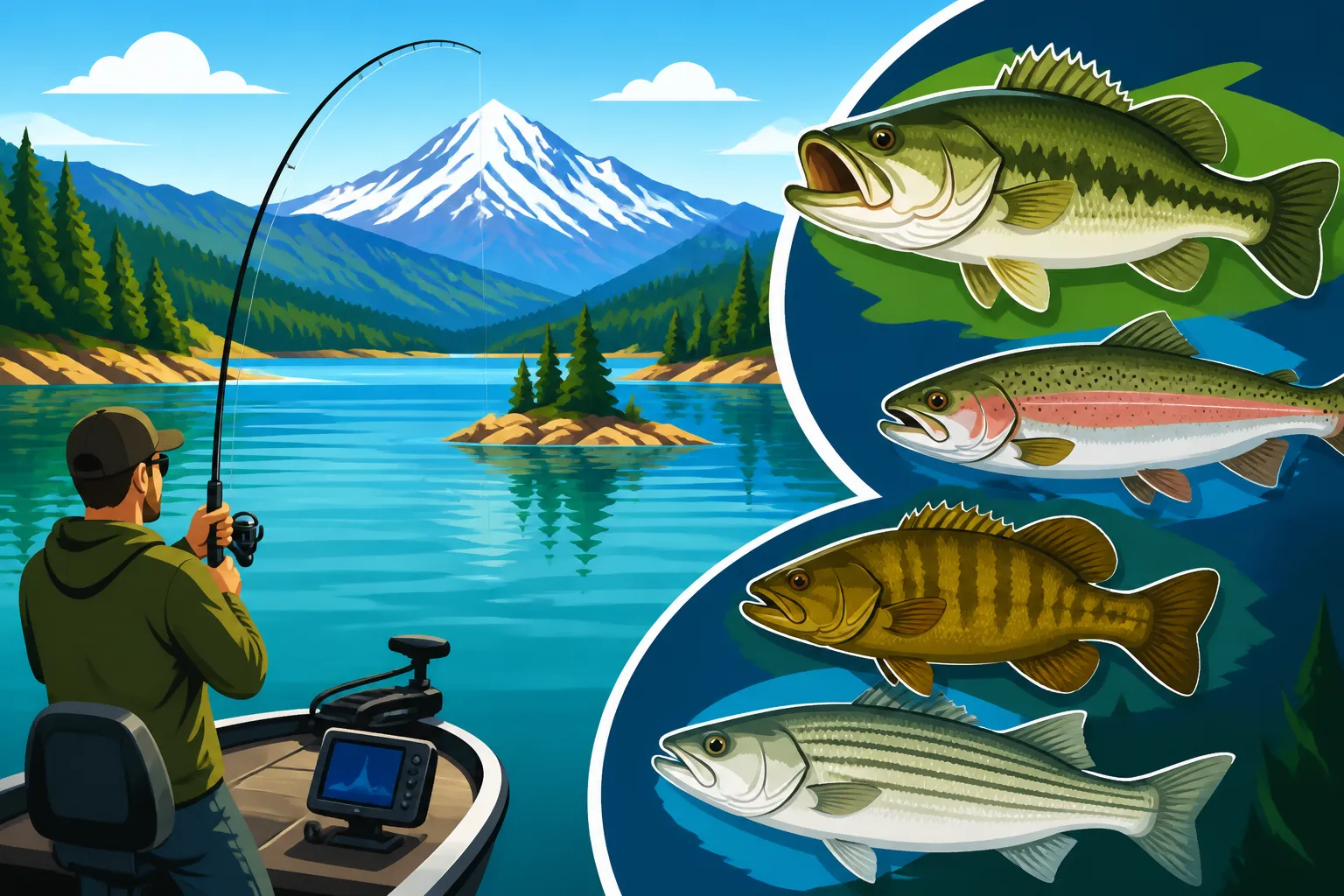
Lake Shasta is renowned for its diverse fish population, offering anglers a chance to target several popular game species. Understanding each species' preferred habitat and behavior is crucial for successful fishing.
Rainbow Trout
Rainbow trout are undoubtedly one of Lake Shasta's most sought-after species, known for their spirited fights and delicious flesh. These beautiful fish thrive in the cooler, oxygen-rich waters of the lake, particularly in the main body and near the dam. The California Department of Fish and Wildlife regularly stocks rainbow trout in Lake Shasta, supplementing the wild populations and ensuring a steady supply for anglers.
You'll find rainbow trout throughout the year, but they tend to be more active in the upper water column during the cooler months of spring and fall. In summer, they retreat to deeper, cooler waters. Trolling with spoons, like a Kastmaster or a Needlefish, behind a dodger or flasher is a highly effective method. Many anglers also find success using PowerBait, nightcrawlers, or even small minnows from shore, especially in areas with good public access like Bridge Bay or Centimudi boat ramp. When the bite is on, catching a limit of these vibrant trout can make for an unforgettable day. Just remember to check the current California Trout Limits and Regulations.
Brown Trout
While perhaps not as numerous as their rainbow cousins, brown trout in Lake Shasta offer a different kind of challenge – they tend to be larger, more elusive, and renowned for their powerful, stubborn fights. These predatory fish prefer structure and often lurk near submerged timber, rock ledges, or drop-offs, ambushing baitfish. Their camouflage allows them to blend in perfectly with their surroundings, making them tricky to spot.
Targeting brown trout usually involves more specialized techniques. Trolling deeper with larger lures that mimic baitfish, such as Rapala or Bomber jerkbaits, or substantial spoons, can entice these bigger fish. They are often found in the same deeper areas as rainbow trout and landlocked salmon but tend to hold tighter to cover. Early morning or late evening often yield the best results, as browns are more active during low light conditions. If you're after a trophy, focusing your efforts on deeper sections of the Sacramento and McCloud arms with heavy tackle could pay off handsomely.
Largemouth and Smallmouth Bass
Lake Shasta is a legitimate bass factory, attracting anglers from all over for its exceptional largemouth and smallmouth bass fishing. Both species thrive in the lake's varied habitats, though they have their distinct preferences. Largemouth bass are typically found in the shallower, warmer coves and bays with plenty of submerged timber, weed lines, and rocky points. They love cover! Smallmouth bass, on the other hand, prefer rocky bottoms, ledges, and open water structures, often inhabiting slightly deeper and clearer areas.
The bass fishing truly shines from spring through fall. Spring is prime time as the bass move into the shallows for their spawn, becoming more aggressive and easier to locate. Later in the summer, they might move deeper, but can still be caught early in the morning or late in the evening near cover. Popular techniques for largemouth include pitching jigs, Texas-rigged plastics, crankbaits, and topwater lures around structure. For smallmouth, tubes, finesse worms, and small crankbaits worked along rocky ledges are often very effective. If you're looking for more specific tactics, our guide on How to Fish for Largemouth Bass in California offers a deeper dive into techniques.
Chinook Salmon (Landlocked King Salmon)
One of Lake Shasta's unique offerings is its population of landlocked Chinook salmon, also known as King Salmon. Unlike their ocean-going relatives, these salmon complete their entire life cycle within the freshwater confines of the lake. They are primarily a cold-water species, preferring the deeper, cooler sections of the main lake body, particularly during the warmer months.
Catching these landlocked kings requires specialized trolling techniques, often involving downriggers to get baits down to depths where the salmon are feeding, typically 40 to 100 feet or more. Popular baits include anchovies or shiners fished behind a dodger, or specialized salmon spoons and hoochies. The bite can be subtle, so paying close attention to your rod tip is crucial. While they aren't as large as ocean-run Chinooks, they still put up a respectable fight and are highly prized for their rich, flavorful meat. Understanding the California Salmon Season Dates is important, as regulations can shift yearly.
Other Notable Species
Beyond the main four, Lake Shasta also offers opportunities to catch other species that add variety to your fishing trips.
- Crappie: Both black and white crappie are present, often found congregating around submerged brush piles, timber, and dock pilings in the lake's arms. They're excellent eating fish and a lot of fun to catch on light tackle using small jigs, minnows, or even tiny spoons. Spring and early summer are usually the best times to target them.
- Catfish: Channel catfish and sometimes bullheads can be found throughout the lake, especially in the shallower, warmer areas of the river arms. They are bottom feeders and are readily caught using smelly baits like cut bait, chicken livers, or commercial catfish dough baits, particularly during the warmer evenings.
- Kokanee Salmon: Though less common than the Chinooks, kokanee, which are landlocked sockeye salmon, occasionally turn up. They are finicky feeders and usually require specialized trolling techniques with small hoochies or wedding rings tipped with corn, often at specific depths.
Best Fishing Spots on Lake Shasta
Given Lake Shasta's gargantuan size, pinpointing "the best" spots can be daunting. However, breaking it down by its distinct arms and main body areas helps narrow things down considerably.
Main Body and Dam Area
The main body of Lake Shasta, especially around the Shasta Dam, is characterized by its deep, open waters and steep rocky banks. This area is a prime location for targeting rainbow trout, brown trout, and landlocked Chinook salmon. The cooler, more stable temperatures here provide an ideal environment for these cold-water species, particularly as surface temperatures rise in the summer.
Anglers often find success by trolling deep with downriggers or lead core line, mimicking baitfish schools. The area directly in front of the dam can be particularly productive due to the deep water and constant current, which concentrate bait and game fish. Shore anglers can also find good spots along the accessible banks near the dam, using power bait or live worms, especially in the early mornings or late evenings when trout move closer to the shore. Marina areas like Bridge Bay often serve as excellent launching points for exploring this vast expanse, and local guides, easily booked through services like FishingBooker, often know the precise contours and thermal breaks where fish congregate.
Sacramento River Arm
The Sacramento River arm is arguably the most prominent and productive arm of Lake Shasta. It extends significantly north, offering a diverse range of habitats. As you move further up the arm, the water can become slightly murkier and shallower, especially after heavy rains, providing excellent cover for bass. Nearer the main body, it retains its deep, clear characteristics.
This arm is a fantastic location for both bass and trout. Largemouth bass will be found in the numerous coves, around submerged brush, and along rocky points. Smallmouth bass thrive on the steep, rocky ledges and bluffs. For trout and salmon, focus on the deeper channels within this arm, particularly where it starts to widen out from the river. Key areas include the points and coves around the I-5 bridges and further north towards the Pit River bridge. Shore access here can be limited, so a boat is often essential to explore the best pockets.
McCloud River Arm
Known for its generally clearer, cooler waters and scenic beauty, the McCloud River arm is another hotspot for trout and bass. This arm tends to be a bit less pressured than the Sacramento arm, offering a more tranquil fishing experience. The water clarity here can make for exciting sight-fishing opportunities for bass in the shallows during spring.
Similar to the Sacramento arm, the McCloud offers diverse conditions. The deeper sections and main channel are excellent for trolling for rainbow and brown trout, especially with lighter line due to the clear water. For bass, explore the various coves and rocky outcrops. The confluence where the McCloud River enters the lake is a particularly active area, as the inflowing current can concentrate baitfish. This arm also has beautiful camping and picnic areas, making it a great destination for a family fishing trip.
Pit River Arm
The Pit River arm, stretching east, often presents a different character compared to its counterparts. It can have more submerged timber and debris, especially in its upper reaches, making it a fantastic, albeit challenging, habitat for largemouth bass. The water can also be a bit more stained at times, which can be an advantage for bass fishing.
This arm is often considered a bass angler's paradise, particularly for those who enjoy working jigs and Texas-rigged plastics around heavy cover. The numerous submerged trees and brush piles provide ambush points for predatory bass. While trout and salmon might be present in the deeper sections closer to the main lake, the upper reaches of the Pit River arm are truly dominated by bass. Areas around the many islands and submerged creek channels are worth exploring.
Jones Valley and Bridge Bay Areas
These areas are popular hubs on Lake Shasta, offering excellent infrastructure with marinas, launch ramps, and tackle shops. From a fishing perspective, they provide easy access to a variety of habitats and are great starting points for diverse angling endeavors.
Jones Valley, with its extensive network of coves and points, is excellent for bass fishing. The diverse bottom structure and availability of docks (often holding crappie) make it a versatile spot. Bridge Bay, on the other hand, provides direct access to the main body, making it a prime launch for trolling for trout and salmon. Both areas see consistent stocking of rainbow trout, ensuring good opportunities for shore anglers and those fishing from smaller boats. Many fishing guides operate out of these marinas, so it's a great place to connect with an expert who can show you the ropes or suggest the hot spots for the day.
Essential Tips for Fishing Lake Shasta
Fishing on a massive body of water like Lake Shasta requires a bit more than just luck. Understanding the nuances of the lake, from seasonal changes to proper gear, will significantly increase your chances of a successful and enjoyable outing.
Seasonal Considerations
The time of year you visit Lake Shasta dramatically impacts the fishing conditions and the species you'll primarily target.
- Spring (March-May): This is arguably one of the best times to fish Lake Shasta. As water temperatures rise, largemouth and smallmouth bass move into the shallows for their spawn, making them very accessible and aggressive. Topwater lures, spinnerbaits, and soft plastics fished around coves and points are highly effective. Trout also become very active near the surface as they feed on emerging insects and baitfish, making trolling and bank fishing excellent.
- Summer (June-August): As the California sun heats up, surface water temperatures climb. Trout and salmon retreat to deeper, cooler sections of the lake. This means deep trolling with downriggers becomes essential for these species. Bass fishing shifts to early morning, late evening, or night fishing, targeting deeper structures, submerged timber, and shaded areas. Crappie can still be caught in brush piles. Hydration and sun protection are paramount during these months. For more insights on fishing during the warmer months, check out our guide on California Fishing in Summer.
- Fall (September-November): Many consider fall to be another peak season. As waters cool, fish become very active, feeding heavily in preparation for winter. Bass fishing can be phenomenal, with both largemouth and smallmouth aggressively chasing baitfish. Topwater action can be explosive, and crankbaits worked along rocky points are deadly. Trout and salmon return to shallower depths, offering great opportunities for trolling and casting.
- Winter (December-February): While fishing slows down, winter can produce some of the largest fish. Trophy brown trout and larger bass are often caught by anglers willing to brave the colder temperatures. Deep jigging for bass and slow trolling for trout/salmon are the primary methods. This is a time for patience, but the rewards can be substantial. Our California Fishing Seasons: Month-by-Month Guide provides even more detailed seasonal information.
Gear and Techniques
Having the right equipment and knowing how to use it is non-negotiable on Lake Shasta.
- Rods and Reels: For trout and salmon, a medium-light to medium action spinning or baitcasting rod (6-7.5 feet) paired with a reel spooled with 6-10 lb test fluorocarbon or monofilament line is ideal. For bass, a medium-heavy to heavy action rod (6.5-7.5 feet) with a baitcasting reel spooled with 12-20 lb fluorocarbon or braided line allows you to handle heavier lures and thicker cover.
- Electronics: A quality fish finder is almost a necessity for deeper water species like trout and salmon, helping you locate schools of baitfish and target depths. For bass, side-imaging or 360 sonar can reveal submerged structures and hidden coves that hold fish. Downriggers are crucial for consistently getting lures to specific depths for trout and salmon when trolling.
- Lures and Baits:
- Trout/Salmon: Spoons (Kastmasters, Little Cleos), dodgers/flashers with hoochies or anchovies, PowerBait, worms.
- Bass: Soft plastics (worms, creature baits), jigs, crankbaits, spinnerbaits, topwater lures, swimbaits.
- Techniques: Trolling is king for open-water trout and salmon. For bass, a variety of California Bass Fishing Techniques are employed, including pitching and flipping, drop-shotting, Carolina rigging, and working topwater. Understanding how to adapt your technique to conditions and target species is what makes a successful angler. Consider booking a guided trip, especially if it's your first time, to learn these techniques firsthand. Platforms like FishingBooker connect you with experienced local captains who specialize in Lake Shasta fishing.
Regulations and Licenses
Before you even think about dropping a line in Lake Shasta, make sure you're squared away with all the necessary legalities. California has specific fishing regulations that apply statewide, with some local variations.
You will absolutely need a valid California fishing license. This isn't just a suggestion; it's a legal requirement for anyone 16 years or older. You can find all the details on how to acquire one in our comprehensive California Fishing License Guide or learn about the specific requirements for California Freshwater Fishing Regulations. Beyond the basic license, pay close attention to the bag and size limits for each species you intend to keep. These regulations are in place to protect fish populations and ensure sustainable fishing for future generations. Ignoring them can lead to hefty fines, so always carry a copy of the current regulations booklet or have the CDFW app on your phone.
Make sure to check for any special regulations specific to Lake Shasta or its river arms, especially concerning bait restrictions or seasonal closures for certain species. Being informed isn't just about avoiding trouble; it's about being a responsible and ethical angler.
Summary of Lake Shasta Fishing Opportunities
To help you quickly visualize the diverse opportunities Lake Shasta offers, here's a handy table summarizing the primary target species, their best seasons, and common fishing approaches.
| Fish Species | Best Season | Preferred Habitat | Common Techniques & Baits | Notes |
|---|---|---|---|---|
| Rainbow Trout | Spring, Fall (Year-round for deeper fish) | Main body, river arms, dam area (cooler water) | Trolling (spoons, dodgers/flashers), PowerBait, worms (shore) | Regularly stocked, good for beginners, spirited fighters. |
| Brown Trout | Fall, Winter (Cooler months) | Deep structure, ledges, submerged timber | Deep trolling (jerkbaits, large spoons), live minnows (deep) | Larger, more elusive, strong fighters. |
| Largemouth Bass | Spring, Fall | Shallow coves, submerged timber, weed lines | Soft plastics, jigs, crankbaits, topwater | Excellent sportfish, especially during the spawn. |
| Smallmouth Bass | Spring, Summer, Fall | Rocky points, ledges, clear water | Tubes, finesse worms, small crankbaits, jigs | Hard-fighting, abundant on rocky sections. |
| Chinook (King) Salmon | Year-round (cooler months for best bite) | Deep main body, river arm channels | Deep trolling (anchovies, shiners, hoochies, spoons) | Requires downriggers, prized for table fare. |
| Crappie | Spring, Early Summer | Brush piles, docks, submerged timber | Small jigs, minnows | Excellent eating, fun on light tackle. |
| Catfish | Summer, Fall (Warm evenings) | Warmer, shallower river arm sections | Cut bait, chicken livers, stink baits | Good for night fishing, bottom dwellers. |
Lake Shasta truly offers a fishing adventure for every type of angler. Whether you're chasing trophy bass in the back coves or trolling for elusive salmon in the deep, knowing what species to target and where to find them is the first step to a memorable day on the water.
Disclaimer
The information provided in this guide is for general informational purposes only and is subject to change. Fishing regulations, seasons, and limits in California are set by the California Department of Fish and Wildlife (CDFW) and can be updated at any time. Always consult the official CDFW regulations booklet or their website for the most current and accurate information before heading out to fish. Adherence to all local, state, and federal laws is the responsibility of the angler.