Best Season for Sturgeon in California
One of the most thrilling and often frustrating experiences for any angler in California is the pursuit of sturgeon. These ancient, powerful fish can test your patience, your gear, and your understanding of their elusive habits. If you've ever spent hours staring at a rod tip, wondering if you're in the right place at the right time, you're not alone. This comprehensive guide will peel back the layers on California's sturgeon fishery, helping you pinpoint the best season to hook into these prehistoric giants.
Understanding California's Sturgeon Fishery
Sturgeon are truly magnificent creatures, living fossils that have plied these waters for millions of years. Their sheer size and incredible fighting spirit make them a prized target for many anglers, but they're not just any fish. Understanding the specific types we have here in California, and why they behave the way they do, is the first step to successful seasonal planning.
The Majestic White Sturgeon
When most folks talk about "sturgeon fishing" in California, they're almost certainly referring to the White Sturgeon. These are the largest freshwater fish in North America, and they certainly live up to that reputation in our state. You hear tales of monsters exceeding eight or nine feet and weighing hundreds of pounds, and while those are certainly rare, even a four-foot "shaker" (a small, sub-legal fish) will give you a fight to remember. White Sturgeon are native to the Pacific Coast and thrive in the brackish waters of our major river systems and bays, particularly around the Sacramento-San Joaquin Delta. They're primarily bottom feeders, relying on their keen sense of smell and barbels to root out crustaceans, clams, and small fish from the murky depths. This feeding habit is key to understanding why certain baits and locations are more effective at different times of the year.
The Elusive Green Sturgeon
While White Sturgeon are the bread and butter of our sport fishery, California is also home to the Green Sturgeon. These fish are a bit more mysterious and, importantly, are a federally protected species. This means they cannot be targeted or retained by recreational anglers. If you happen to hook a Green Sturgeon, you must release it immediately and unharmed. They tend to be smaller than White Sturgeon, usually topping out around six or seven feet, and have a more slender body with prominent scutes (bony plates) along their sides. They also have a distinctive greenish hue, hence their name. Green Sturgeon are more anadromous, meaning they spend more time in saltwater before migrating into freshwater to spawn. They are an endangered species, and while you might occasionally encounter one, remember they're off-limits for fishing. Knowing the difference is crucial, and you can learn more about specific identification in our guide on California Sturgeon Regulations and Limits.
Why Sturgeon are a Unique Challenge
Fishing for sturgeon isn't like casting for bass or trolling for trout. It's a game of patience, preparation, and precision. Their tough, leathery mouths require specific hook sets, and their powerful runs demand robust gear. Furthermore, their feeding habits mean you're often targeting them in strong currents and turbid water, where scent and feel are paramount. The challenge, however, is precisely what makes them so appealing. The anticipation of that slow, deliberate "sturgeon bite"—often just a subtle tap followed by a heavy, steady pull—is addictive. When that rod finally bends over, and you realize you've connected with something ancient and strong, it's an experience that few other fish can offer.
Unraveling the Annual Sturgeon Cycle
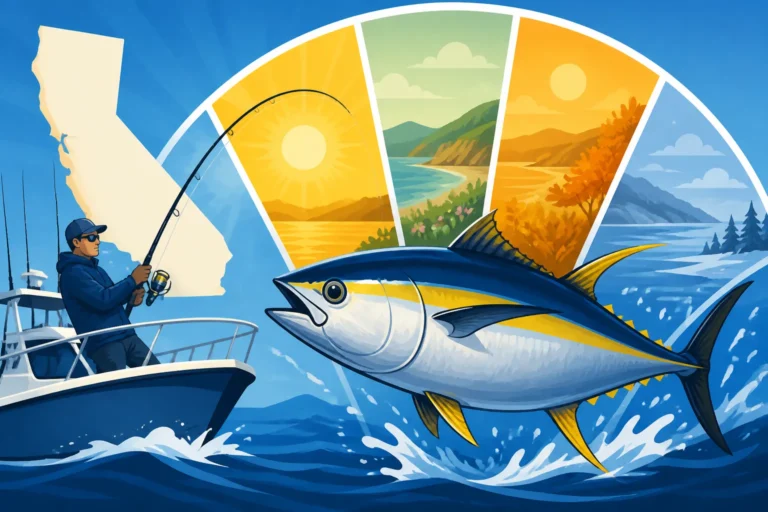
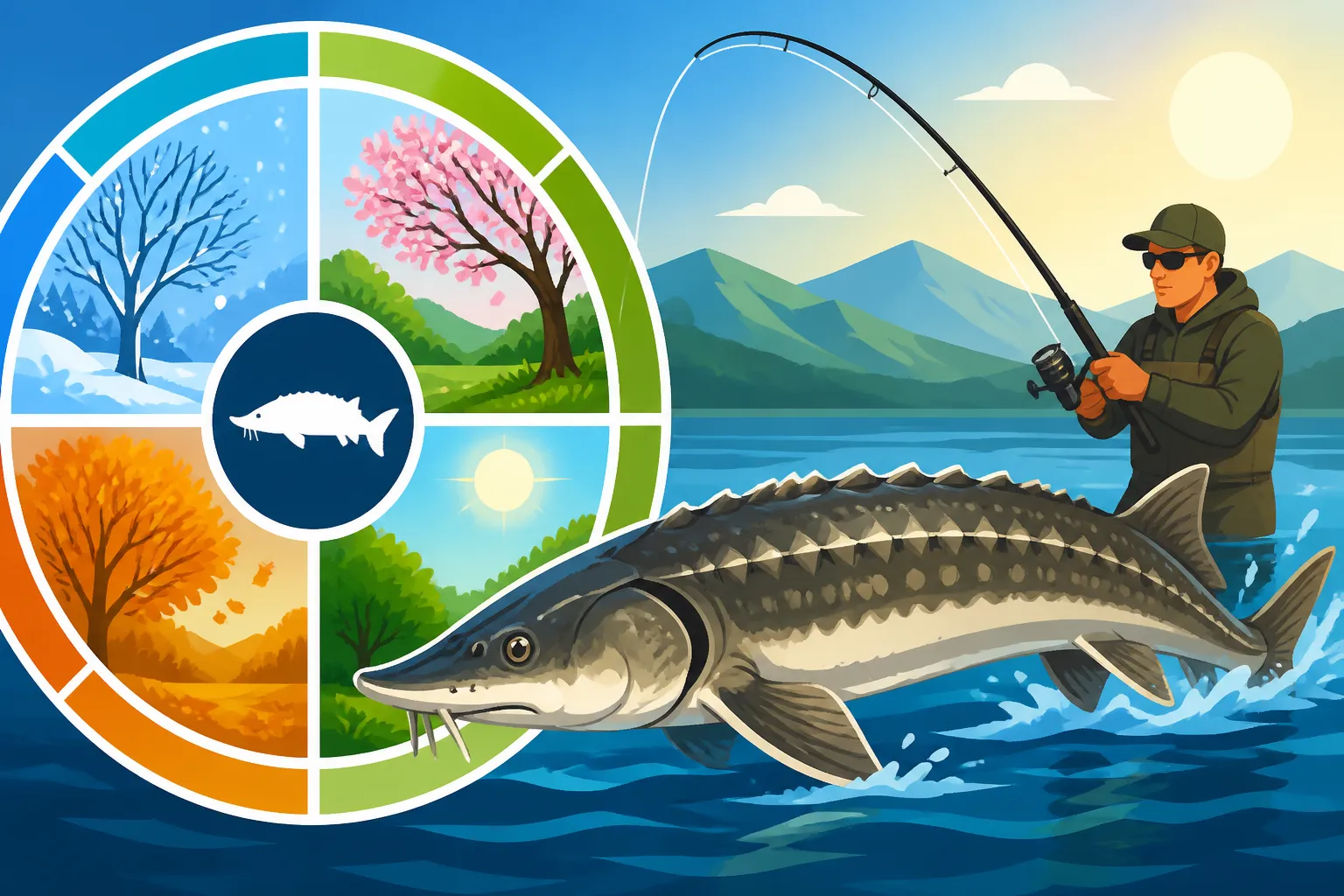
Sturgeon behavior is heavily influenced by environmental factors like water temperature, river flows, and the availability of food. Understanding these seasonal shifts is absolutely critical to identifying the best time to fish. While you can catch sturgeon year-round in California, certain seasons offer significantly higher odds and better opportunities for trophy fish.
Winter: The Peak Season for Trophy Sturgeon
Hands down, winter is widely considered the best season for sturgeon in California. From late November through early March, the bite often heats up significantly. Why winter? Several reasons. Firstly, as water temperatures drop, sturgeon tend to congregate in deeper holes and channels, especially in the larger bays and the lower Sacramento-San Joaquin Delta. They're not actively spawning yet, so their primary focus is on feeding to build up energy reserves. Secondly, the cooler water slows their metabolism slightly, but they still need to eat. This often means they're less scattered than in warmer months, making them easier to locate.
During this period, successful anglers often find consistent action. The colder, clearer water (compared to spring runoff) can also sometimes make finding those deeper concentrations easier with sonar. Imagine a chilly, foggy morning on San Pablo Bay, anchored up, feeling that subtle tap on your line – that's prime winter sturgeon fishing. The fish are often larger and more numerous, making it the ideal time for anyone hoping to land a true trophy. You'll want to layer up, of course, as California winters on the water can still be quite crisp, but the potential reward is well worth the bundled-up effort. If you're planning a trip during this time, definitely check out our guide on California Fishing in Winter for more general tips.
Spring: Spawning Runs and Post-Spawn Feeding
As winter gives way to spring, typically from March to May, the sturgeon fishery undergoes a significant shift. This is the spawning season for White Sturgeon. Triggered by warming water temperatures and increased freshwater flows from snowmelt, adult sturgeon migrate upstream into the Sacramento River and its tributaries to reproduce. This migration can create incredible fishing opportunities in specific areas, particularly upstream of the Delta, as fish are moving through predictable corridors.
However, there's a catch: fish that are actively spawning often become less interested in feeding. They're focused on reproduction, not your bait. So, while you might encounter large numbers of fish, the bite can be finicky. The best opportunities in spring often come before the peak spawn, when fish are staging, or after the spawn, when they're hungry and dropping back downriver, looking to replenish their energy. This post-spawn feeding frenzy can be explosive, as tired, hungry fish gorge themselves. You might find them in slightly shallower water than in winter, often along channel edges or flats where food is abundant. This is also when you'll definitely need your California Sturgeon Report Card in order.
Summer and Fall: Challenging but Rewarding
Summer and fall (June through November) are generally considered the slower seasons for dedicated sturgeon fishing, but don't count them out entirely! The warmer water disperses the fish more widely, and they tend to be more active and faster, making them harder to pin down. Increased recreational boat traffic in the Delta can also make some popular spots less productive. However, this doesn't mean sturgeon disappear. They simply move to different areas and might require different tactics.
In summer, sturgeon often seek out deeper, cooler holes or areas with stronger current to find dissolved oxygen and escape the heat. They might also follow schools of baitfish more actively. Fall can be a shoulder season where activity picks up again as waters cool. While you won't typically see the concentrated numbers of winter or the intense spawning runs of spring, a dedicated angler can still find success by focusing on deep pockets and areas with consistent currents. It's often a time for patience and persistence, but the rewards can be sweet if you find the right spot. For those interested in year-round tactics, our article on Best Times to Fish in California offers broader advice.
Prime Locations and Seasonal Movements
Knowing when to fish is only half the battle; knowing where to drop your line is equally important. California offers several distinct sturgeon habitats, and their productivity shifts with the seasons.
The California Delta: A Year-Round Sturgeon Mecca
The vast Sacramento-San Joaquin River Delta is, without question, the heart of California's sturgeon fishery. With its intricate network of sloughs, channels, and bays, the Delta provides diverse habitats for sturgeon throughout the year. During the peak winter months, popular spots like the deep bends of the Sacramento River, the waters around Pittsburg, and the myriad channels near Antioch and Isleton are prime. Access points like Martinez, Crockett, and the various ramps within the Delta offer easy launching for boats.
As spring arrives, the upstream sections of the Sacramento River become more active with spawning runs. Anglers often focus on areas like Verona, Knights Landing, and even further up towards Colusa, watching for those tell-tale jumps that indicate fish are present. In summer and fall, when fish are more dispersed, the deeper holes and strong current breaks within the Delta remain good bets, especially where baitfish are abundant. Areas around Cache Slough and Prospect Slough can hold fish when other spots slow down. For a deeper dive into this incredible fishery, consult our California Delta Fishing Guide.
San Pablo and Suisun Bays: Estuary Gold
Just west of the Delta, San Pablo Bay and Suisun Bay offer exceptional sturgeon fishing, particularly during the colder months. These brackish estuaries are where many White Sturgeon spend their non-spawning seasons, feeding heavily on clams, shrimp, and other invertebrates.
| Bay/Season | Primary Target Species | Peak Months | Key Features & Tactics |
|---|---|---|---|
| San Pablo Bay | White Sturgeon | November – March | Deep channels, strong tides, clam beds. Heavy scent baits. |
| Suisun Bay | White Sturgeon | December – April | Bayshore flats, river mouths, often shallower. |
| Delta (Upstream) | White Sturgeon | March – May (Spawning Runs) | River channels, eddies, fresh water influence. Live bait/roe. |
| Delta (Downstream) | White Sturgeon | November – March; Post-spawn | Deep holes, current seams, brackish water. |
San Pablo Bay, in particular, is legendary for its massive winter White Sturgeon. The deep channels, often with strong tidal currents, hold huge numbers of fish. Popular spots include the Pumphouse, the Mothball Fleet, and the "Narrows" section connecting to Carquinez Strait. Suisun Bay, being shallower, offers different opportunities. The flats and mouths of sloughs here can be incredibly productive, especially on incoming tides when new food sources are washed in. Access is good from places like Martinez and Benicia. Remember that tidal influence is paramount in these bays; understanding the tides and current breaks is often more important than the exact GPS coordinates. For more info on these incredible saltwater fishing areas, check out our guide to San Francisco Bay Fishing Spots.
Sacramento River and Tributaries: Spawning Grounds
While the lower Sacramento River is part of the Delta system, its upper reaches and associated tributaries become especially important during the spring spawning migrations. Fish move significant distances upstream, sometimes hundreds of miles, to find suitable freshwater spawning grounds. The stretches of river around Knights Landing, Verona, and even up to Colusa can see heavy sturgeon traffic during March, April, and May.
Fishing these river sections requires a slightly different approach than the wider bays. Focusing on deeper bends, submerged timber, and areas where currents create natural holding lies is key. The water here is purely freshwater, and the fish are on a mission. While they might not be as eager to bite as pre-spawn fish in the bays, strategic bait placement and patience can yield incredible results. Always be mindful of local regulations that might vary slightly for these upstream sections. For more details on fishing these waterways, our Sacramento River Fishing Guide can provide excellent context.
Essential Gear and Techniques for Each Season
Sturgeon fishing demands robust tackle, but even within that, there are seasonal nuances and adjustments that can significantly increase your success. The basic principles of sturgeon fishing—heavy rods, stout reels, and smelly bait on the bottom—remain constant, but the details matter. If you want to dive deeper into general techniques, our Best Fishing Techniques for California Waters offers excellent insights.
Winter Tactics: Heavy Gear and Scented Baits
Given that winter is the prime season, let's talk about the setup you'll want. You'll need a heavy-action rod, typically 7 to 9 feet long, capable of handling 40-80 lb test line. Many anglers favor fiberglass rods for their parabolic bend, which helps absorb the powerful runs of a big sturgeon. Paired with this, a sturdy conventional reel (like a Penn Squall or Shimano Tekota) spooled with 65-100 lb braided line is essential. A 100-200 lb monofilament leader of about 18-36 inches will provide abrasion resistance against their rough mouths and the bottom structure.
When it comes to bait, scent is king in winter. Sturgeon are olfactory hunters, and the colder water often means they're relying even more on their sense of smell. Lamprey eel is arguably the most popular and effective bait, especially if you can get your hands on fresh chunks. Ghost shrimp, cured salmon roe, sardine chunks, and even herring are also highly effective. Many anglers swear by adding a scent enhancer, like Pro-Cure or Mike's Anise, directly to their baits or a scent sponge on their rig. For heavier weights, often 8-16 ounces depending on the current, a pyramid or triangle sinker is common to hold the bottom. You can find all sorts of specialized sturgeon gear, from rods to scent enhancers, on sites like Amazon.
Spring Strategies: Lighter Touch Near Spawning Areas
While the gear for battling a large sturgeon remains robust, your approach in spring might be slightly different, especially if you're targeting pre- or post-spawn fish in river systems. You might be fishing in shallower water with less aggressive currents compared to the bays, which could allow for slightly lighter weights, perhaps 4-8 ounces. The key here is presenting your bait naturally.
For bait, cured salmon roe often becomes a standout in spring, especially for fish in freshwater staging for or recovering from spawning. Eel and ghost shrimp are still good options. In these scenarios, some anglers prefer a sliding sinker rig with a longer leader (up to 3 feet) to allow the bait to waft more naturally in the current, mimicking an easy meal. While the fish might be moving and concentrated, they can also be more wary due to spawning stress, so a natural presentation can make a big difference. Patience is still paramount, but paying attention to water flow and subtle changes in depth becomes even more crucial.
All-Season Rigging and Boat Setup
Regardless of the season, a foundational rig for sturgeon is the sliding sinker rig. This involves threading your main line through a large-eyed barrel swivel (or specialized sturgeon slide) to which your sinker is attached. A bead is then added, followed by a sturdy swivel that connects to your leader. The leader will have a single, strong circle hook (often 7/0 to 10/0, depending on bait size) or sometimes a double-hook setup. The sliding sinker allows the fish to pick up the bait and move off without immediately feeling the weight of the sinker, leading to a more solid hookup.
For boat anglers, a good anchor setup is non-negotiable, especially in areas with strong currents. Many use two anchors—a bow anchor and a stern anchor—to hold the boat perfectly still, presenting multiple lines in a precise manner. A reliable fish finder/sonar is also incredibly helpful for locating deep channels, holes, and even marking fish directly. You're looking for depressions or ledges on the bottom where sturgeon tend to congregate. Always ensure your boat is well-maintained and stocked with safety gear, especially when heading out on large, unpredictable bodies of water like San Pablo Bay.
Navigating California Sturgeon Regulations
Fishing for sturgeon isn't just about catching them; it's about doing so legally and responsibly. California has strict regulations in place to protect these long-lived, slow-growing fish. Ignoring these rules can lead to hefty fines and loss of fishing privileges, so it's absolutely vital to be informed. Our comprehensive California Fishing Regulations Explained is a great resource, but let's touch on the sturgeon specifics.
The Crucial California Sturgeon Report Card
Any angler targeting sturgeon in California, regardless of age or whether they plan to retain a fish, must possess a valid California Sturgeon Report Card. This isn't just a suggestion; it's a legal requirement. This card is crucial for data collection, helping the California Department of Fish and Wildlife (CDFW) monitor sturgeon populations and make informed management decisions.
When you purchase your California Fishing License Guide, make sure to add the Sturgeon Report Card. Upon catching a legal-sized White Sturgeon (and if you choose to keep it), you must immediately validate the catch by punching out the month, day, and time on the card. This process is detailed on the card itself, but essentially, it ensures you can only keep a limited number of fish per year. Even if you're just catching and releasing, you're still required to have the card. The card must be returned to the CDFW at the end of the fishing year, even if you didn't catch anything, so they can gather comprehensive data. This might seem like a bit of a hassle, but it's a small price to pay for the privilege of fishing for such incredible species.
Understanding Size and Bag Limits
California has a very specific "slot limit" for White Sturgeon. This means you can only keep White Sturgeon that fall within a particular size range, measured from the nose to the fork of the tail. The current slot limit is typically 40 to 60 inches total length, but always double-check the most current regulations from the CDFW, as they can change. This slot limit is designed to protect both the smaller, juvenile fish and the larger, sexually mature breeding adults (which are crucial for population sustainability). Any fish caught outside this slot (too small or too large) must be immediately released unharmed.
The annual bag limit for White Sturgeon is generally one fish per year, with a maximum of three fish over a lifetime. This extremely conservative limit underscores the importance of protecting these slow-growing fish. As mentioned before, Green Sturgeon are federally protected and are strictly catch-and-release, with zero retention allowed. Understanding the nuances of the California Sturgeon Slot Limit is key to legal compliance. Always have a measuring device readily available on your boat, and know how to properly measure a sturgeon safely and quickly to ensure a healthy release if it's out of the slot.
Conservation and Responsible Angling
Responsible angling practices are paramount when fishing for sturgeon. These fish can live for many decades, and mishandling them can have serious consequences. Here are a few tips for ensuring their survival:
- Use appropriate gear: Heavy tackle minimizes fight time, reducing stress on the fish.
- Circle hooks only: By regulation, only single barbless circle hooks are allowed for sturgeon fishing. Circle hooks are designed to hook in the corner of the mouth, minimizing deep hooking and making release easier. Make sure yours are truly barbless; some hooks come 'debarbed' but a quick check is always good.
- Minimize out-of-water time: If you land a legal fish you intend to keep, get it quickly to a measuring board and then into your livewell or cooler. For catch-and-release fish, keep them in the water as much as possible, especially during warmer months. Support their body, don't drag them by the tail, and allow them to recover before release.
- Avoid rough surfaces: Never drag a sturgeon onto rough ground or a boat deck without adequate padding, as this can remove their protective slime coat.
- Proper release: Hold the fish upright by the tail and support its belly until it swims off on its own.
By adhering to these regulations and practices, we can all contribute to the long-term health of California's magnificent sturgeon fishery.
Disclaimer
Fishing regulations can change frequently. Always consult the latest California Department of Fish and Wildlife (CDFW) regulations before heading out on the water. This guide is for informational purposes only and should not be considered a substitute for official CDFW publications.