Best Baits and Lures for Kokanee Salmon in California
Catching Kokanee salmon in California can sometimes feel like trying to win a game of hide-and-seek with a ghost. These landlocked sockeye are notoriously shy and have a very specific palate, leading to many frustrating days for even seasoned anglers. But don't throw in the towel just yet! Understanding their unique preferences for baits and lures is the secret to unlocking consistent success and filling your cooler. This guide is dedicated to helping you demystify Kokanee fishing by sharing the absolute best attractants to get those silver bullets on your line.
Understanding the Kokanee Salmon’s Unique Palate
Before we dive into the specific baits and lures, let's talk a little about why Kokanee are so particular. Unlike their anadromous sockeye cousins, Kokanee spend their entire lives in freshwater lakes and reservoirs. This freshwater existence fundamentally shapes their diet and, by extension, what they'll strike. They are primarily planktivores, meaning their natural diet consists of tiny zooplankton. This distinction is crucial because it informs why certain baits and lures are so effective while others are completely ignored.
Plankton Diet and Sensory Perception
Because Kokanee primarily feed on microscopic organisms, their mouths are small, and they don't typically chase large, flashy prey like predatory trout or bass. Their sensory systems are highly tuned to detecting subtle cues. They rely heavily on their sense of smell to locate food, making scent a paramount factor in bait selection. Their lateral line is also incredibly sensitive to vibrations, which is why flashers and dodgers play such a significant role. It's not about overpowering them with a huge presentation; it's about mimicking their natural food source or drawing them in with tantalizing subtle signals.
Schooling Behavior and Depth Preferences
Kokanee are highly schooling fish, often found in dense aggregations. They also have distinct depth preferences that change with water temperature, light conditions, and time of day. In warmer months, they tend to move deeper, seeking cooler, oxygenated water where plankton also congregate. Knowing this behavior helps you understand that your bait or lure needs to be presented at the correct depth within these schools. A bait that's too high or too low, no matter how good, simply won't get noticed. This is where a good fish finder becomes your best friend, helping you locate those elusive schools.
Top Baits for Enticing Kokanee Salmon
When it comes to Kokanee, bait isn't just an option; it's often a necessity, especially when tipped onto a lure. The key is to provide a powerful scent trail that these keen-nosed fish can't resist.
The Unrivaled Power of Scented Corn
If there's one bait synonymous with Kokanee fishing, it's corn. But not just any corn. We're talking about special, doctored-up kernels designed to leak scent and look irresistible.
Choosing the Right Corn
- Shoepeg Corn: This is the gold standard. Shoepeg corn is typically firmer, less mushy than regular canned corn, and stays on the hook much better during trolling. You can find it in most grocery stores or even on Amazon, ready for your customization.
- Scented and Dyed Corn: While you can certainly scent and dye your own corn (a popular DIY project among serious Kokanee anglers), many excellent pre-prepared options exist. Brands like Pautzke's Bait, with their famous "Atlas Mike's Glo Scent" series (often in "Garlic" or "Anise" flavors), or Pro-Cure, known for its super-concentrated scents, are incredibly popular. The dyeing (often bright pink, orange, or chartreuse) adds a visual attractant that can be key in low light or deep water.
Presentation is Key
Typically, you'll thread one or two kernels of corn onto a small, sharp hook (size 4 or 6 are common) as a tip for your lure. The corn should spin or wobble enticingly as it moves through the water. Some anglers prefer to use a snelled hook rig, which allows the corn to present naturally behind a dodger or flasher. The goal is to create a small, palatable target that also exudes a strong, consistent scent trail. Many anglers claim that matching the corn color to their hoochie or spoon color often yields better results.
Other Effective Bait Options
While corn is king, other baits can sometimes tempt finicky Kokanee, especially when conditions are tough.
Mealworms and Maggots
Less common but occasionally effective, particularly when jigging or still fishing in shallower waters, are small mealworms or maggots. These also provide a natural protein scent. You'd typically use them in the same way as corn, as a small tip on a hook behind a dodger or micro spoon. Their natural movement can also add an extra dimension of attraction.
Krill-Based Products
Given that krill are a primary component of plankton, it makes sense that krill-based scents and baits can work wonders. You can find krill oil sprays or gels to coat your corn or lures. Some specialized Kokanee baits even incorporate krill directly into a paste or solid form. The scent of krill is incredibly potent and can mimic their natural food source more closely than other artificial scents, making it a powerful addition to your arsenal, especially when fishing in deeper waters like those in Lake Tahoe or Lake Shasta.
Effective Lures for Kokanee Salmon
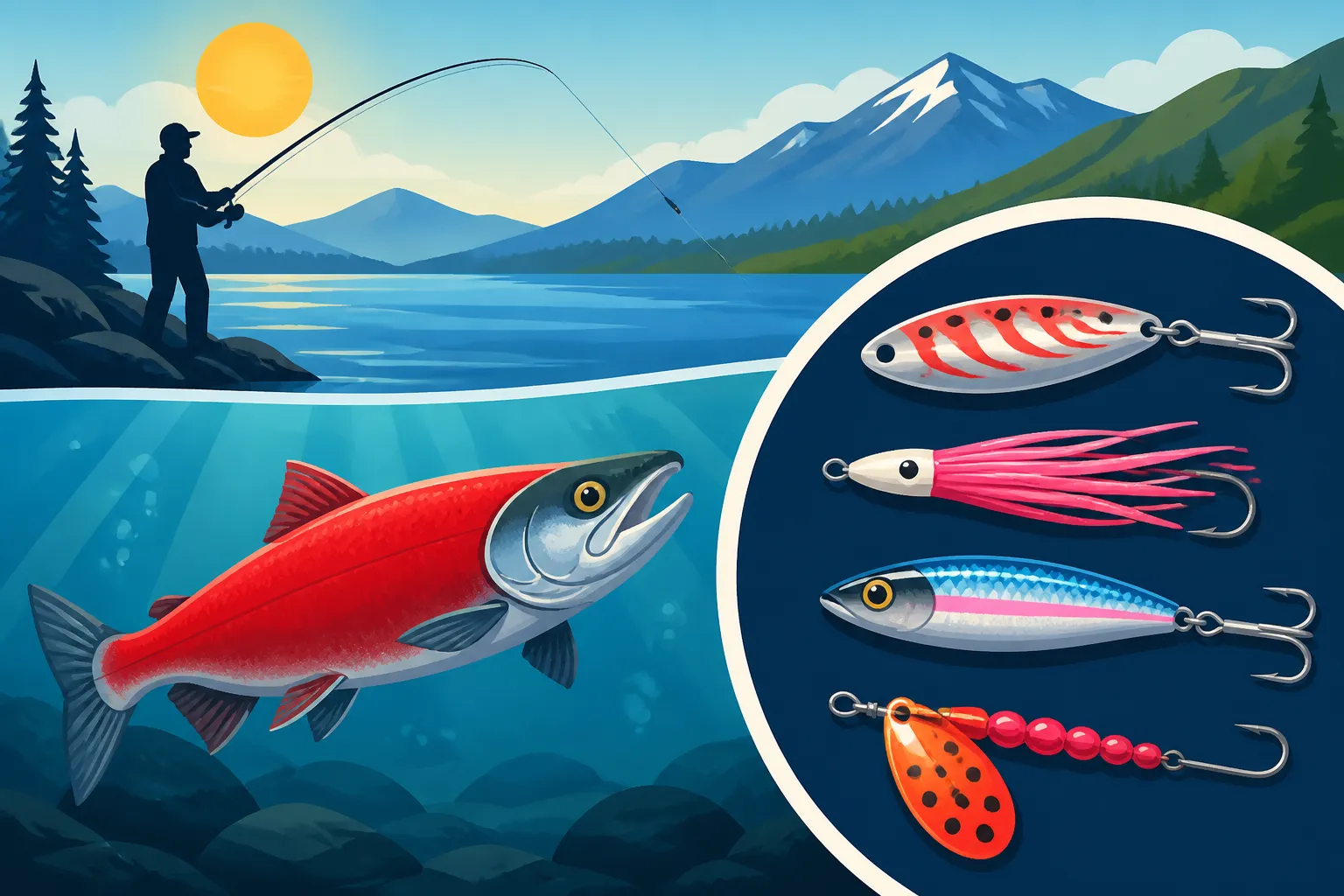
Lures for Kokanee salmon are all about flash, vibration, and subtle movement. They are rarely effective on their own; instead, they act as an attractor to draw the fish in, leading them to your scented bait.
The Indispensable Dodger and Flasher
You simply cannot talk about Kokanee fishing without mentioning dodgers and flashers. These are not lures in the traditional sense, but rather attractors that create a disturbance in the water, mimicking schools of baitfish and generating a powerful sonic vibration that Kokanee detect with their lateral line.
Dodger Dynamics
- How They Work: Dodgers have a broad, cupped or curved shape that makes them swing back and forth erratically when trolled. This creates a strong pulsing action and plenty of flash, drawing attention from afar. The wobble also imparts action to the trailing lure or bait.
- Sizes and Colors: For Kokanee, smaller dodgers (typically 4-6 inches) are preferred. When it comes to color, experiment! Popular choices include chrome, hammered chrome, silver, gold, pink, green, and chartreuse. Often, a combination of metallic and vibrant colors works best. Pay attention to light conditions: brighter, flashier colors for overcast days or deeper water, and more subdued, natural finishes for clear, sunny conditions.
- Popular Brands: Shasta Tackle's "Sling Blade" dodgers are legendary in the Kokanee world, as are Sep's Pro Fishing dodgers. You'll find a wide array of options on Amazon, allowing you to stock up on different sizes and colors without breaking the bank.
Flasher Functionality
- How They Work: Flashers rotate or spin in a more consistent, helical pattern than dodgers. They are designed to create constant flash and vibration, but usually with less erratic side-to-side movement. They impart less action to the trailing lure than a dodger, so your trailing lure needs to have its own inherent action.
- Sizes and Colors: Like dodgers, smaller flashers (4-6 inches) are standard for Kokanee. Color principles are similar: bright and flashy for low light, more subtle for clear conditions.
- When to Choose Which: Many anglers prefer dodgers for their more aggressive action and ability to impart motion to a "dead" lure like a hoochie. Flashers are often chosen when you want your trailing lure to retain more of its natural action, such as a small spoon.
The Alluring Power of Hoochies and Squids
These small, soft plastic skirts are often mistaken for tiny squid or baitfish and are incredibly effective when paired with a dodger or flasher.
Hoochie Anatomy
- Design: Hoochies are typically very small (1.5-3 inches) and come in a vast array of colors and patterns. They have a soft, pliable body and flowing tentacles that flutter enticingly in the water, especially when given action by a dodger.
- Tipping with Bait: Almost always, hoochies are tipped with one or two kernels of scented corn. This combination of visual appeal (color, movement) and irresistible scent is a deadly Kokanee magnet.
- Color Selection: Pinks, oranges, chartreuse, greens, and UV-enhanced colors are top performers. Again, consider the water clarity and depth. Clearer water might call for more natural hues, while murky water or deeper presentations demand brighter, more contrasting colors.
Small Spoons for Kokanee
While dodgers and hoochies dominate, small trolling spoons can also be incredibly effective, especially when Kokanee are being particularly finicky or when you want a different presentation.
Spoon Specifics
- Action: Spoons have an inherent wobbling or darting action that mimics a wounded baitfish. They reflect light effectively and can be trolled at various speeds to change their action.
- Sizes and Colors: Small spoons (1-2 inches) are ideal. Think brands like Dick Nite Spoons, Vance's Tackle, or the various Kokanee Kandy spoons. Colors like silver, gold, brass, copper, and combinations with pink, orange, or green are strong choices. Many also come with UV or glow finishes.
- Tipping with Bait: Just like hoochies, spoons are often tipped with a single kernel of scented corn to maximize their appeal. The added scent can be the deciding factor between a follow and a strike.
Optimizing Your Setup and Presentation
Having the right baits and lures is only half the battle. How you present them to the Kokanee schools makes all the difference.
Trolling: The Primary Method
Trolling is by far the most effective way to target Kokanee salmon. It allows you to cover water, locate schools, and present your baits and lures at their preferred depth and speed.
Depth Control is Critical
Kokanee are highly sensitive to depth. If you're not at their level, you won't catch them.
- Downriggers: These are the ultimate depth control tool, allowing you to precisely position your lure at a specific depth, usually indicated by your fish finder.
- Lead Core Line/Braided Line with Weights: For those without downriggers, lead core line (which sinks at a predictable rate) or heavier weights on braided or monofilament line can get your gear down. Inline weights like banana weights or cannonball weights can be effective.
- Diving Planers/Disc Divers: Devices like Dipsy Divers or Pink Lady divers will take your line down to a predetermined depth, and their setting can also control how far out to the side your line travels, allowing you to spread out your presentation.
Trolling Speed and Action
Kokanee often prefer a slow, consistent troll. Speeds between 0.8 and 1.5 mph are usually ideal, but you'll need to experiment. The correct speed will give your dodger or spoon the right action without overpowering your bait. Watch your rod tip – you should see a subtle, consistent wobble. If it's erratic or too fast, adjust your speed. This careful control is often the secret weapon of successful Kokanee anglers, especially when dealing with spooky fish in clear waters.
Leader Length and Line Selection
The leader connecting your dodger/flasher to your lure/bait is incredibly important.
- Leader Material: Fluorocarbon leaders are preferred due to their invisibility in water, which is crucial for these skittish fish. Use 8-10 lb test for dodger setups and 6-8 lb test for flasher setups, typically.
- Leader Length: This is another area for experimentation. A general starting point is 8-12 inches between the dodger and your lure/bait for dodgers. For flashers, you might go a bit longer, 18-36 inches, as flashers impart less action, allowing the trailing lure to have more freedom. Too short, and the lure might be overpowered; too long, and it won't get enough action from the attractor. This is where subtle adjustments can make a huge difference, particularly in lakes with pressured fish.
Scent Application and Reapplication
Given their strong sense of smell, scent is not optional; it's mandatory.
- Constant Refresh: Reapply scent to your corn and lures frequently, ideally every 15-20 minutes or after every fish. Scent washes off, and a strong, fresh scent trail is what draws Kokanee in.
- Variety of Scents: While garlic and anise are classics, don't be afraid to try other scents like krill, shrimp, or even a mix. Sometimes, a different smell is all it takes to trigger a bite. Pro-Cure offers a wide range of scents, including their popular "Kokanee Killer" blend, which is a fantastic multi-species attractant that can be applied to both corn and various lures.
| Attractor Type | Trailing Lure/Bait | Trolling Speed (MPH) | Depth Control | Key Benefit |
|---|---|---|---|---|
| Dodger | Hoochie w/ Corn | 0.8 – 1.5 | Downrigger, Lead Core | Aggressive flash & wobble, imparts action |
| Dodger | Small Spoon w/ Corn | 0.8 – 1.5 | Downrigger, Lead Core | Strong visual & vibrational draw |
| Flasher | Hoochie w/ Corn | 1.0 – 2.0 | Downrigger, Lead Core | Consistent flash & vibration |
| Flasher | Small Spoon w/ Corn | 1.0 – 2.0 | Downrigger, Lead Core | Lure retains more natural action |
| None (Jigging) | Small Jig w/ Scent | Vertical Drops | Jigging Rod | Targets suspended schools directly |
Considering Water Conditions and Colors
The environment significantly impacts Kokanee's visibility and willingness to bite.
- Clear Water, Bright Sun: Often calls for more natural or subdued colors like silver, gold, or even subtle greens and blues. A lighter fluorocarbon leader is also crucial.
- Overcast, Low Light, or Deep Water: This is when bright, flashy, and UV-enhanced colors really shine. Pinks, oranges, chartreuse, and glow-in-the-dark options stand out and grab attention.
- Water Temperature: Generally, Kokanee prefer cooler water. In warmer months, they'll be deeper. In spring and fall, they might be found higher in the water column. Always check recent fishing reports or your fish finder for the current preferred depth. For more insights into how temperature affects fishing, you might want to read our guide on the Best Times to Fish in California.
Essential Gear and Further Considerations
Beyond just baits and lures, having the right gear can significantly improve your Kokanee success rate.
Rods, Reels, and Line
- Rods: A light to medium-light action rod, typically 6-8 feet long, with a sensitive tip is ideal. This allows you to detect the often subtle bites of a Kokanee and offers good play for their spirited fights.
- Reels: A small spinning reel or a baitcasting reel (especially line counter reels for trolling) spooled with 8-10 lb monofilament or braided line with a fluorocarbon leader. A line counter reel is invaluable for precise depth control when you're trying to stay in the strike zone.
- Line: Monofilament has some stretch, which can be forgiving. Braided line offers extreme sensitivity and no stretch, making it easier to detect light bites, especially when fishing deep. For deeper fishing in lakes like New Melones Lake, braided line is a popular choice among many anglers.
The Value of Electronics
A good fish finder is arguably as important as your bait and lures. It helps you:
- Locate Schools: Pinpoint where the Kokanee are holding.
- Determine Depth: Know exactly how deep to set your gear.
- Monitor Bait: See if your lure is presenting correctly within the strike zone.
Brands like Garmin, Lowrance, and Humminbird offer excellent portable and mounted options suitable for various boat sizes. Knowing how to interpret what your electronics tell you about the California Fishing Seasons: Month-by-Month Guide can also drastically improve your chances.
Where to Find Kokanee in California
California boasts several fantastic Kokanee fisheries. Some of the most renowned include:
- Lake Pardee: Known for producing some trophy-sized Kokanee.
- Lake Berryessa: A consistent producer, especially in the spring and early summer.
- Lake Tahoe: Offers a challenge with its deep, clear waters but rewards with beautiful fish. For more on this iconic spot, check out our Lake Tahoe Fishing Guide.
- Lake Shasta: Another prime destination for both Kokanee and other trout species. Our Lake Shasta Fishing Guide dives deeper into its offerings.
- Don Pedro Reservoir: A popular spot with a healthy population.
Always check the local fishing reports and the specific California Freshwater Fishing Regulations for the body of water you plan to visit, as rules can vary and seasons can change. A California Fishing License Guide will always be helpful too.
Mastering the Kokanee Bite
One of the most frustrating aspects of Kokanee fishing is their often-subtle bite. Unlike a hard-hitting bass, a Kokanee strike can feel like a slight tap, a sudden decrease in line tension, or just a slight wiggle of the rod tip.
Watch Your Rod Tip
When trolling, keep a close eye on your rod tip. Any deviation from its normal rhythm could be a bite. Don't wait for a huge yank; these fish often just "mouth" the bait. Many anglers use a soft rod holder and just watch the tip.
The Gentle Hookset
When you detect a bite, resist the urge for a massive power hookset. A firm, steady sweep of the rod is usually all it takes to set the small, sharp hook into the Kokanee's delicate mouth. They have soft mouths, so aggressive hooksets can tear the hook out.
Fighting the Fish
Kokanee are known for their spirited, acrobatic fights. They'll often make powerful runs and impressive jumps. Keep your rod tip up, maintain steady pressure, and let your reel's drag do its job. Don't horse them in. Their soft mouths and vigorous fighting style mean you need to be patient.
Final Thoughts on Your Kokanee Adventure
Catching Kokanee salmon is incredibly rewarding because it demands attention to detail, persistence, and a keen understanding of these unique fish. It’s not about brute force; it’s about finesse, scent, and presentation. Remember, these fish are trying to replicate their oceanic relatives' fight in a landlocked environment, and they sure put up a good show.
Don't get discouraged if you don't limit out on your first trip. Every time you go out, you learn something new about what works best in specific conditions. Experiment with different dodger colors, try various scent combinations on your corn, and play with your trolling speed until you find the magic formula for that day. A lot of great gear for all these techniques, from specialized corn to dodgers and downriggers, can be found readily on Amazon, making it easy to experiment with your setup. For more detailed advice on targeting these silver beauties, be sure to check out our comprehensive guide on How to Catch Kokanee Salmon in California.
Happy fishing, and I hope your next Kokanee adventure is a successful one!
Disclaimer
The information provided in this guide is for general informational purposes only. Fishing regulations, seasons, and limits in California are subject to change. Always consult the latest California Department of Fish and Wildlife (CDFW) regulations before heading out on your fishing trip. Ensure you have the proper licenses and endorsements. Fishing involves inherent risks; please exercise caution and prioritize safety.