Best Time to Fish Folsom Lake
Few things are more frustrating than packing up your tackle, towing your boat down to Folsom Lake, and spending eight hours under a relentless Central Valley sun without a single bite. Because Folsom is a foothill reservoir subject to drastic water level swings, heavy summer recreation, and extreme seasonal weather, timing your visit is everything. This guide breaks down the absolute best times to fish Folsom Lake across every season, time of day, and target species so you can stop guessing and start catching.
Seasonal Breakdown for Fishing Folsom Lake
Understanding how Folsom Lake changes across the four seasons is the single most critical factor in planning a successful trip. Located where the North and South Forks of the American River meet, this reservoir undergoes dramatic transformations throughout the year. Between shifting water depths, changing clarity, and fluctuating water temperatures, local fish alter their feeding habits completely from one month to the next.
Spring Awakening (March to May)
Spring is universally recognized as the prime season for fishing at Folsom Lake. As snowmelt begins to trickle down from the Sierra Nevada mountains, water temperatures gradually rise from the low 50s into the mid-60s. This thermal trigger prompts largemouth, smallmouth, and spotted bass to migrate from their deep winter haunts into shallow coves, gravel banks, and submerged rocky points.
During late March and April, the pre-spawn and spawn cycles take center stage. Anglers working shallow pockets near Granite Bay or along the North Fork arm will find aggressive bass guarding beds or feeding heavily before spawning. Sight fishing becomes viable in clear water coves, while moving baits like spinnerbaits and chatterbaits dominate around submerged vegetation and flooded brush. Rainbow trout also remain near the surface in early spring, offering fantastic opportunities for trollers working shallow water near the dam. If you want to dive deeper into regional lake dynamics, comparing spring bite patterns with a resource like the Best Time to Fish Lake Berryessa can give you a well-rounded strategy for Northern California reservoirs.
Summer Strategy (June to August)
When summer hits the Sacramento Valley, temperatures routinely soar past 100 degrees Fahrenheit. The surface water at Folsom Lake warms quickly, forcing sport fish like bass, trout, and kokanee to push deeper into the water column or seek refuge around thermal structure and oxygen-rich river inlets. Additionally, summer brings intense recreational boat traffic, jet skis, and wakeboarders, which can turn the main lake body into a chaotic washing machine by mid-morning.
To succeed in the summer, your timing must adjust to the extremes. The early morning dawn patrol—from first light until about 9:00 AM—offers a brief but explosive topwater bass bite along rocky walls and main lake points. Once the sun clears the tree line and the temperature rises, fish drop into 25 to 45 feet of water. Target deep drop-offs near Browns Ravine or deep river channels using drop-shots, heavy jigs, and deep-diving crankbaits. For trout and salmon anglers, summer trolling requires downriggers to reach the cool thermocline at 50 to 70 feet. If you find the summer pleasure-craft traffic overwhelming, booking a guided morning trip through FishingBooker can help you navigate less crowded, hidden river slots where fish retreat to stay active.
Fall Transitions (September to November)
Fall is a criminally underrated time to fish Folsom Lake. As daylight shrinks and evening temperatures cool, pleasure boaters leave the lake, restoring peace to the water. The surface temperature begins to drop, signaling to resident predator fish that winter is approaching. Threadfin shad begin grouping into massive bait balls, moving out of deep water into the main creek arms and river channels.
During October and November, bass follow the shad into the back of coves and creek channels. Schooling activity is common, with spotted bass busting bait at the surface throughout the day. Throwing topwater walking baits, chrome lipless crankbaits, and underspins around bait schools yields high numbers of fish. Trout fishing picks back up as surface waters cool down, allowing trollers to target trout closer to the surface without heavy lead-core lines. Referencing the broader Folsom Lake Fishing Guide will give you additional insights on specific access points like Rattlesnake Bar that shine during the autumn months.
Winter Persistence (December to February)
Winter at Folsom Lake tests an angler’s patience, but it also produces some of the largest spotted and largemouth bass of the year. Water temperatures hover in the high 40s to low 50s, slowing down the metabolism of the fish. Furthermore, winter runoff often turns the water murky, especially near the river inflows after heavy atmospheric river storms.
Success in winter relies on slowing your presentation to a crawl. Target main lake bluff walls, deep rocky points, and submerged roadbeds in 30 to 60 feet of water. Finesse techniques such as Ned rigs, tube jigs, and football head jigs tipped with plastic craws are essential. Look for calm, sunny winter afternoons following a few days of stable weather, as the sun warms the north shoreline rocks slightly, drawing baitfish and hungry bass into slightly shallower water.
| Season | Primary Targets | Best Time of Day | Top Recommended Tactics |
|---|---|---|---|
| Spring | Bass, Trout | Morning & Midday | Plastics, Spinnerbaits, Sight Fishing |
| Summer | Deep Bass, Trout | First Light & Night | Drop-Shots, Downrigger Trolling |
| Fall | Bass, Crappie | All Day | Lipless Crankbaits, Underspins, Jigs |
| Winter | Large Spotted Bass | Late Afternoon | Ned Rigs, Football Jigs, Slow Roll |
Prime Time of Day and Conditions for Folsom Lake
Choosing the right time of year is only half the battle; knowing which hours of the day to be on the water dramatically improves your catch rate. Folsom Lake fish respond strongly to ambient light, wind speed, barometric pressure, and water flow releases managed by local dam operators.
Light, Wind, and Water Temperature Factors
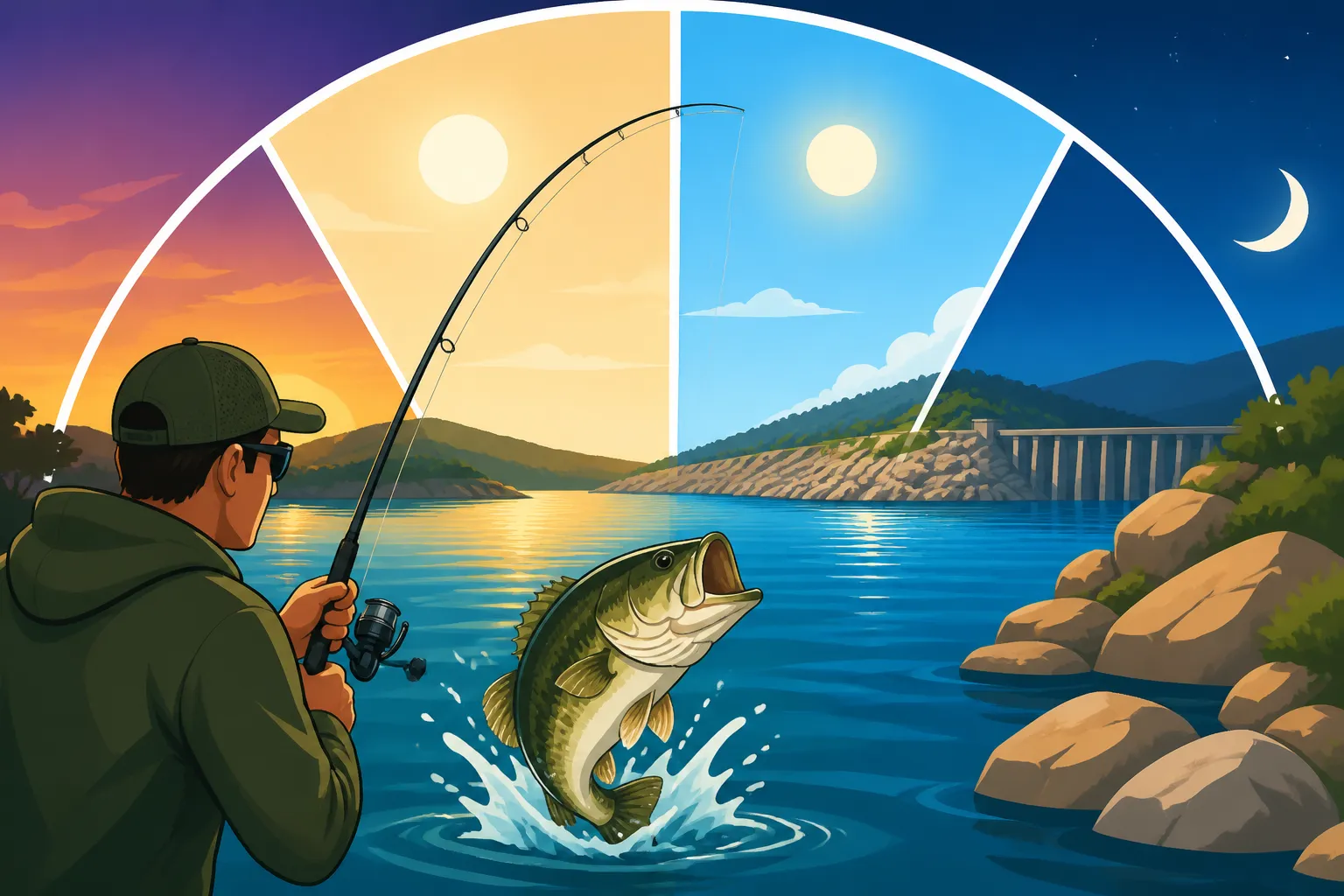
Low-light periods are universally productive on Folsom Lake. The golden hour—roughly 30 minutes before sunrise until two hours after—provides the absolute best topwater bass action of the day. Fish feel secure under the cover of low light and venture into shallow water to hunt schools of threadfin shad. The same low-light advantage applies during dusk.
Wind is another crucial element that many anglers overlook. A light to moderate breeze blowing across main lake points creates surface chop, breaking up sunlight penetration and disorienting baitfish. Fishing the windward side of points with reaction baits like crankbaits or swimbaits often turns on an aggressive bite, even during midday heat. However, strong seasonal winds coming off the Sierra Nevada can make boat control difficult, so always check local wind forecasts before launching at major ramps like Granite Bay or Browns Ravine.
Water Level Fluctuations and Reservoir Management
Folsom Lake is a flood-control and water-storage reservoir, meaning its water levels fluctuate significantly throughout the year. During drought years or early winter flood prep, the lake level can drop dozens of feet, drastically reducing surface acreage and concentrating fish into smaller areas. Conversely, rapid spring refills flood terrestrial vegetation, creating pristine temporary habitat along the shoreline.
When water levels are dropping quickly, fish tend to back off the shore and suspend over deep water or hang tightly to major vertical drop-offs. When water levels are rising, fish move aggressively into freshly flooded brush and willow trees to feed on terrestrial insects and forage. Keeping track of the lake’s capacity and inflow/outflow rates allows you to predict whether fish will be shallow or deep. Make sure you are familiar with California Freshwater Fishing Regulations regarding line limits and gear restrictions when targeting these changing water conditions.
Targeting Key Species by Season at Folsom Lake
Folsom Lake supports a diverse, thriving fishery, but each species has its own ideal calendar window. Knowing when each fish species hits its seasonal peak ensures you bring the right tackle box to the lake.
Bass Fishing Seasonality: Largemouth, Smallmouth, and Spotted
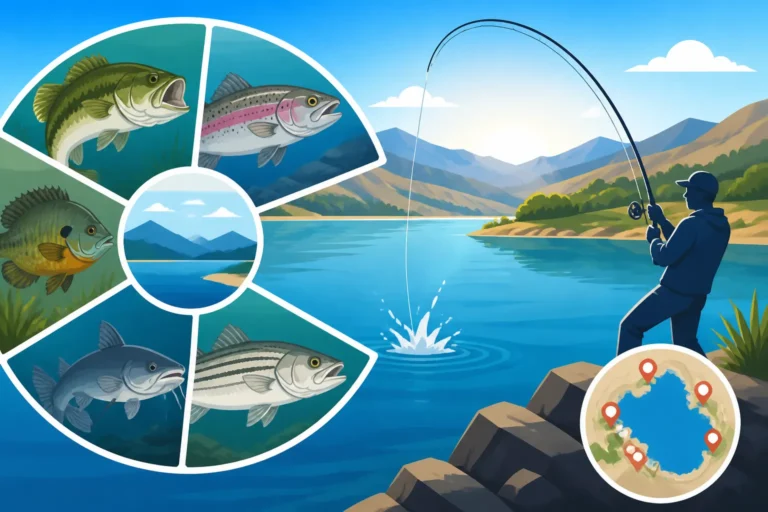
Spotted bass make up the vast majority of the bass population in Folsom Lake, offering consistent year-round action. Largemouth bass are less common but reach impressive trophy sizes, while smallmouth bass populate the rocky areas along the river arms.
- Spring: March through May is peak bass season. Focus on shallow flats, secondary points, and spawning coves. Reviewing How to Fish for Largemouth Bass in California will help you refine your presentation for spring bedding fish.
- Summer: Transition to deep offshore humps, rock piles, and marina docks. Night fishing during full moon phases in July and August can produce trophy catches while avoiding the heat.
- Fall: Target shallow creek arms where shad congregate. Fast-moving reaction lures yield heavy bags of spotted bass.
- Winter: Slow down with finesse presentations along deep rock ledges and steep bluffs.
To stay compliant while targeting bass, always keep up to date with California Bass Fishing Regulations concerning bag limits and minimum lengths.
Rainbow Trout and Kokanee Timing
While Folsom isn’t as famous for trout as high-altitude alpine lakes, the California Department of Fish and Wildlife regularly stocks rainbow trout near accessible boat ramps during the cooler months. Reviewing the California Trout Stocking Schedule gives you a head start on where and when recent plants occurred.
The best time to target trout at Folsom is from late autumn through spring. During these cool months, trout swim in the top 15 feet of the water column, making them accessible to shore anglers throwing PowerBait, nightcrawlers, or small inline spinners near the dam and boat ramps. Trollers using needlefish, speed trolling lures, or flasher-and-worm combinations do remarkably well during overcast spring days. By mid-summer, trout retreat to the cool, deep water near the dam, requiring heavy weight or downriggers to reach.
Panfish and Catfish Options
Bluegill, crappie, and channel catfish round out the recreational fishing options at Folsom Lake. Black crappie fishing peaks during April and May when crappie move into shallow submerged wood, fallen trees, and marina structures to spawn. Small live minnows or micro-jigs suspended under a float around submerged brush yield fantastic action.
Catfishing is best during the warm summer months from June through September. Channel catfish feed actively during hot summer nights along sandy flats, shallow coves, and near the mouth of the river arms. Rigging chicken liver, cut shad, or stink bait on a sliding sinker rig along the bottom is a proven strategy for evening bank anglers.
Planning Your Folsom Lake Fishing Trip
A successful trip to Folsom Lake requires careful planning, especially when deciding how to access the water and what equipment to bring.
Choosing Between Shore Fishing, Kayaks, and Boat Charters
Folsom Lake offers miles of shoreline accessible via state park trails, making bank fishing popular near Granite Bay, Beals Point, and Nimbus Flat (located downstream near Lake Natoma). Shore anglers do best during spring and winter when fish inhabit shallow waters within casting range.
Kayak anglers will find refuge in the no-wake zones and sheltered coves along the North and South Forks. Kayaking allows you to quietly slip into shallow pockets that powerboats cannot reach, particularly during the spring spawn.
If you are unfamiliar with navigating large reservoirs or want to fast-track your success on the water, hiring a professional guide through FishingBooker is a smart investment. Experienced captains track daily fish movements, monitor sonar electronics, and supply all the specialized gear needed to get you onto fish quickly. If you are traveling from out of town, exploring Best Fishing Spots Near Sacramento can help you extend your trip to nearby urban waters and river reaches.
Essential Gear and Seasonal Tackle Adjustments
Because Folsom Lake clear-water conditions can make fish skittish, line choice is critical. Fluorocarbon line in 6 to 10-pound test is standard for finesse bass fishing, while 12 to 17-pound test is appropriate for throwing larger reaction baits around structure.
In terms of rod selection:
1. Spring & Fall: Bring a 7-foot medium-heavy action casting rod for throwing moving baits like crankbaits, spinnerbaits, and topwater lures, alongside a 7-foot medium action spinning rod for finesse plastics.
2. Summer & Winter: Lean heavily on spinning setups equipped with sensitive tips to detect light bites on deep drop-shots, Ned rigs, and shaking worms in deep water.
Always verify that your gear matches the seasonal conditions, and ensure your licenses are up to date before launching. Folsom Lake holds a spot among the Best Bass Lakes in California, and with the right seasonal timing, light line, and patience, it offers incredible angling rewards year-round.
If you need a quick reference on how Folsom compares to other waters in Northern California, checking local reports before hitting the highway will save you hours on the water. If you are looking for hassle-free boat reservations or expert local instruction, platform services like FishingBooker can instantly connect you with verified captains who fish Folsom Lake daily. Pack appropriate sun protection, bring plenty of water, and time your trip according to these seasonal patterns to make the most of your time on Folsom Lake.
Disclaimer
This article is for general informational purposes only and does not constitute professional advice. Laws, prices and regulations vary by location and change over time. Consult a qualified professional for guidance on your specific situation.