California Nearshore Charter Trips
Many anglers dream of chasing big offshore game, but the reality of long runs, high costs, and potential seasickness can be a real buzzkill. Then there's inshore fishing, which is fantastic, but sometimes you crave just a little more adventure and a broader array of species. This guide is all about bridging that gap, diving deep into California nearshore charter trips, clarifying what makes them unique, and helping you plan an incredible, accessible fishing experience without the deep-sea commitment.
What Exactly Is a California Nearshore Charter?
When you hear "fishing charter," your mind might jump to two extremes: either casting for bass in an estuary or heading twenty miles offshore for tuna. But in California, there's a fantastic middle ground that often gets overlooked: the nearshore fishery. This isn't just a technical term; it's a distinct kind of adventure that offers some of the most consistent and exciting fishing opportunities.
Defining the Nearshore Zone
Think of the nearshore zone as the sweet spot just beyond the immediate surf line, stretching out generally from about half a mile to ten or twelve miles from shore. It’s too deep and structured for traditional "inshore" fishing with light gear from the bank, but it’s nowhere near the open ocean abyss that "offshore" implies. This area is characterized by kelp forests, rocky reefs, submerged pinnacles, and other structures that provide crucial habitat for a huge variety of fish species. It’s where the coastline's features extend underwater, creating a vibrant, often overlooked ecosystem.
Compared to true inshore fishing, which focuses on bays, harbors, and estuaries, the nearshore offers more depth, stronger currents, and access to species that prefer cooler, cleaner ocean water. You're typically using slightly heavier tackle than you would in the bay, but nowhere near the heavy-duty gear required for deep-drop offshore fishing. The transition from sandy beach to rocky structure, and then to deeper water, defines this dynamic environment.
Nearshore vs. Inshore vs. Offshore Explained
Understanding the nuances between these three categories is key to choosing the right trip for your ambitions and comfort level. It’s not just about distance from shore; it's about the entire fishing experience, the species you'll encounter, and the type of boat best suited for the job.
Inshore Fishing: This is your closest-to-shore fishing, typically within bays, harbors, estuaries, and very close to beaches. Boats are usually smaller, sometimes even kayaks or skiffs. Target species include bay bass, croaker, halibut, and small sharks. The waters are generally calmer, making it ideal for beginners or those prone to seasickness. Think of a lazy afternoon spent targeting spotted bay bass in Mission Bay or casting for halibut in San Francisco Bay.
Nearshore Fishing: This is where we’re focusing today. You're usually on a slightly larger vessel, often a six-pack charter (meaning up to six passengers) or a smaller party boat, venturing a few miles out. The trip out to the fishing grounds is shorter than offshore, usually 15-45 minutes. The targets are incredibly diverse and include prized species like rockfish, lingcod, calico bass, and sometimes even yellowtail or white seabass cruising the kelp beds. These waters can be choppier than inshore, but generally less so than far offshore. You get the thrill of ocean fishing without committing to a full-day, deep-water expedition.
Offshore Fishing: This is the realm of big game. Boats are larger, designed for long runs (often 20+ miles) into the open ocean, sometimes staying out overnight or for multiple days. Species are pelagic, meaning they live in the open water, and include bluefin tuna, yellowfin tuna, dorado (mahi-mahi), marlin, and swordfish. This type of fishing requires specialized heavy tackle, can be physically demanding, and is definitely not for the faint of heart or those with sensitive stomachs. It's an incredible experience, but it's a completely different beast than nearshore.
Here's a quick comparison to help visualize the differences:
| Feature | Inshore Fishing | Nearshore Fishing | Offshore Fishing |
|---|---|---|---|
| Distance | Bays, harbors, close to shore | 1-12 miles from shore | 20+ miles from shore, open ocean |
| Target Species | Bay bass, croaker, small halibut, perch | Rockfish, lingcod, calico bass, halibut, yellowtail | Tuna, dorado, marlin, swordfish |
| Water Type | Calm, protected bays, estuaries | Ocean swells, varied structure | Deep blue water, unpredictable conditions |
| Trip Duration | Half-day, 3-5 hours | Half-day to full-day, 5-8 hours | Full-day, overnight, multi-day |
| Boat Size | Skiffs, kayaks, small center consoles | Center consoles, small sportfishers, party boats (smaller) | Large sportfishers, long-range boats |
| Seasickness Risk | Low | Moderate | High |
| Cost | Lower | Moderate | Higher |
Why Choose a Nearshore Charter in California?
You might be thinking, "Okay, but why specifically nearshore? What's the big draw?" Well, my friend, for many anglers, myself included, nearshore fishing in California hits that perfect sweet spot. It's adventurous enough to feel like a real ocean expedition, but accessible enough that you don't need a huge budget or nerves of steel to enjoy it.
Accessibility and Comfort for All Skill Levels
One of the biggest hurdles for new anglers, or even seasoned ones who don't want the full commitment of an offshore trip, is the daunting nature of deep-sea fishing. Long boat rides, rough conditions, and specialized techniques can be intimidating. Nearshore trips cut through all that. The shorter runs to the fishing grounds mean less time traveling and more time fishing. This is a huge bonus for families with kids or anyone who's not sure how their stomach will handle the swells.
Imagine you're taking your grandkids out for their first ocean fishing trip. A nearshore charter means they're not bored on a two-hour ride to nowhere. Instead, they're dropping lines and potentially catching fish within minutes of the captain cutting the engines. It's a fantastic introduction to ocean fishing without being overwhelming. Even if you're an experienced angler, a nearshore trip offers a chance to hone your skills on a variety of species without the high stakes or endurance test of a tuna run. It's less about the trophy and more about consistent action and enjoying the process.
Diverse Target Species and Consistent Action
California's nearshore waters are incredibly fertile, teeming with life thanks to the rich kelp forests and rocky reefs. This means a fantastic variety of fish, and often, a much higher chance of consistent bites compared to the more unpredictable nature of offshore pelagics. You're not always chasing a needle in a haystack; you're targeting fish that are actively feeding around structure.
On a good day, you could be pulling up vibrant Rockfish, powerful Lingcod, feisty Calico Bass, or even a nice California Halibut. Each species offers a different fight and unique characteristics, keeping the day interesting. This diversity also means that if one bite slows down, the captain can often pivot to another spot or target species, keeping the rods bent. It truly feels like a treasure hunt, never knowing what might hit your line next. For those specifically looking to target these species, exploring options like California Rockfish Charter Trips can give you an idea of what's available.
Shorter Trip Duration and Lower Costs
Let’s be real, time and money are often the biggest factors when planning a fishing trip. Offshore charters, especially multi-day trips, can be a significant investment, both in terms of cost and the sheer amount of time required. Nearshore charters offer a more digestible option. Most nearshore trips are half-day or full-day excursions, typically ranging from 5 to 8 hours. This allows you to get a great fishing experience without dedicating your entire weekend.
The shorter duration and reduced fuel consumption translate directly to lower costs. This makes nearshore trips an excellent value for the amount of action and experience you get. It means you can potentially go fishing more often, or introduce more friends and family to the joy of ocean fishing. You can easily find options that fit various budgets, making it an ideal choice for both spontaneous outings and planned adventures. When considering your options, checking out the differences between a California Half-Day vs Full-Day Charters can help you decide what fits your schedule best.
What to Expect on a California Nearshore Trip
So, you're convinced a nearshore trip sounds like a blast! But what does the actual day look like? What should you prepare for, and what can you anticipate once you’re on the water? Knowing this ahead of time can make your experience much smoother and more enjoyable.
Typical Boat Types and Gear Provided
For nearshore charters, you'll generally find yourself on a few different types of boats. The most common are "six-pack" charters, which are smaller vessels carrying up to six paying passengers, or smaller "open party" boats that might accommodate 15-30 anglers. Six-packs offer a more personalized experience, with more deck space per angler and direct interaction with the captain and crew. Open party boats are more budget-friendly and great for meeting fellow anglers. Regardless of the type, these boats are equipped for ocean conditions, typically with a cabin, head (restroom), and all the necessary safety gear.
One of the best parts about booking a charter, especially for beginners, is that the boat almost always provides all the necessary fishing gear. This means rods, reels, tackle, and bait are usually included in the price. You won't need to worry about investing in expensive equipment or guessing what lures work best. The crew will have everything prepped and ready to go. They'll show you how to use the gear, tie knots if needed, and give you pointers on technique. However, it's always a good idea to confirm what's included when you book. While a basic fishing license is often required, some charters may offer a temporary license as part of a package for a small fee, but you should always confirm what you need beforehand. Generally, you'll need your own valid California Fishing License Guide to ensure you're compliant.
Common Nearshore Fishing Techniques
The techniques used for nearshore fishing are as diverse as the species themselves, but they largely revolve around getting your bait or lure down to where the fish are hiding along the structure.
- Bottom Fishing (Bait): This is probably the most common and effective method for rockfish and lingcod. You'll typically use a weighted rig, often a dropper loop or a simple leadhead jig with a piece of bait (like a squid strip or anchovy), dropped straight down to the bottom. The goal is to keep your bait hovering just above the rocks where these species ambush their prey. It’s all about feeling those subtle bites and setting the hook at the right time.
- Jigging: This involves using metal jigs, often resembling baitfish, which you drop to the bottom and then retrieve with an erratic up-and-down motion. This technique can be incredibly effective for enticing a strike from an aggressive rockfish or a hungry lingcod. It's a more active way to fish and can be very rewarding. Sometimes, even yellowtail will hit a jig if they're feeding in the area.
- Live Bait Fishing: When targeting species like calico bass or yellowtail in the kelp, live bait (like sardines or anchovies) is king. The crew will usually have a livewell full of fresh bait. You’ll use a lighter line and a smaller hook, letting the bait swim naturally near the kelp paddies. This method requires a bit more finesse and patience but can result in some explosive strikes.
- Light Trolling: Occasionally, if the captain spots schooling fish or migrating species like barracuda or smaller tuna close to shore, they might put out a few trolling lines with lures or bait. This isn’t as common for typical nearshore rockfish trips but can be employed if conditions and target species allow.
The crew will always be on hand to demonstrate these techniques and offer personalized advice throughout the trip, ensuring everyone has the best chance to hook up.
Safety, Regulations, and What to Bring
Safety is paramount on any charter trip. Your captain and crew are highly trained and the boat will be outfitted with all required safety equipment, including life jackets, first-aid, and communication devices. Listen carefully to their safety briefing at the start of the trip. Always follow their instructions, especially when moving around the boat or handling fish.
California has specific fishing regulations, including bag and size limits, as well as seasonal closures, particularly for species like rockfish and lingcod. Your charter captain is an expert on these rules and will ensure everyone onboard is compliant. They'll tell you what's legal to keep and what needs to be released. They also know how to navigate California Marine Protected Areas Explained, which are no-fishing zones established to conserve marine life.
While most gear is provided, there are a few essentials you should always bring:
- California Fishing License: As mentioned, generally required. Get it online or from a local tackle shop before your trip.
- Warm Layers: Even on a sunny day, ocean temperatures can drop, and sea breezes can be chilly. Dress in layers, including a waterproof outer shell.
- Sun Protection: Sunglasses, a wide-brimmed hat, and plenty of sunscreen are a must. The sun's reflection off the water can be intense.
- Food and Drinks: Pack snacks, lunch, and plenty of water or other beverages. Some charters might offer drinks, but it's best to be prepared.
- Cooler with Ice: To transport your cleaned catch home. Leave it in your car until the end of the trip.
- Motion Sickness Medication: If you're prone to seasickness, take medication (like Dramamine or Bonine) before you board the boat. Don't wait until you feel sick!
- Camera: To capture those memorable moments (and fish!).
- Cash for Gratuities: Tipping the deckhands is customary and appreciated. A general guideline is 15-20% of the trip cost for excellent service.
For a more comprehensive checklist, you might want to read up on What to Bring on a California Fishing Charter.
Top California Regions for Nearshore Charters
California's coastline is incredibly diverse, and so are its nearshore fishing opportunities. From the bustling harbors of Southern California to the rugged shores of the Central and Northern coasts, each region offers something a little different for the nearshore angler.
Southern California Hotspots
Southern California is arguably the most popular region for nearshore charters, thanks to its extensive kelp forests, numerous rocky reefs, and generally milder weather.
- San Diego: The sportfishing hub of California, San Diego offers a plethora of charter options departing from Point Loma and Mission Bay. The nearshore waters here are famous for their healthy populations of calico bass, often found in thick kelp beds. Anglers also target rockfish, lingcod, and even yellowtail when they move closer to shore, particularly around iconic spots like the Coronado Islands (though these are in Mexican waters and require specific permits, many nearshore trips stay domestic). Places like Fisherman's Landing and H&M Landing are major departure points. You can easily find diverse trip options there. If you're looking for Best Fishing Spots Near San Diego, nearshore trips are a prime option.
- Orange County / Los Angeles: Areas like Dana Point, Newport Beach, Long Beach, and Marina del Rey are excellent starting points for nearshore trips. These ports provide access to artificial reefs, natural rock formations, and vast kelp forests, perfect for chasing rockfish, calico bass, and sometimes barracuda or halibut. The proximity to major metropolitan areas makes these charters incredibly convenient for a quick getaway. You'll find many reputable charter operations catering to a variety of nearshore fishing desires.
Central Coast Gems
Moving north, the Central Coast offers cooler waters and dramatic underwater terrain, making for fantastic nearshore fishing, especially for bottom-dwellers.
- Morro Bay / Port San Luis: These charming coastal towns are prime for rockfishing and lingcod. The rugged coastline creates incredible submerged structures that hold vast numbers of these species. The trips from these ports often focus on drift fishing or anchoring over reefs to target various rockfish species like vermilion, bocaccio, and reds, alongside some monstrous lingcod. The scenery alone is worth the trip, with iconic Morro Rock often in view.
- Monterey Bay: Famous for its deep canyon, Monterey also has fantastic nearshore fishing closer to shore. Charters from Monterey and Santa Cruz often focus on salmon (when in season), but also offer excellent opportunities for rockfish and lingcod over the extensive reefs. The waters here can be a bit more unpredictable due to the deep submarine canyon influencing currents and weather, but the rewards can be huge. Monterey Bay Fishing Guide details some excellent nearshore opportunities.
Northern California Opportunities
Northern California’s nearshore scene is equally productive, albeit with a different feel due to the more exposed coastline and often more dynamic weather.
- Half Moon Bay / San Francisco Bay Area: While the Bay itself offers fantastic inshore fishing, charters heading out from Half Moon Bay, Princeton-by-the-Sea, or even Emeryville and Berkeley often target nearshore rockfish and lingcod. During salmon season, some nearshore trips will focus on trolling for king salmon just outside the Golden Gate. The Mendocino and Sonoma coasts further north also offer excellent, rugged nearshore grounds for serious bottom fishermen.
- Bodega Bay: Known for its crabbing and salmon fishing, Bodega Bay also provides access to productive nearshore reefs. Rockfish and lingcod are staples here, and the area can also see good runs of halibut and, of course, salmon when conditions are right. The captains here are experts at navigating the often-challenging coastal conditions to find the best spots.
No matter where you choose to fish, a local captain will be your best guide to the specific nearshore hotspots and seasonal patterns unique to that region.
Booking Your California Nearshore Adventure
Alright, you're pumped and ready to book that nearshore trip! But how do you go about it? Choosing the right charter can make all the difference between a good trip and a truly unforgettable one. There are a few things to consider and steps to take to ensure you pick the perfect adventure.
Finding and Comparing Charters
The first step is figuring out where you want to fish and what kind of experience you're after. Do you prefer a small, intimate six-pack boat, or a larger party boat with more people? Are you targeting a specific species, or do you just want some consistent action? Once you have a general idea, you can start your research.
Online platforms like FishingBooker are incredibly helpful for finding and comparing a wide array of California nearshore charter trips. They allow you to filter by location, trip duration (half-day, full-day), price, and even specific target species. You can browse detailed listings, see photos of the boats, and read reviews from other anglers. This transparency is invaluable, giving you a good sense of what to expect from different captains and crews. Beyond online platforms, you can also search directly for local sportfishing landings in your chosen area (e.g., "San Diego sportfishing charters" or "Morro Bay fishing trips") or ask for recommendations from local tackle shops. These shops often have bulletin boards full of business cards from local guides who specialize in the nearshore fishery.
When you're comparing options, pay attention to what's included in the price. Does it cover tackle, bait, and fish cleaning? Are snacks or drinks provided? What about the fishing license? Make sure you understand all the costs upfront to avoid any surprises. Looking at a variety of options can help you find not just the cheapest trip, but the best value for your money. For a broader overview of how to select a guide, check out How to Choose a California Fishing Guide.
Essential Questions to Ask Your Captain
Once you've narrowed down your choices, don't hesitate to call the captain or booking agent directly. This is your chance to get a feel for their personality and ask any specific questions you might have. Here are a few key questions:
- "What species are you primarily targeting right now, and what's the typical success rate?" This helps manage expectations and ensures you're aligning with the captain's current focus. Fishing can be unpredictable, but good captains are usually upfront about recent catch reports.
- "What's the typical group size for this trip, and will it be a private or open party?" This clarifies the boat's capacity and whether you'll be sharing the experience with a large group or a select few.
- "What's the maximum travel time to the fishing grounds?" For nearshore trips, shorter travel times are a major draw. Confirming this can help you decide if it fits your comfort level.
- "What's your policy if the weather turns bad or if we don't catch anything?" Understanding cancellation policies for adverse weather and whether there's any form of guarantee (though rare in fishing) is important. Most reputable charters will offer to reschedule if weather makes the trip unsafe.
- "Is a fishing license included or do I need to purchase one separately?" As discussed, this is critical. While some charters may have a blanket license, often you'll need your own.
- "Do you provide fish cleaning services, and is there an extra charge for that?" Most charters will clean and bag your fish for you, sometimes for a small fee, which is incredibly convenient.
Asking these questions helps ensure there are no misunderstandings and that the trip aligns with your expectations. It's all part of planning a seamless fishing expedition. Don't forget, a lot of what's involved in booking applies to all charters, so checking out How to Book a California Fishing Charter can offer even more insight.
Planning for the Day: Logistics and Preparation
Beyond the gear and questions, a little logistical planning goes a long way. Confirm your meeting time and location a day or two before your trip. Most charters ask you to arrive 15-30 minutes early for check-in and briefing. This also gives you time to find parking and get settled before the boat departs.
Pack a small, soft-sided cooler with your food and drinks, as large hard coolers can take up valuable deck space. Have your valid California fishing license readily accessible (either a physical copy or on your phone if it's the digital version). Dress in layers, as ocean mornings can be foggy and cool, but afternoons can turn sunny and warm. Remember that effective sun protection is key for a full day out on the water.
If you're taking motion sickness medication, take it at least an hour before you board the boat, preferably with a light snack. Don't wait until you're feeling queasy! Most harbors have bait and tackle shops where you can grab any last-minute essentials, but it's always better to be prepared in advance. By taking these small steps, you set yourself up for a relaxed and enjoyable nearshore fishing adventure.
Species You'll Encounter on California Nearshore Charters
The real thrill of a nearshore charter often comes from the sheer variety of fish you can hook into. While offshore fishing targets a few highly prized pelagic species, the nearshore environment, with its complex underwater habitats, supports a rich tapestry of marine life. Let's talk about some of the most common and exciting catches you can expect.
Rockfish: The Colorful Bottom-Dwellers
Ah, rockfish! These are the bread and butter of California's nearshore fishery, and for good reason. There are dozens of species of rockfish in California, ranging in size, color, and habitat preference. What makes them so appealing is their abundance, their willingness to bite, and their excellent table fare.
You'll likely encounter a vibrant array, including:
- Vermilion Rockfish (Red Snapper): Easily identified by their bright red-orange color, these are highly prized for their firm, white meat. They're aggressive biters and can grow to respectable sizes.
- Bocaccio (Salmon Grouper): Often caught in slightly deeper nearshore waters, these fish have a more elongated body and are usually silvery-pink. They are also excellent eating and provide a good fight.
- Copper Rockfish: With a distinctive mottled copper-brown and white pattern, these are commonly found around rocky reefs and kelp. They're tenacious fighters and popular among anglers.
- Cabezon: While technically not a true rockfish, they are often caught in the same habitats and by the same methods. They're larger, more bottom-hugging fish with a huge head and offer a powerful fight.
- Lingcod: These are the apex predators of the rocky reef. With their massive mouths full of needle-sharp teeth, lingcod are unmistakable. They can grow quite large, often over 20 pounds, and put up a formidable fight. Their meat is flaky and delicious. California Lingcod Regulations and Limits are important to know, as they often have specific size and bag limits.
Fishing for rockfish typically involves dropping weighted baits or jigs to the bottom and "bouncing" them gently to attract attention. The key is to stay in contact with the bottom and feel for the subtle taps or tugs. The deckhands will be experts at identifying the different species and helping you navigate the regulations.
California Halibut: The Elusive Flatfish
The California halibut is a highly sought-after species, prized for its delicate, white meat and challenging fight. These flatfish are masters of camouflage, burying themselves in sandy or muddy bottoms, waiting to ambush unsuspecting baitfish.
Nearshore charters often target halibut in areas where sandy patches meet rocky reefs or kelp beds. These transition zones are ideal hunting grounds for halibut. Common methods include drift fishing with live bait (like anchovies or sardines) or trolling with artificial lures that imitate baitfish. The bite can be subtle, feeling like a gentle tug or extra weight on the line, but once hooked, a halibut can make powerful runs. Catching a legal-sized halibut (typically over 22 inches) is a real accomplishment and definitely a bragging-rights fish! Knowing your California Halibut Regulations and Limits is crucial, as they are strictly enforced.
Calico Bass and Yellowtail: The Kelp Forest Fighters
When it comes to exciting, hard-fighting sportfish in the nearshore, calico bass and yellowtail are high on the list, especially in Southern California.
- Calico Bass (Kelp Bass): These highly aggressive and abundant bass are inextricably linked to California's kelp forests. They are incredibly fun to catch on light tackle, offering a spirited fight as they try to dive back into the kelp. Calicos respond well to live bait, plastics, and even surface lures, making them a versatile target. They are often caught and released, particularly the larger breeding fish, but they also make decent table fare.
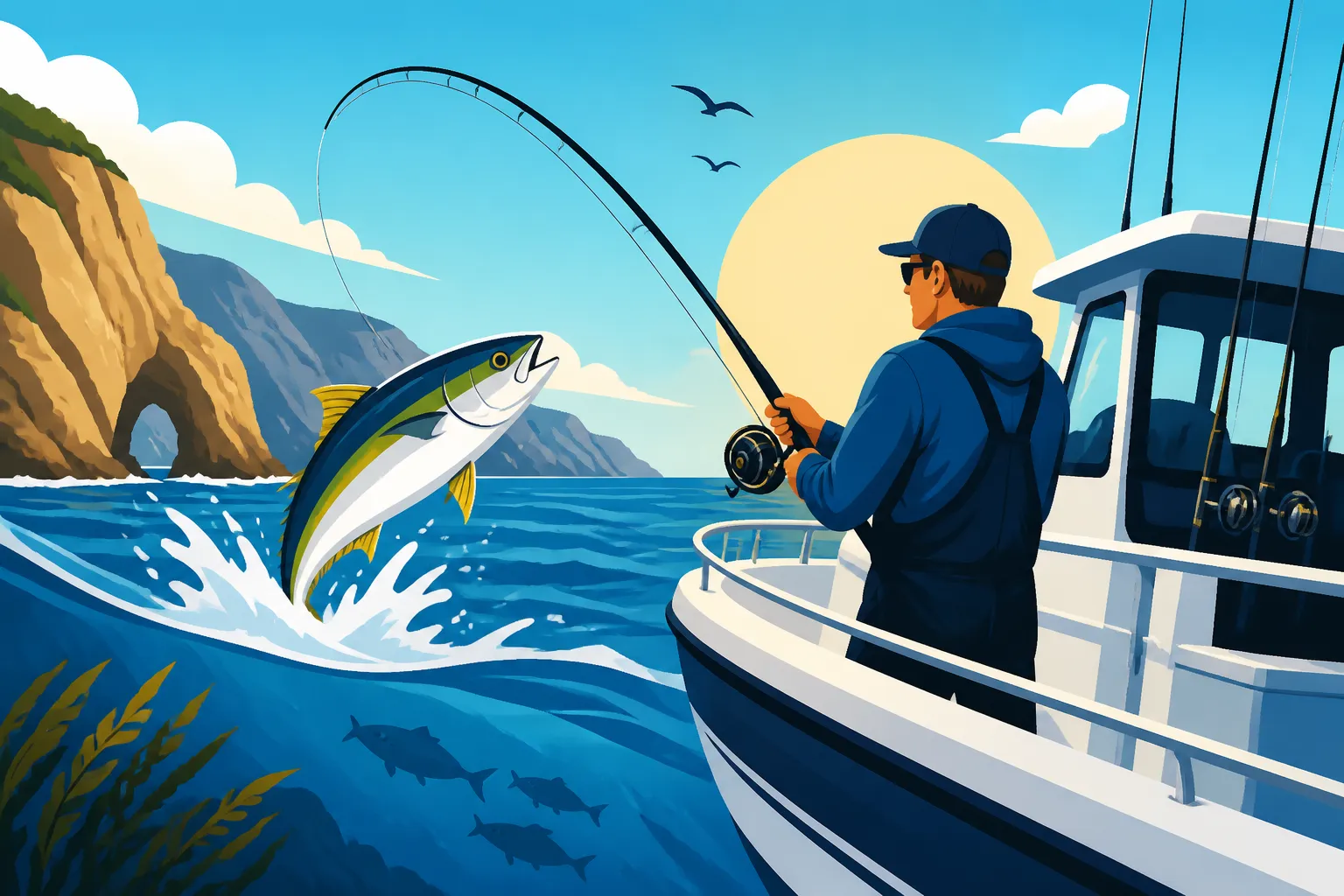
- Yellowtail: While often associated with offshore fishing, yellowtail frequently move into nearshore waters, particularly during warmer months, to feed around kelp paddies and islands. These powerful "fork-tailed" jacks are one of the hardest-fighting fish you'll encounter in California. Hooking into a yellowtail on a nearshore trip, especially on lighter gear, is an absolute adrenaline rush. They hit live bait with incredible force and will test your tackle and your stamina. For more on these powerful fish, checking out a California Yellowtail Fishing Guide can give you an edge.
Targeting these species often involves fishing close to kelp structures, requiring precision casting and quick reflexes to prevent them from "kelping" you (getting your line tangled in the weeds). The excitement of a yellowtail or a big calico hitting your line in the kelp is an experience every angler should have!
Disclaimer
Please be aware that fishing regulations, seasons, and limits in California are subject to change by the California Department of Fish and Wildlife (CDFW). While every effort has been made to provide accurate and up-to-date information in this guide, it is your sole responsibility to consult the latest official CDFW regulations before engaging in any fishing activity. Always prioritize safety and adhere to all local, state, and federal laws.