Albacore Tuna in California: Where and How to Catch
There's nothing quite like the thrill of chasing pelagic fish, especially something as fast and powerful as albacore tuna, but let's be honest, finding these elusive "longfins" in the vast expanse of the Pacific Ocean can feel like searching for a needle in a haystack. Many aspiring anglers dream of battling these delicious fish, yet feel intimidated by the offshore journey and specialized techniques involved. This comprehensive guide is here to break down the mystery, providing you with practical, real-world strategies on exactly where and how to locate and catch albacore tuna in California waters, turning that offshore dream into a reel-screaming reality.
Understanding California Albacore Tuna
Before we even think about dropping a line, it's really helpful to understand a bit about the fish we're after. Albacore tuna, often affectionately called "longfins" by seasoned anglers due to their incredibly long pectoral fins, are truly magnificent creatures. They're built for speed and endurance, capable of long migrations across entire oceans. When you hook one, you'll immediately understand why they're so prized – their runs are relentless, and they fight hard all the way to the boat.
The Elusive "Longfin" and Why We Chase Them
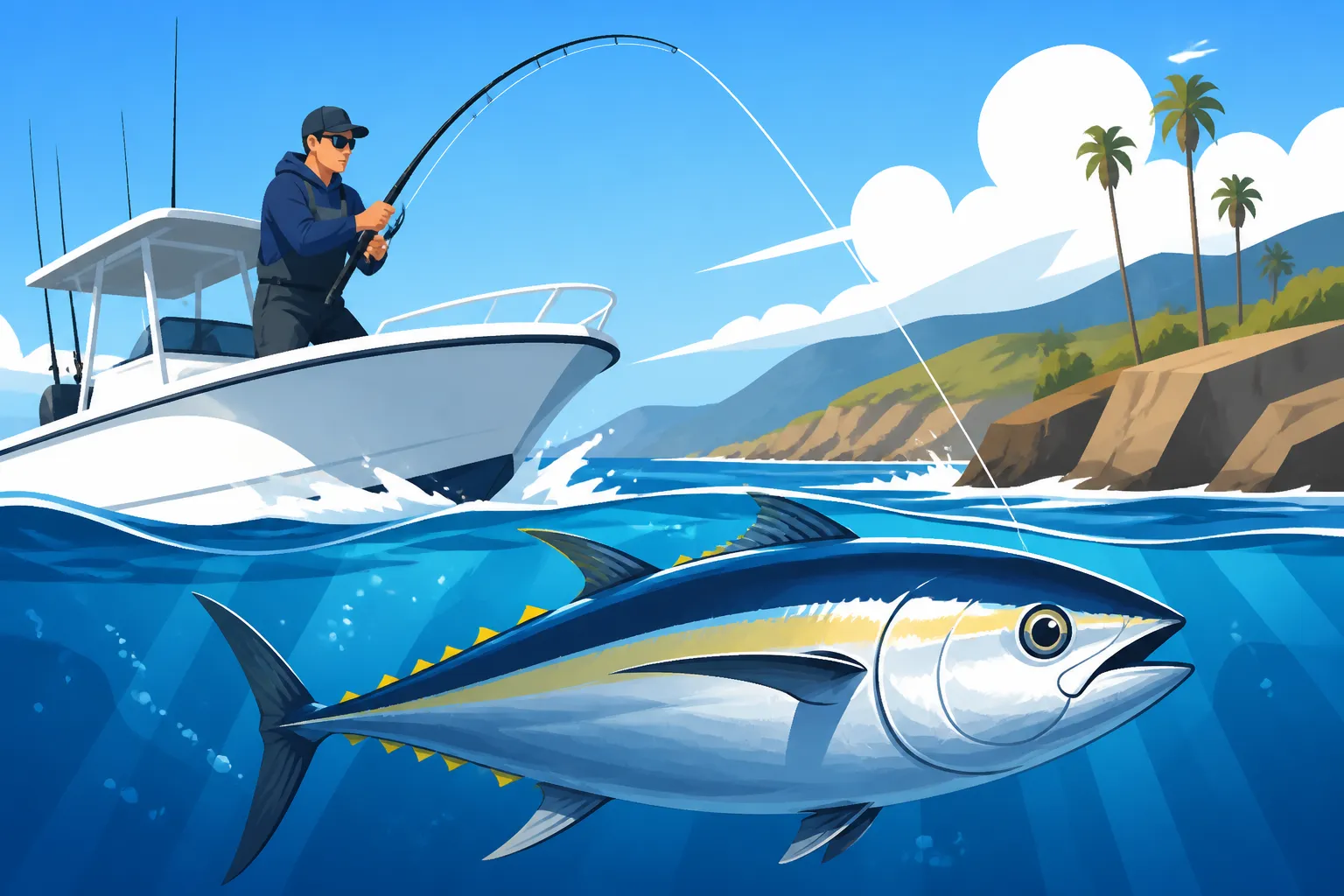
Albacore tuna (Thunnus alalunga) are a species of highly migratory, open-ocean dwelling tuna. Unlike some of their inshore cousins, you won't typically find albacore hanging out near the coast or in shallow bays. These fish are true blue-water adventurers, constantly on the move, driven by instinct to find food and optimal water conditions. Their torpedo-shaped bodies are perfectly adapted for speed, allowing them to chase down fast-moving prey like anchovies, sardines, and squid.
Beyond the incredible fight, albacore are perhaps most famous for their firm, white, and exceptionally delicious meat. It's often compared to chicken of the sea, and for good reason—it's incredibly versatile for grilling, searing, or canning. The pursuit of albacore is more than just fishing; it's an offshore expedition, a testament to an angler's patience, persistence, and ability to read the ocean. There's an immense sense of accomplishment when you finally get one of these beauties into the boat after hours of searching.
Albacore Seasonality in California Waters
One of the biggest questions everyone asks is, "When do the albacore show up?" The answer, like much of offshore fishing, is that it depends, but generally, we're looking at a summer and fall fishery in California. Historically, the peak season for albacore in California runs from July through October, with some years seeing fish arrive as early as June or stick around into November.
Their arrival is heavily dictated by oceanographic conditions, primarily water temperature and the availability of baitfish. Albacore prefer water temperatures typically ranging from the mid-60s to low 70s Fahrenheit (around 16-22°C). They follow these warm water currents up from Baja California, often pushing north along the coast. Factors like El Niño or La Niña weather patterns can significantly impact the season. An El Niño year might bring warmer waters closer to shore and earlier, while a La Niña year could mean cooler waters, pushing the fish farther offshore or delaying their arrival. It's a game of patience and constantly monitoring the latest California Fishing Reports from reputable sources and local landing chatter. Knowing when to expect them is half the battle, and understanding general California Fishing Seasons: Month-by-Month Guide can help frame your expectations.
Where to Find Albacore Tuna in California
So, we know what we're looking for and when to look for it. Now, for the million-dollar question: where in the vast Pacific Ocean do you actually find these things? It's not like they have a mailing address!
The Offshore Hunt for Warm Water and Life
Albacore tuna are pelagic, meaning they live in the open ocean, far from land. This often translates to venturing anywhere from 30 to over 100 miles offshore from the California coastline. Forget fishing the kelp beds or the pier; this is true blue-water angling. The key to finding albacore lies in understanding their habitat preferences: they are temperature-sensitive and follow the food.
Anglers constantly search for "breaks" – areas where distinct differences in water temperature, clarity, or current converge. These convergence zones often concentrate baitfish, which in turn attract predators like albacore. Think about it: if you're a school of anchovies, you're going to get pushed around by currents, and when those currents meet a warmer or cooler water mass, you'll get stacked up. Albacore know this, and they patrol these seams.
You'll be looking for:
- Temperature Breaks: A sudden change in water temperature of even a degree or two can be a hotspot. This is where modern boat electronics, like sea surface temperature (SST) charts, become invaluable.
- Color Changes: Often, the nutrient-rich green inshore water meets the clear, dark blue offshore water. These color changes can act as feeding lanes.
- Current Lines: Visible lines or rips on the surface indicate converging currents, perfect for concentrating bait.
- Floating Debris & Kelp Paddles: While not always tuna, these often provide shelter and food for smaller baitfish and juvenile game fish, which can sometimes attract tuna, dorado, or even yellowtail.
Spotting these signs requires a keen eye, good electronics, and often, a lot of driving around offshore. It’s why many anglers opt for a California Fishing Charter instead of going it alone.
Key Offshore Zones and Departure Points
While albacore can be found anywhere warm water and bait converge offshore, certain regions of California are historically more productive or serve as major departure points for tuna trips.
- Southern California Bight: This area, stretching from Point Conception down to the Mexican border, is the traditional stronghold for California's albacore fishery. Ports like San Diego, Oceanside, Dana Point, Long Beach, and Marina del Rey are prime hubs for private boats and sportfishing charters targeting tuna. Many boats from these landings head southwest towards the offshore banks and ridges, or follow the warm water breaks that push north from Baja. For instance, San Diego is particularly famous for its offshore fleet, with many boats offering everything from half-day trips to multi-day San Diego Overnight Tuna Trips Explained chasing pelagic species.
- Central Coast: In some banner years, especially when warmer currents extend further north, albacore can push up into the waters offshore of Monterey and Half Moon Bay. While not as consistent as Southern California, these northern movements create exciting opportunities for anglers departing from ports like Monterey or Santa Cruz.
- Far Offshore Banks and Seamounts: Beyond the immediate coastal waters, there are numerous offshore banks and seamounts that act as magnets for pelagic life. These submerged structures can create upwellings and current anomalies that draw in bait and, consequently, tuna. Your captain on a charter boat will know these spots well.
Remember, the exact location of the albacore changes daily, sometimes hourly. Staying informed by checking daily fish counts, talking to local tackle shops, and observing the ocean are all crucial parts of the hunt.
How to Catch Albacore Tuna in California
Once you've made the long run offshore and found those promising signs of life, the real fun begins: getting the albacore to bite! There are two primary methods for catching albacore tuna in California: trolling and live baiting/chumming. Often, a successful trip combines both.
Trolling as the Primary Search Method
Trolling is usually the first approach when hunting albacore because it allows you to cover a lot of water and find the schools. You're essentially dragging a spread of lures behind the boat at a relatively fast speed, hoping to entice a strike from a cruising tuna.
- Lures of Choice: Albacore are aggressive feeders, and they often respond well to a variety of artificial lures.
- Feathers: These are classic tuna lures, typically small and flashy, designed to imitate baitfish. Popular colors include green/yellow, blue/white, pink/white, and purple/black.
- Cedar Plugs: Simple wooden plugs that dart erratically through the water, creating a commotion that tuna can't resist. Natural wood finish or painted versions are effective.
- Small Jigs/Swimbaits: Sometimes smaller metal jigs or soft plastic swimbaits trolled on a weighted line can be deadly, especially when tuna are feeding on smaller bait.
- Spreader Bars: These are like a mini school of baitfish, with multiple "teaser" lures leading to a single hook bait. They create a massive disturbance and visual appeal.
- The Trolling Spread: A typical albacore trolling spread involves multiple lines (often 6-10) fished at different distances and depths to cover a wider area. Outriggers are used to spread lines horizontally, while flat lines are fished closer to the transom. Sometimes a downrigger is used to present a lure deeper. Maintain a speed of 6-9 knots; sometimes faster (10-12 knots) can trigger a bite in finicky fish.
- The "Jig Strike": When an albacore hits a trolled lure, it's often referred to as a "jig strike." The rod will double over violently, and the reel will scream as the fish makes its initial blistering run. This is where your medium-heavy to heavy conventional setups with ample line capacity really shine.
Live Bait and Chumming Strategies
Once you get that first jig strike, the game often shifts from trolling to live baiting and chumming. The goal is to keep the school of tuna around the boat by offering them an irresistible feast.
- Bait of Choice: The most effective live baits for albacore are typically sardines, anchovies, or small mackerel. Having a good, healthy bait tank is absolutely critical for keeping your bait lively and attractive. Most reputable charter boats come equipped with excellent bait systems.
- Chumming: When you hook an albacore on a trolled lure, or when you visually locate a school, immediately slow the boat and start throwing live bait into the water. This is called chumming. The goal is to create a feeding frenzy, making the tuna less wary and drawing them closer to the boat. Often, you'll see other albacore pop up right behind the hooked fish.
- Live Bait Techniques:
- Fly-lining: This is perhaps the most exciting way to catch albacore. You simply hook a live baitfish (often through the nose or back) onto a strong, sharp hook (size 2/0 to 4/0, like an Owner Mutu Light or Gamakatsu Octopus hook) with a fluorocarbon leader (25-40 lb test), and cast it out with no weight. Let the bait swim naturally. When a tuna grabs it, let it run for a few seconds before engaging the reel and setting the hook.
- Sinker Fishing: If the fish are deeper, you might need a small egg sinker (1/4 to 1 ounce) above your leader to get the bait down to their level.
Having a range of gear from Amazon or your local tackle shop is a smart move, ensuring you're prepared for whatever the tuna prefer on a given day.
Essential Gear for Albacore Tuna
Outfitting yourself for albacore requires robust gear that can handle powerful fish and saltwater conditions.
- Rods and Reels: You'll want a medium-heavy to heavy conventional rod (often 7-8 feet) paired with a high-quality conventional reel, like a Penn Fathom, Shimano Talica, or Daiwa Saltiga, capable of holding 300+ yards of 30-50 lb monofilament or braided line. The drag system needs to be smooth and powerful. A California Second-Rod Stamp Explained allows you to fish with two rods, which can be useful when one is soaking bait and another is ready for a cast.
- Line and Leaders: Spool up with fresh 30-50 lb test monofilament or braided line. When using braid, a top shot of monofilament or a long fluorocarbon leader (25-50 lb test) is essential for stealth and abrasion resistance. Look for quality fluorocarbon leader material on Amazon for the best performance.
- Terminal Tackle: Strong, sharp hooks (circle hooks are great for bait to prevent gut hooking, J-hooks for lures), heavy-duty barrel swivels (100+ lb test), and perhaps some small egg sinkers are all you need.
- Safety and Comfort: Remember, you're going offshore. Bring sunscreen, sunglasses, a wide-brimmed hat, foul-weather gear (even on a sunny day, it can be wet and windy), and layers of clothing. Dramamine or Bonine is a must for anyone prone to seasickness; understanding How Seasickness Works on California Offshore Trips can help you prepare.
- Coolers and Fish Storage: Once you catch an albacore, you want to get it on ice immediately to preserve its quality. A large cooler packed with plenty of ice or an insulated fish bag is absolutely essential. The quicker you chill them, the better the table fare.
Maximizing Your Albacore Tuna Success
Catching albacore isn't just about having the right gear; it's about being observant, prepared, and persistent. The ocean is a dynamic environment, and success often comes down to reading its subtle cues.
Reading the Ocean and Spotting Signs
The ocean provides clues to where the fish are hiding, if you know what to look for. Think of yourself as a detective, piecing together evidence.
- Bird Activity: This is often the most significant indicator. Terns, shearwaters, and other seabirds dive-bombing into the water are almost always feeding on baitfish, and where there are baitfish, there are often tuna. A "bird pile" is a classic sign of a feeding frenzy below.
- Jumping Baitfish and Crashing Tuna: Sometimes you'll see schools of baitfish erupting on the surface, trying to escape predators from below. Occasionally, you'll even witness the thrilling sight of albacore tuna boiling on the surface or crashing through schools of bait. This is a direct sign to get your baits or jigs in the water ASAP!
- Floating Kelp Paddles: While more common for dorado (mahi-mahi) or yellowtail, floating kelp paddies sometimes hold smaller tuna or attract baitfish, which in turn can bring in albacore. It's always worth a quick stop to cast a bait or jig around a good-looking paddy.
- Marine Mammals: Dolphins and whales are also feeding on baitfish. While they don't directly indicate tuna, their presence shows that there's an active food chain in the area. Look for porpoises breaking the surface or whale spouts in the distance.
These signs are your best friends in the vastness of the Pacific. A good pair of binoculars, like a pair you might find on Amazon, can make a huge difference in spotting distant bird activity or breaking fish.
Preparing for an Offshore Adventure
An offshore albacore trip is an adventure, and like any adventure, proper preparation is key to both safety and success. You're heading far from shore, so self-sufficiency and attention to detail are paramount.
- Weather Watch: Always, always, always check the marine weather forecast before you go. Offshore conditions can change rapidly. Look for low wind speeds and minimal swell. A small craft advisory means staying home.
- Safety First: Ensure your boat has all required safety gear: life jackets for everyone, flares, a VHF radio, an EPIRB (Emergency Position-Indicating Radio Beacon) or PLB (Personal Locator Beacon), and a well-stocked first-aid kit. File a float plan with someone on shore.
- Comfort and Hydration: Bring plenty of water and snacks. Offshore trips are long, and you'll be expending a lot of energy. Pack a lunch, energy bars, and anything else to keep you fueled. Dress in layers, as mornings can be chilly and afternoons can be hot, especially when fighting fish. Good non-slip deck shoes are also a must.
- Know Your Regulations: Before you leave the dock, double-check the current California Fishing Regulations Explained for albacore tuna, including any bag limits or size restrictions. While albacore generally don't have strict size limits, staying informed about all species is crucial. You'll also need a valid California Fishing License Guide if you're over 16, even on a charter boat.
Choosing a reputable California Sportfishing Trips Explained or private boat captain is crucial for your first albacore experience. They have the expertise, the vessel, and the critical safety gear to make your offshore journey productive and safe.
Here’s a quick comparison of the two main strategies:
| Feature | Trolling for Albacore | Live Baiting/Chumming for Albacore |
|---|---|---|
| Purpose | Primarily for searching, covering large areas. | For keeping a discovered school near the boat and generating bites. |
| Typical Speed | 6-12 knots | Slowed down, often drifting or barely moving. |
| Lures/Bait | Artificial lures: feathers, cedar plugs, jigs, spreader bars. | Live bait: sardines, anchovies, mackerel. |
| Gear Required | Rods/reels for high-speed trolling, outriggers, downriggers (optional). | Lighter outfits for casting, bait tank, chum net. |
| When to Use | Initial search, when fish are scattered. | After a jig strike, when fish are seen, or marking a school on sonar. |
| Pros | Covers wide area, often finds the school. | High hook-up ratio, can produce multiple fish once school is found. |
| Cons | Can be slow if fish are deep or not actively feeding on trolled baits. | Requires healthy live bait, fish can be finicky. |
Disclaimer
Please remember that fishing regulations in California can change frequently. Always consult the latest California Department of Fish and Wildlife (CDFW) regulations booklet or their official website before heading out on any fishing trip. This guide is for informational purposes only and does not supersede official regulations.