California Fishing in Marine Protected Areas
One of the most perplexing challenges for any angler in California is navigating the intricate web of fishing regulations, and nothing causes more head-scratching than trying to understand exactly what you can and can't do when it comes to fishing in Marine Protected Areas. It's frustrating when you just want to enjoy a day on the water, but you're constantly worried about accidentally breaking a rule you didn't even know existed. This guide is here to clear up the confusion and give you a comprehensive understanding of California fishing in Marine Protected Areas, so you can fish with confidence and peace of mind.
Understanding California's Marine Protected Areas MPAs
Let's get down to brass tacks about what these areas actually are. You hear the term "MPA" thrown around a lot, and it can sound a bit intimidating, conjuring images of invisible force fields where all fishing is strictly forbidden. The reality is a little more nuanced, but it's crucial to grasp the basics before you even think about dropping a line.
What Exactly is an MPA?
At its core, a Marine Protected Area (MPA) in California is essentially a designated stretch of ocean or coastal waters that has some level of protection from human activities, particularly fishing. Think of them like state or national parks, but underwater. The idea is to conserve marine life and habitats, allowing ecosystems to thrive without constant pressure. The goals are pretty noble: protect biodiversity, allow fish populations to rebound, and preserve critical habitats like kelp forests, rocky reefs, and estuaries.
These aren't one-size-fits-all zones. California's network of MPAs, which was established through the Marine Life Protection Act (MLPA) Initiative, is quite extensive and covers over 850 square miles of state waters. It's a carefully designed system intended to create a resilient network. There are different classifications within this system, each with its own set of rules and permitted activities, which is where the confusion often begins. You might encounter a "no-take" zone where absolutely nothing can be removed, or an area where certain types of fishing are permitted but others are not. It’s a dynamic system, and understanding the nuances is key to staying compliant.
Why Do We Have MPAs in California?
The primary reason for establishing MPAs in California, and really around the world, boils down to conservation and ensuring a healthy future for our oceans and, frankly, for fishing itself. For years, we saw declines in fish stocks, degradation of critical habitats, and a general strain on marine ecosystems due to overfishing, pollution, and coastal development. The MLPA, passed in 1999, was a legislative game-changer designed to address these issues head-on.
By setting aside these protected areas, scientists and conservationists hope to create safe havens where fish can reproduce, grow large, and replenish surrounding waters. It's like an underwater savings account. Over time, these areas are expected to enhance fishing opportunities outside the MPAs by exporting adult fish and larvae into unprotected zones. This concept, often called the "spillover effect," is a huge driver behind their creation. It’s not just about stopping fishing; it’s about creating stronger, more resilient fisheries for generations to come. For instance, protecting a vital spawning ground for lingcod could mean more lingcod for anglers in nearby waters a few years down the line. It's a long-term investment, even if it feels restrictive in the short term.
The Different Types of MPAs and Their Rules
This is where the real nitty-gritty comes in, and it's essential to know the distinctions because a simple mistake can lead to serious trouble. California's MPA network consists of several different designations, each with varying levels of protection and, consequently, different rules for anglers. Knowing which type of MPA you're near can be the difference between a legal catch and a hefty fine.
- State Marine Reserves (SMRs): These are the most restrictive. Think of them as absolute "no-take" zones. Absolutely no living marine resources can be removed or disturbed. This means no fishing, no spearfishing, no collecting, and often, even specific restrictions on boating speed or anchoring. The idea here is to allow the ecosystem to function as naturally as possible, with minimal human interference. For example, the Point Lobos State Marine Reserve near Monterey is a prime example of an SMR where you can enjoy the beauty but not actively fish.
- State Marine Parks (SMPs): These zones are a bit less restrictive than SMRs, but still very protective. While the removal of all marine life is generally prohibited, specific recreational activities might be permitted if authorized by the California Fish and Game Commission, provided they don't harm marine resources. This could include things like limited recreational take of certain species, but it's very site-specific. Always double-check the exact rules for each SMP.
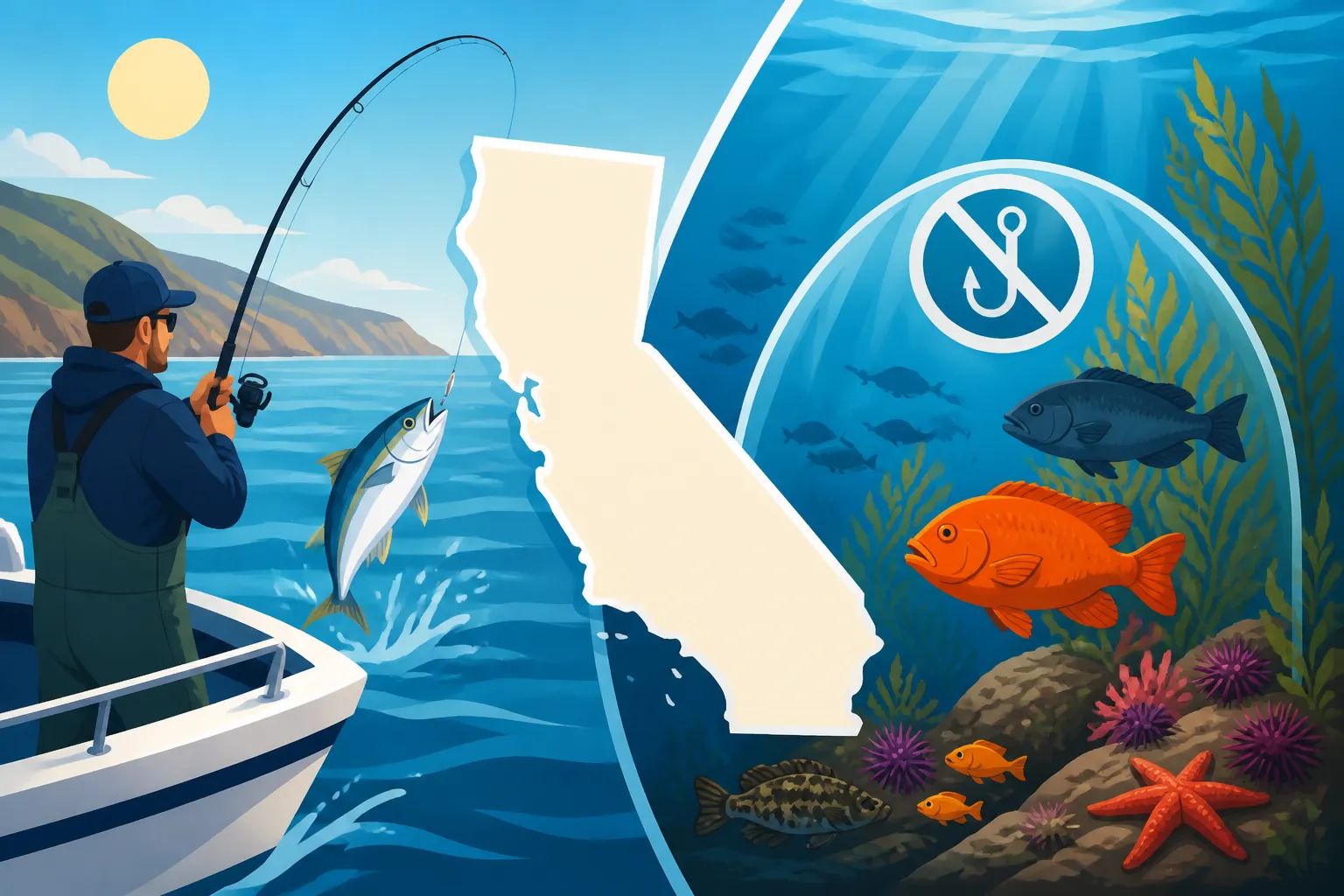
- State Marine Conservation Areas (SMCAs): This is the broadest and most common category, and also the one that causes the most confusion. SMCAs allow for some recreational and/or commercial take of marine resources, but typically with very specific restrictions on species, gear types, or methods. For example, an SMCA might allow recreational fishing for pelagic species like tuna and yellowtail, but prohibit the take of rockfish or groundfish. Or it might allow shore-based fishing but restrict boat-based fishing. The rules here can vary wildly from one SMCA to another, so you absolutely must look up the specific regulations for the SMCA you intend to fish in. The Laguna Beach State Marine Conservation Area, for instance, has very specific rules about what you can and cannot take.
- State Marine Recreational Management Areas (SMRMAs): These are the least restrictive, focusing on allowing recreational opportunities while still offering some level of protection. They might have specific regulations to manage a particular recreational activity, such as limiting the type of gear or the season for certain species. These are less common but still part of the overall network.
Here’s a quick overview table to help differentiate:
| MPA Type | Primary Goal | General Fishing Rules | Example of Allowed Activity (if any) |
|---|---|---|---|
| State Marine Reserve (SMR) | Maximum protection, natural ecosystem | No-Take Zone: No fishing or removal of any marine life. | Boating (passage only), wildlife viewing. |
| State Marine Park (SMP) | Protection of marine life, some recreation | Generally no-take, but specific recreational take may be allowed by CDFW. | Kayaking, diving; limited fishing if explicitly authorized (rare). |
| State Marine Conservation Area (SMCA) | Conservation while allowing some uses | Specific Restrictions: Some recreational/commercial take allowed, but often limited by species, gear, or method. | Recreational fishing for pelagic fish, or shore-based fishing for certain species. |
| State Marine Recreational Management Area (SMRMA) | Manage specific recreational uses for conservation | Specific regulations on methods or seasons to manage a particular activity. | Recreational fishing for specific species with strict gear limitations. |
As you can see, SMCAs are the most varied, and they're usually the ones you'll encounter where you might think you can fish, but then find out you can only catch certain things, or only use certain gear. It’s a lot to keep track of, I know, but it’s critical. For detailed information, you'll want to check the official California Department of Fish and Wildlife (CDFW) website or their physical regulation booklets.
Navigating Fishing Regulations Within MPAs
So, you understand what an MPA is and why they exist. Now, let's talk about the practical side of actually fishing in or around them without getting yourself into a heap of trouble. This isn't just about reading a rule; it's about being prepared and knowing how to interpret your surroundings.
Identifying MPA Boundaries
This is arguably the most crucial step. How do you know if you're even in an MPA, let alone what type it is? The ocean doesn't have neatly painted lines or road signs, which is a major source of frustration for anglers. Thankfully, there are tools and resources available.
- Official CDFW Maps: The California Department of Fish and Wildlife provides detailed maps and GIS data for all MPAs. These are invaluable. You can often find PDF versions online that you can download and print, or even buy waterproof chart versions for your boat. Having a physical map on hand, especially one you can annotate, is a good old-school backup.
- GPS Devices and Chartplotters: For those with boats, a modern GPS unit or chartplotter is essential. Many devices come pre-loaded with MPA boundaries, or you can often download updates. Always ensure your device's charts are up-to-date. Companies like Garmin or Simrad often include these features in their marine electronics. It’s well worth the investment to have these boundaries displayed right on your screen as you navigate.
- Mobile Apps: Technology has made this a lot easier for everyone, including shore anglers or kayakers. There are several excellent mobile applications available for both iOS and Android that display MPA boundaries in real-time using your phone's GPS. Apps like Fish Legal CA (developed by the CDFW) or other popular marine navigation apps are fantastic resources. They can show you exactly where you are relative to a no-take zone. Remember, though, that cell service can be spotty offshore, so a downloaded map or a robust GPS device is always a good idea. You can find excellent waterproof phone cases on Amazon to protect your device while on the water.
- Local Knowledge: Don't underestimate the power of talking to locals. Bait and tackle shops are often treasure troves of information, not just about what's biting, but also about the specifics of local MPA boundaries. Charter boat captains and experienced local anglers can offer invaluable insights into how these boundaries are commonly interpreted and enforced.
Remember, ignorance is not an excuse in the eyes of the law. It's your responsibility as an angler to know where you are and what the rules are.
General "No-Take" Zones vs. Limited Fishing Areas
Let's clarify the two main categories that affect your fishing plans:
- No-Take Zones (SMRs & often SMPs): These are the easiest to understand because they’re simple: no fishing, no spearfishing, no collecting, no disturbing marine life. Period. If you're in an SMR, your fishing gear should be stowed, and you should be focused on enjoying the scenery. Trying to sneak a line in "just for a minute" is a surefire way to get a ticket. Think of the Channel Islands State Marine Reserve – it's a huge area where the goal is maximum protection, and fishing is strictly off-limits.
- Limited Fishing Areas (SMCAs & SMRMAs): These are the tricksters. Here, some fishing is allowed, but it’s crucial to understand the specifics. These areas often have highly nuanced regulations that can vary based on:
- Species: You might be allowed to fish for pelagic species like tuna or dorado that are passing through, but absolutely prohibited from taking groundfish like rockfish or lingcod.
- Gear Type: Some SMCAs might restrict certain gear, like prohibiting the use of gill nets or even specific types of hooks, while allowing rod and reel. For example, some areas might allow only artificial lures.
- Method: Shore-based fishing might be allowed, but boat-based fishing might be restricted, or vice-versa. Spearfishing might be permitted in some SMCAs but not others.
- Season: Even if a species is generally allowed, it might only be permissible during certain times of the year, aligning with seasonal closures that protect spawning fish.
The key takeaway here is that if you're in an SMCA or SMRMA, you cannot assume general statewide regulations apply. You must consult the specific regulations for that particular MPA.
Species-Specific Rules in MPAs
Even in areas where some fishing is permitted, the rules often become species-specific, adding another layer of complexity. This is particularly true in State Marine Conservation Areas (SMCAs), where the goal is to protect certain vulnerable species or habitats while still allowing for sustainable recreational use.
For example, you might be in an SMCA where rockfish are generally protected, meaning you can't target them or even accidentally catch and keep them. However, you might still be allowed to fish for coastal pelagic species like Pacific mackerel or bonito. Or, in another SMCA, perhaps only certain types of "finfish" are allowed, but invertebrates like crabs or lobster are off-limits, or require specific report cards, as outlined in the California Crab Regulations and Limits guide.
These species-specific rules are often put in place to protect populations that are slow-growing, long-lived, or have critical reproductive cycles that make them particularly vulnerable. For instance, you might find stricter rules for various rockfish species within certain MPAs, reflecting broader concerns about their sustainability, which can also tie into California Rockfish Depth Restrictions in non-MPA areas. It’s not uncommon for these specific rules to change year-to-year based on scientific assessments, so staying current is an ongoing effort. Always double-check the latest CDFW regulations booklet or online resources before heading out.
Practical Tips for Fishing Near or Outside MPAs
Given the complexities, planning ahead is non-negotiable. Don't wait until you're out on the water to figure things out. A little preparation can save you a lot of headaches, and potentially, a lot of money in fines.
Essential Tools for Anglers
Having the right tools is paramount, much like knowing the right bait for California halibut. These aren't just gadgets; they're your navigational aids and regulatory guides.
- Reliable GPS with Up-to-Date Charts: As mentioned before, a dedicated marine GPS unit or a chartplotter on your boat is a lifesaver. Ensure its software and charts are regularly updated to reflect the latest MPA boundaries. You can find excellent handheld GPS units for kayak fishing or shore angling on Amazon that are waterproof and pre-loaded with marine charts.
- CDFW Regulations Booklet: Get a physical copy of the current California Sport Fishing Regulations booklet. Keep it in your tackle box or boat. While it's thick and a bit overwhelming, it's the official word. Many bait shops offer them for free. You can learn how to make sense of this document by reading our guide on How to Read the California Fishing Regulations Booklet.
- Mobile Apps with Offline Capabilities: Even with a dedicated GPS, a good smartphone app is a great backup. Apps like Fish Legal CA, Navionics, or C-MAP Embark often allow you to download charts for offline use, which is critical when you lose cell signal offshore. Make sure you know how to use these apps before you're out on the water, fumbling with your phone.
- Physical Maps/Charts: A laminated paper chart with MPA boundaries is an excellent backup for any electronic failures. Sometimes, looking at a large-scale map gives you a better sense of the overall geography than a small screen.
- Binoculars: For identifying landmarks or buoy markers that delineate offshore boundaries.
Checking the Latest Regulations
This cannot be stressed enough: regulations change. Seasons open and close, bag limits shift, and sometimes, MPA rules get refined. Relying on what you think you remember from last year's trip is a recipe for disaster.
- CDFW Website: The official California Department of Fish and Wildlife website is your authoritative source. They provide online versions of the regulations, MPA maps, and real-time updates on closures or emergency changes. Bookmark it!
- Local Bait and Tackle Shops: These places are goldmines of current information. Shop owners and employees often live and breathe local fishing and are usually very knowledgeable about specific MPA rules in their area. They'll also know what's biting, which is always a bonus.
- Fishing Forums and Online Communities: While not official sources, many reputable online fishing forums and communities have members who stay incredibly current on regulations. Use these as supplementary information and always cross-reference with official CDFW sources. They can offer real-world advice, like "watch out for the new boundary near Big Sur, it moved a hundred yards east."
- CDFW Ocean Sport Fishing Regulations Update Line: Many regions have a recorded hotline with the latest updates. Check the CDFW website for the number relevant to your fishing area.
Before every trip, take a few minutes to check the latest rules, especially if you're venturing into a new area or it's been a while since your last outing. This proactive approach applies to all fishing, whether you're targeting rockfish in the central management area or simply trying to understand the full California Fishing License Guide.
Ethical Angling and Conservation
Beyond simply following the rules, there's a broader responsibility we all share as anglers to be ethical and contribute to conservation. MPAs are a tool for conservation, and our actions, even outside their boundaries, impact the marine environment.
- Respect Boundaries: Whether it's a "no-take" SMR or an SMCA with specific restrictions, always respect the boundaries. Don't intentionally fish right on the line, hoping a fish might cross into legal waters. Give the MPAs a little buffer zone.
- Minimize Impact: Even when fishing legally, practice responsible angling. Use appropriate gear to minimize bycatch, handle fish gently for catch-and-release, and never leave trash or discarded fishing line in the environment. Many anglers opt for barbless hooks, which are a California Barbless Hook Requirements in some freshwater areas, and a good ethical choice for catch-and-release in general.
- Report Violations: If you witness someone clearly violating MPA regulations, report it to the CDFW. Protecting these areas is a community effort, and illegal fishing undermines the very purpose of MPAs and impacts everyone. This goes for all violations, not just MPAs, as outlined in How to Report a California Fishing Violation.
- Support Conservation Efforts: Consider joining local conservation groups or supporting organizations that advocate for sustainable fisheries and healthy marine environments. Our passion for fishing goes hand-in-hand with our responsibility to protect the resources we cherish.
By combining diligent preparation with a strong ethical compass, you can ensure your fishing adventures in California are both enjoyable and responsible.
Common Misconceptions and Frustrations
Even with all the information out there, there are still a lot of misunderstandings and genuine frustrations surrounding California's Marine Protected Areas. Let's tackle some of these head-on.
"It's All No Fishing" – Debunking the Myth
One of the biggest misconceptions I hear from fellow anglers is the belief that Marine Protected Areas mean no fishing anywhere in the designated zone. While it's true that State Marine Reserves (SMRs) are indeed no-take zones where absolutely no fishing is allowed, the vast majority of California's MPAs are actually State Marine Conservation Areas (SMCAs) or State Marine Parks (SMPs), where some level of fishing or take is often permitted.
The key is "some level," and this is where the nuance and the need to consult specific regulations come in. For example, many SMCAs allow for the recreational take of pelagic species like tuna, yellowtail, or bonito, as long as you're not targeting bottom-dwelling fish. Others might allow shore-based angling for certain species, but restrict boat fishing. It's not a blanket ban, but rather a targeted approach to conservation. The idea isn't to shut down all fishing, but to protect specific habitats or species that need it most, while allowing compatible recreational activities to continue. So, don't write off an entire region just because you hear it has MPAs; do your homework, and you might find plenty of legal fishing opportunities. For instance, knowing the California Halibut Regulations and Limits might allow you to target them in an SMCA that permits finfish.
The Ever-Changing Rules
This is a totally valid frustration, and frankly, it drives me nuts sometimes too! It feels like the rules are a moving target, constantly changing, making it nearly impossible to keep up. One year, rockfish season is open in an area; the next, it's closed, or depth restrictions change. The same can apply to MPAs – boundaries might be adjusted, or the permitted take within an SMCA might be modified.
There are legitimate reasons for these changes, mostly driven by scientific assessments of fish populations, environmental conditions, and ecosystem health. If a fish stock is struggling, regulations need to adapt quickly to prevent further decline. For example, the California Salmon Closure Explained often demonstrates how seasons can change dramatically based on ocean conditions and population numbers. While frustrating for us, these adjustments are crucial for the long-term health of our fisheries. The challenge lies in staying informed. This is why consistently checking the CDFW website, subscribing to their email updates, and chatting with local bait shop experts before each trip is so important. It's an ongoing commitment, but it's the price of admission for enjoying California's incredible fishing opportunities.
Consequences of Violating MPA Rules
Let's not sugarcoat this: the consequences of violating MPA rules can be severe and can quickly turn an enjoyable day into a nightmare. Enforcement is taken seriously, and for good reason—these areas are critical for marine conservation.
- Fines: The most immediate consequence is usually a hefty fine. Depending on the severity of the violation, the species involved, and whether it's a first offense, fines can range from hundreds to thousands of dollars. Catching a single fish in a State Marine Reserve can easily cost you a significant amount of money.
- Seizure of Gear: Wildlife officers have the authority to seize your fishing gear, and in some cases, your vessel. Imagine losing your favorite rod and reel, or even having your boat impounded, all because you didn't check a boundary.
- Criminal Charges: More serious or repeat violations can lead to criminal charges, including misdemeanors. This can result in probation, community service, or even jail time, depending on the specifics of the offense.
- Loss of Fishing Privileges: A violation can also lead to the suspension or revocation of your fishing license. This means you might be prohibited from fishing in California waters for a set period, or even permanently. This can be particularly painful if you've invested in a California Lifetime Fishing License.
It's clear that the stakes are high. It's far better to err on the side of caution, double-check all regulations, and invest in the tools and knowledge needed to ensure you're fishing legally. Knowing how to fill out report cards properly, as discussed in How to Fill Out a California Report Card, and understanding other specific regulations like those for California Steelhead Report Card and California Sturgeon Report Card is also crucial for staying out of trouble, as these report cards are often linked to conservation efforts within or near MPAs.
In the end, understanding and respecting California's Marine Protected Areas isn't just about avoiding penalties; it's about being a responsible steward of our precious marine resources and ensuring that future generations can also enjoy the thrill of fishing in our beautiful state.
Disclaimer
The information provided in this guide is for general informational purposes only and does not constitute legal advice. Fishing regulations in California, especially concerning Marine Protected Areas, are subject to frequent change. Always consult the official California Department of Fish and Wildlife (CDFW) website and current regulations booklet before engaging in any fishing activities. Compliance with all local, state, and federal laws is the responsibility of the individual angler.