Bullards Bar Reservoir: Fish Species and Best Spots
There’s nothing quite as frustrating as heading out to a new fishing spot, full of anticipation, only to spend hours wondering where the fish are hiding or what they’re even biting on. Bullards Bar Reservoir is one of those places that holds incredible potential, but without knowing the ins and outs, it can feel like a vast, empty expanse. This guide is here to cut through that confusion, helping you understand exactly what fish species call Bullards Bar home and, more importantly, where to find them and how to entice them to bite.
Understanding Bullards Bar Reservoir
Bullards Bar Reservoir, nestled in the scenic Yuba Foothills northeast of Marysville, isn't just another pretty lake; it's a deep, cold-water haven known for producing some truly exceptional fishing experiences. This massive body of water, formed by the Yuba River, is a prime destination for anglers seeking everything from hard-fighting salmon to trophy bass. Its unique characteristics, including its impressive depth and diverse underwater structures, contribute to its reputation as a premier California fishery, but also make it a place that rewards those who come prepared with local knowledge.
A Jewel in the Yuba Foothills
When you first lay eyes on Bullards Bar, you'll be struck by its beauty. The reservoir stretches over 4,700 surface acres at full capacity, with an incredibly convoluted shoreline spanning more than 60 miles. What truly sets it apart, though, is its depth, plunging over 600 feet in places near the main dam. This deep, clear, often chilly water creates an ideal environment for cold-water species, but also offers ample shallower, warmer areas perfect for bass. The surrounding landscape, dotted with pine and oak forests, adds to the serene and somewhat rugged fishing experience, making you feel a world away from the hustle and bustle.
The water quality here is consistently excellent, often boasting incredible clarity, which can be both a blessing and a curse. Clear water means you often need to use lighter lines and more natural presentations, as fish have a better chance of spotting your gear. But it also means you can sometimes spot schools of fish on your electronics, giving you a distinct advantage.
Prime Fishing Conditions
Bullards Bar's fishing conditions are heavily influenced by its depth and the surrounding mountainous terrain. During the warmer months, the lake stratifies, meaning you'll find distinct temperature layers. The upper layers will be comfortable for surface-dwelling bass and those chasing warm-water species, while the deeper thermocline becomes crucial for locating cold-water fish like Kokanee Salmon and Rainbow Trout. This stratification dictates where different species will hold, often pushing Kokanee into specific temperature and oxygen zones that can be identified with a good fish finder.
In the cooler seasons, the water column mixes, and fish can be found throughout a wider range of depths. This seasonal change means that successful anglers are always adapting their techniques and target areas. Understanding these dynamics is key to consistently finding fish, whether you're trolling deep for salmon or casting into submerged timber for bass.
The Aquatic Life of Bullards Bar
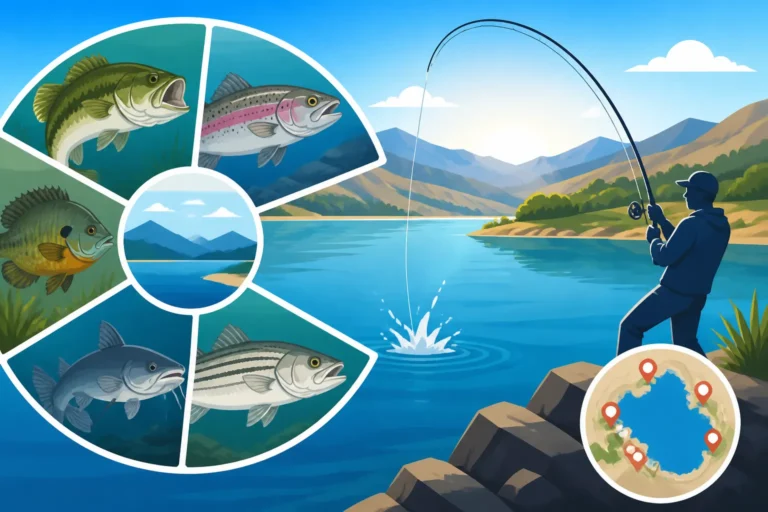
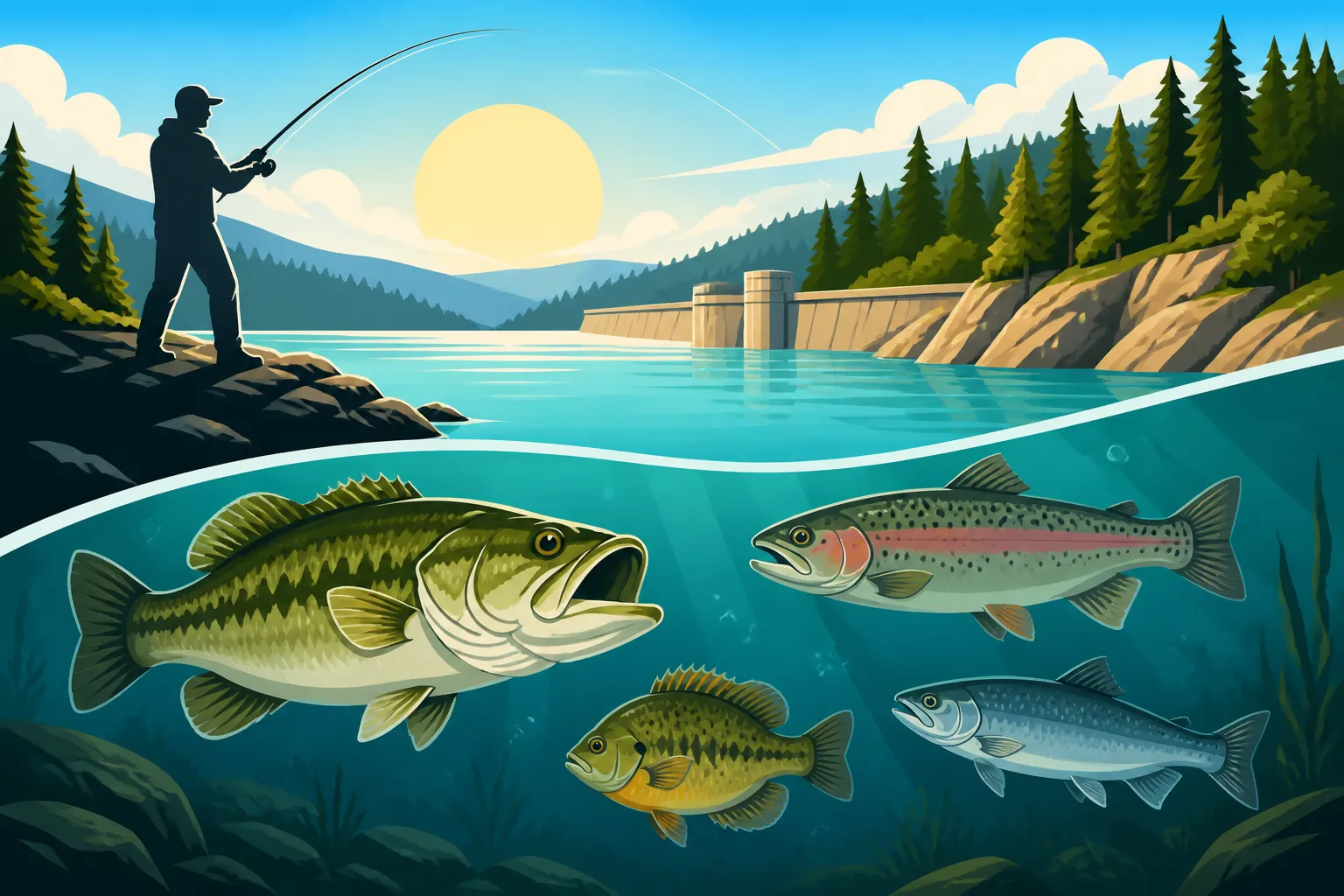
Bullards Bar Reservoir is celebrated for its diverse and thriving fish populations, making it a dream destination for anglers of all stripes. While some lakes might specialize in one or two species, Bullards Bar truly offers a variety, from the elusive trophy Kokanee to feisty bass and readily available rainbow trout. Knowing what's swimming beneath the surface is the first step to a successful day.
Trophy Kokanee Salmon
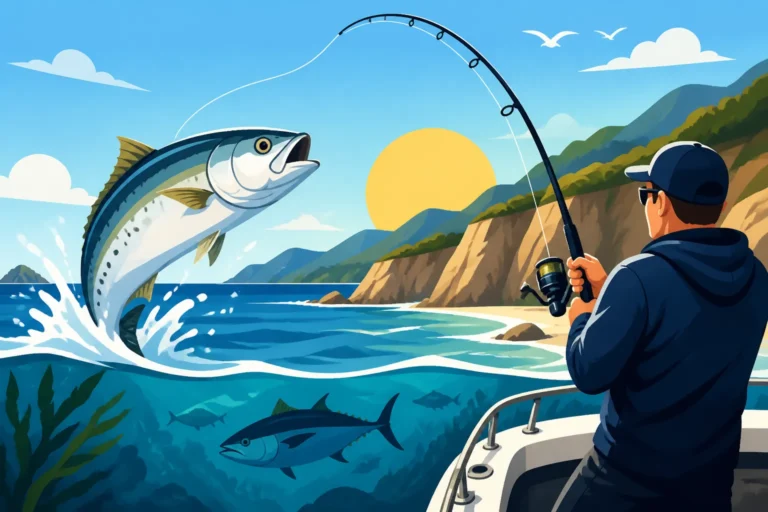
If there's one species that truly defines Bullards Bar, it's the Kokanee Salmon. These landlocked sockeye salmon are notorious for their strong fights and delicious table fare, and Bullards Bar has a well-deserved reputation for producing some of the largest Kokanee in California, often pushing and exceeding 20 inches! Anglers come from all over for the chance at these trophy fish.
Kokanee are pelagic, meaning they roam the open water, typically schooling in the deeper, cooler sections of the reservoir, especially near the old river channel. They feed primarily on zooplankton, which is why they respond so well to small, flashy dodgers and lures like Paulina Peak Tackle or Apex Kokanee lures, tipped with corn or a scent. The best time to target these beauties is usually from spring through late summer, with June and July often being peak months for size and numbers. Trolling at slow speeds, often between 0.8 and 1.5 mph, with downriggers to reach specific depths, is the most effective method. For more on catching these incredible fish, you might want to look into specific tips for How to Catch Kokanee Salmon in California.
Abundant Rainbow Trout
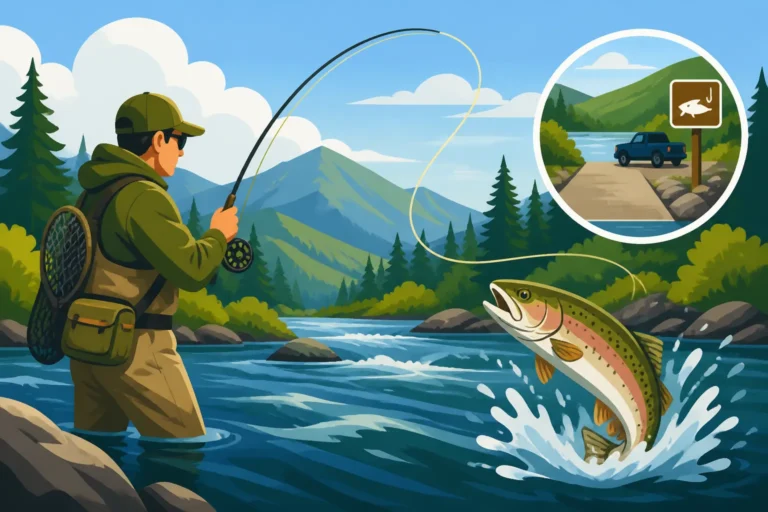
Bullards Bar is also home to a robust population of Rainbow Trout. You'll find a mix of wild, stream-bred rainbows that migrate from the Yuba River system and regularly stocked fish from the California Department of Fish and Wildlife (CDFW). These trout provide consistent action, particularly for those who prefer lighter tackle or bait fishing.
Many anglers find success targeting rainbows in the upper parts of the reservoir where the Yuba River feeds in, as well as in the main body. Trolling with spoons, spinners, or small swimbaits can be highly effective, especially in the spring and fall when trout are more active near the surface. Bait fishing with power bait, worms, or even marshmallows from shore or anchored boats is also a popular and productive method, particularly around recreation areas like Dark Day or the various boat ramps. For details on statewide regulations, be sure to check out the California Trout Limits and Regulations.
Bass Fishing Opportunities
While the cold-water species often steal the spotlight, Bullards Bar offers fantastic bass fishing, too. Both Largemouth Bass and Smallmouth Bass thrive in different parts of the reservoir, providing exciting opportunities for those who love to cast for aggressive strikes. The clear water here can make bass a bit shy, but knowing where to look and what to throw can lead to big rewards.
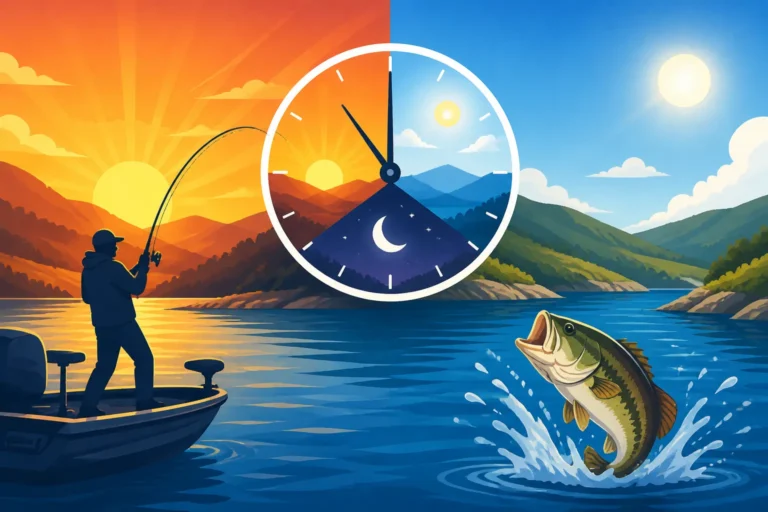
Largemouth Bass: You'll typically find largemouth bass lurking in the shallower, warmer coves and creek arms, especially those with submerged timber, rock piles, or dense aquatic vegetation. Areas around Miners Ranch Road bridge, or the many protected coves up the North Yuba arm, are classic largemouth haunts. Spinnerbaits, jigs, Texas-rigged plastics, and crankbaits fished around structure are excellent choices. During the warmer months, topwater action can be explosive early mornings and late evenings.
Smallmouth Bass: Smallmouth bass, true to their nature, prefer rocky points, ledges, and transition zones where shallow water quickly drops off into deeper areas. They are often found throughout the main body of the lake, especially on the numerous rock banks and humps. Dropshotting, Ned Rigs, or small crankbaits that mimic crawfish are deadly for smallmouth. They are fierce fighters, pound for pound, and will readily hit a variety of artificial presentations. Targeting these aggressive fish requires a bit of patience and precise casting, but the reward is always worth it.
Other Notable Catches
Beyond the main attractions, Bullards Bar also holds populations of other fish species that can provide unexpected fun. Channel Catfish, for instance, are present and can be caught using traditional bottom-fishing techniques with smelly baits like chicken livers, anchovies, or prepared stink baits, especially in the warmer coves or at night. Crappie can sometimes be found in schools around submerged brush or standing timber, particularly in the spring, and are a blast on light tackle with small jigs or minnows. While not as heavily targeted, these species add another layer of angling diversity to the reservoir.
Pinpointing the Best Fishing Spots
Knowing what fish are in Bullards Bar is one thing, but figuring out where they are is the real puzzle. This reservoir, with its vastness and complex underwater topography, demands a strategic approach. Different species will favor different types of habitat, and understanding these preferences will dramatically increase your chances of success.
Main Body and Deep Water
The main body of Bullards Bar, particularly the expansive area stretching from the dam up to the confluence of the North and Middle Yuba Rivers, is prime territory for cold-water species. This is where the reservoir truly opens up and plunges to its greatest depths, providing the cool, oxygen-rich water that Kokanee Salmon and Rainbow Trout crave.
Anglers targeting Kokanee will spend most of their time trolling here. The key is to cover water and locate schools. Look for fish suspended anywhere from 30 to 100 feet down, often near the old river channel or over submerged points. Using sonar to identify bait balls and fish arches is crucial. Popular launch points like Dark Day or Cottage Creek offer easy access to these prime trolling lanes. Downriggers are essential for precise depth control, allowing you to present your lures exactly where the fish are holding. Remember to keep an eye on your fish finder for temperature breaks or "thermoclines," as Kokanee often stack up just above or within these cooler layers. This vast expanse can be intimidating, but reliable electronics and a systematic trolling pattern can make it incredibly productive. For a full breakdown of specific depths, consider checking resources like How to Troll for Kokanee in California.
Coves and Inlets for Bass
For those looking to tangle with Largemouth and Smallmouth Bass, shifting your focus to the numerous coves, inlets, and creek arms is where the action will be. These areas generally offer shallower, warmer water, and more complex shoreline structure that bass love for ambush points and spawning.
The arm fed by the North Yuba River, particularly the larger coves, is fantastic for largemouth bass. Look for areas with visible standing timber, submerged brush, or large rock formations. The water here can be slightly stained after heavy rains, providing excellent cover for bass. Flipping and pitching jigs or Texas-rigged plastics into the thickest cover can be incredibly effective. The smaller, steeper coves and rocky points throughout the main lake are ideal smallmouth bass habitat. These fish love to relate to ledges, drop-offs, and rocky reefs. Casting Ned Rigs, drop-shot worms, or small crankbaits parallel to these structures can produce consistent bites. Even areas around the boat ramps, if they have submerged structure like old docks or brush, can hold bass, especially early in the season.
River Arms and Tributary Mouths
The points where the North Yuba and Middle Yuba Rivers feed into the reservoir are dynamic fishing grounds, especially during periods of increased water flow. These areas offer a mix of current, cooler water, and a constant influx of nutrients and baitfish, attracting a variety of species.
During the spring and fall, these tributary mouths become hot spots for both trout and Kokanee, as they can be drawn to the fresh inflow. Trolling closer to these areas, or even casting from shore if access allows, can be very productive. The current can concentrate baitfish, which in turn concentrates predators. For bass anglers, the confluence areas where the river current meets the still lake water create seams and eddies that are excellent ambush points. These "transition zones" can hold some of the biggest bass, as they wait for bait to be swept by. Remember, river arm conditions can change rapidly with water releases and rain, so always check local conditions before heading out.
Essential Gear and Techniques for Success
Stepping onto Bullards Bar Reservoir prepared with the right gear and knowing which techniques to employ can make all the difference between a memorable day and a frustrating one. The varied species and diverse underwater environment mean you'll need a versatile approach.
Recommended Tackle and Lures
For Kokanee Salmon, a lightweight trolling setup is paramount. You’ll want a rod with a soft tip to detect subtle bites, but enough backbone to handle a fighting fish. A 7-foot, medium-light action trolling rod paired with a line counter reel spooled with 10-12 lb monofilament or fluorocarbon is ideal. The line counter is crucial for replicating successful depths. As for lures, small dodgers (like Vance’s Tackle dodgers or Shasta Tackle Sling Blades) in silver, gold, or vibrant colors, paired with mini hoochies, Kokanee bugs, or small Apex lures, are deadly. Tipping your offering with shoepeg corn soaked in a scent (like Pro-Cure or Mike's Gel Scent) is almost mandatory.
For Rainbow Trout, a similar light spinning setup works well for casting from shore or a boat. A 6-7 foot light to medium-light spinning rod with a matching reel spooled with 4-6 lb test fluorocarbon or monofilament will give you excellent feel. Small Kastmasters, Panther Martin spinners, or Rooster Tail inline spinners are excellent for active fish. For bait fishing, a simple slip-sinker rig with PowerBait or a worm fished on the bottom, or under a bobber, is often all you need.
Bass fishing demands a bit more variety in your tackle. For largemouth in cover, a medium-heavy to heavy action casting rod (7-7.5 feet) with a baitcasting reel spooled with 15-20 lb fluorocarbon or even braided line is essential for pulling fish out of thick stuff. Jigs (½ to ¾ oz), Texas-rigged creature baits, and spinnerbaits are staples. For smallmouth on rocky points, a medium-action spinning rod (6.5-7 feet) with 8-10 lb fluorocarbon is perfect for dropshotting or Ned Rigs. Small finesse worms, tubes, and crawfish-pattern crankbaits are highly effective. You might also consider booking a guide, and platforms like FishingBooker can help you find local experts who know the exact gear and techniques for the current conditions.
| Species | Recommended Rod/Reel | Line Weight | Go-To Lures/Baits | Key Technique |
|---|---|---|---|---|
| Kokanee Salmon | 7' ML Trolling Rod, Line Counter Reel | 10-12 lb Mono/Fluoro | Dodgers + Hoochies/Apex (w/ corn & scent) | Downrigger Trolling |
| Rainbow Trout | 6-7' L-ML Spinning Rod/Reel | 4-6 lb Fluoro/Mono | Spinners, Spoons, PowerBait, Worms | Casting, Bait Fishing |
| Largemouth Bass | 7-7.5' MH-H Casting Rod/Reel | 15-20 lb Fluoro/Braid | Jigs, Texas-rigged Plastics, Spinnerbaits | Flipping, Pitching |
| Smallmouth Bass | 6.5-7' M Spinning Rod/Reel | 8-10 lb Fluoro | Dropshot Worms, Ned Rigs, Small Crankbaits | Finesse, Casting |
Effective Fishing Techniques
Trolling for Kokanee and Trout: This is the bread and butter technique for cold-water species at Bullards Bar. Speed control is critical; a GPS-enabled fish finder or a dedicated speed indicator is highly recommended. Start by identifying the depth range where fish are holding, then deploy your downriggers to place your lures precisely in that zone. Experiment with different colors and scents until you find what triggers bites. Don't be afraid to make subtle turns and changes in speed, as this can make your dodger 'kick' and attract attention.
Finesse Fishing for Bass: Given Bullards Bar's clear water, finesse techniques often out-produce power fishing, especially for wary bass. Dropshotting is extremely effective for smallmouth bass on deep points and ledges. Present a small, natural-colored worm or creature bait above a lead weight, allowing it to suspend tantalizingly in the fish's strike zone. Ned Rigs, wacky-rigged worms, and lightweight jigs are also excellent choices for both largemouth and smallmouth, particularly when fishing around sparse cover or in high-pressure situations.
Casting and Retrieving: For active bass, especially largemouth near cover, casting spinnerbaits, crankbaits, or topwater lures can be exhilarating. Focus your casts tight to shoreline cover, submerged trees, or rock formations. Vary your retrieve speed and incorporate pauses to mimic wounded baitfish. For trout, casting small spoons or inline spinners parallel to shorelines or into open water can draw strikes from cruising fish. A good retrieve mimics a baitfish fleeing, so keep it varied and enticing. Whether you're a seasoned pro or just starting out, utilizing services like FishingBooker can connect you with local guides who can teach you these advanced techniques firsthand.
Navigating Regulations and Seasons
Fishing in California, especially at a prominent spot like Bullards Bar Reservoir, comes with its share of rules and seasonal considerations. It's not just about protecting the fish populations, but also about ensuring a fair and sustainable experience for everyone. Ignoring these guidelines can lead to hefty fines and a spoiled day, so it’s always best to be informed.
Key Regulations to Know
First and foremost, anyone 16 years or older needs a valid California fishing license to fish at Bullards Bar. This is a non-negotiable requirement. You can easily purchase a California Fishing License Online or through licensed vendors. Beyond the license, you'll need to be aware of species-specific regulations. For instance, Kokanee Salmon often have a daily bag limit (typically 5, but always check current regulations), and size limits may apply to bass or trout depending on the specific water.
Bullards Bar operates under general statewide freshwater fishing regulations, but it's always wise to consult the latest California Freshwater Fishing Regulations booklet, as special regulations can sometimes be implemented for specific reservoirs or species. Things like the number of rods you can use (a California Second-Rod Stamp Explained is often needed if you want to use more than one rod), or specific restrictions on certain baits, can vary. These regulations are designed to maintain healthy fish populations and ensure that future generations can enjoy the same incredible fishing opportunities.
Seasonal Fishing Strategies
The fishing at Bullards Bar is a year-round affair, but what you target and how you do it will change dramatically with the seasons.
Spring (March-May): This is a fantastic time for trout and bass. As the water begins to warm, trout become more active near the surface, making trolling and casting effective. Bass, especially largemouth, move into shallower coves for their spawn, becoming highly catchable with plastics and jigs. Kokanee also start to get active, though they'll still be deeper than in summer.
Summer (June-August): Summer is prime time for trophy Kokanee. They'll be deep, often between 40-80 feet, following the thermocline. Early mornings and late evenings can still offer some topwater bass action, but during the heat of the day, bass will retreat to deeper cover or shady areas. This is when patience and precise depth control with downriggers for Kokanee really pay off.
Fall (September-November): As temperatures drop, all species become more active. Kokanee begin their spawning run, changing color and becoming more aggressive. Trout fishing picks up as they feed heavily before winter. Bass will be on a fall feeding frenzy, aggressively chasing baitfish in preparation for colder months, making crankbaits and reaction baits highly effective.
Winter (December-February): While often overlooked, winter fishing can be surprisingly productive, especially for big bass and even deep-dwelling trout. The fish are less active, but often bigger. Slower presentations, deep jigging, and bait fishing become the primary methods. While not as crowded, a cold, clear winter day can yield some impressive catches for the dedicated angler. Understanding these seasonal shifts is crucial for developing a successful California Fishing Seasons: Month-by-Month Guide at Bullards Bar.
Disclaimer
Fishing conditions and regulations in California can change frequently. Always check the latest California Department of Fish and Wildlife (CDFW) regulations before heading out. This guide is for informational purposes only and does not supersede official regulations. Stay safe and fish responsibly.