How to Fish California Kelp Beds
Few things are as exhilarating and, let's be honest, sometimes as frustrating, as trying to land a fish in California's dense kelp beds. It's a truly unique challenge, a tangled underwater forest teeming with life, but also notorious for snags and lost tackle. If you've ever dreamt of pulling a feisty calico bass or a hard-fighting yellowtail out of that emerald jungle, but felt intimidated by the complexity, this guide is here to demystify the art of fishing California kelp beds and help you navigate these productive waters with confidence.
Understanding California's Kelp Ecosystem
California's coastline is renowned for its vibrant underwater forests, primarily made up of kelp. These aren't just patches of seaweed; they're dynamic, living ecosystems that provide shelter, food, and breeding grounds for an incredible array of marine life. Understanding the kelp forest is the first step to successfully fishing it.
The Ecosystem and Fish Habitat
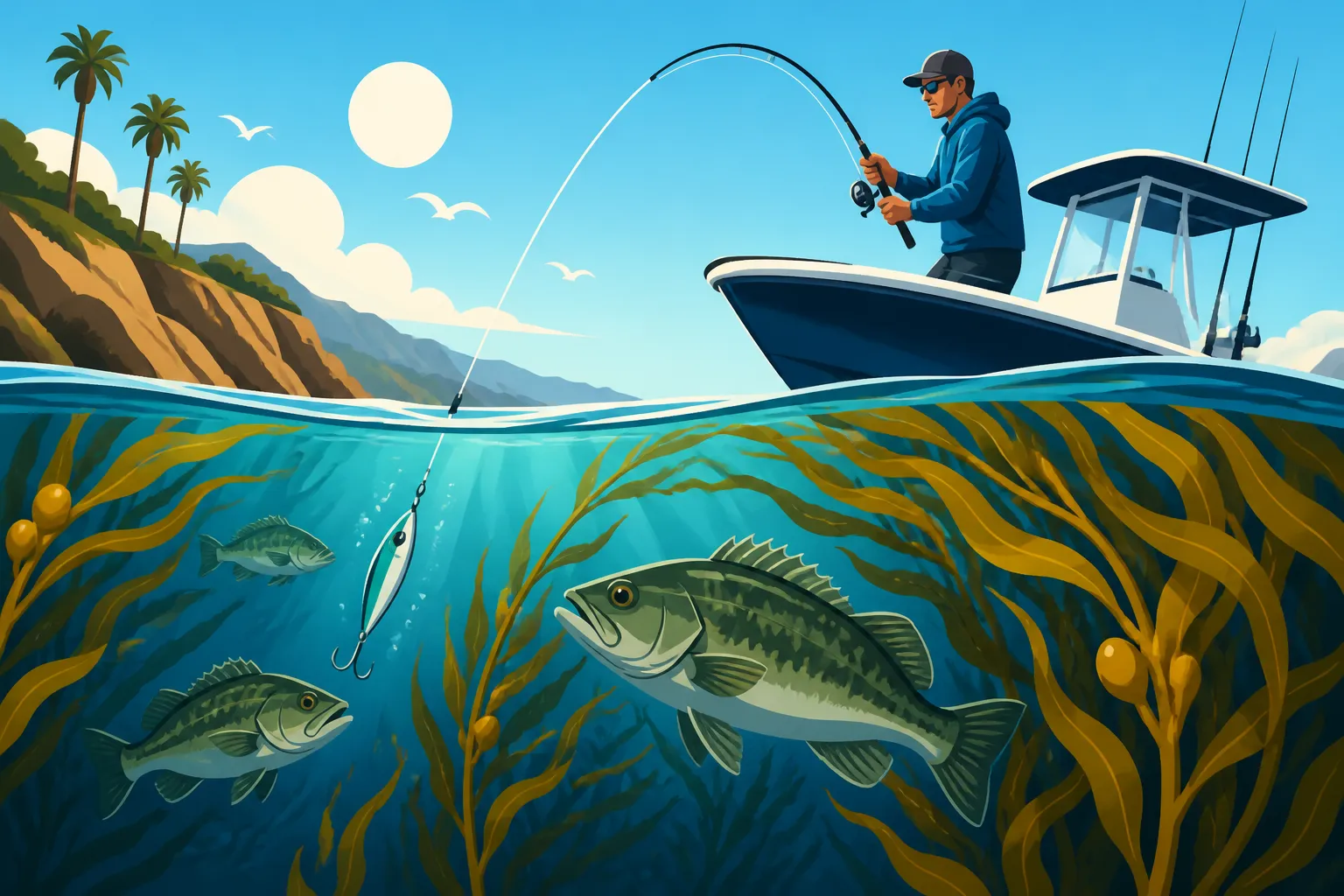
Imagine a towering forest on land, but underwater. That's essentially what a kelp forest is. Giant kelp, or Macrocystis pyrifera, is the most common species forming these towering structures, often reaching lengths of over 100 feet from the seafloor to the surface. It anchors itself to rocky bottoms and grows upwards, forming a dense canopy that shades the waters below. This intricate structure creates a complex habitat, offering protection from predators, a steady food supply for smaller organisms, and an ambush point for larger predatory fish. The holdfasts at the base of the kelp provide hiding spots for crabs, snails, and various invertebrates, which in turn become food for fish. The blades themselves harbor countless tiny creatures, making the entire ecosystem a bustling underwater city. This rich biodiversity is precisely why these areas are such magnets for sportfish.
Types of Kelp and Their Locations
While giant kelp dominates much of Southern California's nearshore waters, other kelp species play their part, too. Bull kelp (Nereocystis luetkeana), with its single, hollow stipe and gas-filled float, is more prevalent in the cooler waters of Central and Northern California, extending up through the Pacific Northwest. Giant kelp tends to form vast, dense beds, particularly around the Channel Islands, San Clemente Island, and along the mainland coast from San Diego up past Santa Barbara. You'll find these magnificent forests thriving in areas with good water clarity and rocky reefs or ledges that provide a solid anchoring point. These kelp beds are typically found in depths ranging from 20 to 100 feet, sometimes even deeper. Knowing the type of kelp and its growth patterns can help you anticipate how fish might relate to it. For instance, the denser canopy of giant kelp offers more hiding places compared to the more sparse, individual stalks of bull kelp.
Why Kelp Beds Are Prime Fishing Grounds
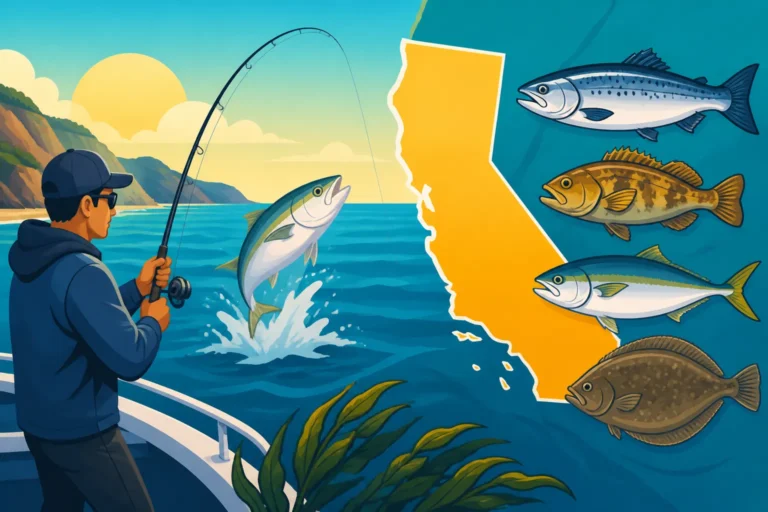
The allure of kelp beds for anglers is simple: they're nurseries and cafeterias for countless fish species. The dense cover provides protection for juvenile fish from larger predators like seals and sea lions. For predatory fish, the kelp offers endless ambush points. Species like the hard-fighting calico bass, often called "kelp bass," are perfectly adapted to hunting within this environment, darting in and out of the stalks to ambush baitfish. Other prized game fish such as yellowtail, white seabass, and lingcod also frequent kelp beds, particularly the edges and deeper sections. These larger predators patrol the perimeter, waiting for an opportune moment to strike, or they might even venture into the open lanes within the kelp to hunt. The sheer volume of life, from tiny plankton to schooling baitfish like anchovies and sardines, creates a food chain that supports a thriving fishery, making these underwater forests undeniably some of the Best Saltwater Fishing Spots in California.
Essential Gear for Kelp Bed Fishing
Tackling the kelp requires specific gear. You can't just use your freshwater bass setup and expect to pull a 20-pound yellowtail out of a dense canopy. The right equipment is crucial for both success and minimizing frustration from lost fish and tackle.
Rods, Reels, and Line Selection
For kelp bed fishing, you need gear that's tough and can handle the brutal fight in a restrictive environment. Forget finesse; think power.
- Rods: A medium-heavy to heavy action rod, typically 7 to 8 feet long, is ideal. You want a rod with enough backbone to really put the hurt on a fish and pull it away from the kelp. A fast action tip is still good for casting accuracy and feeling bites, but the real power should be in the mid-section and butt. Brands like Phenix, Calstar, or Seeker are popular among West Coast anglers for their durability and power.
- Reels: Matching your rod with a robust conventional reel (like a Penn Fathom or Daiwa Lexa) or a stout spinning reel (like a Shimano Saragosa or Penn Spinfisher) is key. The reel needs a strong drag system that won't give up when a fish dives headfirst into the weeds. Look for models with high line capacity, capable of holding at least 200-300 yards of line.
- Line: This is where many anglers make a mistake. Monofilament line offers stretch, which can be forgiving, but its abrasion resistance isn't always enough for kelp. Braided line, with its zero stretch and incredible strength-to-diameter ratio, is a game-changer. It cuts through water better, allows for more direct hooksets, and, critically, it's far more sensitive to subtle bites. However, braid can be easily frayed by kelp. The best approach is often to spool up with 30-65 lb braided mainline and then use a fluorocarbon leader of 20-50 lb test. Fluorocarbon is nearly invisible underwater and significantly more abrasion resistant than mono, offering a crucial buffer against the kelp. This setup gives you the power and sensitivity of braid with the stealth and kelp-cutting protection of fluoro. You might want to pick up a good bulk spool of fluorocarbon leader material from a reliable brand on Amazon to ensure you're always ready.
Lures, Baits, and Terminal Tackle
Your arsenal of lures and baits should be chosen with kelp in mind, focusing on weedless options and natural presentations.
- Lures:
- Swimbaits/Soft Plastics: These are arguably the most effective lures for calico bass in kelp. Weedless designs, rigged on heavy-duty jig heads (3/4 oz to 2 oz) or swimbait hooks, allow them to be worked directly into the kelp without snagging. Popular choices include the Big Hammer swimbaits or similar models from brands like Keitech. Colors like brown, green, white, and clear with glitter mimic baitfish or squid.
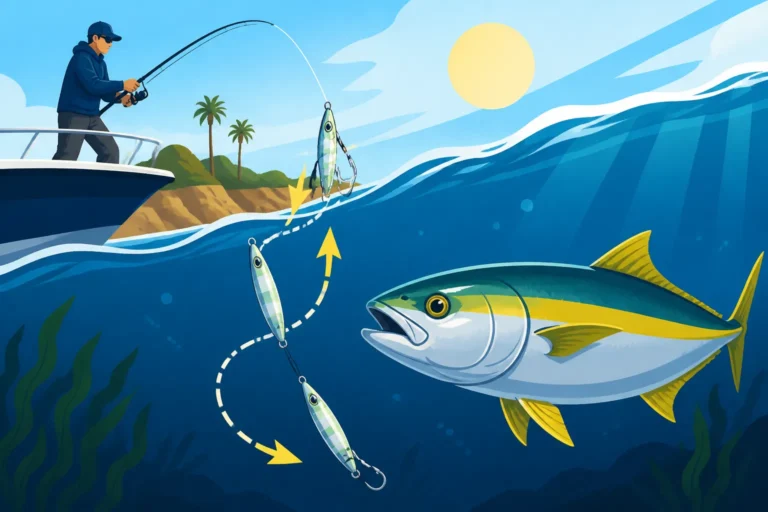
- Jigs: Heavy lead jigs, often called "iron," like those used for How to Catch Yellowtail in California, can be effective when dropped into deeper kelp pockets or along the edges. Consider flat-fall jigs or heavy leadheads with grub tails.
- Surface Irons/Poppers: For aggressive fish on the surface, especially yellowtail or larger calicos, a surface iron or popper can create explosive strikes. Work them quickly along kelp edges or open areas.
- Baits:
- Live Bait: Live anchovies, sardines, or mackerel are king for many kelp species, especially yellowtail and white seabass. Fly-lining a lively bait (no weight, just a hook) into the kelp or drifting it along the edges can be incredibly productive. A sturdy bait tank is essential if you're bringing live bait.
- Cut Bait: Squid strips or chunks of mackerel can also be effective for rockfish and lingcod in the deeper kelp.
- Terminal Tackle:
- Hooks: Stick with strong, sharp, wide-gap hooks. Live bait fishing often calls for circle hooks (e.g., Owner Mutu Light) to ensure clean hooksets and reduce gut-hooking. For soft plastics, heavy-duty swimbait hooks are crucial.
- Weights: Carolina rigs with bullet weights can be worked through kelp surprisingly well. Drop shot rigs with heavy sinkers can also present a bait vertically. Keep a variety of weights on hand, from lighter egg sinkers for drifting to heavier torpedo sinkers for getting baits down fast.
- Swivels/Snaps: Good quality barrel swivels are essential to prevent line twist, especially when using live bait. Avoid using snaps in dense kelp unless absolutely necessary, as they can be a point of failure.
Kayak vs. Boat Considerations
How you approach the kelp beds significantly changes depending on your vessel. Both kayaks and larger boats have their pros and cons.
- Kayak Fishing: Kayaks offer unparalleled stealth and access. You can quietly paddle right up to the kelp canopy, sometimes even slipping into the open lanes without spooking fish. This allows for incredibly precise presentations, and the low profile makes fighting a fish in tight quarters a true test of skill. However, safety is paramount. Kayaks are more susceptible to currents and swell, and getting tangled in kelp in a kayak can be dangerous. Always have a sharp cutting tool, a VHF radio, and a way to signal for help. Anchor points can be tricky in kelp; a grapple anchor designed for kelp works best, or consider a drift chute to control your speed. Being close to the water makes for an intense experience when a big fish goes for a kelp run! For more insights, check out California Kayak Fishing Tips and Techniques.
- Boat Fishing: Larger boats provide more stability, comfort, and speed, allowing you to cover more ground and access offshore kelp paddies. They also offer more storage for gear and live bait tanks. However, noise from the engine can spook fish, and maneuvering a larger vessel in dense kelp can be challenging. Many boats use a "kelp cutter" attachment on their outboard prop to clear a path, but it's still best to be cautious. The key is to position your boat up-current or up-swell from the kelp and drift into or alongside it, allowing your baits or lures to work naturally. If you're using a center console, a dedicated fishing electronics setup can really help pinpoint those key kelp edges and subsurface structure.
Proven Techniques for Fishing Kelp Beds
Successfully fishing kelp beds often comes down to precise presentations and understanding fish behavior within the unique environment. It's about being patient, persistent, and knowing when to adjust your tactics.
Fishing the Edges and Open Lanes
The edges of kelp beds, where the dense canopy meets open water, are always prime territory. This is where many pelagic species like yellowtail and white seabass patrol, intercepting baitfish that venture out from the safety of the kelp. It's also where the largest calico bass often lurk, waiting to ambush prey.
- Drifting the Edges: Position your boat or kayak a bit up-current from the kelp line and let the wind and current push you parallel to the edge. This allows you to present your baits or lures naturally. Fly-line a live sardine or anchovy, letting it swim freely alongside the kelp. Use just enough weight, if any, to keep it at the desired depth. For artificials, cast swimbaits or surface irons parallel to the kelp edge, retrieving them with erratic twitches and pauses to mimic a fleeing baitfish. If you see busting fish or birds working, that's often a sign of yellowtail or barracuda pushing bait against the kelp.
- Targeting Open Lanes: Within larger kelp beds, you'll often find natural "lanes" or clearings where the kelp is less dense, or where breaks occur in the canopy. These are fantastic ambush points. Use a weighted swimbait or a jig to drop down into these lanes, working it vertically through the water column. The trick is to get your bait or lure down quickly without getting hung up on the surrounding kelp. A short, accurate cast and a fast drop are your friends here. These lanes are particularly productive for How to Catch Calico Bass in California and even larger rockfish species like lingcod that often hide in the deeper crevices.
Dropping Down into the Canopy
Sometimes, the fish are holding deep within the kelp, especially when conditions are bright or if there's heavy boat traffic on the surface. This is where you need to be brave and fish vertically, right into the structure.
- Vertical Jigging: This is a classic method. Use a heavy lead jig or a weighted soft plastic swimbait. Drop it straight down into an open pocket or sparse section of kelp. Let it hit the bottom, then jig it aggressively with short, sharp lifts and drops. The goal is to imitate a wounded baitfish or a squid. The bites are often violent, so be ready. The challenge is getting the fish out before it wraps you in the kelp. This method is particularly effective for How to Catch Rockfish in California and lingcod.
- Weighted Bait Presentations: If using live bait, you can use a dropper loop or a Carolina rig with a heavy weight to get your bait down quickly. The trick is to use just enough weight to maintain contact with the bottom or the desired depth, but not so much that it's constantly snagging. Once your bait is down, let it swim naturally for a few moments, then slowly reel up a few feet, then drop again. This "yo-yo" motion can entice a strike.
- Patience and Persistence: Fishing directly in the kelp is frustrating. You will get snagged. You will lose tackle. But the rewards can be huge. Don't be afraid to try different spots, even just a few feet away from a snag. Sometimes moving the boat just a yard or two can put you over a productive pocket. Remember, the fish are in there because it's safe. You just need to convince them to come out.
Live Baiting Strategies
Live bait is often the most effective tool in the kelp, appealing to the natural predatory instincts of many species.
- Fly-Lining: This is perhaps the most popular technique for yellowtail and white seabass. Use a single, strong hook (like a 2/0 to 4/0 Owner Mutu Light or similar circle hook) tied directly to your fluorocarbon leader. Hook a lively sardine or anchovy through the nose or dorsal fin, and simply cast it out with no weight. Let the bait swim naturally towards the kelp edge or into an open lane. Keep your bail open or your reel in free spool with your thumb on the spool, ready to engage the drag when a fish takes the bait and starts running. This natural presentation is hard for a predator to resist. You'll want a quality bait pump and aerator for your livewell, and you can often find good options for these accessories on Amazon.
- Sliding Sinker Rigs: For deeper presentations with live bait, a sliding sinker rig can work well. Thread an egg sinker (1/2 oz to 2 oz, depending on current) onto your main line, then tie on a barrel swivel, followed by a 2-4 foot fluorocarbon leader and your hook. This allows the fish to pick up the bait without immediately feeling the weight of the sinker. This is good for targetting lingcod and larger rockfish closer to the bottom within the kelp.
- Chumming: If legal and appropriate for your area, a bit of chum (cut pieces of anchovy or sardine) can help draw fish out from the kelp. Just be careful not to overdo it, as you want the fish to go for your hook bait, not just eat the free offerings.
Artificial Lure Tactics
While live bait is often king, artificial lures offer versatility and the ability to cover ground quickly.
- Weedless Swimbaits: As mentioned earlier, weedless soft plastic swimbaits are fantastic. Cast them into the kelp and let them sink. Slowly retrieve them with a steady retrieve, adding occasional twitches. The goal is to make them look like a wounded or disoriented baitfish trying to escape the kelp. Pay close attention to your line, as bites can be subtle. If you feel a "tick" or a sudden weight, set the hook hard! This is an excellent technique for How to Catch Calico Bass in California.
- Hard Baits (Surface & Subsurface): For fish actively feeding on the surface, casting a surface popper or a walk-the-dog style lure (like a Heddon Super Spook) along the kelp edges can trigger explosive strikes. Retrieve these lures with a cadence that makes them "walk" or "pop" across the surface, creating disturbance. Subsurface hard baits like jerkbaits can also be effective when retrieved just above the kelp canopy or in open lanes, mimicking a fleeing baitfish. Look for models with strong hooks, as a big fish can bend cheap treble hooks easily.
- Heavy Jigs for Bottom Species: For species like lingcod and larger rockfish dwelling deeper, heavy metal jigs (like a 4-6 oz Salas 6X or similar) can be dropped directly into deep kelp pockets or adjacent rock structure. Work them with long, slow lifts and drops, or a faster "yo-yo" style retrieve. This technique is often used when charter boats are targeting California Rockfish Depth Restrictions and other groundfish, dropping heavy jigs or baited rigs to the bottom.
Navigating and Staying Safe in Kelp
Fishing in kelp beds is an adventure, but it comes with its own set of challenges, especially concerning safety and preventing gear loss. A smart angler is a safe and prepared angler.
Avoiding Fouled Lines and Snags
The number one frustration in kelp is getting snagged. It's almost inevitable, but you can minimize it.
- Keep Your Line Tight: Whenever possible, maintain a taut line. A slack line is an invitation for your hook to drift into a kelp stalk and snag. When casting, reel up any slack quickly once your lure hits the water. When fighting a fish, keep the rod tip high and reel hard to keep the fish's head up and away from the kelp.
- Strategic Casting: Don't cast blindly into the densest part of the kelp. Look for openings, lanes, or the very edges. If you're dropping vertically, find a clear "hole" in the canopy to drop your bait or lure.
- Weedless Rigs: As discussed, weedless soft plastic setups are your best friend. For bait, a properly presented fly-lined live bait will often swim away from snags, but a weighted rig needs careful handling.
- "Pop" Your Lure: If you feel your lure or bait starting to brush against kelp, give your rod tip a sharp, upward pop. Often, this is enough to free it. If you're truly stuck, try reeling down to the snag, then giving a strong, continuous pull in line with the snag. This sometimes frees it or, worst case, allows you to break off cleanly without leaving too much line in the water.
- Be Patient with Fish: When a fish hooks up and dives into the kelp, resist the urge to just crank as hard as you can. Sometimes, applying steady pressure and waiting for the fish to swim itself out is more effective than trying to force it, which can just bury it deeper. If it's truly buried, try letting your line go slack for a few seconds. This can sometimes convince the fish it's free, causing it to swim out, at which point you can re-engage and fight it. This tactic is especially effective when targeting California Yellowtail Fishing Guide when they dive into the kelp.
Understanding Tides and Currents
Tides and currents play a significant role in kelp bed fishing, influencing both fish activity and your ability to present baits.
- Tidal Flow: Moving water is generally good for fishing. As the tide pushes water through the kelp, it dislodges food and concentrates baitfish, making predators more active. Often, the incoming or outgoing tide around the peak or trough can be particularly productive. Look for areas where current eddies or seams form around kelp patches, as these are natural ambush points.
- Slack Tide: While not always unproductive, slack tide can sometimes slow down the bite as the water movement diminishes. However, for targeting bottom-dwelling species like lingcod in deeper, denser kelp, slack tide can offer a window for more precise vertical presentations without the challenge of strong current.
- Boat Control: Understanding how the current will affect your drift is crucial. If you're drifting too fast, your baits will not stay in the strike zone long enough. Too slow, and you're not covering enough ground. Learn to use your engine or a drift sock (for boats) or a sea anchor (for kayaks) to control your speed and angle of drift relative to the kelp.
Safety Considerations
The ocean can be unpredictable, and kelp beds add another layer of complexity. Prioritizing safety is non-negotiable.
- Vessel Awareness: Always be aware of your surroundings. Other boats, kayakers, and even commercial vessels might be in the area. Keep a watchful eye for swells, breaking waves, and any changes in weather. If you're in a smaller vessel, like a kayak, remember that you are largely at the mercy of the sea. Always check the marine forecast before heading out.
- Cutting Tools: This is absolutely essential, especially for kayak anglers. Always carry a sharp knife or a pair of strong trauma shears within easy reach to cut yourself free if you get tangled in the kelp. A diver's knife attached to your PFD is a good idea.
- Communication: Carry a fully charged cell phone in a waterproof case, and ideally, a VHF marine radio. Let someone know where you're going and when you expect to return. Consider a personal locator beacon (PLB) for offshore kayak trips.
- PFD (Personal Flotation Device): Wear it. Every time. No exceptions. Even strong swimmers can get into trouble quickly in cold water or if unexpectedly capsized.
- Know the Regulations: California has strict California Fishing Regulations Explained that vary by species and region. Pay close attention to bag limits, size limits, and seasonal closures, especially for species like How to Catch White Seabass in California and How to Catch Lingcod in California. Additionally, be aware of California Marine Protected Areas Explained (MPAs) where fishing might be prohibited or heavily restricted. Fines for violations can be substantial.
Here’s a quick overview of some common kelp bed inhabitants and the gear often used to target them:
| Fish Species | Primary Habitat in Kelp | Recommended Rod/Reel | Ideal Line Test (Braid/Fluoro Leader) | Top Lure/Bait Choices |
|---|---|---|---|---|
| Calico Bass | Dense canopy, edges | Medium-Heavy Baitcast | 30lb / 20-30lb | Weedless Swimbaits, Live Bait (sardine, anchovy) |
| Yellowtail | Edges, open water | Heavy Conventional | 50-65lb / 40-50lb | Live Bait (sardine, mackerel), Surface Iron, Jigs |
| White Seabass | Edges, deeper kelp | Heavy Spinning/Conv. | 40-60lb / 30-40lb | Live Squid, Live Sardine, Finesse Jigs |
| Lingcod | Deeper kelp, rocky bottom | Heavy Conventional | 50-65lb / 40-50lb | Live Mackerel, Heavy Jigs, Large Swimbaits |
| Various Rockfish | Mid-to-deep kelp | Medium-Heavy Spinning | 30-50lb / 20-30lb | Scampi Jigs, Baited Shrimp Flies, Cut Squid |
Kelp bed fishing in California is a unique and rewarding experience that offers a chance to connect with some of the state's most iconic saltwater species. By understanding the ecosystem, choosing the right gear, and practicing proven techniques, you'll be well on your way to mastering these emerald underwater forests.
Disclaimer
The information provided in this guide is for general informational purposes only and does not constitute professional advice. Fishing regulations and conditions in California can change frequently. Always consult the latest official California Department of Fish and Wildlife (CDFW) regulations before engaging in any fishing activity. It is the angler's responsibility to know and adhere to all current laws and regulations. Fishing can be dangerous; always prioritize safety and take appropriate precautions.