How to Fish for Trout After a Sierra Stocking
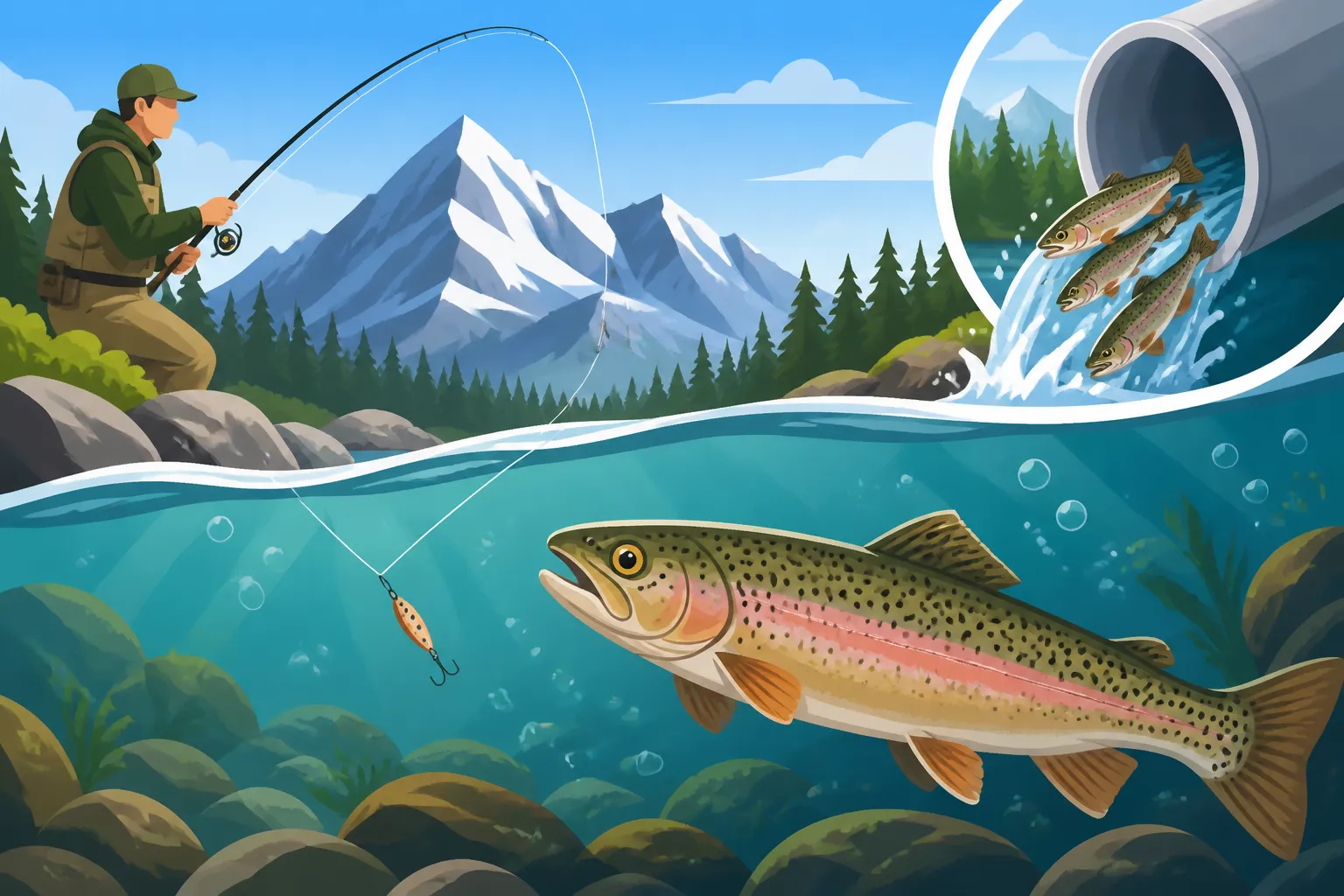
It's a familiar scene in the Eastern Sierra: the California Department of Fish and Wildlife truck pulls away, leaving behind a fresh batch of eager-to-bite trout. But here's the kicker – sometimes these newly stocked fish can be surprisingly elusive, or the sheer number of fellow anglers can make it feel more like a competition than a peaceful fishing trip. If you've ever found yourself wondering how to consistently catch trout right after a stocking, this guide is your answer, diving deep into the tactics, gear, and mindset you need to succeed.
Understanding Stocked Trout Behavior
Fishing for newly stocked trout isn't quite the same as pursuing wild, wary fish. These hatchery-raised beauties have a unique set of behaviors that, once understood, can drastically improve your chances of success. It's not just about throwing any old bait out there; it's about playing to their strengths and weaknesses as fish fresh out of their comfortable, predictable surroundings.
Why Stocked Trout Act Differently
Imagine being raised in a cozy, controlled environment where food is always abundant, predators are nonexistent, and life is, well, pretty easy. That's the life of a hatchery trout. They're fed a consistent diet of pellets, they don't have to hunt, and they certainly don't have to fear a shadow from above or a sudden splash. When they're dumped into a vast, open lake or a flowing stream, it’s a whole new world for them. They're often disoriented, a little stressed, and initially, they're looking for what they know: an easy meal. This is why certain baits work so incredibly well right after a stocking. They aren't programmed to hunt or be particularly suspicious of strange smells or artificial lures yet.
However, this doesn't last forever. As they acclimate to their new surroundings, they'll start to exhibit more natural behaviors, becoming pickier and more aware of their environment. This is why timing your visit and understanding their immediate post-stocking phase is so crucial. They are, for a short window, often quite willing to bite, almost out of curiosity or habit, before they start to wise up to the ways of the wild.
Initial Confusion and Acclimation
When the DFW truck releases thousands of trout into a lake like Crowley Lake or a river section in the Eastern Sierra, these fish are undergoing a massive environmental shock. They don't know where to hide, where the food sources are, or what potential dangers lurk. This disorientation makes them both vulnerable and, conveniently for us anglers, less cautious. Initially, they tend to stay in the general area where they were stocked, often suspending at various depths or cruising along the bottom near the drop-off points. They’re essentially trying to figure things out.
This period of confusion is your golden opportunity. The fish are often schooled up, relying on their numbers for a sense of security, which means if you find one, you're likely to find many. Their instinct to eat the pellets they've been fed their whole lives often translates into a willingness to strike at anything remotely resembling their former diet, or anything that's brightly colored and easy to spot. As days pass, they'll spread out, explore their new habitat, and begin to feed on natural insects, minnows, and crustaceans. This shift in diet and behavior means that the tactics that work immediately after a stocking might become less effective a week or two later. Knowing the California Trout Stocking Schedule can give you a major advantage.
Essential Gear and Bait for Stocked Trout
You don't need a boatload of expensive, specialized equipment to catch stocked trout, but having the right tools for the job certainly makes a difference. Think light, sensitive, and subtle. The goal is to present your offering as naturally as possible, even if the fish themselves aren't all that natural.
Rods, Reels, and Line
For stocked trout, especially in smaller lakes, ponds, or calmer river sections, an ultra-light or light spinning setup is your best friend. A rod between 5'6" and 6'6" with a fast or moderate-fast action will give you the sensitivity to feel those subtle bites and the flexibility to fight trout without tearing the hook out of their soft mouths. Pair this with a small spinning reel (think 1000-2000 size) spooled with 2 to 4-pound test monofilament or fluorocarbon line. Many anglers, myself included, opt for monofilament as a main line because its stretch can be forgiving, preventing break-offs when a feisty rainbow makes a sudden run. However, a fluorocarbon leader of 2-3 feet tied to your main line (using a swivel to prevent line twist) offers incredible invisibility under the water, which can be key on bright, sunny days when the water is clear. Brands like Berkley Trilene or P-Line are excellent choices for main lines, and Seaguar makes fantastic fluorocarbon leaders. You can find a wide array of options for these on Amazon.
When considering your setup, remember that precision casting and a delicate presentation are often more important than brute strength. A light setup allows for accurate casts, which is crucial when targeting specific submerged structures or schooling fish. Plus, fighting a spirited trout on light tackle is just plain fun!
The Go-To Baits and Lures
This is where the magic really happens for stocked trout. While wild trout often prefer specific insect imitations or natural forage, stocked trout have a predictable palate, at least initially. Their hatchery upbringing makes them susceptible to certain readily available options.
PowerBait and Marshmallows
Without a doubt, PowerBait (or similar scented, moldable baits like Pautzke Bait's egg series) is king for newly stocked trout. These doughy baits come in a rainbow of colors and scents, mimicking the protein pellets they were fed. The key is to mold it into a small ball, about the size of a pea or dime, ensuring it floats just off the bottom. My personal favorites are bright chartreuse, rainbow, or garlic-scented options.
Marshmallows, especially mini ones, might sound crazy, but they work! They float, they're soft, and they have a sweet scent that can be surprisingly appealing. Often, I'll combine a small piece of PowerBait with a mini marshmallow on the same hook for a "cocktail" that offers both scent and buoyancy.
Worms and Corn
Garden worms or nightcrawlers are universally effective. They're natural, they wiggle, and they appeal to a trout's developing foraging instincts. Hook them once or twice through the body, letting the ends dangle naturally. Canned corn kernels are another surprisingly effective bait. Their bright yellow color and slight sweetness can entice curious trout, especially in clear water. Using a few kernels on a small hook can be a deadly combination. Just be mindful of local regulations, as some areas might restrict corn as bait.
Spinners, Spoons, and Jigs
When the fish are a bit more active or you want to cover more water, artificial lures shine. Small inline spinners like Rooster Tails or Panther Martins in sizes 1/16 to 1/8 oz with brightly colored blades (chartreuse, gold, silver) are excellent. Cast them out and retrieve slowly, just fast enough to make the blade spin. Small Kastmaster spoons (1/8 to 1/4 oz) in silver, gold, or trout patterns are also fantastic, particularly for casting longer distances or when fish are suspended. Micro jigs, often used for panfish, can also be incredibly effective for trout when tipped with a small piece of PowerBait or a mealworm. Brands like Acme Tackle and Blue Fox make reliable trout lures, many of which are readily available on Amazon.
Here's a quick comparison of some popular baits for stocked trout:
| Bait Type | Best Use Case | Pros | Cons |
|---|---|---|---|
| PowerBait | Still fishing, immediate post-stocking | Floats, strong scent, many colors | Can be messy, fish might swallow deeply |
| Nightcrawlers | Still fishing, drift fishing, more natural | Natural action, universally appealing | Can be picked off easily, doesn't float on its own |
| Canned Corn | Still fishing, clear water, curious fish | Bright color, sweet scent, easy to find | Less durable, might be prohibited in some areas |
| Spinners | Active fishing, covering water, aggressive fish | Irresistible flash and vibration | Requires retrieval, can snag on bottom |
| Spoons | Active fishing, long casts, deeper water | Mimics injured baitfish, good for suspending fish | Less versatile in shallow, snaggy areas |
| Micro Jigs | Active fishing, subtle presentation | Versatile, can be tipped with bait | Requires more finesse, lighter feel for bites |
Proven Techniques for Sierra Stocked Trout
Once you've got your gear dialed in, it's time to talk tactics. Catching stocked trout in the Sierra often comes down to understanding the specific water you're fishing and employing the right technique for the moment. Whether you're at a popular spot like Lake Sabrina or a quiet stretch of the Truckee River, these methods will serve you well. For more general advice, check out this guide on How to Fish for Trout in California.
Still Fishing Strategies
Still fishing is hands-down the most common and often most effective method for newly stocked trout, especially from shore or a dock. It involves casting your bait out and letting it sit, waiting for the fish to come to you.
The Classic Carolina Rig
This is my absolute go-to for PowerBait or a small worm. You'll need an egg sinker (1/8 to 1/4 oz), a small swivel, and an 18-30 inch fluorocarbon leader (2-4 lb test). Tie your main line to one end of the swivel, and your leader to the other. Before tying the main line, thread the egg sinker onto your main line, followed by a small bead (optional, but protects your knot from the sinker). At the end of your leader, tie a small treble hook (size 14-18) or a single salmon egg hook (size 8-10). Mold your PowerBait around the hook, ensuring it's buoyant enough to lift the hook off the bottom. This setup allows the fish to pick up the bait without feeling the weight of the sinker, giving you a better chance for a solid hookset. This rig is particularly effective in lakes and larger pools in rivers where fish might be cruising the bottom.
Slip Sinker or Bobber Rigs
For fishing shallower areas, or when the fish are suspended closer to the surface, a slip sinker rig (without the swivel and bead, just a small split shot a foot or two above the hook) or a classic bobber rig can be great. With a bobber, you're looking for a simple setup: a small split shot about 6-12 inches above your hook, with your bait (often a worm or corn) suspended beneath a bobber set to the desired depth. This is perfect for areas with submerged vegetation or uneven bottoms where a Carolina rig might snag. It's also fantastic for kids, as watching the bobber go down is half the fun!
Active Retrieval Methods
Sometimes, stocked trout need a little encouragement to strike. This is where moving baits come into play.
Slow and Steady Spinners
For spinners, the key is a slow, consistent retrieve. Cast your spinner out and let it sink for a few seconds, especially if you see fish jumping or rolling deeper in the water column. Then, begin a slow retrieve, just fast enough to make the blade spin and flash. Vary your retrieve speed and add a few short pauses; sometimes that little hesitation is enough to trigger a strike from a following fish. Spinners are particularly effective when fishing along shorelines, near submerged rocks, or in river currents. This is a common technique used to target various species, so refining your California Trout Fishing Techniques can pay dividends.
Erratic Spoon Presentation
Spoons like the Kastmaster or Thomas Buoyant are fantastic for covering water and targeting deeper holding fish. Cast them out, let them sink to a desired depth, and then retrieve with a series of jerks and pauses. The spoon will dart and flutter on the retrieve and then wobble on the fall, imitating a wounded baitfish – an irresistible meal for a hungry trout. Pay close attention on the fall, as many strikes happen when the lure is sinking. You might want to consider some of the Best Baits and Lures for Rainbow Trout in California for further ideas.
Best Times and Locations
Timing and location are crucial after a stocking. While the fish are often naive, they're not everywhere.
The Golden Hours and Prime Days
The absolute best time to fish after a Sierra stocking is often within the first 24-48 hours. The fish are still grouped up, disoriented, and most willing to bite. Beyond that, the early morning (sunrise to a couple of hours after) and late afternoon (a few hours before sunset) remain prime times. These cooler periods often see increased fish activity.
As for specific locations, focus on the immediate vicinity of the stocking point. In lakes and reservoirs, this is often near boat ramps, docks, or designated access points. In rivers, it will be the sections where the fish were physically released. From there, think about areas that offer them a sense of security and potential food.
Structure and Cover
Look for drop-offs, submerged structures like rocks or logs, and weed lines. These areas provide cover and a sense of safety for the newly introduced trout. In rivers, slow-moving pools, eddies behind large rocks, and deeper runs are excellent spots. If you're fishing a large lake, studying a bathymetric map (depth map) can help you identify these key areas. Locations highlighted in an Eastern Sierra Fishing Guide often point out these kinds of features.
Always respect private property and check California Freshwater Fishing Regulations for any specific rules regarding fishing access or bait restrictions in the particular body of water you're visiting. Many of the Best Lakes to Fish in California are routinely stocked, offering fantastic opportunities if you know when and where to go.
Navigating Crowds and Ethics
Let's be real: when there's a fresh stocking, especially in popular Sierra destinations, you're not going to be alone. It can feel like a fishing derby, and that's okay. But it does mean you need to be mindful of others and practice good etiquette to ensure everyone has a pleasant experience.
Finding Your Space
The first instinct for many anglers is to rush to the most obvious stocking point. While fish will be there, so will everyone else. Sometimes, walking a little further down the shoreline, or even across to the other side of a smaller lake, can put you on fish that have already begun to disperse. These fish might be slightly less pressured and more willing to bite.
If you arrive at a crowded spot, try to find a clear lane to cast without interfering with others. A good rule of thumb is to give other anglers ample space – ideally, as much as they're giving you. If someone is already actively fishing a spot, don't crowd them. A polite "Mind if I cast over here?" goes a long way. In general, fishing is often about enjoying the peace and quiet, but after a stocking, it's more about the shared excitement. Being patient and respectful is key.
Practicing Good Angler Etiquette
Catching a limit of stocked trout is often quite achievable right after a plant. However, remember the California Trout Limits and Regulations are there for a reason, even for stocked fish. Don't be "that guy" who keeps more than their legal limit or cleans out the entire stock. Ethical angling is about respecting the resource and fellow anglers.
If you're planning on releasing fish, handle them with care. Wet your hands before touching the fish, use barbless hooks, and try to minimize their time out of the water. For stocked trout, especially, sometimes the goal is simply to have fun catching them, and then perhaps keep a few for a delicious dinner, letting the rest go to fight another day. It’s important to remember that these fish are a public resource, funded by our licenses and fees, and their well-being is everyone's responsibility. The DFW works hard to provide these opportunities, and we should reciprocate by adhering to rules and ethical practices. For more detailed information on specific locations like Best Fishing in Northern California, always double-check local guidelines.
Disclaimer
Fishing regulations, conditions, and fish stocking schedules in California are subject to change. Always consult the latest California Department of Fish and Wildlife regulations booklet or their official website before heading out. This guide is for informational purposes only and does not supersede official regulations.