Best Season for Trout in California
Figuring out the absolute "best" time to chase trout in California can feel like trying to hit a moving target, especially with our state's incredible diversity of waters, from high alpine lakes to bustling lowland reservoirs and serene coastal streams. It's not as simple as picking a single month; instead, it's about understanding the nuances of each season and how it impacts trout behavior across different regions. This guide will walk you through California's trout fishing calendar, highlighting what to expect and how to adapt your strategy to find success, no matter the time of year.
Decoding California's Trout Fishing Calendar
California truly offers a year-round trout fishing experience, but the type of fishing and the best spots change dramatically with the seasons. It’s not just about the air temperature; it’s about water conditions, insect hatches, fish spawning cycles, and, let’s not forget, the California Department of Fish and Wildlife (CDFW) stocking schedules and regulations that dictate when and where you can cast a line.
Understanding California's Diverse Trout Habitats
Our state boasts an incredible variety of trout habitats, each with its own rhythm and optimal fishing windows. In the high country, like the Eastern Sierra Nevada, fishing is largely dictated by snowmelt and accessibility. These pristine waters often hold wild, native trout like the California golden trout and various strains of rainbows, along with healthy populations of brook and brown trout. Their season is typically shorter, opening when the ice melts and closing before the heavy snows return.
Contrast that with the sprawling low-elevation lakes and reservoirs closer to urban centers, such as those in Southern California or the Central Valley. These waters are often heavily stocked with hatchery-raised rainbow trout throughout the cooler months, providing consistent, accessible opportunities for anglers of all skill levels. Then you have our beautiful coastal rivers, which, while sometimes having resident trout, are more renowned for their anadromous steelhead runs, a sea-run form of rainbow trout that migrate upstream to spawn. Each habitat presents a unique challenge and reward, making seasonal adjustments absolutely crucial for consistent success.
Regulatory Nuances and Calendar Changes
Navigating California's fishing regulations can sometimes feel like solving a complex puzzle. The CDFW sets specific rules that vary not only by species but also by water body and time of year. For instance, many of our high-elevation lakes and streams, particularly in the Sierra Nevada, adhere to a general trout season that traditionally opens on the last Saturday in April and closes on November 15th. This date is practically a holiday for many anglers, marking the much-anticipated "Eastern Sierra Opener."
However, numerous lakes, reservoirs, and rivers operate under year-round regulations, often with specific gear restrictions, catch limits, or even special "catch and release" zones. It’s absolutely essential to consult the latest California Freshwater Fishing Regulations booklet or the CDFW website before heading out. These regulations are subject to change, sometimes annually, due to drought conditions, fish population health, or other environmental factors. Knowing if you're in a "general regulation" area or a "special regulation" area, and understanding the California Trout Limits and Regulations, can make all the difference between a legal catch and a frustrating encounter with a game warden.
Spring: The Awakening and Stocking Frenzy
Ah, spring! It's a season of renewal, and for trout anglers, it often means the official start of the fishing year for many popular waters. As the weather warms, the ice begins to recede from high-elevation lakes, and rivers swell with snowmelt, bringing new life to the fishing scene.
Thawing Waters and Active Bites
In the early spring, particularly from March to May, many lakes and reservoirs are just coming alive after their winter slumber. The water temperatures are rising, signaling to trout that it’s time to feed aggressively after a period of slower metabolism. This is when you'll often find trout moving into shallower areas, especially near inlets where fresh, oxygenated water is flowing in, and where insects might be washing into the lake. This creates prime opportunities for both bait anglers and fly fishers, as trout are often less selective during this initial feeding spree.
Runoff from snowmelt can make river fishing challenging in some areas due to high, turbid water, but it also brings nutrients and stirs up food, activating fish in calmer pockets and eddies. Focus on areas where currents slow down, allowing fish to conserve energy while ambushing passing morsels. Small spinners, spoons, or even a simple worm can be incredibly effective in these conditions.
Post-Stocking Excitement
Spring is arguably the busiest season for trout stocking in California's lower-elevation lakes and reservoirs. The CDFW begins its intensive stocking programs, replenishing waters that provide easy access for thousands of anglers. Places like Lake Crowley in the Eastern Sierra, various municipal lakes near Los Angeles, and reservoirs throughout the Central Valley receive regular deliveries of hatchery-raised rainbow trout, often of catchable size. This creates a predictable "post-stocking frenzy" where fishing can be fast and furious for a few days or weeks after a plant.
For anglers looking to capitalize on these opportunities, checking the California Trout Stocking Schedule is paramount. You can find this information on the CDFW website, often broken down by county or water body. When heading out for a post-stocking adventure, having a variety of PowerBait, Gulp! trout baits, or small, flashy lures on hand is key. Many anglers also find great success with a simple nightcrawler under a bobber. You can easily stock up on these essentials and even a new tackle box on Amazon before your trip, ensuring you’re ready for the action.
Targeting Wild Trout in Early Season
While stocked trout provide consistent action, early spring also offers fantastic chances to target wild trout. These fish, having survived the winter, are often leaner, feistier, and more challenging to catch, offering a truly rewarding experience. In many freestone rivers and smaller streams that open with the general season, wild brown trout and rainbow trout will be actively feeding on emerging insects.
During this time, the water is typically clear and cold, requiring a more subtle approach. Fly anglers will find success with nymph patterns like Hare's Ears, Pheasant Tails, or stonefly imitations fished dead drift. Spin fishermen can use small, natural-looking lures or bait, focusing on presentation and avoiding heavy tackle that might spook wary fish. These early season wild trout opportunities often precede the heaviest runoff, so getting out before the rivers become roaring torrents is usually best. It's a chance to connect with the raw beauty of California's wild fisheries before the summer crowds arrive.
Summer: High Country Escapes and Deepwater Tactics
When summer heats up, trout fishing in California undergoes a significant shift. The lowland lakes and rivers can become challenging as water temperatures rise, but this is when the majestic high country truly shines, offering some of the most picturesque and rewarding trout fishing experiences.
Chasing Trout in the High Sierra
Summer, particularly from June through September, is prime time for accessing California's stunning High Sierra. As the snow melts, trails open up, making hundreds of alpine lakes and streams reachable for backpacking and day-hiking anglers. These remote waters often hold self-sustaining populations of vibrant brook trout, feisty rainbow trout, and even the iconic Golden Trout in California: Where and How to Catch. The solitude, combined with the breathtaking scenery, makes every cast an unforgettable experience.
In these high-elevation environments, trout are often less pressured and more eager to bite, especially during hatches of caddisflies, mayflies, or mosquitoes. Fly fishing with dry flies can be incredibly productive, watching a trout rise to your imitation on a glassy alpine lake is pure magic. Spin anglers can do very well with small, ultralight spinning gear, casting tiny spoons or spinners. If you're planning an extended trip, consider exploring a section of the Eastern Sierra Fishing Guide, as this region offers some of the best high-country trout opportunities in the world. Just remember to pack light, respect the wilderness, and be prepared for rapidly changing mountain weather.
Deep Water and Nocturnal Opportunities
For those who prefer not to trek into the high country, summer still offers plenty of opportunities in lower-elevation lakes and reservoirs, but your tactics will need to adapt. As surface water temperatures climb, trout in these larger bodies of water will retreat to cooler, deeper zones where oxygen levels are more stable. This means targeting fish in 20 to 60 feet of water, often near submerged structures, creek channels, or thermoclines.
Trolling becomes a highly effective method during summer. Using downriggers, lead core line, or even planer boards allows you to present lures or bait at specific depths. Popular choices include small Apex lures, Rapala shad raps, or even a threaded nightcrawler behind an action disc or dodger. Early mornings and late evenings can also provide brief windows of surface activity as trout venture shallower to feed during the coolest parts of the day. Fly-lining a live minnow or casting a topwater lure at dawn can sometimes entice a big strike from a cruising trout. Consider stocking up on a variety of lures and lines from Amazon to be prepared for these deeper strategies.
Overcoming Warm Water Challenges
One of the most important considerations for summer trout fishing, especially in lower-elevation waters, is the impact of warm water on the fish. Trout are cold-water species, and prolonged exposure to high water temperatures (generally above 65-70°F) can be extremely stressful, often leading to mortality, even for fish that are carefully released. This is a critical ethical consideration for anglers.
When water temperatures are elevated, it's often best to scale back or even avoid trout fishing. If you do fish, minimize handling, use barbless hooks, and try to release fish quickly without taking them out of the water. Targeting cooler, spring-fed sections of rivers or higher-elevation lakes is a responsible choice. Understanding the delicate balance of these ecosystems is part of being a good steward of our fisheries.
Fall: The Pre-Winter Feast and Spawning Runs
Fall in California brings a refreshing change to the air, vibrant colors to the landscape, and some of the most exciting trout fishing of the year. As temperatures cool, trout become incredibly active, feeding aggressively in preparation for winter and their spawning rituals.
Aggressive Feeding Before Winter
From roughly September through November, trout fishing can be phenomenal. The cooling water temperatures invigorate the fish, increasing their metabolism and prompting them to "put on the feed bag" before the lean winter months. This translates to more aggressive strikes and a willingness to chase down larger baits and lures. Unlike the challenging conditions of summer, trout often spread out and can be found in various depths, from shallow flats to deeper breaks, making them accessible to multiple techniques.
This is a fantastic time for both spin fishing and fly fishing. Anglers throwing larger spoons, spinners, or Rapalas often hook into feisty fish. For fly anglers, streamer patterns that imitate baitfish are particularly effective, as are nymphing rigs and even dry flies during sporadic fall hatches. The fish are less lethargic than in winter and not yet stressed by spawning, offering a truly energetic fight.
Witnessing Spawning Colors and Behavior
Fall is also the primary spawning season for brown trout and kokanee salmon (a landlocked sockeye salmon that behaves very much like trout in fresh water). As these fish prepare to reproduce, their colors become incredibly vibrant – browns develop deep reds and oranges, and kokanee turn a brilliant crimson. They often move into shallower areas, congregating near river mouths or gravelly shoals to lay their eggs.
While these fish can be very accessible and put on a spectacular show, it's important to approach them ethically. Targeting actively spawning fish can disrupt the reproductive cycle and damage future populations. Many anglers choose to admire these fish from a distance, or if fishing, target areas just outside of active spawning beds. Understanding species-specific regulations and practicing catch-and-release is especially crucial during this sensitive time. A good pair of polarized sunglasses, available on Amazon, can help you spot these magnificent fish without disturbing them.
Enjoying Fewer Crowds and Scenic Beauty
Beyond the excellent fishing, fall offers an added bonus: fewer crowds. The summer vacationers have departed, and the deep winter chill hasn't quite settled in, leaving many of California's most beautiful fishing spots wonderfully peaceful. Imagine casting your line on a riverbank adorned with golden aspens or a lake reflecting brilliant fall foliage.
This tranquility provides a perfect setting for a relaxed day of fishing, whether you're fly fishing the Truckee River or trolling a deep Sierra lake. The crisp air, the vibrant colors, and the active fish combine to create an idyllic angling experience. It's a season when you can truly appreciate the natural beauty of California while enjoying some of the year's most productive trout fishing.
Winter: The Quiet Pursuit
While many anglers might pack away their trout gear once the cold sets in, California offers surprising winter trout opportunities, especially in its lower-elevation and regulated year-round waters. Winter fishing is often a test of patience and finesse, but it can yield some truly memorable catches.
Focusing on Lower Elevation and Spring-Fed Waters
When the high Sierra lakes freeze over and mountain passes become inaccessible, dedicated winter trout anglers shift their focus. The best bets are generally large, deep reservoirs at lower elevations that rarely freeze, or spring-fed rivers and streams that maintain a more consistent, slightly warmer water temperature. Rivers like the Lower Yuba or specific sections of the Kern River, which are often fed by tailwaters from dams, can remain productive throughout the winter.
Lakes like Lake Pardee, Lake Amador, or even many urban park lakes continue to be stocked by the CDFW or private operators throughout the winter months, providing accessible "put-and-take" fisheries. The key is to find waters that don't get too cold or remain ice-free, allowing trout to stay active, albeit at a slower pace.
Ice Fishing Opportunities (Limited but Present)
Ice fishing isn't a widespread pursuit in California, but it does exist in certain, colder regions during exceptionally cold winters. Big Bear Lake in Southern California's San Bernardino Mountains is perhaps the most well-known spot when conditions allow. Some higher-elevation lakes in the Eastern Sierra might also freeze sufficiently for safe ice fishing, though this is less common and requires careful monitoring of ice conditions.
When ice fishing, specialized gear is often needed, including short ice rods, small jigging spoons, and a reliable auger to cut through the ice. It’s a unique experience, offering a completely different perspective on trout behavior. However, safety is paramount: always check local ice conditions and advisories before venturing out onto frozen water. Never fish alone on the ice, and ensure you have proper safety equipment.
Patience and Precision are Key
Winter trout fishing demands a different mindset. The fish's metabolism slows dramatically in cold water, meaning they feed less frequently and less aggressively. Bites can be incredibly subtle, often feeling like nothing more than a slight "tick" or added weight on your line. Finesse fishing is the name of the game.
Smaller baits and lures, such as tiny jigs, mini-marshmallows, salmon eggs, or micro-spoons, are often most effective. For fly anglers, slow-drifted nymph patterns or small midge imitations are key. It’s not about covering a lot of water quickly; it’s about slow, deliberate presentations in known holding areas. Longer soak times for bait, and ultra-light lines, are your allies. Winter fishing teaches patience, but the rewards—a beautiful trout against a serene, often snowy backdrop—are well worth the effort.
Regional Spotlight: Tailoring Your Trout Strategy
California is a massive state, and what works for trout fishing in the north might be completely different from the south. Understanding these regional variations is crucial for planning a successful trip.
Eastern Sierra: A Trout Angler's Paradise
The Eastern Sierra Nevada, particularly the Owens Valley and Mammoth Lakes area, is widely regarded as California’s trout fishing mecca. This region offers a breathtaking combination of wild trout streams, high alpine lakes, and productive reservoirs, providing exceptional fishing opportunities from late April through November. Famous waters include Crowley Lake, Bridgeport Reservoir, Convict Lake, and the Owens River.
The "Opener" in late April is a monumental event, signaling the start of the general trout season for many waters here. During spring and fall, these lakes are heavily stocked, providing excellent action. Summer opens up the vast network of backcountry lakes and streams, accessible via backpacking. The Eastern Sierra Fishing Guide often covers strategies for different bodies of water, from fly-fishing the Hot Creek Special Regulation area to trolling for trophy browns in Lake Crowley. It's a region where diverse tactics, from bait fishing to complex fly patterns, can all lead to success, depending on the specific water and time of year.
Northern California Rivers and Lakes
Northern California also boasts fantastic trout fishing, often centered around major river systems and large reservoirs. The Sacramento River, Trinity River, and Feather River are renowned for their steelhead and Chinook salmon runs, but they also hold strong populations of resident rainbow and brown trout. These rivers present opportunities for drift fishing, fly fishing, and sometimes even bank fishing, especially in the cooler months.
Larger lakes like Lake Shasta and Lake Almanor offer diverse trout species, including rainbow trout, brown trout, and sometimes even lake trout (Mackinaw). Techniques here can range from trolling deep with downriggers to casting bait from shore. The fishing seasons and regulations in Northern California can be complex, especially with migratory species, so always check the specific rules for the body of water you intend to fish. Understanding the California Salmon Season Dates and their impact on trout movements can also give you an edge.
Southern California Lakes and Reservoirs
Southern California, despite its urban sprawl, provides a surprising number of highly accessible trout fisheries. Many regional parks, county lakes, and larger municipal reservoirs like Diamond Valley Lake, Castaic Lake, and Lake Perris are regularly stocked with rainbow trout, primarily during the cooler months from fall through spring. These "put-and-take" fisheries are perfect for families and beginners, offering a high chance of success.
While these lakes may not offer the wild trout experience of the Sierra, they are incredibly popular and provide consistent action. Popular techniques include fishing PowerBait or similar dough baits off the bottom, casting small spinners or spoons, and sometimes slow trolling. Always check the specific lake's stocking schedule and regulations, as some may have specific bait restrictions or operate under a fee system. These are fantastic places to introduce kids to fishing or just enjoy a relaxing day catching dinner.
Seasonal Trout Fishing Overview
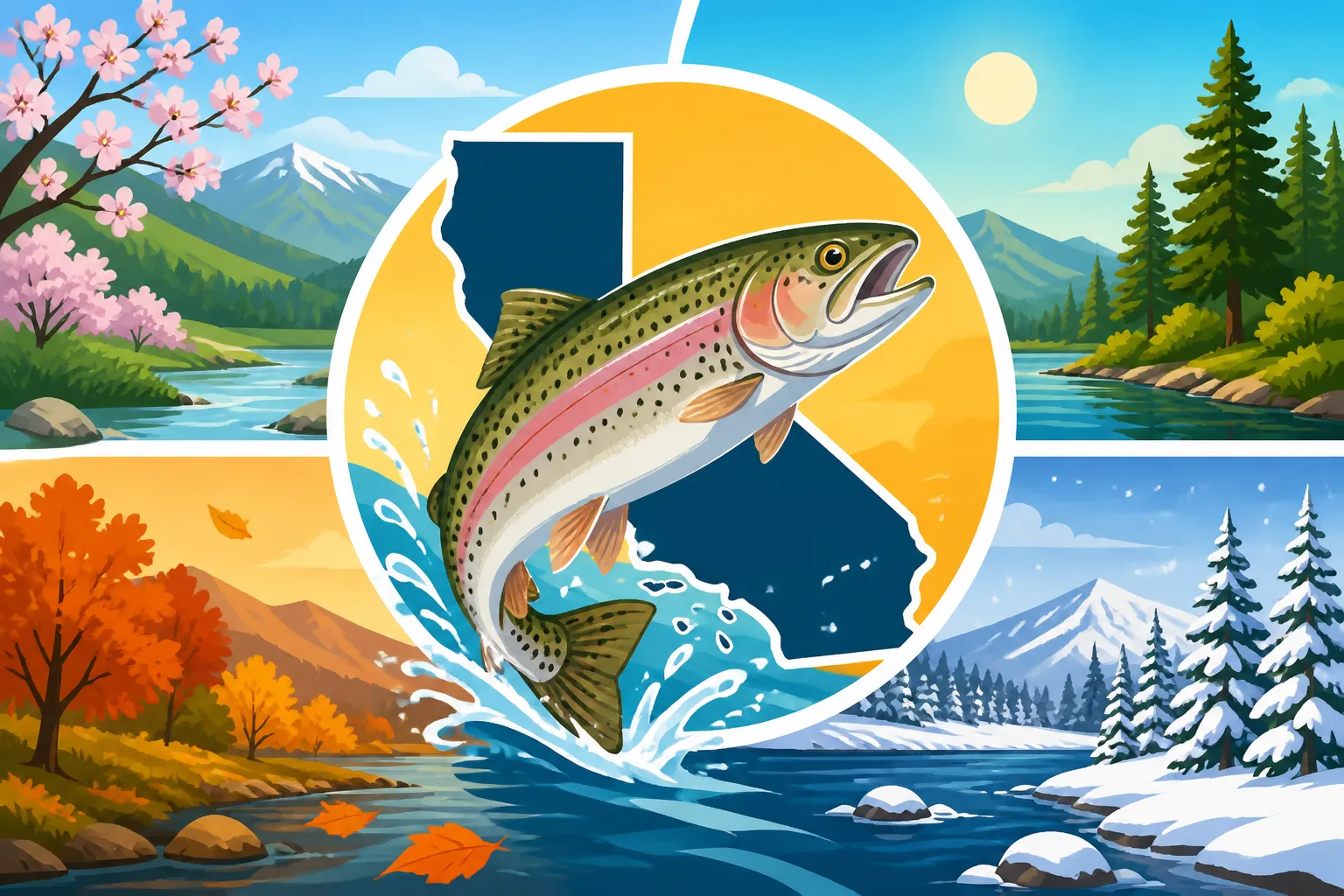
Here’s a quick overview of what to expect season by season for trout fishing in California:
| Season | Typical Months | Primary Locations | Key Characteristics | Recommended Techniques |
|---|---|---|---|---|
| Spring | March – May | Lower elevation lakes, reservoirs, river openers (Sierra) | Thawing waters, post-stocking frenzy, active feeding, early season wild trout. | Bait (PowerBait, worms), spinners, spoons, nymphing (fly), dry flies (late spring) |
| Summer | June – August | High Sierra lakes & streams, deep low-elevation lakes | High country accessibility, warm low-elevation waters, trout go deep, early morning/late evening bites. | Dry flies, small spinners (high country), trolling deep, jigging (low-elevation) |
| Fall | September – November | All waters accessible, pre-winter feeding, spawning runs | Aggressive feeding, vibrant spawning colors, fewer crowds, cooler water temps, strong bites. | Streamers, nymphs (fly), larger spoons/spinners, bait. |
| Winter | December – February | Lower elevation reservoirs, spring-fed rivers | Slow metabolism, subtle bites, ice fishing (limited), focus on finesse and patience. | Small jigs, micro-spoons, bait (PowerBait, salmon eggs), slow nymphing (fly) |
Beyond the Calendar: Other Success Factors
While understanding the seasonal rhythms is paramount, a truly successful trout angler knows that other environmental factors and technical skills play an equally vital role. The calendar gives you a roadmap, but these details provide the navigation.
Water Temperature and Oxygen Levels
Trout are incredibly sensitive to water temperature and dissolved oxygen levels. They thrive in cold, oxygen-rich water, typically ranging from 45°F to 65°F. Outside of this range, they become stressed, lethargic, or seek refuge in more favorable conditions. During the warmer months, as mentioned, trout will seek deeper, cooler water. In winter, they become less active as their metabolism slows down in very cold conditions.
Understanding the optimal temperature range helps you locate fish. For instance, in spring, trout might be found shallower as the water warms, but in summer, a submerged spring or the mouth of a cold tributary can be a magnet for fish. Knowing how these factors influence trout behavior is a huge part of the puzzle. Monitoring local water temperatures, often reported by fishing guides or on specialized websites, can give you a significant advantage.
Hatch Matching and Optimal Bait Selection
For fly anglers, the art of "hatch matching" is critical. This involves identifying the aquatic insects that are currently hatching or are prevalent in the water and then selecting a fly pattern that mimics them in size, shape, and color. Mayflies, caddisflies, stoneflies, and midges are common trout food sources, and having a diverse fly box ready for different stages of these insects (nymphs, emergers, adults) will dramatically increase your success. Even if you're not a fly fisherman, knowing what insects are active can inform your lure or bait choices, helping you select colors and retrieve styles that imitate natural forage.
For spin and bait anglers, choosing the right bait for the conditions is just as important. Live worms, crickets, or salmon eggs are perennially popular, while prepared baits like PowerBait or Gulp! are incredibly effective in stocked waters. The color of PowerBait can make a huge difference, so having a selection of fluorescent colors, as well as more natural hues, is a good idea. Small spinners like Panther Martins or Rooster Tails, or spoons like Thomas Buoyants, should be staples in your tackle box, easily found on Amazon. Don't be afraid to experiment with different sizes and colors until you find what the fish are keying in on that particular day. For more specific advice, check out How to Fish for Trout in California.
Relying on Local Knowledge and Fishing Reports
Perhaps the most valuable resource for trout fishing success, beyond all the gear and techniques, is local knowledge. Conditions in California can change rapidly due to weather, snowmelt, water releases from dams, and stocking schedules. A fishing report from last week might not be accurate for today.
Always make it a point to check current conditions before you go. Local tackle shops are an invaluable source of real-time information. The folks working there live and breathe fishing, and they'll know what flies are working, what bait is getting bites, and where the fish are holding. Many also post regular updates online or on their social media pages. Websites like the CDFW, forums, and specialized fishing apps also provide current data. Don't hesitate to strike up conversations with other anglers on the water; most are happy to share tips, especially if you return the favor. This blend of seasonal understanding, environmental awareness, and real-time intelligence is what truly elevates a good trout angler to a great one.
Disclaimer
Fishing regulations and conditions in California can change frequently. Always consult the latest California Department of Fish and Wildlife (CDFW) regulations booklet or website before heading out on any fishing trip. This guide is for informational purposes only and should not be considered legal advice. Be aware of local conditions and practice safe angling.