Best Season to Catch Sturgeon in California
For many California anglers, the quest for sturgeon is a deeply personal, often frustrating, but ultimately incredibly rewarding journey. These prehistoric giants demand patience, specialized techniques, and a keen understanding of their seasonal movements. If you've ever spent hours staring at a rod tip, wondering if today's the day you'll feel that unmistakable sturgeon tug, then you know the struggle is real. This guide is all about helping you decode the seasonal patterns of white sturgeon in California, so you can increase your chances of connecting with one of these magnificent fish, making every minute on the water count.
Unraveling the Best Seasons for California Sturgeon Fishing
Understanding when to target sturgeon isn't just about picking a month; it's about knowing the rhythms of their lives, their feeding habits, and how they react to environmental changes throughout the year. California's vast and varied waters, from the sprawling Delta to the expansive San Francisco Bay, mean that "best season" can have some nuances depending on where you cast your line.
The Allure of White Sturgeon
When we talk about sturgeon fishing in California, we're almost exclusively talking about white sturgeon. These incredible fish are the largest freshwater fish in North America and can live for over 100 years, growing to truly monumental sizes. Catching a "keeper" (which, by the way, has a very specific slot limit) is a badge of honor for many anglers. The sheer power of a large sturgeon on the line is something that truly gets your heart pumping. However, it's absolutely crucial to remember that green sturgeon, another species found here, are a federally protected species and must be released immediately and unharmed. Always be sure you can identify your catch. This focus on white sturgeon means our strategies for finding them throughout the year need to be precise, taking into account their unique biology and preferred conditions.
Understanding Seasonal Behavior
Sturgeon are migratory fish, and their movements are heavily influenced by water temperature, salinity, and food availability. While they can be found year-round in certain deep pockets of the Delta and Bay, their most active feeding and therefore their most catchable periods align with specific seasons. They're bottom feeders, constantly cruising the river and bay floors for clams, shrimp, worms, and small fish. When water temperatures are optimal, their metabolism speeds up, and they feed more aggressively. Conversely, during extreme heat or cold, they might become more lethargic, making them harder to entice. Learning to "read" the water and anticipate these changes is part of the art of sturgeon fishing.
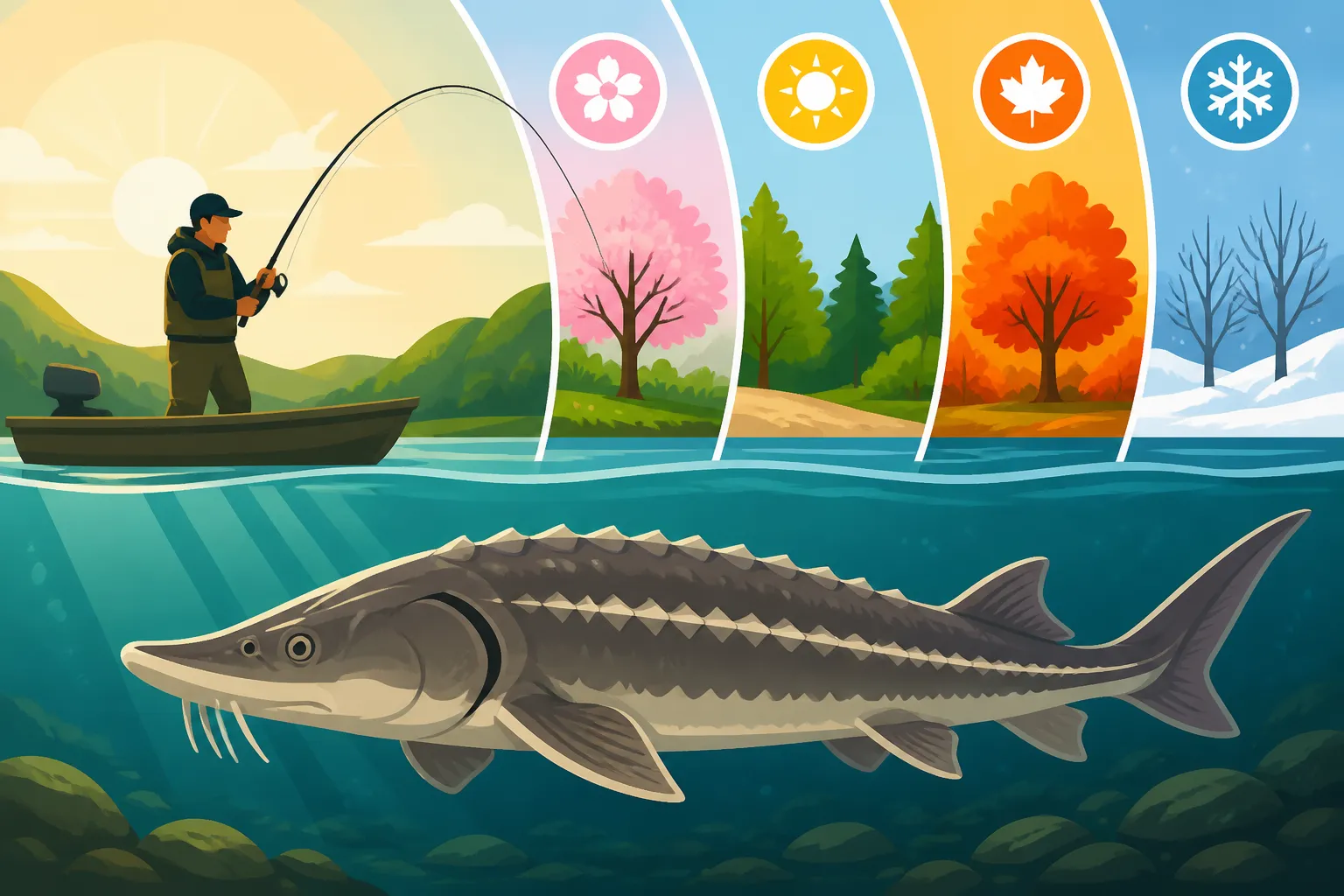
Prime Sturgeon Fishing Windows: Fall, Winter, and Spring
While some dedicated anglers might pursue sturgeon in the summer months, the consensus among seasoned veterans is that late fall through spring offers the most consistent action and the best chance at landing a trophy. This is when the water conditions in the primary sturgeon habitats align perfectly with their feeding and migratory patterns.
Why Fall and Winter Reign Supreme
As the sweltering California summer begins to fade and the first cool fronts move in, typically from late September into March, the sturgeon fishing really starts to heat up. This period, especially the colder months of winter, is widely considered the absolute prime time to target white sturgeon. Why? A few key reasons:
- Cooling Water Temperatures: Sturgeon thrive in cooler water. As the Delta and Bay waters drop from summer highs, these fish become much more active. Their metabolism picks up, and they begin to feed heavily, packing on weight before and during the colder periods. This means they're more likely to bite.
- Salmon Migration: Another massive draw for sturgeon in the fall is the annual salmon run. As Chinook salmon migrate up the Sacramento and San Joaquin rivers to spawn, sturgeon congregate in key areas to feast on salmon carcasses, eggs, and injured fish. This provides a supercharged food source that really turns them on. If you're looking for an incredible experience, targeting sturgeon during the peak of the salmon run is an exhilarating challenge. You might even stumble upon some prime spots to catch salmon yourself, if you consult a guide like the one on California Salmon Season Dates.
- Concentrated Fish: In the colder months, sturgeon tend to school up in deeper channels and holes, making them easier to locate. They seek out these deeper, more stable temperature zones, and if you can find one, you often find many. This concentration means less searching and more fishing.
During these months, anglers often find success anchoring up in deeper sections of the Delta or specific channels in San Francisco Bay. Popular baits include ghost shrimp, mud shrimp, shad, lamprey eel, and even cured salmon roe (especially during the salmon run). Many anglers swear by using scent attractants with their bait, often found on platforms like Amazon, to further entice these scent-driven predators.
Spring's Transitional Opportunities
As winter gives way to spring, generally from March through May, sturgeon fishing remains strong, albeit with some shifts. This is a transitional period, and while the water temperatures are warming, they're still well within the sturgeon's preferred range.
- Pre-Spawn and Post-Spawn Feeding: Many white sturgeon will begin their spawning migrations in late winter and early spring. Before and after spawning, they often engage in heavy feeding to build up energy reserves or recover. This can create excellent fishing opportunities, particularly in the lower river systems and the upstream sections of the Delta.
- Mild Weather: For anglers, spring offers the advantage of more pleasant weather conditions compared to the sometimes harsh cold of winter. This can make for a more comfortable day on the water, especially for those who aren't quite ready for freezing temperatures. However, spring can also bring unpredictable weather, including strong winds, so always check the forecast.
- Changing Baits and Locations: As spring progresses, some of the traditional winter baits might become less effective, and sturgeon might start spreading out from their wintering holes. This is when local knowledge and adaptability become key. Sometimes a switch to fresh shad or even a different type of shrimp can make all the difference. Knowing the California Freshwater Fishing Regulations can also help you understand seasonal bait restrictions.
It's important to keep an eye on river flows and water clarity during spring. Heavy rains can blow out rivers, making fishing difficult, but as the water clears, the fishing can rebound spectacularly.
Key Locations and How Seasons Impact Them
California's sturgeon fishery is primarily centered around the immense Sacramento-San Joaquin River Delta and the expansive San Francisco Bay. While sturgeon can be found in various smaller tributaries and estuaries, these two regions are the undisputed capitals of sturgeon fishing.
The Legendary Sacramento-San Joaquin Delta
The California Delta, a vast network of rivers, sloughs, and channels, is arguably the most famous sturgeon fishing destination in the state. Its nutrient-rich waters and diverse ecosystems provide ideal habitat for white sturgeon.
- Fall and Winter Dominance: This is where the Delta truly shines. As mentioned, the salmon runs draw sturgeon into the system, and the cooler water concentrates them in key areas. Popular spots include the deep channels of the Sacramento River, especially around Pittsburg and Antioch, and various sloughs off the main river. The stretch between Rio Vista and Suisun Bay is also a known hotspot. Many anglers rely on strong, heavy-duty fishing lines and circle hooks to effectively fish these deep, swift-moving waters. You can find excellent options for your setup on Amazon, ensuring you have the right gear to handle these powerful fish.
- Spring Migrations: In spring, sturgeon will continue to utilize the Delta, often pushing further upstream into the Sacramento and San Joaquin rivers for spawning. Areas like the Cache Slough complex and the deeper bends of the main rivers can be very productive. The key is often to follow the freshest water and current breaks where food accumulates.
To truly understand the nuances of this area, a deep dive into the Sacramento River Fishing Guide would be incredibly beneficial. Different sections of the river present different challenges and opportunities throughout the seasons.
San Francisco Bay's Unique Dynamics
San Francisco Bay offers a different, but equally exciting, sturgeon fishing experience. Here, tidal currents and salinity play an even larger role than in the Delta.
- Year-Round Potential, Winter Peak: While sturgeon can be caught in the Bay year-round, the winter months, when the Delta outflows are strong, often produce the best results. The Bay acts as a massive feeding ground, and sturgeon will congregate in deeper channels and flats where current brings food. Productive areas include the Berkeley Flats, Oyster Point, the Alameda Rock Wall, and the waters around Alcatraz and Angel Island.
- Tidal Influence: Tides are absolutely critical in the Bay. Sturgeon use strong tidal currents to feed, positioning themselves to intercept food as it washes by. Often, the hour or two around slack tide (both high and low) and the beginning of a new tide flow are the most productive times. Understanding the tidal swings is paramount for success in the Bay. For more detailed information, checking out a guide on San Francisco Bay Fishing Spots would be highly recommended.
- Shad and Shrimp Baits: While ghost shrimp and mud shrimp are perennial favorites, fresh shad can be incredibly effective in the Bay, especially when available. Again, heavy tackle is a must to combat strong currents and large fish.
Gear, Bait, and Tactics for Each Season
Regardless of the season, sturgeon fishing requires robust gear. A heavy-action rod (rated for 30-80 lb line), a conventional reel capable of holding at least 200-300 yards of strong braided line (50-80 lb test), and heavy sinkers (8-16 oz, sometimes more depending on current) are standard.
- Winter Tactics: In winter, bait presentation is key. A sliding sinker rig, often called a "Sturgeon Rig," is the most common. This involves a sinker sliding freely on the main line above a barrel swivel, which is then tied to a leader (usually 80-100 lb monofilament or fluorocarbon) with a large circle hook (8/0-12/0). Fresh bait is paramount; you want the strongest scent possible. Many anglers will change their bait every 15-30 minutes if they're not getting bites. This constant refresh ensures maximum scent dispersion, which is critical for these scent-driven bottom feeders.
- Spring Adaptations: As waters warm slightly in spring, sturgeon might become a bit more spread out. Don't be afraid to move around if a spot isn't producing. Some anglers also experiment with slightly lighter leaders if fish seem finicky, though never compromise on strength too much. The importance of having high-quality swivels and leader material cannot be overstated, and you'll find a wide selection of these critical components on Amazon. During strong winds or difficult currents, an effective boat anchor setup can mean the difference between staying on the fish and drifting off.
Here's a quick overview of seasonal activity:
| Season | Best Months (Approx.) | Typical Locations | Primary Baits | Key Considerations |
|---|---|---|---|---|
| Fall | Sept – Nov | Delta Channels, SF Bay Flats | Salmon Roe, Ghost/Mud Shrimp, Shad | Salmon run influence, cooling waters |
| Winter | Dec – Feb | Deep Delta Holes, SF Bay Channels | Ghost/Mud Shrimp, Lamprey Eel, Shad | Peak activity, concentrated fish, cold weather |
| Spring | Mar – May | Lower Rivers, Delta Sloughs, SF Bay | Ghost/Mud Shrimp, Shad, Worms | Pre/post-spawn activity, warming waters, tidal shifts |
| Summer | June – Aug | Deeper, Cooler Pockets (less common) | Occasional small baits, worms | Slower action, less reliable, fish often lethargic |
Navigating Regulations and Ensuring a Successful Trip
California's Department of Fish and Wildlife (CDFW) takes sturgeon conservation very seriously, and for good reason. These long-lived fish are vulnerable to overfishing, so strict regulations are in place to protect them. Ignoring these rules can lead to hefty fines and loss of fishing privileges. A comprehensive guide like California Fishing Regulations Explained is an essential read for any angler.
Essential Report Card Compliance
The most critical regulation for sturgeon fishing is the Sturgeon Fishing Report Card. This isn't just a recommendation; it's a legal requirement for anyone fishing for sturgeon, regardless of age or whether you possess a regular fishing license.
- Why it's Crucial: The report card allows the CDFW to monitor sturgeon populations, understand angler effort, and track harvest. Each card has tags that must be notched immediately upon retention of a legal sturgeon.
- Filling it Out Correctly: You need to record the date, location, and whether you kept or released the fish. Even if you don't catch a sturgeon, you must return the card by January 31st of the following year. Failing to return it can result in a fine. This vital piece of paper is just as important as your California Fishing License Guide.
- Slot Limits: Remember the slot limit! White sturgeon must be between 40 and 60 inches fork length (measured from the tip of the snout to the fork of the tail). Anything outside this range is illegal to retain and must be released. There's also an annual bag limit, usually one fish per year per angler, but always check the latest regulations.
For a detailed breakdown of this vital requirement, make sure to read up on the California Sturgeon Report Card. Understanding how to correctly fill out and return this card is fundamental to responsible sturgeon angling.
Conservation and Responsible Angling
Beyond the regulations, responsible angling practices are paramount for the health of the sturgeon fishery.
- Catch and Release Best Practices: For any sturgeon you don't intend to keep (or those outside the slot limit), quick and careful release is essential. Minimize the time the fish is out of water. Use proper de-hooking tools, and consider using barbless hooks, which are often required in certain areas for other species anyway. Guides on California Catch-and-Release Rules offer excellent advice on minimizing stress to fish.
- Handling Large Fish: If you hook a true monster, avoid dragging it onto dry land, especially on abrasive surfaces. Keep the fish in the water as much as possible, supporting its belly if you must lift it for a quick photo. These fish can weigh hundreds of pounds and their internal organs can be damaged by improper handling.
- Respect the Resource: Sturgeon fishing is a privilege. Follow all rules, respect other anglers, and leave no trace. This ensures that future generations can also experience the thrill of catching these living fossils.
Planning Your Trip for Success
Catching a sturgeon is rarely a spontaneous event. It requires planning, preparation, and often, a bit of grit.
- Choosing a Guide or Charter: Especially for newcomers, hiring a reputable guide or going on a charter boat can significantly increase your chances of success. They have the local knowledge, specialized gear, and experience to put you on fish and teach you the ropes. Many excellent guides operate out of Pittsburg, Antioch, and Rio Vista in the Delta, and various ports in the Bay. Look for guides specifically advertising "sturgeon trips."
- Checking Current Conditions and Forecasts: Always check the latest weather forecast, especially wind conditions, which can make fishing difficult or even dangerous. River flows in the Delta and tidal charts for the Bay are also crucial. Strong outflows from winter rains can be great for fishing, but can also make anchoring challenging. You can often find up-to-date fishing reports and conditions through bait shops, local online forums, or even by asking fellow anglers at launch ramps. Keep an eye out for posts about California Fishing in Winter or California Fishing in Spring for seasonal advice.
- Prepare Your Gear: Before you even leave the house, make sure your tackle is in top shape. Inspect your line for nicks, check your knots, and ensure your reel's drag is smooth. Losing a giant sturgeon to equipment failure is a heartbreaking experience. Consider bringing extra weights, hooks, and leader material, as snagging on the bottom is a common occurrence in sturgeon territory. Having a well-stocked tackle box, perhaps with some essentials purchased from Amazon, will save you a lot of grief on the water.
Ultimately, while late fall and winter undeniably offer the "best" seasons for catching sturgeon in California due to favorable conditions and concentrated fish, dedicated anglers can find opportunities throughout the spring as well. Success hinges on understanding the nuances of these magnificent fish, respecting their habitat, and always adhering to the regulations. Happy sturgeon hunting!
Disclaimer
Please be aware that fishing regulations, including seasons, bag limits, and size restrictions, can change. Always consult the latest California Department of Fish and Wildlife (CDFW) regulations booklet or their official website before heading out to fish. This guide is for informational purposes only and should not be considered a substitute for official regulations.