How to Catch Leopard Shark in California
There's something uniquely thrilling about targeting sharks in California waters, but let's be honest, trying to pinpoint a specific species like the leopard shark can feel a bit like searching for a needle in a kelp forest. You might have spent hours on the pier or beach, hoping for that distinctive spotted pattern, only to come up empty-handed or accidentally hook something else entirely. It's frustrating when you know these beautiful creatures are out there, but you just can't seem to get them to bite your line. This comprehensive guide is here to cut through the confusion and give you the real-world strategies, gear insights, and location tips you need to successfully target and catch leopard sharks in California, turning those hopes into actual catches.
Understanding the Elusive Leopard Shark
Before you even think about casting a line, getting to know your target is crucial. Leopard sharks aren't massive, toothy predators that will drag you across the ocean, but they are strong, beautiful, and a blast to catch. Understanding their habits, what they eat, and where they like to hang out is your first step to a successful outing. Ignoring these basics is like trying to bake a cake without knowing what flour is – you're just setting yourself up for disappointment.
Leopard Shark Identification and Habitat
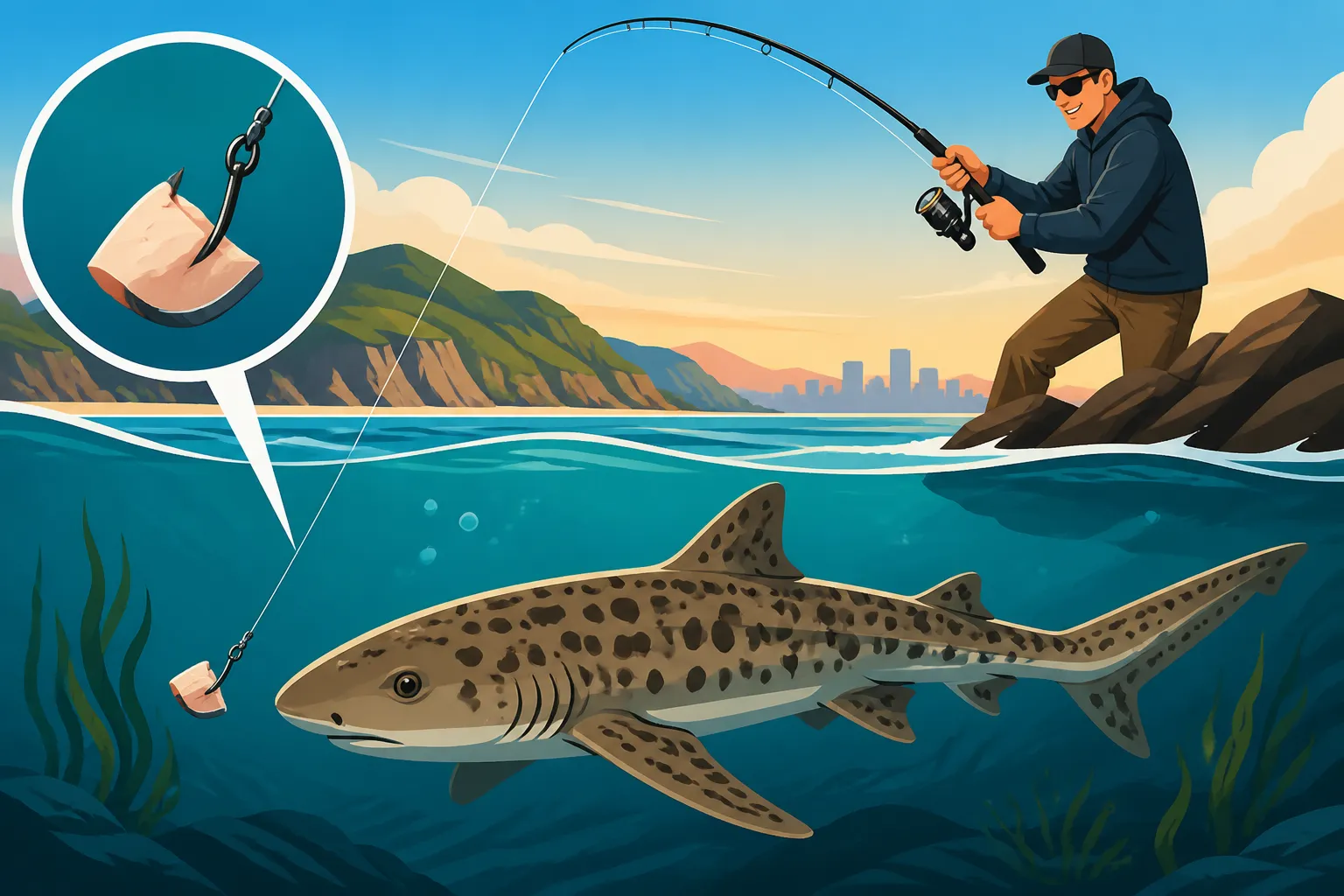
One of the coolest things about the leopard shark (Triakis semifasciata) is its unmistakable appearance. They're named for those gorgeous, saddle-like dark spots and bars across their sleek, slender, gray-to-bronze bodies. Many anglers mistake them for other small sharks, but once you've seen one, those distinctive markings make them easy to identify. They're generally not huge, typically ranging from 3 to 5 feet in length, though some can reach up to 7 feet. For many, landing a 4-foot leopard shark is a true trophy and a fantastic fight on light tackle.
These sharks are genuine coastal dwellers, perfectly at home in the shallow, temperate waters of California. You'll find them cruising over sandy or muddy bottoms, often near rocky reefs, kelp forests, and especially within the calm, nutrient-rich environments of bays and estuaries. They love those areas where freshwater mixes with saltwater, bringing in plenty of food. They're not offshore wanderers; they prefer to stick close to shore, making them accessible to pier and shore anglers, which is a big part of their appeal.
Their diet is pretty varied, which is good news for us anglers. Leopard sharks are opportunistic feeders, sifting through the bottom for whatever tasty morsels they can find. This includes crabs, shrimp, clams, worms, and small fish like anchovies, sardines, or flatfish. Knowing this helps us pick the best bait to present to them, as they're not too picky but certainly prefer certain snacks over others. Think of it as knowing your friend's favorite takeout order – you're more likely to succeed if you bring them what they actually want!
Where and When to Find Them
Leopard sharks are pretty consistent residents in California waters year-round, but they definitely have peak seasons when they're more abundant and active. Generally, the warmer months, from spring through fall, tend to be the most productive. This is when they're most actively feeding and, importantly, when females move into shallow bays and estuaries to give birth, which naturally concentrates them in accessible areas. If you're planning a trip specifically for leopard sharks, aiming for late spring or summer will significantly increase your odds.
Timing your fishing around the tides can make a massive difference. Leopard sharks are heavily influenced by tidal movements, especially in bays and estuaries. They often follow the incoming tide into shallower flats and channels to forage for food, then retreat to deeper water as the tide recedes. Many seasoned anglers swear by the last few hours of an incoming tide and the beginning of the outgoing tide as prime time. Dawn and dusk can also be incredibly productive, as these low-light conditions often coincide with increased feeding activity.
Connecting their habitat preferences with the right timing is key. For example, targeting the edges of eelgrass beds or sandy channels within bays during an incoming tide at dawn can be incredibly effective. They'll be moving through these areas, actively hunting for crabs and other prey stirred up by the current. It's about thinking like a shark: Where would you go to grab an easy meal when the water's moving just right? That combination of location and timing is what separates a hopeful cast from a successful hook-up.
California Regulations for Leopard Shark
Alright, let's talk rules. California has some of the most comprehensive fishing regulations in the country, and it's absolutely vital to stay on top of them. Regulations aren't just suggestions; they're legal requirements designed to protect fish populations and ensure healthy fisheries for generations to come. Always, always check the current California Department of Fish and Wildlife (CDFW) regulations before you head out. You can find detailed information on their website or by picking up a sport fishing regulations booklet. A quick search for "California Fishing Regulations Explained" will point you in the right direction. It's a small step that can save you a hefty fine or worse.
When it comes to leopard sharks, there are specific size and bag limits you need to be aware of. While these can shift, a common regulation for leopard sharks specifies a minimum size limit, often around 36 inches total length, and a daily bag limit, typically three fish. However, many anglers, myself included, choose to practice catch and release for these beautiful sharks, regardless of the limits. They're resilient, but careful handling ensures they swim away strong. Always be sure to verify the latest "California Saltwater Fishing Regulations" for any recent changes that might affect your trip.
Of course, no matter what you're fishing for in California, you're going to need a valid California Sport Fishing License if you're 16 years or older. This is non-negotiable. You can pick one up online, at most tackle shops, or at many sporting goods stores. Don't even think about casting a line without it. If you're unsure about the process, a quick read through "California Fishing License Guide" can clarify everything you need to know.
Finally, you need to be extremely mindful of Marine Protected Areas (MPAs). California has designated various areas along its coast as MPAs, where fishing activities can be heavily restricted or entirely prohibited. Fishing in an MPA, even accidentally, can lead to serious penalties. Before you fish any spot, especially in coastal waters, make sure you know if it's within an MPA and what the specific rules are for that zone. Understanding "California Marine Protected Areas Explained" is crucial for ethical and legal fishing. Ignorance of the law is not an excuse, and these areas are clearly marked and enforced.
Essential Gear for Leopard Shark Fishing
You wouldn't try to hammer a nail with a sponge, right? The same logic applies to fishing. Having the right gear isn't just about spending money; it's about matching your tools to the task. Leopard sharks, while not massive, are strong fighters, and you need tackle that can handle their power and the environments they inhabit. Skimping on your setup will only lead to broken lines, lost fish, and a whole lot of frustration.
Rods, Reels, and Line Choices
For targeting leopard sharks from shore or a pier, you're going to want a medium-heavy to heavy action rod, typically in the 7 to 10-foot range. This length provides the casting distance you'll often need to get past the immediate surf break or reach deeper channels from a pier. A good backbone is essential to handle the weight of your bait and sinker, and to give you leverage during the fight. For boat fishing, a slightly shorter rod, around 6 to 8 feet, with similar action, will give you better control and maneuverability. You're not trying to cast a mile, but you still need that power.
Pair that rod with a robust spinning reel or a reliable conventional reel. Spinning reels in the 6000-8000 size range are popular for their ease of use and good line capacity, perfect for pier or shore fishing. For boat anglers or those who prefer more brute force, a conventional reel in a similar size category (e.g., 20-30 size) offers superior cranking power. Whatever you choose, ensure it has a smooth, strong drag system and is designed to resist saltwater corrosion. Brands like Penn, Shimano, and Daiwa are often trusted choices, and you can find many great options and read reviews on sites like Amazon to help you decide.
Your line choice is critical. For your main line, I highly recommend a braided line in the 30 to 50-pound test range. Braid offers incredible strength-to-diameter ratio, allowing for more line on your reel, and its minimal stretch provides superior sensitivity, so you can feel even the most subtle shark bites. Connect your braid to a fluorocarbon leader, typically 40 to 80-pound test, about 2-3 feet long. Fluorocarbon is nearly invisible in water, and more importantly, it offers excellent abrasion resistance against the shark's rough skin and teeth, or any underwater structure. Don't skip the leader; it's your main defense against a cut-off.
Terminal Tackle and Rigging Strategies
When it comes to hooks, conservation-minded anglers widely recommend strong, sharp circle hooks. A 4/0 to 8/0 size is usually appropriate, depending on the size of your bait. Circle hooks are fantastic because they're designed to hook in the corner of the shark's mouth, minimizing the chance of gut-hooking, which greatly improves the survival rate of released fish. If you plan to release your leopard shark, and I sincerely hope you do, circle hooks are the way to go. You can find quality circle hooks from brands like Gamakatsu or Owner at most tackle shops or online retailers.
For sinkers, your choice will depend on where you're fishing. If you're surf fishing, pyramid sinkers or Sputnik sinkers (which have wires that dig into the sand) are excellent for holding your bait in place against strong currents and waves. Weights between 2 to 6 ounces are common. In calmer bay waters, a lighter egg sinker, which slides freely on your main line, can be effective. Always make sure your sinker is heavy enough to keep your bait stationary where you want it, especially if there's any current. Adding a robust swivel between your main line and leader is also essential to prevent line twist.
The most effective rig for leopard sharks, hands down, is the Carolina rig, also known as a sliding sinker rig. To set it up, you'll thread your main line through an egg sinker, then tie on a barrel swivel. To the other end of the swivel, attach your fluorocarbon leader (about 18-30 inches long), and finally, your circle hook. This setup allows the shark to pick up the bait and swim off without feeling the resistance of the sinker, giving you a better chance for a solid hook-set. It’s incredibly versatile and works well from piers, beaches, and boats alike.
If you're fishing from a pier and want to present multiple baits, a high-low rig can also be effective. This rig has two short leaders branching off the main line, each with a hook, with a sinker at the very bottom. This allows you to present baits at different depths and can sometimes entice bites from other species while you wait for a leopard shark. Just ensure your hooks are appropriate for the target size and consider if you might hook something larger than intended.
Bait Selection: What They Can't Resist
Leopard sharks are primarily scent-driven predators, so fresh, oily cut bait is almost always going to be your best bet. Think of it like a gourmet meal for them. Mackerel, sardines, and anchovies are top contenders, readily available at most bait shops. Squid is another fantastic option, especially if you want a tougher bait that stays on the hook longer and withstands smaller bait stealers. Using fresh bait is key; frozen bait works, but truly fresh bait that's never been frozen has a more potent scent trail that will attract sharks from a greater distance. It's frustrating to prepare for a trip and realize you forgot to pick up quality bait, so plan ahead!
While cut bait is king, live bait can also be incredibly effective if you have access to it. Small live fish like anchovies, smelt, or even ghost shrimp and small crabs can be irresistible to a cruising leopard shark. Rigging live bait appropriately is important to keep it lively and swimming naturally. For ghost shrimp, a small, sharp circle hook threaded carefully through the tail is usually sufficient. Remember, a lively bait puts out distress signals and vibrations that can attract predators.
In a pinch, or if you simply can't get your hands on fresh bait, prepared artificial baits can sometimes yield results. Products like Berkley Gulp! series, particularly those mimicking shrimp or sandworms, have a strong scent that can sometimes fool a hungry leopard shark. While they usually don't outperform fresh cut bait, having some on hand, perhaps ordered from Amazon, isn't a bad idea, especially if bait shops are closed or fresh bait is scarce. They can be a lifesaver on a slow day or when you've run out of your primary bait.
Ultimately, regardless of your choice, the presentation is almost as important as the bait itself. Cut your bait into manageable, bite-sized chunks that fit your hook cleanly without obstructing the barb. Ensure your bait is fresh, oily, and presented naturally on your chosen rig. A small chunk of mackerel, expertly threaded onto a circle hook, is far more enticing than a dried-out piece of squid carelessly slapped on a J-hook. Learning the nuances of "California Bait Fishing Tips and Techniques" can drastically improve your success rate.
Mastering Leopard Shark Fishing Techniques
So, you've got your gear, you know your bait, and you've checked the regulations. Now comes the exciting part: putting it all into practice. Whether you're standing on a pier, digging your feet into the sand, or cruising on a boat, there are specific techniques that will significantly increase your chances of hooking into a leopard shark. This isn't just about luck; it's about strategy, patience, and a little bit of finesse.
Pier and Shore Fishing Tactics
Pier fishing is an incredibly popular way to target leopard sharks in California, and for good reason—it often puts you over deeper water and structure without needing a boat. When fishing from a pier, look for areas where the pier pilings meet the sandy bottom, or where there are known channels or breaks in the current. These are natural ambush points for leopard sharks. Cast your Carolina rig with a hefty sinker out as far as you can comfortably, aiming for these deeper zones. Remember to check the "California Pier Fishing License Rules" as licenses are generally not required on public piers extending into the ocean, but there are exceptions.
Once your bait is out, the waiting game begins. Use a sturdy rod holder to keep your rod secure and engage your reel's clicker or set your drag just loose enough to allow line to be pulled without the rod going overboard. Leopard shark bites can be subtle at first—a series of light taps before the line starts steadily moving. Resist the urge to yank immediately. Let the shark take the bait and swim off for a few seconds; with a circle hook, the shark will often hook itself as it tries to swim away. You can find some fantastic fishing spots outlined in "Best Fishing Piers in California".
It's common to hook into other species when pier or shore fishing. Bat rays, stingrays, and various small bottom fish are frequent bycatch. Knowing how to safely handle and release these non-target species is important. Always have a dehooker handy, and try to keep the fish in the water as much as possible. It's frustrating when you're targeting one thing and get another, but every catch is a learning experience, and respecting all marine life is part of being a good angler.
Boat Fishing Approaches
Fishing for leopard sharks from a boat offers a bit more flexibility and access to prime spots that are out of reach from shore. You can either anchor or drift, depending on the conditions and the specific area you're fishing. Anchoring over a known channel, a deep hole within a bay, or near the edge of a kelp bed where leopard sharks are known to forage can be incredibly effective. Use your fishfinder to identify bottom structure or baitfish schools that might attract predators. Drop your Carolina rig straight down, letting the current carry the scent of your bait.
Drifting can also be productive, especially in larger bays or along sandy flats. Letting your boat drift slowly with the tide allows you to cover more ground and present your bait to a wider area. Pay close attention to your line; maintaining a slight tension helps you feel bites and prevents tangles, especially if multiple anglers are on board. Lightening your sinker a bit during a drift can make your bait appear more natural as it tumbles along the bottom.
If you're fishing in a boat, a little bit of chum can sometimes help, but be careful not to overdo it. A small mesh bag filled with cut anchovies or sardines, deployed up-current from your fishing position, can create a scent trail that draws sharks to your area. The goal is to entice them, not to feed them, so keep the chum sparse. Over-chumming can fill them up before they even see your hook. It's a fine line, but when done right, chumming can significantly improve your chances.
Handling and Releasing Your Catch Responsibly
Catching a leopard shark is exciting, but how you handle it once it's on the line and in your grasp is paramount, especially if you're releasing it (which, again, I strongly encourage). Leopard sharks are beautiful and generally docile, but they are still sharks. Try to keep the shark in the water as much as possible, especially if you're measuring or removing the hook. If you must bring it onto the boat or pier, lay it on a wet, flat surface, avoiding direct contact with hot, dry surfaces. Using wet gloves can help protect both your hands and the shark's delicate skin.
Hook removal is a crucial step. Since you're using a circle hook, it should be lodged right in the corner of the shark's mouth, making removal relatively straightforward. Have a long-nosed plier or, even better, a specialized dehooker ready. Gently but firmly grasp the hook and twist it out. Avoid tearing flesh. If the hook is deeply swallowed (which is rare with circle hooks), consider cutting the leader as close to the hook as possible rather than trying to force it out, as this can cause more harm. You can find excellent dehookers on Amazon, and they are an invaluable tool for any responsible angler.
Once the hook is out, the goal is to get the shark back into the water quickly and safely. Support the shark by its belly and tail, gently moving it back and forth in the water to help push oxygen over its gills until it regains its strength and swims away on its own. Never just toss a shark back into the water, especially if it looks sluggish. Ensuring a strong release is the mark of a true sportsman and contributes to the health of our fisheries. Reading up on "California Catch-and-Release Rules" can provide further valuable insights into best practices.
Prime California Spots for Leopard Shark
California's coastline is vast and varied, offering countless opportunities for fishing. When it comes to leopard sharks, certain areas stand out as consistent producers. Knowing where to focus your efforts can save you a lot of fruitless casting and get you right into the action. From the expansive bays of Northern California to the warmer waters of the south, there's a spot for every angler.
Northern California Hotspots
If you're in Northern California, the undisputed champion for leopard sharks is the San Francisco Bay. This massive estuary system, with its rich muddy bottoms and abundant bait, is a leopard shark paradise. You can find them throughout the bay, from the South Bay all the way up to the Carquinez Strait. Popular shore and pier spots include Berkeley Pier, which is a classic for many species, and areas like Candlestick Point or the shoreline parks around Oakland and Alameda. These locations offer good access to deeper channels and flats where sharks congregate. A thorough look at "San Francisco Bay Fishing Spots" will give you even more detailed information.
Another fantastic option in Northern California is Humboldt Bay. This large, shallow bay, particularly around the towns of Eureka and Arcata, is teeming with leopard sharks. The numerous channels, eelgrass beds, and river mouths provide ideal habitat and feeding grounds. Fishing from shorelines, docks, or small boats within the bay can be incredibly productive. Like San Francisco Bay, the estuarine environment provides a perfect blend of food and shelter for these sharks.
When fishing these Northern California locations, pay close attention to seasonal nuances. While leopard sharks are present year-round, they are generally more active and concentrated in the bays during the spring and summer months when water temperatures are warmer and breeding activity increases. This is particularly true for locations like "Berkeley Pier Fishing Guide", where the bite can really turn on during those warmer periods. Don't be afraid to ask local bait shops or fellow anglers for their insights on current conditions; they often have the most up-to-date intel.
Central and Southern California Havens
Moving south, Central California also offers prime opportunities. Monterey Bay is a beautiful and productive area. While better known for rockfish and salmon, its shallower parts, particularly around the Elkhorn Slough area, can hold good numbers of leopard sharks. Fishing from kayaks or small boats in the calmer parts of the bay, especially where sandy bottoms meet kelp or rocky structure, can yield excellent results. For more general fishing advice in the area, check out "Monterey Bay Fishing Guide".
Southern California, with its warmer waters and numerous large bays, is arguably the leopard shark capital of the state. San Diego Bay, Mission Bay, and Newport Bay are absolute hotspots. These bays offer vast areas of shallow, sandy, and muddy bottoms, rich with crabs and small fish – perfect for leopard sharks. Shoreline access is plentiful, and many piers, such as Ocean Beach Pier or Imperial Beach Pier in San Diego, are known for their leopard shark catches. If you're planning a trip to the region, exploring "San Diego Fishing Spots" should be at the top of your list for specific locations and tips.
Beyond the major bays, many open coast beaches in Southern California also hold leopard sharks, especially those with relatively calm surf and nearby structure. Beaches near river mouths or outflows can be particularly productive, as the outflow often carries nutrients and baitfish, attracting hungry sharks. Just remember that surf fishing for leopard sharks requires good casting distance and heavy sinkers to hold your bait in the often-stronger ocean currents.
Tidal and Weather Considerations
As we touched on earlier, tides play a monumental role in leopard shark fishing. For bay and estuary fishing, the incoming tide is often the most productive. As the tide pushes into these shallower areas, it brings in cooler, oxygenated water and stirs up the bottom, making crabs and other food sources more accessible. This is when leopard sharks tend to move from deeper channels onto the flats to feed. The slack tide just before the outgoing can also be good, as sharks might linger before retreating.
Weather patterns also have a significant impact. While leopard sharks are hardy, they generally prefer calm to moderately choppy conditions. Extremely rough seas can make fishing difficult and scatter bait. Similarly, very cold water temperatures can slow down their metabolism and make them less active feeders. Overcast days are often favored by many anglers, as they tend to keep water temperatures stable and can encourage more daytime feeding activity.
Finally, consider water clarity. While you might think clear water is always best, leopard sharks often thrive in slightly turbid water, especially in bays and estuaries. This murkiness can help them ambush prey and provide a sense of security. Avoid fishing in extremely muddy or polluted waters, but don't shy away from areas with a bit of "color." The sweet spot is often that slightly off-colored water where the scent of your bait can travel effectively without making the shark feel too exposed.
| Fishing Location Type | Recommended Rod Action | Recommended Line Weight (Braid) | Preferred Bait Type | Best Tide for Fishing |
|---|---|---|---|---|
| Pier Fishing | Medium-Heavy to Heavy | 30-50 lb | Cut Mackerel, Sardine, Squid | Incoming, Slack High |
| Shore/Surf Fishing | Heavy | 40-60 lb | Cut Mackerel, Sardine | Incoming, Low to High |
| Bay/Estuary Boat | Medium-Heavy | 30-50 lb | Cut Squid, Anchovy, Live Shrimp | Incoming, Slack High |
| Open Coast Boat | Medium-Heavy to Heavy | 40-60 lb | Cut Mackerel, Sardine, Squid | Incoming, Slack Low |
Disclaimer
Fishing regulations, conditions, and fish behavior can change. Always consult the latest California Department of Fish and Wildlife (CDFW) regulations before any fishing trip. This guide is for informational purposes only and does not constitute legal advice or guarantee fishing success. Practice responsible angling, respect marine life, and ensure your safety.