How to Fish for Stripers on the Delta in Fall
Falling into the rhythm of fishing on the California Delta in autumn is an experience like no other, but it can also be incredibly frustrating when you’re out there, rods bent, and nothing’s hitting. The vastness of the Delta, combined with the often-fickle nature of striped bass, can make finding and catching them feel like an impossible puzzle. This comprehensive guide is designed to cut through the confusion, offering you proven strategies, gear insights, and location tips to help you consistently hook into those elusive fall stripers.
Understanding Fall Striped Bass Behavior on the Delta
The California Delta is a truly unique fishery, and when autumn rolls around, it transforms into a bustling highway for striped bass. These fish are in a transitional period, and understanding their motivations is key to unlocking consistent success. It's not just about throwing a line in the water; it's about anticipating their moves.
Why Fall is Prime Time for Stripers
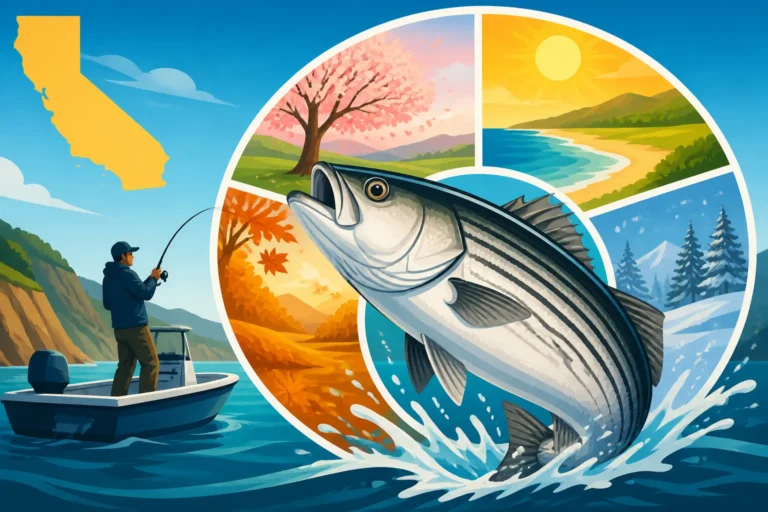
There's a reason why so many anglers eagerly await the fall season on the Delta – it's often when the stripers are at their most aggressive and abundant. As summer heat gives way to cooler temperatures, the water in the Delta also begins to drop, signaling to the striped bass that it's time to fuel up for winter. This crucial period sees them moving from their deeper summer haunts into shallower, more accessible areas where baitfish are plentiful.
The water temperature plays a massive role here. Once the water consistently dips into the 60s Fahrenheit, the stripers' metabolism kicks into high gear. They become opportunistic feeders, chasing down schools of baitfish like threadfin shad, hitch, and even juvenile salmon and steelhead. This isn't just a leisurely snack time; it's a frantic effort to put on weight. You'll often find them schooling up in large numbers, pushing bait against tule banks or into shallow flats, creating explosive surface action that's truly a sight to behold. This intense feeding window offers some of the most exciting fishing of the year, making it an essential time to understand California Striped Bass Regulations and Limits.
Key Locations and Seasonal Movements
The sheer size of the California Delta can be daunting, stretching over 1,000 miles of waterways. However, in the fall, stripers tend to concentrate in specific areas as they follow bait migrations and react to tidal flows. It's rarely a static situation; these fish are always on the move.
Many of the most productive fall spots are in the central and western Delta, where the freshwater meets the tidal influence of the San Francisco Bay. Iconic locations like Franks Tract become hotbeds of activity, particularly the submerged islands and weed lines within. Sherman Island, with its intricate network of sloughs and cuts, also offers excellent opportunities. The main channels of the Sacramento and San Joaquin Rivers are critical migration routes, and stripers will hold in deeper holes or along current seams waiting to ambush prey. As fall progresses, and especially after significant rain events, stripers might push further upriver, but generally, the western and central Delta remains the most consistent. Look for areas with current breaks, points, submerged humps, or distinct changes in bottom structure. Tule banks that offer shade and ambush points are also prime real estate for schooling fish. Understanding these patterns is crucial, and checking out a California Delta Fishing Guide can provide even more localized insights.
Essential Techniques for Fall Delta Stripers
With the stripers actively feeding, a variety of techniques can be highly effective. It’s all about matching the hatch and presenting your lure or bait in a way that triggers their predatory instincts. Don't be afraid to experiment, as conditions can change rapidly on the Delta.
Trolling with Plugs and Swimbaits
Trolling is often one of the most productive methods for covering water and locating active schools of stripers, especially when they are spread out or holding in deeper channels. The key is to present your lures at the right depth and speed to mimic natural baitfish.
For trolling, hard-bodied plugs like the Yo-Zuri Crystal Minnow, P-Line Predator, or Rapala X-Rap are incredibly popular and effective. Divers in sizes ranging from 4 to 7 inches are typically a good starting point, but don't hesitate to go larger if you're targeting bigger fish. Match the color to the prevailing baitfish – chrome and blue, chartreuse, or natural shad patterns are always solid choices. Experiment with trolling speeds, typically between 2 to 4 miles per hour, adjusting until you find what triggers bites. Pay close attention to your depth; stripers will often be suspended in the water column or hugging the bottom. Using a leadcore line or a downrigger can help you precisely control your lure's depth. When fishing with leadcore, a good rule of thumb is to calculate roughly 5 feet of depth for every color (10 yards) of line you let out, though this varies by lure, speed, and line diameter. Many anglers also find success with large swimbaits, like those from Savage Gear or Castaic, trolled slowly behind a lead weight. For those interested in understanding the nuances, a guide to California Trolling Tips and Techniques would be highly beneficial.
Casting Artificials and Live Bait
Once you've located a school of stripers, or if you're targeting specific structures, casting can be incredibly effective and often more exhilarating.
For artificials, soft plastic swimbaits, especially those designed to imitate Delta baitfish like G-Funk baits or similar shad profiles, are phenomenal. Rig them on a jighead heavy enough to get to the desired depth but light enough for a natural presentation. Sizes from 4 to 8 inches are standard. Flukes, like those from Zoom, rigged weightless or with a small belly weight, can also be deadly when twitched through bait schools. Don't forget topwater lures, especially during low light conditions or when stripers are actively busting on the surface. Walking baits (like the Heddon Super Spook) or poppers can elicit explosive strikes that get your heart pounding. For a more subtle approach, bucktail jigs or blade baits bounced along the bottom can entice less aggressive fish.
Live bait, however, can often be the ultimate trump card, especially when stripers are being finicky. Shad, anchovies, or even small bluegill (where legal) are excellent choices. Rig them on a Carolina rig with a sliding egg sinker or a simple dropper loop. Drifting live bait through known striper hangouts or anchoring near current seams can produce impressive results. Remember, live bait often requires a robust bait tank to keep your offerings frisky. You might also want to look into California Bait Fishing Tips and Techniques for more detailed rigging ideas.
Targeting Structure and Current Seams
Striped bass are ambush predators, and they love to position themselves where they can easily intercept prey. This means they are almost always associated with some form of structure or current break.
On the Delta, this can mean a lot of things: submerged islands, rock piles, bridge pilings, deep holes, old docks, and, of course, the ever-present tule banks. Look for areas where the current changes speed or direction, creating eddies or seams. These are natural funnels for baitfish, and stripers know it. Use your fishfinder to identify underwater contours, bait balls, and suspended fish. When you find a promising spot, approach stealthily, either by drifting with the current, using a shallow-water anchor like a Power-Pole or Talon, or holding your position with a trolling motor. Cast your lures or present your bait upstream or upcurrent, allowing it to drift naturally into the strike zone. On sunny days, stripers might hug the shade of tule banks or deeper ledges. After a rain, fresh water flowing into the Delta can create highly attractive current breaks and bring in new food sources, making those areas prime targets. Mastering these tactics can significantly improve your odds when trying to catch California Striped Bass in California: Where and How to Catch.
Gear Recommendations for a Successful Fall Striper Trip
Having the right tackle is fundamental to success on the Delta. Fall stripers can range from schoolie-sized fish to hard-fighting beasts, so your gear needs to be up to the task. Investing in quality equipment will pay dividends in sensitivity, casting distance, and the power needed to land big fish.
Rods, Reels, and Line for Delta Striper Fishing
For rod setups, you’ll want something versatile. A medium-heavy to heavy action casting or spinning rod, typically in the 7 to 8-foot range, is ideal. This length provides good casting distance for covering water and enough leverage to fight strong fish. For casting heavier swimbaits and topwater lures, a baitcasting setup with a high-capacity reel (like a Shimano Curado or a Daiwa Tatula) is excellent. If you prefer spinning gear, look for a robust reel in the 4000-6000 series (like a Penn Battle III or a Daiwa BG) paired with a sturdy rod.
When it comes to line, braided line is almost a necessity for its incredible sensitivity and strength-to-diameter ratio. A 30 to 50-pound test braid is common. Always use a fluorocarbon leader, typically 15 to 30-pound test, tied with an FG knot or a double-uni knot, for abrasion resistance and invisibility. For trolling, especially with leadcore, a robust conventional reel is preferred. For more detailed insights on tackle, refer to a comprehensive California Fishing Guide.
Must-Have Lures and Baits
Your tackle box should be stocked with a variety of proven Delta striper getters. For topwater action, Heddon Super Spooks, Lucky Craft Sammy, or similar walking baits in chrome, bone, or chartreuse are essential. For sub-surface casting, soft plastic swimbaits from brands like Optimum Baits, Huddleston Deluxe, or any realistic shad or minnow imitation in 4-8 inch sizes, rigged on appropriate jig heads, are a must. Carry a selection of jig head weights (1/2 oz to 2 oz) to match depth and current.
For trolling, include several diving plugs like the Yo-Zuri Crystal Minnow, P-Line Predator, or Bomber Long A, in both shallow and deep diving versions. Colors such as sardine, ghost minnow, firetiger, and chrome blue are highly effective. Don't forget a few bucktail jigs in white, chartreuse, or olive, ranging from 3/4 oz to 2 oz, for working deeper water or mimicking baitfish. If you plan on live bait, ensure you have appropriate hooks (e.g., octopus hooks in sizes 1/0 to 4/0) and sinkers. Consider carrying some scent attractants like Pro-Cure or Mike's Lure Oil to give your artificials an extra edge. You can find a great selection of these on Amazon.
Electronics and Accessories
Modern electronics can give you a significant advantage on the Delta. A reliable fish finder with GPS capabilities (like models from Garmin, Humminbird, or Lowrance) is invaluable for identifying structure, bait schools, and actual stripers. The GPS will help you mark productive spots and navigate the sometimes-confusing network of sloughs and channels.
A powerful trolling motor, especially one with GPS anchoring capabilities (like a Minn Kota Terrova or MotorGuide Xi5), is a game-changer for holding your position in current or stealthily approaching feeding schools. Always carry a reliable anchor system for when you want to stop and fish a specific hole or point. Other crucial accessories include a good pair of polarized sunglasses to spot fish and structure, sturdy pliers for hook removal, a long-handled net suitable for large fish, and a cooler with plenty of ice to properly care for your catch. Safety gear like life jackets, a first-aid kit, and a charged cell phone are non-negotiable on the vast Delta waters. For extended trips, considering a California Sportfishing Trips Explained might be useful.
| Lure Type | Best Conditions | Ideal Colors | Example Lures |
|---|---|---|---|
| Topwater Plugs | Low light, calm water, active surface feeds | Bone, Chrome, Chartreuse | Heddon Super Spook, Lucky Craft Sammy |
| Soft Plastic Swimbaits | All conditions, mimicking baitfish | Shad, Minnow, Pearl | Optimum Baits, G-Funk Baits, Keitech Swing Impact |
| Diving Plugs (Trolling) | Covering water, deeper channels, locating schools | Chrome Blue, Firetiger, Sardine | Yo-Zuri Crystal Minnow, P-Line Predator, Rapala X-Rap |
| Bucktail Jigs | Bottom bouncing, current seams, active fish | White, Chartreuse, Olive | SPRO Bucktail Jig, Andrus Jetty Caster |
| Live Bait | Finicky fish, slow drifts, anchoring over holes | Shad, Anchovy, Bluegill | Live-lined on a Carolina or dropper rig |
Disclaimer
Fishing regulations, seasons, and limits can change frequently. Always consult the latest California Department of Fish and Wildlife (CDFW) regulations before heading out. This guide is for informational purposes only and does not supersede official regulations.