Berkeley Pier Fishing Guide
There's nothing quite like the urge to cast a line, feel that tug, and reel in a fish, but let's be real: navigating all the rules, finding a good spot, and figuring out what gear you even need can be a total headache, especially if you're new to fishing or just looking for a low-stress outing. Many of us just want to get out there and enjoy the water without jumping through a million hoops for licenses or owning a boat. This comprehensive guide is here to untangle all those frustrations, giving you the complete rundown on making the iconic Berkeley Pier your go-to spot for a fantastic and uncomplicated fishing adventure.
Why Berkeley Pier is a Gem for Anglers and Why You Don't Need a License Here
For anyone in the bustling Bay Area, the idea of getting away from it all and connecting with nature often sounds like a full-day commitment involving traffic, parking woes, and complicated gear. But Berkeley Pier offers a truly refreshing alternative: a wonderfully accessible, productive, and surprisingly peaceful escape right within reach. It’s a place where you can genuinely unwind, soak in the panoramic views of the San Francisco Bay, Alcatraz, and the Golden Gate Bridge, all while waiting for that tell-tale bite on your line. It's truly a gem for both seasoned anglers and curious beginners, promising a relaxed atmosphere far removed from the hurried pace of city life.
The Perks of Pier Fishing in California
California is blessed with an incredible coastline, and along it, countless public piers stretch into the Pacific Ocean and its various bays. These piers aren't just for strolling or enjoying a sunset; they're vital fishing hubs, offering unique advantages over boat or shore fishing. First and foremost, the sheer accessibility is a huge win. You can literally walk out onto the water, often for free, and reach deeper waters that would otherwise require a boat. This makes it incredibly family-friendly, allowing kids to experience the excitement of fishing in a relatively safe and contained environment. There's a wonderful sense of community on many piers, too, where experienced anglers are often happy to share tips and stories, making it a great place to learn.
What's more, piers often act as natural attractors for fish. Their pilings provide shelter and a food source for smaller baitfish, which in turn draws in larger predatory species. The structure beneath the pier can be a veritable underwater city, teeming with marine life. For many, pier fishing embodies a pure, unpretentious form of angling – it's about the simple pleasure of the cast, the wait, and the thrill of the catch, all without the financial burden or logistical complexities of maintaining a boat or even owning specialized equipment. It's a convenient, low-barrier entry point into the fantastic world of fishing, and Berkeley Pier really shines in this regard, offering ample space and a long reach into the productive waters of the central Bay.
License-Free Fishing: A Closer Look
Now, here's where Berkeley Pier, and pretty much every other public pier in California, truly becomes a game-changer for many aspiring anglers: you don't need a fishing license to fish from a public pier in California. This isn't some loophole or a temporary waiver; it's a specific, long-standing regulation designed to encourage public access to fishing opportunities. Think about it – for many, the cost and perceived hassle of obtaining a California Fishing License Guide can be a deterrent to even trying the sport. This rule removes that barrier entirely, making fishing from the pier one of the most accessible recreational activities available.
However, and this is super important, while the license requirement is waived for pier fishing, all other California Fishing Regulations Explained remain firmly in place. This means you still need to abide by species-specific regulations concerning bag and size limits, seasons, and any gear restrictions. For example, if you're targeting Striped Bass, you still need to know the California Striped Bass Regulations regarding minimum size and daily limits. The California Department of Fish and Wildlife (CDFW) website or their annual regulation booklet is your best friend here, always check before you go. The idea is to allow easy access but still protect the precious marine resources we all share. So, cast your line with confidence, knowing you're legal, but always be informed about what you can keep and how much! If you're planning to move beyond pier fishing, understanding California Fishing License Cost will be your next step.
What You Can Expect to Catch at Berkeley Pier
Berkeley Pier, stretching over three miles out into the San Francisco Bay (though only the first 2,000 feet are accessible for fishing), is a fantastic place to encounter a diverse range of fish species. The pier's length means it reaches into varying depths and currents, attracting different types of fish at different times of the year. You're not just limited to one or two species here; the Bay's rich ecosystem ensures there's always something interesting to target, whether you're looking for a challenging fight or just some fresh fish for dinner.
Common Species and Seasonal Highlights
One of the most exciting aspects of fishing Berkeley Pier is the variety. You'll primarily encounter a mix of bottom dwellers and schooling fish that pass through the Bay.
Year-Round Residents:
- Leopard Sharks: These beautiful, docile sharks are probably the most common large catch from the pier. They put up a respectable fight and are usually present year-round, though more active in warmer months. If you're keen to learn more about catching them, check out our guide on How to Catch Leopard Shark in California.
- Bat Rays: Another big bottom dweller, Bat Rays are powerful fighters and are also frequently caught. Handle them with care due to their barb, and most anglers practice catch and release for these magnificent creatures.
- Perch (Pile, Rubberlip, Barred Surfperch): Various species of perch are a staple. They're usually smaller but delicious and can be caught throughout the year, especially around the pilings.
- Jacksmelt: These schooling fish are often targeted for bait but are also fun to catch on light tackle and make excellent table fare.
Seasonal Visitors:
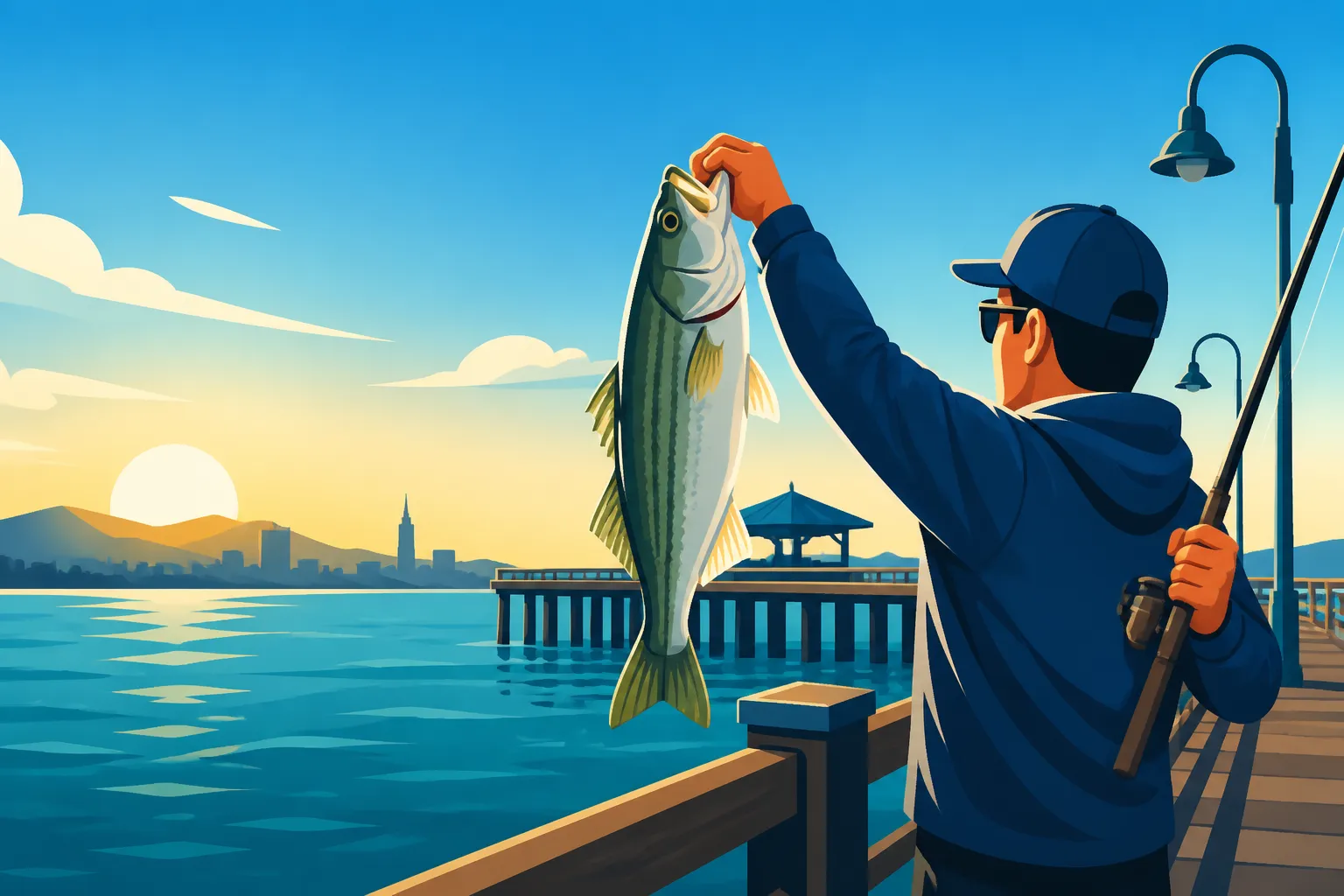
- Striped Bass: The legendary "stripers" are a highly sought-after game fish in the Bay. They move through the area, especially during spring and fall, chasing baitfish. They can be found closer to the shore or further out on the pier, depending on the migration. You'll want to be familiar with California Striped Bass Regulations before targeting them.
- California Halibut: These prized flatfish appear in warmer months, typically from spring through fall, lurking on the sandy bottom. They require a bit more finesse and a different technique but are well worth the effort for their delicious meat. Make sure you know the California Halibut Size and Bag Limits.
- Sturgeon: While much rarer, White Sturgeon do occasionally make an appearance, particularly in the colder months. Catching one is a significant achievement and requires heavy tackle and patience. Keep in mind that California Sturgeon Regulations and Limits are very strict.
- Shiner Perch and Smelt: These smaller fish are often caught in large numbers, providing excellent live bait for bigger predators or simply a fun target for kids.
To get a better sense of what's biting when, it's always a good idea to check local fishing reports. Websites like FishingBooker sometimes feature reports or have guides who operate nearby and can give you an idea of current conditions, helping you align your trip with the California Fishing Seasons: Month-by-Month Guide.
Identifying Local Catches
Knowing what you've caught is critical for a few reasons: first, it ensures you're following regulations regarding size and bag limits; second, it helps you identify potential hazards (like a Bat Ray's barb); and third, it's just plain good angling knowledge! Here's a quick reference table for some common Berkeley Pier catches:
| Species | Identifying Features | Preferred Baits | Best Season |
|---|---|---|---|
| Leopard Shark | Slender body, distinctive dark spots, blunt snout | Squid, cut anchovy, shrimp | Year-round, warmer months best |
| Bat Ray | Broad, flat body, diamond shape, long tail with barb | Squid, cut fish, clam | Year-round |
| Pile Perch | Deep body, silvery with darker vertical bars, large scales | Shrimp, mussels, bloodworms | Year-round |
| Striped Bass | Silvery body, prominent horizontal dark stripes, two dorsal fins | Live anchovy, sardine, lures | Spring/Fall |
| California Halibut | Flat, oval body, usually mottled brown/green, eyes on one side (left) | Live anchovy, smelt, squid, swimbaits | Spring-Fall |
| Jacksmelt | Slender, silvery body, small mouth, often found in schools | Small pieces of shrimp, sabiki rigs | Year-round |
It's a good practice to carry a small, waterproof field guide or have a fishing app on your phone that helps with fish identification. If you're ever unsure about a catch, especially if it's a species you're considering releasing, it's best to handle it carefully, take a quick photo, and then release it unharmed. This respectful approach helps maintain the health of the Bay's fishery for everyone. Understanding the nuances of these fish can also help you hone your Best Fishing Techniques for California Waters.
Essential Gear and Techniques for Berkeley Pier
Alright, let's talk tackle! One of the beautiful things about pier fishing at Berkeley is that you don't need a boatload of specialized gear. You can actually get started with a fairly basic setup, which is great for beginners or those who just want to keep things simple. However, having the right rod, reel, line, and knowing the best baits and rigs can dramatically increase your chances of success and make your day a lot more enjoyable. It’s all about matching your gear to the local conditions and the fish you hope to catch.
Recommended Rods, Reels, and Line
When you're standing on Berkeley Pier, you'll see everything from light freshwater setups to heavy-duty surf rods. For a versatile all-around setup that can handle most of what the Bay offers, I'd recommend a medium-heavy spinning combo.
- Rods: Look for a rod in the 7 to 9-foot range. This length gives you enough leverage for casting a good distance, which is often crucial on a long pier to reach active fish, and provides enough backbone to handle a decent-sized Leopard Shark or Striped Bass without feeling overwhelmed. A faster action tip will help you detect subtle bites, while the stronger butt section can put the hurt on bigger fish. Brands like Ugly Stik or Penn Battle offer durable, affordable options that are perfect for pier fishing.
- Reels: A spinning reel in the 3000 to 6000 series is ideal. The larger sizes will hold more line and have a stronger drag, which is essential when you hook into something hefty like a Bat Ray. Make sure it's corrosion-resistant, as saltwater can be brutal on gear. A reel with a smooth drag system is a must, allowing you to tire out a strong fish without snapping your line.
- Line: For your main line, you have a couple of solid choices. Many anglers prefer braided line in the 20 to 30-pound test range because it has no stretch, offering excellent sensitivity to feel even the lightest bites, and it's incredibly strong for its diameter. Pair it with a fluorocarbon leader of 15 to 25 pounds for invisibility and abrasion resistance, especially if you're fishing near the pier pilings where mussels and barnacles can fray line. Alternatively, a good quality monofilament line of 15 to 25 pounds can also work well, offering more stretch which can be forgiving with sudden runs from fish, though it's less sensitive than braid. For those interested in expanding their horizons, knowing about California Kayak Fishing Tips and Techniques might be useful, though not for the pier itself!
Best Baits and Rigs for Pier Fishing
Choosing the right bait and rig can make all the difference between a slow day and an action-packed one. The key is to match your bait and rig to the species you're targeting and the conditions.
- Baits:
- Shrimp: Raw shrimp (peeled or unpeeled) is a universal bait that almost everything eats, from perch to halibut to smaller sharks. It’s readily available at tackle shops or even grocery stores.
- Squid: Tough and scent-rich, squid strips are excellent for bottom fish like Leopard Sharks, Bat Rays, and even Halibut. It stays on the hook well, resisting nibbles from smaller bait stealers.
- Anchovies/Sardines: Fresh or frozen whole anchovies or chunks of sardine are irresistible to predatory fish like Striped Bass and Halibut. Live anchovies, if you can get them, are absolute killer bait.
- Bloodworms/Sandworms: These are fantastic for perch and other smaller bottom feeders, offering a strong scent that fish can't resist.
- Cut Mackerel: A good option for larger sharks and rays, offering a substantial meal with a strong scent trail.
- Rigs:
- High-Low Rig: This is perhaps the most common pier fishing rig. It features a sinker at the bottom and two hooks spaced above it, allowing you to fish two baits at different depths off the bottom. Excellent for perch, smelt, and anything else cruising the bottom or suspended just above it.
- Carolina Rig (Slider Rig): Perfect for Halibut and Leopard Sharks. It consists of a sliding sinker, a bead, a swivel, and a leader with your hook. The sliding sinker allows the fish to pick up the bait without feeling the weight, making it a very natural presentation.
- Slip Sinker Rig: Similar to a Carolina rig but often with a shorter leader. Good for fishing cut bait on the bottom for rays and sharks.
- Float/Bobber Rig: If you're targeting perch or small schooling fish closer to the surface, a float rig (with a weighted bobber) keeps your bait suspended at a specific depth. This is also a fun way to fish for kids.
- Sabiki Rig: A multi-hook rig designed to catch baitfish like anchovies and smelt. Cast it out, jig it gently, and you can quickly fill a bait bucket, which then becomes your prime live bait. You can learn more about general bait tactics in our guide to California Bait Fishing Tips and Techniques.
Remember, a little experimentation goes a long way. If one bait isn't working, try another! The fish in the Bay can be picky.
Mastering Pier-Specific Techniques
Fishing from a pier, especially a long one like Berkeley Pier, involves a few unique techniques and considerations. It’s not just about casting and waiting; understanding the water, currents, and fish behavior specific to this environment can significantly improve your catch rate.
First off, casting strategy is crucial. With so many people often on the pier, you need to be mindful of your surroundings. Avoid casting directly over other anglers' lines. Try to cast out as far as comfortably possible to reach different depths and structures. Sometimes, the fish are right under your feet, hugging the pilings; other times, they are further out in the deeper channel. Observing where others are catching fish can give you clues.
Reading the water is another important skill. Look for signs of baitfish schools (like nervous water or birds diving), areas of current breaks around the pier pilings, or even changes in water color. The strong currents in the San Francisco Bay mean that understanding tidal influences is paramount. Often, the incoming or outgoing tide, especially around the peak of the tide change, can be the most productive time, as fish become more active in feeding. Websites like NOAA provide free tide charts for the Berkeley area, so you can plan your trip around these optimal windows.
When you've cast out, patience and a slow retrieve are often key. For bottom fishing, let your bait settle, then lift and drop it gently every few minutes to stir up sediment and attract attention. If you're using lures for Striped Bass, a slow, steady retrieve with occasional jerks can imitate a wounded baitfish. Don't be afraid to move around the pier; a spot that's unproductive for an hour might suddenly turn on if you relocate further down the pier or closer to shore.
Finally, always be aware of your surroundings. Berkeley Pier is popular with pedestrians, joggers, and cyclists. Be courteous, keep your area clean, and make sure your lines aren't a hazard to others. Remember, pier fishing is often as much about the experience and camaraderie as it is about the catch itself.
Navigating Berkeley Pier: Access, Amenities, and Etiquette
Berkeley Pier is more than just a place to fish; it's a vibrant community space, a scenic overlook, and a cherished local landmark. To truly enjoy your fishing trip here, it helps to understand the practicalities of getting there, what facilities are available, and how to be a good neighbor on the pier. After all, a smooth trip starts with good planning! This is one of the Best Fishing Piers in California, and knowing the ins and outs makes all the difference.
Getting There and Parking
Berkeley Pier is located at the foot of University Avenue in Berkeley, California. It’s quite easy to find, as University Avenue leads directly to the waterfront park area.
- Driving: If you're driving, take the University Avenue exit from I-80/I-580. Head west towards the Bay. University Avenue will lead you directly into the Cesar Chavez Park area where the pier begins.
- Parking: There is ample paid parking available in lots adjacent to the pier and Cesar Chavez Park. Parking fees typically apply and can vary, so it's a good idea to bring some cash or be prepared to pay by card/app. On busy weekends, these lots can fill up, especially if there are other events happening in the park. You might find limited free street parking further away on residential streets, but be mindful of posted restrictions and local parking ordinances. It's often worth paying for the closer, more convenient parking to avoid a long haul with your gear.
- Public Transportation: For those looking to avoid driving, AC Transit buses serve the area, with stops relatively close to the pier entrance. Check the AC Transit website for specific routes and schedules. This can be a great option if you're traveling light or coming from nearby East Bay cities. While you can find many great San Francisco Bay Fishing Spots, Berkeley Pier offers a unique experience without requiring a boat.
On-Site Facilities and Services
While Berkeley Pier itself is a long concrete structure, the surrounding area, primarily Cesar Chavez Park, provides a host of amenities that enhance your fishing experience.
- Restrooms: Public restrooms are available in Cesar Chavez Park, near the pier entrance. These are generally well-maintained, but it's always a good idea to carry hand sanitizer.
- Bait & Tackle: There typically isn't a dedicated bait and tackle shop directly on Berkeley Pier anymore, but there are several excellent independent shops in the broader Berkeley and Oakland area. Before heading out, consider stopping at a local tackle shop like Hi's Tackle Box in South San Francisco or a similar store to pick up fresh bait, extra hooks, sinkers, and any forgotten essentials. They often have the most up-to-date local knowledge too.
- Food and Drink: While there aren't typically vendors directly on the pier, the nearby marina area or University Avenue itself offers cafes and restaurants where you can grab a snack, a coffee, or a full meal before or after your fishing session. It’s always a good idea to pack your own water and some snacks, especially on a long fishing day.
- Picnic Areas and Open Space: Cesar Chavez Park, which the pier extends from, is a beautiful 90-acre park with plenty of open grassy areas, walking paths, and picnic tables. It’s a fantastic spot to enjoy a meal, let kids run around, or simply relax if you need a break from fishing. You could even bring a kite, as the park is a popular kiting spot! If you're interested in alternative fishing experiences nearby, exploring charter options on platforms like FishingBooker can provide access to deeper waters or specialized trips for species like salmon or rockfish, offering a different perspective than pier fishing.
Being a Respectful Pier Angler
Fishing from a public pier means sharing the space with a wide variety of people, not all of whom are there to fish. Practicing good pier etiquette is essential to ensure everyone has an enjoyable and safe experience.
- Leave No Trace: This is paramount. Pack out everything you pack in, and then some. This includes discarded fishing line, bait containers, food wrappers, and especially any fish guts or unwanted catches. Dispose of trash in designated receptacles. Leaving litter not only spoils the environment but can also be harmful to wildlife.
- Respect Other Users: Berkeley Pier is a popular spot for walkers, joggers, and cyclists. Always be aware of your surroundings, keep your fishing gear consolidated, and ensure your lines are not obstructing pathways. If you’re casting, double-check that no one is behind or near you.
- Mind Your Space: Piers can get crowded, especially on weekends. Try to keep your gear organized and take up only the space you need. Avoid setting up directly next to another angler if there's plenty of room elsewhere, unless invited.
- Proper Fish Handling: If you plan on keeping fish, know your California Fishing Bag and Size Limits and ensure you have a cooler with ice to keep your catch fresh. If you're releasing fish, do so quickly and carefully, minimizing their time out of the water. For species like Bat Rays or smaller sharks, it's often best to cut the line if the hook is deep, rather than struggling to remove it and potentially harming the fish or yourself.
- Be Mindful of Marine Protected Areas (MPAs): While Berkeley Pier is open to fishing, it's always good to be aware of nearby California Marine Protected Areas Explained. These are specific zones where fishing may be restricted or prohibited to protect marine ecosystems. Always check official maps and regulations if you venture beyond the pier.
By following these guidelines, you'll not only enjoy your time on Berkeley Pier but also contribute to a positive and sustainable fishing environment for everyone. Happy casting!
Disclaimer
The information provided in this guide is for general informational purposes only and is subject to change. Fishing regulations, seasons, and limits are set by the California Department of Fish and Wildlife (CDFW) and can be updated at any time. It is the responsibility of each angler to check the most current CDFW regulations before engaging in any fishing activity. Always prioritize safety and environmental stewardship.