Best Bait for California Sturgeon
Trying to figure out the absolute best bait for California sturgeon can feel like solving a complex puzzle. You’ve heard whispers of ghost shrimp, the legendary power of shad, or the classic effectiveness of salmon roe, but which one truly gives you the edge against these prehistoric giants? This guide is here to cut through the noise, helping you understand what these amazing fish want to eat, how to present it, and ultimately, how to increase your chances of reeling in a California sturgeon.
Understanding the Sturgeon's Diet and Senses
Sturgeon are fascinating creatures, living fossils that have patrolled our waters for millions of years. Unlike many predatory fish that hunt by sight, sturgeon are primarily bottom feeders, relying heavily on their incredibly sensitive barbels and powerful sense of smell to locate food. This fundamental difference in their feeding strategy means that selecting the right bait is less about flash and movement, and much more about scent, texture, and how effectively your offering mimics their natural forage.
The Sturgeon's Super-Scent Detectors
Imagine a bloodhound underwater – that's essentially how a sturgeon finds its next meal. Their barbels, those whisker-like protrusions around their mouths, are packed with chemoreceptors, allowing them to detect even the faintest chemical trails in the water. This means that a bait that exudes a strong, natural aroma is going to be far more effective than something visually appealing but lacking scent. They’re not chasing down flashy lures; they’re rooting around in the mud and silt for a hidden meal. Understanding this is key to unlocking consistent success when targeting these magnificent fish. They cruise the bottom, vacuuming up whatever smells good.
Natural Forage vs. Your Bait
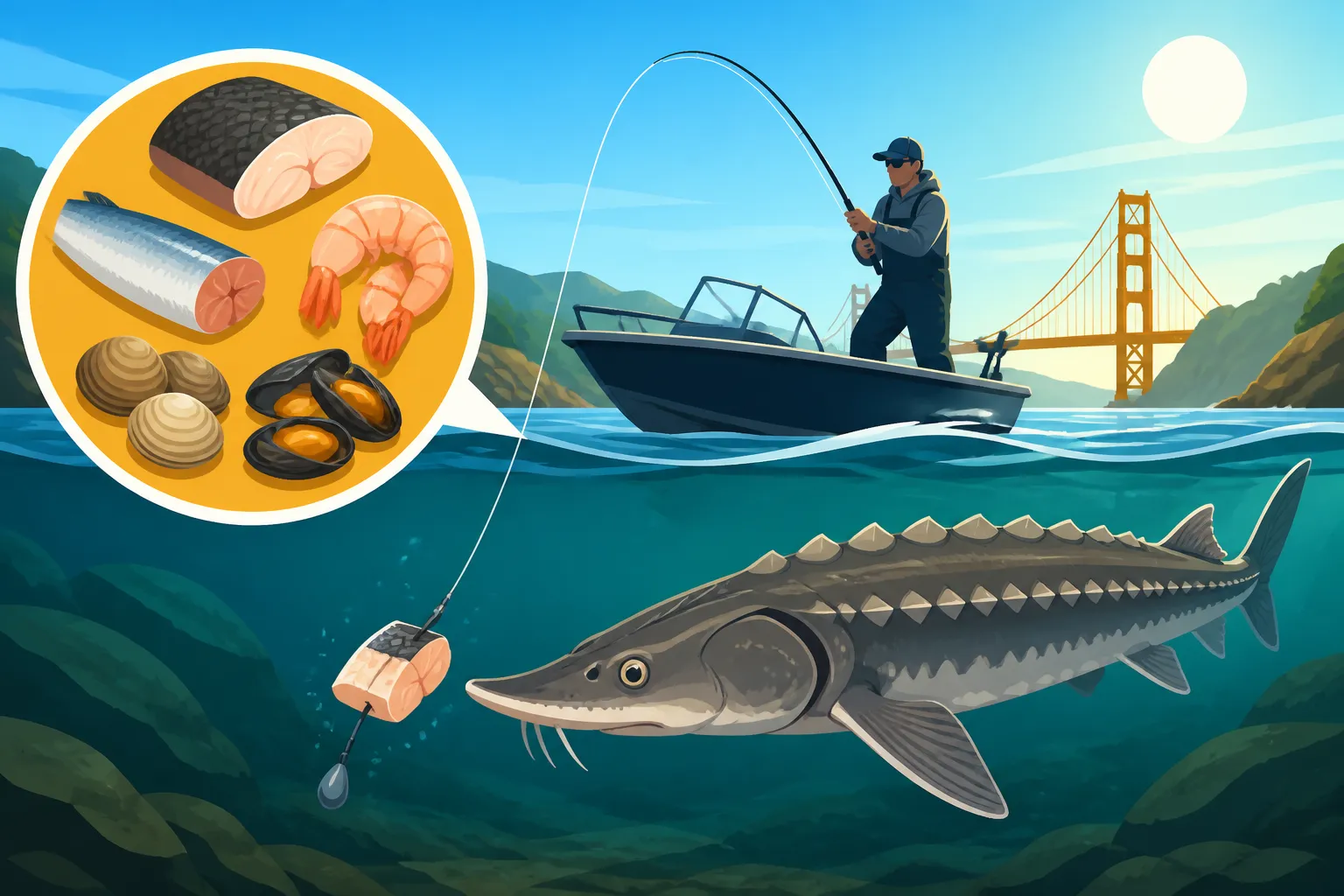
In their natural habitat, California sturgeon feed on a wide variety of prey, depending on where they live and the time of year. In the vast stretches of the San Francisco Bay Delta, for instance, they gorge on clams, worms, shrimp, and smaller fish like anchovies and shad. When choosing your bait, think about what's naturally available in the area you're fishing. If you're in the brackish waters of the delta, a juicy ghost shrimp might be irresistible. If you're in an area where small baitfish are abundant, a piece of cut fish could be just the ticket. Matching the hatch, as they say in fly fishing, applies here too, but with a strong emphasis on scent.
The Best Baits for California Sturgeon
When it comes to California sturgeon, there’s no single "magic" bait, but there are definitely a few superstars that consistently outperform the rest. These baits are chosen for their strong scent profile, natural appeal, and durability on the hook.
Live Baits: The Irresistible Wiggle
Live bait often brings an extra dimension to your presentation: movement. While sturgeon are primarily scent-feeders, a subtle twitch or squirm from a live offering can sometimes trigger a strike from an otherwise uninterested fish.
Ghost Shrimp
Without a doubt, ghost shrimp are often considered the king of sturgeon baits in California, especially in the brackish waters of the Delta and associated bays like San Pablo and Suisun. These little crustaceans are a natural part of the sturgeon’s diet, and the fish simply can’t resist them. They release a powerful scent trail and their slight movements on the hook are incredibly enticing. Finding fresh ghost shrimp can sometimes be a challenge, requiring a trip to a bait shop specializing in live bait or, for the truly dedicated, digging them up yourself with a pump. When you can get them, they are worth their weight in gold. Many anglers will rig several ghost shrimp on a single hook to create a larger, more impactful bait ball.
Shad
Another fantastic live bait, particularly when fishing areas where shad are prevalent, is live shad. These are usually small threadfin or gizzard shad. Their oily flesh creates a scent slick that sturgeon can follow from a distance. The challenge with live shad is often keeping them alive and lively on your hook. They are best used in areas with a good population of them, often requiring cast netting to acquire them freshly. When legal and available, a perfectly presented live shad, slowly swimming near the bottom, can be absolutely deadly. Remember to check local regulations about using live baitfish, as rules can vary.
Cut Baits: Scent is King
When live bait isn't an option or when you want to create a maximum scent trail, various cut baits shine. These are often easier to acquire and store.
Salmon Roe
Salmon roe, particularly cured clusters or single eggs, is an old-school favorite for sturgeon and remains incredibly effective. The eggs burst with a rich, fishy scent that sturgeon find irresistible. You can often buy cured salmon roe at tackle shops, or if you're lucky enough to catch salmon, cure your own. Many anglers will pack a bait mesh with a cluster of roe to keep it on the hook longer and really let that scent diffuse. This bait is especially potent during or after the salmon runs in rivers that feed into sturgeon habitats. For those serious about their sturgeon game, a good supply of quality salmon roe is a must-have. You can find quality cured roe options available online, even on platforms like Amazon.
Sardines and Anchovies
These oily little fish are scent powerhouses, making them excellent choices for cut bait. They are readily available frozen at most tackle shops and even many grocery stores. The key is to use fresh, oily pieces, often cut into strips or chunks that are about an inch or two long. The oil and blood they release create a long-lasting scent trail that draws sturgeon in. Many anglers will butterfly a sardine or anchovy fillet to expose more flesh and maximize scent dispersion. These are a great fallback when other specialized baits are hard to come by, and their effectiveness is tried and true.
Lamprey Eel
Less common, but incredibly potent, is lamprey eel. The blood and unique scent profile of lamprey are like a siren call to sturgeon. It's not always easy to find, but some specialized bait shops, especially around the Delta, will carry frozen lamprey sections. It's tough, stays on the hook well, and provides a powerful, long-lasting scent. If you're serious about targeting a trophy sturgeon, lamprey is definitely one to consider adding to your arsenal when available.
Commercial Sturgeon Baits and Scent Enhancers
Beyond natural offerings, the market has seen an increase in specialized commercial sturgeon baits and scent enhancers. These are designed to provide a concentrated, attractive aroma that can supplement or even replace natural baits in certain situations.
PowerBait and Similar Formulations
While often associated with trout fishing, some anglers have found success with heavily scented PowerBait or similar dough baits designed for bottom feeders. These often come in bright colors and super-strong scents like garlic or cheese, which can surprisingly attract sturgeon. They’re easy to use and stay on the hook well, but they usually perform best when combined with a natural bait to create a multi-layered appeal. Think of them as a "scent booster" for your primary offering.
Scent Sprays and Dips
Sometimes, your bait just needs an extra kick. Scent sprays and dips, often infused with natural fish oils, garlic, or a proprietary blend of attractants, can be applied to any cut bait or even artificial lures. Brands like Pro-Cure offer a wide range of super-concentrated scents that can significantly enhance your bait's appeal. A little squirt on your ghost shrimp or cut sardine can make a big difference, especially in colder water where scent dissipates slower. Many popular fishing stores, and online retailers like Amazon, stock a variety of these scent enhancers.
Here's a quick comparison of some popular sturgeon baits:
| Bait Type | Pros | Cons | Ideal Conditions |
|---|---|---|---|
| Ghost Shrimp | Top-tier natural food, strong scent, movement | Can be hard to find, fragile, pricey | All conditions, especially brackish Delta |
| Live Shad | Natural food, strong scent, irresistible movement | Hard to acquire/keep alive, may be regulated | Areas with natural shad, slow currents |
| Salmon Roe | Very strong, natural scent, stays on hook well | Can be expensive, sometimes hard to find | Good in colder water, during salmon runs |
| Cut Sardine | Highly oily, strong scent, readily available | Can be messy, less durable than roe | All conditions, good for broader scent |
| Cut Anchovy | Similar to sardine, affordable, strong scent | Very soft, can come off hook easily | Calm water, light currents |
| Lamprey Eel | Extremely potent unique scent, very durable | Hard to find, expensive | Targeting trophy sturgeon, strong currents |
| Scent Sprays | Boosts any bait, versatile | Not a standalone bait, can be overused | Enhancing natural baits, any conditions |
How to Rig and Present Your Sturgeon Bait
Having the best bait in the world won't do you much good if it's not presented properly. Sturgeon are bottom feeders, so your rig needs to get your bait directly into their feeding zone and keep it there. Presentation is paramount, and often, simplicity is key.
The Importance of a Bottom Rig
The most effective rig for sturgeon fishing in California is almost always a bottom rig, typically a sliding sinker rig, often called a Carolina rig. This setup allows your bait to be presented naturally on the bottom, with the line free to slide through the sinker. This means that when a sturgeon picks up your bait, it feels minimal resistance from the weight, encouraging it to fully commit and "chew" on the bait. This is crucial because sturgeon bites can often be very subtle at first.
Components of a Basic Sturgeon Rig
- Main Line: A strong braided line is preferred (50-80 lb test) for its sensitivity and abrasion resistance.
- Sliding Sinker: A heavy pyramid or disc sinker (3-8 oz, depending on current) to hold bottom.
- Barrel Swivel: A strong swivel to prevent line twist and separate the main line from the leader.
- Leader Line: A fluorocarbon or monofilament leader (40-60 lb test, 18-36 inches long) that's lighter than your main line in case of a snag, and less visible underwater.
- Hook: A strong, sharp hook is vital. Circle hooks are highly recommended (5/0 to 9/0) as they are designed to hook fish in the corner of the mouth, minimizing harm if you're practicing catch and release. Barbless hooks are often required or strongly encouraged for sturgeon, so check your California Freshwater Fishing Regulations and the specific California Sturgeon Regulations Explained where you're fishing.
When setting up your rig, thread your main line through the eye of your sliding sinker, then tie a barrel swivel to the end of your main line. Next, tie your leader to the other end of the swivel, and finally, your hook to the end of your leader. It seems simple, but getting this right ensures your bait is presented naturally on the bottom, just where those sturgeon are rooting around. For more details on specific rigs, you might want to look into How to Fish for Sturgeon in California.
Maximizing Scent Diffusion
Even the best bait needs help spreading its aroma. A common tactic is to "milk" your bait, especially soft baits like salmon roe or anchovies, before casting. Gently squeeze or mash the bait to release more of its natural juices and oils. Some anglers will even use a small syringe to inject scent into tougher baits. The goal is to create a vibrant scent plume that travels down current, drawing sturgeon from a distance. The longer your bait is in the water, the more scent it disperses, which is why durability is also a key factor. When fishing in areas like the California Delta Fishing Guide region, currents can be significant, making good scent dispersion even more important.
Beyond the Bait: Tips for Sturgeon Success
While bait choice is critical, it's just one piece of the puzzle. Successful sturgeon fishing involves understanding their behavior, their preferred habitats, and employing sound angling practices. These fish are powerful and ancient, deserving of respect and careful handling.
Fresh Bait is Always Best
This cannot be stressed enough: freshness matters. Sturgeon have an incredibly sensitive sense of smell, and they will absolutely turn up their noses at old, rancid bait. Invest in the freshest ghost shrimp, the O-I-L-I-E-S-T sardines, and perfectly cured salmon roe. If your bait doesn't smell good to you, it certainly won't smell good to a sturgeon. Keep your bait cool and out of direct sunlight, especially on warm days. Some dedicated anglers even bring small coolers with ice specifically for their bait, ensuring it stays in prime condition throughout the day.
Reading the Water and Tides
Sturgeon fishing is heavily influenced by tides, especially in tidal estuaries like the San Francisco Bay and the Delta. Moving water is your friend, as it helps carry the scent of your bait. The outgoing tide is often considered the most productive time, as it concentrates baitfish and other forage in specific channels and washes them out. However, don't dismiss the incoming tide or slack tides entirely; sturgeon can be caught at any time. Learning to read currents and identify where sturgeon might stage or feed based on the tidal flow is a skill that comes with experience. Pay attention to how the current affects your sinker and where your bait ultimately settles on the bottom. Local knowledge and fishing reports are invaluable here, especially when trying to understand specific areas outlined in the California Fishing Regulations by Region.
Proper Gear and Handling
Sturgeon are robust fish, and hooking into one requires appropriate gear. A medium-heavy to heavy action rod (7-9 feet) paired with a robust baitcasting or spinning reel spooled with strong braided line is ideal. You need a setup that can handle powerful runs and the brute strength of these fish. More importantly, proper handling is crucial for the survival of released sturgeon. These fish are slow-growing and long-lived, and many are caught and released multiple times. Always use a net designed for large fish, keep the fish in the water as much as possible, and never drag a sturgeon onto shore or concrete. When unhooking, use pliers or a hook remover, and if you need a photo, do it quickly and support the fish horizontally with both hands. Always remember that a California Sturgeon Report Card is required, and there are strict California Sturgeon Slot Limit rules to adhere to.
Finding the Hot Spots
California boasts several legendary sturgeon fishing locations. The expansive San Francisco Bay Delta is arguably the most famous, with key areas like Suisun Bay, San Pablo Bay, and the various sloughs and channels within the Sacramento and San Joaquin Rivers. These areas are rich in the forage sturgeon love. Best Places to Catch Sturgeon in California will give you more details, but generally, look for deeper channels, drop-offs, and areas with structure like submerged logs or rock piles where sturgeon might congregate. These are prime feeding grounds. The Best Fishing Spots in the Bay Area are also known for their sturgeon populations. Understanding Best Time of Year to Catch White Sturgeon in California will also greatly increase your odds.
The pursuit of California sturgeon is a journey that combines patience, skill, and a deep appreciation for these magnificent fish. By understanding their unique biology, selecting the right baits, mastering your rigging, and practicing responsible angling, you'll greatly improve your chances of a successful and memorable sturgeon encounter.
Disclaimer
Fishing regulations and conditions in California can change frequently. Always consult the latest California Department of Fish and Wildlife (CDFW) regulations before heading out. This guide provides general information and should not be considered a substitute for official regulations.