Best Winter Fishing in California
When the winter chill rolls across the Golden State, a lot of fair-weather anglers pack up their gear and lock their tackle boxes away until spring. Shorter days, freezing valley fogs, and sudden atmospheric rivers can make stepping out onto the water feel like a cold gamble. This guide solves the winter fishing puzzle by revealing where the bite stays hot across California, breaking down the exact species to target, and sharing proven seasonal tactics so you never waste a day shivering on an empty shoreline.
Freshwater Winter Hotspots and Tactics in California
When the temperatures drop, freshwater ecosystems across California undergo a massive reset. High-elevation lakes in the Sierra Nevada freeze over or close access roads due to snowpack, forcing savvy freshwater anglers to shift their attention toward lower-elevation reservoirs and inland river systems. While fish metabolism slows down significantly in cold water, species like rainbow trout, brown trout, and spotted bass actually become far more accessible to shore and boat anglers as they migrate into shallower, cooler surface waters that would normally be too warm for them during the summer months.
Understanding how cold water alters structure preference is the key to filling your cooler during December, January, and February. Deep-water staging areas near creek channels, submerged rocky ledges, and drop-offs become primary holding points. Rather than aggressive, fast-moving presentations, winter freshwater fishing demands patience, downsized terminal tackle, and ultra-slow retrieves.
Trolling and Bank Fishing Low-Elevation Lakes
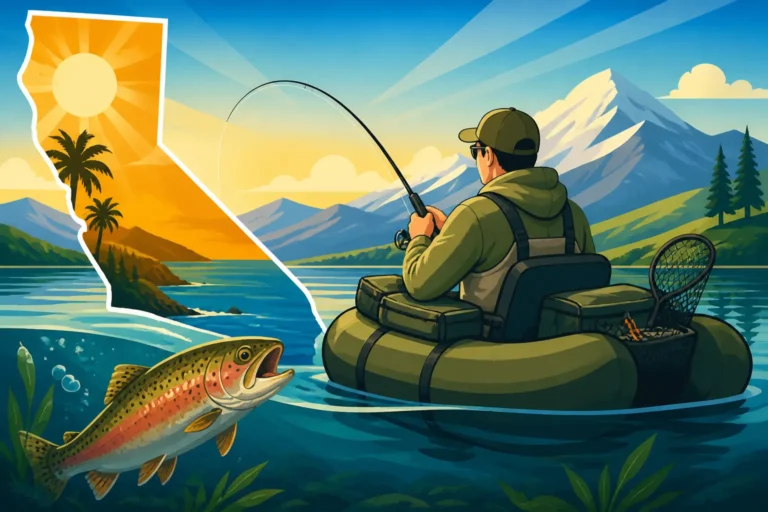
Low-elevation reservoirs throughout Northern and Central California offer some of the most consistent trout fishing of the entire year throughout the winter months. Destinations like Lake Shasta, Folsom Lake, Lake Berryessa, and New Melones Reservoir see surface water temperatures plummet into the low 50s or high 40s. This temperature drop brings large rainbow and brown trout out of the unreachable depths and into the top 10 to 20 feet of the water column.
For boat anglers, trolling small minnow-imitating plugs, dodgers with live nightcrawlers, or plastic grubs behind a lead-core line produces exceptional results. You do not need heavy downriggers during this season because the fish are cruising near the surface. Shore anglers can join in on the action by casting heavy spoons or setting up near river inlets with floating synthetic trout bait on a light leader. If you are gearing up for these frosty shoreline sessions, picking up a reliable portable rod holder or thermos on Amazon makes long waits in the cold wind much more comfortable. When planning your trip, always check local guidelines to ensure you follow California Trout Regulations and Limits before keeping your catch, as winter rules can vary significantly between body types.
Mastering cold-water trout behavior requires a subtle approach. Fish are less willing to chase fast baits across long distances, meaning you need to put your lure directly in their path. Slowing your boat speed down to around 1.5 miles per hour or allowing your bait to sit stationary near creek mouths where fresh water runoff enters the lake will yield the highest strike rates. For more detailed insights on tackle setups, read our complete guide on How to Fish for Trout in California.
Targeting Cold-Water Bass in Deep Reservoirs and Lakes
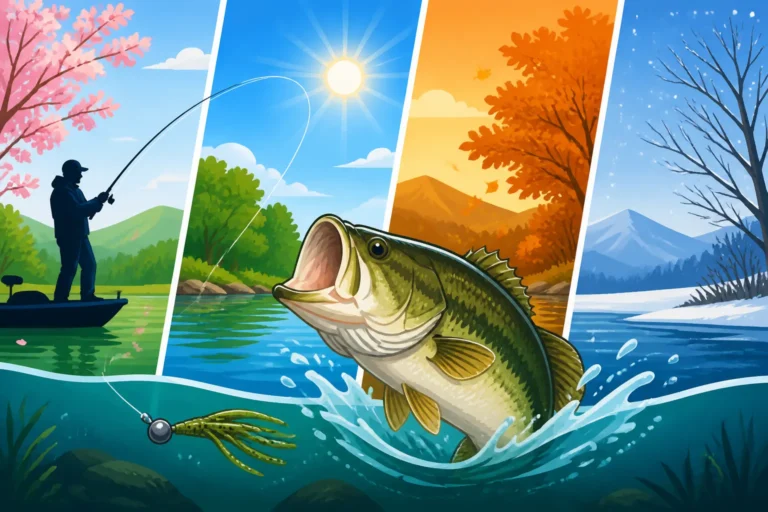
Bass fishing during a California winter might seem counterintuitive to anglers accustomed to explosive summer topwater bites, but this season produces some of the heaviest trophy largemouth and spotted bass of the year. Bodies of water like Castaic Lake, San Luis Reservoir, Diamond Valley Lake, and Clear Lake hold massive bass that spend the cold months gorging on planted rainbow trout and deep-dwelling threadfin shad.
Finesse techniques reign supreme when targeting cold-water bass. The drop-shot rig, football head jig, and Ned rig presented on light fluorocarbon line allow you to drag a bait along bottom structures at a crawl. Spotted bass, in particular, remain remarkably active in lakes like Lake Oroville and Collins Lake, congregating in tight schools around deep rocky points, submerged bridge pylons, and steep bluffs. Utilizing modern fishfinders to pinpoint suspended baitfish schools allows you to drop lures directly into the strike zone.
If you prefer targeting trophy largemouth, slow-rolling large glide baits or swimbaits that mimic freshly stocked hatchery trout is a high-risk, high-reward strategy. While you may only get a couple of bites a day, those strikes often come from double-digit fish looking for a maximum calorie intake with minimum energy expenditure. To sharpen your winter bass presentation, take a look at our specialized breakdown of California Bass Fishing Techniques and explore regional dynamics in our Clear Lake Fishing Guide.
Winter Saltwater and Coastal Opportunities
While offshore groundfish and rockfish regulations often enforce seasonal closures or depth restrictions during the winter months along the California coast, the shoreline and tidally influenced coastal rivers offer world-class fishing opportunities. Atmospheric cold fronts push ocean swells around, stirring up the surf zone and creating ideal conditions for bottom-feeding marine species. Furthermore, winter marks the arrival of prized ocean-going salmonids returning to their birth rivers to spawn.
Navigating the coastal winter bite requires close attention to swell forecasts, weather fronts, and tide charts. High winter tides bring powerful currents that rearrange sandbars along beaches and flush out coastal estuaries, creating dynamic feeding windows for anglers willing to brave the ocean breeze.
Surf Fishing for Perch along the Pacific Coast
Beach fishing during the winter is dominated by surfperch. Barred surfperch along the beaches of Southern and Central California, along with redtail surfperch along the rocky, sandy stretches of Northern California, reach peak activity when winter storms churn up the shoreline. These powerful waves dislodge sand crabs, worms, and small crustaceans from the seabed, creating a massive feeding frenzy right in the shore break.
Targeting surfperch requires simple terminal tackle. A standard Carolina rig featuring a sliding sinker, a swivel, an 18-inch fluorocarbon leader, and a small hook tipped with live sand worms, gulp grubs, or fresh clam meat is incredibly effective. Look for deep troughs, rip channels, and areas where the water appears milky or foamy just beyond the crashing waves.
| Species | Primary Winter Region | Target Depth/Zone | Top Winter Bait/Lure |
|---|---|---|---|
| Barred Surfperch | Southern/Central Coast | Surf zone / Troughs | Sand worms, Grubs |
| Rainbow Trout | Low-Elevation Lakes | Top 15 feet | Nightcrawlers, Spoons |
| White Sturgeon | San Francisco Delta | 20 – 50 foot holes | Ghost shrimp, Eel |
| Winter Steelhead | North Coast Rivers | Deep pools, Runs | Drift beads, Yarn |
| Spotted Bass | Sierra Foothill Lakes | 30 – 60 foot bluffs | Drop-shot, Jigs |
Because surf fishing keeps you in contact with wet sand and cold saltwater spray, ordering a high-quality pair of neoprene chest waders off Amazon before heading out can make the difference between a miserable morning and a productive trip. To build a solid foundation for reading beach structure and tying proper surf rigs, check out our comprehensive California Surf Fishing Guide and learn species-specific tricks through our article on How to Surf Fish for Perch in California.
Targeting Winter Steelhead on Coastal Rivers
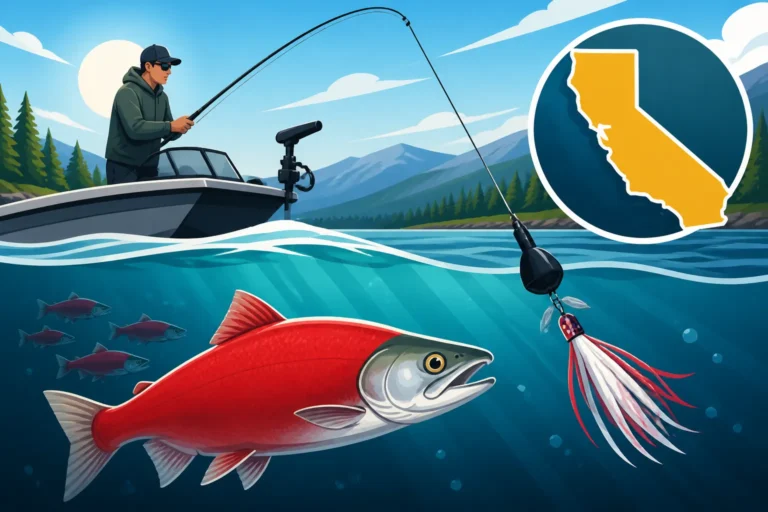
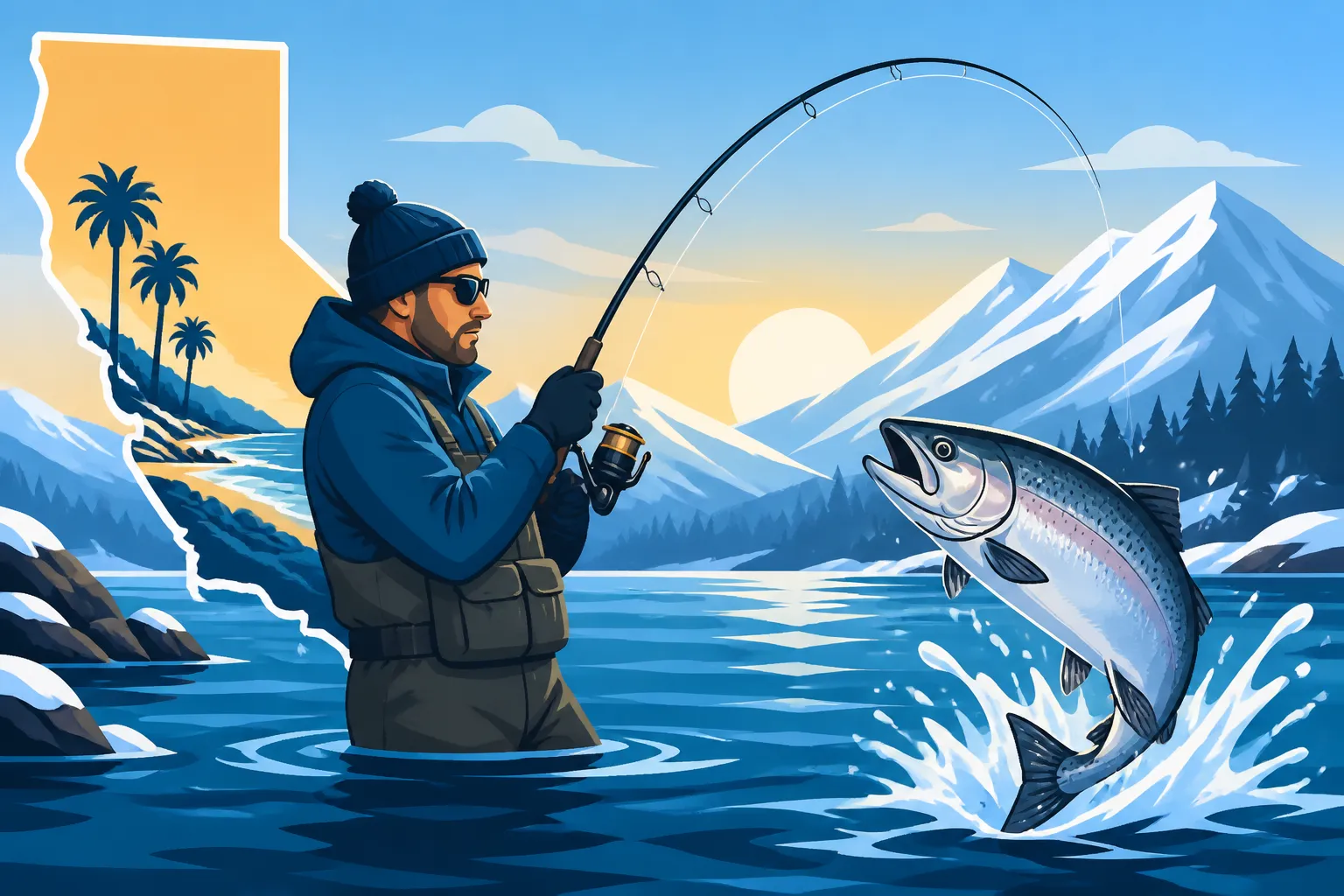
For freshwater river anglers, winter is synonymous with the elusive “ghost of the Pacific”—the wild winter steelhead. From December through March, cold rains cause coastal rivers to rise, triggering ocean-bright steelhead to charge up pristine river systems along the North Coast. Rivers like the Smith River, Trinity River, Eel River, Klamath River, and Russian River become ground zero for dedicated fly and gear anglers.
Successfully catching a winter steelhead requires monitoring river gauges closely. When a winter storm blows through, rivers rise and turn muddy. The prime fishing window occurs as the river begins to recede and clear, taking on a translucent “green” water color. Anglers employ techniques such as side-casting small plugs from a drift boat, drift-fishing with plastic beads and yarn flies, or swinging heavy streamers on Spey rods through deep tailouts and boulder-strewn runs.
Precision and persistence are mandatory, as cold river water makes steelhead hold tightly to bottom structure. Before setting out onto these cold riverbanks, always review regional regulations regarding barbless hooks, wild fish release mandates, and seasonal river closures. Dive deeper into run timing with our guide on California Steelhead Season Dates Explained and inspect prime access points via our detailed Smith River Fishing Guide.
Delta Sturgeon and Striped Bass Action
The expansive inland delta formed by the confluence of the Sacramento and San Joaquin rivers serves as a crucial winter refuge and hunting ground for massive predatory fish. As water temperatures drop into the 40s across the Delta and San Pablo Bay, ocean species migrate inland while resident monsters settle into deep river channels, providing winter anglers with some of the most exciting heavy-tackle action in the state.
Winter fishing in the Delta revolves around tracking tidal swings. Strong incoming and outgoing tides move immense volumes of water, sweeping food past deep clay banks and submerged mudflats where giant fish lay in wait.
Soaking Bait for Winter White Sturgeon
The white sturgeon is North America’s largest freshwater fish, and winter represents the absolute prime time to target these prehistoric giants in the California Delta. Driven inland by heavy seasonal rain runoff, sturgeon enter deep river bends, scour holes, and mudflats to feed aggressively on clams, crabs, and shrimp dislodged by strong river currents.
Sturgeon fishing is entirely a stationary bait-soaking game played in deep water, usually from a well-anchored boat. Heavy-duty saltwater rods paired with strong braided lines and heavy pyramid or bank sinkers are required to hold the bottom against sweeping tides. Top-tier baits include fresh ghost shrimp, mud shrimp, eel, and lamprey rigged on heavy circle or octopus hooks.
Detecting a sturgeon bite requires intense focus. Despite their immense size, these fish often strike with a surprisingly delicate “pump-pump” tap on the rod tip. Anglers must wait for the rod to load up completely before setting the hook. If you need to restock your tackle box with heavy sinkers, leader materials, or heavy-duty swivels, picking up bulk terminal tackle supplies on Amazon is an easy way to prepare for a Delta trip. Make sure you understand current harvest slot limits and tag requirements by reviewing our California Delta Fishing Guide and checking the legal guidelines outlined in California Sturgeon Regulations and Limits.
Chasing Cold-Water Stripers in the Delta Estuaries
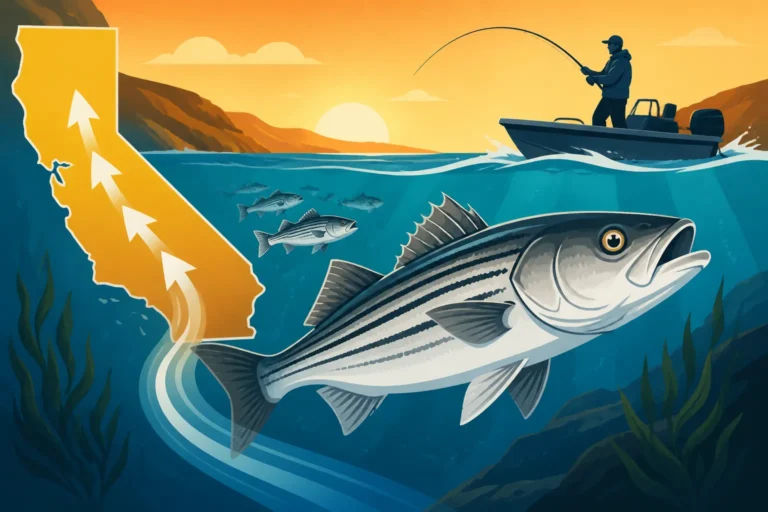
Alongside sturgeon, striped bass thrive in the brackish, cool waters of the California Delta throughout the winter. While spring and fall bring the massive migratory runs, resident stripers and early-winter spawners pack into the Delta’s river channels, sloughs, and flooded tracts like Franks Tract and Sherman Island.
Winter stripers are often found schooling tightly along deep ledge drop-offs or suspended near structure where current breaks exist. Slow-trolling deep-diving crankbaits or heavy swimbait setups along channel edges is a reliable tactic for covering water and locating active schools. Once a school is located on your sonar, switching to vertical jigging with heavy metal spoons or drifting with live jumbo minnows produces fast action.
During mild winter afternoons when the sun warms shallow mudflats by a few degrees, stripers will often move into three to six feet of water to feed on baitfish. Casting large topwater plugs or slow-sinking glide baits in these shallow pockets can yield explosive strikes from fish taking advantage of the temporary heat window. For a deeper look at river setups and trolling speeds, review our ultimate guide on How to Fish for Striped Bass in California.
Key Considerations for California Winter Anglers
Winter angling across California offers incredible rewards, but it also presents unique physical and environmental challenges. Being unprepared for sudden winter weather shifts can spoil a trip or create dangerous situations on the water.
- Monitor Water Conditions: Heavy atmospheric rivers can turn clear rivers into raging, muddy torrents within hours and drift massive wooden debris into coastal bays. Always check online water gauge levels and maritime forecasts before launching a boat.
- Layer Up for Safety: Hypothermia is a real risk, even in California. Dress in moisture-wicking synthetic or merino wool base layers, followed by an insulating fleece, and top it off with a fully waterproof outer shell.
- Invest in Quality Footwear: Cold, wet feet will send you home early. Wearing insulated rubber deck boots or waterproof wading boots paired with thick wool socks will keep you comfortable on damp boat decks or frozen riverbanks. Searching for breathable waterproof outerwear on Amazon is a simple way to compare gear before heading out into the elements.
- Adjust Your Retrieve Speed: Remember that cold fish have slow metabolisms. Cut your retrieve speed in half, use lighter line presentations, and hold your bait in the strike zone longer than you would during the summer.
- Carry Safe Navigation Gear: Winter brings dense Tule fog to the Central Valley and coastal river valleys. Ensure your boat is equipped with working navigation lights, a marine compass, a horn, and up-to-date GPS maps to navigate low-visibility conditions safely.
By adapting your tactics to cold-water fish behavior, targeting resilient winter species like trout, perch, sturgeon, and steelhead, and wearing the right protective clothing, you can transform the off-season into one of the most action-packed times of your fishing year.
Disclaimer
This article is for general informational purposes only and does not constitute professional advice. Laws, prices and regulations vary by location and change over time. Consult a qualified professional for guidance on your specific situation.