How to Catch Chinook Salmon in California
Chasing Chinook salmon in California can feel like trying to solve a complex puzzle, especially with seasons and regulations that seem to shift more often than the tides. It's frustrating when you gear up, head out, and realize you've missed a critical detail about where or when to even drop a line for these magnificent fish. This comprehensive guide is here to untangle that complexity, giving you the insider knowledge on how to successfully target and catch Chinook salmon across California's diverse waters.
Understanding California's Chinook Salmon
Chinook salmon, often called "King salmon" for their impressive size and fighting spirit, are a true jewel of California's fisheries. Their migratory patterns and life cycle are a marvel, making them a uniquely challenging and rewarding species to pursue. If you're going to catch them, you first need to understand them.
The Life Cycle of a King Salmon
Chinook salmon are anadromous fish, which is a fancy way of saying they start their lives in freshwater, migrate to the ocean to grow and mature, and then return to freshwater to spawn. This incredible journey shapes everything about how and when we can encounter them. They hatch from eggs laid in gravel beds in rivers like the Sacramento or Klamath, and after a period of growing in the river, they make their way out to the vast Pacific Ocean.
Out in the ocean, these kings spend several years feasting on baitfish like anchovies, sardines, and squid, growing rapidly and building up the energy reserves they’ll need for their monumental return journey. This ocean phase is where they develop their incredible power and size, often reaching weights of 20 to 30 pounds, with some true giants pushing past 50 pounds. When it's time to reproduce, an instinctual call draws them back to the exact river system, and often the very tributary, where they were born. They cease feeding once they enter freshwater, relying solely on their stored fat reserves to power their upstream migration, defend spawning territory, and ultimately, create the next generation of salmon. This non-feeding behavior in rivers is why enticing them can be such a unique challenge.
Key Chinook Runs and Their Importance
California is blessed with several distinct runs of Chinook salmon, primarily categorized by the time of year they enter freshwater to spawn. Understanding these runs is absolutely crucial, not just for knowing when and where to fish, but also because state regulations are often tied directly to the health and timing of these specific populations.
The major runs include the Fall Run, Spring Run, Late-Fall Run, and Winter Run. The Fall Run is by far the most abundant and targeted, with fish entering rivers like the Sacramento, Feather, and Klamath from late summer through fall. These are the fish most recreational anglers encounter. Spring Run Chinook are federally protected and critically endangered in many areas, as they enter rivers in spring, hold in cool deep pools through summer, and spawn in fall. Late-Fall Run fish typically enter rivers later in the fall and spawn in winter. The Winter Run is perhaps the most critically endangered and is primarily found in the Sacramento River system, with spawning occurring in late spring and early summer. Because of their endangered status, fishing for Spring and Winter Run Chinook is strictly prohibited, and anglers must be able to identify the different runs or adhere to very specific regulations during overlapping seasons. Conservation efforts by organizations like the California Department of Fish and Wildlife (CDFW) are vital in managing these complex populations, and adhering to the nuanced California Salmon Season Dates Explained is paramount.
Prime Locations for Chinook Salmon Fishing in California
California offers a diverse range of environments for chasing Chinook, from the vast expanse of the Pacific Ocean to the intricate network of inland rivers. Each location presents its own unique challenges and rewards, often requiring specialized techniques. Knowing where the fish are likely to be, and when, is half the battle won.
Major River Systems and Their Best Stretches
When Chinook salmon make their epic return from the ocean, they're heading for specific river systems. These freshwater highways become hotspots for anglers hoping to intercept these powerful fish.
The Sacramento River is arguably California's most famous salmon river. The stretch from Redding down to Verona is prime territory. Upstream near Redding and Anderson, anglers often target early fall-run fish using back-bouncing or back-trolling plugs and cured roe. As the season progresses and fish move downstream, spots around Balls Ferry and Bend Bridge become productive. Further down, near Colusa and Verona, bank anglers and boaters alike will fish the deeper channels, often using bait under floats or trolling larger plugs. Water levels and temperature on the Sacramento River can drastically influence fish movement and bite patterns, so keeping an eye on Sacramento River Fishing Guide reports is a smart move.
The Klamath River in Northern California is another legendary salmon fishery, particularly known for its fall run. Fishing here can be influenced by tribal regulations in certain areas, so always be extra vigilant about checking current rules. The lower Klamath, closer to the ocean, often sees fish staging before their upstream push. Popular stretches include the confluence with the Trinity River and areas upstream to Weitchpec. Fly fishing, drift fishing with roe, or casting spinners are common methods here. The Klamath is a wilder river, and accessing some of its prime spots might require a jet boat or a willingness to hike, but the reward of a wild Klamath King is truly something special. Remember to consult the Klamath River Fishing Guide for specific details.
The Feather River, a major tributary of the Sacramento, also boasts a robust fall run, particularly below Oroville Dam. The section downstream from the Fish Barrier Dam near Oroville, through Yuba City, and down to its confluence with the Sacramento, can be very productive. The presence of the Feather River Fish Hatchery ensures a strong return of fish. Anglers here use similar techniques to the Sacramento, including drift fishing with roe or various plugs and lures. Due to its size and access, the Feather is a favorite for many central valley anglers.
Finally, the Trinity River, a tributary to the Klamath, while more famous for its steelhead, also sees good numbers of Chinook salmon, especially during the fall run. Fishing here often involves drift fishing with roe or small plugs, targeting fish holding in deeper pools and runs. Its clearer waters can make stealth a factor.
Ocean and Bay Hotspots for Chinook
Before they even think about entering freshwater, Chinook salmon spend years fattening up in the nutrient-rich waters of the Pacific Ocean and its major bays. This is where you can find them in their prime, actively feeding, and putting up a spectacular fight.
San Francisco Bay offers incredible opportunities, especially in the late spring and summer months. Anglers often troll the main bay, particularly near Alcatraz, Angel Island, and the Berkeley Flats, or just outside the Golden Gate. Party boats are a popular option, taking anglers to where the fish are biting. The key here is often locating bait balls – schools of anchovies or sardines that the salmon are actively feeding on. When the bait is thick, the salmon are usually not far behind. Trolling with anchovies behind flashers or dodgers is the most common and effective technique, but some anglers find success with spoons or hoochies. The San Francisco Bay Fishing Guide is an excellent resource for detailed information on tides and hotspots.
Further south, Monterey Bay is another fantastic Pacific Ocean destination for Chinook. The deeper waters here, often influenced by the Monterey Canyon, provide a rich feeding ground. Popular areas include the "Soquel Hole" and points off Santa Cruz and Moss Landing. Similar to San Francisco Bay, trolling with bait (usually anchovies or sardines) or artificial lures designed to imitate them is the go-to method. The deep-water access directly from harbors makes Monterey Bay a prime jumping-off point for many ocean salmon enthusiasts. For specifics on conditions and best spots, check out the Monterey Bay Fishing Guide.
Other coastal areas like Bodega Bay, Half Moon Bay, and Fort Bragg also host excellent ocean salmon fisheries. These regions are often seasonal, with the presence of baitfish dictating when the salmon move in. Charter boats are readily available in most of these ports, providing a great way for both experienced and novice anglers to get on the fish. These charters often employ downriggers to get baits to the precise depth where salmon are feeding, making them highly effective. Remember that California Ocean Salmon Regulations can vary significantly by management area and are subject to emergency closures, so always check the latest rules before heading out.
Timing Your Chinook Salmon Pursuit
Timing is absolutely everything when it comes to catching Chinook salmon in California. These fish are highly migratory, and their presence in certain areas is dictated by their life cycle, environmental conditions, and of course, seasonal regulations. Miss the window, and you might miss the fish.
Best Seasons for Freshwater vs. Saltwater
The "best" time to fish for Chinook salmon in California really depends on whether you're targeting them in their freshwater spawning grounds or their ocean feeding territories. The seasons are distinct and demand different approaches.
For freshwater fishing, the prime time almost exclusively revolves around the fall run. This usually kicks off in late summer (August) and continues through the fall (September, October, and sometimes into November) on major river systems like the Sacramento, Feather, Klamath, and Trinity Rivers. This is when the largest numbers of mature fish enter the rivers to begin their upstream migration. The exact peak can vary year to year based on water levels, temperature, and ocean conditions that influence their staging. For instance, good rains after a dry spell can trigger a strong push of fish into the rivers. While there are other runs like the Spring Run, these are often protected and not open to recreational fishing. Anglers targeting fall-run fish will find the rivers teeming with activity, but also with other anglers, so expect company. Keeping an eye on localized reports and the California Salmon Regulations and Limits is key to success and compliance.
Saltwater fishing for Chinook salmon typically begins earlier in the year and can extend through the summer. The ocean fishery often opens in late spring (April/May) and continues through the summer months (June, July, August), sometimes into early fall. This timing is driven by when the salmon are actively feeding and congregating in coastal waters. The presence of abundant baitfish like anchovies and sardines dictates where and when the schools of salmon will be found. Popular spots like San Francisco Bay and Monterey Bay see their best action during these warmer months. The ocean season is highly dynamic, often subject to emergency closures or changes based on stock assessments and ocean conditions, so always, always check the latest CDFW announcements. This is also where you might catch some of the biggest "bright" fish, still full of ocean vigor and silver scales, before they transition to their spawning colors.
Daily Considerations: Tides, Time of Day, and Weather
Beyond the broad seasonal windows, daily factors like tides, time of day, and prevailing weather conditions can profoundly impact your success when targeting Chinook salmon. Ignoring these elements can mean the difference between a memorable day on the water and a frustrating skunk.
In saltwater and bay environments, tides are absolutely critical. Moving water concentrates bait and, in turn, concentrates salmon. An outgoing or incoming tide, especially around changes in current, can trigger aggressive feeding behavior. Many experienced ocean anglers swear by fishing during the "slack tide," the brief period when the tide changes direction, believing it gives salmon an opportunity to orient themselves and feed before the current picks up again. However, others prefer a strong current to disperse bait and create feeding lanes. It's often a matter of local knowledge and experimentation. For example, fishing the Golden Gate entrance on a strong incoming tide requires different tactics than fishing inside the calmer bay. Knowing how to read a tide chart is as important as knowing how to tie a knot when bay fishing.
In freshwater river systems, while tides are less of a factor (unless you're in the tidal influence of the lower Delta), the time of day often plays a significant role. Chinook salmon, especially those just entering the river, are often more active and responsive to lures during low light conditions – dawn and dusk. These periods offer them a sense of security and often cooler water temperatures, encouraging movement and making them more susceptible to presentation. Midday can be tough, especially on bright, clear days, though deep holes might still hold active fish. Water temperature is also a major driver; salmon prefer cooler water, so warmer spells can make them lethargic. Rain can be a mixed blessing; a fresh rain can muddy the water, making fishing difficult, but it can also raise river levels and trigger a fresh push of fish from the ocean, creating excellent opportunities once the water clears. Always consult local California Fishing Reports Explained to get a real-time pulse on current conditions.
Essential Gear and Techniques for Chinook Salmon
Catching Chinook salmon is not just about being in the right place at the right time; it's also about having the right tools and knowing how to use them. These powerful fish demand robust tackle and specific techniques that have been refined over years of salmon fishing.
Rods, Reels, and Line for Kings
Given the size and sheer power of Chinook salmon, your gear needs to be up to the task. Skimping on tackle is a surefire way to end up with a broken heart and an empty net.
For ocean and bay trolling, you'll want a medium-heavy to heavy conventional rod, typically 7 to 9 feet in length, with a fast to moderate-fast action. This provides the backbone needed to fight big fish while still offering enough tip sensitivity to detect the subtle bites when trolling. Pair this with a high-quality conventional reel, like a Penn Fathom or an Okuma Coldwater, that can hold at least 300 yards of 25-40 lb monofilament or 50-65 lb braided line. Many anglers prefer braided main line for its no-stretch sensitivity, especially when using downriggers, but they'll often use a 50-100 foot top shot of monofilament for shock absorption. A good level-wind system is also a huge plus for even line retrieval. You can find a wide selection of these robust setups on Amazon, often with reviews from other dedicated salmon anglers.
When river fishing for Chinook, the setup can vary based on the technique. For drift fishing or back-bouncing with bait or plugs, a medium-heavy casting rod, 8.5 to 10.5 feet long, is common. The longer length helps with line mending and setting the hook on a long drift. Matching this with a strong baitcasting reel capable of handling 15-25 lb monofilament or fluorocarbon main line, or 30-50 lb braid, is ideal. Fluorocarbon leaders in the 20-40 lb range are almost universally used due to their abrasion resistance and near invisibility in clear water. For specific plug pulling or back-trolling applications from a boat, shorter, stiffer rods (7-8 feet) might be preferred, again paired with a reliable conventional reel. Always make sure your drag system is smooth and capable of handling long, powerful runs.
| Component | Ocean/Bay Trolling (Conventional) | River Drift/Back-Bouncing (Casting) |
|---|---|---|
| Rod Type | Medium-Heavy to Heavy Conventional | Medium-Heavy Casting Rod |
| Rod Length | 7-9 feet | 8.5-10.5 feet |
| Rod Action | Fast to Moderate-Fast | Moderate to Fast |
| Reel Type | Conventional (e.g., Penn Fathom) | Baitcasting (e.g., Shimano Curado) |
| Main Line | 25-40 lb Mono / 50-65 lb Braid | 15-25 lb Mono/Fluoro / 30-50 lb Braid |
| Leader | 30-60 lb Fluorocarbon | 20-40 lb Fluorocarbon |
Baits and Lures That Entice Chinook
Chinook salmon can be picky, but a few offerings consistently get their attention, whether they're actively feeding in the ocean or grudgingly responding in the river.
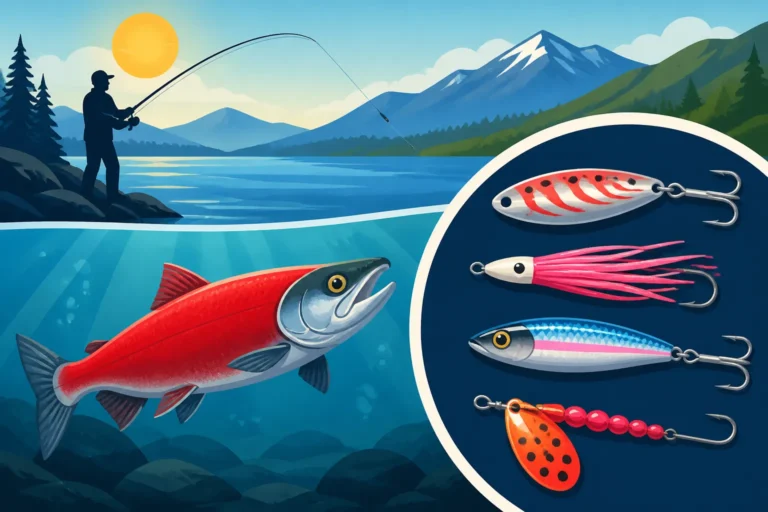
For ocean trolling, fresh bait is king. Anchovies and sardines, fished whole in a herring helmet or bait holder, are incredibly effective. The roll and flash of a perfectly presented bait imitate a wounded fish, triggering strikes. These are often fished behind a flasher or dodger, which are designed to attract fish with their erratic motion and reflection. Popular artificial lures include Apex lures, Brad's Killerfish (especially the smaller sizes), and hoochies (squid skirts) trolled behind flashers. Color choice can be critical, with green, blue, and white often being top performers in clear ocean water. Many experienced captains will have a tackle box full of different colors and sizes to match the prevailing conditions. You can stock up on a variety of proven trolling lures on Amazon, ensuring you have options for different light and water conditions.
In river environments, the game changes. Since migrating salmon often stop feeding, you're trying to elicit a reaction strike or appeal to their biological instinct. Cured salmon roe (eggs) is a perennial favorite, often drifted under a float or back-bounced along the bottom. The scent and natural appearance can be irresistible. Plugs are also highly effective, with classics like Kwikfish and Flatfish dominating the scene. These lures have an aggressive wobbling action that can provoke a strike from even a lethargic salmon. Spinners, such as large Blue Fox or Roostertail spinners, especially in flashier colors like chartreuse or silver, can also work well, particularly in faster-moving water where their blades spin enticingly. Again, when stocking up on these specialized river baits and lures, a quick search on Amazon or a visit to your local tackle shop is a must.
Tried-and-True Fishing Techniques
Mastering Chinook salmon fishing involves more than just having the right gear; it's about employing the right techniques for the specific environment and fish behavior.
Trolling is the dominant technique for ocean and bay salmon. This involves moving slowly through the water, dragging your baits or lures behind the boat. The goal is to cover water, locate feeding fish, and present your offering at the correct depth. Downriggers are indispensable for ocean salmon trolling, allowing you to precisely control the depth of your lure, getting it right into the salmon's feeding zone, which can be anywhere from 20 to 200 feet deep. Divers and planer boards can also be used to achieve depth or spread out your lines. The speed of your troll is critical, usually slow enough to ensure your bait has the desired action but fast enough to cover ground. Understanding the nuances of "stacking" your lines at different depths and distances is a skill that comes with practice.
For river fishing, several effective techniques are employed. Drift fishing (also known as side-drifting in some regions) is a popular method where you allow your bait or lure to drift naturally with the current, usually under a float or with minimal weight, presenting it as naturally as possible. This is particularly effective in runs and pools where salmon are holding. Back-bouncing is a more aggressive bottom-contact method, often done from a boat, where you drop your bait or plug to the riverbed and allow the current to push it downstream while maintaining bottom contact. This method is excellent for getting your offering right in front of salmon holding tight to the bottom in deeper slots. Back-trolling involves using your boat's motor to slowly move upstream, allowing your plugs or lures to "swim" against the current, creating an irresistible action that can provoke strikes from territorial salmon. Each of these techniques requires a delicate touch and a keen understanding of river currents and salmon holding patterns.
Navigating California's Chinook Regulations
Fishing for Chinook salmon in California means playing by the rules, and these rules are some of the most complex and frequently updated in the state. The health of the salmon population directly impacts seasons, limits, and even the type of gear you can use, so staying informed is not just a recommendation, it's a legal requirement.
Understanding Seasons, Bag, and Size Limits
The first and most critical step before even thinking about going after Chinook salmon is to check the current regulations. Unlike some other species, California Salmon Season Dates and limits are highly dynamic and can change annually, sometimes even mid-season, based on stock assessments, environmental conditions like drought, and federal and state mandates. What was legal last year might not be this year, and what’s allowed in the ocean might be entirely different from what’s permitted in the rivers.
For ocean fishing, regulations are typically set by the Pacific Fishery Management Council (PFMC) and implemented by the CDFW. These often include specific opening and closing dates, daily bag limits (e.g., two Chinook salmon per day), and minimum size limits (e.g., 20 inches total length). Critically, these regulations can vary by geographical management area, meaning the rules off San Francisco might be different from those off Fort Bragg or Bodega Bay. There are often periods of "early season" or "late season" restrictions.
In freshwater river systems, the rules become even more nuanced. Each major river, such as the Sacramento, Klamath, or Feather, can have its own specific season, bag limits, and size restrictions. Some sections of a river might be open, while others are closed. There can be specific dates for different runs, and even gear restrictions, such as barbless hooks only, or no bait allowed in certain areas to protect spawning fish or non-target species like steelhead. Identifying the different salmon runs is also paramount as targeting protected runs (like Spring or Winter Run Chinook) is illegal and carries severe penalties. Always consult the official CDFW regulations booklet or website for the most current and detailed information on California Fishing Regulations Explained. Ignorance of the law is not an excuse, and a violation could lead to hefty fines or even loss of fishing privileges.
The Importance of a California Fishing License and Report Cards
Beyond understanding the specific regulations for Chinook salmon, you absolutely need to be properly licensed and prepared with the correct report cards. This isn't just bureaucracy; it's how the state funds conservation efforts and collects vital data to manage these precious fisheries.
First and foremost, anyone 16 years of age or older needs a valid California Fishing License Guide to fish in California, regardless of the species. This license is your fundamental permission slip to participate in recreational fishing. You can purchase a California fishing license online through the CDFW website, at authorized license agents like tackle shops or sporting goods stores, or even at some department stores. Make sure you have it physically or digitally accessible while fishing. There are different options available, from annual licenses to California One-Day Fishing License or California Two-Day Fishing License options, which can be great for visitors or occasional anglers. The California Fishing License Cost can vary depending on residency and duration, but it's a small price to pay for access to such incredible fishing.
In addition to your general fishing license, if you plan on targeting Chinook salmon in California, you are required to obtain a California Salmon Report Card. This is a separate card, similar to those required for steelhead or sturgeon. The salmon report card is critical for collecting data on catch effort and harvest, which directly informs CDFW's management decisions. You must fill out the card correctly, recording your fishing days and any salmon you catch, even if you release them. After the season, you are legally required to return your completed report card to the CDFW by the specified deadline, typically in January of the following year. Failure to return the card, even if you didn't catch any fish, can result in penalties and prevent you from purchasing a new card in subsequent years. This requirement underscores the importance of every angler's contribution to conservation. Understanding the nuances of the California Salmon Report Card is essential for any serious Chinook angler.
Disclaimer
The information provided in this guide is for general informational purposes only and is subject to change. Fishing regulations in California, especially for highly managed species like Chinook salmon, can change frequently due to environmental factors, stock assessments, and emergency closures. Always consult the official California Department of Fish and Wildlife (CDFW) website or the latest printed regulations booklet before planning any fishing trip to ensure compliance with current laws and to verify season dates, bag limits, and size restrictions for your specific fishing location.