California Fly Fishing Guide
For many anglers, the thought of fly fishing in California conjures images of pristine mountain streams and elusive trout, but the reality can often be a complex web of varying regulations, diverse ecosystems, and sometimes, a steep learning curve. It's easy to feel overwhelmed by where to start, what gear you truly need, or which flies to tie on in such a vast and varied state. This comprehensive guide is here to untangle that complexity, providing you with the essential knowledge, practical tips, and seasoned advice to confidently explore the incredible world of California fly fishing, whether you're chasing wild trout in the Sierra or battling striped bass in the Delta.
Why California is a Fly Fishing Paradise and Its Unique Challenges
California is truly a fly angler's dream come true, offering an unparalleled diversity of fishing experiences that can keep you challenged and captivated year-round. From the snow-capped peaks of the Sierra Nevada to the sprawling freshwater deltas and even the rugged Pacific coastline, the opportunities are endless. However, this very diversity also presents unique challenges, making a good understanding of the local nuances absolutely critical.
The Diverse Landscapes and Waters
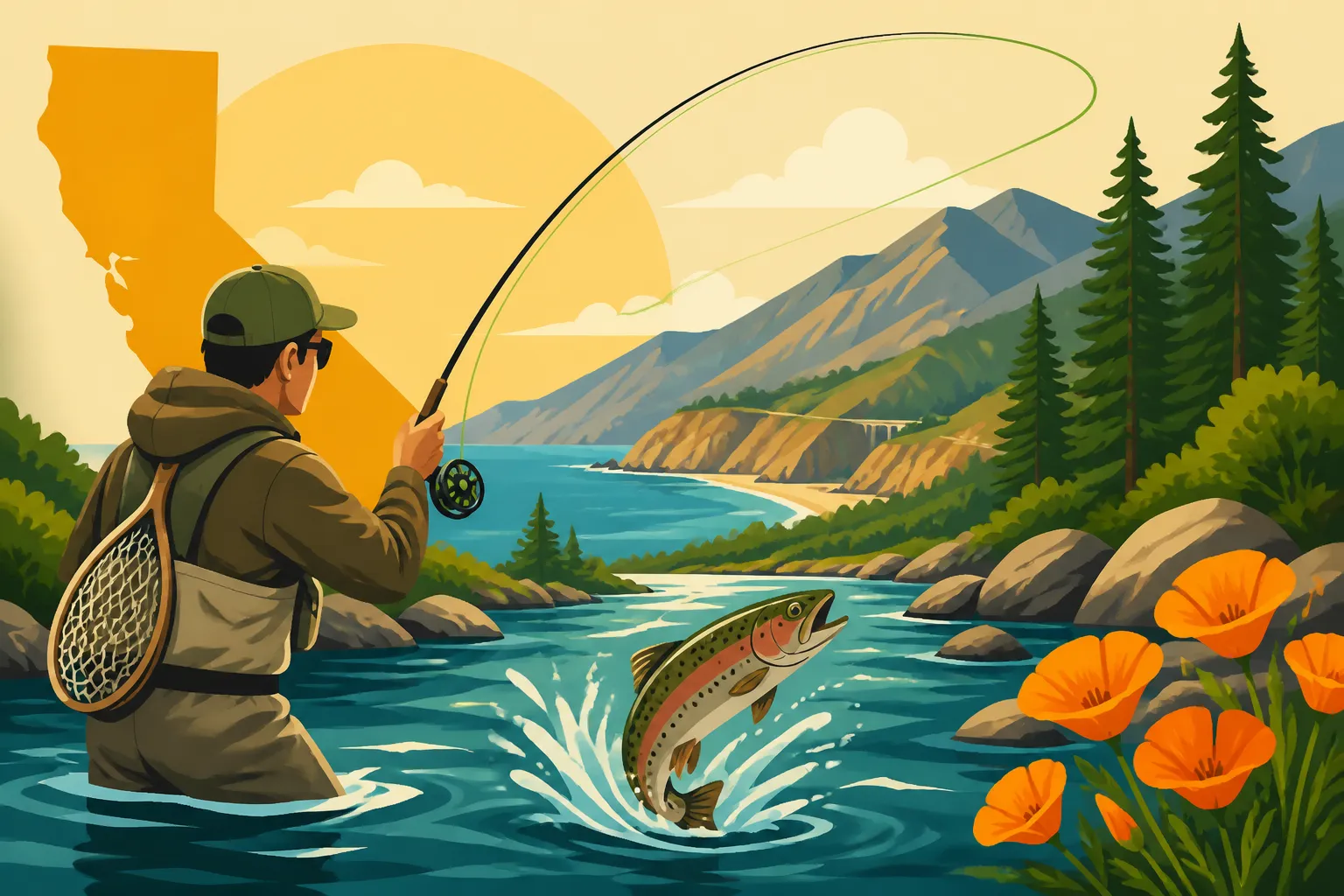
Imagine casting a dry fly on a crystal-clear alpine lake one day, then nymphing a freestone river for robust rainbows the next, and perhaps even stripping a streamer in saltwater for a feisty surf perch a day after that. This isn't just wishful thinking; it's the reality of fly fishing in California. We've got high mountain streams fed by snowmelt, vast reservoirs teeming with bass, an intricate delta system that connects rivers to the San Francisco Bay, and a rugged coastline that offers unique saltwater fly fishing adventures. Each landscape demands a different approach, different gear, and a unique set of skills. The stark contrast between the arid desert regions and the lush redwood forests means that even within a short drive, conditions can change dramatically, requiring adaptability from the angler.
The Abundance of Target Species
It's not just about trout here, although California certainly has some world-class trout fishing. We're talking about a lineup of species that will make any fly angler's heart race. You can target feisty rainbow trout, elusive brown trout, and even the state's revered Golden Trout in their native high-altitude homes. But beyond that, consider the powerful steelhead that migrate up coastal rivers, the hard-fighting striped bass in the Delta, and even warmwater species like largemouth and smallmouth bass in the state's many lakes and reservoirs. Venture to the coast, and you can cast for surf perch, halibut, or even try your hand at chasing bonito or yellowtail on the fly if you head offshore. This incredible variety means you can literally spend a lifetime exploring different species and never get bored.
Navigating the Seasons and Regulations
While the abundance is a blessing, the sheer variety in seasons and regulations can feel like a bureaucratic maze. Unlike states with more uniform fishing seasons, California's vast geography means that "season" can vary wildly depending on whether you're in the Eastern Sierra, on a North Coast river, or in the Central Valley. Some waters are open year-round with specific gear restrictions, while others have strict opening and closing dates tied to fish migrations or spawning periods. Furthermore, specific species like steelhead and salmon often require a separate report card in addition to your California Fishing License Guide to track your catch. Understanding these localized rules, including bag limits and gear restrictions, is crucial not only for compliance but also for protecting our precious fisheries. Ignoring them can lead to significant penalties, not to mention impacting the fish populations we all cherish. Always consult the latest California Fishing Regulations Explained booklet from the California Department of Fish and Wildlife (CDFW) before heading out.
Essential Gear for California Fly Fishing
Stepping into the world of fly fishing often comes with the intimidating question of gear: what do you really need? The good news is you don't need to break the bank to get started, but investing in quality essentials for California's diverse conditions will make your experience far more enjoyable and successful. Think of it as building a reliable toolkit, not just buying a bunch of stuff.
Rods, Reels, and Lines for Different Applications
Your rod, reel, and line are the core of your fly fishing setup, and choosing them depends heavily on what kind of fishing you plan to do. For general trout fishing in most California rivers and streams, a 4-weight or 5-weight rod, typically 8.5 to 9 feet long, is an excellent all-around choice. This setup is versatile enough for dry flies, nymphs, and smaller streamers. For larger rivers, bigger trout, or chasing smallmouth bass, a 6-weight rod offers a bit more backbone.
When you start looking at anadromous species like steelhead or salmon, or even larger warmwater fish like striped bass, you'll want to move up to a 7-weight or 8-weight rod. These heavier rods can handle larger flies, more powerful fish, and stand up better to windy conditions. For specific techniques like Spey casting for steelhead, dedicated two-handed rods (often 11 to 14 feet long, in 6-8 weight ranges) are preferred. Saltwater fly fishing for species like surf perch might use an 8-weight, while offshore pursuits for yellowtail could call for a 10-weight or even 12-weight setup.
Reels for trout fishing are primarily for line storage, but for larger, stronger fish, you'll need a reel with a smooth, reliable drag system that can withstand powerful runs. Always match your reel size to your rod weight. Lines also vary: floating lines are standard for dry flies and most nymphing, while sink-tip or full-sinking lines are essential for streamer fishing, deep nymphing, or many saltwater applications. You can often find great entry-level combos on Amazon that pair a rod, reel, and line, which is a fantastic way to start without overthinking it.
Waders, Boots, and Apparel
Staying dry and comfortable is paramount, especially when you're spending hours in cold mountain streams or wet coastal environments. Breathable chest waders are the standard. Look for reputable brands like Simms, Orvis, or Patagonia. Neoprene waders are warmer but less breathable, making them suitable for very cold water but less ideal for warmer days or hiking. Wading boots, separate from the waders, provide crucial grip on slippery rocks. Felt soles offer excellent traction in freshwater, but rubber soles are more durable for hiking and are often required or preferred in areas where felt might spread invasive species.
Under your waders, layering is key. Avoid cotton, which loses its insulating properties when wet. Opt for synthetic base layers or wool, which wick moisture and retain warmth. A good waterproof and windproof wading jacket is also a must, as California weather can change rapidly, especially in the mountains or near the coast. Don't forget a wide-brimmed hat for sun protection and polarized sunglasses, which not only protect your eyes but also help you see fish and subsurface structure.
Essential Accessories and Safety Gear
Beyond the core setup, a few accessories will significantly improve your fly fishing experience. A quality landing net, preferably rubberized to protect fish, is essential for catch-and-release. Hemostats or forceps are critical for easily removing hooks without harming the fish. Nippers for cutting line, a tippet spool holder, and a small fly box (or several) are also non-negotiable.
Safety should always be a priority. A wading staff provides stability in swift currents, especially for beginners or when crossing unfamiliar water. A first-aid kit, a whistle, and a water bottle are basic backcountry essentials. When fishing alone in remote areas, consider carrying a personal locator beacon (PLB) or satellite messenger. For peace of mind, make sure your phone is fully charged, and let someone know your float plan or where you'll be fishing, even for a short trip. It's also a good idea to pack snacks, especially high-energy ones, to keep you going throughout the day.
Understanding California's Fly Fishing Seasons
California's vast and varied geography means there isn't one universal "best time" to fly fish. Instead, different regions and species offer prime opportunities throughout the year, making it possible to find great fishing in almost any season. Understanding these seasonal shifts is key to planning a successful trip.
Spring: Run-off, Hatches, and Early Season Trout
Spring in California, generally from March to May, is a season of awakening and transition. In the lower elevation rivers and streams, you'll start to see prolific insect hatches, bringing trout to the surface for exciting dry fly action. Think caddis, mayflies, and stoneflies. Early spring can be fantastic for targeting aggressive trout that are emerging from winter sluggishness. However, as the snowmelt begins in the higher elevations, many rivers will experience significant "run-off," meaning high, cold, and often turbid water. This can make fishing challenging, especially in larger freestone rivers.
During run-off, focus on tailwaters (rivers flowing out of dams) like the Lower Owens River or the Lower Yuba River, where water flows are regulated and often clearer. These rivers can offer exceptional nymphing opportunities, and streamer fishing can be very effective as fish look for bigger meals. Reservoir and lake fishing for trout and warmwater species like bass also begins to pick up as water temperatures rise. Remember that some high-elevation waters might still be inaccessible due to snow, especially in March and April. Check conditions before you go, and be prepared for variable weather.
Summer: High Country Adventures and Warmwater Opportunities
Summer, from June to August, is synonymous with high-country fly fishing in California. As the snow melts, roads to the Eastern Sierra become fully accessible, opening up a plethora of alpine lakes and small streams. This is prime time for hiking into remote areas and targeting hungry trout with dry flies. The days are long, and the weather is generally stable, making for comfortable fishing. Popular destinations include the Mammoth Lakes area, Crowley Lake, and the legendary Upper Owens River.
While the high country thrives, many lower elevation rivers can become too warm for trout, putting stress on the fish. This is when anglers turn their attention to warmwater species. The California Delta becomes a prime location for fly fishing for striped bass, often on topwater flies in the mornings and evenings. Lakes and reservoirs throughout the state offer fantastic opportunities for largemouth bass, smallmouth bass, and even carp on the fly. Fishing early in the morning or late in the evening helps beat the heat and capitalize on active feeding windows. Always carry plenty of water and be mindful of afternoon thunderstorms in the mountains.
Fall: Steelhead, Salmon, and Big Trout on the Move
Fall, typically September through November, is arguably one of the most anticipated seasons for California fly anglers, especially those chasing anadromous species. As temperatures cool and rains begin, coastal rivers like the Klamath, Trinity, and Eel Rivers come alive with migrating steelhead and salmon. This is when Spey casting and indicator nymphing with larger flies become popular techniques. Anglers also flock to the renowned Eastern Sierra Fishing Guide region, where big brown trout move out of lakes and into rivers like the Upper Owens to spawn, offering a chance at a true trophy.
Many of the state's best trout rivers, including the Truckee River and Hat Creek, experience strong hatches and aggressive feeding as trout bulk up for winter. Fall colors add to the beauty of the experience, but conditions can be unpredictable, ranging from crisp, clear days to heavy rain. Always carry your California Steelhead Report Card or California Salmon Report Card if targeting these species, and be aware of specific regulations, which can change frequently.
Winter: Challenging but Rewarding
Winter (December to February) can be a challenging but incredibly rewarding season for the dedicated fly angler. While many high-elevation waters are frozen or inaccessible, numerous lower-elevation rivers and tailwaters remain open and productive. The Lower Sacramento River near Redding, for example, is famous for its year-round trout fishery, offering nymphing and streamer opportunities for large rainbow trout.
Coastal steelhead runs continue into winter, peaking in certain rivers. Warmwater species fishing generally slows down, but some dedicated anglers still find success with slow presentations for bass in deeper parts of reservoirs. Winter fly fishing often means smaller flies, slower retrieves, and more patience, but the rewards can be substantial, with fewer crowds and the chance at truly impressive fish. Dressing warmly in layers, including waterproof outer shells, is essential. Also, remember that some areas might have specific winter regulations, so checking the CDFW handbook for California Freshwater Fishing Regulations and California Saltwater Fishing Regulations is always a good idea.
Key California Fly Fishing Techniques
California's diverse waters demand a versatile angler. While the fundamentals of fly casting remain constant, tailoring your presentation to the specific environment and species will dramatically increase your success. Let's delve into the techniques that will serve you best across the state.
Dry Fly Fishing: Reading the Rise and Matching the Hatch
There’s nothing quite like seeing a fish rise to your perfectly presented dry fly. Dry fly fishing is often considered the quintessential fly fishing experience. In California, this technique truly shines in spring and summer on high-country streams and tailwaters when insects are actively hatching. The key to successful dry fly fishing is "matching the hatch" – presenting a fly that closely imitates the size, shape, and color of the natural insects currently emerging from the water.
To master dry fly fishing, you need to develop a keen eye for reading the water. Look for subtle rises, dimples on the surface, or even aggressive splashes. Understanding the feeding behavior of the fish will tell you whether they are taking emergers just below the surface, duns on the surface, or spinners after they've laid their eggs. A good, drag-free drift is paramount; your fly needs to float naturally with the current, as if it were an actual insect. This often requires careful casting and mending your line. Popular California dry fly patterns include various mayfly imitations like Parachute Adams or Light Cahills, caddis patterns such as Elk Hair Caddis, and terrestrial imitations like hoppers or ants, especially in late summer.
Nymphing: Mastering Subsurface Presentations
While the glamour often goes to dry fly fishing, nymphing is arguably the most consistent and productive technique for trout in California, as fish spend up to 90% of their feeding time subsurface. Nymphs imitate the larval and pupal stages of aquatic insects. This technique involves getting your fly down to the fish's feeding zone, often near the bottom, and allowing it to drift naturally with the current.
There are several variations of nymphing. Indicator nymphing uses a small float (indicator) on your leader to detect subtle bites and help you control your drift depth. Tight-line nymphing, also known as Euro nymphing or contact nymphing, involves fishing without an indicator, using the subtle feel of your line and rod tip to detect strikes. This technique is incredibly effective in complex currents and for fishing pocket water. Another common method is "dry-dropper" where a dry fly acts as both an attractor and an indicator, suspending a nymph below it. Successful nymphing requires careful weight placement (split shot or weighted flies), precise leader rigging, and an understanding of how currents affect your drift. Popular California nymph patterns include Copper Johns, Pheasant Tail Nymphs, Hare's Ears, and various midge larvae and pupae. You can find a vast array of these patterns, along with specialized nymphing lines, on Amazon.
Streamer Fishing: Aggressive Tactics for Aggressive Fish
For anglers looking to target larger, more aggressive fish, streamer fishing is the go-to technique. Streamers imitate baitfish, leeches, or other larger prey, provoking an aggressive predatory response from fish. This is a highly effective method for targeting big trout, steelhead, bass, and even saltwater species.
Streamer fishing typically involves casting weighted flies, often with a sink-tip or full-sinking line, and then retrieving them with various stripping motions to give them life. Experiment with short, erratic strips, long slow pulls, or even jigging motions to see what triggers a strike. The key is to make the streamer appear like an injured or fleeing baitfish. This method is particularly effective in larger rivers, deep pools, and during periods of low light or higher flows. In California, streamer fishing is popular for chasing trophy brown trout in rivers like the Truckee or Fall River, targeting aggressive rainbows in the Lower Sacramento, or pursuing striped bass in the Delta. You'll often use a stout leader and a rod in the 6 to 8-weight range to cast these larger, often wind-resistant flies.
Spey Casting and Switch Rods
When you're chasing migratory fish like steelhead or salmon in wide, powerful rivers, traditional single-handed casting can be exhausting and less efficient. This is where Spey casting and switch rods come into their own. Spey casting is a style of fly casting with a two-handed rod that allows you to cast long distances without needing a lot of back casting room, making it ideal for large rivers with limited bank space or heavy brush.
Switch rods are shorter, lighter versions of traditional Spey rods, typically ranging from 10 to 11.5 feet. They offer the versatility to be cast single-handedly for traditional overhead casts or two-handedly for Spey casts, making them incredibly adaptable for various river conditions and target species. Many anglers find switch rods to be a perfect bridge for learning two-handed casting techniques without committing to a full-size Spey rod. These techniques are particularly popular on Northern California rivers like the Trinity, Klamath, and Eel when targeting How to Fish for Steelhead in California or salmon. The powerful casts and effortless line control they provide can make fishing large runs much more enjoyable and effective.
Top Fly Fishing Destinations in California
California is a treasure trove of fly fishing spots, each offering its own unique charm and challenges. Knowing where to go and what to expect is half the battle, so let's explore some of the state's most iconic and productive fly fishing destinations.
Eastern Sierra: Trout Mecca
When most people think of fly fishing in California, the Eastern Sierra is often the first place that comes to mind, and for good reason. This region, nestled against the magnificent Sierra Nevada mountain range, is an undisputed trout mecca. From the high alpine lakes and streams accessible via scenic hikes to the legendary tailwaters and reservoirs, the Eastern Sierra offers diverse experiences.
Crowley Lake: This massive reservoir is famous for its "Crowley chronomids" and boasts an incredible population of rainbow, cutthroat, and brown trout. Fly fishing here is often done from boats or float tubes, targeting fish in deeper waters with specialized nymphing techniques. The spring and fall are particularly productive.
Upper Owens River: A classic meandering meadow stream, the Upper Owens is known for its large wild trout, especially during the fall spawn when big fish move up from Crowley Lake. It’s primarily a nymphing and streamer fishery, though dry fly opportunities exist. Its wild trout designation means special regulations apply, emphasizing catch-and-release.
Lower Owens River: Below the Pleasant Valley Reservoir, the Lower Owens is a tailwater fishery offering year-round access and consistent fishing for robust rainbow and brown trout. It's a fantastic nymphing river, and streamer fishing can be very effective. This section often escapes the worst of the winter weather, making it a great cold-season option.
Hot Creek: A spring-fed creek renowned for its prolific insect hatches and technical dry fly fishing, Hot Creek requires a stealthy approach and precise presentations. It's strictly catch-and-release and artificial lures only, making it a true test of skill.
Northern California Rivers: Steelhead and Salmon Havens
Further north, a network of powerful rivers flowing into the Pacific Ocean provides some of the best opportunities for migratory species in the state. These are the Best Rivers to Fish in California for those seeking the thrill of a hard-fighting steelhead or a chrome-bright salmon.
Trinity River: One of California's most famous steelhead rivers, the Trinity offers excellent fishing primarily from fall through spring. It's a managed river, and while some wild steelhead exist, hatchery-origin fish provide consistent opportunities. Nymphing under an indicator or swinging flies with Spey or switch rods are common techniques. The river's varying flows and diverse runs keep anglers on their toes.
Klamath River: Known for its runs of both steelhead and Chinook salmon, the Klamath is a powerful, scenic river that winds through rugged terrain. Fishing for half-pounder steelhead (smaller, immature steelhead) can be exceptional in late summer and fall, while larger adult steelhead and salmon arrive later in the season. Drift fishing with nymphs and egg patterns is popular, as is Spey casting in the wider sections.
Russian River: Closer to the Bay Area, the Russian River offers a more accessible steelhead fishery, particularly in late winter and early spring. While often challenging due to fluctuating water conditions and pressure, a well-timed trip after a rain can yield great results. Fly fishing is typically done with nymphs, egg patterns, or small streamers.
Central Valley and Delta: Warmwater and Striped Bass Opportunities
Moving away from the mountains and coast, the vast Central Valley and its intricate Delta system offer a completely different, yet equally exciting, fly fishing experience. This region is a powerhouse for warmwater species and, most famously, striped bass.
California Delta: This labyrinthine network of sloughs, channels, and islands is the epicenter of striped bass fly fishing in California. From spring through fall, anglers target these hard-fighting fish with large streamers, poppers, and baitfish imitations. The fishing can be challenging, requiring a boat or kayak to access prime areas, but the rewards are powerful runs and aggressive takes. The Delta also holds excellent populations of largemouth and smallmouth bass, as well as carp, all of which can be targeted on the fly.
Lake Oroville/Lake Shasta: These large reservoirs in Northern California are known for their strong populations of both spotted and largemouth bass. Fly anglers can find success throughout the year, but spring and fall are particularly good. Targeting bass with poppers, Dahlberg Divers, and various subsurface patterns around structure, points, and coves can be incredibly productive. These lakes also hold trout and landlocked salmon, offering multi-species opportunities.
Coastal Waters and Estuaries: Surf Perch, Halibut, and More
California's extensive coastline also provides exciting, albeit often overlooked, fly fishing opportunities. From sandy beaches to rocky shorelines and protected bays, there's a unique saltwater fly fishing scene waiting to be explored.
Surf Fishing: On sandy beaches along the Pacific coast, you can target surf perch with small, weighted flies that imitate sand crabs, shrimp, or small baitfish. This is a wonderfully accessible form of saltwater fly fishing, often requiring just a 7 or 8-weight rod and basic gear. Patience and understanding the subtle movements of the waves are key. Good spots can be found from Southern California up to the North Coast, with many beaches near San Diego, Los Angeles, and the Bay Area offering possibilities.
Bay and Estuary Fishing: Protected bays and estuaries, such as San Francisco Bay, Morro Bay, or San Diego Bay, offer opportunities for a wider range of species including halibut, spotted bay bass, leopard sharks, and even small striped bass. Fly fishing here often involves casting baitfish imitations like Clouser Minnows or deceivers, sometimes from a kayak or boat. Understanding tidal movements and targeting structure like jetties, docks, or kelp beds is crucial. Remember to check California Marine Protected Areas Explained for any restricted zones.
Matching the Hatch: Essential California Fly Patterns
No matter how skilled a caster you are, having the right fly at the right time is paramount. California’s diverse fisheries demand a wide array of patterns, mimicking everything from tiny midges to large baitfish. Building a versatile fly box is an ongoing process, but here are some staples you won't want to be without.
Trout Flies: From Mayflies to Midges
Trout fishing is probably where fly pattern selection gets the most detailed. Matching the local insects is crucial, and California has a rich entomology.
Mayfly Imitations: These are bread and butter. Patterns like the Parachute Adams (a universal attractor and general mayfly imitation), Light Cahill, PMD (Pale Morning Dun), and BWO (Blue Winged Olive) are essential. Have them in various sizes (from #12 down to #20 or #22) to match emerging duns. For emergers, don't forget patterns like the RS2 or Barr's Emerger.
Caddis Imitations: Caddis are super important in many California rivers. The Elk Hair Caddis in tan, olive, or grey (#12-18) is a must-have dry fly. For larvae and pupae, the Caddis Larva (green or tan) and LaFontaine's Sparkle Pupa are highly effective nymph patterns.
Stonefly Imitations: Especially in freestone rivers, stoneflies are a major food source. Large Golden Stonefly and Salmonfly imitations (dries and nymphs like the Pat's Rubber Legs or Kaufmann's Stone) can draw aggressive strikes, particularly in spring.
Midges: Don't underestimate tiny midges, especially in tailwaters like the Lower Owens or during winter. Zebra Midges, Brassies, and Griffith's Gnats (often in sizes #18-24) can be deadly when trout are selective.
Terrestrials: In late summer and fall, ants, beetles, and especially grasshoppers become significant food sources. Hopper patterns like the Dave's Hopper or Chernobyl Ant can lead to explosive dry fly takes.
Streamers for Trout: For bigger trout, especially browns, streamers like Woolly Buggers (black, olive, brown), Sculpzillas, or even articulated patterns can trigger predatory strikes.
Steelhead and Salmon Flies: Intruders, Leeches, and Eggs
Chasing anadromous fish requires flies that stand out in strong currents and appeal to their migratory, often aggressive, nature.
Egg Patterns: For both steelhead and salmon, egg patterns (Glo Bugs, Otter's Soft Eggs) are incredibly effective, mimicking the eggs that wash downstream during spawning seasons. Have them in various colors like peach, orange, and chartreuse.
Nymphs: Larger nymphs like a Copper John or a Prince Nymph, often in sizes #8-12, are standard for indicator nymphing for steelhead. Stonefly patterns are also a good bet.
Traditional Steelhead Flies: Classic patterns like the Green Butt Skunk, Purple Peril, or Silver Hiltons are still effective, often fished on a swing.
Intruders and Spey Flies: For swinging flies with two-handed rods, larger, often articulated flies like Intruders (in various colors like black/blue, chartreuse/black, or pink) create movement and a larger profile, perfect for enticing aggressive steelhead.
Leeches: Patterns like the Hoh Bo Spey or various rabbit strip leeches in black or purple are excellent choices, offering lots of movement in the water. Remember to check current regulations for California Salmon Regulations and Limits and California Trout Limits and Regulations before targeting these species.
Warmwater Flies: Poppers, Clousers, and Bass Bugs
When targeting bass and other warmwater species, you'll generally use larger, more robust flies designed to create disturbance or imitate baitfish.
Poppers and Divers: For explosive topwater action, bass poppers (like the Boogle Bug or similar foam poppers) and deer hair divers (Dahlberg Diver) are irresistible. They create splash and commotion, drawing fish from cover.
Streamers: Clouser Minnows (chartreuse/white, olive/white, grey/white) are incredibly versatile for bass, imitating baitfish. Leech patterns like the Woolly Bugger in black or olive are also very effective.
Crawfish Imitations: Bass love crawfish. Patterns like the Critter Craw or various dumbbell-eyed crawfish imitations are great fished on the bottom.
Worms and Jigs: Flies tied to imitate soft plastics, or "worm" patterns, can be deadly fished slowly.
Carp Flies: For carp, subtle patterns like a small Woolly Bugger, San Juan Worm, or even an egg pattern fished near the bottom can be effective.
Saltwater Flies: Crab, Shrimp, and Baitfish Imitations
Saltwater fly fishing demands durable, often heavily weighted flies that can sink quickly and withstand harsh conditions.
Baitfish Imitations: The Clouser Minnow reigns supreme in saltwater, effective for surf perch, halibut, and even bonito or yellowtail. Deceivers, particularly in white, chartreuse, or blue/white, are also excellent for mimicking various baitfish.
Crab and Shrimp Patterns: For species like surf perch, bonefish patterns such as the Gotcha, or various crab patterns (e.g., small Merkin Crab, Fiddler Crab) are highly effective when fished on the bottom.
Kelp Flies: For fishing around kelp beds for calico bass, flies that imitate the smaller baitfish and creatures found in these environments work well.
Surface Flies: For species like bonito or barracuda, a small popper or a "Gartside Gurgler" can provoke aggressive surface strikes.
| Fish Species | Recommended Rod Weight | Primary Techniques | Key Fly Patterns | Ideal Seasons |
|---|---|---|---|---|
| Trout (Small Stream) | 3-5 weight | Dry Fly, Nymphing | Parachute Adams, Elk Hair Caddis, Zebra Midge, Copper John | Spring, Summer, Fall |
| Trout (Big River/Tailwater) | 5-6 weight | Nymphing, Streamer, Dry Fly | Pheasant Tail, Woolly Bugger, Stonefly Nymphs | Year-round |
| Steelhead | 7-8 weight (single-hand), 6-8 weight (Spey/Switch) | Nymphing, Spey/Swing | Egg Patterns, Intruders, Hoh Bo Spey, Prince Nymph | Fall, Winter, Spring |
| Salmon | 8-10 weight | Spey/Swing, Heavy Nymphing | Large Intruders, Egg Patterns, Flash Fly | Fall |
| Striped Bass (Delta) | 8-9 weight | Streamer, Poppers | Clouser Minnow, Lefty's Deceiver, Gurglers, Bass Poppers | Spring, Summer, Fall |
| Largemouth Bass | 7-8 weight | Poppers, Streamer, Crawfish | Dahlberg Diver, Woolly Bugger, Critter Craw | Spring, Summer, Fall |
| Surf Perch | 7-8 weight | Bottom-fishing, Streamer | Clouser Minnow, Gotcha, Sand Crab | Year-round |
| Halibut | 8-10 weight | Bottom-fishing, Streamer | Clouser Minnow, Lefty's Deceiver | Spring, Summer, Fall |
Regulations, Conservation, and Etiquette
Being a responsible fly angler in California means more than just knowing how to cast. It means understanding and respecting the rules, actively participating in conservation, and practicing good etiquette on the water. Our fisheries are a precious resource, and it's up to all of us to protect them.
Navigating Fishing Licenses and Report Cards
The first and most critical step before even wetting a line in California is to obtain the appropriate fishing license. Anyone 16 years of age or older needs a valid California Fishing License Cost to fish in the state. Licenses can be purchased online through the California Department of Fish and Wildlife (CDFW) website, or in person at licensed vendors like tackle shops, sporting goods stores (e.g., Big 5 Sporting Goods, Bass Pro Shops), or some Walmarts. Options range from annual resident or non-resident licenses to short-term licenses like the California One-Day Fishing License or California Two-Day Fishing License, perfect for visitors or quick trips.
Beyond the general license, certain species require additional "report cards." These are crucial for the CDFW to monitor catch data and manage fish populations. The most common ones for fly anglers are the California Steelhead Report Card, the California Salmon Report Card, and the California Sturgeon Report Card. Always ensure you have the correct report card, fill it out accurately as soon as you catch a fish, and return it by the deadline, even if you didn't catch anything. This data directly influences future fishing regulations.
Understanding Special Regulations
California has many waters with specific, often stricter, regulations designed to protect sensitive fish populations or enhance fishing quality. These are frequently found in "Wild Trout Waters," "Special Regulation Waters," or "Catch-and-Release Only" sections. For fly anglers, this often means "artificial lures with barbless hooks only" or "catch-and-release" mandates. Barbless hooks are standard practice in fly fishing for the health of the fish, but some waters explicitly require them.
Familiarize yourself with the regulations for the specific body of water you intend to fish. A general statewide license doesn't grant you carte blanche everywhere. For example, some sections of the Trinity River might have different regulations than others, and a designated Wild Trout section of the Lower Owens will have different rules than the general section. These rules cover everything from gear restrictions (e.g., no bait), to bag and size limits, to season dates. The CDFW publishes a detailed regulation booklet annually, and it's your responsibility to read and understand it. Many local tackle shops are also excellent resources for current, hyper-local regulation updates.
Leave No Trace and Ethical Angling Practices
Conservation is at the heart of fly fishing, and practicing Leave No Trace principles is non-negotiable. This means packing out everything you pack in, including all trash (even tiny bits of leader or tippet). Never leave behind fishing line, as it can be deadly to wildlife. Avoid disturbing wildlife, especially nesting birds or spawning fish. Stay on designated trails when possible, and avoid trampling riparian vegetation, which is vital for stream health.
Ethical angling also extends to how you handle fish. If you plan to release fish, minimize their time out of the water. Handle them gently with wet hands, avoid touching their gills, and use a rubberized net to protect their slime coat. If a fish is deeply hooked and can't be safely unhooked, simply cut the line as close to the hook as possible. When taking photos, do so quickly, keeping the fish in or just above the water. Releasing a fish properly gives it the best chance of survival. Being mindful of other anglers, giving them space, and respecting private property boundaries are also crucial aspects of good etiquette on the water. We are all stewards of these incredible resources.
Disclaimer
The information provided in this guide is for general informational purposes only and is subject to change. Fishing regulations, seasons, and conditions in California can vary greatly by location and time of year, and are frequently updated by the California Department of Fish and Wildlife (CDFW). Always consult the most current official CDFW regulations booklet or website before embarking on any fishing trip. The author and publisher are not responsible for any incidents, accidents, or regulatory violations that may occur as a result of using this information. Fish responsibly and safely.