California Fly Casting Tips and Techniques
Mastering fly casting in California can feel like trying to hit a moving target with a string – it's incredibly rewarding when it clicks, but often feels frustrating and elusive at first. With our state's incredible diversity of fishing environments, from high Sierra trout streams to expansive coastal surf, a generic casting approach just won't cut it. This guide is dedicated to breaking down the essential fly casting tips and techniques, providing you with the nuanced skills you need to tackle any of California's unique waters and truly enjoy your time on the water.
Understanding the Basics: The Foundation of a Good Cast
Before we get into the fancy stuff, let's be real: every great cast starts with a solid foundation. If you're struggling with accuracy or distance, it's almost always a breakdown in these fundamental principles, not some secret trick. Think of it like building a house – you wouldn't start with the roof, right? We need to get the slab poured correctly first.
The Overhead Cast: Your Go-To for Most Situations
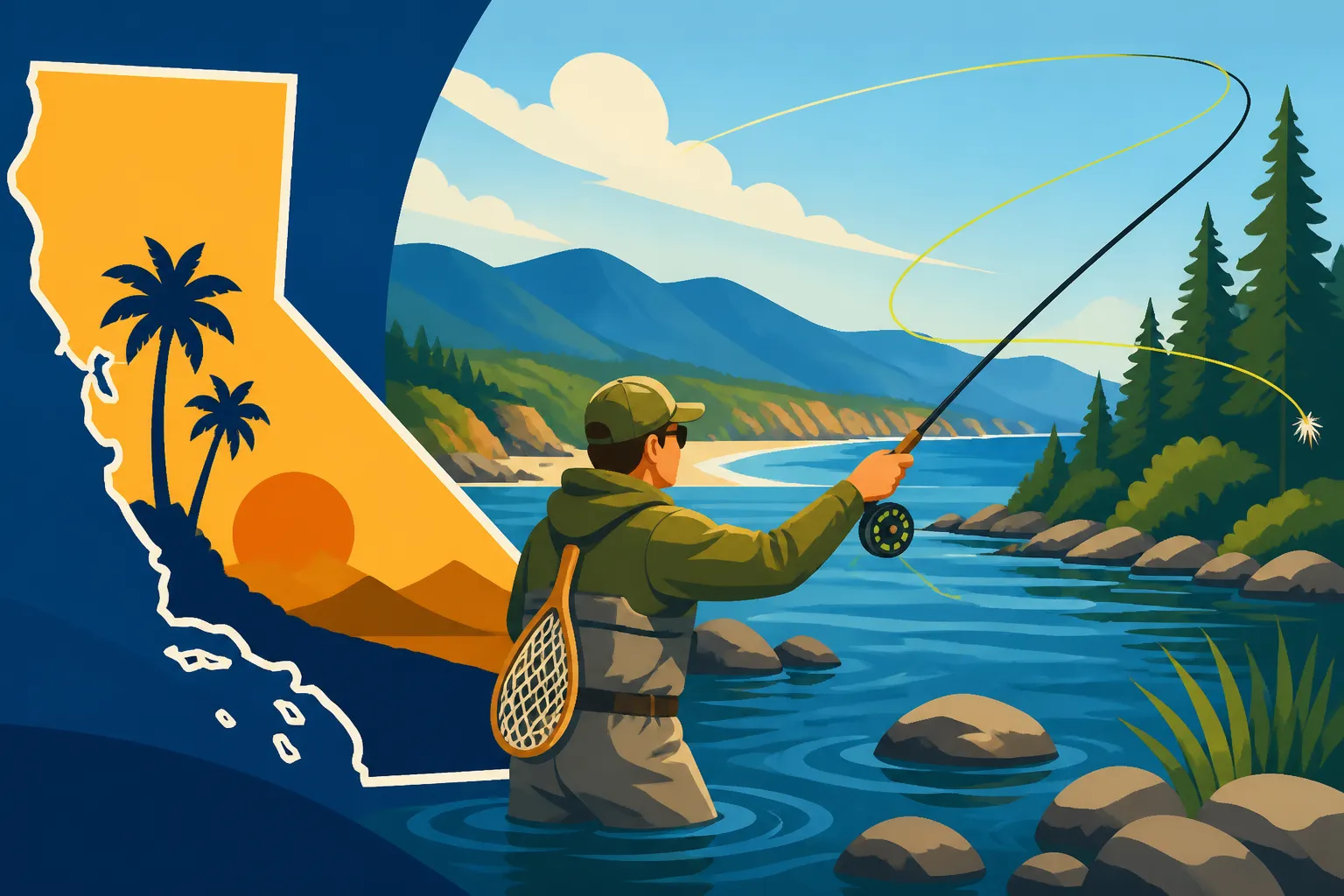
The overhead cast is the bread and butter of fly fishing, and it’s the first one everyone needs to master. It’s essentially a forward and backward stroke that propels the line through the air, laying your fly out gently on the water. Many beginners try to whip the rod like a conventional rod, but fly casting is all about loading and unloading the rod with smooth, controlled acceleration, not brute force. The rod does the work, not your arm.
To execute a proper overhead cast, imagine your rod tip traveling in a straight line, like it's painting a picture frame. Start with your rod tip low, sweep it back smoothly to roughly the 1 o'clock position (or slightly past vertical, depending on line length), pause, and then drive it forward to the 10 o'clock position. That "pause" at the back is crucial – it allows the line to fully unroll behind you, loading the rod with energy. If you rush it, you'll hear that dreaded "crack" as the line snaps, collapsing in a pile. The forward stroke should be a controlled acceleration, bringing the rod to an abrupt stop, letting the line shoot forward.
Mastering the Roll Cast: Essential for Tight Quarters
There will be countless times, especially when you're fishing California's incredible freestone rivers or brushy mountain streams, when an overhead cast just isn't an option. Maybe you've got a towering tree canopy behind you, a steep bank, or just a boatload of impenetrable willows. That's where the roll cast becomes your best friend. It allows you to launch your fly forward with no backcast, using only the water tension and a well-timed forward stroke.
The key to a good roll cast is creating a "D-loop" of line on the water surface in front of you. To do this, raise your rod tip slowly until the line forms a U-shape, with the leader and fly pointing upstream or slightly to the side. Then, just like the forward stroke of an overhead cast, accelerate the rod forward, stopping crisply. The D-loop collapses, and the tension on the water propels the fly line forward in a graceful roll. It takes a bit of practice to get the timing and angle right, but once you do, you'll find yourself able to present flies in spots you never thought possible.
Line Management: The Unsung Hero of Fly Casting
You can have the most beautiful cast in the world, but if your line isn't managed properly, it's all for naught. Tangled line, slack line, or too much line on the water will kill your presentation, your drift, and ultimately, your chances of catching a fish. Line management starts even before you cast – making sure there are no knots or coils in your running line, and that you have enough line stripped off your reel to make the next cast. Many anglers overlook this simple step and then wonder why their casts fall short or get tangled.
When casting, especially in moving water or when battling the wind in saltwater, effective line management continues throughout the retrieve and even during the presentation. Learning to strip line efficiently, stacking it neatly on the water or in a stripping basket, and minimizing extraneous slack are vital skills. This continuous awareness of your line's position and tension will significantly reduce tangles, improve your ability to feel subtle takes, and ensure your next cast is as smooth as your last.
Adapting Your Cast to California's Diverse Waters
California isn't just one type of fishing destination; it's a dozen different ecosystems crammed into one state. From the bustling bays of San Francisco to the serene lakes of the Eastern Sierra, each environment demands a slightly different approach to your casting. What works on a small creek might be utterly useless on the open ocean.
River and Stream Casting: Reading the Water and Targeting Fish
Fishing California's rivers and streams, whether it's the legendary Sacramento River Fishing Guide for trout and salmon or a tiny tributary in the Sierras, is all about precision and stealth. You're often dealing with limited backcasting room, varying currents, and specific holding lies for fish. Here, short, accurate casts are often more effective than long bombs. Focus on delicate presentations that land your fly gently without spooking the fish.
Techniques like the roll cast are invaluable here, as are various slack-line casts (like the S-cast or parachute cast) which introduce deliberate slack into the line to allow for a longer, drag-free drift over complex currents. You'll need to learn to "read the water" – identifying seams, eddies, and riffles where fish are likely holding – and then place your fly upstream of these spots, allowing it to drift naturally into the strike zone. This often means shorter casts, perfectly executed, are far superior to a hero cast that crashes down and spooks everything.
Lake and Stillwater Casting: Distance and Presentation
When you're out on California's vast lakes like Lake Shasta or Diamond Valley Lake, you often need to cover more water and achieve greater distances. Fish in stillwater environments can be spread out, and without the current to carry your fly, you need to deliver it to them directly. This is where mastering the double haul (which we'll cover soon) becomes a game-changer, dramatically increasing your line speed and casting distance.
Presentation is still paramount in stillwater, but it shifts from precise placement over varied currents to achieving a natural movement on the retrieve. Consider the type of fly you're using – a dry fly needs to land softly, while a streamer might require a more aggressive splash to mimic a baitfish. Pay attention to wind direction; casting into a headwind demands more power and a lower trajectory, while a tailwind can assist in achieving those longer casts. Even on still waters, fish can be surprisingly spooky, so a gentle landing is always preferred.
Surf and Saltwater Casting: Power and Accuracy in the Wind
California's coastline offers incredible opportunities for California Surf Fishing Guide for species like surfperch, corbina, and even halibut. But let me tell you, casting into the Pacific can be a whole different beast. You're typically dealing with relentless wind, heavy surf, and often needing to launch hefty flies or baitfish patterns a good distance. Forget delicate presentations; here, it's about brute force met with finesse.
A powerful double haul is almost a necessity for surf casting. You need to generate maximum line speed to punch through the wind and propel heavy lines and flies. Accuracy is still important, often needing to land your fly beyond the breaking waves or into a specific trough. Techniques like the Belgian cast (a horizontal cast) can be incredibly useful as it keeps the line low to the water, minimizing the wind's effect. Always be mindful of your surroundings; a heavy fly line whipping around in strong winds can be dangerous to bystanders if you're not careful. For specific regulations on where you can pursue these exciting opportunities, you might want to look into the California Saltwater Fishing Regulations.
Advanced Casting Techniques for Tricky Situations
Once you've got the fundamental overhead and roll casts down, you're ready to add some more specialized tools to your casting toolbox. These techniques aren't just for showing off; they solve real problems on the water, helping you catch more fish.
The Double Haul: Adding Power and Distance
The double haul is arguably the most important advanced casting technique you can learn. It's what allows fly anglers to cast truly long distances with minimal effort and to fight through windy conditions. Essentially, you're adding another layer of rod loading by stripping the line hard with your non-casting hand during both the backcast and the forward cast. This creates immense line speed and allows you to load the rod much more efficiently.
It sounds complicated, but it's really a coordinated movement: as you make your backcast, you pull sharply down on the line with your hauling hand. As the line straightens out behind you, you release the line. Then, as you make your forward cast, you pull sharply down again, and release the line just before the rod stops, allowing the built-up momentum to shoot the line forward. The timing is crucial, and it requires practice to synchronize your hauling hand with your casting arm. Many find it helpful to watch videos or get personal instruction, but it's a skill that will unlock a new level of casting performance, especially on California's larger lakes or when chasing offshore species like yellowtail. You can even find helpful instructional videos on platforms like Amazon, often bundled with beginner fly fishing kits.
Slack Line Casts: Achieving a Natural Drift
A perfectly straight line might sound good, but in many river fishing scenarios, it's the kiss of death for a natural drift. Currents vary in speed across a river, and if your line is taut, the faster current will pull on it, dragging your fly unnaturally. This phenomenon is called "drag," and fish hate it. Slack line casts are designed to introduce deliberate curves or wiggles into your leader and fly line to counteract this drag, allowing your fly to drift at the same speed as the natural current.
The "S-cast" or "parachute cast" involves wiggling your rod tip slightly during the forward cast, creating an S-shape in the line as it lands. The "reach cast" involves extending your casting arm upstream or downstream after the forward cast to reposition the line. There are also "pile casts" where you intentionally dump a coil of line on the water. Each of these techniques aims to buy you precious seconds of drag-free drift, making your fly look like a real insect or baitfish floating downstream, which is absolutely essential for fooling wary trout in rivers like the Lower Yuba or Hat Creek.
Mending and Drag Control: Keeping Your Fly Fishing
Even with perfect slack line casts, the river is constantly working against you. Mending is the act of repositioning your fly line on the water during the drift to continue to counteract drag. It’s like a mini-cast without actually recasting. When you see your line starting to pull downstream too quickly, you gently lift a section of your fly line off the water and place it upstream of your fly, effectively creating more slack and extending your drag-free drift.
There are upstream mends, downstream mends, and stack mends, each suited to different situations and current speeds. Mastering mending requires a keen eye to observe your fly's drift and anticipate when drag will occur. Combined with proficient line management, mending ensures that your fly remains in the strike zone, looking as natural as possible, for as long as possible. This constant interaction with the line and the water is what makes river fly fishing so engaging and, sometimes, so maddening.
Gear Considerations: Matching Your Setup to Your Cast
Your casting ability is only as good as the tools you're using. Trying to cast a heavy streamer with a delicate trout rod, or vice-versa, is going to lead to frustration. Choosing the right rod, reel, and line for the job is critical for making your casting smoother and more effective, especially in a state with as many different fishing opportunities as California. For a deeper dive into the variety of fish you might encounter, check out our California Fish Species: Complete Guide.
Rod and Reel Selection: The Right Tools for the Job
Your fly rod is the engine of your cast, and the reel is mostly for holding line and fighting fish (though a quality drag system is crucial). Rods are rated by weight, typically from 0-weight (super light for tiny creeks) to 14-weight (heavy-duty for offshore big game). Matching your rod weight to the size of fish you're targeting and the flies you'll be casting is paramount. For general trout fishing in California, a 4 or 5-weight rod is a versatile choice. If you're chasing How to Catch Largemouth Bass in California in a reservoir, a 7 or 8-weight might be better. For serious surf or offshore work, you're looking at 9-weight or higher.
The action of the rod (how much it bends) also plays a big role. Fast-action rods are stiff and powerful, great for distance and wind, but require precise timing. Medium-action rods are more forgiving and versatile. Slow-action rods are wonderful for delicate presentations on small streams but won't punch through wind well. When buying a rod, especially online through retailers like Amazon, pay attention to these specs and read reviews. Your reel should balance the rod and have a smooth drag system, especially if you're targeting strong fish like steelhead or salmon.
Fly Line Choices: Taper, Weight, and Type
The fly line is what actually casts the fly – not the rod. It's weighted to load the rod, and its design has a huge impact on your casting performance. Fly lines come in different weights (which should match your rod weight), tapers, and densities. A "weight-forward" taper, where most of the weight is concentrated towards the front of the line, is the most common and best for general casting and distance. "Double taper" lines are better for delicate presentations and roll casting.
Beyond taper, you'll choose between floating, intermediate (slow sinking), and full-sinking lines. Floating lines are your standard for dry fly and nymph fishing. Sinking lines are essential for getting streamers and nymphs down deep in lakes or fast rivers. Matching your line to your fishing situation is critical. For instance, if you're fishing for trout in the deeper sections of Crowley Lake, a full-sinking line might be essential, whereas a floating line is perfect for the dry fly hatch on the Truckee River.
Leader and Tippet: The Final Connection
The leader and tippet are the nearly invisible connection between your heavy fly line and your tiny fly. The leader is typically tapered, going from thick at the butt (where it connects to the fly line) to thin at the tip. This taper helps transfer casting energy smoothly and turn over your fly gently. Tippet is the final, thinnest section of line, and it's what you tie your fly to. You replace tippet as needed, saving your tapered leader.
Leaders and tippet are rated by "X-size," with smaller numbers indicating thicker, stronger line (e.g., 0X) and larger numbers indicating thinner, more delicate line (e.g., 7X). For a gentle presentation to spooky trout, you'll want a longer, lighter leader and tippet. For casting heavy streamers or fishing for stronger species, you'll need a shorter, heavier setup. Finding the right balance between strength, invisibility, and casting performance is a constant calibration for any serious fly angler. You can find a huge variety of leader and tippet options on Amazon, allowing you to stock up for any California fishing adventure.
Common Casting Mistakes and How to Fix Them
Let's be honest, everyone makes casting mistakes – even the pros. The trick is recognizing them and knowing how to correct them. It's not about being perfect every time, but about understanding the mechanics so you can self-correct when things go awry.
The "Tail Loop" and How to Eliminate It
Ah, the dreaded tail loop. This is when your leader or tippet actually folds over on itself during the cast, creating a knot or getting tangled around your fly. It's incredibly frustrating. The most common cause of a tail loop is trying to apply power too early or too abruptly in the cast. Instead of a smooth acceleration and crisp stop, you're using too much force too quickly, causing the line to "pile up" on itself.
To fix it, focus on two things: smooth acceleration and a straight line path for your rod tip. Imagine you're drawing a straight line with the tip of your rod. Any deviation or "dipping" of the rod tip during the power stroke can create that unwanted tailing loop. Practice the fundamental overhead cast with less power, really focusing on that smooth, consistent acceleration to an abrupt stop. Your line should unroll gracefully, not fold.
Overpowering the Cast: Smooth is Fast
This is another classic beginner mistake, and honestly, many experienced anglers fall into this trap too. We think that if we throw the rod harder, the line will go farther. Nope! Fly casting isn't about strength; it's about timing and efficiency. Overpowering the cast often leads to a jerky stroke, a collapsed loop, and the inability to shoot line. It also tires you out much faster.
The mantra in fly casting is "smooth is fast." The energy for the cast comes from the bending and straightening of the rod, not from your arm muscles trying to whip it. Focus on a gradual acceleration, letting the rod load, and then a clean, crisp stop. Imagine you're trying to stop the rod tip completely, without any wobble. This allows the rod to transfer its stored energy efficiently into the line, sending your fly sailing effortlessly. Many guides, especially those specializing in California Fly Fishing Tips and Techniques for trout, will emphasize this principle.
Timing and Rhythm: The Key to Effortless Casting
Fly casting is often described as a dance, and like any dance, it has a rhythm. The backcast, the pause, the forward cast – they all need to be perfectly timed for the line to unroll efficiently. If you rush the backcast (don't pause long enough), your line won't have fully straightened out behind you, and you'll "stack" the line on your forward cast. If you pause too long, the line will fall to the ground.
The "pause" is variable; it depends on how much line you have out. More line means a longer pause, less line means a shorter pause. Listening to the line is key. You can often feel or even hear the line unroll behind you, and that's your cue for the forward stroke. Practice counting or using a mental rhythm ("back-pause-forward") until it becomes second nature. This rhythm is what makes casting feel effortless, allowing you to focus on where your fly needs to land, rather than how you're going to get it there.
Practice Makes Perfect: Drills and Routines
Nobody becomes a master caster overnight. It takes deliberate practice, both on and off the water. Just like any skill, consistency and focus are your allies. Don't get discouraged by bad casts; learn from them and keep trying.
Backyard Practice: Building Muscle Memory
You don't need to be on the water to improve your casting. In fact, many professional casters spend countless hours practicing on a lawn or even indoors. Grab your rod, tie a piece of yarn (instead of a fly) to your tippet, and head outside. The goal here is to focus solely on the mechanics of your cast without the distractions of fishing.
Practice your overhead cast, focusing on that straight-line rod path and crisp stop. Work on your roll cast, getting that D-loop to form perfectly. If you're feeling adventurous, start experimenting with the double haul. Focus on consistency – try to make ten identical casts in a row. It's often helpful to set up targets (like a frisbee or a small cone) at various distances to practice accuracy. This muscle memory you build in the backyard will translate directly to more effective casting on the water.
On-Water Drills: Applying Skills in Real Conditions
Once you've built a solid foundation in your backyard, it's time to take those skills to the water. But don't just immediately start fishing. Take some time to practice specific scenarios. If you're on a river, find a spot with challenging currents and practice your slack line casts and mending. If you're on a lake, work on your distance and accuracy to a floating leaf or a distant ripple.
Pay attention to how the wind affects your cast and adjust accordingly. Experiment with different amounts of line out. The real world adds variables that a lawn can't replicate. The goal here isn't necessarily to catch fish during these drills (though it might happen!), but to refine your casting in the actual environment you'll be fishing in. This deliberate, focused practice on the water will solidify your skills and build confidence for when that trophy fish finally rises. Looking for some fantastic practice spots? Our guide to Best Fishing Spots in California offers plenty of inspiration, including specific rivers like the Truckee River Fishing Guide which offers diverse casting challenges.
Conclusion
Fly casting might seem intimidating at first, like some secret handshake only a select few know. But truly, it's a skill built on fundamental principles, adapted with specific techniques, and refined through persistent practice. California's incredible fishing opportunities, from the smallest trout stream to the expansive Pacific, demand a versatile caster. By understanding the basics, mastering the overhead and roll casts, incorporating advanced techniques like the double haul, and constantly refining your approach through practice, you'll not only improve your catch rate but also find a deeper, more satisfying connection to the art of fly fishing. So grab your rod, hit the water (or your backyard), and start casting with confidence.
| Casting Technique | Primary Use Case | Key Benefit | Typical California Scenario |
|---|---|---|---|
| Overhead Cast | General purpose, open water | Distance, accuracy | Most lake fishing, open river sections |
| Roll Cast | Tight quarters, no backcast | Stealth, obstacle avoidance | Brushy stream banks, high canopy rivers |
| Double Haul | Long distance, windy conditions | Increased line speed, power | Large reservoirs, surf fishing, offshore |
| S-Cast / Reach Cast | Drag control in complex currents | Natural drift, extended presentation | Seams and eddies in a swift river |
| Belgian Cast | Heavy flies, strong headwinds | Low line trajectory, power | Casting large streamers in the surf |
Disclaimer
The information provided in this guide is for general informational purposes only and is not intended as legal advice. Fishing regulations, seasons, and limits in California can change frequently. Always consult the official California Department of Fish and Wildlife (CDFW) regulations booklet or their website before heading out to fish. Adherence to all local, state, and federal laws is the responsibility of the angler.