How to Catch White Seabass in California
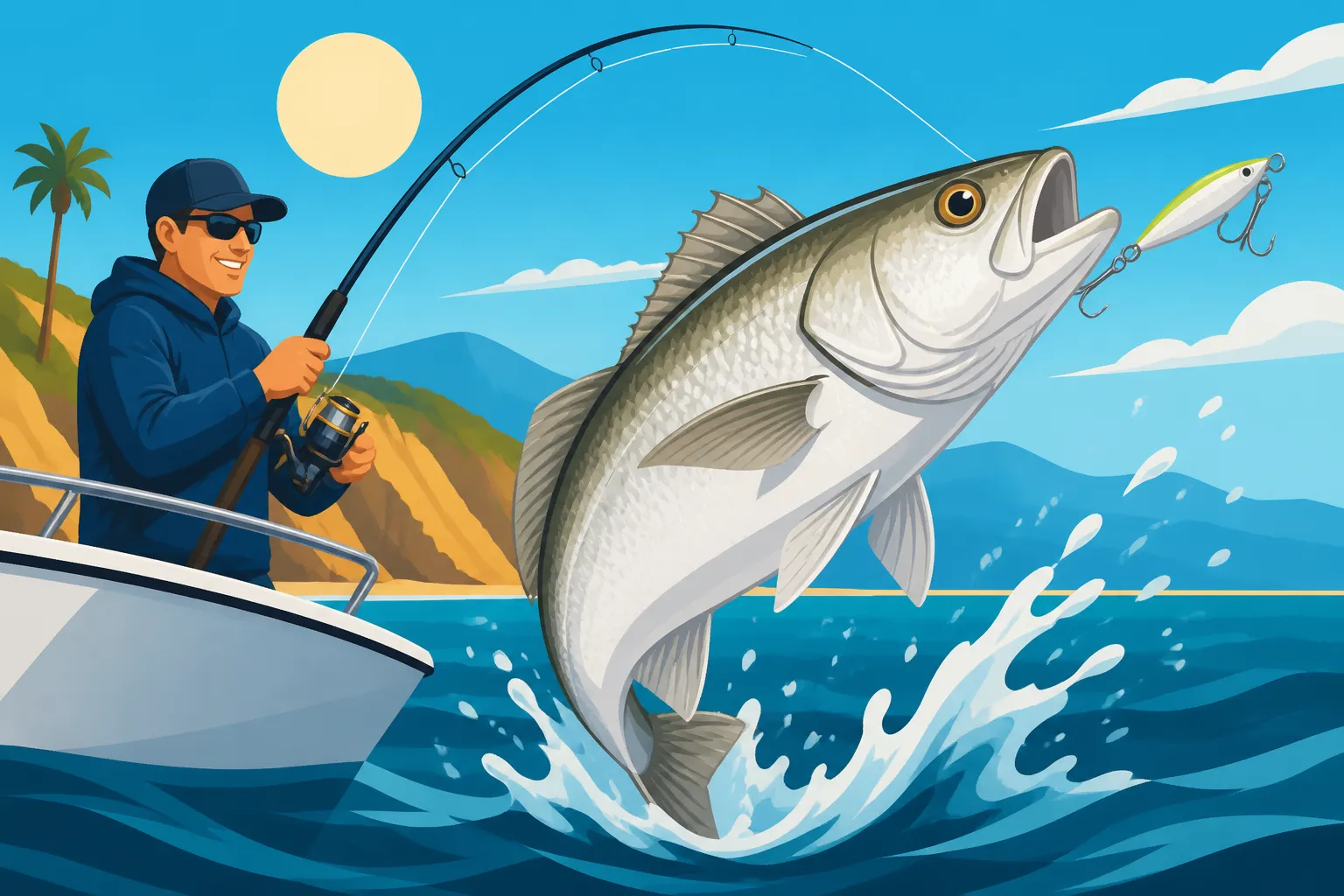
Ah, the white seabass! If you've ever chased these elusive giants in California, you know the mix of thrill and utter frustration they can bring. They're often called the "ghost of the kelp" for a reason—one moment they're there, the next they've vanished, leaving you wondering if you imagined the whole thing. But when you hook into one of these powerful, magnificent fish, there's nothing quite like it. This guide is all about peeling back the layers of mystery surrounding white seabass fishing in California, helping you understand their habits, the right gear to use, and the techniques that will give you the best shot at landing one of these highly prized catches.
Understanding White Seabass: The Ghost of the Kelp
White seabass, Atractoscion nobilis, are truly one of California's most revered sport fish. They're not only a challenge to catch, known for their powerful runs and evasive tactics, but they're also absolutely delicious, making them a top target for many anglers. But before you can even think about the fight, you need to know who you're dealing with.
Identifying White Seabass
Proper identification is key, especially since other species like barracuda or even large bonito can sometimes be confused with smaller white seabass. A true white seabass has a long, slender body with a metallic silvery sheen, often with hints of blue or purple along its back. The most distinctive feature is a prominent ridge that runs down the middle of its belly, between the ventral fins and the anus. Juveniles typically have dark, wavy bars on their sides, which fade as they mature. Their tail fin is subtly forked, and they have a large mouth with small, sharp teeth. It's important to be sure of your catch, not just for bragging rights, but to ensure you're adhering to the specific regulations for the species.
They can grow quite large, with trophy fish exceeding 60 pounds, though most recreational catches are in the 15-40 pound range. Imagine reeling in a fish that's longer than your arm and pulls like a freight train! It's a truly memorable experience. Knowing these identifiers helps you understand what you're targeting and what you've caught, which is a fundamental part of responsible angling.
White Seabass Habitat and Behavior
White seabass are primarily found in coastal waters, often associating with structure like kelp beds, rocky reefs, and submarine canyons. They are opportunistic predators, meaning they'll eat whatever is readily available, but they have a particular fondness for squid, anchovies, sardines, and mackerel. Their behavior is highly influenced by water temperature, bait availability, and spawning cycles. They tend to be more active in warmer water, typically above 60 degrees Fahrenheit, which is why the spring and summer months are often prime time for targeting them.
They're also migratory, moving up and down the coast with the seasons and the availability of their preferred forage. For instance, large schools of squid attracting hungry seabass can turn a quiet spot into a fishing frenzy overnight. These fish are also known for their schooling behavior, though sometimes you'll find solitary giants lurking in deeper kelp. Their tendency to stick close to structure means you'll often be fishing in relatively shallow waters, from 20 to 100 feet deep, making them accessible to various fishing methods, from private boats to kayaks. Understanding their preference for structured environments is key to finding them; if you're not near kelp or a reef, you're probably not in the right neighborhood.
When and Where to Find Them in California
Timing and location are everything when it comes to white seabass. In California, the peak season generally runs from late spring through summer and into early fall, roughly April to October, though this can vary year to year depending on ocean conditions. When you're planning your trip, looking at the California Fishing Seasons: Month-by-Month Guide can give you a good overview of what to expect throughout the year. The southern California coast, from San Diego up through the Channel Islands, is renowned for its white seabass fishery. Iconic spots include the kelp beds off La Jolla, Catalina Island, San Clemente Island, and the shallow waters around the Channel Islands. Further north, areas like Santa Monica Bay, Malibu, and even specific spots in Monterey Bay can produce when conditions are right, particularly during warmer water events.
You'll often hear about "squid grounds" – these are specific areas where market squid aggregate to spawn, attracting not just white seabass but also yellowtail and even thresher sharks. When a local fishing report mentions a squid bloom, it’s usually time to drop everything and go! These fish can be found from the surf zone, especially around rocky points and jetties, all the way out to offshore islands. Checking local fishing reports is crucial, as white seabass can be incredibly nomadic. What was a hot spot last week might be barren today. Conditions like water clarity, temperature, and current also play a huge role in where they decide to hang out.
Essential Gear for White Seabass Success
Getting your gear dialed in is paramount for white seabass. These fish are powerful, and they live in areas that can be snag-prone, so having tackle that can handle the stress is non-negotiable. You don't want to lose the fish of a lifetime because you skimped on your line or your reel couldn't handle the drag.
Rods, Reels, and Line Choices
When it comes to rods, a medium-heavy to heavy conventional rod, typically 7 to 8 feet long, is a solid choice. You want something with enough backbone to pull a big fish away from kelp, but still sensitive enough to detect those subtle bites. Brands like Phenix, Seeker, and Calstar are popular among seasoned California anglers for their durability and performance. For reels, a conventional reel with a strong drag system and good line capacity is essential. Think models in the 30-40 size class from reputable manufacturers. A reel that can hold at least 250-300 yards of 50-65 lb braided line, topped with a monofilament or fluorocarbon leader, is ideal. The Penn Fathom or a Shimano Trinidad, for instance, are excellent choices, offering the cranking power and smooth drag needed for these hard fighters.
For line, a braided main line of 50 to 65-pound test is highly recommended. Braid offers superior sensitivity and minimal stretch, which helps with hook sets and detecting light bites in deeper water. Plus, its thinner diameter means more line on your spool. You'll then want to attach a fluorocarbon leader, typically 30 to 50-pound test, to your main braid. Fluorocarbon is nearly invisible underwater, which is a huge advantage when targeting wary seabass, and it has excellent abrasion resistance, a must when fishing around kelp and rocks. The length of your leader can vary, but usually 6 to 10 feet is a good starting point. You can find quality braided lines and fluorocarbon leaders from brands like PowerPro and Seaguar on Amazon, which often has competitive pricing and a wide selection. Don't cheap out on your line—it's the only thing connecting you to that potential trophy.
Terminal Tackle and Rigging
Your terminal tackle needs to be robust and appropriate for the baits or lures you're using. When fishing live bait, circle hooks are often preferred, especially when dealing with squid. A 2/0 to 5/0 circle hook, depending on the size of your bait, works wonders. The beauty of circle hooks is that they typically hook the fish in the corner of the mouth, reducing gut-hooking and making for easier, healthier releases of undersized fish. For a classic live bait setup, a dropper loop rig is incredibly effective. This involves tying a dropper loop a few feet above a sinker, allowing your bait to swim naturally above the bottom while keeping your sinker on the seafloor.
Sinker weights can range from 1 to 8 ounces, or even heavier, depending on the current and depth. You want just enough weight to get your bait down and keep it there, but not so much that it restricts the bait's movement. For artificial lures, a heavy-duty swivel and split rings are important, especially if you're jigging. White seabass have a knack for finding any weak link in your setup. Carrying a variety of weights and hook sizes is always a good idea, as conditions and bait size can change rapidly. Having a selection of durable swivels and snaps on hand, perhaps a multi-pack from Amazon, can save your trip if you run into snags or need to quickly change rigs.
Best Baits and Lures
Without a doubt, live market squid is the king bait for white seabass. If you can get your hands on fresh, lively squid, your chances of success skyrocket. There's just something about that natural movement and scent that white seabass can't resist. You can fish squid whole, or if they're particularly large, cut them into strips. Other effective live baits include anchovies, sardines, and mackerel. These are typically fly-lined (no weight, just bait and hook) or fished with a very light sinker if the current allows, letting them swim freely in the water column.
| Bait/Lure Type | Description | Best Conditions | Pros | Cons |
|---|---|---|---|---|
| Live Squid | Whole or cut, fished on a dropper loop or fly-lined. | Clear water, active seabass, squid present. | Irresistible to seabass, very natural presentation. | Hard to obtain, can be fragile, attracts other species. |
| Live Fin Bait | Anchovies, sardines, mackerel, typically fly-lined. | Surface activity, light current. | Highly effective, easy to acquire from bait receivers. | Can be picked off by smaller fish, fragile, not always available. |
| Jigs (Iron) | Heavy metal jigs, typically white, green, or blue, dropped to the bottom and retrieved with a yo-yo motion. | Deeper water, strong current, bait schools deep. | Durable, reusable, covers water column quickly. | Requires active presentation, can get snagged easily. |
| Swimbaits | Soft plastic swimbaits, often infused with scent, rigged on lead heads. | Around kelp, structure, lighter current. | Versatile, mimics natural bait, can be fished slowly. | Can be torn by fish or structure, single-use unless repaired. |
When live bait isn't available or practical, artificial lures can be incredibly effective. Heavy metal jigs, often referred to as "iron," are a classic choice. Colors like white, green mackerel, or blue and white are perennial favorites. You'll often "yo-yo jig" these, dropping them to the bottom and quickly reeling them up, mimicking a fleeing baitfish. Swimbaits, especially those with a large paddle tail, rigged on a lead head, can also entice a bite, particularly when fished slowly around kelp edges. Brands like Lead Masters and Ahi USA make excellent jigs for this fishery. The key is to match the hatch—try to use lures that imitate the size and color of the local baitfish or squid.
Mastering White Seabass Fishing Techniques
Catching white seabass isn't just about having the right gear; it's about employing the right techniques and understanding how these fish react to different presentations. It's a game of patience, stealth, and sometimes, quick reflexes.
Live Bait Techniques
Fishing with live bait is, for many, the most effective way to target white seabass, especially when fresh squid is on the menu. The most common setup is the dropper loop, which we touched on earlier. You'd typically nose-hook or tail-hook your live squid, ensuring it can swim naturally. Drop it down to the desired depth, usually just off the bottom or around kelp, and let it do its thing. The challenge here is distinguishing a seabass bite from a calico bass or a rockfish nibble. A white seabass bite can sometimes be subtle, a gentle pull or a sudden weight, before they really decide to run. Once you feel that distinct pull, let the fish take the bait for a second or two before gently sweeping the rod to set the hook.
Another incredibly effective method is fly-lining, which is essentially fishing with no weight, allowing your live bait to swim freely and naturally. This is particularly deadly when fish are feeding actively on the surface or in the upper water column. You'll typically cast your bait out and let it drift with the current. This method requires a bit more finesse to keep your line tight enough to feel a bite but loose enough not to impede the bait's movement. It's also a great tactic when you spot seabass boiling on bait near the surface. Remember, seabass are visual predators, and a struggling, natural presentation is often too tempting to resist. On some California fishing charters, the crew will net live squid right off the boat, making this technique easy and effective for passengers.
Jigging Strategies
When live bait is scarce, or if the fish are holding deeper and require an aggressive presentation, jigging can be incredibly productive. Metal jigs, also known as "iron," are the go-to artificial. The "yo-yo" technique is classic for white seabass: you drop a heavy jig straight down to the bottom, engage your reel, and then retrieve it with a series of quick, long upward sweeps of the rod, letting the jig flutter back down on a semi-slack line. The bite often comes on the drop, so it's crucial to pay attention to your line as it falls. A sudden stop or unnatural slack can indicate a take.
Other jigging variations include "surface iron" or "long casts." This involves casting a lighter, longer metal jig a good distance and retrieving it quickly across the surface or just below, mimicking a fleeing baitfish. This works well when fish are chasing bait near the surface or when fishing around expansive kelp beds from a boat or even a kayak. Color choice matters; start with natural baitfish patterns like blue and white, or sardine, and switch to brighter colors if the water is murky or the sun is low. Experiment with retrieve speeds and jig sizes until you find what the fish are reacting to. Having a few different sizes and colors of jigs, easily purchased from a tackle shop or online like Amazon, gives you options for various conditions.
Kayak and Shoreline Approaches
White seabass aren't exclusively a boat fishery. Dedicated kayak anglers and even determined shore anglers can find success, especially in specific areas. Kayak fishing for white seabass is growing in popularity, particularly in areas with extensive kelp beds that are difficult for larger boats to access. Kayak anglers can stealthily paddle into prime ambush spots, often using live squid or jigs. They benefit from being able to quietly approach fish without spooking them. Knowing the Best Kayak Fishing Spots in California can certainly help you find those secret honey holes. Safety is paramount when kayak fishing in the ocean; always wear a PFD, carry a VHF radio, and check marine forecasts.
Shoreline anglers, while facing a tougher challenge, can also intercept white seabass, particularly during specific times of year when fish move closer to shore to feed. This often occurs around rocky points, jetties, or beaches adjacent to kelp beds. Casting large swimbaits or even live mackerel (if you can catch them from shore) can yield results. The patience required for shore fishing for seabass is immense, but the reward of landing a big one from the sand or rocks is truly special. Success from shore is often about persistence and being in the right place at the right time, especially during early morning or late evening hours when seabass tend to cruise in shallower waters.
Navigating Regulations and Conservation
Fishing for white seabass means playing by the rules, both for the health of the fishery and to avoid any costly penalties. California has specific and often dynamic regulations for this species, reflecting ongoing efforts to maintain healthy populations.
California White Seabass Regulations
Regulations for white seabass in California are set by the California Department of Fish and Wildlife (CDFW) and can change, so it's absolutely vital to stay updated. Generally, there are minimum size limits, daily bag limits, and often seasonal closures or area restrictions. For instance, the minimum size limit for white seabass is typically 28 inches total length, and the daily bag limit is usually three fish, though this can be reduced to one fish in certain areas or during specific periods, often between March 15 and June 15. This is especially true south of Point Conception, which is considered a primary spawning area.
You must have a valid California Fishing License Guide to fish for white seabass, as with almost all fishing in California. Additionally, anglers fishing for white seabass might need a specific report card, depending on current regulations. Always check the current California Saltwater Fishing Regulations booklet or the CDFW website before heading out. Ignorance of the law is no excuse, and wardens are out there enforcing these rules to protect our resources. Understanding these regulations is not just about avoiding fines; it's about contributing to the sustainable management of this incredible fishery so that future generations can enjoy the same opportunities we have today.
Responsible Angling and Conservation Efforts
Beyond simply adhering to regulations, practicing responsible angling is crucial for the long-term health of the white seabass population. This means knowing how to properly handle and release undersized fish. If you catch a white seabass that doesn't meet the size limit, handle it minimally, use wet hands, and release it quickly and gently. Circle hooks, as mentioned earlier, can significantly improve a fish's chances of survival by minimizing gut-hooking. Avoid excessive stress on the fish during the fight if you intend to release it.
Conservation efforts for white seabass include size and bag limits, seasonal closures, and the designation of California Marine Protected Areas Explained (MPAs). MPAs are specific ocean areas where fishing or resource extraction is limited or prohibited to protect marine ecosystems. It is absolutely critical to know the boundaries of any MPAs in your fishing zone, as fishing within a "no-take" zone can result in severe penalties. Organizations like the Pacific Fisheries Management Council and the CDFW continuously monitor the health of the white seabass fishery and adjust regulations as needed. As anglers, we have a responsibility to be part of the solution, not the problem, by understanding and respecting these conservation measures.
Advanced Tips for Tricky Conditions
White seabass can be notoriously finicky. They might be biting like crazy one day and completely shut down the next. Learning to adapt to changing conditions and employing advanced strategies can make all the difference.
Reading the Ocean and Weather Patterns
Experienced white seabass anglers are keen observers of the ocean and weather. Water clarity, temperature breaks, current speed, and even swell direction can all influence where these fish decide to hang out and feed. White seabass generally prefer clearer water, so after a big storm that stirs up sediment, they might move to deeper, cleaner areas. Look for temperature changes; sometimes a slight increase or decrease in temperature can concentrate bait, and thus, seabass. Using a fishfinder with a good temperature gauge is invaluable here. Pay attention to current breaks, too—areas where currents meet or eddy around structure can create feeding lanes.
Weather patterns also play a role. Overcast days or periods with light winds can sometimes lead to more active feeding, as the fish feel less exposed. Conversely, bright, sunny days with flat calm conditions might push them into deeper cover or make them more wary of unnatural presentations. It’s also worth noting that the California Ocean Enhancement Stamp helps fund programs like fish planting, which can influence fish behavior and distribution over time. Learning to "read the water" takes time and experience, but by paying attention to these environmental cues, you'll start to develop an intuition for where the fish might be. Think of yourself as a detective, piecing together clues to find your quarry.
Night Fishing for White Seabass
While many anglers target white seabass during the day, night fishing can be incredibly productive, especially around a squid spawn. White seabass are known to feed aggressively on squid under the cover of darkness. Many of the techniques remain the same as daytime fishing, primarily using live squid on a dropper loop. However, stealth and proper lighting become even more important. Use minimal light on the boat to avoid spooking fish, and be extra careful with your navigation. Some of the biggest white seabass are caught after the sun goes down.
The ambiance of night fishing is also unique—the quiet, the cooler temperatures, and the glow of the squid in the water create a magical experience. It's not uncommon for a boat to "squid up" in the evening by attracting market squid with bright lights, then turning off the lights and fishing in the dark as the seabass move in to feed on the concentrated bait. Always ensure your vessel has proper navigation lights and safety equipment for night operations. A good headlamp with a red light setting is invaluable, as red light preserves your night vision and is less likely to spook fish.
Post-Catch Care and Handling
So, you've battled a magnificent white seabass to the boat—congratulations! Now, proper post-catch care is essential, both for the quality of the meat and to comply with regulations. If you intend to keep the fish, dispatch it quickly and humanely. A swift blow to the head or iki jime (brain spiking) is effective. The next crucial step is bleeding the fish. Cut the gills or sever the artery in the throat to allow the blood to drain. This greatly improves the taste and texture of the meat.
Once bled, get the fish on ice as quickly as possible. A large cooler filled with an ice slurry (ice and saltwater) is ideal. This rapid chilling prevents spoilage and maintains the quality of your catch. When you're cleaning your white seabass, remember they have delicate, flaky white meat that is prized by chefs. Fillet carefully, and be sure to check the California Halibut Regulations and Limits or California Yellowtail Fishing Guide if you happen to catch other species alongside your seabass, as their regulations will differ. Proper care ensures that your hard-earned catch tastes as good as the memory of catching it.
California White Seabass Fishing Resources
To maximize your chances of success and stay informed, here are some invaluable resources for white seabass fishing:
| Resource Type | Description | How It Helps |
|---|---|---|
| CDFW Website | The official California Department of Fish and Wildlife website, with detailed regulations, fishing reports, and license information. | Essential for current regulations, size/bag limits, and purchasing your California Fishing License Guide. |
| Local Bait Shops | Knowledgeable staff at tackle and bait shops (e.g., Angler's Choice, Sav-On Tackle) often have the most up-to-date local bite reports and bait availability. | Provides real-time information on what's biting, where, and what bait/lures are working best. |
| Online Forums/Apps | Websites like Bloodydecks.com or various fishing apps offer community-sourced reports, discussions, and tips from other anglers. | Connects you with a community of experienced anglers, offering diverse perspectives and recent catch info. |
| Fishing Charters | Booking a trip on a local charter or party boat can give you firsthand experience with effective techniques and current hot spots. See our California Deep Sea Fishing Charter Guide. | Allows you to learn from pros, access offshore grounds, and increase your chances of catching fish, especially if you're new to the area. |
| Weather & Ocean Apps | Marine weather forecasts (e.g., NOAA Marine Forecast), tide charts, and sea surface temperature (SST) apps (e.g., FishTrack, Rip Charts). | Helps you plan trips based on favorable conditions like calm seas, good tides, and temperature breaks where fish might congregate. |
Remember, staying connected to these resources can significantly improve your fishing success. The more informed you are, the better prepared you'll be to tackle the "ghost of the kelp." Don't forget to check out What to Bring on a California Fishing Charter if you're thinking of hopping on a boat for your white seabass adventure!
Disclaimer
Fishing regulations, seasons, and limits are subject to change by the California Department of Fish and Wildlife. Always consult the latest official CDFW regulations before engaging in any fishing activity. This guide is for informational purposes only and does not constitute legal advice. Please fish responsibly and safely.