California Calico Bass Fishing Tips
There's nothing quite like the thrill of a hard-fighting calico bass, often found lurking in the kelp forests and rocky reefs off the California coast. Many anglers, especially those new to saltwater fishing, can find themselves frustrated when these feisty fish prove elusive, or when they manage to hook one only to lose it in the dense cover. This guide is dedicated to equipping you with the knowledge and tactics to consistently hook and land calico bass, transforming those frustrating days into memorable successes on the water.
Understanding the Calico Bass: A California Staple
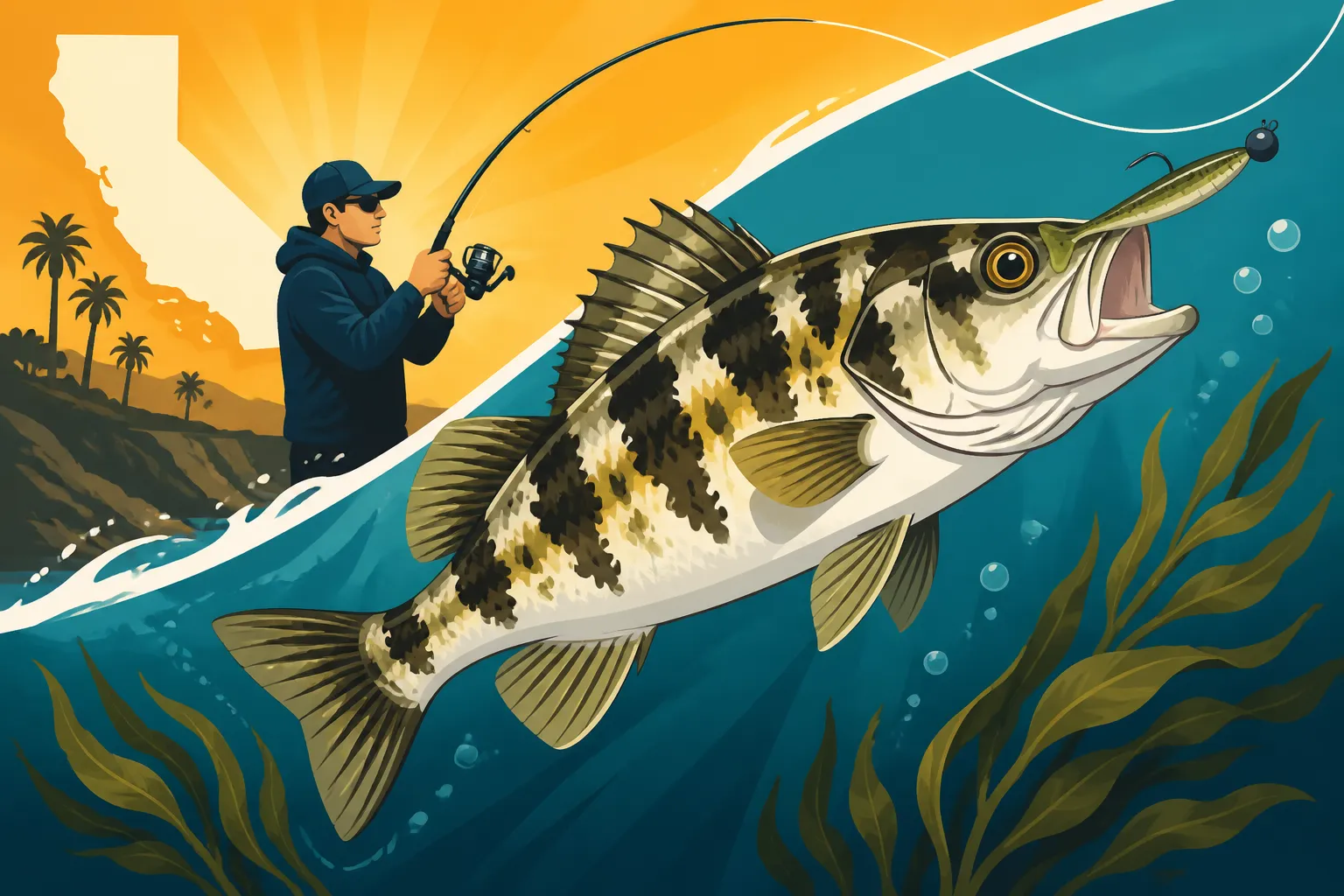
The calico bass, also known as kelp bass (Paralabrax clathratus), is a true icon of California's inshore fishing scene. These powerful, chunky fish are renowned for their aggressive strikes and their knack for immediately heading for the nearest structure the moment they feel a hook. If you've ever battled one, you know the struggle is real – they're masters of the kelp jungle! Understanding their behavior and preferred habitats is your first step to conquering them.
Where Calico Bass Love to Hang Out
Calico bass are intrinsically linked to structure. You'll primarily find them inhabiting kelp forests, rocky reefs, submerged rocks, jetties, and even oil rigs from Baja California up to Point Conception, though they are most abundant in Southern California. Think of these areas as their underwater cities, providing both food and shelter from predators.
- Kelp Forests: This is their prime real estate. The dense canopy and stalks offer protection, ambush points, and a thriving ecosystem of baitfish and invertebrates. Fishing the "kelp line"—the edge where the kelp meets open water—or dropping baits directly into the thick stuff can be incredibly productive. Areas around the Channel Islands, such as Santa Catalina Island, San Clemente Island, and even closer to shore around La Jolla, are legendary for their calico bass populations due to extensive kelp beds.
- Rocky Reefs and Submerged Structure: Even without kelp, rocky bottoms and submerged pinnacles provide the perfect ambush points. Calicos will relate to these structures, often sitting just off them, waiting for an unsuspecting meal to swim by. This is where your sonar comes in handy to identify these hidden gems.
- Jetties and Harbors: Don't overlook man-made structures! Breakwaters, jetties, and even docks within harbors can hold good numbers of calicos, especially during periods when baitfish move into these areas.
Their Seasonal Patterns and Feeding Habits
Calico bass are opportunists, but their activity levels are heavily influenced by water temperature and the presence of bait. Generally, their activity peaks in the warmer months, typically from late spring through fall, when baitfish like anchovies and sardines are abundant. However, they can be caught year-round, especially in deeper water during winter.
- Warm Water Activity: As ocean temperatures rise, calicos become more active and aggressive. This is when you'll often see them crashing baits on the surface, making for some truly exhilarating fishing. They're primarily visual predators, ambushing their prey with explosive speed.
- Diet: Their diet consists mainly of baitfish (sardines, anchovies, mackerel, squid), but they're also not above munching on crustaceans and even smaller fish. Mimicking these natural food sources with your lures or using live bait is key.
- Spawning: Calico bass typically spawn from late spring into summer. During this time, they often move to specific areas, and while they can still be caught, it’s a good time to practice extra care with catch and release to protect these valuable breeding fish. Understanding California Calico Bass Regulations and Limits is crucial, especially concerning spawning periods.
Essential Gear for Targeting Calico Bass
Trying to catch calico bass with the wrong gear is like bringing a spoon to a knife fight – you're just not going to have a good time. Because of their powerful runs and their immediate dive into heavy cover, you need robust tackle that can stand up to the challenge. Don't skimp on quality here; a cheap reel or flimsy line will quickly lead to heartbreak in the kelp.
Rods, Reels, and Line Setup
The right rod and reel combo will give you the power to pull those calicos out of the weeds and the sensitivity to feel subtle bites.
- Rods: For most calico bass fishing, a medium-heavy to heavy action rod, usually 7 to 8 feet long, is ideal. You want a rod with enough backbone to turn a fish away from structure, but with a fast enough tip to cast accurately and detect bites. Graphite composites are popular for their sensitivity and strength. Look for ratings around 15-40 lb test line. A good example might be a Phenix Black Diamond Hybrid or a Seeker Black Steel rod, popular choices among West Coast anglers.
- Reels:
- Baitcasting Reels: For fishing plastics or jigs, a low-profile baitcasting reel spooled with strong line is a favorite. It allows for quick, accurate casts and excellent control. Look for models with a high gear ratio (7.0:1 or higher) for fast retrieve, which is crucial for keeping fish out of the kelp. Brands like Shimano, Daiwa, and Penn offer excellent options. You can find a wide selection of these on Amazon.
- Spinning Reels: If you prefer spinning gear or are new to baitcasters, a sturdy 4000-6000 series spinning reel can work well. Ensure it has a strong drag system and enough line capacity.
- Line: This is where many battles are won or lost.
- Main Line (Braid): Most serious calico anglers use braided line as their main line, typically 30-50 lb test. Braid offers superior strength-to-diameter ratio, zero stretch for maximum sensitivity and hook-setting power, and incredible abrasion resistance against kelp.
- Leader (Fluorocarbon): Always tie a fluorocarbon leader to your braid. Fluorocarbon is nearly invisible underwater, extremely abrasion-resistant, and provides a little bit of stretch, which can be helpful. A 20-30 lb test fluorocarbon leader, about 3-6 feet long, is standard. Brands like Seaguar and Berkley Vanish are reliable choices.
Lures and Baits That Get the Bite
Calicos aren't overly picky, but certain lures and baits consistently outfish others, depending on the conditions and the fish's mood.
- Soft Plastics: These are the bread and butter of calico bass fishing. Swimbaits, grub tails, and jerkbaits in natural baitfish colors (greens, browns, clear with sparkle) or brighter "reaction" colors (red, white, chartreuse) are incredibly effective.
- Swimbaits: Paddle tail swimbaits from 4-6 inches rigged on a leadhead jig (1/2 to 1 oz) are deadly. Brands like Big Hammer, Keitech, and MC Swimbaits are widely used.
- Grubs: Curl-tail grubs fished on a leadhead are also excellent.
- Jerkbaits: Soft plastic jerkbaits, often rigged weedless, are fantastic for working through thick kelp.
- Surface Irons and Poppers: When calicos are up on the surface chasing bait, nothing beats the excitement of a topwater bite. Surface irons (like those from Salas, Tady, or Colt Sniper) and poppers (e.g., Yo-Zuri) cast into boiling water can draw explosive strikes.
- Live Bait: If the bite is tough, live bait is almost always the answer.
- Sardines and Anchovies: These are prime calico food. Fly-line a lively sardine or anchovy with a small hook (size 1 to 2/0) and let it swim naturally near structure.
- Squid and Mackerel: Chunked squid or small live mackerel can also be effective, especially for larger fish.
- Jigs and Leadheads: Carrying a variety of jig head weights (1/2 oz to 1.5 oz) is crucial to match current, depth, and lure size. Ensure they have strong, sharp hooks.
Here's a quick reference for popular choices:
| Lure/Bait Type | Common Uses | Recommended Sizes/Colors |
|---|---|---|
| Soft Plastic Swimbaits | All-around, imitating baitfish, subsurface | 4-6 inches, green/brown/clear sparkle, white, red |
| Soft Plastic Grubs | Versatile, good for deeper water and subtle bites | 3-5 inches, same colors as swimbaits |
| Soft Plastic Jerkbaits | Weedless rigging in heavy kelp, imitating injured bait | 5-7 inches, natural baitfish colors |
| Surface Irons | Topwater action, fast retrieve, aggressive fish | 1-3 oz, blue/chrome, mint, sardine colors |
| Poppers | Topwater explosion, noisy attraction | 1-2 oz, white, clear, chrome |
| Live Sardines/Anchovies | Slow bite, natural presentation, all conditions | Small to medium, fly-lined |
| Leadhead Jigs | Rigging soft plastics | 1/2 oz – 1.5 oz, various hook sizes |
Top Techniques for Hooking Calico Bass
Now that you've got the gear, let's talk tactics. Calico bass fishing is all about getting your offering into their strike zone and being ready for that sudden, powerful take. Precision and quick reactions are paramount, especially when fishing near abrasive structure.
Fishing the Kelp Line
This is perhaps the most iconic and productive method for calico bass. The "kelp line" refers to the outer edge of a kelp bed where the dense canopy meets open water. Calicos often patrol this edge, waiting to ambush prey moving in or out of the kelp.
- Casting Accuracy: Your casts need to be precise. Aim to land your lure or bait as close to the kelp as possible without getting tangled. A good cast allows your lure to sink naturally along the kelp edge, where fish are often holding. If you're on a boat, positioning the boat parallel to the kelp line is key.
- Working the Lure: Once your lure hits the water, let it sink for a few seconds (the "count down") to reach the desired depth, then begin a steady retrieve with subtle twitches or pauses. Vary your retrieve speed until you find what the fish prefer. Sometimes a slow, methodical retrieve is best, other times a faster, more erratic retrieve can trigger a strike.
- The Immediate Hookset and Pull: The moment you feel a bite, set the hook hard and immediately start cranking. Don't give the fish a second to turn its head and bury itself in the kelp. Use the backbone of your rod to pull them away from the structure. This is where that strong braid and powerful rod really earn their keep. For deeper dives into boat fishing, our guide on California Deep Sea Fishing Charter Guide offers more insights.
Surface Iron and Topwater Tactics
There's nothing quite like the visual explosion of a calico bass blowing up on a topwater lure. This technique is most effective during warmer months when fish are actively feeding on the surface, especially during morning and evening hours, or when you see baitfish being chased.
- Reading the Water: Look for signs of active fish: diving birds, baitfish showering, or actual calicos crashing on the surface. These are your cues to grab a surface iron or popper.
- Casting and Retrieve: Cast your surface iron or popper beyond the active zone and begin a fast, sweeping retrieve. For surface irons, keep your rod tip up and reel at a speed that makes the lure "skip" or "swim" just under the surface. For poppers, a "pop-and-pause" retrieve, creating splashes and gurgles, is usually effective. The key is to mimic a fleeing baitfish.
- The Strike: Calicos will often blast the lure without hesitation. Resist the urge to set the hook on the visual strike; wait until you feel the weight of the fish before sweeping the rod back to drive the hook home.
Dropping Plastics into the Cover
Sometimes, the biggest calicos are tucked deep within the thickest kelp beds, where casting a standard jig head is a recipe for snags. This is where weedless rigging shines.
- Weedless Rigging: Use a heavy-duty worm hook (like an EWG hook) and Texas-rig your soft plastic swimbait or jerkbait. This keeps the hook point protected within the plastic, allowing it to slide through kelp without snagging.
- Vertical Presentation: Position your boat directly over the kelp bed. Drop your weedless rigged plastic straight down into the openings or "pockets" within the kelp. Let it sink to the bottom, then slowly work it up and down, jigging it gently.
- Subtle Bites: Bites in this heavy cover can be subtle. Pay close attention to your line for any twitch or sudden slack. When you feel a bite, reel down quickly to take up slack and set the hook hard, then power the fish out immediately. You're effectively extracting the fish from its living room.
Live Bait Presentation
When the bite is tough, or you're specifically targeting larger calicos, live bait is often the most reliable option.
- Fly-lining: This is the most common and natural way to present live bait. Hook a lively sardine or anchovy lightly through the nose or dorsal fin with a small, sharp hook (size 1 to 2/0). Cast it out without any weight, letting it swim naturally towards the kelp or rocky structure. Keep your bail open (on a spinning reel) or thumb on the spool (on a baitcaster) to let the fish run when it gets picked up.
- Slow Trolling: If you're on a boat, slow trolling live bait along the kelp line or over rocky reefs can be very effective. Use a small weight (like a sliding egg sinker) to keep the bait at the desired depth.
- Patience and Readiness: With live bait, allow the fish to take the bait fully before setting the hook. Once you feel a steady pull, close your bail or engage your reel, reel down to remove slack, and set the hook. Be prepared for an immediate fight. For more insights on live bait fishing, particularly in Southern California, checking out Best Fishing Spots in Southern California can provide context for where to apply these techniques.
California Calico Bass Regulations and Conservation
As anglers, it's our responsibility to understand and adhere to fishing regulations to ensure healthy fish populations for the future. California has specific rules for calico bass, and they can change, so always check the latest California Department of Fish and Wildlife (CDFW) regulations before you head out. This guide on California Fishing Regulations Explained can be incredibly helpful.
Size and Bag Limits
Currently, calico bass are managed under specific regulations designed to protect their populations.
- Minimum Size Limit: There is typically a minimum size limit for calico bass you can keep. This is usually around 14 inches total length. This allows younger fish to mature and reproduce before being harvested.
- Bag Limit: There's also a daily bag limit, restricting the number of calico bass you can keep per day. This limit is often around 5 fish.
Important Note: It is absolutely essential to consult the official CDFW Ocean Sport Fishing Regulations booklet or website for the most current and accurate information, as these rules can change based on scientific assessments and management decisions. Also, remember you need a valid California Fishing License Guide to fish, even from a boat, unless you're on a designated free fishing day or pier.
Conservation and Best Practices
Calico bass are a fantastic sport fish, and practicing good conservation habits ensures we can enjoy them for years to come.
- Catch and Release: Many anglers choose to release most, if not all, of their calico bass. If you're going to release a fish, do so quickly and carefully. Minimize its time out of the water, handle it with wet hands, and support its body weight. If a fish is deeply hooked, cut the line as close to the hook as possible rather than trying to remove the hook, especially if it's in the gills or gut.
- Barbless Hooks: In some areas or for certain species, barbless hooks are required or highly recommended. For calico bass, while not universally mandated, using barbless hooks (or crimping down the barb on your existing hooks) can make releases much easier and less damaging to the fish.
- Ventilation (Fizzing): If you're fishing in deeper water (typically 30 feet or more) and a calico bass comes up with an inflated swim bladder (eyes bulging, stomach protruding), it may need to be "fizzed" or vented. This involves carefully inserting a hypodermic needle into the swim bladder to release excess air, allowing the fish to swim back down. Only do this if you know how; improper fizzing can harm the fish. Consider investing in a purpose-made venting tool, easily found on Amazon.
- Marine Protected Areas (MPAs): California has established numerous Marine Protected Areas (MPAs) along its coast. Fishing rules within MPAs can range from "no-take" zones to highly restricted access. Always know if you are in an MPA and understand its specific regulations. Our article, California Marine Protected Areas Explained, provides a comprehensive overview. Ensure you check local charts or apps for MPA boundaries before you drop a line.
Strategic Planning for Your Calico Bass Trip
Successful calico bass fishing isn't just about what you do on the water; it's also about how you prepare for it. A little planning can go a long way in increasing your chances of a great day.
Timing Your Trip
While calicos can be caught year-round, certain times offer better opportunities for aggressive surface action or larger fish.
- Warm Water Months: Late spring through fall (typically May-October) offers the most consistent and exciting calico fishing. Water temperatures are higher, bait is abundant, and the bass are more active. This is when topwater and swimbaits really shine.
- Tidal Influence: Calico bass often prefer moving water, so planning your trip around incoming or outgoing tides, especially around tidal current breaks, can be productive. The movement of water brings food and positions the bass in ambush points.
- Early Morning and Late Evening: Like many predatory fish, calicos are often most active during low light conditions, making dawn and dusk prime fishing times. However, on overcast days, they can bite throughout the day. For more general timing insights, refer to our California Fishing Seasons: Month-by-Month Guide.
Choosing Your Platform: Boat, Kayak, or Shore?
How you access the calico's habitat will dictate your approach. Each platform offers unique advantages and challenges.
- Boat Fishing: This is arguably the most effective way to target calico bass, allowing you to easily move between kelp beds and rocky reefs. Whether you're in a private boat or on a California Fishing Charters: Complete Guide, you have the mobility to find the fish. Ensure your boat is equipped with a reliable fish finder to locate structure.
- Kayak Fishing: Kayaks offer stealth and access to shallow, rocky areas that larger boats might struggle with. They're fantastic for working the kelp line and getting into tight spots. Just be mindful of safety, especially when fishing near open ocean conditions. Check out our guide on California Kayak Fishing Guide for more information.
- Shore Fishing (Jetties/Piers): While not as productive for consistently large numbers of calicos, you can catch them from jetties or rocky shorelines if there's kelp or structure nearby. Long casting rods and a good pair of polarized sunglasses to spot structure are essential. Fishing from a pier typically doesn't require a license in California, but always verify local rules.
What to Bring Beyond the Tackle
Beyond your rods and reels, a few other items are crucial for a successful and comfortable calico bass trip.
- Polarized Sunglasses: Absolutely essential for spotting kelp, structure, and even cruising fish. They cut the glare off the water, giving you a huge advantage.
- Sun Protection: Sunscreen, a wide-brimmed hat, and protective clothing are non-negotiable, especially on sunny California days.
- Pliers/Forceps: For quickly and safely unhooking fish. Long-nosed pliers are a must for reaching hooks in a calico's toothy mouth.
- Landing Net: A sturdy landing net with a rubberized mesh (which is kinder to fish if you're releasing them) is invaluable for securing your catch.
- Cooler with Ice: If you plan on keeping fish, a good cooler filled with ice is essential to keep your catch fresh.
- First-Aid Kit: Accidents happen, especially when dealing with hooks and sharp fish fins. A basic first-aid kit is always a good idea.
- Appropriate Clothing: Dress in layers, as conditions on the water can change quickly. Waterproof outer layers are a plus, even on sunny days, for spray or unexpected showers. For more general packing advice, read our article What to Bring on a California Fishing Charter.
Fishing for calico bass in California is an incredibly rewarding experience. These aggressive, powerful fish will test your skills and gear, but with the right approach, you can enjoy thrilling battles and consistent success. Remember to respect the resource, follow regulations, and most importantly, have fun out there!
Disclaimer
The information provided in this guide is for general informational purposes only. Fishing regulations, seasons, and limits are subject to change by the California Department of Fish and Wildlife (CDFW). It is the angler's responsibility to check the latest official regulations before engaging in any fishing activity. Always prioritize safety on the water and practice responsible angling.