Best Baits and Lures for Lake Trout in California
There’s nothing quite like the thrill of hooking into a powerful lake trout in the crystal-clear, deep waters of California, but let's be honest, these fish can be incredibly elusive. Many of us have spent countless hours targeting these beautiful Mackinaw, only to come up empty-handed, wondering if we’re using the right bait or lure to tempt them. It can be incredibly frustrating when you know they're down there, lurking, but just won't bite. This comprehensive guide is here to demystify lake trout fishing, diving deep into the best baits and lures specifically designed to entice those often-stubborn giants in California's magnificent lakes.
Understanding Lake Trout Behavior and Habitat
Before we even think about what to tie on, it’s crucial to understand the fish we’re after. Lake trout, or Mackinaw as they’re often called, aren't like your typical stream trout. They’re built for the deep, cold, and often dark environments of large reservoirs and alpine lakes, and understanding their preferences is the first step to success.
Deep Water Dwellers: Why Depth Matters
Lake trout are primarily cold-water species, which means they prefer deep, oxygen-rich environments where water temperatures remain consistently cool. In large California lakes like Lake Tahoe, Lake Shasta, or Stampede Reservoir, this often means finding them well below the surface, sometimes in depths ranging from 50 to over 200 feet, especially during warmer months. The sheer challenge of getting your offering down to these depths, and then keeping it in the strike zone, is a significant hurdle for many anglers.
While you might find them shallower in the early mornings or late evenings, or during the cooler spring and fall months, their general preference is for the abyssal zones. This deep-water habit is a survival mechanism, allowing them to thrive in conditions that would stress or kill many other fish species. If you're not fishing deep enough, you're quite literally not fishing where the fish are.
This preference for depth directly dictates the type of gear and presentation you need. Heavy weights, downriggers, or specialized lead core lines become essential tools, not just accessories. You need your chosen bait or lure to reach them efficiently and stay there consistently, which means mastering depth control.
Cold Water Preferences: The Ideal Conditions
Delving deeper into their thermal preferences, lake trout thrive in water temperatures generally between 45-55°F (7-13°C). In stratified lakes, where distinct layers of water at different temperatures form, lake trout will often congregate along the thermocline—the boundary layer where warm surface water meets cooler deep water. This layer is usually rich in oxygen and often holds baitfish, making it an ideal ambush point for Mackinaw.
Atmospheric pressure and broader weather patterns can also subtly influence their behavior. Stable, high-pressure systems often lead to more predictable fishing, while sudden drops in pressure or extreme weather changes can make them less active and harder to tempt. Paying attention to these subtle cues can give you an edge, though often it just means being persistent through tough conditions.
The real challenge here isn't just knowing that they like cold water, but pinpointing where that ideal temperature band is in a vast lake on any given day. This often requires quality electronics like a fish finder with temperature sensors, helping you map out the thermocline and identify potential holding areas. Finding that precise sweet spot can transform a frustrating day into an incredibly productive one.
Foraging Habits: What They Naturally Eat
Lake trout are apex predators in many of their environments, boasting a diet primarily consisting of other fish. In many California lakes, their main menu items include Kokanee Salmon, Whitefish, sculpins, chubs, and sometimes even smaller trout. Their diet can shift based on the availability of prey, but generally, they are looking for a substantial meal to sustain their large bodies in cold water.
This "match the hatch" principle is incredibly important when selecting your baits and lures. If a lake is known for a robust Kokanee population, using lures that mimic a struggling Kokanee can be deadly effective. Similarly, in areas where sculpins are prevalent, a jig with a sculpin-like profile and color can be a game-changer. Size matters too; lake trout aren't afraid of a big meal, so don't shy away from larger presentations, especially when targeting trophy fish.
Understanding their natural foraging habits helps you not only choose the right lure but also the right presentation. Are they actively chasing? Or are they lethargically waiting for an easy meal to pass by? Observing baitfish on your sonar or checking local fishing reports can give you crucial insights into what they're currently keyed in on, helping you make informed decisions about your presentation. For more on what to target, check out our guide on California Trout Species Explained.
Top Lures for California Lake Trout
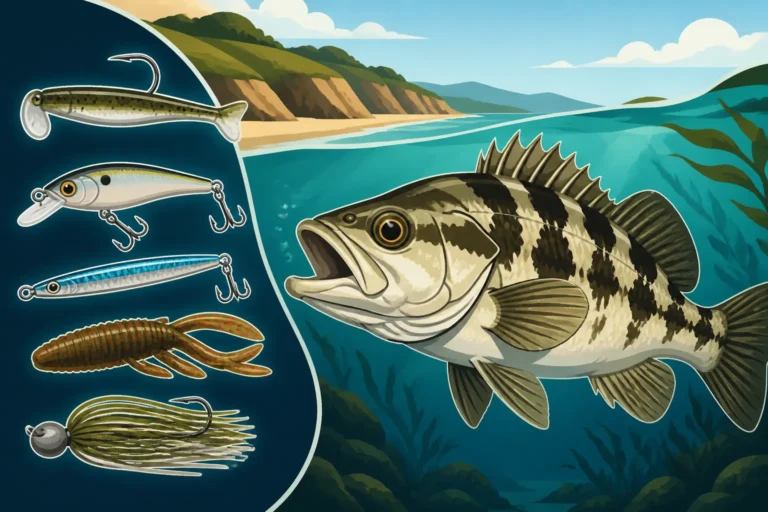
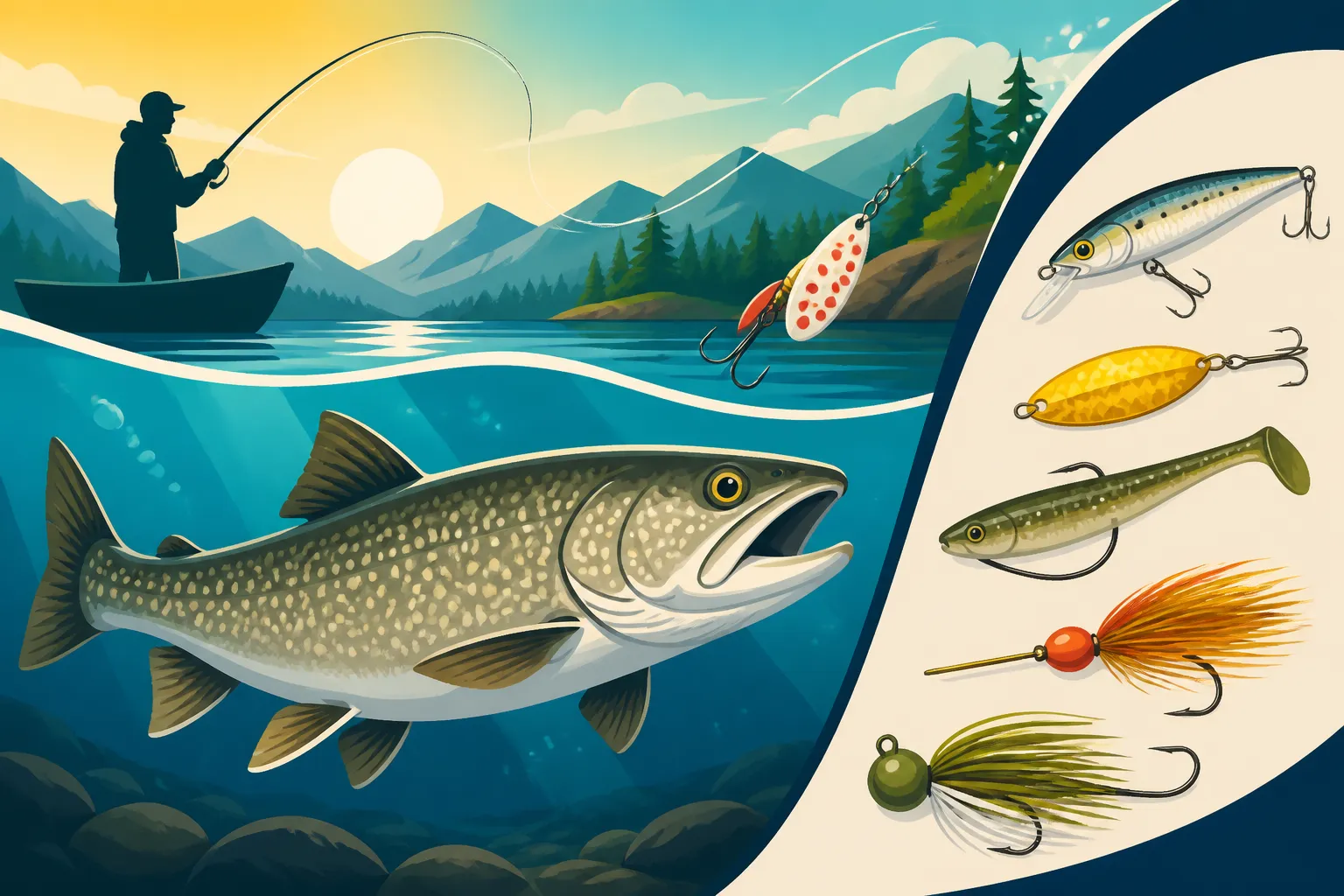
Now that we understand a bit more about what makes these fish tick, let's talk about the gear that will give you the best chance of success. Lake trout lures are designed to get deep and imitate their primary forage with enticing action and flash.
Trolling Spoons and Dodgers: The Classic Choice
Trolling spoons are an absolute staple for lake trout anglers across California, and for good reason. Their unique fluttering and wobbling action perfectly mimic an injured or erratic baitfish, a prime target for a hungry Mackinaw. Popular choices include spoons from Luhr-Jensen, Apex, Shasta Tackle, and Dick Nite. The key is their metallic flash and erratic movement, which are highly visible in the deep, dark water where lake trout reside.
Often, spoons are fished in conjunction with a dodger or flasher. These aren't lures themselves but rather attractors designed to create a large amount of flash and a pulsating action in the water. This commotion draws attention from a distance, luring lake trout closer to investigate, where they then spot your trailing spoon or bait. Dodgers create a distinctive "kick" that imparts an irresistible action to the lure behind it.
When trolling, precise depth control is paramount, often achieved with downriggers or lead core line, allowing you to present your spoon exactly where the fish are holding. Trolling speed is also critical; generally, a slower speed (1.5-2.5 mph) is effective for lake trout, letting the spoon and dodger work their magic. Experiment with colors like silver, chartreuse, blue/silver, or even glow-in-the-dark patterns for particularly deep or murky conditions. Imagine slowly motoring over a submerged ridge in the middle of Lake Tahoe Fishing Guide, with your downrigger set at 100 feet, dragging a shimmering watermelon-colored dodger followed by a J-Plug. This classic setup has put countless trophy Mackinaw in the boat for generations.
Jigs and Soft Plastics: For Vertical Presentation
When lake trout are schooled up or you've marked specific fish on your electronics, vertical jigging with jigs and soft plastics can be an incredibly effective and active fishing technique. This method allows you to directly target fish at a precise depth, mimicking a dying or stunned baitfish falling through the water column. It's less about covering water and more about pinpoint accuracy.
You'll find various types of jigs work well. Lead-head jigs tipped with soft plastic bodies, such as grubs, swimbaits, or minnow imitations (like those from Berkley PowerBait or Keitech), are excellent. Heavier metal jigs, often referred to as "butterfly" or "vertigo" jigs (like the P-Line Laser Minnow), are also popular for their fast drop rate and erratic action. The size of your jig should be substantial – lake trout are big predators, so don't be afraid to use jigs in the 1 to 4-ounce range, sometimes even heavier.
The technique involves dropping the jig to the desired depth, then employing a series of lifts, drops, and twitches. Many strikes occur on the fall, so pay close attention to your line for any subtle taps or changes in tension. Pauses are also crucial; sometimes, a stationary jig is all it takes to convince a curious lake trout to commit. Picture yourself hovering over a deep rock pile in Lake Shasta Fishing Guide, watching your fish finder light up with fish arches. Dropping a 2-ounce white grub jig and slowly working it through that school, pausing at critical depths, can often trigger aggressive strikes that you just wouldn't get with a trolled presentation. For a wide selection of jigging options, check out the fishing section on Amazon.
Stickbaits and Plugs: Mimicking Prey Fish
Stickbaits and plugs are another formidable category of lures for California lake trout, particularly effective when trolled. These lures are designed to have an inherent swimming action that realistically imitates fleeing baitfish, often without the need for additional dodgers or flashers. Brands like Rapala (especially their deep-diving models), AC Plugs, and Rebel Minnows are long-time favorites among Mackinaw anglers.
These lures typically feature a slender profile and a diving lip that allows them to reach specific depths when trolled. The trick is to match the size and color pattern to the prevailing baitfish in the lake you're fishing. If Kokanee Salmon are abundant, a stickbait with a red, orange, or silver flash that mimics a Kokanee is an excellent choice. Their tight wiggle and vibration are highly appealing to opportunistic lake trout.
While primarily used for trolling, some deeper-diving plugs can also be cast and retrieved in specific scenarios, though this is less common for typical deep-water lake trout fishing. The beauty of these lures lies in their consistent action at varying speeds and their ability to draw strikes from curious fish. When experienced anglers discuss How to Troll for Lake Trout in Tahoe, stickbaits and plugs are almost always a central part of their strategy, proving their effectiveness time and again.
Effective Baits for California Lake Trout
While lures offer action and flash, sometimes nothing beats the natural appeal of actual bait. The scent, texture, and inherent realism of bait can often seal the deal when artificial presentations fall short.
Live Baits: The Enticing Option
There's a reason live bait is often considered the most natural and effective choice, especially when targeting finicky fish. The natural movement, vibration, and irresistible scent trail of a live baitfish can provoke strikes when all else fails. For large lake trout in California, the prime live baits typically include small Kokanee Salmon, sculpins, or chubs, depending on local forage and regulations.
It's absolutely crucial to check local regulations regarding the use of live bait, including species restrictions, size limits, and whether bait fishing is permitted in specific waters. You can find detailed information in the California Fishing Regulations Explained guide. These baits are typically fished on a weight-forward rig, either slow-trolled with a downrigger to keep them at the desired depth or drifted slowly through promising areas.
The key to success with live bait is keeping it healthy and active. A struggling baitfish sends out distress signals that lake trout simply can't ignore. While acquiring and maintaining live bait can be more involved than simply tying on a lure, the results often speak for themselves, particularly for trophy-sized Mackinaw. Just imagine a large lake trout seeing a lively Kokanee, perfectly presented at its preferred depth – it's a primal trigger.
Cut Baits: Scent and Flash
When live bait isn't feasible, or if you're looking for an alternative with a strong scent profile, cut baits become a highly effective option. The primary advantage of cut bait is the continuous release of scent and oils into the water, creating a persistent attractant that can draw fish from a considerable distance, even in deep water.
Common cut baits for lake trout include pieces of mackerel, anchovy, or sardine. The oiliness of these fish ensures a potent scent trail. Sometimes, anglers even use pieces of legal, previously caught baitfish from the same body of water, if regulations allow. These are usually fished on a multi-hook rig, often in conjunction with a spinner or a dodger to add visual appeal and action, mimicking an injured fish.
The rigging is important: you want the cut bait to spin enticingly behind the attractor, creating both flash and a scent plume. A popular setup is a dodger followed by a short leader with a two-hook rig, where the cut bait is carefully threaded to ensure a natural spin. This combination provides both visual and olfactory appeal. Many anglers will also enhance their cut bait with supplemental scent sprays or gels for an added edge. You can find specialized bait rigs and cutters, which are essential for presenting cut bait effectively, on Amazon.
Scented Artificial Baits: The Hybrid Approach
In recent years, the market has exploded with scented artificial baits, offering a fantastic hybrid approach that combines the durability and convenience of lures with the fish-attracting power of natural scent. Products like Berkley PowerBait and Gulp! Alive! have become incredibly popular, available in a vast array of shapes, sizes, and colors that imitate everything from minnows and worms to grubs.
These baits are impregnated with strong, long-lasting fish-attracting scents that are released slowly into the water. This continuous scent trail can be particularly effective when lake trout are hesitant or not actively chasing. They provide the advantage of an appealing scent without the mess, fragility, or regulatory complexities often associated with live or natural cut baits.
Scented artificials are incredibly versatile. They can be jigged, trolled behind dodgers or flashers, or even still-fished on a simple dropper rig, often tipped onto a jig head. Their main benefit lies in their ability to repeatedly attract fish with scent over a prolonged period, making them an excellent choice for persistent presentations. I've personally had days on the water where a small, chartreuse Gulp! Minnow fished on a jig head absolutely outfished everything else, proving that the combination of subtle movement and potent scent can be irresistible to a wary lake trout.
Key Considerations for Success
Beyond just picking the right bait or lure, there are several overarching factors that will significantly impact your success rate when chasing California's lake trout. These involve technique, equipment, and your ability to adapt to changing conditions.
Depth and Presentation Techniques
We’ve talked about depth a lot, and for good reason: it’s arguably the single most critical factor in lake trout fishing. Tools like downriggers are not just luxuries; they are essential for consistently presenting your lure or bait at the precise depth where fish are holding. Lead core line can also achieve depth, but it's less accurate and harder to adjust quickly.
Learning to read your sonar or fish finder is paramount. You need to be able to identify the thermocline, distinguish between baitfish schools and larger individual fish arches, and interpret changes in bottom structure. This real-time information allows you to make immediate adjustments to your depth, ensuring your offering is right in front of the fish. Remember, a difference of even a few feet can be the difference between a strike and a silent retrieve. If you’re marking fish at 90 feet, make sure your lure is running at 90 feet, not 80 or 100. It seems obvious, but many anglers overlook this subtle precision.
Trolling speed is another nuance. While many trout species prefer faster presentations, lake trout often favor a slower, more deliberate retrieve. However, don't be afraid to experiment. Sometimes a subtle change in speed, or a sudden turn that causes your lure to drop or surge, can trigger a reactionary strike from a following fish. Mastering California Trout Fishing Techniques means being versatile and paying close attention to what's working.
Gear Selection for Lake Trout
Successfully battling deep-dwelling lake trout demands specific gear. Your rod and reel setup needs to be up to the task. Medium-heavy rods with a strong backbone are necessary to handle the weight of deep-diving lures or heavy lead, and to effectively fight a powerful fish from significant depths. Pair this with a high-capacity reel spooled with strong braided line (often 30-50 lb test), which offers sensitivity and minimal stretch, crucial for detecting subtle bites in deep water. Always add a fluorocarbon leader (20-30 lb test is common) for abrasion resistance and invisibility in clear water.
Beyond the rod and reel, a quality fish finder with GPS is almost non-negotiable for serious lake trout anglers. It allows you to locate fish, identify structure, monitor water temperature, and mark productive spots for future reference. Without good electronics, you’re often fishing blind.
Finally, don't overlook terminal tackle. Invest in strong, high-quality swivels, snap swivels, and leader material. Lake trout have robust jaws and sharp teeth, and a weak link in your setup can quickly lead to a lost trophy. Don't skimp on these critical components; a cheap swivel or knot can cost you the fish of a lifetime. You can easily find high-quality fishing tackle from reputable brands on Amazon.
Reading the Water and Adjusting Tactics
Successful lake trout fishing is rarely about sticking to one plan; it's about constant observation and adaptation. Pay attention to how various conditions—like the time of day, cloud cover, wind, and even recent California Fish Planting Explained schedules—influence trout behavior. Often, early mornings and late evenings are prime times, but sometimes overcast days can extend the bite window. For more general timing tips, refer to our guide on the Best Times to Fish in California.
The most important advice here is to be adaptable. If you've been trolling with a certain lure at a specific depth for an hour without a bite, it's time to change something. Try a different color, a different lure type, adjust your trolling speed, or alter your depth. Lake trout can be notoriously finicky, and what worked yesterday might not work today. This willingness to experiment is what separates consistently successful anglers from those who get lucky once in a while.
Lastly, never underestimate the power of local knowledge. Chat with tackle shop owners near the lake, talk to guides, or strike up conversations with other successful anglers at the boat launch. They often have the most up-to-date information on current conditions, recent patterns, and hot baits or lures for specific lakes. Their insights can save you hours of trial and error and significantly improve your chances. I've had countless days on the water where a conversation at the bait shop in Tahoma or Big Bear Lake provided the exact intel I needed to unlock a tough bite.
Lake Trout Baits and Lures Comparison
Here's a quick overview to help you choose the right approach for your next lake trout adventure:
| Lure/Bait Type | Best Use Case | Typical Depth (ft) | Key Advantage | Notes |
|---|---|---|---|---|
| Trolling Spoons | Covering large areas, mimicking injured baitfish | 50-200+ | Flash, flutter, broad appeal | Often paired with dodgers; effective in various colors depending on water clarity and light; typically slow-trolled. |
| Dodgers/Flashers | Attracting attention to trailing lure/bait | 50-200+ | Pulsating action, reflective flash | Not a lure itself; enhances visibility and action of a spoon, plug, or bait; crucial for deep water visibility. |
| Jigs (Lead/Metal) | Vertical jigging over marked fish or structure | 50-300+ | Direct presentation, aggressive strikes | Mimics injured prey; requires active fishing; weight is critical for reaching and staying at depth. |
| Soft Plastics (on jigs) | Adding natural look and scent to jigs | 50-300+ | Realistic profile, can be scented | Grubs, swimbaits, minnows; versatile for jigging or slow retrieve; can be tipped with scent for added appeal. |
| Stickbaits/Plugs | Trolling, mimicking larger baitfish | 20-100+ (deep divers) | Built-in swimming action | Great for imitating Kokanee and other forage fish; check specific diving depths; often effective without additional attractants. |
| Live Bait | Finicky fish, maximum natural appeal | 50-200+ | Scent, natural movement, vibration | Highly effective, but requires careful handling and strict adherence to California Freshwater Fishing Regulations and species/size restrictions; slow-trolled or drifted. |
| Cut Bait | Strong scent trail, appealing flash | 50-200+ | Persistent scent, oily profile | Often combined with spinners or dodgers; great for attracting fish from a distance; check local regulations. |
| Scented Artificials | Hybrid approach, durable with continuous scent | 50-300+ | Scent release, durability | Products like PowerBait/Gulp! Alive!; versatile for jigging, trolling, or still fishing; offers convenience without sacrificing scent. |
Disclaimer
Fishing regulations, seasons, and limits can change frequently. Always consult the latest California Department of Fish and Wildlife (CDFW) regulations booklet or their official website before heading out on any fishing trip. The information provided here is for general guidance and informational purposes only.