How to Catch Albacore Tuna in California
There’s nothing quite like the thrill of chasing fast-moving pelagic species off the coast of California, and few fish ignite that passion quite like the Albacore tuna. These powerful, silver-sided torpedoes offer an incredible fight and some of the best eating in the ocean. If you’ve ever dreamed of battling one of these "longfin" speedsters but felt overwhelmed by where to start, you're in the right place. This comprehensive guide will break down everything you need to know to successfully catch Albacore tuna in California waters, from understanding their behavior to mastering the right techniques.
Understanding Albacore Tuna in California Waters
Catching Albacore isn't just about dropping a line in the water; it's about understanding the fish itself. These are highly migratory, open-ocean predators that follow specific conditions, making them a puzzle that dedicated anglers love to solve. Knowing their habits is your first step to success.
Biology and Behavior of Albacore
Albacore, scientifically known as Thunnus alalunga, are a member of the tuna family distinguished by their exceptionally long pectoral fins, which can reach nearly half the length of their body. In California, they typically range from 10 to 40 pounds, though larger specimens are certainly caught. They are incredibly streamlined, built for speed, and can swim vast distances across the ocean. Their diet primarily consists of smaller baitfish like anchovies, sardines, squid, and krill, which they actively pursue in open water. This makes them opportunistic feeders, often striking at whatever mimics their natural prey.
These tuna are warm-water dwellers, preferring sea surface temperatures generally between 60 to 70 degrees Fahrenheit. They are schooling fish, often found in large, active pods, which is great news for anglers because if you find one, you're likely to find many. Their behavior is often tied to oceanographic features like temperature breaks, current edges, and convergences where baitfish tend to accumulate. Spotting signs of these active feeding frenzies, such as diving birds or porpoises, is a huge indicator of Albacore presence.
Understanding their behavior also means recognizing their aggressive, predatory nature. When they're in a feeding mood, they can be incredibly eager to strike a variety of lures and baits. However, they can also be finicky, requiring precise presentations or a switch in tactics if they're not biting. This blend of predictability (following warm water and bait) and unpredictability (finicky feeding) is what makes Albacore fishing such an engaging challenge for anglers.
Seasonal Migration Patterns
The arrival of Albacore in California waters is a highly anticipated event, dictating the start of the offshore fishing season for many. These migrations are driven by ocean currents, water temperatures, and the availability of their preferred forage. Generally, Albacore begin to show up in Southern California waters sometime in late spring or early summer, typically June or July, and can remain a viable target well into the fall, sometimes even into November, depending on ocean conditions. For a broader overview of when different species bite, check out our guide on California Fishing Seasons: Month-by-Month Guide.
Their journey often starts further south, off the Baja California coast, as they move northward following the warm currents and baitfish aggregations. The exact timing and location can shift year to year based on phenomena like El Niño or La Niña, which influence sea surface temperatures and current patterns. A strong warm water push can bring them closer to shore or further north earlier in the season, while colder water might keep them offshore or delay their arrival.
Historically, the Albacore bite often starts off San Diego and areas like the Coronado Islands, then extends further north to Orange County, Los Angeles, and even up to Central California if the conditions are favorable. They'll generally hold along the outer banks and offshore ridges, sometimes as far as 50 to 100 miles offshore, though they can occasionally be found closer. Staying informed through fishing reports and local bait shops is crucial for tracking their movements. These patterns highlight why offshore fishing is such a dynamic pursuit, constantly adapting to nature's calendar.
Essential Gear for Albacore Tuna Fishing
When you're heading out to chase Albacore, you can't just grab any old rod and reel. These fish are powerful, fast, and require gear that can withstand serious punishment. Investing in the right tackle isn't just about catching fish; it's about making the experience enjoyable and increasing your chances of success.
Rods, Reels, and Line Selection
For Albacore, you're looking for a setup that offers a balance of power and sensitivity. A good starting point for a conventional setup would be a medium-heavy to heavy conventional rod, typically 6 to 7.5 feet in length, rated for 20-50 pound line. Look for rods with a fast action, meaning the tip bends easily but the backbone is stiff, allowing for strong hooksets and control during the fight. Brands like Penn, Shimano, and Daiwa offer excellent options that can handle the stress of offshore tuna fishing. If you prefer to shop online, you can often find great deals on these rods on Amazon.
Pair this with a quality conventional reel that has a smooth, strong drag system and a high line capacity. Reels in the 15-30 size range (e.g., Shimano Talica 16, Penn Fathom 30) are popular choices. A 2-speed reel can be incredibly helpful, allowing you to quickly retrieve line or drop into a low gear for grinding out a tough fish. For line, a braided main line is almost universally preferred due to its incredible strength-to-diameter ratio and lack of stretch, which enhances sensitivity. Load your reel with 50-80 pound braided line, ensuring you have at least 300-400 yards of capacity.
The main braid should then be connected to a fluorocarbon leader. Fluorocarbon is less visible in water and offers excellent abrasion resistance, which is vital when fishing around kelp paddies or dealing with the rough mouths of tuna. A good rule of thumb is to use a leader strength that's half the main line's strength, so if you're using 60-pound braid, a 30-pound fluorocarbon leader is a solid choice. The length of the leader can vary, but 6-10 feet is common, providing enough stealth and shock absorption. The connection to your main line should be a strong knot like an FG knot or an Alberto knot; practicing these knots beforehand is a must.
Lures, Baits, and Terminal Tackle
Albacore are often caught using a variety of presentations, from trolled lures to live bait and jigs. Having a diverse tackle box will prepare you for different situations and the fish's changing preferences.
When it comes to lures, smaller, fast-trolled feathers or cedar plugs are a classic choice for Albacore. These lures mimic smaller baitfish darting through the water and are highly effective when run in a spread behind the boat. Popular colors include green/yellow, blue/white, and black/purple. Also, hard-bodied diving lures that imitate mackerel or sardines can be very successful. Metal jigs, especially "iron" jigs in sizes ranging from 40g to 100g, are excellent for casting to breaking fish or dropping when a school is located. For more detailed information on specific lures, explore our guide on Best Baits and Lures for Albacore Tuna in California.
Live bait is often the most effective method, especially when the fish are finicky or after a school has been stopped. Sardines and anchovies are the go-to baits. You'll need a live bait tank to keep them healthy and active. When rigging live bait, a simple hook-to-leader connection with a small, strong circle hook (e.g., Owner Mutu Light, Gamakatsu Octopus) is usually best. The hook size will depend on your bait and the size of the tuna you anticipate, but generally, 1/0 to 3/0 hooks are appropriate. Using a sliding sinker rig or simply nose-hooking a bait and letting it swim naturally in the chum line can be incredibly effective.
Your terminal tackle arsenal should also include swivels, split rings, and extra leader material. Quality ball-bearing swivels help prevent line twist, especially with trolling. Keep a variety of hook sizes on hand, along with split ring pliers and cutters. Don't forget a good pair of fishing gloves to protect your hands when handling fish or line, and a gaff for safely bringing larger Albacore into the boat. Having a few different brands of fluorocarbon leader, like Seaguar or Berkeley Vanish, on hand is always a good idea, as some anglers swear by one over the other.
Prime California Albacore Fishing Locations
California’s coastline offers some fantastic opportunities for Albacore, but these fish aren't found just anywhere. They are pelagic, meaning they live in the open ocean, and tracking them down requires understanding where they tend to aggregate offshore.
Offshore Hotspots and Banks
The quest for Albacore in California typically takes anglers far offshore, often beyond sight of land. Southern California boasts several well-known hotspots that regularly produce Albacore. The Cortez Bank and Tanner Bank, located southwest of San Diego, are legendary fishing grounds. These submerged seamounts rise from deep water, creating upwellings and current breaks that concentrate baitfish and, consequently, tuna. It's not uncommon for boats to travel 70-100 miles to reach these prolific areas.
Closer to shore, but still considerable distances out, areas off San Clemente Island, Catalina Island, and even further north off the coast of Orange and Los Angeles counties can hold Albacore when conditions are right. These spots are often associated with deep canyons and offshore ridges that create similar bait-attracting features. The key is finding temperature breaks and current lines, which often form around these underwater structures. These can change daily, so staying up-to-date with marine weather forecasts and satellite sea surface temperature charts is crucial.
For those departing from Central or Northern California ports, the Albacore grounds can be even further offshore, sometimes extending hundreds of miles out into the Pacific. However, during strong warm water years, these fish can move closer to shore and further north, offering opportunities for anglers launching from places like Monterey or even Half Moon Bay. Charter boats from these regions, like those operating out of Fisherman's Landing or H&M Landing in San Diego, or Hook'em Sportfishing in Ventura, often target these productive zones and provide some of the best insights into where the fish are biting. If you're considering a trip, our California Fishing Charters: Complete Guide can help you pick the right vessel.
Finding the Fish: Reading the Water and Signs
Locating Albacore in the vastness of the Pacific can feel like finding a needle in a haystack, but experienced anglers know how to read the water and interpret signs of life. The most critical factor is water temperature. Albacore prefer water generally between 60-70°F (15-21°C). Look for "temperature breaks" – areas where there's a significant change in temperature over a short distance. These breaks often indicate current lines where baitfish and predators congregate. Satellite imagery from sites like Fishdope or Terrafin can provide invaluable real-time sea surface temperature charts.
Beyond temperature, visual cues are paramount. Keep a keen eye out for working birds, especially shearwaters, terns, and gulls diving into the water. This is a tell-tale sign that baitfish are being pushed to the surface, and Albacore are often the culprits underneath. Porpoises and dolphins are also excellent indicators; they often feed on the same bait schools as tuna, and their presence can lead you right to the fish. Look for their characteristic splashes and boils on the surface.
When you're actively searching, pay attention to kelp paddies. These floating islands of kelp often hold an entire ecosystem, attracting baitfish that then attract larger predators like Albacore and Yellowtail. Trolling past a kelp paddy or casting a lure near it can often result in a hook-up. Modern fish finders and sonar technology are also indispensable tools, allowing you to mark bait schools and even individual tuna in the water column. Understanding these subtle, and sometimes not-so-subtle, signs is what truly separates successful tuna anglers from those who come home empty-handed.
Effective Albacore Tuna Fishing Techniques
Once you've located the fish, applying the right technique is the next critical step. Albacore are aggressive feeders, but they can also be cautious, requiring anglers to be adaptable and ready to switch strategies.
Trolling for Albacore
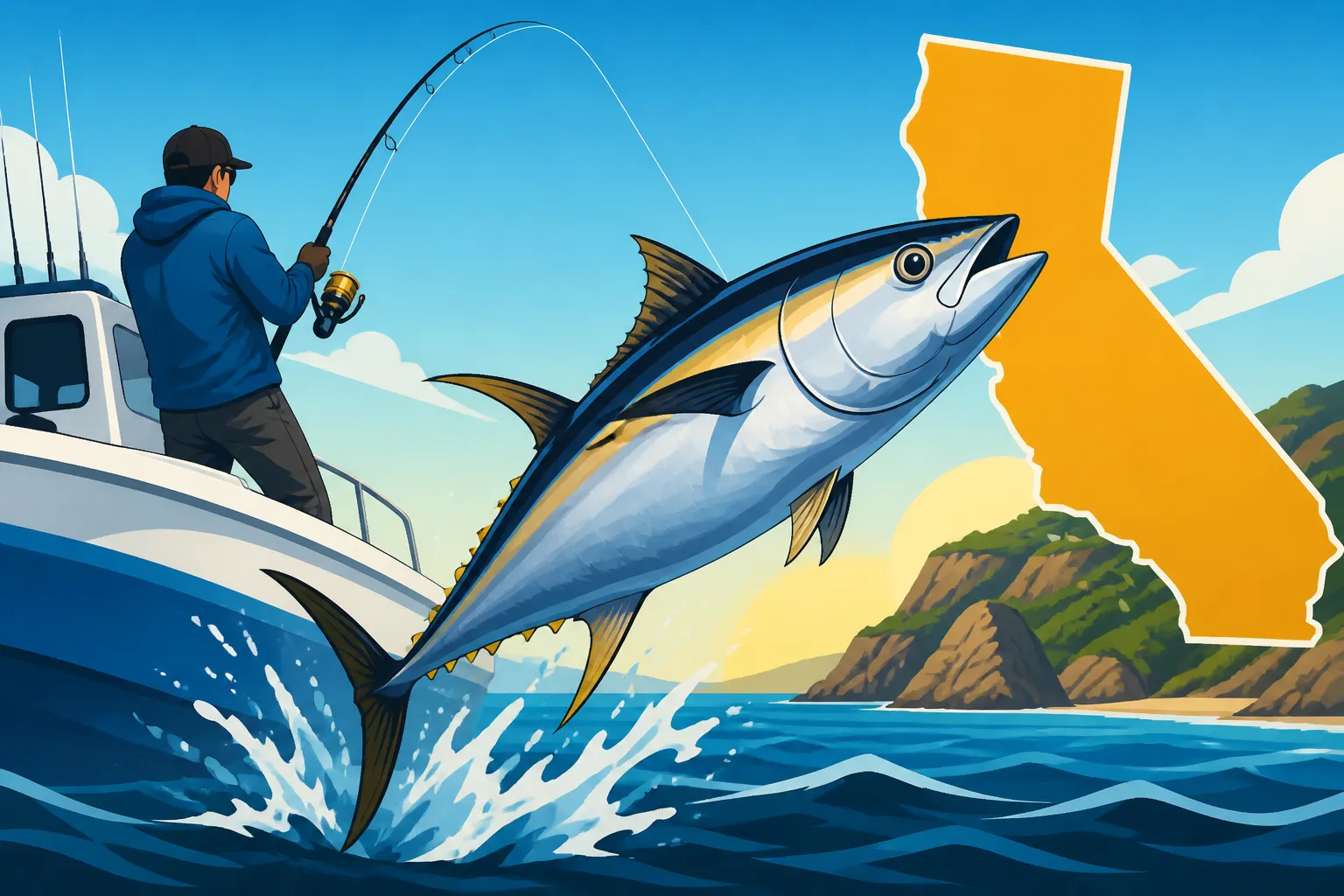
Trolling is arguably the most popular and effective method for locating and catching Albacore tuna, especially when you're covering vast expanses of open ocean. It involves dragging a spread of lures behind a moving boat at a speed that makes the lures swim enticingly, typically between 6 to 10 knots. The goal is to imitate a school of baitfish or squid fleeing from a predator. This technique allows you to cover a lot of water quickly and find active schools. For more general offshore strategies, refer to our guide on California Offshore Fishing Techniques.
A typical Albacore trolling spread involves running multiple lines from outriggers, the stern, and even a flat line off the transom. This creates a wide "V" shape behind the boat, ensuring your lures cover a broad area and avoid tangles. Lures like cedar plugs, small feathers, and sometimes jet heads or small hard baits are common. Varying the colors and depths of your lures can help you dial in what the fish are preferring on a given day. When an Albacore strikes, the drag screams, and the fight is on. It's often said that "where there's one, there's more," so once you get a strike, it's common practice to keep trolling a short distance before stopping the boat, allowing more fish from the school to get hooked.
Once you have a fish on, the boat should slow down or stop, and anglers can switch to other techniques like casting or live bait to capitalize on the agitated school. When the Albacore are really fired up, it’s not uncommon for multiple rods to go off simultaneously, leading to exciting "quad" or "quint" hookups. Keeping your hooks sharp, drag settings smooth, and your eye on the depth finder for bait balls are all part of a successful trolling strategy. Many boats, particularly the larger sportfishing vessels you might find on California Deep Sea Fishing Charter Guide or a California Sportfishing Trips Explained page, rely heavily on this method to locate schools.
Live Bait Fishing and Chumming
Once a school of Albacore has been located, either through trolling or spotting surface activity, switching to live bait and chumming can be incredibly effective at keeping the fish around the boat and enticing them to bite. This method often leads to longer fights and a higher hook-up ratio once the fish are in a feeding frenzy directly behind the boat.
Chumming involves throwing small, live baitfish (usually anchovies or sardines) into the water around the boat. This creates a scent trail and visually stimulates the tuna, drawing them closer and putting them into a competitive feeding mode. As the chum drifts away from the boat, the Albacore follow it, and with a bit of luck, they’ll swim right into the range of your rigged live baits. The key is to chum consistently but not excessively, keeping the fish interested without overfeeding them. A good chum line can turn a slow pick into a wide-open bite.
When the fish are in the chum, anglers will cast live sardines or anchovies, usually nose-hooked on a fluorocarbon leader, into the slick. The goal is to make your live bait appear as natural as possible, drifting along with the chum. Often, no weight is needed, allowing the bait to swim freely. When an Albacore bites, it's typically a savage strike, and you'll want to let the fish run for a moment before setting the hook to ensure it's fully committed. This technique is often employed on party boats, and understanding How to Catch Tuna on a California Party Boat can provide even more context on its nuances and social dynamics. This is also where you might reach for a longer, more sensitive rod, perhaps a spinning setup, for better casting distance and bait presentation.
Jigging and Casting to Breaking Fish
While trolling and live bait are mainstays, jigging and casting offer exciting, active ways to target Albacore, especially when they are aggressively feeding on the surface or when a boat has stopped on a school. These techniques are often employed after a trolling strike reveals a school, or when you visually locate boiling fish.
When Albacore are "boiling" on the surface, pushing bait up and creating a commotion, casting into the melee with a lure can be incredibly productive. Small, heavy metal jigs (often called "iron" jigs or "candy bar" jigs) are perfect for this. Cast beyond the school and retrieve rapidly, mimicking a fleeing baitfish. Sometimes a "skipping" retrieve, where the lure breaks the surface like a panicked baitfish, can trigger vicious strikes. Soft plastic swimbaits, particularly those resembling anchovies or sardines, can also be deadly when cast into breaking fish, offering a more natural, subtle presentation that can fool wary tuna.
Jigging is another dynamic technique, particularly effective when fish are marked on the sonar below the boat but aren't coming to the surface or taking live bait readily. This involves dropping a metal jig to a certain depth and then retrieving it with an erratic, yo-yo-like motion, or a "flat fall" presentation where the jig flutters on the drop. The goal is to provoke a reactionary strike. Different jig weights and profiles work better on different days, and sometimes a simple vertical retrieve with a fast reel is all it takes. These active techniques demand strong, responsive gear and can result in some of the most memorable battles as you feel every head shake and powerful run.
Safety and Regulations for Albacore Tuna Fishing
Offshore fishing for Albacore in California is an incredible adventure, but it comes with responsibilities. Safety on the open ocean is paramount, and understanding California's fishing regulations is essential to ensure a legal and sustainable catch.
Safety at Sea: Essential Precautions
Heading far offshore means you're often many miles from immediate assistance, so being prepared for any eventuality is crucial. First and foremost, always check marine weather forecasts before you leave and regularly throughout your trip. Conditions can change rapidly, and being caught unprepared in rough seas is dangerous. Pay attention to wind, swell height, and any small craft advisories. A good VHF radio is non-negotiable for communicating with other boats and shore; a satellite phone or personal locator beacon (PLB) offers additional layers of safety for emergencies.
Ensure your boat is seaworthy and properly maintained. This includes checking your engine(s), fuel levels, electronics, and navigation systems. Essential safety equipment, as mandated by the U.S. Coast Guard, must be on board and easily accessible. This includes life jackets for everyone on board, throwable flotation devices, visual distress signals (flares), sound signaling devices (horn or whistle), fire extinguishers, and navigation lights. Beyond the minimum, consider a first-aid kit, extra water and food, a spare prop, and basic tools for minor repairs.
Finally, communicate your float plan. Let someone on shore know where you're going, when you expect to return, and who is with you. If you’re heading out with a fishing charter, they will handle all these safety aspects, but it’s still good practice to be aware and listen to their safety briefings. When you’re miles offshore, the ocean demands respect, and proper preparation is the best way to ensure a safe and enjoyable trip.
California Albacore Regulations
Fishing in California, whether for Albacore or other species, means adhering to the California Department of Fish and Wildlife (CDFW) regulations. These rules are in place to manage fish populations and ensure sustainable fishing for future generations. It’s imperative to have a valid California sport fishing license before you even cast a line. You can learn more about this in our guide, California Fishing License Guide.
For Albacore tuna, specific regulations cover bag limits and sometimes size limits. As of my last check, Albacore generally have a daily bag limit of 10 fish per person. There usually isn't a minimum size limit for Albacore, unlike some other tuna species, but always verify current regulations as they can change. It's crucial to consult the most recent California Sport Fishing Regulations booklet, available on the CDFW website or at licensed bait and tackle shops, before each trip. This booklet is the definitive source for all rules, including any emergency closures or changes that might occur. Our guide on California Fishing Regulations Explained provides a general overview, but always double-check the official sources.
| Species | Bag Limit (per person/day) | Size Limit | Season | Notes |
|---|---|---|---|---|
| Albacore Tuna | 10 fish | None | Year-round | Highly migratory, follow warm water patterns. |
| Bluefin Tuna | 2 fish | 27 inches (fork length) | Year-round | Strict limits due to conservation concerns. |
| Yellowfin Tuna | 10 fish | None | Year-round | Often found with Albacore. |
It's also important to be aware of any required endorsements or stamps, such as the California Ocean Enhancement Stamp, though it's typically for certain species caught in specific areas and may not directly apply to offshore Albacore. While Albacore do not currently require a specific report card like some other species such as Sturgeon or Steelhead, understanding the general concept of California Fishing Report Cards Explained is useful for any California angler. Always ensure you are in compliance; violations can lead to hefty fines and loss of fishing privileges. Remember, responsible angling ensures these magnificent fish remain a viable target for years to come.
Disclaimer
Fishing regulations and conditions are subject to change. Always consult the latest official California Department of Fish and Wildlife (CDFW) regulations before your trip. This guide is for informational purposes only and does not constitute legal advice. Adhere to all local, state, and federal laws and prioritize safety on the water.