How to Catch Yellowtail in California
There's nothing quite like the electrifying pull of a California yellowtail, a fish known for its incredible speed, brutal strength, and often frustrating elusiveness. Many anglers, even seasoned ones, find themselves scratching their heads when these hard-fighting jacks go lockjaw or simply disappear from their usual haunts. This guide will dive deep into everything you need to know to consistently hook into these prized gamefish, from understanding their behavior to mastering the techniques that get them to bite.
Understanding California Yellowtail
Before you even think about casting a line, getting to know the yellowtail itself is crucial. These aren't just any fish; they're apex predators that hunt aggressively, and understanding their habits, preferred environments, and seasonal movements is the first step to successful angling. Without this foundational knowledge, you're essentially just guessing, and yellowtail fishing is rarely a game of chance.
Identifying Yellowtail and Their Habits
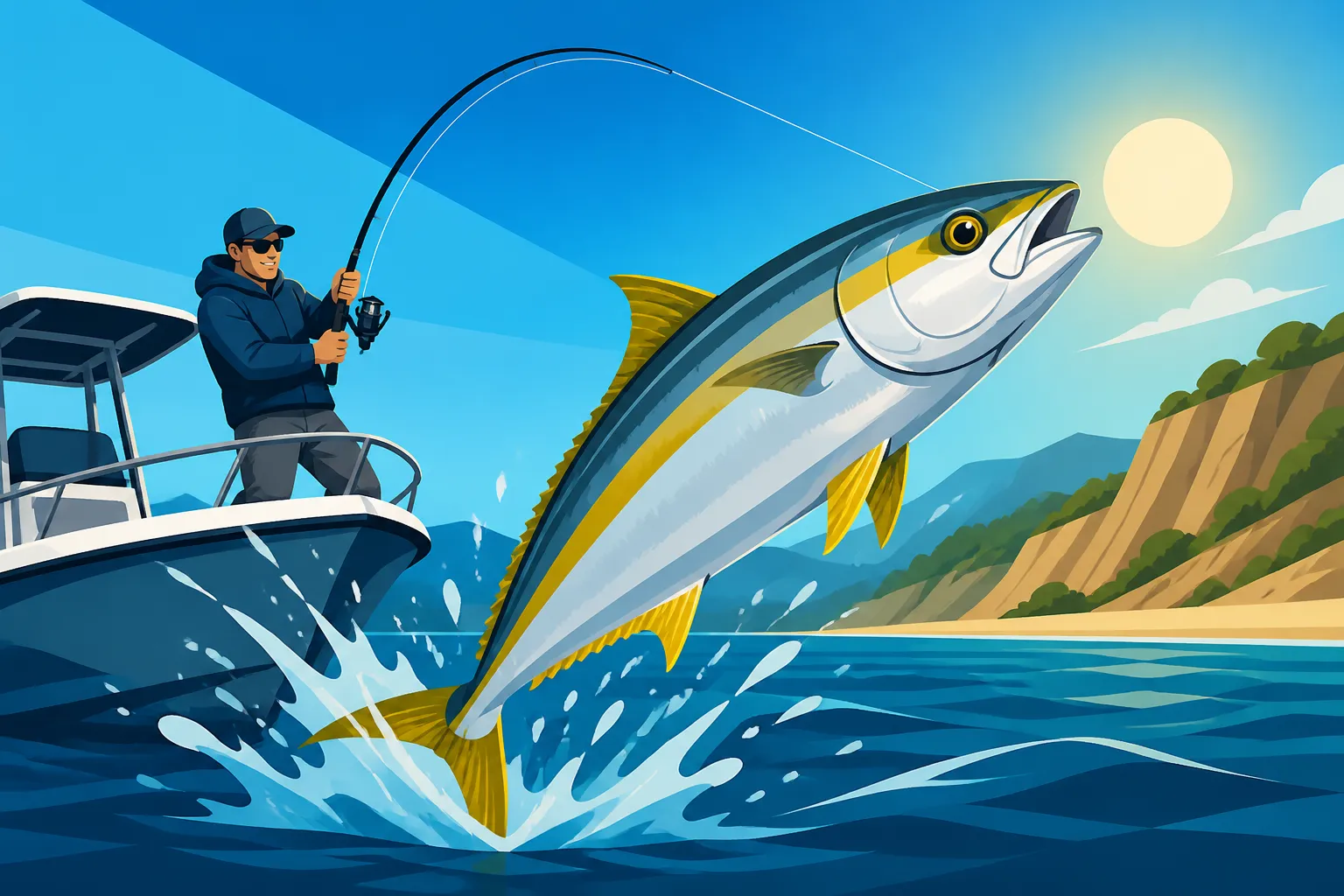
California yellowtail (Seriola lalandi) are striking fish, easily identifiable by their distinctive yellow caudal fin (tail) and a prominent yellow stripe running horizontally along their body, from eye to tail. Their sleek, torpedo-shaped bodies are built for speed, making them formidable opponents on the end of a line. They can range from "firecrackers" in the 5-10 pound class to true "hoodlums" pushing 30-40 pounds or even larger, especially down in Baja California waters, though larger models are caught in Southern California too.
Yellowtail are schooling fish, often found in large aggregations, which is why when you find one, you often find many. They are highly migratory, constantly on the move in search of baitfish like sardines, anchovies, mackerel, and squid. Their predatory nature means they're always looking for an easy meal, making them susceptible to various bait and lure presentations. However, they can also be incredibly finicky, especially when pressured or if there's an abundance of natural forage. They are visual hunters, often slashing through schools of bait, and their keen eyesight plays a big role in how we present our offerings. This constant search for food and their schooling behavior is what makes them so exciting – you can go from zero to hero in a matter of minutes if you hit a hot bite.
Prime Yellowtail Seasons in California
The timing of your yellowtail pursuit in California is paramount, as their presence is highly seasonal and dictated by water temperature and bait availability. Generally, the warmer months from late spring through fall offer the best opportunities, particularly in Southern California where their population is most prevalent. As the ocean waters warm up, typically starting around May or June, yellowtail begin to migrate north from Baja waters, following the thermocline and vast schools of bait.
Peak season often runs from July through October, with August and September frequently cited as prime months. During this period, you’ll find yellowtail actively feeding around islands, kelp beds, and offshore banks. However, it's not a rigid schedule. Sometimes, a warm water current can bring them in earlier, or extend their stay later into the year. Conversely, a colder year might delay their arrival or shorten their season. It's always a good idea to check the local California Fishing Reports to get the most up-to-date information on where and when these fish are biting. While they are predominantly a warm-water species, opportunistic anglers occasionally encounter them during the winter months, especially in deeper, offshore zones or during unseasonably warm spells. Knowing the Best Season for Yellowtail in California can make all the difference in planning your trip.
Preferred Habitats: Kelp, Islands, and Offshore Banks
Yellowtail aren't just swimming aimlessly in the open ocean; they prefer specific structures and environments that provide both cover and a reliable food source. These fish are masters of their domain, using the ocean's topography to their advantage, which means anglers need to do the same.
Kelp Beds: Perhaps the most iconic yellowtail habitat along the California coast is the vast network of kelp forests. These underwater jungles provide excellent ambush points for yellowtail to hunt baitfish. The dense canopy also offers protection from larger predators and strong currents. When fishing kelp, look for "paddys" – floating rafts of kelp – that can hold substantial schools of yellowtail underneath. These can act like magnets for bait and predators alike. Fishing the edges of expansive kelp beds, or slow-trolling live bait just outside the kelp line, can be incredibly effective. The challenge here is keeping the fish out of the kelp once hooked, which requires heavy tackle and quick reflexes.
Coastal Islands: California's Channel Islands, like Catalina, San Clemente, Santa Cruz, and Coronado Islands (though the latter are technically in Mexican waters but heavily fished by San Diego boats), are absolute yellowtail magnets. The unique currents and upwellings around these islands create rich feeding grounds for baitfish, which in turn attract large schools of yellowtail. You'll find them holding near structure like rocky reefs, pinnacles, and the aforementioned kelp beds that often grow prolifically around the islands. Fishing the leeward sides, or areas where currents concentrate bait, is often key. Shore-based anglers also have opportunities around some island features.
Offshore Banks and Submarine Canyons: Beyond the immediate coast and islands, various offshore banks and seamounts serve as critical habitats for yellowtail, especially the larger, migratory specimens. Places like Tanner Bank, Cortes Bank, and even smaller, unnamed high spots attract yellowtail that are feeding on vast schools of baitfish, often far from land. These deeper areas are typically accessed by longer-range sportfishing boats. The thermal breaks and nutrient-rich upwellings that occur around these submarine features create biological hotspots that yellowtail readily exploit. When fishing these areas, depth finders are invaluable for locating bait schools and fish marks. Yellowtail here might be more accustomed to feeding in open water, making different tactics more effective than those used in kelp.
Essential Gear for Yellowtail Fishing
Yellowtail fishing isn't for the faint of heart or the poorly equipped. These fish will test your tackle to its limits, and a breakdown in gear usually means a lost fish and a lot of frustration. Investing in quality equipment specifically designed for the power of yellowtail is not just a recommendation; it's a necessity. You wouldn't bring a butter knife to a sword fight, and you shouldn't bring ultralight freshwater gear to a yellowtail brawl.
Rod and Reel Setups for Different Techniques
The right rod and reel are the foundation of your yellowtail setup. You’ll often need multiple setups depending on the technique you plan to employ, as each method has different demands.
Live Bait Rods: For presenting frisky sardines or anchovies, a medium-heavy to heavy conventional rod, typically 7-8 feet in length with a fast to moderate-fast action, is ideal. This length provides good casting distance for smaller baits and helps absorb the shocks of a surging yellowtail. The rod should have enough backbone to turn a powerful fish away from structure. Pair this with a conventional reel in the 30-40 size class (e.g., Shimano Trinidad 30, Penn Fathom 40N, Daiwa Saltist 40) that has a smooth drag system and high retrieve ratio. You need a drag that can handle 15-25 pounds of pressure effortlessly. A good live bait rod feels light enough to hold all day but powerful enough to handle serious pressure. For those who prefer spinning gear, a heavy-duty 7-8 foot spinning rod with a 6000-8000 size reel (like a Penn Spinfisher VI 6500 or a Shimano Saragosa 8000) can work, especially for casting lighter baits or lures when fish are busting on the surface.
Jigging Rods: Jigging for yellowtail, especially the heavier yo-yo jigs, requires a shorter, stout conventional rod, often 5.5 to 6.5 feet long, with a fast taper and immense backbone. These rods are designed to work a heavy jig aggressively and quickly bring a fish up from the depths. Think specific jigging rods that can handle 60-100 lb braid. Reels for jigging should be robust, often a 2-speed conventional reel in the 30-40 size range (e.g., Accurate Valiant 300, Shimano Talica 16). The 2-speed option is invaluable for cranking a heavy jig all day and then shifting to low gear for battling a big fish.
Casting Rods (Surface Iron): Fishing surface iron (metal lures) demands a longer casting rod, typically 9-10 feet, with a medium-heavy to heavy action. The length is crucial for long casts to breaking fish and for retrieving the lure with the characteristic "swim." These rods need a powerful butt section to launch heavy jigs but a relatively forgiving tip to work the lure. Pair with a conventional casting reel, often a 25-30 size (e.g., Daiwa Lexa 400, Shimano Tranx 400), spooled with heavy braid. The retrieve speed is vital here, so a high gear ratio is preferred. Many anglers find quality rods from brands like Seeker, Calstar, and Phenix on platforms like Amazon when building their custom setups.
Line Selection: Mono, Fluoro, and Braid
The line on your reel is the direct connection to the fish, and choosing the right type and strength is non-negotiable for yellowtail.
Braided Line (Braid): Braid is almost universally used as the mainline for its incredible strength-to-diameter ratio, zero stretch, and sensitivity. For yellowtail, 50-80 lb braided line is standard. The lack of stretch means you feel every bump and bite, and your hooksets are incredibly efficient. It also allows you to pack a lot more line on your reel, which is crucial for those long runs yellowtail are famous for. Brands like PowerPro and Spectra are popular choices.
Fluorocarbon Leader: Because yellowtail have excellent eyesight and can be leader-shy, a fluorocarbon leader is absolutely essential. Fluorocarbon is nearly invisible underwater, and its abrasion resistance is a huge advantage when fishing around kelp or rocky structure. Leader strength should match the conditions, but generally, 25-50 lb test is common. Lighter leader might get more bites, but heavier leader will give you a better chance of landing the fish, especially the larger ones. It's often a trade-off. For live bait, you might start with 30-40 lb fluorocarbon, while for jigging, you might bump it up to 50-60 lb. Always use a strong knot to connect your braid mainline to your fluorocarbon leader, such as an FG knot or an Alberto knot.
Monofilament Line (Mono): While less common as a mainline for yellowtail today, some anglers still prefer a monofilament top shot, especially on conventional reels for live baiting. The slight stretch of mono can act as a shock absorber, preventing hooks from tearing out during head shakes. However, its larger diameter and reduced sensitivity usually push anglers towards braid with a fluoro leader. For casting specific lures, mono can also sometimes be preferred for its different action characteristics.
Terminal Tackle: Hooks, Leaders, and Weights
Your terminal tackle is the business end of your fishing system, and it needs to be robust enough to withstand the incredible power of a yellowtail. Don't skimp here; a cheap hook or weak swivel is a recipe for disaster.
Hooks: Strong, sharp, and appropriately sized hooks are critical. For live bait, octopus-style hooks or circle hooks in sizes 2/0 to 6/0 are common, depending on the size of your bait. For smaller anchovies, 2/0-3/0 might be perfect, while for larger sardines or mackerel, 4/0-6/0 is more appropriate. Many anglers opt for Gamakatsu or Owner hooks for their superior sharpness and strength. When jigging, your jigs will come with their own hooks, but ensure they are heavy-duty and sharp. For surface iron, often a single, strong treachery hook or a single assist hook is used.
Leaders: As mentioned, fluorocarbon leaders are key. The length of your leader will vary, but usually 4-8 feet is a good starting point. A longer leader can be beneficial in clear water or when fish are particularly spooky. Always check your leader frequently for nicks and abrasions; even a small imperfection can lead to a break-off.
Weights: When fishing live bait, you'll often need weights to get your bait down to the desired depth or to keep it in the strike zone in strong currents. Egg sinkers, torpedo sinkers, or sliding sinkers are commonly used. The weight size will depend on current and bait size, typically ranging from 1/4 ounce up to 2 ounces. For "fly-lining" live bait, no weight is used at all, allowing the bait to swim naturally. For deeper jigging, the weight is built into the jig itself.
Top Techniques for Hooking Yellowtail
Yellowtail are versatile predators, and a single technique rarely works universally. Mastering several different methods will significantly increase your chances of success, allowing you to adapt to changing conditions and the yellowtail's mood. From delicate bait presentations to aggressive lure retrieves, each technique has its time and place.
Live Baiting Strategies
Live baiting is arguably the most consistent and often the most productive method for catching yellowtail in California. The key is presenting a lively, natural-looking baitfish that a yellowtail can't resist.
Fly-Lining: This is the purest form of live bait fishing and often the most exciting. You simply tie your fluorocarbon leader directly to your mainline (usually braid) and attach a single, sharp hook to the end of the leader. Hook your chosen bait (sardine, anchovy, mackerel) through the nose, behind the dorsal fin, or through the shoulders. The goal is to allow the bait to swim naturally away from the boat without any weight. Cast it out, keep your bail open (or freespool your conventional reel) with your thumb lightly on the spool, and let the bait swim freely. A yellowtail strike on a fly-lined bait is unmistakable: the line will start peeling off rapidly. Let the fish run for a few seconds to ensure it has swallowed the bait before engaging the reel and setting the hook firmly. This technique is deadly when yellowtail are feeding near the surface or are particularly wary.
Dropper Loop/Carolina Rig: When yellowtail are holding deeper, or when there's strong current, a weighted rig is necessary. The dropper loop rig allows you to attach a sinker to the bottom of your leader, with your hook tied to a loop above it. A variation, often called a Carolina rig, involves a sliding egg sinker above a swivel, with your leader and hook below the swivel. This keeps your bait near the bottom or at a specific depth. The weight ensures your bait gets into the strike zone and stays there, even in choppy conditions or strong drifts. The key here is to use just enough weight to get down, allowing the bait some freedom of movement. Always keep a tight line but allow the bait to swim, and be ready for a solid thump when a yellowtail decides to commit. You can often find a good selection of ready-to-tie leaders and weights on Amazon for quick rigging on the boat.
Slow Trolling Live Bait: When fish are scattered or not actively showing on the surface, slow trolling live bait can be very effective, especially around kelp paddies or island points. Using a slow-moving boat (just above idle), you can deploy several live baits at different depths. Often, a small torpedo sinker or a lead-core line might be used to get the bait deeper. This technique covers a lot of water and presents the bait in a way that often triggers a reaction bite from hesitant yellowtail. Watch your rod tips closely for any unusual twitches or pulls; a yellowtail strike can sometimes start subtly before erupting into a full-blown fight.
Jigging for Yellowtail
Jigging is a highly effective, often more active, way to target yellowtail, especially when they're holding deeper or when you're looking for a reaction strike. There are two main types of jigs for yellowtail: yo-yo jigs and surface iron. For more detailed insights, check out our guide on California Jigging Tips and Techniques.
Yo-Yo Jigging: This technique is primarily used when yellowtail are marked on the sonar holding deeper, often 50-150 feet or more. A heavy, fast-sinking metal jig (known as a yo-yo jig, typically 4-8 ounces) is dropped quickly to the desired depth. Once it reaches the fish, you retrieve it rapidly with a steady, sweeping motion, often at high speed. The idea is to mimic a fleeing baitfish, triggering an aggressive strike. The retrieve should be continuous and powerful, often with a slight pause or twitch to entice a follow-up. When a yellowtail hits a yo-yo jig, it’s usually a violent strike that nearly pulls the rod from your hands. This is a very physical style of fishing, but incredibly rewarding.
Knife Jigging (Vertical Jigging): While similar to yo-yo jigging in principle, knife jigging uses longer, thinner, often asymmetrical jigs that flutter and dart on the retrieve. These are worked vertically through the water column with a series of lifts, drops, and twitches. The action of a knife jig is designed to imitate an injured or disoriented baitfish, making it irresistible to yellowtail. This method can be effective when fish are suspended at various depths or when they're not responding to a faster yo-yo retrieve. Pay attention to how the jig falls; many strikes occur on the drop as the jig flutters.
Surface Iron and Casting Lures
When yellowtail are boiling on the surface, busting baitfish, or even just chasing schools of anchovies, there's nothing more exhilarating than casting a surface iron or a topwater lure. This is sight fishing at its best, and the explosive strikes are unforgettable.
Surface Iron (Hard Jigs): These are metal lures, often shaped like baitfish, that are designed to be retrieved quickly across the surface, creating a "swimming" or "wobbling" action. Popular surface irons include the "Tady" and "Salas" jigs, often in green and yellow mackerel, blue and white, or sardine patterns. The key to fishing surface iron is a long cast to get beyond the breaking fish, then a fast, consistent retrieve. The lure needs to "swim" properly, which means it should wobble from side to side without tumbling. Different jigs have different retrieves, so practice is essential. When a yellowtail explodes on a surface iron, hold on tight! This is truly a heart-stopping way to fish.
Topwater Poppers and Walk-the-Dog Lures: For particularly aggressive yellowtail feeding on the surface, topwater lures like poppers or walk-the-dog style baits can be incredibly effective. Poppers create a "chugging" or "splashing" action that mimics a struggling baitfish, while walk-the-dog lures glide from side to side. These lures often draw spectacular, violent strikes from yellowtail. Work them with a rhythmic retrieve, pausing occasionally to allow the fish to commit. While not as universally used as surface iron, they can be phenomenal when the conditions are right and the yellowtail are in a chasing mood.
Swimbaits and Soft Plastics: In certain situations, especially around kelp or when yellowtail are a bit more lethargic, soft plastic swimbaits rigged on lead heads can be very effective. These lures offer a realistic profile and action. They can be cast and retrieved or slowly worked through structure. Brands like Berkley and Keitech make excellent swimbaits that often prove irresistible. While not traditional "casting lures" for yellowtail in the same way surface iron is, they offer a versatile option for different scenarios.
Here's a quick comparison of the main yellowtail fishing techniques:
| Technique | Primary Conditions | Key Gear | Advantages | Disadvantages |
|---|---|---|---|---|
| Fly-Lining Live Bait | Surface activity, clear water | Light leader, small hook, frisky bait | Most natural presentation, often gets bites | Can be leader-shy, slower presentation |
| Dropper Loop Live Bait | Deeper fish, strong current | Weighted leader, sinker, live bait | Gets bait to depth, keeps it in strike zone | Less natural movement, more terminal tackle |
| Yo-Yo Jigging | Deep-holding fish, active bite | Heavy jigging rod, fast reel, heavy metal jig | Aggressive reaction strikes, covers depth | Physically demanding, can be ignored by finicky fish |
| Surface Iron Casting | Surface boils, chasing fish | Long casting rod, fast reel, metal jig | Explosive visual strikes, covers wide area | Only effective when fish are on the surface |
| Knife Jigging | Suspended fish, varied depths | Vertical jigging rod, knife jig | Enticing flutter, appeals to less aggressive fish | Requires precise technique, can be slow |
Best Locations for Yellowtail in California
California is a big state, and while yellowtail are primarily a Southern California species, opportunities exist further north when conditions are right. Knowing where to go significantly narrows down your search and increases your odds of finding these elusive fish.
Southern California Hotspots
Southern California is undoubtedly the epicenter of yellowtail fishing in the state. The warmer waters, extensive kelp forests, and offshore banks create perfect conditions for these fish.
The Channel Islands: San Clemente Island, Catalina Island, Santa Cruz Island, and Santa Rosa Island are legendary yellowtail destinations. These islands consistently produce excellent yellowtail fishing, especially during the peak season. San Clemente, being furthest offshore, often sees the earliest and largest fish. Catalina is closer and offers more diverse fishing, from shallow kelp to deeper reefs. Boats often target the various banks and points around these islands, looking for meter marks or breaking fish. Many charters from San Diego and Los Angeles counties head to these prolific fishing grounds.
Coronado Islands (Mexico): While technically in Mexican waters, the Coronado Islands are a primary target for many San Diego-based sportfishing boats. They are relatively close and often hold large schools of yellowtail, especially during spring and early summer. Fishing here requires a valid Mexican fishing license and often a passport if you're crossing the border. The Islands offer a mix of kelp, structure, and open water opportunities, making them a very reliable yellowtail spot. You can find many charter options targeting these islands through California Fishing Charters: Complete Guide.
Coastal Kelp Beds and Offshore Banks: Beyond the islands, the vast coastal kelp beds stretching from San Diego up through Orange and Los Angeles counties can hold yellowtail. Areas like La Jolla, Point Loma, and the Palos Verdes Peninsula often see schools of yellowtail move in close to shore. Offshore, banks like the 182, 302, and 277 can attract migratory yellowtail, especially during the late summer and fall. These offshore spots are often targeted by larger boats and can produce impressive catches, sometimes mixed with other pelagic species like tuna.
Central and Northern California Opportunities
While less consistent than Southern California, there are indeed opportunities for yellowtail in Central and even Northern California, especially during exceptionally warm water years or strong El Niño events.
Monterey Bay Area: Historically, yellowtail were not a common catch north of Point Conception. However, with warming ocean temperatures, yellowtail are increasingly being encountered in the Monterey Bay area. During late summer and fall, if warm currents push up, schools of yellowtail can move into this region, often found around deeper reefs and submarine canyons. Fishing charters in Monterey Bay have started to adapt their strategies to target these opportunistic visitors. It’s not a guarantee, but it’s becoming more of a possibility.
Occasional Northern Reaches: In rare, very warm years, yellowtail have even been reported further north, sometimes as far as the San Francisco Bay Area or even off Bodega Bay. These are typically stray fish following warm water anomalies, but for anglers in these regions, it's a testament to the changing dynamics of marine ecosystems. When these rare opportunities arise, local fishing reports are essential for pinpointing their location and confirming their presence. For detailed local information, checking out guides like the Monterey Bay Fishing Guide can be helpful.
Chartering for Success
For most anglers, especially those without their own offshore-capable boat, booking a fishing charter is the best way to target yellowtail. Charters provide the expertise, specialized gear, and local knowledge to put you on the fish.
Party Boats vs. Private Charters: You generally have two main options: "open party" boats (also known as sportfishing boats or head boats) or private charters. Party boats take a larger group of individuals out, making them a more economical choice. They typically run half-day, full-day, and sometimes even overnight trips. Private charters, on the other hand, offer a more personalized experience for your group, allowing for more flexibility in target species and fishing locations. The cost difference is significant, but a private charter can be ideal for a serious fishing group. Many anglers find themselves booking a California Half-Day vs Full-Day Charters to decide on the best trip length for their group.
Choosing the Right Charter: When selecting a charter, especially for yellowtail, look for boats with a proven track record. Check their fish counts and online reviews. Ask about their typical yellowtail tactics – do they focus on live bait, jigging, or a mix? Ensure the boat is well-maintained and has experienced deckhands who can help with rigging, netting, and general assistance. Good communication from the captain and crew about current conditions and fishing strategies is invaluable. Operators like those out of Fisherman's Landing, H&M Landing, and Point Loma Sportfishing in San Diego are renowned for their yellowtail expertise. For offshore trips specifically, a guide to California Deep Sea Fishing Charter Guide can offer valuable insights.
Reading the Ocean and Maximizing Your Chances
Catching yellowtail isn't just about having the right gear and being in the right place; it's also about understanding the subtle cues the ocean provides. Being observant and adaptable can turn a slow day into a memorable one.
Interpreting Water Conditions and Sign
Yellowtail are highly sensitive to their environment, and paying attention to water conditions, temperature, and visual "sign" can be the difference between catching fish and getting skunked.
Water Temperature: Yellowtail are warm-water fish, generally preferring temperatures between 62-72°F. Fluctuations in water temperature, especially significant drops, can send them packing or make them lethargic. Offshore, look for temperature breaks – areas where warmer water meets cooler water – as these often concentrate bait and, consequently, predators. Many boats have sophisticated temperature gauges, but even a basic surface temp reading can give you clues.
Water Clarity: Clear, blue water is generally preferred by yellowtail, especially for sight-feeding. They hunt by sight, so murky or green water (often associated with colder upwellings or plankton blooms) can make them less active or push them elsewhere. That said, sometimes a slight tinge in the water can provide just enough cover for them to be less wary of your line. It's a delicate balance.
Bird Activity: One of the most obvious signs of feeding yellowtail is bird activity. Diving pelicans, circling gulls, or terns swooping down are often indicators of baitfish being pushed to the surface, which usually means larger predators like yellowtail are below. Look for large concentrations of birds, or birds actively diving, and head in that direction. The more frantic the bird activity, the more likely it is that there's a serious feeding frenzy happening underneath.
Baitfish Activity: Seeing schools of sardines, anchovies, or mackerel jumping and fleeing on the surface is a dead giveaway that yellowtail are in the area and actively feeding. Sometimes, you'll see large "boils" or "foaming" water as yellowtail aggressively slash through bait schools. This is prime time for casting surface iron or fly-lining a live bait. Even subtle signs, like small ripples or dark patches on the water, can indicate bait below. Understanding California Fishing Seasons: Month-by-Month Guide will also give you a better idea of what bait might be around.
The Importance of a Good Presentation
Even with the best gear and in the right spot, a poor presentation will often result in zero bites. Yellowtail are wary, and how your bait or lure looks and acts in the water is critical.
Natural Bait Movement: For live bait, ensure your bait is hooked properly so it can swim naturally and freely. A poorly hooked bait will swim erratically or drown quickly, making it less appealing. On a fly-lined setup, let the bait do the work – don't reel it in too fast or too slow. Let it swim away from the boat as if it were trying to escape. When using dropper loops, try to keep a semi-slack line to allow the bait to move naturally with the current. This subtle movement is often what triggers the bite. More tips can be found in our California Bait Fishing Tips and Techniques article.
Lure Action: For jigs and surface iron, retrieve speed and action are paramount. A surface iron needs to "swim" – a steady, fast retrieve that makes the lure wobble side-to-side. If it's tumbling, slow down slightly or change your retrieve angle. For yo-yo jigs, the retrieve needs to be powerful and continuous to mimic a fleeing fish. Practice makes perfect with lures; understand how your specific lure acts in the water and adjust your retrieve until you get that irresistible action.
Stealth and Approach: Yellowtail can be incredibly spooky. Approaching a school too fast or too noisily can send them deep. If you see breaking fish, try to approach from upwind or upcurrent, allowing your boat to drift into casting range. Keep noise on the boat to a minimum – no slamming doors or heavy footsteps. Cast beyond the breaking fish and retrieve through them to avoid spooking the school directly. A quiet approach can often mean the difference between getting a few bites and watching the school disappear.
Handling and Releasing Yellowtail Properly
Once you’ve successfully battled a yellowtail to the boat, proper handling is essential, whether you plan to keep it or release it. Responsible angling ensures the health of the fish population and the quality of your catch.
Handling for Retention: If you plan to keep your yellowtail, dispatch it quickly and humanely. A strong hit to the head or iki-jime spike will minimize stress and improve meat quality. Bleed the fish immediately by cutting the gills; this further enhances flavor and texture. Store the fish on ice, preferably in a fish bag or cooler, to keep it cold and preserve its freshness. Check the current California Yellowtail Regulations and Limits to ensure you are within legal limits for size and bag.
Handling for Release: If you're releasing the fish, minimize its time out of water. Use a wet towel or gloves to handle the fish carefully, avoiding contact with its gills and eyes. Support its body horizontally; never hold it vertically by the tail, as this can damage its internal organs. If the fish is deeply hooked, cut the line as close to the hook as possible rather than trying to remove the hook, especially if it’s a gut hook. For fish caught in deeper water, you may need to use a descending device to help it recompress and swim back down successfully. Observe the fish as you release it to ensure it swims away strongly. If it struggles, gently hold it in the water, facing the current, until it regains its strength.
Common Mistakes and How to Avoid Them
Yellowtail fishing can be challenging, and even experienced anglers make mistakes. Recognizing these common pitfalls and learning how to avoid them will significantly boost your success rate and reduce frustration on the water.
Using the Wrong Tackle
This is perhaps the most common and easily avoidable mistake. Many anglers underestimate the power of yellowtail and bring gear that's simply not up to the task.
Underpowered Rods and Reels: Trying to fight a 20-pound yellowtail on a medium freshwater bass setup is a recipe for disaster. The rod won't have the backbone to turn the fish, and the reel's drag will either seize or burn out. This often leads to prolonged fights that exhaust the fish, reducing its chances of survival if released, or results in a heartbreaking break-off. Always use heavy-duty conventional or spinning gear designed for saltwater species. Look for rods rated for 30-80 lb line and reels with a smooth, powerful drag capable of 20+ pounds of pressure.
Insufficient Line Strength: Spooling up with too light a line, especially on the leader, is another common error. While lighter leaders might sometimes get more bites, they also increase the risk of abrasion break-offs, especially when yellowtail dive into kelp or rocky structure. It's often better to err on the side of slightly heavier leader (e.g., 40-50 lb fluorocarbon) to have a better chance of landing the fish, especially if you're fishing in high-structure areas like the California Yellowtail: Kelp Bed Tactics. If fish are super finicky, then you can try dropping down in leader size, but always be aware of the increased risk.
Dull or Weak Hooks: A sharp, strong hook is your direct connection to the fish. Using cheap, dull, or flimsy hooks is asking for trouble. A dull hook won't penetrate properly, leading to missed hooksets, and a weak hook can straighten or break under the strain of a fighting yellowtail. Always use high-quality, corrosion-resistant hooks specifically designed for saltwater use, and check their sharpness frequently. Carry a hook sharpener with you and give them a quick touch-up if needed.
Not Adjusting to Conditions
The ocean is constantly changing, and what worked yesterday might not work today. Stubbornly sticking to one technique or presentation when it's clearly not producing is a surefire way to go home empty-handed.
Ignoring Water and Weather Changes: The yellowtail's behavior is heavily influenced by factors like water temperature, clarity, current, and wind. If the water suddenly cools, or turns murky, yellowtail might move deeper or become less aggressive. If the current picks up, your light live bait rig might not get down to the fish. Pay attention to these changes and be willing to switch tactics. If surface iron isn't working on a calm day, try live bait. If live bait isn't getting bit, try dropping a jig. The most successful anglers are those who can quickly adapt their approach.
Not Varying Lure/Bait Presentation: Even with the "right" bait or lure, how you present it matters. If you're jigging and not getting bites, try varying your retrieve speed, cadence, or depth. If fly-lining live bait, try different hooking methods or letting the bait swim further out. Sometimes, a subtle change in retrieve, a slight pause, or even a different color lure can trigger a bite. Don't fall into the trap of doing the same thing over and over if it's not working. Experiment!
Failing to Move When Fish Aren't There: One of the hardest things to do is leave a spot where you "know" the fish should be, but they just aren't biting. If you've worked an area thoroughly with multiple techniques and haven't had any success for a reasonable amount of time, it's often best to move on. Yellowtail are migratory, and they could have simply moved to another area to feed. Trust your instincts and your fishfinder, and don't be afraid to hunt for new opportunities. This is especially true for California Fishing in Summer when fish are often on the move.
Overlooking Important Signs
The ocean is full of clues, and overlooking them can mean missing out on prime fishing opportunities.
Not Trusting Your Electronics: Modern fishfinders and sonar are incredibly powerful tools. Learn how to read your unit to identify bait schools, fish marks (often appearing as arches or distinct blobs), and bottom structure. Yellowtail often hang around specific features, and a good fishfinder can pinpoint their location even when they're not showing on the surface. Don't just motor around blindly; use your electronics to actively search.
Ignoring Subtle Bites: Yellowtail strikes can be explosive, but sometimes they can be surprisingly subtle, especially if they are leader-shy or just mouthing the bait. On a fly-lined bait, you might feel a slight twitch or an unusual change in your line's movement before the full run. When jigging, sometimes it's just a light tap or a sudden heaviness on the line. Pay close attention to your rod tip and line, and if anything feels out of the ordinary, set the hook! Many anglers miss fish because they assume a subtle take isn't a yellowtail.
Failing to Notice Environmental Cues: Beyond birds and bait, there are other environmental cues. Changes in current lines, weed lines (often holding bait), or even the color of the water can give you insights. Sometimes, even the smell of the ocean can indicate certain baitfish concentrations. Be observant, look all around you, not just directly where you're casting. A holistic awareness of your surroundings will make you a much more effective angler.
Disclaimer
Fishing regulations, seasons, and limits are subject to change by the California Department of Fish and Wildlife. It is the responsibility of every angler to consult the latest official regulations before heading out on the water. This guide provides general information and should not be considered a substitute for current legal requirements. Always prioritize safety and practice responsible angling.